Never Forget

Tuesday, September 11, 2018
A Day of Remembrance 

Jer20_11 Sept11

Today, in Mercy, almost anyone who has come of age remembers where we were this day seventeen years ago. We remember the horrifying scenes, the crushing sadness, the swelling anger, the hardening resolve.

Over these years, we have remembered again and again the innocent lives lost and hearts shattered. 

We have remembered, with a never-to-be-reclaimed nostalgia, a world of unguarded and comfortable safety.

Understandably, the memories have left many of us smaller, harder and meaner.

A question for our reflection today might be this. How do we remember inflicted pain in a way that makes us:

  • determined not vengeful
  • wise not judgmental
  • resilient not fearful
  • united not isolated 

We must do this because to do otherwise is to be consumed by the hatred that our enemy has heaped on us. And that would allow evil its victory.

So, on this solemn day, let us never forget. 

But let us remember with reverence, hope, faith, and love – and the unquenchable strength these engender. Let us remember with a grace that ennobles our loss, letting it empower rather than weaken us.

Music: In a Peaceful Valley (The Dance of Innocents)
~ Peter Kater & Nawang Khechog

Pray with this beautiful music and allow it to bless, heal, and release the sacred power of your memories.

Ever Complain to God?

Saturday, August 11, 2018

Memorial of St. Clare

Readings: http://www.usccb.org/bible/readings/081118.cfm

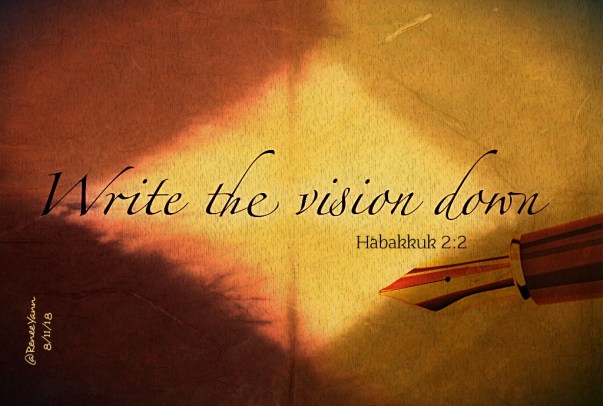
Hab 2_2 write

Today, in Mercy, we have a rare appearance from the prophet Habakkuk, whose contribution to the Hebrew Scriptures is brief — three short chapters. The first two chapters are known as the First and Second Complaint of Habakkuk.

In his first complaint, Habakkuk is upset with the way the world is going. You know what he feels like. He saw the political infrastructure rife with corruption, enemies attacking the heart of Jewish religion, and economic deadlock. Habakkuk asks God to explain why this is happening.

God says that Habakkuk has to have faith, that ultimately God will work things out.

That doesn’t float with Habakkuk, so he complains again. He basically tells God that, as the all-Powerful One, God should be able to do better.

Have you ever talked to God like that in your prayer – just so frustrated with your life or the world situation that you pour it all out in one massive complaint?

The fullness of Habakkuk’s faith evolved over time, because God abided with him, telling Habakkuk to be patient:

Write down the vision
Clearly upon the tablets,
so that one can read it readily.
For the vision still has its time,
presses on to fulfillment, and will not disappoint;
If it delays, wait for it,
it will surely come, it will not be late.
The rash man has no integrity;
but the just man, because of his faith, shall live.

This passage is a good incentive to maintain a spiritual journal.  When we go back over past challenges, we are often amazed to see how God did, indeed, abide with us — just as God did with Habakkuk.

Ready for some haunting beautiful Gaelic? (English lyrics below.)

Music: Bi Thusa Mo Shuile (Be Thou My Vision)
( Be Thou My Vision is a traditional hymn from Ireland. The words are based on a Middle Irish poem often attributed to the sixth-century Irish Christian poet Dallán Forgaill. The best-known English version was translated by Eleanor Hull and published in 1912. Since 1919 it has been commonly sung to the Irish folk tune “Slane”.)

Be Thou my Vision, O Lord of my heart
Naught be all else to me, save that Thou art
Thou my best Thought, by day or by night
Waking or sleeping, Thy presence my light
Be Thou my Wisdom, and Thou my true Word
I ever with Thee and Thou with me, Lord
Thou my great Father, I Thy true son
Thou in me dwelling, and I with Thee one
Riches I heed not, nor man’s empty praise
Thou mine Inheritance, now and always
Thou and Thou only, first in my heart
High King of Heaven, my Treasure Thou art

Keeping the Night Watch

Tuesday, August 7, 2018

Readings: http://www.usccb.org/bible/readings/080718.cfm

Do you ever have trouble sleeping at night? Or do you wake too early and fight to go back to sleep? 

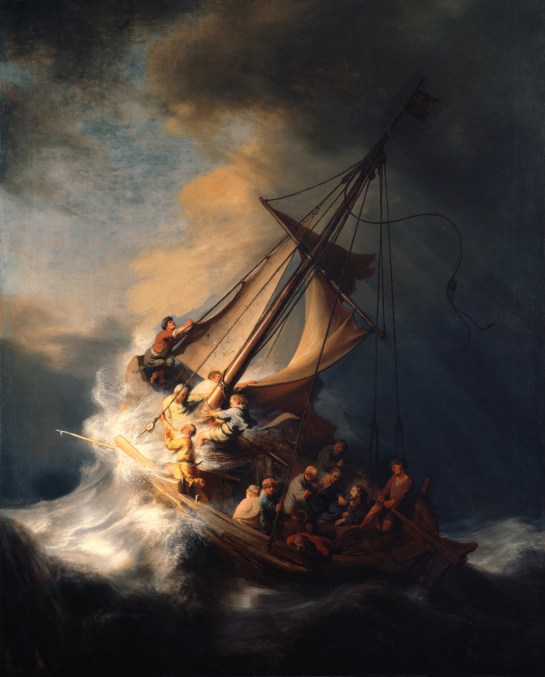
The disciples in today’s Gospel understand your plight. They had worked hard all day and were exhausted. Nestled in various of the boat’s nooks, each one settled to his own slumber. At first, the Sea of Galilee was gently rolling, almost like a lullaby of waves.
But …

Set in the hills of northern Israel, the Sea of Galilee is nearly 700 feet below sea level. … The sea’s location makes it subject to sudden and violent storms as the wind comes over the eastern mountains and drops suddenly onto the sea.” (Ray Vander Laan)

storm at sea

The Storm on the Sea of Galilee~ Rembrandt 

We’re not unlike these men. The storms of life come suddenly to disturb our sleep too. Sorrows, worries, frustrations, deadlines, aches and pains — all kinds of winds howl into our sleep during “the fourth watch of the night.”

What if, rather than resisting these little twisters, we looked deeply into them for the face of God. As we struggle with whatever it is disturbing us, God is always approaching us with a message of hope, courage and spiritual growth. Often, it is our resistance to that message which creates the storm.

That night, on the Sea of Galilee, the disciples sensed the rising winds of resentment against Jesus. The knew in their depths that the storm clouds were gathering in the dark hearts of Christ’s enemies. But they probably resisted their growing fears. 

Most of them had not witnessed the Transfiguration. But they too, like Peter, James and John, needed some bolstering! Walking across the water, Jesus brings each of them a blessed assurance that He has the storms in hand.

In our own night watches, God is waiting to calm and assure us. Let us be still in the darkness and trust God.


Music:  Holy Darkness sung by John Michael Talbot

The Times They Are A-Changin’

July 24, 2018

Readings: http://www.usccb.org/bible/readings/072418.cfm

Today, in Mercy, we pray with a passage from the prophet Micah, the last of three over the past few days of readings. Micah, who composed about 700 years before Christ, is considered a “minor prophet”. We hear from him only these three times in our liturgical readings. Yet, some of the loveliest and most moving lines come from the pen of this country poet.

Micah

Micah gave us this gem:

He has shown you, O mortal, what is good.
   And what does the Lord require of you?
To act justly and to love mercy
   and to walk humbly[a] with your God.
~ Micah 6:8

He also foretold the birth of Jesus in Bethlehem.

But you, Bethlehem Ephrathah,
   though you are small among the clans of Judah,
out of you will come for me
   one who will be ruler over Israel,
whose origins are from of old,
   from ancient times.~ Micah 5:2

Micah was a poor farmer with a rich gift of poetry and grace. In powerful images, he confronted the corporate sinfulness of his times – economic and social injustices institutionalized in the Jerusalem political power structure. He was like a folk singer whose simple words cut to the truth, mourned the sad state of current affairs, and offered lyrical hope to his listeners. Micah teaches us that God’s justice will always prevail. Still, he assures us that this divine justice will be delivered with Mercy.

One can profit from reading Micah prayerfully while considering our current political reality. Like all good poetry, his words still have meaning for us. Our “Jerusalem” may be Washington or Moscow or Beijing. Our “Babylon” maybe economic, environmental, or moral destruction. 

Micah calls us to recognize injustice, especially toward the poor, orphans, and refugees. He enjoins us to mourn the sad reality that surrounds us. And then he encourages us to hope – and act – because God is with us in our vulnerability and will bring us Mercy.

Music: The Times They Are A-Changin’- written by Nobel Laureate Bob Dylan, sung here by Bruce Springsteen when Dylan received the Kennedy Honors.( Lyrics below.)

https://m.youtube.com/watch?v=Dhuf_OvH8B8

Come gather ’round people
Wherever you roam
And admit that the waters
Around you have grown
And accept it that soon
You’ll be drenched to the bone.
If your time to you
Is worth savin’
Then you better start swimmin’
Or you’ll sink like a stone
For the times they are a-changin’.

Come writers and critics
Who prophesize with your pen
And keep your eyes wide
The chance won’t come again
And don’t speak too soon
For the wheel’s still in spin
And there’s no tellin’ who
That it’s namin’.
For the loser now
Will be later to win
For the times they are a-changin’.

Come senators, congressmen
Please heed the call
Don’t stand in the doorway
Don’t block up the hall
For he that gets hurt
Will be he who has stalled
There’s a battle outside
And it is ragin’.
It’ll soon shake your windows
And rattle your walls
For the times they are a-changin’.

Come mothers and fathers
Throughout the land
And don’t criticize
What you can’t understand
Your sons and your daughters
Are beyond your command
Your old road is
Rapidly agin’.
Please get out of the new one
If you can’t lend your hand
For the times they are a-changin’.

The line it is drawn
The curse it is cast
The slow one now
Will later be fast
As the present now
Will later be past
The order is
Rapidly fadin’.
And the first one now
Will later be last
For the times they are a-changin’

Called to Be Prophets

Sunday, July 8, 2018

Readings: http://www.usccb.org/bible/readings/070818.cfm

Today, in Mercy, our readings bring us the great prophets Ezekiel, Paul, and the Ultimate prophet, Jesus.

How did they become prophets? When they were little guys, how did they answer the perennial question, “What do you want to be when you grow up”? Unlikely that they responded, “A prophet, of course!” Probably it was something like a camel rider, a carpenter, or a farmer. So what changed them?

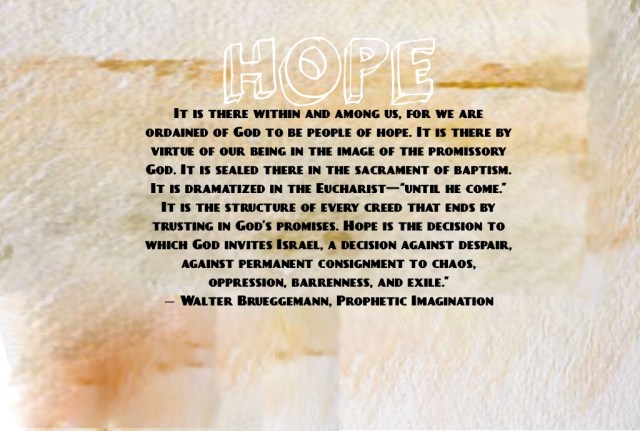
All three, by heritage and practice, were steeped in the traditions of the Hebrew Scriptures. As they grew up into the oppressive, idolatrous worlds of their particular time, the scriptural promises gave each of them hope. They developed, as the theologian Walter Brueggemann describes it, “the capacity to imagine the world seen through the eyes of … God.”

HOPE

This kind of vision is not unknown to our times. A few years ago, it was very popular to ask, “WWJD? – What would Jesus do?” Some people even wore bracelets and medallions of the letters to remind them to look at life through Jesus’ eyes.

Although a bit simplistic, it’s still a good visual reminder. What is less evident is the implied thought that we must KNOW Jesus well enough to UNDERSTAND what He would do. A casual acquaintance won’t do the trick here. Prophets are intimate with God through prayer and the works of mercy. Over years of faithful practice, they have come truly to see the world as God sees it. They beat with God’s heart.

A prophet is profoundly realistic about the world’s ills, heartbroken for those who suffer, but nonetheless convinced that God will make something amazingly beautiful for God’s People. This conviction impels them to live, speak and act  for this Godly vision.

We too are called to live with this kind of prophetic hope. It is not easy in our fractured world. But it is possible. Let today’s three Great Ones inspire and teach us.

Music: A Hymn to Hope from “The Secret Garden”


God’s Mercies Are Renewed Each Morning

Saturday, June 30, 2018

Readings: http://www.usccb.org/bible/readings/063018.cfm

Today, in Mercy, we encounter a rare -in fact, singular- reading from the Book of Lamentations. While passages from the book are used in the Lenten Tenebrae service, today is the only time we will meet Lamentations during the Mass readings.

So, let’s give it special attention.

This tenderly written and grief-filled Old Testament poem laments the Babylonian destruction of Jerusalem nearly 600 years before Christ’s birth. The disaster is seen as God’s punishment against a faithless people, who have listened to false prophets. These prophets, rather than confronting the people with their sinful blindness, enabled their guilt in order to be popular and accepted.

Lament 2_13

What does Lamentations have to say to us?  What, in particular, can it teach our religious leaders about their political voice?

Many of us recognize that we live in a toxic world. Terrorism, perpetual war and militarism, rampant consumerism, political isolationism, environmental destructionism are just some of our global “Babylons”. There are numerous local and personal ones as well.

We all play some role in the fostering or impeding of these systems in our culture. A sincere and active faith helps us see our role and responsibility more clearly. We need faith leaders who are not afraid to call us to insight, lamentation, and prayerful action. We, and the political leaders we choose, need to build a world where we live in balanced relationship with God. This is a world where all God’s people live in peace, sustainability, mutuality, and freedom.

While the Book of Lamentations is filled with sadness and regret, it also contains one of the most beautiful and hopeful verses in Scripture:

Because of the Lord’s great love
we are not consumed,
for his mercies never fail.
They are renewed each morning;
So great is God’s faithfulness.
`~ Lamentations 3:22-23

Some of us may feel that our our current socio-political world is irredeemable, but Lamentations says we are wrong. Vibrant faith, active hope, and limitless courage will prove it.

Music: Great Is Thy Faithfulness

On This Father’s Day

Sunday, June 17, 2018

Readings: http://www.usccb.org/bible/readings/061718.cfm

2 Cor 5_7 faith

Today, in Mercy, our Sunday readings are filled with the hope of new life, spoken out of the abyss of suffering.

Both Ezekiel’s and Paul’s communities were suffering under exile or persecution. In both cases, a powerful state has dehumanized and enslaved them – rendering them as “other”, unworthy of fraternal compassion.

These suffering communities hunger for the encouragement of their prophets, Ezekiel and Paul.

They long for Ezekiel’s majestic cedar, born from a single, hopeful branch – a life-giving tree where all can dwell in fullness and joy. It is a precursor of heaven, where they will be free and restored to honor.

They draw hope from Paul’s example of courage, believing with him that there is a new day coming where they will be known as precious and worthy in God’s sight.

What might these readings suggest to us, as we celebrate Father’s Day today?

As we contemplate the gift of fatherhood from the perspective of our own experience, let us be mindful of fathers and families experiencing exile and persecution similar to Ezekiel’s and Paul’s communities.

migrant fathers

The Bible tells us stories of our ancestors in faith, but it is also a living Word – speaking to our current experiences. Just this week, we have heard some in power positions use the Bible to justify the infliction of pain and hardship on other human beings. God must weep at such sinful arrogance!

Let us, instead, be inspired by these Scriptures to open our hearts in mercy. Let us pray for suffering migrant communities throughout the world, forced from their homes by war, crime, and greed. Let us pray for children torn from their families by blind, inhumane policies. 

Today, let us pray especially for these refugee fathers as their hopes are crushed and their families broken. And, where we can, let us do more than pray. Let us act for justice and mercy. Let us, at the very least, not rally behind a power that subverts the preciousness of human life and family.

Music: One Day When We All Get To Heaven written by Eliza Hewitt (1851-1920).

Courage to Dance?

Wednesday, May 9, 2018

Readings: http://www.usccb.org/bible/readings/050918.cfm

Today, in Mercy, we follow Paul to Athens where he preaches a beautiful and reasonable sermon to the thoughtful Greeks. These were people proud of their intellects and dedicated to philosophy. They desired a reasonable god, a god that they could control and explain.

But the Christian God is not reasonable. God is infinite mystery plumbed only by abandoning ourselves to faith, trust, hope and love. Our God will not be controlled by theses, explanations or definitions. Our God will not be “ordered”, but rather invites us to the abundant chaos of Divine Life. Only a few Athenians had the courage to meet this God.

In our highly intellectualized, scientifically ordered society, there are fewer brave believers today. It takes a large mind and soul to embrace the dance of both reason and faith. Are you one of the dancers?

Acts 17_28 Dance

https://m.youtube.com/watch?v=cwiE54S1h5s

A Sacred Peace

Tuesday, May 1, 2018

Readings: http://www.usccb.org/bible/readings/050118.cfm

Today, in Mercy, Jesus continues his loving assurance that He is with us always. He promises his followers peace, but not “peace” according to our human understanding. Instead, it is an immutable trust born of deep union with God and dependence on God’s protection. It endures and survives storms and darkness. Its gaze is focused on eternity. It is the peace that Jesus has demonstrated in His own life. How do we attain it? By imitating Jesus in the ordinary routines of our days – faith, trust and above all, love.

It Was Winter

Tuesday, April 24, 2018

Readings: Acts  11:19-26, Psalm 87;  John 10:22-30

Today, in Mercy, we accompany Jesus as He walks in the Temple area known as Solomon’s portico. In a very human touch, John tells us, “It was winter.” Thus, we can draw the conclusion that Jesus went inside to be warm. To think of Jesus experiencing the seasons – just as we do – makes him all the more real for us. Like us, Jesus experienced “inner seasons” too – that undulating range from sorrow to joy. When it is “winter” in our souls, and we seek the warmth of prayer, Jesus walks beside us.

IMG_5137