Today, in God’s Lavish Mercy, we pray with a passage from Daniel for our Responsorial Psalm:
Blessed are you, O Lord, the God of our forebearers, praiseworthy and exalted above all forever; And blessed is your holy and glorious name, praiseworthy and exalted above all for all ages
Daniel 3:52
This week we continue with a series of readings from the Book of Daniel. It is the only time throughout the Liturgical Year that we get a good dose of Daniel. And it is well placed, coming in this final week before Advent.
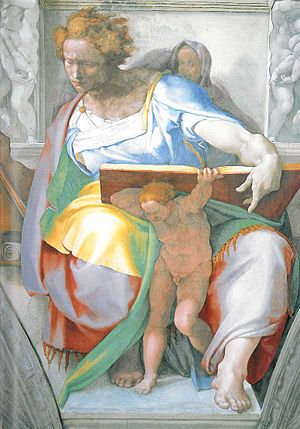
The Prophet Daniel by Michelangelo (Sistine Chapel)
Daniel is apocalyptic literature, a genre which conveys the author’s perception of the end times through dreams, visions and prophecies. Like many of our readings of the past weeks, Daniel focuses us on God’s Final Coming into time by interpreting current circumstances in a spiritual light.
Today’s Gospel does the same thing, but in a little different way.
Jesus tells the story of the poor widow who gave everything she had for the sake of the poor. This widow, in a sense, already lives in the “end times”, a time when our only “possessions” will be the good we have done in our lives.
Both these readings set us up to reflect on our lives and times as we approach Advent. This sacred season is the annual reenactment of Christ’s First Coming in order to prepare us for:
Christ’s daily revelation in our lives
Christ’s Final Coming at the end of time
All of Daniel’s complex visions and prophecies can feel a little confusing, but we can focus on this:
God is continually revealing Godself in the ordinary circumstances of time.
We can open ourselves to this revelation by our humble prayer and good works.
Staying awake like this in our hearts and souls will allow us to pass seamlessly into God’s Presence when the end times come.
Poetry: Awake! awake O sleeper of the land of shadows (from Jerusalem) – William Blake
Awake! awake O sleeper of the land of shadows, wake! expand!
I am in you and you in me, mutual in love divine:
Fibres of love from man to man thro Albions pleasant land.
In all the dark Atlantic vale down from the hills of Surrey
A black water accumulates, return Albion! return!
Thy brethren call thee, and thy fathers, and thy sons,
Thy nurses and thy mothers, thy sisters and thy daughters
Weep at thy souls disease, and the Divine Vision is darkend:
Thy Emanation that was wont to play before thy face,
Beaming forth with her daughters into the Divine bosom
Where hast thou hidden thy Emanation lovely Jerusalem
From the vision and fruition of the Holy-one?
I am not a God afar off, I am a brother and friend;
Within your bosoms I reside, and you reside in me:
Lo! we are One; forgiving all Evil; Not seeking recompense!
Ye are my members O ye sleepers of Beulah, land of shades!
Music: Sleepers Awake from the beautiful album by Chris Wyton, “Music for Deep Meditation “
For some, the lofty, politically-tinged title might obscure the rich devotion offered by this feast. The title “king” carries with it suggestions of exaggerated power, wealth and dominance not compatible with our Gospel perception of Jesus.
We may be more comfortable with images of Christ as infant, brother, shepherd, lamb, vine, gate, way, truth, life…
But what all these images point out is that our ability to comprehend the fullness of Christ is severely limited by our humanity. We usually choose a specific image based on our circumstances and spiritual needs.
Pope Pius XI promoted the concept of Christ the King in his 1925 encyclical Quas Primas, in response to growing international secularism and nationalism. His intent was not to compare Christ to the challenged world leaders of the time. It was to raise the perceptions of all people to the lessons of Divine Leadership: mercy, justice, inclusivity, and peace.
Oh, how we could benefit from the same understanding today!
In this age with its culture of continual war, the human pain it causes, refugee crises, climate devastation, wealth distortion and indifference to the poor, how our hearts long for just, wise and loving leadership!
In his encyclical, Pius XI wrote:
Christ the King reigns “in the human hearts,” both by reason of the keenness of his intellect and the extent of his knowledge, and also because he is very truth, and it is from him that truth must be obediently received by all humanity. He reigns, too, in our wills, for in him the human will was perfectly and entirely obedient to the Holy Will of God, and further by his grace and inspiration he so subjects our free-will as to incite us to the most noble endeavors. He is King of hearts, too, by reason of his “charity which exceedeth all knowledge.”
— Quas primas, §7[4]
Let’s pray for these virtues for all who are charged with any form of power or leadership:
keen spiritual intellect
deep heart’s knowledge
uncompromising truth
obedience to grace
holy inspiration
noble character
and surpassing charity for all Creation
May Christ the King truly live and reign among us. May we behold the “sweet light in His eyes”!
Poetry: A King Inside Who Listens - Rumi

There are many people with their eyes open
whose hearts are shut. What do they see?
Matter.

But someone whose love is alert,
even if the eyes go to sleep,
he or she will be waking up thousands of others.

If you are not one of those light-filled lovers,
restrain your desire-body's intensity.
Put limits on how much you eat
and how long you lie down.

But if you are awake here in the chest,
sleep long and soundly.

Your spirit will be out roaming and working,
even on the seventh level.

The Prophet says, I close my eyes and rest in sleep,
but my love never needs rest.

The guard at the gate drowses.
The king stays awake.

You have a king inside who listens
for what delights the soul.

That king's wakefulness
cannot be described in a poem.
Music: We Shall Behold Him – offered in American Sign Language by Kayla Seymour; sung by Sandi Patty
Today, in God’s Lavish Mercy, we pray with Psalm 9 and its beautiful verse which is echoed in several other Psalms:
I will give thanks to you, O LORD, with all my heart; I will declare all your wondrous deeds. I will be glad and exult in you; I will sing praise to your name, Most High.
Psalm 9: 2-3
Like so many of our readings lately, today’s point us toward a consideration of the “afterlife” or the “end times”. I know you may have had enough of such considerations, but the Church isn’t giving up quite yet!
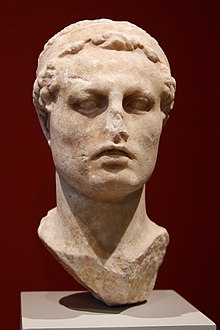
Antiochus IV, wikipedia
Maccabees gives us a colorful account of the defeat, dismay and ultimate death of Antiochus IV, persecutor of the Jews. The account, like most of the Books of Maccabees, is primarily historical, not spiritual or theological. But threaded through the books, of course, is the underlying biblical orientation that God-Yahweh is present and active in all life’s circumstances.
Today’s passage has even pagan Antiochus considering how God/Fate has brought him to judgement- to “payback” time:
But I now recall the evils I did in Jerusalem, when I carried away all the vessels of gold and silver that were in it, and for no cause gave orders that the inhabitants of Judah be destroyed. I know that this is why these evils have overtaken me; and now I am dying, in bitter grief, in a foreign land.
1 Maccabees 6:11-13
In our Gospel account, some Sadducees question Jesus about marriage laws and the afterlife. Their questioning reminds me of modern songwriter Eric Clapton’s musings in his song:
Tears in Heaven – Eric Clapton
Jesus doesn’t sing to the Sadducees, as far as I know. Rather, he answers them this way:
Those who are deemed worthy to attain to the coming age and to the resurrection of the dead neither marry nor are given in marriage. They can no longer die, for they are like angels; and they are the children of God because they are the ones who will rise.
Luke 20:35-36
So for us today, the questions and concerns of both Antiochus and the Sadducees might lead us to consider how we feel about the “afterlife”.
Do you ever wonder what heaven will be like? Will we see our beloveds once again? Will we see our “unbeloveds” too and what will that be like!! Do you calculate whether or not you’ll even make the cut through the Pearly Gates?
When I think about heaven these two promises of Jesus sustain, comfort and animate me. Maybe you’ll consider their power too as you pray today.
I have come that you may have life, and have it to the full.
John 10:10
Eternal life is this, that they know you, the only true God, and Jesus Christ, whom you have sent.
I have desired to go
Where springs not fail,
To fields where flies no sharp and sided hail,
And a few lilies blow.

And I have asked to be
Where no storms come,
Where the green swell is in the havens dumb,
And out of the swing of the sea.
Music: Here’s a beautiful piece of music to accompany you in your “considerations”.
Nocturne No.20 in C-Sharp Minor – Frédéric Chopin, played by Joshua Bell
Today, in God’s Lavish Mercy, we pray with Psalm 3 which well might reflect the prayer of noble Eleazar from our first reading:
You, O LORD, are my shield; my glory, you lift up my head! When I call out to the LORD, he answers me from his holy mountain. R. The Lord upholds me. When I lie down in sleep, I wake again, for the LORD sustains me. I fear not the myriads of people arrayed against me on every side.
Psalm 3: 4-7
Eleazar’s faithful character is so strong that he can look beyond his present circumstance to:
… leave in his death a model of courage and an unforgettable example of virtue not only for the young but for the whole nation.
2 Mc 6:31
Both Eleazar’s story and Zaccheus’s are about living in the big picture of God’s vision for us. These stories invite us to stretch beyond ourselves to see God in our circumstances.
Eleazar was a giant in the virtues necessary to “see beyond the trees” of his current circumstances. A more spiritually short-sighted person might have succumbed to the temptation to save himself at the cost of his faith and witness.
But Eleazar’s faith was long, both in years and in depth. He kept the eyes of his heart focused on that faith and was delivered beyond any short-sighted choices.
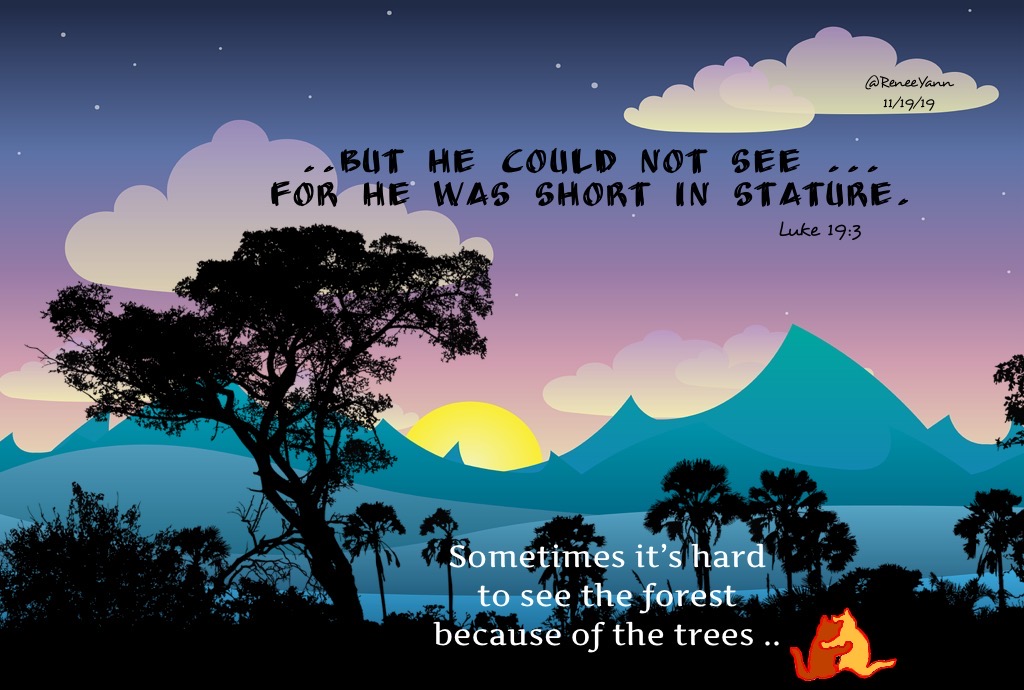
In our Gospel, we meet Zaccheus who, due to his short stature, was unable to get a glimpse of Jesus walking nearby. He wasn’t getting the whole picture – but he desperately wanted to!
Sometimes we miss Christ in our midst, don’t we? It may be because we’re “short” on time, patience, faith, attention, courage, peace, desire … you name it.
Zaccheus may have been physically short, but he was tall in will and intention to see Jesus. The trees became his tools not his obstacles.
It’s hard sometimes to see the forest beyond the trees – to direct our choices, attitudes and actions by a vision we glimpse only on the tippy toes of faith and prayer.
Perhaps these two God-seekers can inspire us today, by their courage, steadfastness and faith, to always live within God’s long eternal vision for us.
Poetry: Walking on Tiptoe by Ted Kooser
Long ago we quit lifting our heels
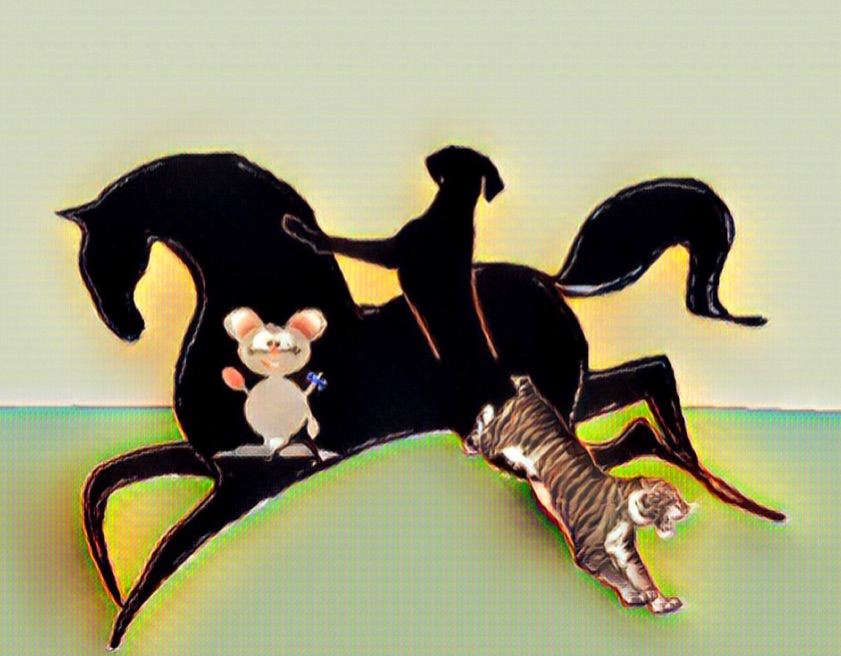
like the others—horse, dog, and tiger—
though we thrill to their speed
as they flee. Even the mouse
bearing the great weight of a nugget
of dog food is enviably graceful.
There is little spring to our walk,
we are so burdened with responsibility,
all of the disciplinary actions
that have fallen to us, the punishments,
the killings, and all with our feet
bound stiff in the skins of the conquered.
But sometimes, in the early hours,
we can feel what it must have been like
to be one of them, up on our toes,
stealing past doors where others are sleeping,
and suddenly able to see in the dark.
Turn Your Eyes Upon Jesus – written in 1922 by Helen Lemmel, sung here by Michael W. Smith
O soul are you weary and troubled
No light in the darkness you see
There's light for a look at the Savior
And life more abundant and free

Turn your eyes upon Jesus
Look full in his wonderful face
And the things of earth will grow strangely dim
In the light of his glory and grace

His word shall not fail you he promised
Believe him and all will be well
Then go to a world that is dying
His perfect salvation to tell

Turn your eyes upon Jesus
Look full in his wonderful face
And the things of earth will grow strangely dim
In the light of his glory and grace

O soul are you weary and troubled
No light in the darkness you see
There's light for a look at the Savior
And life more abundant and free

Turn your eyes upon Jesus
Look full in his wonderful face
And the things of earth will grow strangely dim
In the light of his glory and grace
Today, in God’s Lavish Mercy, our readings offer another taste of “pre-Advent agita”. You know what I mean. Those metaphoric gates described in our readings don’t seem all the “pearly” to me! In fact, the image that comes to mind is the massive wrought iron gates of Moffat Public School when I stood before them on my first day going to kindergarten!
Well, get ready for it! In the next few weeks of readings:
the sun will be darkened,
and the moon will not give its light,
and the stars will be falling from the sky,
and the powers in the heavens will be shaken
The phrase, “In those days” becomes prelude to some scary stuff! What’s going on here?
Well, the Church Year – symbolic of the total Christian life – is coming to an end. With its closing, we are constantly reminded that this might be our last chance to get our act together before we are judged.
I always disliked these apocalyptic readings. As a child, I was frightened by them. As an adult, they don’t easily convey the kind of God Who has loved me into my maturity. But they do reveal the God of fidelity who stays with us through it all to the end.
One line from today’s reading that captures the heart?
When you see these things happening, know that He is near, at the gates.
There are still a lot of closed gates in my heart – places I have not yet given over fully to God. You? Same?
This reading challenges us to go to the gate, unlock it, and let our whole heart meet God who is waiting there for us, despite any fears we may harbor – even of the end-time.
Poetry: from Paradiso – Dante Allegheri
“O grace abounding and allowing me to dare to fix my gaze on the Eternal Light, so deep my vision was consumed in it! I saw how it contains within its depths all things bound in a single book by love of which creation is the scattered leaves: how substance, accident, and their relation were fused in such a way that what I now describe is but a glimmer of that Light.”
Music: Heaven’s Gate – instrumental music to pray with as we unlock our gates. 🙂
November 10, 2021 Memorial of Saint Leo the Great, Pope and Doctor of the Church
Today, in God’s Lavish Mercy, we pray with Psalm 82 considered, by at least one Biblical scholar, to be:
“the single most important text in the entire Christian Bible.”
John Domenic Crossan, an Irish-American New Testament scholar, historian of early Christianity, and former Catholic priest
Council of the Gods by Raphael, (Public domain, via Wikimedia Commons)
Psalm 82 best summarizes for me the character of (the early Biblical) God. It imagines a scene in which God sits among the gods and goddesses in divine council. Those pagan gods and goddesses are dethroned not just because they are pagan, nor because they are other, nor because they are competition. They are dethroned for injustice, for divine malpractice, for transcendental malfeasance. They are rejected because they do not demand and effect justice among the peoples of the earth. And that justice is spelled out as protecting the poor from the rich, protecting the systemically weak from the systemically powerful.
excerpts from Crossan: The Birth of Christianity
Rise up, O God, bring judgment to the earth. Defend the lowly and the fatherless; render justice to the afflicted and the destitute. Rescue the lowly and the poor; from the hand of the wicked deliver them. Psalm 82: 3-4
In today’s Gospel, we encounter this just and supreme God in the person of Jesus when we witness the cure of the ten lepers.
You know, it would be startling enough to run into one leper on your daily walk, right? But TEN! That must have been an astounding situation. And to see those sad, disfigured people restored to wholeness must have been nearly overwhelming for the entourage accompanying Jesus.
Can you imagine that the recipients of such a miracle wouldn’t have clung in gratitude to Jesus for the rest of their days??? But, wow, only one even bothered to say “Thank you”.
What might have kept the other nine away, locked in their blind ingratitude?
Perhaps it’s not such a mystery if we allow ourselves to examine our own often ungrateful hearts. We don’t necessarily mean to be boorish in the face of God’s kindness and the generosity of others, but we sometimes suffer from …
Distraction: our lives are filled with frenetic activity which causes our blessings to flit by us into dizzying forgetfulness
Entitlement: we think we deserve or have earned those blessings
Self-absorption: we are so wrapped up in ourselves that we don’t even notice that our whole life is a gift
Laziness: we might say thanks if we get around to it. But we never get around to it.
Unresolved anger: we’re mad that we even needed help
Non-intentionality: we fail to live with intention and reflection, thus missing the opportunities for gratitude
Pride: we are too proud to acknowledge that we need anything
Fear: we are afraid something will be required of us in return for the gift
Spiritual blindness: we just don’t see the nurturing power of God and others in our life
It’s likely that our nine ungrateful lepers had these human frailties. But don’t be thinking about them, or your acquaintances who share their failings.
Let’s think about ourselves and how we want to be more grateful. Let’s think about our omnipotent God who is always Justice and Mercy.
The story is a powerful wake-up call to do better than the poor lepers did by living this prayer:
May I live humbly and gratefully today.
Poetry: The Ten Lepers – by Rosanna Eleanor (Mullins) Leprohon who was both a poet and novelist. Born in Montreal in 1829, Rosanna Mullins was educated at the convent of the Congregation of Notre Dame.
’Neath the olives of Samaria, in far-famed Galilee, Where dark green vines are mirrored in a placid silver sea, ’Mid scenes of tranquil beauty, glowing sun-sets, rosy dawn, The Master and disciples to the city journeyed on.
And, as they neared a valley where a sheltered hamlet lay, A strange, portentous wailing made them pause upon their way— Voices fraught with anguish, telling of aching heart and brow, Which kept moaning: “Jesus, Master, have mercy on us now!”
Softly raised the gentle Saviour His eyes like midnight star, And His mournful gaze soon rested on ten lepers, who, afar, Stood motionless and suppliant, in sackcloth rudely clothed, Poor Pariahs! by their nearest, their dearest, shunned and loathed.
Not unto Him prayed vainly those sore afflicted ten, No! He yearned too fondly over the erring sons of men, Even sharing in their sorrows, though He joined not in their feasts,— So He kindly told the Lepers: “Show yourselves unto the priests.”
When, miracle of mercy! as they turned them to obey, And towards the Holy Temple quickly took their hopeful way, Lo! the hideous scales fell off them, health’s fountains were unsealed, Their skin grew soft as infant’s—their leprosy was healed.
O man! so oft an ingrate, to thy thankless nature true, Thyself see in those Lepers, who did as thou dost do; Nine went their way rejoicing, healed in body—glad in soul— Nor once thought of returning thanks to Him who made them whole.
One only, a Samaritan, a stranger to God’s word, Felt his joyous, panting bosom, with gratitude deep stirred, And without delay he hastened, in the dust, at Jesus’ feet, To cast himself in worship, in thanksgiving, warm and meet.
Slowly questioned him the Saviour, with majesty divine:— “Ten were cleansed from their leprosy—where are the other nine? Is there none but this one stranger—unlearned in Gods ways, His name and mighty power, to give word of thanks or praise?”
The sunbeams’ quivering glories softly touched that God-like head, The olives blooming round Him sweet shade and fragrance shed, While o’er His sacred features a tender sadness stole: “Rise, go thy way,” He murmured, “thy faith hath made thee whole!”
Music: Hymn of Grateful Praise – Folliott S. Pierpoint
Today, in God’s Lavish Mercy, we pray with the comforting yet challenging Psalm 139, a prayer of awareness, intimacy, and trust.
O LORD, you have probed me and you know me; you know when I sit and when I stand; you understand my thoughts from afar. My journeys and my rest you scrutinize, with all my ways you are familiar.
Psalm 139:1-3
The thought that God knows us so intimately might be both assuring and/or scary — depending on how we know and understand ourselves. The psalmist describes an overwhelming wonder at the thought of God’s closeness:
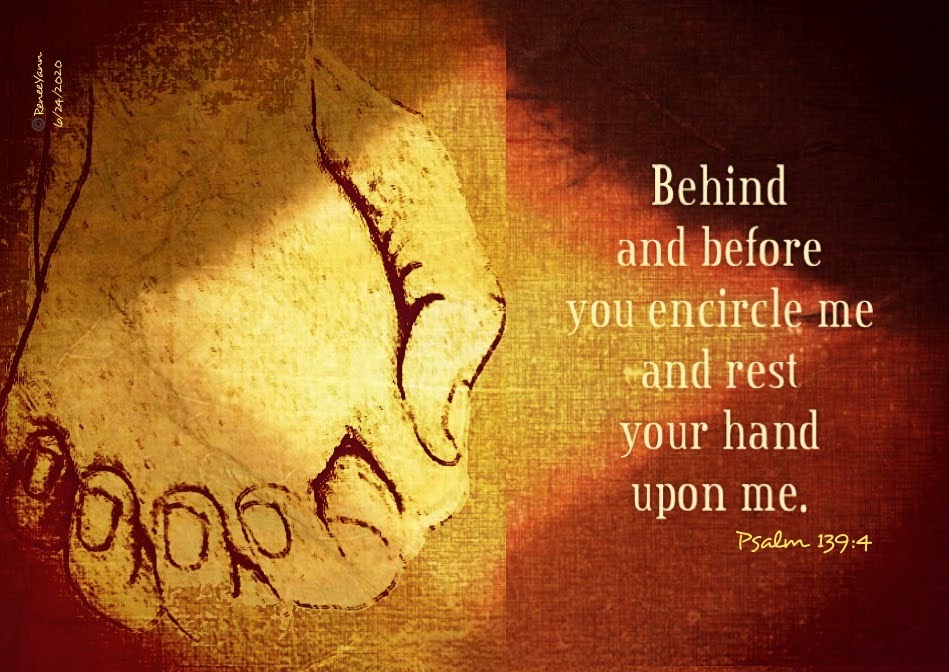
Even before a word is on my tongue, behold, O LORD, you know the whole of it. Behind me and before, you hem me in and rest your hand upon me. Such knowledge is too wonderful for me; too lofty for me to attain.
Psalm 139:4-6
As we pray Psalm 139, the awe settles into a deep awareness that God’s penetrating Presence in our spirits is ever beneficent and merciful. We pray to yield to its Love and seek its Wisdom.
Where can I go from your spirit? From your presence where can I flee? If I go up to the heavens, you are there; if I sink to the nether world, you are present there. If I take the wings of the dawn, if I settle at the farthest limits of the sea, Even there your hand shall guide me, and your right hand hold me fast.
Psalm 139:7-10
On this 32nd Monday, we begin a week of readings from the Book of Wisdom. Written in the century surrounding the birth of Christ, Wisdom is the work of a poet, theologian, philosopher, and moralist.
Today’s passage alerts us, as does our Gospel, that holding God’s Presence within us, we must live lives that bear it witness:
For wisdom is a kindly spirit, yet she acquits not blasphemers of their guilty lips; Because God is the witness of the inmost self and the sure observer of the heart and the listener to the tongue. For the Spirit of the Lord fills the world, is all-embracing, and knows what the person truly bespeaks by their lives.
Wisdom 1:6-7
A millstone at someone’s feet …
For as our Gospel tells us today:
Jesus said to his disciples, “Things that cause sin will inevitably occur, but woe to the one through whom they occur. It would be better to have a millstone hung around the neck and be thrown into the sea than to cause one of these little ones to sin.”
Luke 17:1-2
Poetry: Wisdom – Tagore
The small wisdom
is like water in a glass:
clear, transparent, pure.

The great wisdom
is like the water in the sea:
dark, mysterious, impenetrable.
Wednesday, November 4, 2021 Memorial of St. Charles Borromeo
Today, in God’s Lavish Mercy, we pray with Psalm 27:
Our scripture passages are all about confidence in our salvation.
Do you have that confidence? Do you ever wonder if you’re going to get to heaven? Maybe even worry about it a little?
If so, today’s readings are for you.
Paul tells the faithful:
For if we live, we live for the Lord, and if we die, we die for the Lord; so then, whether we live or die, we are the Lord’s.
And Jesus, using the symbol of a lost sheep, counsels the critical Pharisees:
I tell you, in just the same way there will be more joy in heaven over one sinner who repents than over ninety-nine righteous people who have no need of repentance.
Key to both readings is the call to a repentant, Christian life.
Our beautiful Responsorial Psalm captures the joy of the repentant sinner, the very ones for whom Christ died. It’s a beautiful psalm. We might want to just slowly relish it in our prayer today.
R. I believe that I shall see the good things of the Lord in the land of the living.
The LORD is my light and my salvation; whom should I fear? The LORD is my life’s refuge; of whom should I be afraid?
R. I believe that I shall see the good things of the Lord in the land of the living.
One thing I ask of the LORD; this I seek: To dwell in the house of the LORD all the days of my life, That I may gaze on the loveliness of the LORD and contemplate his temple.
R. I believe that I shall see the good things of the Lord in the land of the living.
I believe that I shall see the bounty of the LORD
in the land of the living.
Wait for the LORD with courage;
be stouthearted, and wait for the LORD.
R. I believe that I shall see the good things of the Lord in the land of the living.
We might want to turn toward the searching Shepherd of today’s Gospel while praying this Psalm of repentance and faith.
Poetry: The Shepherd Boy Sings in the Valley of Humiliation– John Bunyan (1628–1688), a Christian writer and preacher, most famous for The Pilgrim’s Progress.
He that is down needs fear no fall, He that is low, no pride; He that is humble ever shall Have God to be his guide.
I am content with what I have, Little be it or much: And, Lord, contentment still I crave, Because Thou savest such.
Fullness to such a burden is That go on pilgrimage: Here little, and hereafter bliss, Is best from age to age.
Today, in God’s Lavish Mercy, we pray with beautiful Psalm 18:
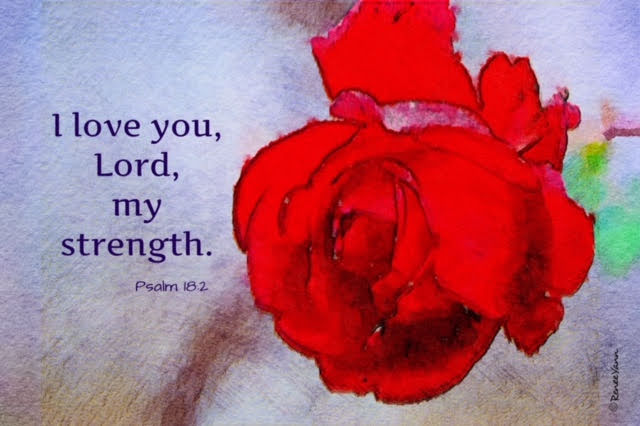
I love you, O LORD, my strength, O LORD, my rock, my fortress, my deliverer. R. I love you, Lord, my strength. My God, my rock of refuge, my shield, the horn of my salvation, my stronghold!
Psalm 18: 2-3
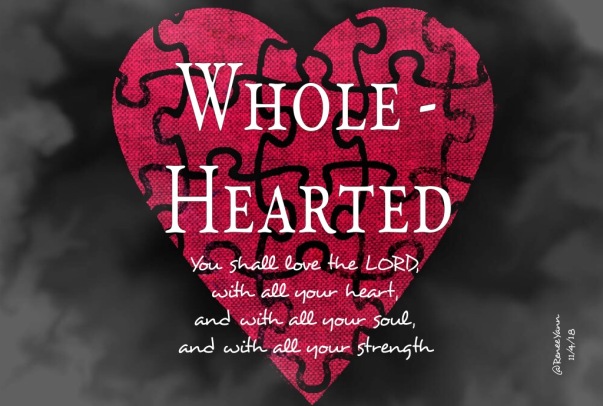
In our readings, both Deuteronomy and Mark proclaim the call to love God wholeheartedly.
In Mark, it is one of the scribes who initiates this proclamation by asking Jesus which is the first – most important – of the commandments. Unlike many of Jesus’ encounters with the scribes and Pharisees, this one does not seem hostile. The man, as one might expect of an expert in the Law, wants to know if Jesus continues the priorities of the Torah.
One of the scribes came to Jesus and asked him, “Which is the first of all the commandments?”
Mark 12:28
He is pleased with Jesus’ answer. And Jesus is pleased with him. We can almost see Christ’s smile at the scribe’s sincere and lived response.
Jesus replied, “The first is this: Hear, O Israel! The Lord our God is Lord alone! You shall love the Lord your God with all your heart, with all your soul, with all your mind, and with all your strength. The second is this: You shall love your neighbor as yourself. There is no other commandment greater than these.” The scribe said to him, “Well said, teacher.
Mark 12: 29-31
This man sees through the Pharisaical confusions which have been heaped upon this most important law. He understands that love of God and neighbor mean infinitely more than burnt offerings and public sacrifices.
How do we reach this wholehearted love in our complex lives? We’re not busy with burnt offerings, but we are distracted by so many forces that lay claim to our attention and devotion.
We love many worthy and unworthy things in our lives. We often confuse real love with one of its masquerading forms – “loves” that are self-serving rather than other-serving.
Today’s Alleluia verse is an answer to our, “How?”.
Whoever loves me will keep my word, says the Lord; and my father will love him and we will come to him.
John 14:23
Real love is proved by action. It’s that simple. What do my actions say about where my heart is? Let me just flip back through my last 24 hours to see if God would have smiled at my choices, words, and actions. And let me change what I need to change for tomorrow.
Poetry: from Rumi
Last night I learned how to be a lover of God, To live in this world and call nothing my own.
I looked inward And the beauty of my own emptiness filled me till dawn. It enveloped me like a mine of rubies. Its hue clothed me in red silk.
Within the cavern of my soul I heard the voice of a lover crying, “Drink now! Drink now!”—
I took a sip and saw the vast ocean— Wave upon wave caressed my soul. The lovers of God dance around And the circle of their steps becomes a ring of fire round my neck.
Heaven calls me with its rain and thunder— a hundred thousand cries yet I cannot hear…..
All I hear is the call of my Beloved.
Music: V’Ahavta- Marty Goetz
V’Ahavta is part of the Shema Yisrael (שְׁמַע יִשְׂרָאֵל)- a prayer that serves as a centerpiece of the morning and evening Jewish prayer services.
Today, in God’s Lavish Mercy, we pray with Psalm 94 which assures us of God’s patient and enduring love.
Happy are they whom you instruct, O Lord! whom you teach out of your law; to give them rest in evil days… For you will not abandon your beloved, nor will you forsake your own.
Psalm 94: 12-14
How does God instruct us in this perfect Law? Our Alleluia Verse offers this insight:
Take my yoke upon you and learn from me, For I am meek and humble of heart.
Matthew 11:29
By imitating the humble love of Jesus, we learn to become more like God in whose image we are created.
Deepening in that imitative love is a lifelong journey. Sometimes, maybe often, our footing is unsure. Sometimes we even fall flat on our face!
The psalmist tells us we are not alone in the struggle, a verse we might repeat when we are a bit off spiritual balance:
Were not the LORD my help, my soul would soon dwell in the silent grave. When I say, “My foot is slipping,” your mercy, O LORD, sustains me.
Psalm 94: 17-18
Poetry: Prayer of the Tightrope Dancer – Sister Eleanor Fitzgibbons, IHM
Oh God of tenderness and watchful love, You are my balance beam, I shall not falter. With you, my surety, I will not fail.
Music: Two songs today
Blessed Assurance – written in 1883 by Fanny Crosby an amazing creative talent and activist. She was blind from infancy.
For my fellow tightrope walkers out there: Walk-in’ the Tightrope: Some of you might like this rockin’ song from Stevie Ray Vaughn to kick up your Saturday 😉










 Lavish Mercy