Psalm 97: Ordinary?

Monday of the First Week in Ordinary Time

January 11,2021


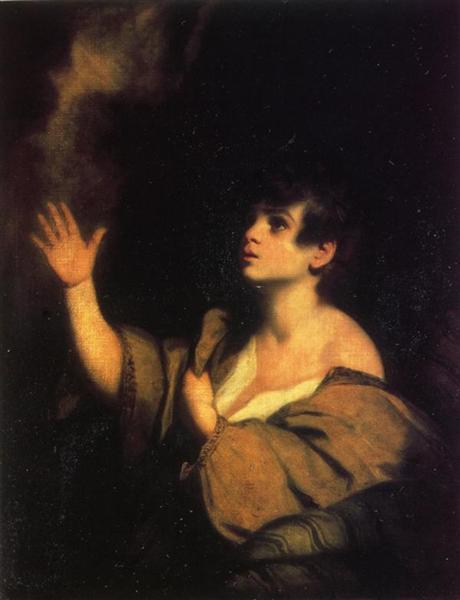
Today, in God’s Lavish Mercy, we pray with Psalm 97 which reminds us that, as Jesus begins his earthly ministry, he is accompanied by the unseen powers of heaven.

The heavens proclaim his justice,
and all peoples see his glory.
Let all his angels worship him.

Psalm 97: 6-7

The psalm is reflective of the glorious passage from our first reading describing the Divinity of Jesus:

The Son of God is…
the refulgence of God’s glory, 
the very imprint of God’s being,
who sustains all things by his mighty word.
When he had accomplished purification from sins, 
he took his seat at the right hand of the Majesty on high,
as far superior to the angels
as the name he has inherited is more excellent than theirs.

Hebrews 1: 3-4

These seem perfect readings to begin a season described as “Ordinary Time” because they remind us that the power of Jesus Christ is far from ordinary.

And our days do not feel like ordinary times, do they? They are both fraught with threat and charged with hope.

They are times belabored by pandemic struggle, political vitriol, climate dissolution, global strife and systemic oppression.

But they are also times bristling with breakthrough discovery, civic renewal, social consciousness, communal courage and spiritual awakening.


Just as in our Gospel on this first day of “Ordinary Time”, Jesus asks his disciples to “Come”, dream extraordinary dreams with him, so he asks us. 

He asks us to believe
that there are unseen angels attending us.
 
He asks us to remember that we, like him,
are made in the refulgent image of God.


He calls us, like Simon and Andrew, to believe
that our “ordinary time” is actually the “time of fulfillment”:

This is the time of fulfillment.
The Kingdom of God is at hand.
Repent, and believe in the Gospel.

Mark 1:15

Poetry: Maya Angelou – Touched by an Angel

We, unaccustomed to courage,
exiles from delight,
live coiled in shells of loneliness
until love leaves its high holy temple
and comes into our sight
to liberate us into life.

Love arrives
and in its train come ecstasies
old memories of pleasure
ancient histories of pain.
Yet if we are bold,
love strikes away the chains of fear
from our souls.

We are weaned from our timidity
In the flush of love's light
we dare be brave
And suddenly we see
that love costs all we are
and will ever be.
Yet it is only love
which sets us free.

Music: Ordinary Time – Marie Bellet

There will come a day for quiet kitchen mornings
Lunches with the girls, book clubs in the afternoon
There will come a day for chintz flowers on my sofa
Just the perfect lipstick, matching purse and shoes.

There will come a day without constant interruption
Confusing all my senses, my reason and my rhyme
But for now I trip on the backpacks in the hallway
Scrub the crayon from the walls that mark this ordinary time.

There will come a day for uneventful dinners
When no one drops their fork or spills their milk upon the floor
There will come a day, I’ll be wiser, I’ll be thinner
I will finish conversations before running out the door.

Well, isn’t that the way it is for all those happy women
Who smile at me from magazines there in the checkout line?
What about the tired, the simple and forgotten?
Blessed be the ordinary here in ordinary time.

He said “Who will feed my sheep?
Who will heed their cry?”
I said “I am vain and weak
But surely I will try.

You know everything
And You know that I’m
Just an ordinary woman 
here in ordinary time”.

There will come a day when everything is order
And I will be the queen of everything I see
But how my heart will leap to find one backpack in the hallway
With the promise of a face, and a story just for me.

So may I never yearn for those cocktail conversations
Clever observations made for fashionable minds
May I finally learn to be happy and have patience
With the constant changing rhythm of this ordinary time,
The constant changing rhythm of this ordinary time.

Psalm 29: Holy Splendor

The Baptism of the Lord

January 10, 2021
We celebrate the Baptism of Jesus in the River Jordan by John the Baptist. The Christmas season, which celebrates the revelation of God through Christ, closes with this liturgy. Jesus’ Baptism begins his public ministry.

Today, in God’s Lavish Mercy, we pray with Psalm 29 in which the psalmist invites the pray-ers to find the power of God in the storm.

One can picture a small group huddled onshore as thunder ripples across the sea. The psalmist says not to focus on the storm itself, but:

  • to see the Power Who creates it
  • to find more than meteorological meaning in the experience
  • to be soaked not only in rain, but in grace.

Give to the LORD, you children of God,
give to the LORD glory and might;
Give to the LORD the glory due God’s name.
Bow down before the LORD’s holy splendor!

Psalm 29: 1-2

The psalmist invites the community to be sanctified by nature’s manifestation of God’s power.


As I wrote earlier this week, “This short post-Epiphany season is all about “manifestation” – how Jesus begins to show us the face of God-become-flesh.” Today’s Baptism of Jesus marks the glorious culmination of these manifestations.

I have always loved this feast. I imagine it as a moment in time when everything changes – when the Timeless Trinity steps through our human perceptions to fully reveal Itself in light, color, and sound. It is a quantum moment when, time suspended, Omnipotence speaks.

The voice of the LORD is over the waters,
    the LORD, over vast waters.
The voice of the LORD is mighty;
    the voice of the LORD is majestic.

Psalm 29: 3-4

In an earlier blog, I offer a reflection on these thoughts. It contains a beautiful picture which I received the artist’s permission to share. I hope you can take time to read it again.


Our lives, too, are filled with potential manifestations of God’s power, with invitations to be bathed in God’s grace. As we pray today, let us allow our psalm to lower the barriers that keep us from hearing God’s voice in our own experiences.


Poetry: God Speaks by Rainer Marie Rilke

God speaks to each of us as God makes us,
then walks with us silently out of the night.
These are the words we dimly hear:
You, sent out beyond your recall,
go to the limits of your longing.
Embody me.
Flare up like a flame
and make big shadows I can move in.
Let everything happen to you: beauty and terror.
Just keep going. No feeling is final.
Don’t let yourself lose me.
Nearby is the country they call life.
You will know it by its seriousness.
Give me your hand.

Music: “Christ unser Herr zum Jordan kam” BWV 684 – “Christ our Lord came to the Jordan”) is a hymn by Martin Luther written in 1541. It has been set in many musical compositions, including cantatas and chorale preludes by Johann Sebastian Bach

Organist: Cecilia Yae-Jin Lee, Seoul Catholic Singers (On Youtube, there are several more prestigious organists playing this piece on magnificent organs. But I thought this young woman was extremely impressive rendering it on a rather simple instrument.)

Christ, unser Herr, zum Jordan kam
Nach seines Vaters Willen,
Von Sanct Johann’s die Taufe nahm,
Sein Werk und Amt zu ‘rfüllen.
Da wollt’ er stiften uns ein Bad,
Zu waschen uns von Sünden,
Ersäufen auch den bittern Tod
Durch sein selbst Blut und Wunden,
Es galt ein neues Leben.

Christ our Lord came to the Jordan
in accordance with his father’s will,
he received baptism from Saint John,
to fulfil his work and ministry.
By this he wanted to establish for us a bath
to wash us from our sins,
to drown also bitter death
through his own blood and wounds.
This meant a new life.

Psalm 72: Governed with Mercy

Memorial of Saint John Neumann, Bishop

January 5, 2021

Today, in God’s Lavish Mercy, we pray with Psalm 72 which will be familiar to us because it is used six times throughout the Advent and Christmas seasons.

O God, with your judgment endow the king,
and with your justice, the king’s son;
He shall govern your people with justice
and your afflicted ones with judgment.

Psalm 72: 1-2

This short post-Epiphany season is all about “manifestation” – how Jesus begins to show us the face of God-become-flesh.

The core message, conveyed to us in the daily progressive reading of 1 John, is that God is Love.


Our Gospel today, the feeding of the 5000, shows how that Love is expressed – merciful action for those in need.

Our psalm, written a thousand years before Christ, exults in the expectation of such a merciful Messiah:


The mountains shall yield peace for the people,
and the hills justice.
He shall defend the afflicted among the people,
save the children of the poor.
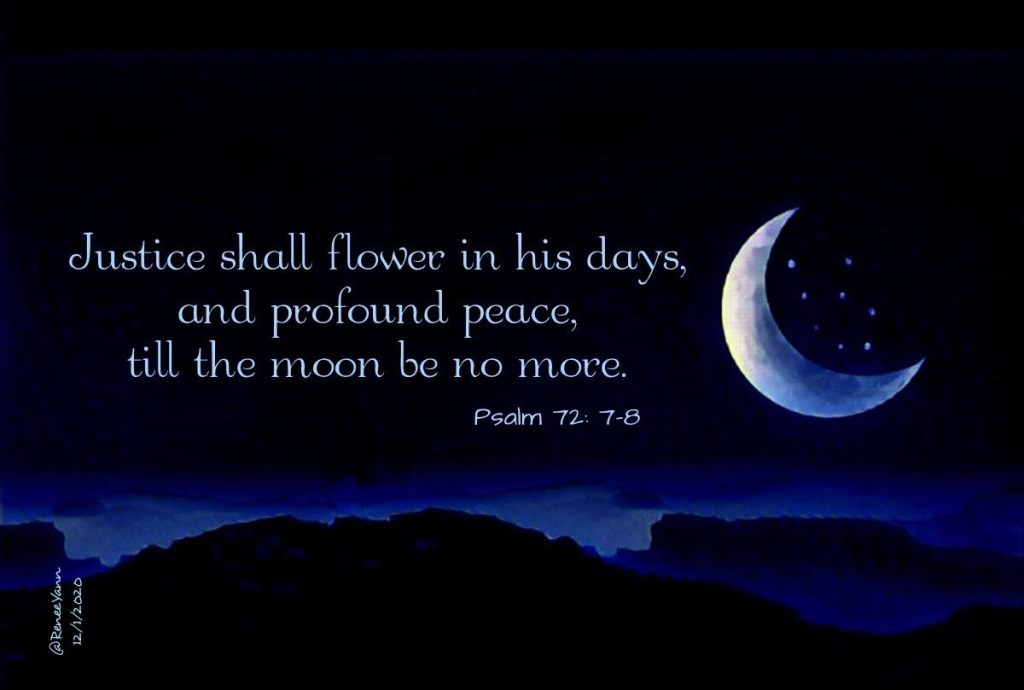
Justice shall flower in his days,
and profound peace, till the moon be no more.
May he rule from sea to sea,
and from the River to the ends of the earth.

Let us begin once again, in this new year,
to soak in the words and images
describing this longed-for and loving Savior.


Poetry: When Little Was Enough – Irene Zimmerman, OSF

(LUKE 9:10–17)

“Send the people away from this deserted place
to find food and lodgings,” the twelve urged Jesus,
“for the day is advanced and it is almost evening.”

Jesus looked at the crowd (there were about five thousand)
and looked at his disciples, still excited and tired
from their first mission journey.

What had they learned from the villagers of Galilee
who shared bread and sheltered them from cold night winds?
What had they learned of human coldness on the way?

He remembered the pain in his mother’s voice
as she told of his birth night when they found no room
in all of Bethlehem, House of Bread.

“You give them something to eat!” he said.

“We have only five loaves and two fish!” they protested.
“How can we feed so many with so little?”
He understood their incredulity.

They had yet to learn that a little was enough
when it was all they had—
that God could turn these very stones to bread.

“Have the crowd sit down in groups of fifty,” he said.
Jesus took the food and looked up to heaven.
He blessed it, broke it, gave it to the disciples
to distribute to the new-formed churches.

Afterwards, when everyone was satisfied,
the twelve filled twelve baskets of bread left over—
as faith stirred like yeast within them.


Music: Justice Shall Flourish – Rory Cooney

The Word

The Seventh Day in the Octave of Christmas

December 31, 2020

Today, in God’s Lavish Mercy, we pray with Psalm 96, which set the tone for us to more deeply appreciate our beautiful Gospel today on this New Year’s Eve.

The LORD comes,
comes to align the earth in Grace.
The LORD shall tender the world
with merciful justice
and the peoples with divine constancy.

Psalm 96: 13

Who is this Lord Who comes,
comes to each of us and all of us?

I think no one describes this mysterious, yet enfleshed, God more beautifully that the writer of John’s Gospel and Epistles.

For our prayer, let’s savor that beauty from today’s Gospel.

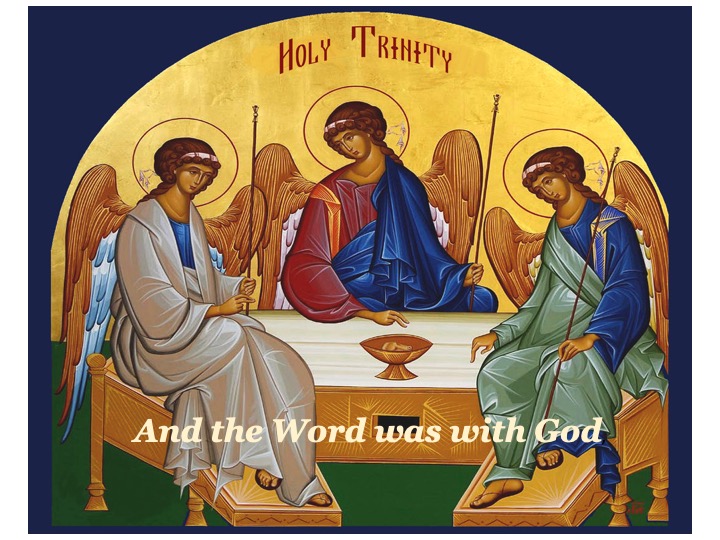
Click the little white triangle in the grey bar above to hear some lovely accompanying music
as you slowly move through the slides below by pressing the right arrow on the slide.

Poetry: a prayer from Hildegard of Bingen (1098–1179 – O Eternal Lord 

Dear Friends, perhaps we might pray Hildegard’s prayer for one another as we leave this painful year and move toward New Hope.

O eternal Lord,
it is pleasing to you
to burn in that same fire of love,
like that from which our bodies are born,
and from which you begot your Son
in the first dawn before all of Creation.
So consider this need which falls upon us,
and relieve us of it for the sake of your Son,
and lead us in joyous prosperity.

Psalm 34: The Reason

Tuesday of the Third Week of Advent

December 15, 2020


Today, in God’s Lavish Mercy, we pray with Psalm 34.

When I read its refrain, my mind was triggered into a kind of “Jeopardy-like” exchange with God:

Answer: This is the reason God sent his Son,
and continues to redeem the world in us.

Question : What is “The Lord hears the cry of the poor”.

Psalm 34 reiterates a fundamental fact so often overshadowed by our highly secularized “Christmas unconsciousness”. The psalm refocuses us by consistently using words like this:

  • Let my soul glory in the LORD;
    the lowly will hear me and be glad.
  • When the poor one called out, the LORD heard,
    and from all his distress he saved him.
  • When the just cry out, the LORD hears them,
    and from all their distress he rescues them.
  • The LORD is close to the brokenhearted;
    and those who are crushed in spirit he saves.

Christmas is God’s response to the unrelenting cry of the poor. If we want to truly honor and celebrate Christmas, we must allow that merciful and healing response to flow through us.

How and where do I hear the cry of the poor?
How do I respond?

Poetry: Blessed Are the Poor in Spirit Alice Walker (born February 9, 1944) is an American novelist, story writer, poet and social activist. In 1982, she wrote the novel The Color Purple for which she won the National Book Award hardcover fiction, and the Pulitzer Prize for Fiction.

Did you ever understand this? 
If my spirit was poor, how could I enter heaven? 
Was I depressed? 
Understanding editing,
I see how a comma, removed or inserted
with careful plan,
can change everything.
I was reminded of this
when a poor young man
in Tunisia
desperate to live
and humiliated for trying
set himself ablaze; 
I felt uncomfortably warm
as if scalded by his shame.
I do not have to sell vegetables from a cart as he did
or live in narrow rooms too small for spacious thought; 
and, at this late date,
I do not worry that someone will
remove every single opportunity
for me to thrive.
Still, I am connected to, inseparable from,
this young man.
Blessed are the poor, in spirit, for theirs is the kingdom of heaven.
Jesus. (Commas restored) .
Jesus was as usual talking about solidarity: about how we join with others
and, in spirit, feel the world, and suffering, the same as them.
This is the kingdom of owning the other as self, the self as other; 
that transforms grief into
peace and delight.
I, and you, might enter the heaven
of right here
through this door.
In this spirit, knowing we are blessed,
we might remain poor 

Music: The Lord Hears the Cry of the Poor – John Foley, SJ

Gaudete Sunday: Rejoice!

Third Sunday of Advent

December 13, 2020

The day takes its name from the Latin word Gaudete (“Rejoice”),
the first word of the Introit prayer for this day’s Mass taken from Philippians 4:
Gaudete in Domino semper: iterum dico, gaudete.
Rejoice in the Lord always; again I say, rejoice. 


Today, in God’s Lavish Mercy, we prayerfully rejoice with Mary’s courageous and hopeful song:

My soul proclaims the greatness of the Lord;
my spirit rejoices in God my Savior,
for he has looked upon his lowly servant.
From this day all generations will call me blessed.

Today is a break day midway through a season which is otherwise of a penitential character, and signifies the nearness of the Lord’s coming. On Gaudete Sunday, the Church is no longer inviting us to adore merely “The Lord who is to come”, but calling upon us to worship and hail with joy “The Lord who is now nigh and close at hand“.


While the whole Church is called this Sunday to rejoice in the approach of the Christ-event,  Mary’s Magnificat calls us to celebrate a specific “nearness” – God’s preferential affinity for those who are poor:

The Lord has filled the hungry with good things,
and sent the rich away empty.
He has come to the help of his servant Israel
remembering the promise of mercy.

The Gaudete message is not about a cheap and frenzied Christmas celebration. It is a profound reminder that Divine Joy seeks its home in a holy emptiness – in a heart space that has been reflectively cleared of spiritual arrogance.

His mercy is from age to age
to those who bow in awe.
He has shown might with his arm,
dispersed the arrogant of mind and heart.

Luke 150-51

How do we become, like Mary,
poor and humble before our God,
open to the Awesome Joy who is Christ?

We can pray according to Paul’s blessing to the Thessalonians in our second reading:

May the God of peace make us perfectly holy
and may we entirely, spirit, soul, and body,
be preserved blameless for the coming of our Lord Jesus Christ.
The One who calls us is faithful,
and will also accomplish it.


Poem: Heart Cave – Geoffrey Brown

I must remember to go down to the heart cave
And sweep it clean, make it warm, with fire on the hearth
And candles in their niches
The pictures on the walls glowing with quiet lights
I must remember to go down to the heart cave
And make the bed with the quilt from home
Strew rushes on the floor
And hang lavender and sage from the corners
I must remember to go down to the heart cave
And be there when you come.

Music: Gaudete – Steeleye Span 

This British folk rock group had a hit in 1973 (No. 14, UK singles chart) with an a cappella recording of the song. Guitarist Bob Johnson heard the song when he attended a folk-carol service with his father-in-law. 
This single is one of only three top 50 British hits to be sung fully in Latin (the others were both recordings of “Pie Jesu” from Andrew Lloyd Webber’s
Requiem)

Psalm 145:The Hint of God

Thursday of the Second Week of Advent

December 10, 2020


Today, in God’s Lavish Mercy, we pray with Psalm 145 in which the psalmist once again assures us that our God is 

The psalm extends the promises of our first reading from Isaiah:

The afflicted and the needy seek water in vain,
their tongues are parched with thirst.
I, the LORD, will answer them;
I, the God of Israel, will not forsake them.

Isaiah 41:17

We need promises like those of Isaiah and our psalmist, especially in times when we feel tested, alone, frightened, desperate, or abandoned. Even a taste of these radical emotions is hard to bear without some glimmer of promise.

Faith tells us that the Promise is already fulfilled in the Gift of Jesus Christ. 


Advent is our annual liturgical practice in waiting … in the recommitment

  • to a faith that cannot yet see,
  • to a hope that waits yet believes,
  • to a trust that praises even in the predawn shadows.

Advent is our promise to lean
on an invisible God. 

Christmas is the astounding Divine response –
Jesus Christ – God made visible.

Poetry: Paul’s great poem from Colossians 1: 15-23

Christ is the image of the invisible God,
the firstborn of all creation.

For in him were created all things in heaven and on earth,
the visible and the invisible,
whether thrones or dominions or principalities or powers;
all things were created through him and for him.i

He is before all things,
and in him all things hold together.

He is the head of the body, the church.
He is the beginning, the firstborn from the dead,
that in all things he himself might be preeminent.

For in him all the fullness was pleased to dwell,
and through him to reconcile all things for him,
making peace by the blood of his cross
whether those on earth or those in heaven.

Music: Immortal, Invisible, God Only Wise (1867) – Walter Chalmers Smith.
The original, beautiful final verses of this hymn have been lost in the English translation. Here they are, and worth their own meditation:

Great Father of glory, pure Father of light,
Thine angels adore Thee, all veiling their sight;
But of all Thy rich graces this grace, Lord, impart
Take the veil from our faces, the vile from our heart.
All laud we would render; O help us to see
’Tis only the splendour of light hideth Thee,
And so let Thy glory, Almighty, impart,
Through Christ in His story, Thy Christ to the heart.

Psalm 118: Inside the Gate

Memorial of Saint Francis Xavier, Priest

December 3, 2020


Today, in God’s Lavish Mercy,
we pray with Psalm 118
which describes the Lord’s strong city
and the gate which protects it.

Our opening passage from Isaiah exults in this Divine Strength, asking to be embraced  within its sacred space:

A strong city have we;
the Lord sets up walls and ramparts to protect us.
Open up the gates
to let in a nation that is just,
one that keeps faith.

Isaiah 26: 1-2

Jesus, in our Gospel, tells us that inclusion in the sanctuary must be merited by those who understand that God’s Will is for justice over all Creation:

Not everyone who says to me, ‘Lord, Lord,’
will enter the Kingdom of heaven,
but only the one who does the will of my Father in heaven.

Matthew 7: 21

Thus we, longing to be among the included, we pray this Advent psalm:

Open to me the gates of justice;
I will enter them and give thanks to the LORD.
This gate is the LORD’s;
the just shall enter it.
I will give thanks to you, for you have answered me
and have been my savior.

Psalm 118: 19-21

As I meditate on these thoughts, our Motherhouse property offers many “icons” to reflect upon the concept of the “gate”. The entire campus is enclosed by various types of fencing or walls. There are four gates through which one may pass into the complex.

early photo of Motherhouse main gate , Montgomery County Historical Society. The open gate is barely visible against the small pine tree on the left of the opening.

I imagine that, when first installed, these great gates offered a more formidable enclosure than they do today. Only the wrought iron hinges remain of the main gate’s  double swing panels. Yet these, driven into imposing stone pillars, still suggest the firm purpose to create a sacred space.

You will notice the open gate just under the right side of the big tree

Inside the property, another wrought iron enclosure surrounds the community cemetery. This fence’s two gates are usually open, demonstrating that their purpose too is not security but rather sacred designation.

These venerable gates, rather than castle-like ramparts, are more like torii, those traditional Japanese gates found at the entrance or within a Shinto shrine where they symbolically mark the transition from the mundane to the sacred.

The famous torii at Itsukushima Shrine, Hiroshima, Japan

During Advent, we slowly pass through such a sacred symbolic gate, once again entering the holy mystery who is Jesus Christ. We pray to be transformed, not simply by the retelling of his story, but by the Living Grace he is for us in our own lives.

With today’s powerful readings, we pray to enter more deeply into that Mystery.


Poetry: Endless Time – Tagore

Time is endless in thy hands, my lord.
There is none to count thy minutes.
Days and nights pass and ages bloom and fade like flowers.

Thou knowest how to wait.
Thy centuries follow each other perfecting a small wild flower.

We have no time to lose,
and having no time we must scramble for a chance.
We are too poor to be late.

And thus it is that time goes by
while I give it to every querulous person who claims it,
and thine altar is empty of all offerings to the last.

At the end of the day I hasten in fear lest thy gate be shut;
but I find that yet there is time.

Music: Huanqiutan Garden – Oliver Shanti 

Psalm 23: Awake to the Feast

Wednesday of the First Week of Advent

December 2, 2020


Today, in God’s Lavish Mercy, we pray with Psalm 23. On this first Wednesday of Advent, our psalm is set between two eloquent readings about the full satisfaction of our soul’s hungers.

Isaiah blesses us with his metaphor for Heaven’s abundance, when our souls will be filled to a divine capacity of grace.

In a world already redeemed, Isaiah’s vision has been fulfilled. We live our lives already seated at the banquet he describes.

But do we realize it? Do we partake every moment in the outpouring of grace given us by our Baptism into Christ?

Unaware, many of us sit at the table starving.

In our Gospel, Jesus sees the deeper hungers of the fatigued crowd. His miracle feeds their bodies but, more importantly, awakens their souls to see him as the fulfillment of God’s promise. Isaiah’s prophecy is accomplished in Jesus:

On that day it will be said:
Behold our God, to whom we looked to save us!
This is the LORD for whom we looked;
let us rejoice and be glad that he has saved us!”
For the hand of the LORD will rest on this mountain.

Isaiah 26:9-10

As we read Psalm 23 today, let’s allow its consoling verses to become our prayer of trust and gratitude for God’s “already presence” in our lives. Like the crowd awakened by Jesus’s miracle, let us open our eyes to the infinite grace spread before us, though wrapped sometimes in the mundane circumstances of our lives.


Poetry: Joy Harjo – Perhaps the World Ends Here

The world begins at a kitchen table. No matter what, we must eat to live.

The gifts of earth are brought and prepared, set on the table. So it has been since creation, and it will go on.

We chase chickens or dogs away from it. Babies teethe at the corners. They scrape their knees under it.

It is here that children are given instructions on what it means to be human. We make men at it, we make women.

At this table we gossip, recall enemies and the ghosts of lovers.

Our dreams drink coffee with us as they put their arms around our children. They laugh with us at our poor falling-down selves and as we put ourselves back together once again at the table.

This table has been a house in the rain, an umbrella in the sun.

Wars have begun and ended at this table. It is a place to hide in the shadow of terror. A place to celebrate the terrible victory.

We have given birth on this table, and have prepared our parents for burial here.

At this table we sing with joy, with sorrow. We pray of suffering and remorse. We give thanks.

Perhaps the world will end at the kitchen table, while we are laughing and crying, eating of the last sweet bite.

Music: Psalm 23 – Stuart Townend

Psalm 19: God’s Two Great Books

Feast of Saint Andrew, Apostle

November 30, 2020


My niece Maureen took this picture at the Biltmore in Asheville, NC

Today, in God’s Lavish Mercy, we pray with Psalm 19 which, according to the famous Baptist preacher Charles Spurgeon, is “the study of God’s two great books—nature and Scripture”.

The verses chosen for today’s Responsorial focus on the Law as we receive it in the words of Scripture.

The law of the LORD is perfect,
refreshing the soul;
The decree of the LORD is trustworthy,
giving wisdom to the simple.

Psalm 19:8

St. Andrew, whose feast we celebrate today, was a simple fisherman made wise by the Living Word of God. He received the Gospel as it was first uttered in the life and preaching of his dear friend Jesus.

DUCCIO DI BUONINSEGNA
The Calling of the Apostles Peter and Andrew, 1308-1311

Andrew decided to retell that precious Word in his own life and preaching.

He joyfully accepted the call to radical discipleship, allowing his inner vision to be enlightened by the Christ’s vision for the world.

The precepts of the LORD are right,
rejoicing the heart;
The command of the LORD is clear,
enlightening the eye.

Psalm 19: 9

Andrew’s whole life and death gave witness to his total investment in God’s Word. That apostolic commitment sweetened not only Andrew’s life, but the life of the whole faith community to whom he transmitted the Living Word… including us.

Your words, Lord, are Spirit and life.
They are more precious than gold,
than a heap of purest gold;
Sweeter also than syrup
or honey from the comb.

Psalm 19: 10;11

Let’s pray this Psalm today
with a simplicity and faith like Andrew’s.


Prayer: from daily-prayers.org

O Glorious St. Andrew,
you were the first to recognize and follow the Son of God.
With your friend, St. John,
you remained with Jesus,
for your entire life,
and now throughout eternity.
Just as you led your brother, St Peter,
to Christ and many others after him,
draw us also to Him.
Teach us how to lead them,
solely out of love for Jesus
and dedication to His service.
Help us to learn the lesson of the Cross
and carry our daily crosses without complaint,
so that they may carry us to God the Almighty Father. Amen.

Music: from Bach – Die Himmel erzählen die Ehre Gottes, BWV 76

 Chor

Die Himmel erzählen die Ehre Gottes, 

und die Feste verkündiget seiner Hände Werk. 

Es ist keine Sprache noch Rede, 

da man nicht ihre Stimme höre.

(Psalm 19:2,4)

Chorus

The heavens declare the glory of God, 

and the firmament shows His handiwork. 

There is no speech or language, 

since one does not hear their voices.