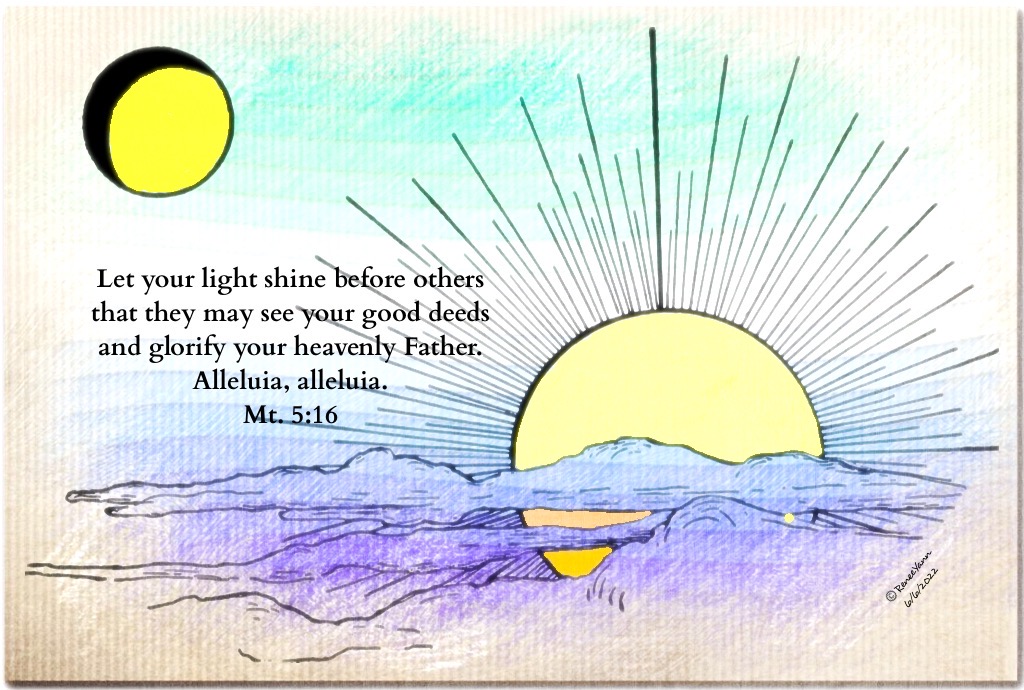
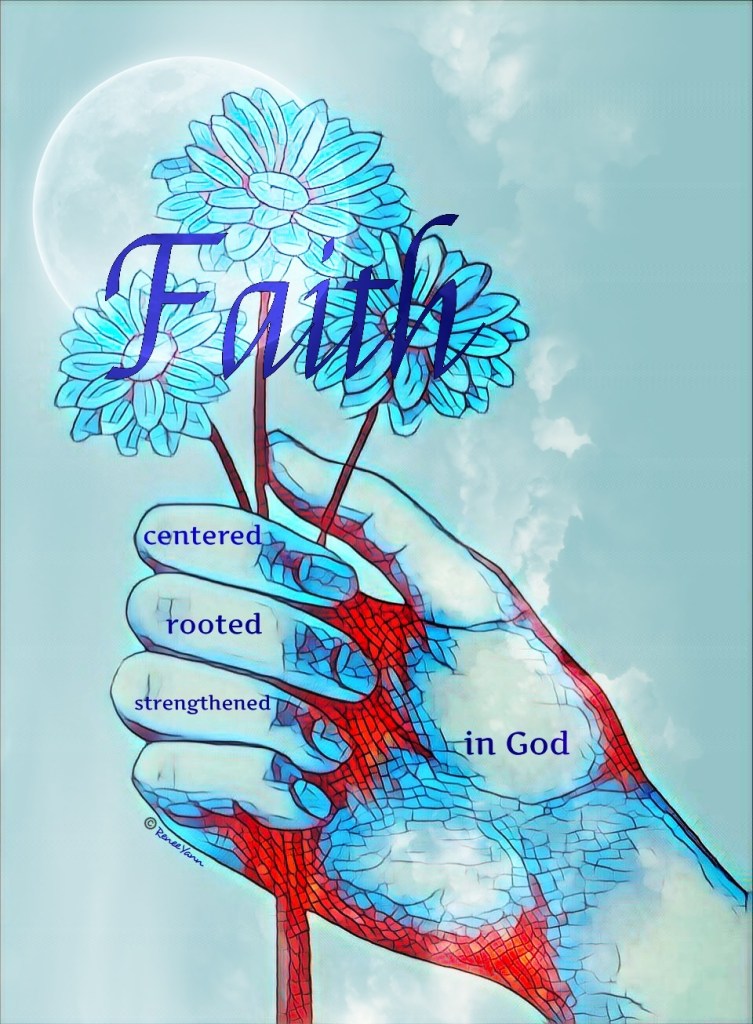
Alleluia: Just Shine

Friday of the Tenth Week in Ordinary Time
June 10, 2022
Today, in God’s Lavish Mercy, our Alleluia Verse gives us a powerful encouragement– “Shine”. That’s it – just shine because the Word of God has charged you with Light and Life.

Alleluia, alleluia.
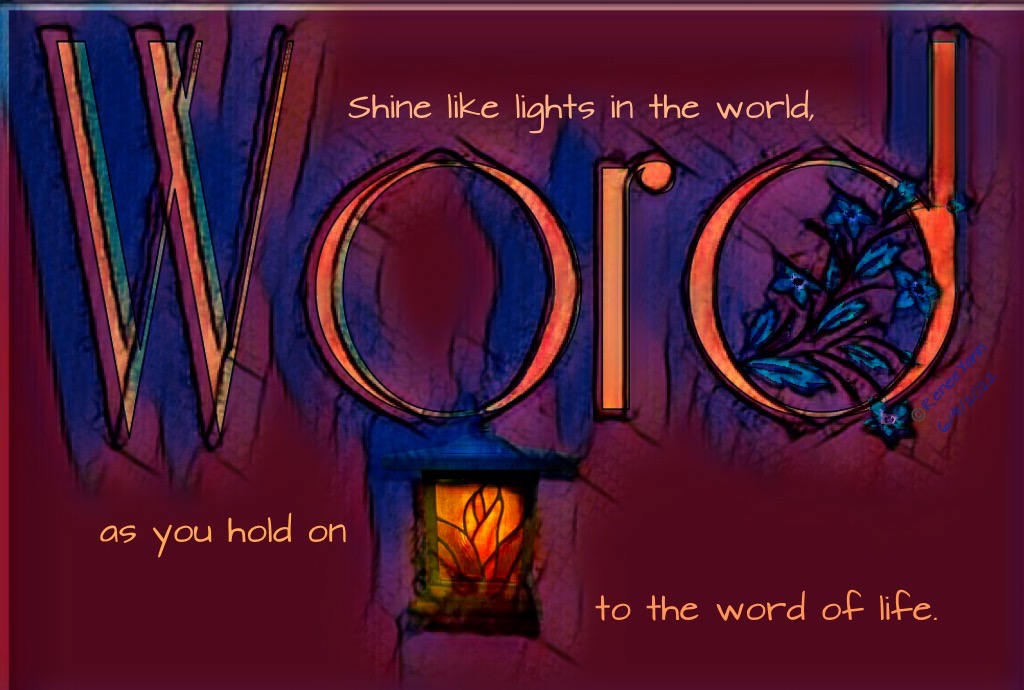
Shine like lights in the world,
as you hold on to the word of life. ( Phil. 2:15-16)

As our verse so clearly indicates, the more we absorb the beauty of the scriptures into our hearts, the more we shine.

And it’s not just about reading the Bible. It’s about sitting down with the Word just like we would with an old and dear friend. It’s listening, not only to what is said, but the immensity that is unsaid or whispered – both by the scriptures and by our own self-examination.

It is taking what our heart hears and letting it change or deepen our lives. It is letting go of so much that doesn’t matter in order to hold on the the Word that does matter.

It is becoming a sanctuary where others see that Word shining and are strengthened.

May we shine with a Holy Light that draws others to God’s Brilliant Love.

Poetry: I found this little poem on the internet, author unknown. I think it works for today’s meditation.

You don’t have to tell how you live each day;
You don’t have to tell if you work or play;
A tried and true barometer stands in its place—
You don’t have to tell, it will shine in your face. …
If you live close to God and God’s infinite grace—
You won’t have to tell, it will shine in your face.

Music: Walk in the Beautiful Light

I think this video is amazing. The hymn is being sung by a German speaking choir!

(Lyrics below — I especially like those “dewdrops of mercy”)

Walk in the light, beautiful light,
come where the dewdrops of mercy shine bright.
Oh shine all around us by day and by night,
Jesus is, Jesus is the light of the world;

Oh we shall walk in the light, beautiful light,
come where the dewdrops of mercy shine bright.
Oh shine all around us by day and by night,
Jesus is, Jesus is the light of the world;

No need to worry, no need to fret,
all of my needs, the man named Jesus has met.
His love protects me from hurt and from harm,
Jesus is, Jesus is the light of the world.

If the gospel be hid, it’s hid from the lost,
my Jesus is waiting to look past your faults.
Arise and shine, your light has come,
Jesus is, I know that He is the only light of this world.

Jesus is the light,
light of the world.

Jesus is the light,
light of the world.

Jesus is the light,
light of the world.

He’s ever shining in my soul.
Alleluia: Be Light!

June 7, 2022
Tuesday of the Tenth Week in Ordinary Time

Today, in God’s Lavish Mercy, we come back to the shore of Ordinary Time. Fresh off the glorious voyage with Jesus through Lent, Holy Week, Eastertide and Pentecost, we arrive grace-filled for the ordinary days of our lives.

( During this next Liturgical Season, I would like to focus us on our Alleluia Verse each day.  This short snippet of scripture serves like a doorman opening the way into our Gospel for the day. It helps us to focus on a truth that might be most meaningful in the sacred Word awaiting us. It alerts us that Jesus wants to speak to us, and it gives us a hint of what He might want to say.

Of course, we do not read the Alleluia Verse in isolation, but rather in the context of the lessons of our first reading and the reinforcements of our daily psalm. But it still might help us to take the small gem of the Alleluia Verse and hold it up to a longer, more reflective light.

For those who wish to meditate further on the readings or Psalm, I will try each day to give you links to earlier reflections on these readings, as you see with the buttons above.)


Today’s verse is an invitation to the light and energy of the Holy Spirit.
It is a call to be like suns and stars in the world’s shadows.
It is a reminder that we are satellites circling God’s Brillance …
that the brightness we reflect is a sprinkling of Divinity…
that no shadow can withstand our “Alleluia ”.

So if we are brave, let’s look in the mirror each morning,
maybe after a cold splash and a sip of coffee
and let’s tell ourselves the amazing truth:
“You are called to be Light in the darkness.”

That darkness takes the form of the obvious evils of our times:
war, violence, hatred, rampant militarism
and all other forms of contempt for another’s life.

But it comes in subtler patterns as well
that may be harder to discern in ourselves.

To name just a few – the infamous “ins” such as:

  • Intemperance
  • Ingratitude
  • Insincerity
  • Injustice
  • inaction
  • and I think, worst of all, Indifference

May we invite and welcome the
“Alleluia Light”
into our every darkness.
Amen.


Poetry: Bearing the Light – Denise Levertov

Rain-diamonds, this winter morning, 
embellish the tangle of unpruned pear-tree twigs; 
each solitaire, placed, it appears, with considered judgement, 
bears the light beneath the rifted clouds - 
the indivisible shared out in endless abundance.

Music: Be a Light – Thomas Rhett

Giving or Grabbing?

February 12, 2022
Saturday of the Fifth Week in Ordinary Time

Today, in God’s Lavish Mercy, our readings stand in stark contrast to each other.

In our first reading, we meet the two adversarial kings of the now split kingdom of Israel – so cooly named King Rehoboam and King Jeroboam. They were grasping, grabbing and trying to hold on to power over each other’s terrain. Using idols, Jeroboam tried to lure the people away from their covenanted practice of going up to Jerusalem to worship.


Our Gospel demonstrates that Jesus is a very different kind of king. His concern is for the wholeness of his people, not for the increase of his own power and standing.

Jesus summoned the disciples and said,
“My heart is moved with pity for the crowd,
because they have been with me now for three days
and have nothing to eat.
If I send them away hungry to their homes,
they will collapse on the way,
and some of them have come a great distance.”

Matthew 8:1-4

This morning I can’t help thinking that many of us have come a long way with Jesus too. But still we find ourselves in spells of hunger — hungers of all kinds. Jesus sees our true needs, has compassion for, and presence with us in the pangs of any human experience.

He ordered the crowd to sit down on the ground.
Then, taking the seven loaves he gave thanks, broke them,
and gave them to his disciples to distribute,
and they distributed them to the crowd.

Matthew 8: 6

Let’s just sit down with Jesus today as we pray, laying out before him our deepest hungers, worries, regrets, doubts and hopes. Let’s wait for the gift of God’s beautiful and miraculous Bread – broken for each one of us.

Poetry: Gratitude – Henry Van Dyke

“Do you give thanks for this? — or that?”
No, God be thanked
I am not grateful
In that cold, calculating way, with blessing ranked
As one, two, three, and four, — that would be hateful.

I only know that every day brings good above”
My poor deserving;
I only feel that, in the road of Life, true Love
Is leading me along and never swerving.

Whatever gifts and mercies in my lot may fall,
I would not measure
As worth a certain price in praise, or great or small;
But take and use them all with simple pleasure.

For when we gladly eat our daily bread, we bless
The Hand that feeds us;
And when we tread the road of Life in cheerfulness,
Our very heart-beats praise the Love that leads us.

Music: Bread of Life – rory Cooney

I myself and the bread of life.
You and I are the bread life,
Taken and blessed,
Broken and shared by Christ that the world might live.

This bread is spirit, gift of the maker’s love,
And we who share it know we can be one:
A living of God in Christ.

I myself and the bread of life.
You and I are the bread life,
Taken and blessed,
Broken and shared by Christ that the world might live.

Here is God’s kingdom given to us as food.
This is our body, this is our blood:
A living sign of God in Christ.

I myself and the bread of life.
You and I are the bread life,
Taken and blessed,
Broken and shared by Christ that the world might live.

Lives broken open, stories shared aloud,
Become a banquet, a shelter for the world:
A living sign of God in Christ.

I myself am the bread of life.
I myself am the bread of life

David, the King

January 24, 2022
Monday of the Third Week in Ordinary Time
Memorial of Saint Francis de Sales, Bishop and Doctor of the Church

Today, in God’s Lavish Mercy, our readings place us at watershed moments in the lives of David and Jesus.

All the tribes of Israel came to David in Hebron and said:
“Here we are, your bone and your flesh.
In days past, when Saul was our king, 
it was you who led the children of Israel out and brought them back.
And the LORD said to you, ‘You shall shepherd my people Israel 
and shall be commander of Israel.’”
When all the elders of Israel came to David in Hebron, 
King David made an agreement with them there before the LORD, 
and they anointed him king of Israel.

2 Samuel 5:1-4

In 2 Samuel 5, David fully assumes the kingship through the approbation of the community. The scene marks the culmination of his rise to power and “the beginning of the rest of his life”.

Through our readings in Samuel until now, we have ascended with David to the pinnacle of his life. We are about to begin weeks of moving down “the other side of the mountain”.


Scholars generally see the David narrative in two primary units, the Rise of David (I Sam. 16:1—II Sam. 5:10) and the Succession Narrative (II Sam. 9:1—20:26; I Kings 1:1—2:46). Chapters 5:11—8:18, fall between two larger units. Whereas the first presents David in his ascendancy, the second presents David in his demise and expresses pathos and ambiguity. Our chapters thus come after the raw vitality of the rise of David and before the terrible pathos of the succession narrative. They show the painful process whereby this beloved chieftain is transformed into a hardened monarch, who now has more power than popular affection.

Walter Brueggemann, First and Second Samuel

In our Gospel, Jesus also comes to a sort of “continental divide”. But rather than community approbation, Jesus encounters the condemnation of the scribes who have come from Jerusalem to assess him.

The scribes who had come from Jerusalem said of Jesus, 
“He is possessed by Beelzebul,” and
“By the prince of demons he drives out demons.”

Mark 3:22

From this moment in his life, Jesus too launches into his “kingship”, one that looks very different from David’s. The ensuing chapters of Samuel will reveal how David struggles and succumbs to the temptations of power and domination. The Gospels, on the other hand, describe Jesus’s “kingdom” as one of humility, mercy, and love for those who are poor and suffering.

Only through faith can we understand the inverse power of God present in the Life, Death and Resurrection of Jesus, and in our own lives. Jesus, the “new David”, is anointed in the Spirit to reveal and incorporate us into the kingdom of God.


Prose: from Immanuel Jakobovits who was the Chief Rabbi of the United Hebrew Congregations of the Commonwealth from 1967 to 1991.

To those without faith
there are no answers.
To those with faith, 
there are no questions.

Music: King David, music by Herbert Howells, sung by Sarah Connolly from a poem by Walter de la Mare

King David – Walter de la Mare

King David was a sorrowful man:
    No cause for his sorrow had he;
    And he called for the music of a hundred harps,
    To ease his melancholy.

    They played till they all fell silent:
    Played-and play sweet did they;
    But the sorrow that haunted the heart of King David
    They could not charm away.

    He rose; and in his garden
    Walked by the moon alone,
    A nightingale hidden in a cypress-tree
    Jargoned on and on.

    King David lifted his sad eyes
    Into the dark-boughed tree-
    ''Tell me, thou little bird that singest,
    Who taught my grief to thee?'

    But the bird in no wise heeded
    And the king in the cool of the moon
    Hearkened to the nightingale's sorrowfulness,
    Till all his own was gone.

David’s Keening

January 22, 2022

Today, in God’s Lavish Mercy, our readings center on the themes of grief, honor, and mercy.

In the passage from 2 Samuel, Saul has been killed in battle. The news is brought to David by a scheming Amalekite who (later verses reveal) hopes to profit from his enterprise. He has stripped Saul’s dead body of its kingly insignia, obsequiously depositing it at David’s feet. The messenger expects David’s vengeful rejoicing and a hefty reward.

Instead David, with reverence and honor appropriate to a future king, launches a deep public mourning for Saul and Jonathan. It is a bereavement necessary to both cleanse and heal the community’s heart from all the strife leading up to it.

David seized his garments and rent them, 
and all the men who were with him did likewise.
They mourned and wept and fasted until evening 
for Saul and his son Jonathan, 
and for the soldiers of the LORD of the clans of Israel, 
because they had fallen by the sword.

2 Samuel 1:11-12

David’s lament is profound; it is”splancha”, sprung from his innards, like the anguish Jesus felt for the suffering persons he encountered, as described in our Gospel.

A callous or indifferent heart cannot comprehend such pathos. Seeing it in Jesus, even his relatives thought him insane!

Jesus came with his disciples into the house.
Again the crowd gathered,
making it impossible for them even to eat.
When his relatives heard of this they set out to seize him, 
for they said, “He is out of his mind.” 

Mark 3:20-21

Our God is a God of boundless love
and impractical mercy.
David models a bit of that godliness.
Jesus is its complete Incarnation.

Poem:  David and Jonathan by Abraham Crowley, an English poet born in the City of London in 1618. He was one of the leading English poets of the 17th century.

Still to one end they both so justly drew,
As courteous Doves together yok'd would do.
No weight of Birth did on one side prevaile,
Two Twins less even lie in Natures Scale,
They mingled Fates, and both in each did share,
They both were Servants, they both Princes were.
If any Joy to one of them was sent;
It was most his, to whom it least was meant,
And fortunes malice betwixt both was crost,
For striking one, it wounded th'other most.
Never did Marriage such true Union find,
Or mens desires with so glad violence bind;
For there is still some tincture left of Sin,
And still the Sex will needs be stealing in.
Those joys are full of dross, and thicker farre
These, without matter, clear and liquid are.
Such sacred Love does he'avens bright Spirits fill,
Where Love is but to Understand and Will,
With swift and unseen Motions; such as We
Somewhat express in heightned Charitie.
O ye blest One! whose Love on earth became
So pure that still in Heav'en 'tis but the same
There now ye sit, and with mixt souls embrace,
Gazing upon great Loves mysterious Face,
And pity this base world where Friendship's made
A bait for sin, or else at best a Trade.

Music: Lascia Ch’io Pianga (Let Me Weep)- Georg Frideric Handel – a single piece of beautiful music today in two version, an aria and an instrumental interpretation.

Julia Lezhneva – soprano


Stjepan Hauser – cellist

Lascia ch’io pianga
la cruda sorte,
e che sospiri
la libertà.
Il duolo infranga
queste ritorte
de’ miei martiri
sol per pietà.

Let me weep
cruel fate,
and sigh for
liberty.

May sorrow break
these chains
Of my sufferings,
for pity’s sake.

Sunset for Saul

January 21, 2022
Memorial of Saint Agnes, Virgin and Martyr
Friday of the Second Week in Ordinary Time

Today, in God’s Lavish Mercy, our readings are full of drama and meaning enveloped in two of the greatest speeches of the Hebrew Scriptures – one from David, the other from Saul. The use of speeches to unfold the narrative is characteristic of the high points of Scripture. And these are two winners.

In the passage from Samuel, David spares Saul’s life even though Saul is in murderous pursuit of him. The result is the final dissolution of Saul’s kingship. It is a scene that could be right out of MGM! (Here is a video for kids featuring the moment. But I thought it was pretty cool. Maybe you will too.)

Is David noble or naïve? Is he magnanimous or stupid? Is he sincere or clever? Various scripture scholars interpret these passages in a host of ways. But as I pray this morning, I ask myself what it is that God might be saying to me through this passage.

Two things rise up:

  1. Above all else, David is motivated by a deep respect for God’s Will and Presence in his life. He doesn’t force God’s Will by seizing the kingship. David waits and listens for God’s intention.

David said to his men,
“The LORD forbid that I should do such a thing to my master,
the LORD’s anointed, as to lay a hand on him,
for he is the LORD’s anointed.”

    2.  David engages Saul directly and respectfully, perhaps in the hope of reaching a resolution of their issues. This honesty appears to motivate Saul to see himself and his situation clearly. It is a consummate act of reconciliation.

When David finished saying these things to Saul, Saul answered,
“Is that your voice, my son David?”
And Saul wept aloud.


Reverence and honesty rooted in
sincere love and respect for one another!
What a world we would live in
if each of us practiced these things unfailingly!

In our Gospel, Jesus calls his disciples to live in the world in just such a way – to bring healing and wholeness in the Name of Christ, for the sake of Love.

Our Alleluia Verse today captures the essence of Christ’s call to them —- and to us:

God was reconciling the world to himself in Christ,
and entrusting to us the message of that reconciliation.


Poetry: Saul And David by Anthony Hecht, 1923 – 2004, was an American poet. His work combined a deep interest in form with a passionate desire to confront the horrors of 20th century history, with the Second World War, in which he fought, and the Holocaust being recurrent themes in his work.

It was a villainous spirit, snub-nosed, foul
Of breath, thick-taloned and malevolent,
That squatted within him wheresoever he went
…….And possessed the soul of Saul.

There was no peace on pillow or on throne.
In dreams the toothless, dwarfed, and squinny-eyed
Started a joyful rumor that he had died
…….Unfriended and alone.

The doctors were confounded. In his distress, he
Put aside arrogant ways and condescended
To seek among the flocks where they were tended
…….By the youngest son of Jesse,

A shepherd boy, but goodly to look upon,
Unnoticed but God-favored, sturdy of limb
As Michelangelo later imagined him,
…….Comely even in his frown.

Shall a mere shepherd provide the cure of kings?
Heaven itself delights in ironies such
As this, in which a boy’s fingers would touch
…….Pythagorean strings

And by a modal artistry assemble
The very Sons of Morning, the ranked and choired
Heavens in sweet laudation of the Lord,
…….And make Saul cease to tremble.

Music: To Fill the World with Love sung by Richard Harris
(Lyrics below, but you will no doubt recall them from the fabulous film “Goodbye Mr. Chips”.)

In the morning of my life I shall look to the sunrise.
At a moment in my life when the world is new.
And the blessing I shall ask is that God will grant me,
To be brave and strong and true,
And to fill the world with love my whole life through.

(Chorus)
And to fill the world with love
And to fill the world with love my whole life through

In the noontime of my life I shall look to the sunshine,
At a moment in my life when the sky is blue.
And the blessing I shall ask shall remain unchanging.
To be brave and strong and true,
And to fill the world with love my whole life through

(Chorus)

In the evening of my life I shall look to the sunset,
At a moment in my life when the night is due.
And the question I shall ask only God can answer.
Was I brave and strong and true?
Did I fill the world with love my whole life through?

Faith’s Adventure

January 19, 2022
Wednesday of the Second Week in Ordinary Time

Today, in God’s Lavish Mercy, our readings present to us a faith that is

Centered
Rooted
Strengthened
in God

The first reading has the making of a powerful action-adventure movie. Picturing young David facing the mighty giant might bring to mind images like Robin Hood and Indiana Jones.

We are now at David’s third point of entry into Israel’s narrative. Already he has been secretly anointed (16:1–13), and privately received by Saul (16:19–23). This story of David in chapter 17 is the best known of the David stories. Though the narrative may have had a complex prehistory, it now is a powerful, well-crafted narrative capable of sustaining our interest and imagination through its long telling. The story, deliberately paced, draws us slowly and steadily into the moment of high tension. It then resolves the tension quickly in the killing of the Philistine.

Walter Brueggemann: First and Second Samuel: Interpretation -A Biblical Commentary for Teaching and Preaching

David and Goliath – Guillaime Courtois

These chapters in Samuel offer a compelling story, masterfully written to impress itself on the readers’ minds. But unlike our action-adventure films, the purpose is not to entertain.

The purpose of the David-Goliath story is to teach Israel and us that:

  • faith places God at the center of all experience
  • faith is rooted in complete trust
  • faith is stronger than any fear or threat

David, the pure-hearted and faithful one, then uses his gifts and intelligence to accomplish his mission.


In our prayer today, we might talk with God about our own faith – its centeredness, roots and strength. May we too, like the person in Mark’s Gospel, stretch out to God’s healing power anything that might be withering in us.


Poetry: Five Smooth Stones – Eric K. Carr

Five smooth stones
The future king
Chose
As his arsenal
Against the giant

I have thrown far more
Into the goliaths of the future
Skipping across ponds
Of sure uncertainty
Hoping they may sink
Into pools of grace
Or at least a life well lived
And that my children
Will know they are loved
Through
And beyond 
Each missile’s reach


Music: God of the Impossible – Everfound

Just a boy with a sling and a stone,
But the heart of a lion dared him to go.
To hear the sound of the cynical,
Die out with the sound of the giant’s fall.
Ohhh, oh ohh!
I dare to believe in incredible things.
Ohhh, oh ohh!
I’m ready to go, I’m ready to gooo-oh!
Here I am! Lord send me!
I won’t look back, cause I was made
To be a part, of the, imposs-ible!
You’re God, of the, imposs-ible!
Here I am! Lord send me!
I won’t back down, cause I believe
You are the God, of the, imposs-ible!
Here, I, am, send me!
Empty bones and a thirsty soul,
Dreamin’ for more than the life I have known.
‘Til I tasted a burning coal,
And my guilt was erased, and my sin was atoned!
Ohhh, oh ohh!
I dare to believe in incredible things.
Ohhh, oh ohh!
I’m ready to go, I’m ready to gooo-oh!
Here I am! Lord send me!
I won’t look back, cause I was made
To be a part, of the, imposs-ible!
You’re God, of the, imposs-ible!
Here I am! Lord send me!
I won’t back down, cause I believe
You are the God, of the, imposs-ible!
Here, I, am, send me!
Ohhh, oh ohh!
I dare to believe in incredible things.
Ohhh, oh ohh!
Cause you’re the God of the impossible.
Ohhh, oh ohh!
I dare to believe in incredible things.
Ohhh, oh ohh!
I’m ready to go, I’m ready to gooo-oh!
Here I am! Lord send me!
I won’t look back, cause I was made
To be a part, of the, imposs-ible!
You’re God, of the, imposs-ible!
Here I am! Lord send me!
I won’t back down, cause I believe
You are the God, of the, imposs-ible!
Here, I, am, send me!
Send me!

Let God…

January 18, 2022
Tuesday of the Second Week in Ordinary Time

Today, in God’s Lavish Mercy, three themes suggest themselves for our prayerful consideration. At various points in our spiritual lives we are called to:

Release what binds us
Reorient to what is good
Recommit to hope and promise

Our first reading begins the narrative of David, key figure of the Hebrew Scriptures and the archetype king who prefigured the Messiah.

Release
We read about Samuel’s commission to find a new kingly candidate and to anoint him. This is a big deal for Samuel, who first has to release his dream for Saul in whom he had misplaced his hope:

The LORD said to Samuel:
“How long will you grieve for Saul,whom I have rejected as king of Israel?


Reorient
God, Who already has a plan, encourages Samuel to pursue a new path:

Fill your horn with oil, and be on your way.
I am sending you to Jesse of Bethlehem,
for I have chosen my king from among his sons.


Recommit
In a memorable series of attempts, Samuel tries to figure out who it is that God has set the kingly choice upon. After seven “not him”s, David appears – the unlikeliest of all the sons:

Then Samuel, with the horn of oil in hand,
anointed him in the midst of his brothers;
and from that day on, the Spirit of the LORD rushed upon David. 
When Samuel took his leave, he went to Ramah.


Throughout this entire process, God is at the wheel. Samuel’s job — and Jesse’s, and David’s, and the unchosen brothers— is to listen, hear, and respond even to the unlikely and improbable.

Believe it or not, he will be King!

The lesson, perhaps, for us: God is at the wheel in our lives too. Of course, we will have failures. Often, we will miss the “holy point”. But God is always with us, reiterating faith’s promise and inspiring a new path to its fulfillment.


Poetry: Let God – Meister Eckhart

Let God work in you,
give the work to God,
and have peace.
Don’t worry if God works
through your nature
or above your nature,
because both are God’s,
nature and grace.

Music: Meditation – Yuhki Kuramoto

Faithful Heart

January 17, 2022
Monday of the Third Week in Ordinary Time
Memorial of Saint Anthony. Abbot

Today, in God’s Lavish Mercy, our readings help us understand the basic process for spiritual growth – the evolution from self-centered practice to God-centered faith.

The passages highlight three elements of a deeply faithful life:

Obedience – a listening heart
Discipline – a right heart
Freedom – a selfless heart

Obedience – The Listening Heart

In our first reading, Saul has fulfilled all God’s commands regarding the mission against the Amalekites – but he has still missed the point. Saul was given a divine mandate through Samuel to completely destroy the Amalekites. Instead, Saul kept the plunder, using some as a burnt sacrifice to God.

According to Samuel, Saul messed up big time. He had an unlistening heart. God didn’t want sacrifice, but rather a fully listening obedience.

But Samuel said:
            “Does the LORD so delight in burnt offerings and sacrifices
            as in obedience to the command of the LORD?
            Obedience is better than sacrifice,
                        and submission than the fat of rams.
            For a sin like divination is rebellion,
                        and presumption is the crime of idolatry.
            Because you have rejected the command of the LORD,
                        the LORD too, has rejected you as ruler.”

1 Samuel 15: 22-23

Discipline – The Right Heart

Our Responsorial Psalm continues the theme:

Why do you recite my statutes,
            and profess my covenant with your mouth,
Though you hate discipline
            and cast my words behind you?”…

The ones that offers praise as a sacrifice glorifies me;
            and to them that go the right way I will show the salvation of God

Psalm 50: 16-17;23

Freedom – The Selfless Heart

Mark’s Gospel complements the lessons of our first two readings. It paints a joyful picture of Jesus and his disciples. 

They are in the “salad days” of Christ’s earth-shaking ministry. Listening to Jesus, these disciples are in the Presence of a new and radical Truth. They fill their hearts and minds with its transformative power. Cherishing God’s Presence with them allows the disciples to release a inner love and generosity to fuel their ministry.

The nosy Pharisees, seeing all this joyful exuberance, question their unpenitential attitude:

The disciples of John and of the Pharisees were accustomed to fast.
People came to Jesus and objected,
“Why do the disciples of John and the disciples of the Pharisees fast,
 but your disciples do not fast?”

MARK 2:18

Does all this mean that there is never a time in the spiritual life for sackcloth, ashes and fasting? No – even Jesus didn’t say that:

Jesus answered the Pharisees,
“Can the wedding guests fast while the bridegroom is with them?
As long as they have the bridegroom with them they cannot fast.
But the days will come when the bridegroom is taken away from them,
and then they will fast on that day.

Mark 2:20

What I think it does mean is that a healthy spiritual life is centered on the Presence of God with us, not the absence. There are times when we should take stock of those “absences” and open them to repentance and healing. But then our spiritual energy should be turned to God in praise not toward our own penitential achievements.


Poetry: Flickering Mind – Denise Levertov

Lord, not you
it is I who am absent.
At first
belief was a joy I kept in secret,
stealing alone
into sacred places:
a quick glance, and away -- and back,
circling.
I have long since uttered your name
but now
I elude your presence.
I stop
to think about you, and my mind
at once
like a minnow darts away,
darts
into the shadows, into gleams that fret
unceasing over
the river's purling and passing.
Not for one second
will my self hold still, but wanders
anywhere,
everywhere it can turn.  Not you,
it is I am absent.
You are the stream, the fish, the light,
the pulsing shadow.
You the unchanging presence, in whom all
moves and changes.
How can I focus my flickering, perceive
at the fountain's heart
the sapphire I know is there?

Music: Sapphire Days – Anne Sweeten

Persevering Faith

January 14, 2022
Friday of the First Week in Ordinary Time

Today, in God’s Lavish Mercy, our readings burst with lessons for our faith. We might center our prayer on these three dynamic elements:

Power
Praise
Perseverance


Power

In our first reading, Israel is in the midst of a profound power shift. Until this time, Israel has thrived in “covenantal localism” which released possibility and initiative within the broad community. But now, perhaps stressed by the Philistine threat, the elders lobby for the establishment of a kingship – a centralization of power, wealth, land control, and local self-determination.
( based on Walter Brueggemann: First and Second Samuel: Interpretation: A Bible Commentary for Teaching and Preaching)


The Elders Ask Samuel for a King

Samuel isn’t happy with the elders’ suggestion and, apparently, neither is God. Samuel tells the elders so in a passionate speech against regalism. He pronounces that when the king has usurped all their rights, God will not deliver them as they once were delivered from a similar bondage in Egypt:

When this takes place,
you will complain against the king whom you have chosen,
but on that day the LORD will not answer you.

1 Samuel 8:18

The lesson for us is that the use and organization of power must always be for the sake of communal justice and well-being. Fostering these universal goods is the perpetual struggle of nations and institutions. As part of any community, we are called advocate for a just distribution of power for all people.


Praise
Our Responsorial Psalm counsels that in all such human interactions, our focus must be on God and God’s Will for universal wholeness and peace – a peace evidenced in justice, joy, and praise.

Blessed the people who know the joyful shout;            
in the light of your countenance, O LORD, they walk.
At your name they rejoice all the day,            
and through your justice they are exalted.

Psalm 89:16-17


Perseverance

Mark’s story of the cure of a paralyzed man demonstrates the power of faithful perseverance. This man’s community – his friends – persist until he fully benefits from God’s desire for his wholeness.

Unable to get near Jesus because of the crowd, they opened up the roof above him.
After they had broken through,
they let down the mat on which the paralytic was lying.
When Jesus saw their faith, he said to him,
“Child, your sins are forgiven.”

Mark 2:4-5

Such is our responsibility to pursue our own wholeness and the wholeness of our global community.


Poetry: Ozymandias – Percy Bysshe Shelley

(The poem explores the fate of history and the ravages of time: even the greatest men and the empires they forge are impermanent, their legacies fated to decay into oblivion. (Wikipedia)

I met a traveller from an antique land
Who said: ‘Two vast and trunkless legs of stone
Stand in the desert. Near them, on the sand,
Half sunk, a shattered visage lies, whose frown,
And wrinkled lip, and sneer of cold command,
Tell that its sculptor well those passions read
Which yet survive, stamped on these lifeless things,
The hand that mocked them and the heart that fed:
And on the pedestal these words appear:
“My name is Ozymandias, king of kings:
Look on my works, ye Mighty, and despair!
”Nothing beside remains. Round the decay
Of that colossal wreck, boundless and bare
The lone and level sands stretch far away.’


Music: Aria – composed by Friedrich Gulda, played by Tomoko Inoue