Declare God’s Glory

October 28, 2021
Feast of Saints Simon and Jude, Apostles
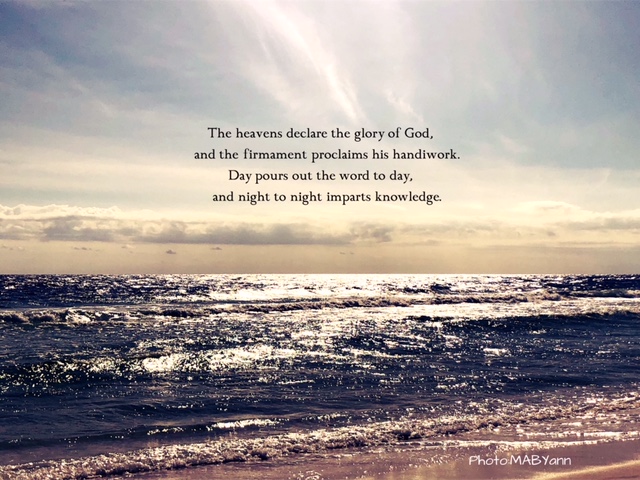
Photo by my talented Sister-in-Law

Today, in God’s Lavish Mercy, we pray with Psalm 19. Today’s beautiful verses alert us to the magnificence of the Heavens as a testament to God’s Glory:

The heavens declare the glory of God,
    and the firmament proclaims God’s handiwork.
Day pours out the word to day,
    and night to night imparts knowledge.

Psalm 19: 2-3

We might picture the psalmist, perhaps burdened, confused, or exhausted by the exigencies of daily life, walking outside under an October sky such as the ones we are given this time of year. The walk may have happened in a crystal blue Noon, or late under a black canopy sprayed with October’s meteor showers.

Photo by my talented Niece

Whatever the hour, that ancient psalmist’s heart is stilled in nature’s constant, silent yet resounding adoration of our Creator:

Not a word nor a discourse
    whose voice is not heard;
Through all the earth their voice resounds,
    and to the ends of the world, their message.

Psalm 19: 4-5

Psalm 19, after today’s introductory stanzas, compares nature’s elegant and eternal balance to the perfection of God’s Law…

The law of the LORD is perfect,
refreshing the soul.

Psalm 19:8

… Psalm 19
where the searching and cleansing sun
becomes an image of
the searching and cleansing Law.

C. S. Lewis: Reflections on the Psalms

On this Feast of Saints Simon and Jude, the Church uses Psalm 19 to describe the work of an Apostle. Like the heavens whose beauty and constancy declare God’s glory, the Apostle lives and preaches that Divine Elegance – that Law of Love perfected in Jesus Christ.

Paul, in our first reading from Ephesians, says that these Apostles lay the foundation for all of us to become – like Sacred Creation – “a dwelling place of God in the Spirit.”

Our Gospel recounts the calling of the first twelve of these “foundation builders”. But the call continues eternally. It comes to each of us.


Under the constant sun and other stars, that call to witness and declare God’s glory summons us to live a life that sings:

We praise you, O God,
we acclaim you as Lord;
with the glorious company of Apostles,
we praise you.

Today’s Alleluia Verse taken from the Te Deum

Poetry: Pied Beauty- Gerard Manley Hopkins

Glory be to God for dappled things – 
   For skies of couple-colour as a brinded cow; 
      For rose-moles all in stipple upon trout that swim; 
Fresh-firecoal chestnut-falls; finches’ wings;
 
   Landscape plotted and pieced – fold, fallow, and plough; 
      And áll trádes, their gear and tackle and trim. 
All things counter, original, spare, strange; 
   Whatever is fickle, freckled (who knows how?) 

      With swift, slow; sweet, sour; adazzle, dim; 
He fathers-forth whose beauty is past change: 
                                Praise him.

Music: Benedictus – Karl Jenkins
How Long, O Lord?!

October 27, 2021
Wednesday of the Thirtieth Week in Ordinary Time

Today, in God’s Lavish Mercy, we pray with Psalm 13, a powerful lesson in prayer.

The psalm is one of my favorites because it feels so “real”. The one who prays, presumably David, needs an answer to his prayer- and is not perceiving one. (emphasis on “perceiving”)

So the psalmist sounds a bit like someone desperately calling customer service to see why a life-saving order has not arrived😉:

How long, LORD? Will you utterly forget me?
How long will you hide your face from me?
..
Look, answer me, O LORD, my God!
Give light to my eyes that I may not sleep in death

Psalm 13: 2, 4

But as the psalmist continues to pray, an evolution of grace and understanding occurs. There is a realization that the kind of answer expected is one according to human measurement … one that will make the pray-er look triumphant in the eyes of his enemies:

Answer me, Lord my God …
Lest my enemy say, “I have prevailed,”
lest my foes rejoice at my downfall.

Psalm 13: 4-5

But the depth of our relationship with God is not determined by what our enemies think … or even our friends. That sacred relationship is rooted in our grateful recognition and trusting immersion in God’s ever-present mercy and love for us:

But I trust in your mercy.
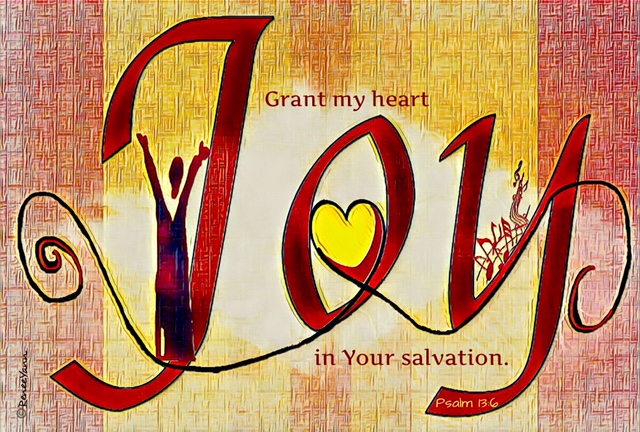
Grant my heart joy in your salvation,
I will sing to the LORD,
Who has dealt bountifully with me!

Psalm 13: 6-7

God always answers us. We may not have the capacity to perceive the answer because it is not the one we expected or wished for. But the truth is that through whatever “answer” unfolds to our prayer, God is leading us deeper into God’s heart.

Can we trust that? Can we yield to it? That is the “salvation” the psalmist ultimately prays for:


Sometimes we might hear a person say that they don’t know how to get started talking with God in prayer. They seem to feel it’s kind of like a blind date where you end up realizing you have nothing in common with each other.

Paul – in our reading from Romans says – no, wait a minute. God is already within you simply by the nature of your creaturehood. You are made of the very stuff of God. In fact, the Spirit of God deep within our souls is like the fiery magma from a volcano. It erupts from our love and prays for us to the Creator – if we will only let it.


Poetry: Praying by Mary Oliver

It doesn’t have to be
the blue iris, it could be
weeds in a vacant lot, or a few
small stones; just
pay attention, then patch
a few words together and don’t try
to make them elaborate, this isn’t
a contest but the doorway
into thanks, and a silence in which
another voice may speak.

Music: Spirit Seeking Light and Beauty – by Janet Erskine Stuart, interpreted here by the Daughters of St. Paul (Lyrics below)

Spirit seeking light and beauty,
Heart still longing for your rest
In your search for understanding,
Only thus can you be blest,

Through the vastness of creation,
Though your restless thought may roam,
God is all that you can long for,
God is all creation’s home.

Taste and see God, feel and hear God,
Hope and grasp the unseen hand;
Though the darkness seem to hide you,
Faith and love can understand.

Loving Wisdom, guiding Spirit,
All our hearts are made anew.
Lead us through the land of shadows
‘Til we come to rest in you.

That Little Seed

Tuesday of the Thirtieth Week in Ordinary Time
October 26, 2021

Today, in God’s Lavish Mercy, we pray once again with Psalm 126, a song of hope fulfilled:

When the LORD brought back the captives of Zion,
    we were like men dreaming.
Then our mouth was filled with laughter,
    and our tongue with rejoicing.

Then they said among the nations,
    “The LORD has done great things for them.”
The LORD has done great things for us;
    we are glad indeed.

Psalm 126: 1-3

In our readings, we are called to be people of hope – to live in gratitude for hopes fulfilled, and to live in confidence of future blessing.


Paul blesses us with some of his most powerful words:

I consider that the sufferings of this present time are as nothing
compared with the glory to be revealed for us.

Romans 8:18

How often, over the ensuing centuries, have these words uplifted and embravened a struggling heart! Paul reminds us of what he so passionately believed – that we are not here for this world alone; that we, with all Creation, are being transformed for eternal life in God.


Jesus too reminds us that our life in faith is so much bigger than we perceive. We see a tiny mustard seed, but God sees the whole tree of eternal life blossoming in us.  We see a fingertip of yeast, but God sees the whole Bread of Life rising in us.

Paul tells us to be People of Hope who do not yet expect to see the object of their hope but who, nonetheless, believe and love with all their hearts.

May we pray this today for ourselves, and for anyone burdened by suffering or hopelessness at this time in their lives.


Poetry: Hope – Czeslaw Milosz

Hope is with you when you believe
The earth is not a dream but living flesh,
that sight, touch, and hearing do not lie,
That all thing you have ever seen here
Are like a garden looked at from a gate.
You cannot enter. But you're sure it's there.
Could we but look more clearly and wisely
We might discover somewhere in the garden
A strange new flower and an unnamed star.
Some people say that we should not trust our eyes,
That there is nothing, just a seeming,
There are the ones who have no hope.
They think the moment we turn away,
The world, behind our backs, ceases to exist,
As if snatched up by the hand of thieves.

Music:  Living Hope – Phil Wickham

Our Tender God

October 25, 2021
Monday of the Thirtieth Week in Ordinary Time

Today, in God’s Lavish Mercy, we pray with Psalm 68 which pictures a triumphant God, rising like the sun over the darkness of evil.

Arise, O God, and let your enemies be scattered;
let those who hate you flee.
Let them vanish like smoke when the wind drives it away; 
as the wax melts at the fire,
so let the wicked perish at your presence.

Psalm 68: 1-3

This psalm comforts us with a tender picture of God:

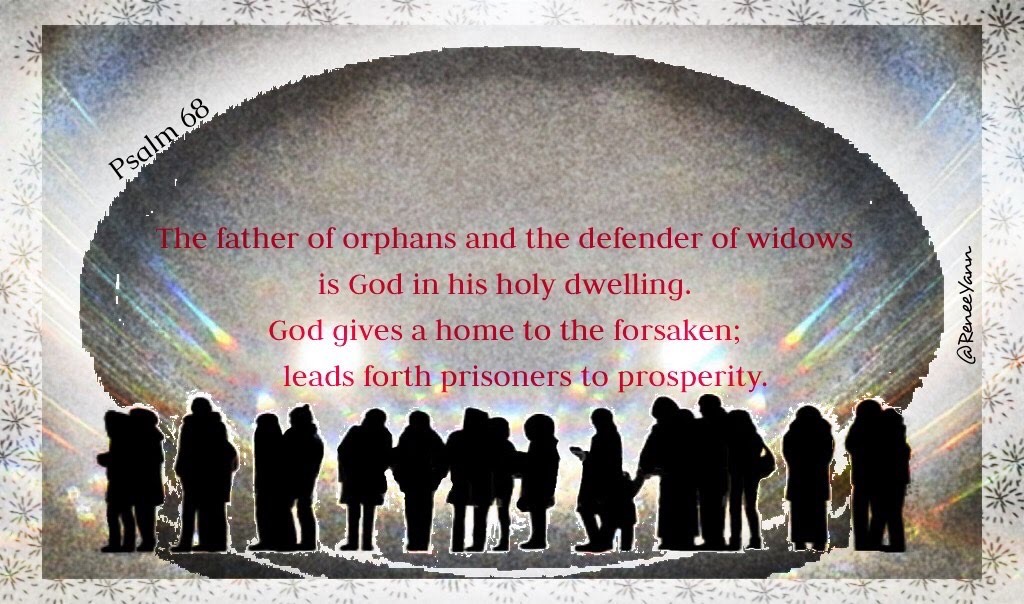
Protector of orphans, defender of widows,
the One who dwells in holiness,
who gives the solitary a home
and brings forth prisoners into freedom;
but the rebels shall live in dry places.

Psalm 68: 5-6

It is the same tenderness Paul presents in our first reading:

For those who are led by the Spirit of God are children of God.
For you did not receive a spirit of slavery to fall back into fear,
but you received a spirit of adoption,
through which we cry, “Abba, Father!”
The Spirit bears witness with our spirit
that we are children of God,
and if children, then heirs,
heirs of God and joint heirs with Christ…

if only we suffer with him
so that we may also be glorified with him.

And there we have the key line:
we are to live a life aligned with
the Passion, Death, and Resurrection of Christ.

And what will that kind of life look like? It will look like our merciful Jesus of today’s Gospel – who stepped out to see, comfort, and heal the suffering around him.

Jesus recognized the crippled woman as “an heir of God, and joint heir with him” to the fullness of life in God. We are called recognize ourselves and all of our sisters and brothers in the same way.


Poetry: WOMAN UN-BENT (LUKE 13:10–17) – by Irene Zimmerman, OSF

That Sabbath day as always
she went to the synagogue
and took the place assigned her
right behind the grill where,
the elders had concurred,
she would block no one’s view,
she could lean her heavy head,
and (though this was not said)
she’d give a good example to
the ones who stood behind her. 

That day, intent as always
on the Word (for eighteen years
she’d listened thus), she heard
Authority when Jesus spoke. 

Though long stripped
of forwardness,
she came forward, nonetheless,
when Jesus summoned her.
“Woman, you are free
of your infirmity,” he said. 

The leader of the synagogue
worked himself into a sweat
as he tried to bend the Sabbath
and the woman back in place. 

But she stood up straight and let
God’s glory touch her face.

Video: Jesus Heals the Bent-over Woman

If you’d still like a little music, this one seems to fit: Spirit Touch by Joseph Akins

Don’t Pass Me By

October 24, 2021
Thirtieth Sunday in Ordinary Time

Today, in God’s Lavish Mercy, we pray with Psalm 126, a song of irrepressible joy at Divine Deliverance:

When the LORD brought back the captives of Zion,
    we were like men dreaming.
Then our mouth was filled with laughter,
    and our tongue with rejoicing.

Then they said among the nations,
    “The LORD has done great things for them.”
The LORD has done great things for us;
    we are glad indeed.

Psalm 126: 1-3

The psalm captures for us
a community which
recognizes, beseeches,
and thanks God for its deliverance.

Our Gospel presents us with a story of someone who is delivered – the blind man, Bartimeus. He is an otherwise unknown character in scripture. Yet this short passage suggests so much about him.

It is stated that he was the son of Timeus, apparently someone of note in the community – otherwise, why mention his name? And yet this notable man’s blind son is left to begging on the side of the road. Had disability driven father and son apart? Was Dad unable to accept a son with a physical challenge?

The passage also reveals that Bartimeus knew about Jesus. Perhaps while begging in the public square, he talked and listened. He daydreamed about what he planned to do if he should ever have a chance to meet Jesus!

His cronies in the marketplace were not very supportive. They told him to shut up, even as he pathetically cried for Jesus’s mercy. Still, Bartimues persisted and Jesus heard him.

When he comes to Jesus, Jesus asks, “What do you want me to do for you?” It has always struck me as a strange question. The man is obviously blind, stumbling through the crowd on some disciple’s arm. Why did Jesus bother to ask what Bartimeus wanted?


This might be the lesson hidden in this Gospel. We need to name and claim our needs before God can reach through and transform them. If we don’t even know we’re “blind”, how can we know we’re cured? If we don’t present our needs to God, how can we believe that it is God Who has healed us?

The freshly cured Bartimeus, eyes wide open in grace, now follows along the path with Jesus. All the “shut-uppers” are silenced. Perhaps, Timeus weeps off in a doorway to see the power of his son’s faith and Jesus’s love.

How might our lives be changed if we had that kind of faith… that kind of love?


Poetry: Blind Bartimeus – Henry Wadsworth Longfellow

Blind Bartimeus at the gates
Of Jericho in darkness waits;
He hears the crowd;--he hears a breath
Say, "It is Christ of Nazareth!"
And calls, in tones of agony,
Ἰησοῦ ἐλέησόν με! (Have mercy on me!)

The thronging multitudes increase;
Blind Bartimeus, hold thy peace!
But still, above the noisy crowd,
The beggar's cry is shrill and loud;
Until they say, "He calleth thee!"
Θάρσει ἔγειρε φωνεῖ σε! (Jesus is calling you)

Then saith the Christ, as silent stands
The crowd, "What wilt thou at my hands?"
And he replies, "Oh, give me light!
Rabbi, restore the blind man's sight."
And Jesus answers, "ὕπαγε
πίστις σου σέσωκέν σε!" (Your faith has saved you)

Ye that have eyes, yet cannot see,
In darkness and in misery,
Recall those mighty Voices Three,
Ἰησοῦ ἐλέησόν με! (Have mercy on me.)
Θάρσει ἔγειρε φωνεῖ σε! (Jesus is calling you.)
ἡ πίστις σου σέσωκέν σε! (Your faith has saved you.)

Music: Don’t Pass Me By – Fred Hammond (lyrics below)

There was a blind man on the road side, and he heard a commotion
It was Jesus passing by with a crowd and it stirred his emotions
He’d been displaced his whole life, should he even try

Don’t bother Jesus (they say you have nothing)
You have nothing to offer (stay in your place)
Right then he knew(he had to choose)
He had nothing to lose

So he cried Jesus (Jesus), I need you,  please don’t pass me by
He cried out Jesus, I’m not ashamed(to tell you) I need you in my life
(I need you in my life)

I’m not much different from that man, and this is the honest truth
Could this sinful one, with this messed up life, could I ever serve you
people and things clutter my mind, should I even try

Don’t bother Jesus (they say you have nothing)
You have nothing to offer (stay in your place)
Right then he knew (he had to choose)
He had nothing to lose

So I cry Jesus(Jesus), I need you
Please don’t pass me by
I’m crying out Jesus, I’m not ashamed to tell you I need you in my life

As the deer (as the deer panted)
Thirsty for the water yeah(thirsty for the water)
My soul desires and longs to be(to be with you)

Jesus, I need you, please don’t pass me by
I don’t mean to waste your time but I can’t listen to the crowd,
Situations in my life telling me to keep it down
But I need you

I know I’m broken, but you can heal me, Jesus, Jesus I’m calling you
(I might not be worth much)might not be worth much, but I’m still willing
Jesus, Jesus, I’m calling you

Zap?

October 23, 2021
Saturday of the Twenty-ninth Week in Ordinary Time

Today, in God’s Lavish Mercy, we pray with Psalm 24 in which the psalmist expresses the heart’s deep longing for God:

Who can ascend the mountain of the LORD?
    or who may stand in that holy place?
The one whose hands are sinless, whose heart is clean,
    who desires not what is vain.
Who shall receive a blessing from the LORD,
    a reward from God the savior.
Such is the race that seeks for God,
    that seeks the face of the God of Jacob.

Psalm 24: 5-6

But achieving those sinless hands and clean heart is not always an easy task. It takes a life focused on faith and rooted in love.

Jesus talks about that focus in today’s Gospel.

Jesus gives us a parable which, at first, appears to say, “Get your act together fast, or God might zap you.” From Jesus’s words, we can assume that some public disasters have recently occurred. Those in the gathered crowd are unnerved by these events.

Jesus uses that nervousness to talk about repentance. He tells the people that tragedy can make us wake up to the fact that life is fragile and fleeting. That awareness should make us want to use our time on earth well, to give glory to God.

The repentance Jesus encourages is not just a contrition, or turning from sin. It is an opening of the soul’s eyes to see our lives and circumstances as God sees them.

Is God going to zap us if we don’t have that kind of repentance? No, I think not.

God is always Mercy …
always, always Mercy.

With the parable of the fruitless fig tree, Jesus assures us that God is with us, giving us every grace and opportunity to bear spiritual fruit. God is patient and nurturing. But, in every human life, there is a limit to the time we have to respond.


Poetry: The Facts of Life – Pádraig Ó Tuama

That you were born
and you will die.

That you will sometimes love enough
and sometimes not.

That you will lie
if only to yourself.

That you will get tired.

That you will learn most from the situations
you did not choose.

That there will be some things that move you
more than you can say.

That you will live
that you must be loved.

That you will avoid questions most urgently in need of
your attention.

That you began as the fusion of a sperm and an egg
of two people who once were strangers
and may well still be.

That life isn’t fair.
That life is sometimes good
and sometimes better than good.

That life is often not so good.

That life is real
and if you can survive it, well,
survive it well
with love
and art
and meaning given
where meaning’s scarce.

That you will learn to live with regret.
That you will learn to live with respect.

That the structures that constrict you
may not be permanently constricting.

That you will probably be okay.

That you must accept change
before you die
but you will die anyway.

So you might as well live
and you might as well love.
You might as well love.


Music: Calm the Soul – Poor Clares Galway

Winds of Change

Friday of the Twenty-ninth Week in Ordinary Time

October 22, 2021

Today, in God’s Lavish Mercy, we pray with Psalm 119, the longest and very familiar psalm which pleads for God to mercifully teach us:

  • Wisdom
  • Knowledge
  • Goodness 
  • Generosity
  • Kindness
  • Compassion

In our readings, Paul asserts that without God’s Grace we can never attain these gifts. Jesus calls us to use these gifts and to practice a holy life by recognizing and responding justly to the challenges of our times.


Paul sounds a lot like someone approaching the microphone at “Sinners Anonymous”:

I know that good does not dwell in me, that is, in my flesh.
The willing is ready at hand, but doing the good is not.
For I do not do the good I want,
but I do the evil I do not want.

Romans 7:18-20

Paul basically attests to the fact that for human beings, even him, will and actions often don’t synch up. Sure, we want to be good people, but as Nike says, do we …

Paul’s says no. The only way we do the good we will to do is by the grace of Jesus Christ.


In our Gospel, Jesus affirms the slowness of the human spirit to act on the realities around us. In some translations, Jesus uses a phrase which caught on with the architects of Vatican II: the signs of the times.

Jesus tells his listeners and us that we need to be alert to the circumstances of our world. It both weeps and rejoices. Where it weeps, we must be a source of mercy and healing. Where it rejoices, we must foster and celebrate the Presence of the Spirit.


In the Vatican II document Gaudium et Spes (The Church in the Modern World), we read:

In every age, the church carries the responsibility
of reading the signs of the times
and of interpreting them in the light of the Gospel, if it is to carry out its task.
In language intelligible to every generation, it should be able to answer
the ever recurring questions which people ask
about the meaning of this present life and of the life to come,
and how one is related to the other.
We must be aware of and understand the aspirations, the yearnings,
and the often dramatic features of the world in which we live.

Although written in the 1960s, these powerful words hold true today. We are the Church of which the document speaks. We are the ones whom Jesus calls to respond with authentic justice and mercy to the signs of the times. 

Read the newspaper in that light today. Watch the news in that light. Meet your brothers and sisters in that light today.


Poetry: Ode to the West Wind by Percy Bysshe Shelley

Perhaps more than anything else, Shelley wanted his message of reform and revolution spread, and the wind becomes the symbol for spreading the word of change through the poet-prophet figure. Some also believe that the poem was written in response to the loss of his son William in 1819 (born to Mary Shelley – author of “Frankenstein”). The ensuing pain influenced Shelley. The poem allegorizes the role of the poet as the voice of change and revolution. (Wikipedia)

O wild West Wind, thou breath of Autumn’s being, 
Thou, from whose unseen presence the leaves dead 
Are driven, like ghosts from an enchanter fleeing, 
Yellow, and black, and pale, and hectic red, 
Pestilence-stricken multitudes: O thou, 
Who chariotest to their dark wintry bed 
The winged seeds, where they lie cold and low, 
Each like a corpse within its grave, until 
Thine azure sister of the Spring shall blow 
Her clarion o’er the dreaming earth, and fill 
(Driving sweet buds like flocks to feed in air) 
With living hues and odours plain and hill: 
Wild Spirit, which art moving everywhere; 
Destroyer and preserver; hear, oh hear! 

II 

Thou on whose stream, mid the steep sky’s commotion, 
Loose clouds like earth’s decaying leaves are shed, 
Shook from the tangled boughs of Heaven and Ocean, 
Angels of rain and lightning: there are spread 
On the blue surface of thine aëry surge, 
Like the bright hair uplifted from the head 
Of some fierce Maenad, even from the dim verge 
Of the horizon to the zenith’s height, 
The locks of the approaching storm. Thou dirge 
Of the dying year, to which this closing night 
Will be the dome of a vast sepulchre, 
Vaulted with all thy congregated might 
Of vapours, from whose solid atmosphere 
Black rain, and fire, and hail will burst: oh hear! 

III 

Thou who didst waken from his summer dreams 
The blue Mediterranean, where he lay, 
Lull’d by the coil of his crystalline streams, 
Beside a pumice isle in Baiae’s bay, 
And saw in sleep old palaces and towers 
Quivering within the wave’s intenser day, 
All overgrown with azure moss and flowers 
So sweet, the sense faints picturing them! Thou 
For whose path the Atlantic’s level powers 
Cleave themselves into chasms, while far below 
The sea-blooms and the oozy woods which wear 
The sapless foliage of the ocean, know 
Thy voice, and suddenly grow gray with fear, 
And tremble and despoil themselves: oh hear! 

IV 

If I were a dead leaf thou mightest bear; 
If I were a swift cloud to fly with thee; 
A wave to pant beneath thy power, and share 
The impulse of thy strength, only less free 
Than thou, O uncontrollable! If even 
I were as in my boyhood, and could be 
The comrade of thy wanderings over Heaven, 
As then, when to outstrip thy skiey speed 
Scarce seem’d a vision; I would ne’er have striven 
As thus with thee in prayer in my sore need. 
Oh, lift me as a wave, a leaf, a cloud! 
I fall upon the thorns of life! I bleed! 
A heavy weight of hours has chain’d and bow’d 
One too like thee: tameless, and swift, and proud. 

Make me thy lyre, even as the forest is: 
What if my leaves are falling like its own! 
The tumult of thy mighty harmonies 
Will take from both a deep, autumnal tone, 
Sweet though in sadness. Be thou, Spirit fierce, 
My spirit! Be thou me, impetuous one! 
Drive my dead thoughts over the universe 
Like wither’d leaves to quicken a new birth! 
And, by the incantation of this verse, 
Scatter, as from an unextinguish’d hearth 
Ashes and sparks, my words among mankind! 
Be through my lips to unawaken’d earth 
The trumpet of a prophecy! O Wind, 
If Winter comes, can Spring be far behind?


Music: The Times They Are A’changin’ – Bob Dylan 

Dylan’s songs in the 50s and 60s became anthems for the Civil Rights and anti-war movements. His lyrics during this period incorporated a wide range of political, social, philosophical, and literary influences, defied popular music conventions and appealed to the burgeoning counterculture. (Wikipedia) 
Ah, it was a good time to be young! (me)

The Swedish Academy awarded Dylan the 2016 Nobel Prize in Literature “for having created new poetic expressions within the great American song tradition.”

A Fire for Good

October 21, 2021
Thursday of the Twenty-ninth Week in Ordinary Time

Today, in God’s Lavish Mercy,  we pray with Psalm 1 which promises that, if we walk in faith, we will prevail against any evil.

Blessed the one who follows not
    the counsel of the wicked
Nor walks in the way of sinners,
    nor sits in the company of the insolent,
But delights in the law of the LORD
    and meditates on the law day and night.

Psalm 1: 1-3

The passage from Romans and our Gospel preach, in no uncertain terms, that we must choose good over evil.

In our Gospel, Jesus says he has come to set fire on the earth! He says that, because of him, there will not be peace but division, setting households against one another. 

It’s not a comforting Gospel.

And guess what, we don’t live in a comforting world do we? We see human beings set against each other in war, political corruption, economic despoiling, human trafficking, ecological crime and other deeply ingrained systemic abuses.


Pope John Paul II in his encyclical EVANGELIUM VITAE refers to these realities as a “culture of death”.

Some threats come from nature itself, but they are made worse by the culpable indifference and negligence of those who could in some cases remedy them. Others are the result of situations of violence, hatred and conflicting interests, which lead people to attack others through murder, war, slaughter and genocide.

And how can we fail to consider the violence against life done to millions of human beings, especially children, who are forced into poverty, malnutrition and hunger because of an unjust distribution of resources between peoples and between social classes? And what of the violence inherent not only in wars as such but in the scandalous arms trade, which spawns the many armed conflicts which stain our world with blood? What of the spreading of death caused by reckless tampering with the world’s ecological balance, by the criminal spread of drugs, or by the promotion of certain kinds of sexual activity which, besides being morally unacceptable, also involve grave risks to life? It is impossible to catalogue completely the vast array of threats to human life, so many are the forms, whether explicit or hidden, in which they appear today! 


Paul says that, through our Baptism, we are called and strengthened to bear witness against such a culture:

But now that you have been freed from sin and have become slaves of God,
the benefit that you have leads to sanctification,
and its end is eternal life.
For the wages of sin is death,
but the gift of God is eternal life in Christ Jesus our Lord.


Every day, each one of us has the opportunity to stand up for mercy and justice by the choices we make, by the attitudes we affirm, by the values we stand for. But sometimes it’s hard, because it can set us against some of the people around and close to us. That’s when the rubber meets the road!


Poetry: The Onset by Robert Frost

In his poem, Frost is realistic about the onset of winter, at first comparing it to a death of someone who has failed to prevail against evil. But then he places winter in the whole cycle of the seasons and finds hope in the promise of spring.

Always the same, when on a fated night
At last the gathered snow lets down as white
As may be in dark woods, and with a song
It shall not make again all winter long
Of hissing on the yet uncovered ground,
I almost stumble looking up and round,
As one who overtaken by the end
Gives up his errand, and lets death descend
Upon him where he is, with nothing done
To evil, no important triumph won,
More than if life had never been begun.

Yet all the precedent is on my side:
I know that winter death has never tried
The earth but it has failed: the snow may heap
In long storms an undrifted four feet deep
As measured again maple, birch, and oak,
It cannot check the peeper’s silver croak;
And I shall see the snow all go down hill
In water of a slender April rill
That flashes tail through last year’s withered brake
And dead weeds, like a disappearing snake.
Nothing will be left white but here a birch,
And there a clump of houses with a church.


Music: Golden Autumn – Fariborz Lachini

A Free and Obedient Heart

October 20, 2021
Wednesday of the Twenty-ninth Week in Ordinary Time

Today, in God’s Lavish Mercy,  we pray with Psalm 124, a dramatic psalm stretched between early desperation and ultimate freedom.

In the psalmist’s prayer, Israel is called to realize that it has narrowly escaped from a mortal danger, never specified, but only alluded to in phrases such as:

  • would have swallowed us alive
  • fury was inflamed against us
  • waters have overwhelmed us
  • torrent swept over us
  • swept over by the raging waters
  • not leave us a prey to their teeth

This is some serious trouble! And because of this blessed escape, the community is called to a life of freely given service and praise.


In our readings, Paul and Jesus both instruct and challenge their listeners and us to a similar response for all the graces we have received – especially being rescued from sin in the life-saving waters of Baptism.

Paul wants us to understand that, through our Baptism, we are living in a whole new power for goodness and grace. The world may look the same as it did before we belonged to Christ, but it isn’t. 

To use a phrase from the poet Gerard Manley Hopkins:

The world is charged with the grandeur of God.
It will flame out, like shining from shook foil;

If we see with the new eyes of grace, we will be able to respond to Jesus’s challenge:

Stay awake!
For you do not know
when the Son of Man will come.

Stay awake. See the world and life as they truly are  – places where God awaits us in every moment. This is the amazing power we have received through our Baptism!

So let’s open our hearts to listen lovingly to the sound of the Holy Spirit in our lives. That freed and obedient heart is precious to God, and is the catalyst to a transformed life!


Poetry: Song for Autumn – Mary Oliver

In the deep fall
don’t you imagine the leaves think how
comfortable it will be to touch
the earth instead of the
nothingness of air and the endless
freshets of wind? And don’t you think
the trees themselves, especially those with mossy,
warm caves, begin to think
of the birds that will come — six, a dozen — to sleep
inside their bodies? And don’t you hear
the goldenrod whispering goodbye,
the everlasting being crowned with the first
tuffets of snow? The pond
vanishes, and the white field over which
the fox runs so quickly brings out
its blue shadows. And the wind pumps its
bellows. And at evening especially,
the piled firewood shifts a little,
longing to be on its way.

Music:  Speak, O Lord – Kristyn Getty

Seeking and Waiting

October 19, 2021
Memorial of Saints John de Brébeuf and Isaac Jogues, Priests, and Companions, Martyrs

Today, in God’s Lavish Mercy,  we pray with Psalm 40 in which the psalmist prays for all who seek God and faithfully wait on God’s salvation:

May all who seek you
    exult and be glad in you,
And may those who love your salvation
    say ever, “The LORD be glorified.”

Psalm 40:17

Luke’s Gospel describes the expectant fidelity God gives us and desires from us. In other words, God waits for us too!

The master of the house was away on a long journey. Likely he would have tried to return home in daylight, because the ancient roads were dark and menacing at night. Perhaps the evening meal was already prepared in anticipation of his arrival. But he does not appear over the distant rise where all the household’s eyes are trained.


You know how they waited. You’ve waited for loved ones coming home in bad weather. You’ve waited for beloved holiday guests when flights are delayed or traffic is snarled.

You watch for headlights cresting down the far road. You listen for the sound of a car door closing. Minutes seem like hours. The perfectly prepared meal cools, and your energy slackens as you pick at the olives and breadsticks.


Sometimes our prayer life feels like that. We do all the things necessary to welcome God’s grace, but instead we feel distant from the Divine Presence. We long for God’s warm blessing over the feast of our life, but God tarries somewhere at the other edge of our hope.  We feel like these Gospel servants who wait, exhausted, even into the early morning hours.

But we don’t give up. Our hope remains steadfast because God has promised. And it is in that fidelity that our eyes are opened to realize that God had been present all along — just not looking as we had expected.

It turns out that God is the One who had been waiting… waiting for us to see.


Poetry: Waiting by Leza Lowitz

You keep waiting for something to happen,
the thing that lifts you out of yourself,

catapults you into doing all the things you've put off
the great things you're meant to do in your life,

but somehow never quite get to.
You keep waiting for the planets to shift

the new moon to bring news,
the universe to align, something to give.

Meanwhile, the pile of papers, the laundry, the dishes, the job –
it all stacks up while you keep hoping

for some miracle to blast down upon you,
scattering the piles to the winds.

Sometimes you lie in bed, terrified of your life.
Sometimes you laugh at the privilege of waking.

But all the while, life goes on in its messy way.
And then you turn forty. Or fifty. Or sixty...

and some part of you realizes you are not alone
and you find signs of this in the animal kingdom

when a snake sheds its skin its eyes glaze over,
it slinks under a rock, not wanting to be touched,

and when caterpillar turns to butterfly
if the pupa is brushed, it will die –

and when the bird taps its beak hungrily against the egg
it's because the thing is too small, too small,

and it needs to break out.
And midlife walks you into that wisdom

that this is what transformation looks like –
the mess of it, the tapping at the walls of your life,

the yearning and writhing and pushing,
until one day, one day

you emerge from the wreck
embracing both the immense dawn

and the dusk of the body,
glistening, beautiful

just as you are.

Music: A country tune today, maybe overly simple. But I find some country music has a profound nugget of truth buried in the twang. I hope you can enjoy it.

He Was There All the Time ~ Gary S. Paxton