Tuesday of the Fifteenth Week in Ordinary Time

Tuesday, July 13, 2021

Today, in God’s Lavish Mercy, we pray with Psalm 69 whose speaker, not to make a pun, is in bad straits!

I am sunk in the abysmal swamp
    where there is no foothold;
I have reached the watery depths;
    the flood overwhelms me.

Psalm 69:3

This is painful stuff – the kind of desperate pain we find threaded throughout the psalms in the prayers of lament.

These laments follow a pattern:

  • a petition for God’s help
  • multiple repetitions of this plea
  • detailed descriptions of the suffering being endured
  • proclamations of the sufferer’s innocence
  • assurances of the sufferer’s goodness
  • and often, a list of suggestions about how God should solve the problem

So the prayer, at least mine, would go something like this:

  • Dear God, please help me get out of this mess!
  • Do something, please. I know you can do something!
  • I am being harassed and destroyed. Let me tell you all about it.!
  • And it’s not my fault- (well, not completely anyway)
  • I try to be a good person and look what happens anyway!
  • I still believe in you and pray that you take care of my persecutors
  • (By the way, here are some tips on how you might do that, God.)

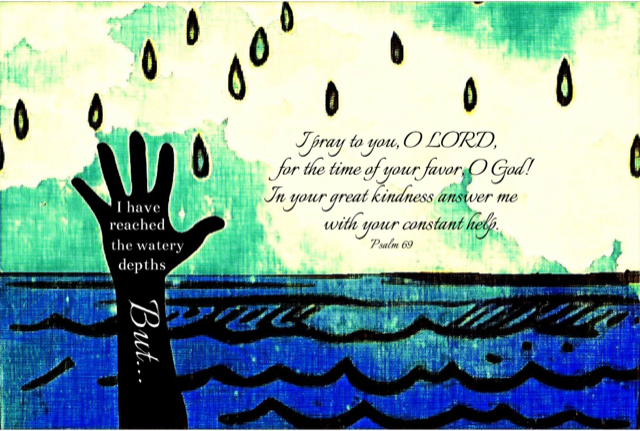
All in all, such a lament is a really healthy prayer. If we pray it completely, we get to the “BUT” of the pictured verse – that place where we allow God to teach and change us.
When we pray like this, we do these things in God’s Presence:

  • recognize our pain and name it
  • admit that we need help
  • analyze what’s really at the root of our pain
  • acknowledge our part in causing the suffering
  • rehearse our vengeance until we have exhausted it
  • reclaim our faith as a way to healing
  • THEN allow God to convert us to the Love of which we are made

The psalmist has given us a gift by laying out such vulnerability for us. It is healing to humbly and honestly pray this psalm when we are “overwhelmed” by hurt, confusion, anger, fear or any form of desperation.

The psalm is a script for
unburdening negation in God’s presence.
It is a script for rehabilitation to
the community of praise and thanks.

Walter Brueggemann

We may have to pray Psalm 69 many times before we let God through to teach us the real meaning of our suffering. It is only then that we might pray the psalm’s final verses:

See, you humble ones, and be glad;
you who seek God, take heart!
For the LORD hears us,
and does not turn away from our pain.
Let the heaven and the earth praise God,
the seas and whatever moves in them!
For God will rescue usand rebuild us
so that we can be at home with ourselves
as the dwelling place of God.

Psalm 69: 33-36

Poetry: Psalm 69 – Christine Robinson

Save me, O God,
I have gotten myself in deep waters.
and find no firm ground under my feet.

I am tired of crying.
I feel at war with myself and with others;
I’m unable to do what is expected of me.

O God, you know my foolishness and my faults—
Do you love me anyway?
I really am sinking.

These rushing, dark waters are going to swallow me up.
Answer me, God!
Your loving kindness would save me.

If I could see your face, it would be enough
to ease my distress and help me relax in the flood.
I will remember that you are here,
even in the torrent, even in the war.

I will give thanks for the small beauties
and kindnesses of the day.
And for the love that is in my heart.

Music: Deep Water – American Authors 
Monday of the Fifteenth Week in Ordinary Time

Monday, July 12, 2021

Today, in God’s Lavish Mercy, we pray with Psalm 124 which is a raw remembering of how bad things could have been without God’s help.

The psalm opens with these lines:

Had not the LORD been with us,
let Israel say,
Had not the LORD been with us,
when all rose against us,
Then we would have been swallowed alive,
for fury blazed against us.

Psalm 124: 1-3

Have you been there? What flares up to swallow your life, your hope, can wear many disguises: 


or the many forms of hunger and dying.


The psalm calls us to remember these things for two reasons:

  1. so that we don’t get caught again
  2. and that if – sadly – we do, we remember who freed us

We were rescued like a bird 
    from the fowlers’ snare;
Broken was the snare, 
    and we were freed.
Our help is in the name of the LORD,
    who made heaven and earth.

Psalm 124: 7-8

The release from such snares
does not return us to the way things were.
There will be
wounds and wisdom
to change us.
It depends on us which we choose to cherish.

“Re-membering” ourselves, pulling our new selves together in God, releases us to fuller, deeper life.

Our help is in the name of the LORD,
the maker of heaven and earth.

… so surely that Omnipotent God can heal and remake us.

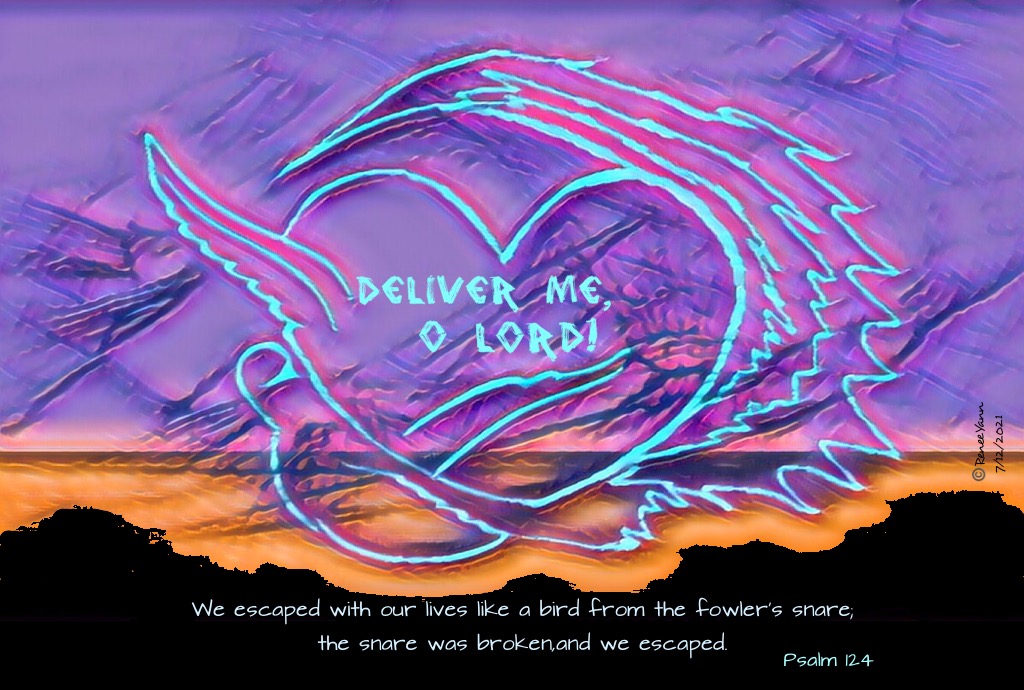
Remember, this and a few other of my images have been set beautifully into cards by Sister Judy Ward, RSM.
You can contact her at

Poetry: The Fowler by Wilfrid Wilson Gibson (1868-1962)

A wild bird filled the morning air 
With dewy-hearted song; 
I took it in a golden snare 
Of meshes close and strong. 
But where is now the song I heard? 
For all my cunning art, 
I who would house a singing bird 
Have caged a broken heart.

Music: Peter Kater – Wings

Fifteenth Sunday in Ordinary Time

Sunday, July 11, 2021

Today, in God’s Lavish Mercy, our readings are filled with God’s glory and blessings. 

The magnificent passage from Ephesians is considered an example of the great Pauline Hymns. These are places in Paul’s writing where he breaks into lyrical songs of praise and thanksgiving, so overwhelmed is he by the goodness of God.


Photo by luizclas on Pexels.com

Have you ever felt like that – just so grateful to God for the blessings of your life? So blessed to wake up in the morning, with the capacity to believe, to hope, and to love!

A practice I learned many years ago has helped me focus on this kind of prayerful gratitude. As soon as I realize I am awake in the morning (and sometimes that takes a while) I say this simple prayer:

Thank you, God, for my life.

On a special morning, I might pause and expand that prayer quite a bit. (And, come on now, isn’t every morning special just for the fact that you woke up!)

But every day, even dull and rainy ones, I start with at least that brief phrase.


Poetry: Savor Paul’s eloquence in his hymn of praise today. Let your heart recognize God’s goodness and sing even a silent, personal Thank You.

Blessed be the God and Father of our Lord Jesus Christ,
who has blessed us in Christ
with every spiritual blessing in the heavens.

Ephesians 1:3

Music: Ephesians Hymn ~ Suzanne Toolan, RSM, who is Sister of Mercy at Mercy Center in Burlingame, CA. She has mentored many people in centering prayer in retreats and in prisons. She is prolific composer of liturgical music, including the iconic hymn, “I Am the Bread of Life”.

Saturday of the Fourteenth Week in Ordinary Time

Saturday, July 10, 2021

Today, in God’s Lavish Mercy, we pray with Psalm 105, using some of its earlier verses than yesterday’s.

Verses 1-15 tell the same story as 1 Chronicles 16:8–22:
“a ‘canonical’ inventory of YHWH’s faithful, transformative actions.”
(Brueggemann, From Whom No Secrets Are Hidden)


As the faith community recounts this inventory, again and again down through the ages, we are deepened and strengthened in our grateful love for God Who abides.

Today’s readings once again invite us to count our blessings, and to repeat the practice daily.

Doing so allows us to hear the music of God’s omnipotent love, swirling grace through every chord of our lives.

We are summoned
to glory in that Loving Presence;
our spirits dancing
in thanksgiving.


Give thanks to the LORD, invoke God’s name;
    make known among the nations God’s deeds.
Sing to God, sing praise,
    proclaim all God’s wondrous deeds.
Glory in God’s holy name;
    rejoice, O hearts that seek the LORD!
Look to the LORD’s strength;
    seek to serve God constantly.

Pslam 105:1-4

Poetry: Forever Dance from D. Ladinsky, I Heard God Laughing – Renderings of Hafiz

I am happy even before I have a reason.
I am full of Light even before the sky
Can greet the sun or the moon.
Dear companions,
We have been in love with God
For so very, very long.
What can Hafiz now do but Forever Dance.


Music: Dance of Innocents – Nawang Khechog and Peter Kater

Friday of the Fourteenth Week in Ordinary Time

Friday, July 9, 2021

Today, in God’s Lavish Mercy, we pray with Psalm 37 which is widely interpreted as:

“a response to the problem of evil,
which the Old Testament often expresses as a question:
why do the wicked prosper and the good suffer?”

Wikipedia

It’s a question all of us struggle with, isn’t it?
And wouldn’t we manage things a lot differently
if we were in charge of the world?


Psalm 37 opens with this advice to help us deal with our consternation:

Do not be provoked by evildoers;
do not envy those who do wrong.

Like grass they wither quickly;
like green plants they wilt away.

Psalm 37: 1-2

The psalmist continues to demonstrate that even though evil doers seem to prosper, their prosperity is short-lived. Only goodness endures and ultimately thrives.

Psalm 37 sounds very much like a parent teaching a child not to be distressed by the apparent success of the selfish and scheming. God is not fooled by evildoers so neither should we be.

The wicked plot against the righteous
and gnash their teeth at them;

But my Lord laughs at them,
seeing that their day is coming.

Psalm 37: 12-13

The advice is easily spoken but perhaps not so easily practiced. So the psalmist offers some tips on how to live a spiritually fruitful life:

  • Trust in the LORD and do good.
  • Find your delight in the LORD.
  • Commit your way to the Lord.
  • Be still before the LORD.
  • Refrain from anger; abandon wrath;
  • Do not be provoked; it brings only harm.
  • Wait a little, and the wicked will be no more.
  • Turn from evil and do good,
    that you may be settled forever.
  • Wait eagerly for the LORD,
    and keep the Lord’s way;

The psalm indicates the result of such goodness, conditions that sound very much like the Beatitudes:

  • You will be raised up to inherit the earth.
  • Yes, the poor will inherit the earth,
    will delight in great prosperity.
  • Better the meagerness of the righteous one
    than the plenty of the wicked.
  • The LORD will sustain the righteous.
  • The LORD knows the days of the blameless;
    their heritage lasts forever.
  • They will not be ashamed when times are bad;
    in days of famine they will be satisfied.
  • For those blessed by the Lord will inherit the earth,
    but those accursed will be cut off.

It’s hard to live a life like the one this psalm invites us to. (At least, I think it is!) It’s hard to have that much faith, especially when evil is smacking us right in the face. The psalmist acknowledges this difficulty but does so with a beautiful assurance:

The valiant one whose steps are guided by the LORD,
who will delight in God’s way,
may stumble, but will never fall,
for the Lord holds their hand.


Poetry: Give Me Your Hand – Rainer Maria Rilke

God speaks to each of us as we are made, 
then walks with us silently out of the night. 
These are the words we dimly hear:
You, sent out beyond your recall,
go to the limits of your longing.
Embody me.
Flare up like a flame
and make big shadows I can move in.
Let everything happen to you: 
beauty and horror. 
Just keep going. 
No feeling is final.
Don't let yourself lose me.
Nearby is the country they call life. 
You will know it by its seriousness. 
Give me your hand.

Music: Hold to God’s Unchanging Hand – Alfred Street Baptist Church

Thursday of the Fourteenth Week in Ordinary Time

Thursday, July 8, 2021

Today, in God’s Lavish Mercy, we pray with Psalm 105, one of the psalms which Walter Brueggemann characterizes as “lively remembering”.

These are psalms which gratefully inventory God’s generosity and faithfulness to Israel. The long list evokes holy surprise, gratitude, trust, and commitment in the believer’s heart.


Today’s verses pertain particularly to the wonderful story of Joseph cited in our first reading. But the entire psalm remembers a Divine Generosity covering generations.

Recall the wondrous deeds God has done,
wonders and words of judgment,

You descendants of Abraham God’s servant,
offspring of Jacob the chosen one!

Psalm 105: 5-6

Reading Psalm 105 always makes me remember a little blond kid from my long ago teaching days. 

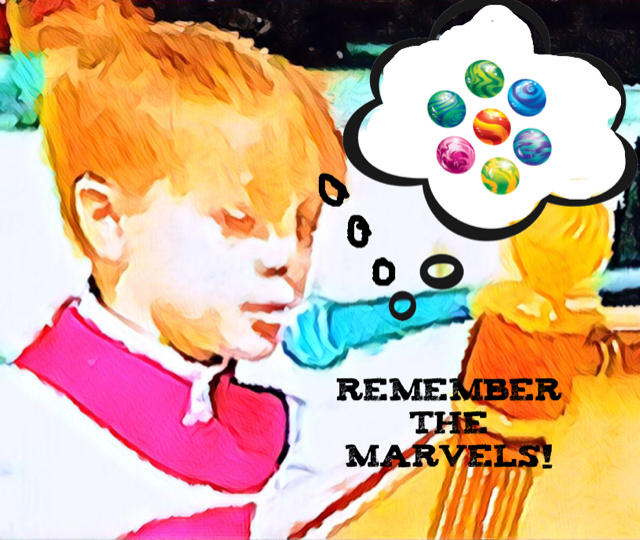
We regularly gathered our school community for a “Children’s Mass”, either on Sunday or some special occasion. Bobby, a very good reader for a third grader, had volunteered to deliver the Responsorial Psalm. 

And he delivered, loud and clear:

Remember the “marbles”
the Lord has done.

Four times, the school body of 500+ children obediently responded in kind, apparently visualizing the same “marbles” as Bobby did.


Did God care? No, I think God enjoyed it as much as we teachers did. 

And as I remember the moment this morning, I can’t help considering how innocently garbled my own prayer must seem to God. Because honestly, how can we even imagine God, let alone find the words to speak the mysteries of our soul!

Glory in his holy name;
let hearts that seek the LORD rejoice!

Seek out the LORD’s might;
constantly seek God’s face.

Psalm 105: 3-4

So, praying our psalm today, we might want to hold up silently before God, who created the vastness of universe, all the tiny “marbles” in our hearts – those brilliant but impenetrable mysteries of love, hope, suffering, and joy which roll around in the deep universe of our lives.

Like the psalmist, we can unroll an inventory of God’s faithfulness to us which allows us to imagine a future full of hope – for ourselves and the generations to follow us.


Poetry: Ode to Marbles BY MAX MENDELSOHN

I love the sound of marbles   
scattered on the worn wooden floor,   
like children running away 
in a game of hide-and-seek.   
I love the sight of white marbles,   
blue marbles,   
green marbles, black,   
new marbles, old marbles,   
iridescent marbles,   
with glass-ribboned swirls,   
dancing round and round.   
I love the feel of marbles,   
cool, smooth,   
rolling freely in my palm,   
like smooth-sided stars   
that light up the worn world.

Music: Tchaikovsky’s Waltz of the Flowers
– synchronized with MARBLES!
By DoodleChaos

Allow this video to open up your amazement. Invite into that amazement your gratitude for God’s astounding goodness to you. Perhaps like prayerfully walking a labyrinth, you can roll with the marbles through your faith journey.

Wednesday of the Fourteenth Week in Ordinary Time

Wednesday, July 7, 2021

Today, in God’s Lavish Mercy, we pray with Psalm 33 in which the psalmist is clearly awestruck by both the power and the mercy of God. It is a prayer of radical awareness that God is Creator and we are creature.

According to Walter Brueggemann,
Psalm 33 describes Yahweh
as the settled sovereign, securely in control,
who need only speak
to have the command fulfilled.

The psalm has two divisions. In part one, the community is called to praise God because God deserves it.

Rejoice, you righteous, in the LORD;
praise from the upright is fitting.

Give thanks to the LORD on the harp;
on the ten-stringed lyre offer praise.

Sing to God a new song;
skillfully play with joyful chant.

For the LORD’s word is upright;
and works are trustworthy.

Psalm 33: 1-4

In part two, that praise is articulated by recounting God’s caring intervention in the community’s experience.

From heaven the LORD looks down
and observes the children of Adam,

From that dwelling place surveying
all who dwell on earth.

The One who fashioned together their hearts
and who knows all their works.

Psalm 33: 13-15

Psalm 33 can be summarized in this way:

Because Yahweh rules with righteousness, justice, and unfailing love,
we must worship Yahweh with songs and praise
and by rejecting all false sources of salvation.

Lynn Jost, Professor of Biblical and Religious Studies – Tabor College, Kansas

Praying Psalm 33 reminds me that one can never demand mercy. We cannot require the other to hold us in continual compassion. We can only hope and be grateful.

Mercy is the gift of a heart moved beyond itself by love and tenderness. Such outpouring is the very nature of God in whose image we are created.

Thus for God, and for us, to be unmerciful is to be unnatural. In Psalm 33, we pray not only to receive mercy, but to become mercy.


Psalm 33 closes with a plea for our hearts to be deepened in their affinity to God, to mirror God by our patience, joy, hope, and mercy.

Our soul waits for the LORD,
Who is our help and shield.

For in God our hearts rejoice;
in God’s holy name we trust.

May your mercy, LORD, be upon us;
as we put our hope in you.

Psalm 33: 20-22

Poetry: To Live in the Mercy of God BY DENISE LEVERTOV

To lie back under the tallest
oldest trees. How far the stems
rise, rise
               before ribs of shelter
                                           open!
To live in the mercy of God. The complete
sentence too adequate, has no give.
Awe, not comfort. Stone, elbows of
stony wood beneath lenient
moss bed.
And awe suddenly
passing beyond itself. Becomes
a form of comfort.
                      Becomes the steady
air you glide on, arms
stretched like the wings of flying foxes.
To hear the multiple silence
of trees, the rainy
forest depths of their listening.
To float, upheld,
                as salt water
                would hold you,
                                        once you dared.
                  .
To live in the mercy of God.
To feel vibrate the enraptured
waterfall flinging itself
unabating down and down
                              to clenched fists of rock.
Swiftness of plunge,
hour after year after century,
                                                   O or Ah
uninterrupted, voice
many-stranded.
                              To breathe
spray. The smoke of it.
                              Arcs
of steelwhite foam, glissades
of fugitive jade barely perceptible. Such passion—
rage or joy?
                              Thus, not mild, not temperate,
God’s love for the world. Vast
flood of mercy
                      flung on resistance.

Music: As you listen to David Arkenstone’s instrumental, you may want to remember Shakespeare’s famous description of mercy. See below the music.

Friday of the Thirteenth Week in Ordinary Time

Friday, July 2, 2021

Today, in God’s Lavish Mercy, we pray with Psalm 106 which is a prayerful inventory of Israel’s long story with God. In today’s liturgy, the psalm follows a similar Genesis recounting of the story of the Abraham-Sarah family.


These two readings remind me of my own family as we have gathered, in our many configurations, over the seven decades of my life. For many early years, I was the listener to the old tales and legends. Gradually, as new generations were born, I became a guardian and teller of our history.


Psalmist 106 is a teller of Israel’s many ups and downs to the place where they now find themselves. By remembering both the darkness and light, the calms and the storms, our psalm testifies to God’s faithful and enduring mercy.

Blessed are they who observe what is right,
    who do always what is just.
Remember us, O LORD, as you favor your people. 

That testimony encourages the listeners that this faithful God can be trusted now and in the future – to abide, forgive, renew, and call believers. 

It holds out for us a heritage of fidelity promising to bless the generations with whom we share it.


If you sat down with your life at the table of holy memory, what would your stories be? What storms and rainbows mark your journey? How would your psalm of memory and gratitude read? How is your faith life transmitting this heritage to the next generations?

Visit me with your saving help,
That I may see the prosperity of your chosen ones,
    rejoice in the joy of your people,
    and glory with your inheritance.


Poetry: Naked Truth – A Jewish tale retold as a poem by Heather Forest

Naked Truth walked down the street one day.
People turned their eyes away.
Parable arrived, draped in decoration.
People greeted Parable with celebration.

Naked Truth sat alone, sad and unattired,
“Why are you so miserable?” Parable inquired.
Naked Truth replied, “I’m not welcome anymore.
No one wants to see me. They chase me from the door.”

“It is hard to look at Naked Truth,”Parable explained.
“Let me dress you up a bit. Your welcome will be gained.”
Parable dressed Naked Truth in story’s fine attire, 
with metaphor, poignant prose, and plots to inspire.

With laughter and tears and adventure to unveil,
Together they went forth to spin a tale.
People opened their doors and served them their best.
Naked Truth dressed in story was a welcome guest. 

Music: Heritage of Faith – Babbie Mason (lyrics below)

The patriarchs of old
The saints that now are gone
To their great reward
Held fast to the struggle
Persistent through the years
Forging through their fears
They fought to change their world
For the sake of the gospel

May their love for Jesus
Never go unnoticed
May they spur us on to all
That lies before us
This heritage of faith
This legacy of love
We must pass to our daughters
Hand down to our sons
We must raise the standard high
And proclaim the name of Christ
That others may know the way
And this heritage of faith

In my heart I hear the call
That echoes from the cross
Where the sacrifice for man
Was freely rendered
It's the call to stand for right
Keep the faith and fight the fight

Solemnity of the Nativity of Saint John the Baptist

June 24, 2021

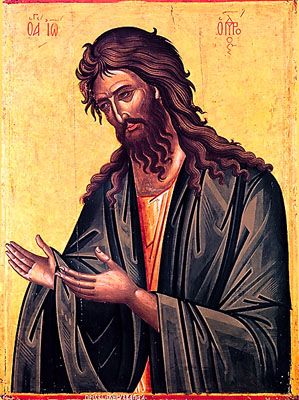
Icon of St. John the Baptist (16th c.) Dionysiou Monastery

Today, in Mercy, we celebrate one of the greatest figures of the Bible, John the Baptist. He prepared the way for the Lord.

Thinking of John’s role in Salvation History, I am reminded of a captivating poem by Geoffrey Brown, author of Road of the Heart Cave:

The Heart Cave

I must remember

To go down to the heart cave
& sweep it clean; make it warm
with a fire on the hearth,
& candles in their niches,
the pictures on the walls
       glowing with a quiet light.
       I must remember

To go down to the heart cave
       & make the bed
with the quilt from home,
strew
the rushes on the floor
hang
lavender and sage
         from the corners.
         I must go down
                                           To the heart cave & be there
                                           when You come.


John the Baptist went down to the heart cave of our human perception of God.  He understood, in an inexpressible way, that God was about to do something astounding in human history.  God was about to become part of it!

John understood this with unquestioning faith, the way we understand heaven but cannot rationalize it. Understanding it, he knew that the world needed to turn itself toward God – to repent – in radical and ardent expectation.

This was his call and his message – this extraordinary man, dressed in his camel hair vestments, preaching at the desert’s edge.


We might pray with John today to be turned from anything that distracts us from God, to long for God’s presence in our hearts and in our world, to love deeply and make a welcome home for Christ within us.


( On this Feast, 55 years ago, my entrance companions and I professed our vows. I think of all of them with love today. May I humbly ask you, dear readers, to join me in prayer for us as we thank God for the gift of our lives in Mercy.)


Music: “Utqueant laxis” or “Hymnus in Ioannem” is a Latin hymn in honor of John the Baptist written in Horatian Sapphics and traditionally attributed to Paulus Diaconus, the eighth-century Lombard historian. It is famous for its part in the history of musical notation, in particular solmization (do-re-mi-fa-so-la-ti-do). The hymn is sung to a Gregorian chant, and introduces the original do-re-mi music

1. O for your spirit, holy John, to chasten
Lips sin-polluted, fettered tongues to loosen;
So by your children might your deeds of wonder
Meetly be chanted.

2. Lo! a swift herald, from the skies descending,
Bears to your father promise of your greatness;
How he shall name you, what your future story,
Duly revealing.

3. Scarcely believing message so transcendent,
Him for a season power of speech forsaketh,
Till, at your wondrous birth, again returneth,
Voice to the voiceless.

4. You, in your mother’s womb all darkly cradled,
Knew your great Monarch, biding in His chamber,
Whence the two parents, through their offspring’s merits,
Mysteries uttered.

5. Praise to the Father, to the Son begotten,
And to the Spirit, equal power possessing,
One God whose glory, through the lapse of ages,
Ever resounding. Amen.

Wednesday of the Twelfth Week in Ordinary Time

Wednesday, June 23, 2021

Today, in God’s Lavish Mercy, we pray with Psalm 105, a sacred invitation to rest confidently in God.

Glory in God’s holy name;
    rejoice, O hearts that seek the LORD!
Look to the LORD’s strength;
    seek to serve God wholeheartedly.

Psalm 105:3-4

Our trust is based on God’s infinite memory, mindful of us with every breath of our lives. We are asked to remember too.

The Lord remembers the covenant for ever.

Psalm 105:8

Jesus reminds us of this covenant in our Alleluia verse from John’s Gospel:

Let’s just be cradled in these holy promises as we pray today.


Poetry: Trust by Thomas R. Smith

It’s like so many other things in life   
to which you must say no or yes.                                    
So you take your car to the new mechanic.   
Sometimes the best thing to do is trust.   
The package left with the disreputable-looking   
clerk, the check gulped by the night deposit,   
the envelope passed by dozens of strangers—   
all show up at their intended destinations.   
The theft that could have happened doesn’t.   
Wind finally gets where it was going   
through the snowy trees, and the river, even               
when frozen, arrives at the right place.                        
And sometimes you sense how faithfully your life   
is delivered, even though you can’t read the address.


Music: two songs today. I liked them both a lot and didn’t want to deprive you of either.

Rest in God – Brian Doerksen

Rest – Steve Green