Idolatry

Memorial of Saint Pius X, Pope
Monday of the Twentieth Week in Ordinary Time
August 21, 2023

Today’s Readings:

https://bible.usccb.org/bible/readings/082123.cfm


Today, in God’s Lavish Mercy, our two readings connect to remind us of an essential truth: stay faithful to God’s Word in order to live in peace, justice, and joy.


The passage from Judges recounts the topsy-turvy history of Israel around 800 years before Christ. It was a time when various Judges served as leaders before the eventual establishment of the kingdom under Samuel.

The Twelve Judges of Israel (in technicolor!)

These were tough times for Israel. One after another, hostile forces rose against them. During each threat, someone would emerge as a deliverer and, with their heroic success, endure for a while as the Judge.


The writer equates Israel’s ups and downs with God’s pleasure or displeasure with the people. When the people broke faith, God punished them with political turmoil. When the people were repentant, God provided a deliverer.

Of course, this is an overly simplified interpretation of events. By infusing God with the human qualities of anger and appeasement, the writer explains complex history as a simple quid pro quo: You’re bad, you get zapped. You’re good, you get rewarded.


We know that our God does not vacillate between angry punishment and satisfied recompense. God is always loving, forgiving, and nurturing. So what can this passage teach us about our own faith life and the spiritual culture of our times?

I found a key reflection point in the passage’s initial phrase: The children of Israel offended the LORD by serving the Baals.

The “Baals” are false gods erected by those who manipulate “faith” to advance their self-absorbed agendas. In the time of the Judges, these Baals might have been represented by carved idols, or natural phenomena such as the moon or stars. In the end, this idolatry – like all idolatries – rewarded some hidden promoter with money, power, or influence.


But what are the “Baals” of our culture? What is our modern idolatry?

Britannica Dictionary offers this definition of idolatry: “A person becomes guilty of a more subtle idolatry, however, when, although overt acts of adoration are avoided, he attaches to a creature the confidence, loyalty and devotion that properly belong only to the Creator.”

As we pray with this passage, we might look to our own society with its infectious materialism, nationalism, consumerism, racism, sexism. These and other imposed societal shackles serve to bind some in order to exalt others to idol status. As it is with any communicable disease, some of these systems – acknowledged or not – may be lurking within us.


Worship of these “isms” falsly legitimizes:

  • the usurpation of the poor in a credit-bound economic system
    (e.g. how many times have you been offered “revolving credit” which makes money on ever-increasing interest rates)
  • the armed control of the defenseless
    (e.g. the insurmountable influence of the gun lobby to produce weapons of mass destruction despite the repeated massacres of our children)
  • the supersession of the haves over the have-nots
    (e.g. college placement of moneyed descendants over academically superior disadvantaged applicants)
  • the veiled acquiescence to white-advantage
    (e.g. entrenched indifference to colorless board rooms, executive suites, and other decision-making forums)
  • the subtle second-classism toward and objectification of women
    (e.g. the range of systemic oppressions suffered by women, from Taliban terrors and sex trafficking to indefensible Church exclusions)

Our Gospel clearly states the antidote to such idolatry:

Jesus answered the young man:

There is only One who is good.
If you wish to enter into life,

keep the commandments:
(Love God above all things,
and your neighbor as yourself.)

Jesus tells him further that if he wishes to be perfect, he will:

  • dispossess himself of anything that distracts him from God
  • follow Jesus and the Gospel with all his heart

I never read that Gospel without realizing that, just like that young man, I have a lot of work to do on my own often idolatrous soul.


Poetry: Sell All You Have – Malcolm Guite

To whom, exactly, are you speaking Lord?
I take it you’re not saying this to me,
But just to this rich man, or to some saint
Like Francis, or to some community,
The Benedictines maybe, their restraint
Sustains so much. But I can’t bear this word!
I bought the deal, the whole consumer thing,
Signed up and filled my life with all this stuff,
And now you come, when I’ve got everything,
And tell me everything is not enough!
But that one thing I lack, I cannot get.
Sell everything I have? That’s far too hard
I can’t just sell it all… at least not yet,
To whom exactly, are you speaking Lord?

Music: Simple Living (A Rich Young Man) – Keith & Kristyn Getty, Stuart Townend

All Are Welcome

Twentieth Sunday in Ordinary Time
August 20, 2023

Today’s Readings:

https://bible.usccb.org/bible/readings/082023.cfm


Christ and the Canaanite Woman – Annibale Carracci

Today, in God’s Lavish Mercy, we read the story of the Canaanite woman whom Jesus first meets with sarcastic banter. The banter however serves to expose some of the alienating prejudices of Jesus’s time which he then dissolves in a sweeping act of mercy and inclusion.

But the woman came and did Jesus homage, saying, “Lord, help me.”
He said in reply,
“It is not right to take the food of the children
and throw it to the dogs.”
She said, “Please, Lord, for even the dogs eat the scraps
that fall from the table of their masters.”
Then Jesus said to her in reply,
“O woman, great is your faith!
Let it be done for you as you wish.”

Matthew 15:25-28

The outcast Canaanite woman prevails on Jesus to broaden his kingdom. His response is to open his heart to another way of bringing mercy to all those longing for it. Jesus’s words and actions signify a new culture of divine justice offered to all people. They alert his reticent disciples to practice the same kind of generous, inclusive mercy in their ministries.


Our Gospel challenges us to confront our own prejudices and any limitations we place on who is welcome in the Kingdom of God. It clearly establishes a single element as the determiner of who belongs to God’s new Reign of Love. That element is FAITH.

Then Jesus said to her in reply,
O woman, great is your faith
Let it be done for you as you wish.” 


Prose for Reflection: Pope Francis continually encourages the Church toward this faith-defined inclusivity.

Being the church, being the people of God, … means being God’s leaven in this our humanity. It means proclaiming and bearing God’s salvation in this our world, which is often lost and needful of having encouraging answers, answers that give hope, that give new energy along the journey.

May the church be the place of God’s mercy and love where everyone can feel themselves welcomed, loved, forgiven and encouraged to live according to the good life of the Gospel. And in order to make others feel welcomed, loved, forgiven and encouraged, the church must have open doors so that all might enter. And we must go out of those doors and proclaim the Gospel.”


Music: All Are Welcome – Marty Haugen

Let us build a house
Where love can dwell
And all can safely live
A place where
Saints and children tell
How hearts learn to forgive
Built of hopes and dreams and visions
Rock of faith and vault of grace
Here the love of Christ shall end divisions
All are welcome, all are welcome
All are welcome in this place

Let us build a house where prophets speak
And words are strong and true
Where all God's children dare to seek
To dream God's reign anew
Here the cross shall stand as witness
And a symbol of God's grace
Here as one we claim the faith of Jesus
All are welcome, all are welcome
All are welcome in this place

Let us build a house where love is found
In water, wine and wheat
A banquet hall on holy ground
Where peace and justice meet
Here the love of God, through Jesus
Is revealed in time and space
As we share in Christ the feast that frees us
All are welcome, all are welcome
All are welcome in this place

The Darks and Lights of Scripture

Saturday of the Nineteenth Week in Ordinary Time
August 19, 2023

Today’s Readings:

https://bible.usccb.org/bible/readings/081923.cfm


Today, in God’s Lavish Mercy, we have the last of our readings from the Book of Joshua, writings that tell the story of Israel from the conquest of Canaan to the Babylonian exile. Joshua is a difficult book to read for at least two reasons: it is dull and boring, and it is full of brutality and violence.

Modern scholars tend to agree that the bloody battles described in Joshua never happened and that the Book should be viewed more as legend or myth. So why is it even included in the Bible to which we look for inspiration in building a peaceful and just world? It is hard work to find nuggets of this kind of inspiration in the Book of Joshua! (But there are a few, I must admit. Here is one of my favorites:)


Actually, the Book of Joshua is not alone in the challenges it tosses at its readers.. There are many passages in the Hebrew Scriptures that might cause us to flinch at their tone or violence. They are particularly upsetting when they implicate God as a condoner of such violence.

God’s tone in today’s passage might strike us in this way:

Joshua in turn said to the people,
“You may not be able to serve the LORD, for he is a holy God;
he is a jealous God who will not forgive
your transgressions or your sins.
If, after the good he has done for you,
you forsake the LORD and serve strange gods,
he will do evil to you and destroy you.

Joshua 24:19-20

When I read that passage I say to myself, “Wait a minute, Joshua!!! That’s not the God I know and love. So what can this passage teach me?”

Feminist theologian Carolyn Sharp writes that Joshua has “important potential to draw contemporary communities of faith into reflection on their own subjectivity, the power dynamics that energize and fracture their common life, and their need for robust and ongoing reformation. Joshua remains a disturbing book, and the first step toward ethical appropriation of its truth is to acknowledge that.”


We may choose to skip over disturbing and confusing passages like some found in Joshua. But the Church includes some of them in the liturgical readings because every scripture passage has something to teach us – just like every person has something to teach us.

From some people, we learn what we want to be like in life. And from others we learn exactly the opposite. So it is with scripture. Reading with a critical eye and a converted heart, we can benefit both from the positive and the negative energy in various Bible passages. And, as Christians, we must read all Scripture in the ultimate light of Jesus Christ and his Gospel.


Of course, as we pray with Scripture, we more readily appropriate those passages that touch our spirits with light and joy. We have such a passage in today’s Gospel:

Children were brought to Jesus
that he might lay his hands on them and pray.
The disciples rebuked them, but Jesus said,
“Let the children come to me, and do not prevent them;
for the Kingdom of heaven belongs to such as these.”
After he placed his hands on them, he went away.

Matthew 19:13-15

Poetry: God’s Grandeur – Gerard Manley Hopkins

The world is charged with the grandeur of God.
It will flame out, like shining from shook foil;
It gathers to a greatness, like the ooze of oil
Crushed. Why do men then now not reck his rod?
Generations have trod, have trod, have trod;
And all is seared with trade; bleared, smeared with toil;
And wears man’s smudge and shares man’s smell: the soil
Is bare now, nor can foot feel, being shod.
And for all this, nature is never spent;
There lives the dearest freshness deep down things;
And though the last lights off the black West went
Oh, morning, at the brown brink eastward, springs—
Because the Holy Ghost over the bent
World broods with warm breast and with ah! bright wings.

Music: Speak, O Lord – Stuart Townend

God’s Mercy Endures Forever

Friday of the Nineteenth Week in Ordinary Time
August 18, 2023

Today’s Readings:

https://bible.usccb.org/bible/readings/081823.cfm

Today, in God’s Lavish Mercy, we pray with Psalm 136 – a short course in Bible history – some of which we also read in the first reading from Joshua:

Thus says the LORD, the God of Israel:
In times past your fathers, down to Terah,
father of Abraham and Nahor,
dwelt beyond the River and served other gods.
But I brought your father Abraham from the region beyond the River
and led him through the entire land of Canaan.
I made his descendants numerous, and gave him Isaac.
To Isaac I gave Jacob and Esau.
To Esau I assigned the mountain region of Seir in which to settle,
while Jacob and his children went down to Egypt ……

Joshua 24:2-4

Didn’t you love Bible History when you were in school? I remember my little 1950’s McLoughlin Notes and my old Benzinger Bible History book. 

An exciting Bible story was a welcome change to droll history and geography. Sister Stella Mercedes had the great Bible figures pinned over the blackboard, just above the permanent, perfectly painted border which warned me, (fruitlessly🤣), never to lie:

Oh, what a tangled net we weave, when first we practice to deceive.


Psalm 136 could serve as an index for those wonderful Old Testament stories. As Walter Brueggemann notes:

In Psalm 136, the whole history is again recited, punctuated this time with the repeated refrain, “for his steadfast love endures forever.” All of Israel’s history, indeed all of world history, is an arena that exhibits God’s abiding fidelity.

Walter Brueggemann: From Whom No Secrets Are Hid

With this encouragement, today we might reflect on what our own catalogue of God’s fidelity might look like. 

  • How has God’s mercy and love endured in my life? 
  • How has God loved, protected, and delivered me? 
  • How has God deepened in me the call to responsive love?

Poetry: We might like to pray with Rev. Christine Robinson’s prayer “Mercy Forever”:

Give thanks to God, who is good—
whose mercy endures forever.
Whose love expands with the expanding universe–
whose mercy endures forever.
Whose breath gives life to matter–
whose mercy endures forever.
Who animates life with spirit–
whose mercy endures forever.
Who plants a fierce unrest in our hearts–
whose mercy endures forever.
Who bends the universe towards justice–
whose mercy endures forever.
Who holds the whole world, and our hearts–
whose mercy endures forever.
Give thanks to God, who is good—
whose mercy endures forever.


Music: How Deep, How Simple – Kathryn Kaye

An Extra Today: Our Lady of Knock

It was brought to my attention this morning that today is the Feast of Our Lady of Knock.

The Sanctuary of Our Lady of Knock, commonly referred to as Knock Shrine, is a Roman Catholic pilgrimage site and national shrine in the village of Knock, County Mayo, Ireland, where locals saw an apparition in 1879 of the Blessed Virgin Mary, Saint Joseph, Saint John the Evangelist, angels, and Jesus Christ (the Lamb of God).

Wikipedia

Here’s a lovely hymn for your prayer and enjoyment. And thanks to the leprechaun who reminded me of the Feast today.

God’s Faithfulness

Thursday of the Nineteenth Week in Ordinary Time
August 17, 2023

Today’s Readings:

https://bible.usccb.org/bible/readings/081723.cfm


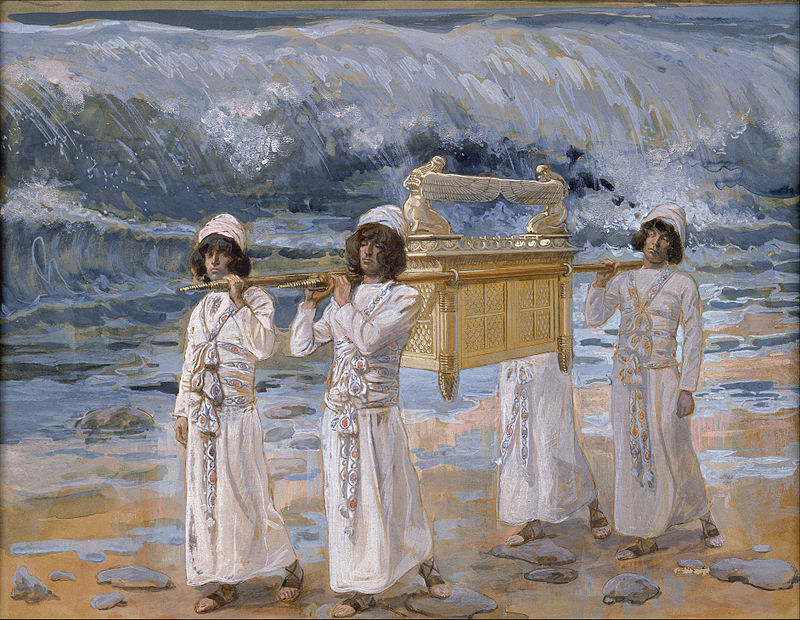
Today, in God’s Lavish Mercy, we pray with Psalm 114, eight short but extremely powerful verses. They summarize the entire faith journey of Israel, a People born in the Exodus and coming to full promise as they pass over the Jordan.

Crossing the Jordan by James Tissot

Our first reading describes the Jordan passage which mirrors the miraculous passage through the Red Sea. Joshua becomes the new Moses leading the people, finally, into the Promised Land.

As early as the 6th century, Psalm 114 was included in funeral and burial liturgies in order to emphasize the triumphant and joyful character of our final passage into heaven.


It’s hard for us to think of death that way. On a purely human level, death feels sad – like an end or a loss. But our faith says differently. 

Even throughout life, in all our smaller losses, frustrations and failures, our faith encourages us to see things differently. Faith calls us to see each “exodus” , each “crossing”, as the beginning of a journey to a new promise. It calls us to remember that the seas and rivers will part – that God always makes a way.

Faith calls us to receive 
life’s contradictions and impasses 
as opportunities to learn a different way.

In Psalm 114, the poet-psalmist uses natural metaphors to remind us of God’s transformative presence in our lives. The Red Sea disappears. The Jordan River opens a path. Mountains skip and hills leap out of our way.

Why was it, sea, that you fled?
Jordan, that you turned back?
Mountains, that you skipped like rams?
You hills, like lambs?

Psalm 114:5-6

When we face turbulent seas, overwhelming passages, exoduses from the comfortable places, may we find courage in remembering God’s faithfulness as Psalm 114 encourages us to do.


Poetry: The Valley of Vision – Taken from The Valley of Vision: A Collection of Puritan Prayers & Devotions, edited by Arthur Bennett.

Lord, high and holy, meek and lowly,
Thou hast brought me to the valley of vision,
where I live in the depths but see Thee in the heights;
hemmed in by mountains of sin I behold Thy glory. 
Let me learn by paradox that the way down is the way up,
that to be low is to be high,
that the broken heart is the healed heart,
that the contrite spirit is the rejoicing spirit,
that the repenting soul is the victorious soul, 
that to have nothing is to possess all,
that to bear the cross is to wear the crown,
that to give is to receive,
that the valley is the place of vision.
Lord, in the daytime stars can be seen from deepest wells, 
and the deeper the wells the brighter Thy stars shine;
let me find Thy light in my darkness,
Thy life in my death,
Thy joy in my sorrow,
Thy grace in my sin,
Thy riches in my poverty,
Thy glory in my valley.

Music: God Will Make a Way – Don Moen

Gathered in God’s Name

Wednesday of the Nineteenth Week in Ordinary Time
August 16, 2023

Today’s Readings:

https://bible.usccb.org/bible/readings/081623.cfm


Today, in God’s Lavish Mercy, our readings confirm the power of call and community.

In this final reading from Deuteronomy, God shows Moses the Promised Land. The description is sweepingly triumphant in tone:

Moses went up from the plains of Moab to Mount Nebo,
the headland of Pisgah which faces Jericho,
and the LORD showed him all the land—
Gilead, and as far as Dan, all Naphtali,
the land of Ephraim and Manasseh,
all the land of Judah as far as the Western Sea,
the Negeb, the circuit of the Jordan
with the lowlands at Jericho, city of palms,
and as far as Zoar.

Deuteronomy 34:1-3

There in front of Moses is the entire vision of what his life’s call was all about. Moses’s journey is now complete and his death is memorialized by the Deuteronomist in the uttermost terms:

Since then no prophet has arisen in Israel like Moses,
whom the LORD knew face to face.
He had no equal in all the signs and wonders
the LORD sent him to perform in the land of Egypt
against Pharaoh and all his servants and against all his land,
and for the might and the terrifying power
that Moses exhibited in the sight of all Israel.

Deuteronomy 34: 10-12

Joshua now assumes a leadership role among the people who have been formed by God, under Moses’s mentorship, into the community of Israel. Joshua, with the people, will continue to shape Israel into a true “People of God”.


Our Gospel reading today describes how the power of community also shapes Christian life.

In Matthew 18, Jesus teaches his disciples a lesson in a particular element of community: fraternal correction. Fraternal correction is a concept often misinterpreted by its would-be practitioners. Here is a good description of what fraternal correction is and is not:

Fraternal correction is an ancient, Christian understanding of what it means to help each other grow in holiness. It is not a reaction to injury suffered, it is not vengeance, it is not revenge, it is not a reaction because I am hurting. But instead, it happens when I am moved by love for my brother or sister. It happens when I am moved to assist my brother or sister in growth or holiness.

Fr. Matthew Spenser, OSJ, Provincial of the Oblates of St. Joseph

Sisters of Mercy Community – Buffalo Founding Event, 1991


A community gathered in God’s Name depends on its members to exercise leadership, followership, sororal and fraternal correction, and unlimited goodwill for one another. Moses did it. Joshua did too. And Jesus certainly modeled and taught us how to live with and for one another in community.

Today’s readings might inspire us to consider the level of our own commitment to the communities which sustain our life: family, Church, religious community, as well as the civic, global, and universal contexts in which we live. We are leaders in some of these communities. We are followers in others. In all of them, we are members – a graced status that calls us to active and responsive love.


Prayer: Prayer for Community
This prayer comes from the same site as our readings – The USCCB: United States Conference of Catholic Bishops

Embracing Father,
You grace each of us with equal measure in your love.
Let us learn to love our neighbors more deeply,
so that we can create
peaceful and just communities.
Inspire us to use our creative energies
to build the structures we need
to overcome the obstacles
of intolerance and indifference.
May Jesus provide us the example needed
and send the Spirit to warm our hearts for the journey.
Amen

Music: even Sesame Street can offer a little community “theology” 🙂

Mother, Sister, Friend

Solemnity of the Assumption of the Blessed Virgin Mary
August 15, 2023

Today’s Readings:

https://bible.usccb.org/bible/readings/081523-Day.cfm


Today, in God’s Lavish Mercy, we pray with our dear Mother, Sister, and Friend – Mary, mother of Jesus.

For this feast and others over the years, I have offered a good bit of Marian theology which you can access through the search function on the right of my homepage. But for today, I feel like just a simple, quiet prayer with Mary might be the right thing for our reflection.


This passage is from The Flowering Tree by Caryll Houselander.

She is a reed,
straight and simple,
growing by a lake
in Nazareth:

a reed that is empty,
until the Breath of God
fills it with infinite music:

and the breath of the Spirit of Love
utters the Word of God
through an empty reed.
The Word of God
is infinite music
in a little reed:

it is the sound of a Virgin’s heart,
beating in the solitude of adoration;
it is a girl’s voice
speaking to an angel,
answering for the whole world;
it is the sound of the heart of Christ,
beating within the Virgin’s heart;
it is the pulse of God,
timed by the breath of a Child.

The circle of a girl’s arms
has changed the world–
the round and sorrowful world–
to a cradle for God….

Be hands that are rocking the world
to a kind rhythm of love;
that the incoherence of war
and the chaos of our unrest
be soothed to a lullaby;
and the round and sorrowful world,
in your hands,
the cradle of God.

Music: Ave Maria – Daniela de Santos playing the Bach/Gounod version of this beautiful prayer

In Grateful Awe

Memorial of Saint Maximilian Kolbe, Priest and Martyr
Monday of the Nineteenth Week in Ordinary Time
August 14, 2023

Today’s Readings:

https://bible.usccb.org/bible/readings/081423.cfm


Today, in God’s Lavish Mercy, Moses recounts for the people God’s immense generosity toward them.

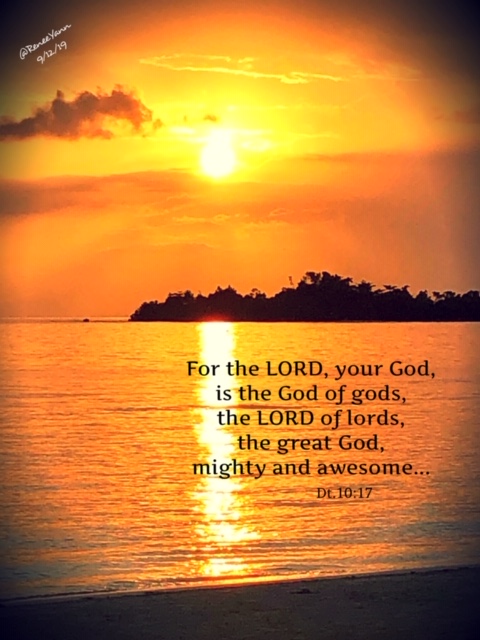
Dt10_7awesome God

Have you ever heard yourself, or someone dear to you, saying, “God has been so good to me!” Such a statement rises out of our awe at God’s love and mercy to us.

The deeper our faith, the clearer our insight into these gifts. I have heard people in the sparest of circumstances utter such a prayer. How can they do that, we might ask?


In all cases, there is a beautiful humility, trust, and generosity emanating from their spirits. Gratitude has transformed them. Hope, not wishing, has freed them.

Moses wants his People to be like that. He says:

Think! The heavens, even the highest heavens,
belong to the LORD, your God,
as well as the earth and everything on it.
Yet in his love for your fathers the LORD was so attached to them
as to choose you, their descendants …

This is your glory, he, your God,
who has done for you those great and awesome things
which your own eyes have seen.


I want to be that kind of grateful, faith-filled person too. Don’t you?

Today’s profound advice from Moses can help us as we pray its words into our own lives.


Poetry: Praying the whole of today’s Responsorial Psalm 147 can also help us recognize our blessings. I love this transliteration by Christine Robinson.

Psalm 147 - Mother of All Creation
It is good to sing praises to you,
Mother of all creation.
And to recognize the touch of your love.
You bring us home, help us heal,
You love your creation
You call every one of your stars by name.
You bless the young, the poor, the ill
You wait forever for the lost to turn to you.
Your love is music to our hearts, and we sing.
You are in the clouds that darken the sky
You send the rain which gives us life.
The cycles of the seasons and the growth of the plants
are your delight.
You provide food for the wild animals
even the young ravens when they cry.
You love the horse’s proud strength
and the athlete’s prowess.
You crave our love and attention.
And so we pray.
We give thanks for life, for children, for the beauty of the snow
that lies soft in the morning.
We give thanks for the storm,
the hail, scattered like popcorn on the grass.
We are in awe of your power.
When the seasons turn, the growing warmth
reminds us of your warmth
The flowing waters remind us
of the life which comes from you.
Thank you, Mother of us all, help us
to keep your love in our hearts and to love your creation.

Music: Your Grace Still Amazes Me – Philips, Craig and Dean

Holy Whisper

Nineteenth Sunday in Ordinary Time
August 13, 2023

Today’s Readings:

https://bible.usccb.org/bible/readings/081323.cfm


Today, in God’s Lavish Mercy, we pray again with beautiful Psalm 85, so famous for its described eschatological “kiss”.

I thought this painting captured the Kiss of Mercy and Justice.
I could not find an attribution.

On this 19th Sunday, each of our readings invites us to deep meditation. We might choose one of the passages to deeply explore by reading it slowly several times. Be attuned to any single word that catches your heart. Rest in that word to hear what it is saying to you.


Our Psalm serves as a bridge connecting Elijah’s gentle whisper with Paul’s impassioned wish and Jesus’s invitation to walk on water.

These powerful readings will carry a personal message to every one of us if we take time to listen. As Psalm 85 confirms:

I will hear what God proclaims;
the LORD — Who proclaims peace.
Near indeed is salvation to those who stand in awe of God,
glory dwelling in our land.

Psalm 85:9

We are shaped by our personal experiences as well as the culture of our times. Let’s take a look at our circumstances today, allowing these realities to speak to our praying hearts. 

  • Like Elijah, how is God whispering to me today?
  • Like Paul, what great desire for faith and blessing rises in my prayer?
  • Like Peter, what invitation to profound faith is God speaking to me?

Poetic Prose: from Babette’s Feast by Isak Dinesen

There comes a time when our eyes are opened. 
And we come to realize that mercy is infinite. 
We need only await it with confidence and receive it with gratitude. 
Mercy imposes no conditions. 

 And, lo!  Everything we have chosen has been granted to us. 
And everything we rejected has also been granted. 
Yes, we get back even what we rejected. 
For mercy and truth are met together. 
Righteousness and bliss shall kiss one another. 

the character General Lowenhielm


Music: When God Whispers Your Name – Matthew West

When nobody listens
When nobody cares
When you lie wounded
And no one is there

When darkness surrounds you
And when your best friend is fear
When the words “I love you”
Are all you long to hear

That’s when God whispers your name
He’s never ashamed
To call you His own
That’s when God whispers your name

In your darkest night You’ll never be alone
When God whispers your name
For the tired and weary
For the hopelessly lost His arms will surround you
His blood has paid the cost
When all you hold onto
Is slipping through your hands
When there’s no one to turn to
And no one understands

That’s when God whispers your name
He’s never ashamed
To call you His own
That’s when God whispers your name
In your darkest night
You’ll never be alone
When God whispers your name

Listen !
A still, small voice
Calling Calling

That’s when God whispers your name
He’s never ashamed
To call you His own
That’s when God whispers your name
In your darkest night
You’ll never be alone
When God whispers your name