Today, in God’s Lavish Mercy, we listen to both Jesus and Paul as they offer their farewell addresses to their beloved disciples.
It seems an appropriate time for these readings here as students close their educational years and move on to their future. The disciples of Jesus and Paul are doing the same thing. And their valedictorians are the beloved masters on whom they have come to depend.
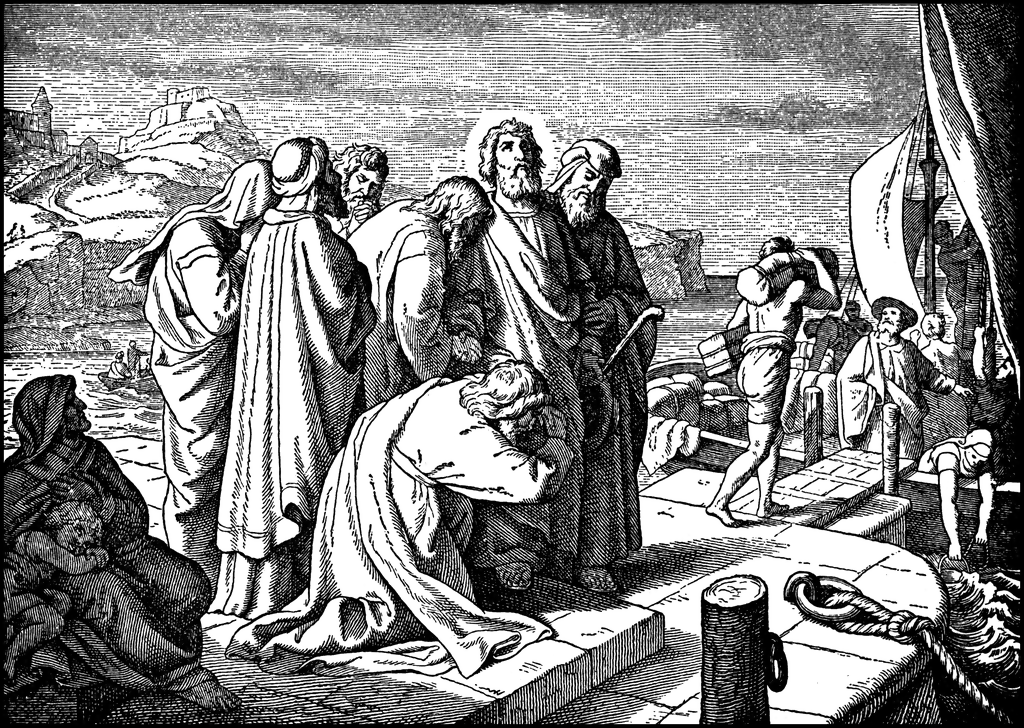
Paul and his disciples share a tearful good-bye as he departs for Rome
In Acts, Paul prepares to depart from Ephesus where he has lived for three years. It is his cherished community as we can assess from the beautiful letters Paul writes to the Church there. The disciples are heartbroken to see Paul leave, and he is quite emotional himself in his remarks:
I earnestly bore witness for both Jews and Greeks to repentance before God and to faith in our Lord Jesus. But now, compelled by the Spirit, I am going to Jerusalem. What will happen to me there I do not know…
But now I know that none of you to whom I preached the kingdom during my travels will ever see my face again. And so I solemnly declare to you this day that I am not responsible for the blood of any of you, for I did not shrink from proclaiming to you the entire plan of God.
Acts 20
Paul, declaring that he has done all that he can for the Gospel, sternly charges his followers to carry on the work of evangelization.
Jesus is a little gentler but no less dramatic in describing the charge to his disciples:
I pray for them. I do not pray for the world but for the ones you have given me, because they are yours, and everything of mine is yours and everything of yours is mine, and I have been glorified in them. And now I will no longer be in the world, but they are in the world, while I am coming to you
John 17
Both these readings speak to us, not only about the disciples’ experience of commissioning, but of our own. Our Baptismal incorporation into the faith came with a price tag — “Carry on the Gospel in your life.”
As we listen to the passion with which both Jesus and Paul advised their followers, let’s hear them speaking to us as well. Let’s listen for the unique call we are receiving through the circumstances of our particular life. Not everyone is called to be Paul, or Peter, or Lydia, or Apollos, or Silas or the others we have read about throughout Eastertide.
But we ARE called to be
_________________________________ (Fill in your name) a believer and doer in the Name of Jesus Christ
Poem: by Hafiz from Love Poems from God – Daniel Ladinsky
I am
a hole in a flute
that the Christ’s breath moves through—
listen to this
music.
Today, in God’s Lavish Mercy, our readings can serve to remind us that Christian discipleship is not always a smooth ride. There are “potholes” — as in all of life.
Pothole 1: Rejection in Lycaonia Paul, after being stoned, rejected and otherwise harassed, takes off for Derbe and Lystra to test the readiness of that community to receive the Gospel. There, Paul meets Timothy who would become a beloved friend and companion, traveling and ministering with Paul for the next decade.
Pothole 2: Sorry, Tim! But the relationship starts out with a problem. Timothy’s dad was Greek and, per custom, did not have Timothy circumcised at birth. Even though the Jerusalem apostles had adjudicated circumcision as unnecessary, Paul – who had been its main critic – requires the rite for Timothy. Paul was convinced that the Jews to whom they would be preaching would reject Timothy otherwise.
Pothole 3: Rejection in Asia They traveled through the Phrygian and Galatian territory because they had been prevented by the Holy Spirit from preaching the message in the province of Asia. (Acts 16:6)
Pothole 4: Bypassing Bithynia When they came to Mysia, they tried to go on into Bithynia, but the Spirit of Jesus did not allow them, so they crossed through Mysia and came down to Troas. (Acts 16:7)
When we see the massive success and widespread influence of the Church today, we might think it was easy to get this whole thing started – to light the fire of faith in the early years. It wasn’t! And it’s still not easy, despite some appearances.
Jesus counseled his disciples that it would be this way, and encouraged them:
Jesus said to his disciples: “If the world hates you, realize that it hated me first. If you belonged to the world, the world would love its own; but because you do not belong to the world, and I have chosen you out of the world, the world hates you. Remember the word I spoke to you, ‘No slave is greater than his master.’ If they persecuted me, they will also persecute you. If they kept my word, they will also keep yours. And they will do all these things to you on account of my name, because they do not know the one who sent me.”
John 15:18-21
That encouragement was enough for Paul and Timothy to keep going. May it be so for us, and for all who would lead the Church into the future Jesus desired for us..
Poetry: Portia Nelson, There’s a Hole in My Sidewalk from The Romance of Self-Discovery
I walk down the street. There is a deep hole in the sidewalk. I fall in. I am lost… I am helpless. It isn’t my fault. It takes forever to find a way out.
I walk down the same street. There is a deep hole in the sidewalk. I pretend I don’t see it. I fall in again. I can’t believe I am in the same place. But, it isn’t my fault. It still takes me a long time to get out.
I walk down the same street. There is a deep hole in the sidewalk. I see it is there. I still fall in. It’s a habit. My eyes are open. I know where I am. It is my fault. I get out immediately.
walk down the same street. There is a deep hole in the sidewalk. I walk around it.
I walk down another street.
Music: just for some pothole fun today – I Love My Juggernaut – an Irish lorry driven bemoans the pothole problem. Lyrics below.
This is an enjoyable Irish song highlighting a long-standing pothole problem in Cavan, a small city near the border with Northern Ireland. The town is located on the junction of two national routes, the N3 to Dublin and N55 to Athlone. Until recently there was no bypass around Cavan town to eliminate the heavy traffic passing through an already congested town –thus, the legendary pothole problem!
Oh believe it or believe it not, I love me Juggernaut !! I’ve been all over Ireland, to the North I’ve seen the lot. I’m hauling great big bales of hay, I’m heading for Mayo. With potholes all through Cavan, sure I’ll have to drive so slow.
In the morning I’m up early on the road at half past five. The air is fresh and crispy boy it’s great to be alive. I fall in behind a crawler put me foot down on the gas. But the roads are to bumpy for me Juggernaut to pass.
Chorus
Oh believe it or believe it not i love me Juggernaut !! I’ve been all over Ireland, to the North I’ve seen the lot. I’m hauling great big bales of hay, I’m heading for Mayo. With potholes all through Cavan, sure i’ll have to drive so slow.
(Johnny) “Breaker, Breaker, I’m looking for a copy” (Richie) “10/4…This is big Rich’ come back” (Johnny) “Ah, this is your auld pal Johnny” (Richie) “A, Johnny what’s your 20”
I’m in the County Offaly and I’m awfully sorry now. I broke the mirrors of me cab and I’d like to tell you how. With sceachs, bows and bushes rubbing of me load. I wish the county council would trim along the road.
Chorus
Oh believe it or believe it not I love me Juggernaut !! I‘ve been all over Ireland, to the North I’ve seen the lot. I’m hauling great big bales of hay, I’m heading for Mayo. With potholes all through Cavan, sure I’ll have to drive so slow.
(Richie) “Come back Johnny, come back”
Some people call us Juggernaut’s, Artic’s or big trucks. Some people even give us horrid dirty looks. I know you’ve got your reasons, sometimes for to frown. But did you ever try to drive a Scania through your town.
Chorus
Oh believe it or believe it not I love me Juggernaut !! I’ve been all over Ireland to the North, I’ve seen the lot. I’m hauling great big bales of hay, I’m heading for Mayo. With potholes all through Cavan, sure I’ll have to drive so slow.
(Richie) “Stay wut her Johnny, stay wut her” (Johnny ) “That’s right, that’s the truth, rev’er on the corners” (Richie) “And face her for Mount Leinster”
I know I swing me volvo all around your market square. I know that you think lorry drivers we just don’t care. But the streets are so narrow, built so many years ago. They were built for horses carts, not juggernauts you know.
Chorus
Oh believe it or believe it not I love me juggernaut!! I’ve been all over Ireland, to the North I’ve seen the lot. I’m hauling great big bales of hay, I’m heading for Mayo. With potholes all through Cavan, sure I’ll have to drive so slow.
(Richie) “Come back Johnny, come back, we’ll leave the last one to you”
I’m in the County Offaly and I’m awfully sorry now. I broke the mirrors off me cab and I’d like to tell you how. With sceachs, bows and bushes the council will not cut. When I get back to the depot, the boss will do his nut. Oh when I get back to the depot, the boss will do his nut.
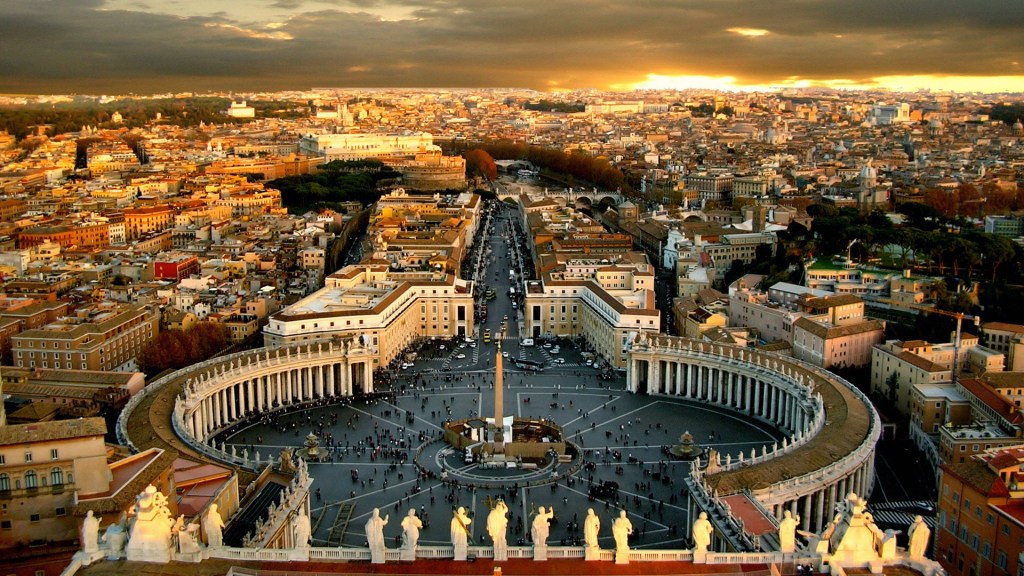
Today, in God’s Lavish Mercy, Judas Barsabbas and Silas are chosen to deliver a letter from the Apostles to the Gentiles in Antioch. It’s a critical letter – containing the apostolic decision regarding how the Antiochan church must observe religious practice.
Have you ever waited for a “decision letter”, one for which you were not sure of the outcome? Maybe a college or job acceptance letter? A bid on a new house? Or maybe a contest you entered desperate to win?
I remember waiting for the letter announcing whether or not the Sisters of Mercy would accept me into their community. It was a nerve-wracking wait for many reasons. I really wanted to be a Sister of Mercy but, after the initial interview, I wasn’t sure I could fill the bill.
The ride to the interview had seemed so distant from where I lived – in many ways. I had never seen such beautiful houses as those in the neighborhood surrounding the Motherhouse. And the entrance to the convent itself was, and still is, breath-taking. My six-foot self felt extremely small.
Sister Mary Assisium, who interviewed my parents and me, was an icon of the pre-Vatican II religious. She was perfection in her beautiful habit, cultured speech, quiet gait, and ultra-serious tone of voice. Her eyes seemed like big lakes in a sacred monument.
She scared me to death! I was a lanky, loping, gum-chewing teenager who still dropped the “g”s on my “ing”s. As we drove home from the meeting, I was pretty sure there was no way these women were going to invite me to join them! I think my parents were pretty sure too.
That interview happened on April 7, 1963. On June 2nd, I came home from work at the neighborhood deli, carrying a pastrami sandwich, to find an unopened letter lying on our dining room credenza. About ten feet away, Mom sat in the kitchen staring back and forth from the letter to me. For a few minutes, I stared back and forth from the letter to Mom, then finally got the guts to open it. It was dated May 31, 1963, Feast of the Queenship of Mary. ( After 1969, that date became Feast of the Visitation)
It said this, but in a lot of different, more beautiful words:
But the letter also implied, although not stated, an understanding that reassured my doubts.
Judas Barsabbas and Silas carried the same kind of letter to the Chrisitan Gentiles in Antioch. “You’re in. Just as you are.” And our Gospel today, tells us why that is so – Love.
Love is the test which measures us for Christianity – not religious practice, rituals, or personaility traits. The apostolic decision-makers understood this and came to a conclusion based on Gospel love.
Jesus makes this clear in our reading today, and how blessed are we to receive his invitation:
This is my commandment: love one another as I love you. No one has greater love than this, to lay down one’s life for one’s friends. You are my friends if you do what I command you. I no longer call you slaves, because a slave does not know what his master is doing. I have called you friends, because I have told you everything I have heard from my Father. It was not you who chose me, but I who chose you and appointed you to go and bear fruit that will remain, so that whatever you ask the Father in my name he may give you. This I command you: love one another.
Poetry: Acceptance – Robert Frost
When the spent sun throws up its rays on cloud
And goes down burning into the gulf below,
No voice in nature is heard to cry aloud
At what has happened. Birds, at least must know
It is the change to darkness in the sky.
Murmuring something quiet in her breast,
One bird begins to close a faded eye;
Or overtaken too far from his nest,
Hurrying low above the grove, some waif
Swoops just in time to his remembered tree.
At most he thinks or twitters softly, 'Safe!
Now let the night be dark for all of me.
Let the night be too dark for me to see
Into the future. Let what will be, be.'
Music: The Letter – by the Boxtops: Well, the Sisters of Mercy didn’t exactly say they “couldn’t live without me no more”. But that’s the way I read it! 🙂
Today, in God’s Lavish Mercy, we enfold ourselves in some of our favorite post-Easter stories. They warm our hearts with their humanness. They help us understand how people just like us processed the astounding news of the Resurrection.
Two of our beloved senior sisters … on the road together with Him…
In Acts, we find Peter and John, the same ones Mary had summoned to the empty tomb. Now, in place of their tentative searching, ministerial confidence pours out of them. The long-crippled man wants only a coin but Peter yearns to give the treasure he now knows he possesses.
By faith, Peter’s heart has risen from death with Christ, and he is compelled to share that redemption with the world:
Peter said, “I have neither silver nor gold, but what I do have I give you: in the name of Jesus Christ the Nazorean, rise and walk.”
Acts 3: 6-7
Listen, this is the same guy who, on the way to Jerusalem, begged Jesus not even to mention Calvary. This is the guy who, on Good Friday eve, cowered by the fire and denied he even knew Jesus.
Look what Easter faith can do for a doubtful, frightened heart!
ALLELUIA!
In our beautiful Gospel, a miracle dose of this faith was given to two journeying friends. Can’t you see them – perhaps two old men or women. Arm in arm, they trudge along the dusty road, gabbing their weary heads off. As evening falls, they are slowly wrapped in all kinds of inner and outer shadows:
Has this all really happened?
Wasn’t He the One we thought he might be?
Have our dearest hopes all been in vain?
When Jesus joins them, he wants to hear their mumbled questions. By his abiding, honest,and patient Presence, he walks them out of doubtful logic into faith’s freedom:
He asked them, “What are you discussing as you walk along?” They stopped, looking downcast. One of them, named Cleopas, said to him in reply, “Are you the only visitor to Jerusalem who does not know of the things that have taken place there in these days?”….
And he said to them, “Oh, how foolish you are! How slow of heart to believe all that the prophets spoke! Was it not necessary that the Christ should suffer these things and enter into his glory?” Then beginning with Moses and all the prophets, he interpreted to them what referred to him in all the Scriptures.
Luke 24: 17-18; 25-27
Jesus is listening and walking with us too. He wants to give us the same confidence Peter had as we proclaim our faith by the merciful actions of our life. Just like the Emmaus friends, let’s invite him to stay with us as evening falls.
Poetry: The Servant Girl at Emmaus (A Painting by Velázquez) by Denise Levertov
The Kitchen Maid, Diego Velazquez, National Gallery of Ireland
She listens, listens, holding
her breath. Surely that voice
is his—the one
who had looked at her, once, across the crowd,
as no one ever had looked?
Had seen her? Had spoken as if to her?
Surely those hands were his,
taking the platter of bread from hers just now?
Hands he'd laid on the dying and made them well?
Surely that face—?
The man they'd crucified for sedition and blasphemy.
The man whose body disappeared from its tomb.
The man it was rumoured now some women had seen this morning, alive?
Those who had brought this stranger home to their table
don't recognise yet with whom they sit.
But she in the kitchen, absently touching
           the winejug she's to take in,
a young Black servant intently listening,
swings round and sees
the light around him
and is sure.
Today, in God’s Lavish Mercy, we share the heartfelt experience of the early disciples captured in a few poignant comments.
Sometimes words are so full of meaning that they burst in your heart when you read them — when you hear them
Two such phrases rise up from our readings today:
Cut to the heart
In our first reading, the Easter-liberated Apostles preach the Gospel with gusto! They tell it – exactly like it is- to the crowd gathered in Jerusalem:
On the day of Pentecost, Peter said to the Jewish people, “Let the whole house of Israel know for certain that God has made him both Lord and Christ, this Jesus whom you crucified.”
Acts 2:36
….” this Jesus whom you crucified..”
For those in that crowd, these were shattering words to hear! The feeling is like when you drop a precious vase and it crumbles at your feet! What do you do now? It is too late to redeem the brokenness! They were “cut to the heart” by the realization.
But that is the wonder of the Resurrection. It is never too late! Our life in God is never irrevocably broken!
Peter, motivated by Jesus’ own act of forgiveness from the cross, said to them,
“Repent and be baptized, every one of you, in the name of Jesus Christ, for the forgiveness of your sins; and you will receive the gift of the Holy Spirit. For the promise is made to you and to your children and to all those far off, whomever the Lord our God will call.”
Acts 2:38-39
Rabbouni
Our Gospel extends this theme of restoration and hope. As we pray with its grace-filled drama, we thank John for being the only Evangelist to record this poignant moment between Jesus and Mary.
After Mary had discovered the empty tomb, and summoned the other disciples to see it, she lingers there once they have returned the city.
She doesn’t know what to do! Feel her confusion, her distress. Easter faith has not yet dawned in her. She thinks the precious body of Jesus has been stolen, perhaps desecrated – again, like a beautiful vessel splintered and lost forever.
Then she turns toward the Light – as we all must do when we are overshadowed in doubt.
She said to the angels, “They have taken my Lord, and I don’t know where they laid him.” When she had said this, she turned around and saw Jesus there…
John 20:14
Still, she doesn’t fully recognize him until he lovingly speaks her name. Then she in turn utters the word so full of devotion and love: Rabbouni
Noli Me Tangere – Antonio Corregio
Think about it! You can imagine how she felt when she said it – just like you would feel if you thought you had lost a Beloved but they returned to you alive and transformed!
Let’s be with Jesus and Mary in this sacred moment, hearing our own name spoken by our Beloved, responding in amazed tenderness from the depths of our heart.
Poetry: Rabboni! by John Banister Tabb (1845 – 1909) an American poet, Roman Catholic priest, and professor of English.
"I bring thee balm, and, lo, Thou art not here!
Twice have I poured mine ointment on Thy brow,
And washed Thy feet with tears. Disdain'st Thou now
The spikenard and the myrrh?"
“Has Death, alas, betrayed Thee with a kiss
That seals Thee from the memory of mine?”
“Mary!” It is the self-same Voice Divine.
"Rabboni!" -- only this.
Music: Rabboni – Ken Young
You were there when the world had turned against me. When the darkness had possessed my soul, Your tender mercy made me whole. When I followed You, my life was filled with meaning From the morning to the evening. I’ve seen the face of God.
Chorus: Rabboni! My Teacher and my God! You’re alive and my burdens melt away. Rabboni! Sweet Son of God Most High! I know death has lost its power And Your glory’s here to stay. (repeat).
When I close my eyes I can hear Your voice so clearly saying, “Father, please forgive them, For they know not what they do.” What good reason did they have to do The things they did to You?
So I come once again bringing all I have to offer, Just to find a dark and empty tomb, Your holy frame somehow exhumed. Then I hear someone say, “Why are tears so freely falling? Can’t You hear the voice that’s calling? A voice that knows Your name.”
Today, in God’s Lavish Mercy, Acts recounts some of the challenges Paul and Barnabas met as they continued spreading the Gospel. With such a reading, we see the beginnings of theological arguments in the unfolding teaching of the Church.
The Apostles Barnabas and Paul tore their garments when they heard this and rushed out into the crowd, shouting, “Men, why are you doing this? We are of the same nature as you, human beings. We proclaim to you good news that you should turn from these idols to the living God, who made heaven and earth and sea and all that is in them.
Acts 14:14-15
One might wonder what turned yesterday’s Jewish and Gentile listeners into a stone-throwing mob. One wonders it today regarding some of the acrimonious factions within the Church.
It is one thing to receive the Gospel with one’s heart and spirit. It is another thing to receive it with one’s mind. As human beings, we resist mystery; we long for logic. We are more comfortable with a problem we can solve than with a Truth beyond our comprehension. Rather than Infinite Surprise, I think most of us prefer predictability and control.
The Gospel can be fearsome. It asks that we let go of our limited human “geometry”; that we entrust everything to the Inclusive Love who is Jesus Christ. It asks us to open ourselves to the Holy Spirit who, ultimately, will “teach us EVERYTHING”.
In our recent readings, we’ve seen Thomas, Philip, and today, Jude the Apostle trying to reach this level of spiritual trust. It’s hard because such trust is more than human. It is a trust bred of the Holy Spirit within us. It is a trust born of living fully in Peace with that Presence.
Judas, not the Iscariot, said to him, “Master, then what happened that you will reveal yourself to us and not to the world?” Jesus answered and said to him, “Whoever loves me will keep my word, and my Father will love him, and we will come to him and make our dwelling with him.
John 14:22-23
It is a trust described like this in tomorrow’s Gospel reading:
Peace I leave with you; my peace I give to you. Not as the world gives do I give it to you. Do not let your hearts be troubled or afraid.
Let us pray for trust and peace in ourselves, our Church, and our world.
Poetry: The Peace of Wild Things – Wendell Berry
When despair for the world grows in me
and I wake in the night at the least sound
in fear of what my life and my children’s lives may be,
I go and lie down where the wood drake
rests in his beauty on the water, and the great heron feeds.
I come into the peace of wild things
who do not tax their lives with forethought
of grief. I come into the presence of still water.
And I feel above me the day-blind stars
waiting with their light. For a time
I rest in the grace of the world, and am free.
Music: Wonderful Peace – an old Gospel song by Warren Cornell and William Cooper (1899), sung here by Don Moen
Far away in the depths of my spirit tonight Rolls a melody sweeter than psalm; In celestial strains it unceasingly falls O’er my soul like an infinite calm.
Peace, peace, wonderful peace, Coming down from the Father above! Sweep over my spirit forever, I pray In fathomless billows of love!
Ah, soul! are you here without comfort and rest, Marching down the rough pathway of time? Make Jesus your Friend ere the shadows grow dark; O accept of this peace so sublime!
What a treasure I have in this wonderful peace, Buried deep in the heart of my soul, So secure that no power can mine it away, While the years of eternity roll!
I am resting tonight in this wonderful peace, Resting sweetly in Jesus’ control; For I’m kept from all danger by night and by day, And His glory is flooding my soul!
And I think when I rise to that city of peace, Where the Anchor of peace I shall see, That one strain of the song which the ransomed will sing In that heavenly kingdom will be:
Peace, peace, wonderful peace, Coming down from the Father above! Sweep over my spirit forever, I pray In fathomless billows of love!
Peter’s Vision of the Sheet – By Domenico Fetti – Kunsthistorisches Museum Wien, Bilddatenbank., Public Domain
Today, in God’s Lavish Mercy, we have the long story and explanation by Peter about who can be welcomed into the Community.
The earliest Christians were all Jews. Their beginning Christian rituals had deep roots in Jewish tradition. Their entire expectation of a Messiah was wrapped in the garment of the Old Testament. So it was hard for them to comprehend that Gentiles might also be saved by the Blood of Christ.
We might be tempted to consider these Jewish Christians very provincial, parochial, or even prejudiced in their closed attitudes. But maybe we should just look in the mirror!
It seems to be an enduring human inclination that, rather than – like Peter – seek a road to inclusion, we claim privilege for ourselves and exclude others on all kinds of bases:
She’s a woman, so she can’t…. whatever…
He’s gay, so he can’t …
She’s divorced, so she can’t…
He’s pro-life, or pro-choice, so he can’t…
She’s a Muslim, an atheist, and (irony of ironies) a Jew, so she can’t…
He’s too young – She’s too old – so they can’t …
Maybe in your own life, you have felt the pain of some of these suggested or blatant exclusions.
Jesus, in our Gospel, has a whole different approach to whom he loves. All creatures belong to him and will be brought to the Father in love.
I am the good shepherd, and I know mine and mine know me, just as the Father knows me and I know the Father; and I will lay down my life for the sheep. I have other sheep that do not belong to this fold. These also I must lead, and they will hear my voice, and there will be one flock, one shepherd.
Let us pray today to know and love our God ever more intensely. Let us ask to experience God’s infinite love and knowledge of us so that our unquenchable joy, humble gratitude, and limitless charity grow more evident.
Let us pray these gifts for all our sisters and brothers, no matter by what gate they come to the sheep fold.
Quote: I couldn’t find the original source, but it is a quote common in Eastern Spirituality:
We are all One. There is no Other.
Music: They’ll Know We Are Christians By Our Love
This is an interesting rendering of an old hymn. Kind of touched my heart.
Today, in God’s Lavish Mercy, Peter is a headliner in both our readings.
I really love Peter. Can’t we relate to him on so many levels as he stumbles and shines through his growing relationship with Jesus?
Some of my best prayers with Peter have been:
when he tries to walk on water to meet Jesus in the sea
And Peter answered him, “Lord, if it is you, command me to come to you on the water.” He said, “Come.” So Peter got out of the boat and walked on the water and came to Jesus. But when he saw the wind, he was afraid, and beginning to sink he cried out, “Lord, save me.” Mk.14:28
when he gets slammed for trying to stop Jesus from talking about his death
Peter took Him aside and began to rebuke Him. “Far be it from You, Lord!” he said. “This shall never happen to You!” But Jesus turned and said to Peter, “Get behind me, Satan! You are a stumbling block to me!” Mt. 13:41
when his name is changed to Rock and he’s foretold his future
And I tell you that you are Peter, and on this rock I will build my church, and the gates of Hades will not overcome it. Mt. 16:18
when he cowers in denial outside Jesus’s trial
Immediately the rooster crowed the second time. Then Peter remembered the word Jesus had spoken to him: “Before the rooster crows twice you will disown me three times.” And he broke down and wept. Mk. 14:72
when he recognizes the Resurrected Jesus on the shore and swims to him
Then the disciple whom Jesus loved said to Peter, “It is the Lord!” As soon as Simon Peter heard him say, “It is the Lord,” he wrapped his outer garment around him (for he had taken it off) and jumped into the water. Jn.21:7
In today’s first reading, we see Peter in his full authority as the Vicar of Christ.
In our Gospel, we see Peter’s unequivocal confession of faith, voiced for the Church, voiced for all of us:
Jesus then said to the Twelve, “Do you also want to leave?” Simon Peter answered him, “Master, to whom shall we go? You have the words of eternal life. We have come to believe and are convinced that you are the Holy One of God.”
Let’s take whatever piece of Peter is in us today and lay it at the feet of Jesus in our own confession of faith and hope.
Poetry: Simon Peter – John Poch
There are three things which are too wonderful for me, Yes, four which I do not understand. The way of an eagle in the air, The way of a serpent on a rock, The way of a ship in the heart of the sea, And the way of a man with a maid –Prov. 30:18, 19
I Contagious as a yawn, denial poured over me like a soft fall fog, a girl on a carnation strewn parade float, waving at everyone and no one, boring and bored There actually was a robed commotion parading. I turned and turned away and turned. A swirl
of wind pulled back my hood, a fire of coal brightened my face, and those around me whispered: You’re one of them, aren’t you? You smell like fish. And wine, someone else joked. That’s brutal. That’s cold, I said, and then they knew me by my speech. They let me stay and we told jokes like fisher- men and houseboys. We gossiped till the cock crowed, his head a small volcano raised to mock stone.
II Who could believe a woman’s word, perfumed in death? I did. I ran and was outrun before I reached the empty tomb. I stepped inside an empty shining shell of a room, sans pearl. I walked back home alone and wept again. At dinner. His face shone like the sun.
I went out into the night. I was a sailor and my father’s nets were calling. It was high tide, I brought the others. Nothing, the emptiness of business, the hypnotic waves of failure. But a voice from shore, a familiar fire, and the nets were full. I wouldn’t be outswum, denied this time. The coal-fire before me, the netted fish behind. I’m carried where I will not wish.
Today, in God’s Lavish Mercy, in our reading from Acts, we meet the Ethiopian eunuch who served the country’s Queen. The man was sitting in a chariot reading the prophet Isaiah. Philip asks him, “Do you understand what you are reading?” He replied, “How can I, unless someone instructs me?” Philip’s instruction results in this faith-filled man’s Baptism.
It’s a bible story I’ve loved since I was a novice and read the excellent book by Alexander Jones, “Unless Some Man Show Me”. That long-ago era in my life was a time when Vatican II opened up to the faithful the power and beauty of scriptural study and prayer.
The 1960s were a wonderful time to be committing myself to a life-long spiritual journey. Over the next few years, I devoured the published documents of Vatican II which included the one on sacred scripture, the “Dogmatic Constitution on Divine Revelation” (“Dei Verbum”).
Before Vatican II, like many Catholics, I had had limited experience with scripture. Mainly, we had it read to us at Mass. We had a Bible in my childhood home, but we used it mainly to record familial births and deaths inside the front cover.
Part of the reason for this scriptural vacuum was the long-held belief that most Christians were not theologically astute enough to interpret scripture on their own. Vatican II initiated a blessed change in that perception.
In 1966, the same Alexander Jones, in the company of 27 colleagues, edited the magnificent Jerusalem Bible. My parents gave me this revered book as a gift for my Religious Profession and it has accompanied my prayer for more than a half-century.
Reading the phrase in Acts today, “unless someone show me”, brought the whole sacred journey back to me.
I offer this brief reminiscence to confirm how precious and important it is to build our prayer life on scripture. It is also important to educate ourselves continually by reading good commentary and spirituality. Such thinkers are like Philip in today’s passage. They are the ones who will “show” us, opening to us new understandings for our prayer.
Walter Brueggemann
Elizabeth Johnson
Thelma Hall
Macrina Wiederkehr
Raymond Brown
Brother David Steindl-Rast
Sandra Schneiders
Margaret Farley
Matthew Fox
Pierre Teilhard de Chardin
I would love for some of you (even though you are a shy audience) to list some of your biblical and spiritual guides in the comment section, if you feel so inclined.
Poetry: Give Me a Name – Emily Ruth Hazel, a New York City-based poet and writer whose work has appeared in numerous publications, including Magnolia: A Journal of Women’s Socially Engaged Literature, Kinfolks: A Journal of Black Expression, and Ruminate Magazine. In 2014, she was awarded a National Endowment for the Arts Fellowship to develop a full-length poetry book manuscript during a residency at The Hambidge Center for the Creative Arts & Sciences.
The way home is a desolate road
through the desert. Only my driver and I
roll through the noonday heat. Ahead of us,
the air shimmers. Then out of a cloud
of dust, a man runs up behind us.
He calls out, Who are you reading?
A poet’s vision unfurls in my lap.
I’m thirsty for company, someone to walk
between these lines with me,
clear a path through my own wilderness.
The stranger says he’s well acquainted
with this writer. If he knows who I am,
he doesn’t let on. He climbs in
and we plunge beneath the words.
Whose story is this, anyway?
The one who takes a vow of silence,
an outcast whose most loyal friend is
heartache—is this a portrait of the poet
or of another? I hold the words like water
in my palms, my face reflected in them.
Back in Jerusalem, I was an unexpected guest
in God’s house. There I was dark enough
that I’d never pass as a native.
In a land of divided rooms,
neither side claims me.
Smooth chinned, voice unchanged,
even among my own, I am always other.
My educated tongue surprises.
I read the way my people envy
and despise me in the same blink.
The jewel of Ethiopia, our warrior queen,
trusts me with the nation’s treasure.
But power of the purse came with a price.
Still a boy when I was taught my body
could not be trusted, I was like a lamb
that hears the metal scraping
hot against the stone. When they came for me,
my gut churned. A boulder sealed
my throat. Only mangled moans escaped.
They carved me into a loyal servant
ashamed of my own voice.
Deep in my chest liquid rage
threatened to erupt. I tried to swallow
the unspeakable. Learned to amputate
everything I felt. Any part of me that trembled
was a danger best denied.
All the boys I knew marched into manhood
believing courage hung between their legs.
But I’m my mother’s child.
Long after the men who tore me from my home
washed my blood off their blade,
I remembered my mother
had shown me how to be brave.
Wherever I go, I’m described by my difference,
defined by what I cannot do or be, haunted by
echoes of violence known but unnamed.
Never to look into a young face and recognize
my likeness, I’m tired of being seen
as an absence, a shadow that merely calls
attention to what is touched by light.
Here in this barren place, riding with
a stranger, I feel like I belong.
The wheels of my world slow to a stop.
I step out of the story I’ve been told
must be mine. The man I’ve just met
stands beside me as we wade into a river.
He holds my shoulders. Dips me
into the muddy water. Not as I was held down
years ago. This time, I’ve chosen
to be held. I feel the muscles in my back
relax against his arm. Memory stirs,
half-awake: my mother’s gentle hands
bathe me as a baby.
Raised up again, my body breaks
the surface. Bright sky overwhelms.
Boulder rolled away, my tongue
unguarded now. Laughing and coughing,
mouth full of water and silt and suddenly a song
in a language I’ve never heard.
God of the unsung, God of the present
and the missing, God who translates
phantom pain, who holds the map of all
my scars, may this body be your temple.
Some say my branches died before they bloomed,
water too precious to be wasted on me.
Don’t let me wither under the blistering sun,
cursed for bearing no fruit.
If I can offer shelter to someone called
to walk a lonely road, maybe that’s enough.
God of the forgotten, God of the never begotten,
will my story, at least, outlive me?
Give me a name worth remembering,
a name that will never be cut off.
Today, in God’s Lavish Mercy, our readings invite us to consider our capacity to trust. Who, what, why and when do we feel that we can trust?
In Acts, we see a beautiful example of the community trusting itself – presenting a concern, having it heard, and coming to a mutual resolution.
As the number of disciples continued to grow, the Hellenists complained against the Hebrews because their widows were being neglected in the daily distribution. So the Twelve called together the community of the disciples and said, “It is not right for us to neglect the word of God to serve at table. Brothers, select from among you seven reputable men, filled with the Spirit and wisdom, whom we shall appoint to this task, whereas we shall devote ourselves to prayer and to the ministry of the word.” The proposal was acceptable to the whole community,
Acts 6: 1-5
What a blessing such a process would be in any community from family, to work, social, and global communities!
But it’s not easy to come by that kind of trust, is it? It has to be proven – accumulated over small and consistent affirmations that such trust is safely given to the other, whoever that might be.
In our Gospel, the disciples’ ability to trust is tested.
When it was evening, the disciples of Jesus went down to the sea, embarked in a boat, and went across the sea to Capernaum. It had already grown dark, and Jesus had not yet come to them. The sea was stirred up because a strong wind was blowing.
Jesus walks across the stormy water to meet his frightened disciples. They are afraid of the wind, the night and the wonder of Jesus.
One of my favorite quotes comes from the spiritually gifted Paula D’Arcy:
“Who would I be, and what power would be expressed in my life, if I were not dominated by fear.”
If you’re like me, your first inclination is to think, ” Well, I’m not dominated by fear!”
Just wait a minute. I encourage you to think about it. How has, or does, fear hold you back in your life?
As human beings, we harbor many fears even if we pretend to be very brave. We may be afraid of failure, loneliness, responsibility, insignificance, aging, dying or a thousand other things. Essentially, what we most fear is that we might be unloved or unlovable.
Just as he came to the disciples, Jesus comes to us through the night of any fear to prove that we are irrevocably safe in God’s Love. Even in darkness, we are the precious breath and heartbeat of God and cannot be extinguished by our fears.
Poetry: Trust by Lizette Woodworth Reese, (1856-1935), an American poet and teacher. Born in Maryland, she taught English for almost five decades in the schools of Baltimore. Though Reese was successful in prose as well as in poetry, the latter was her forté. She was named Poet Laureate of Maryland in 1931.
I am thy grass, O Lord! I grow up sweet and tall But for a day; beneath Thy sword To lie at evenfall.
Yet have I not enough In that brief day of mine? The wind, the bees, the wholesome stuff The sun pours out like wine.
Behold, this is my crown; Love will not let me be; Love holds me here; Love cuts me down; And it is well with me.
Lord, Love, keep it but so; Thy purpose is full plain; I die that after I may grow As tall, as sweet again.












 Lavish Mercy