
Saturday of the Nineteenth Week in Ordinary Time
August 19, 2023
Today’s Readings:
https://bible.usccb.org/bible/readings/081923.cfm
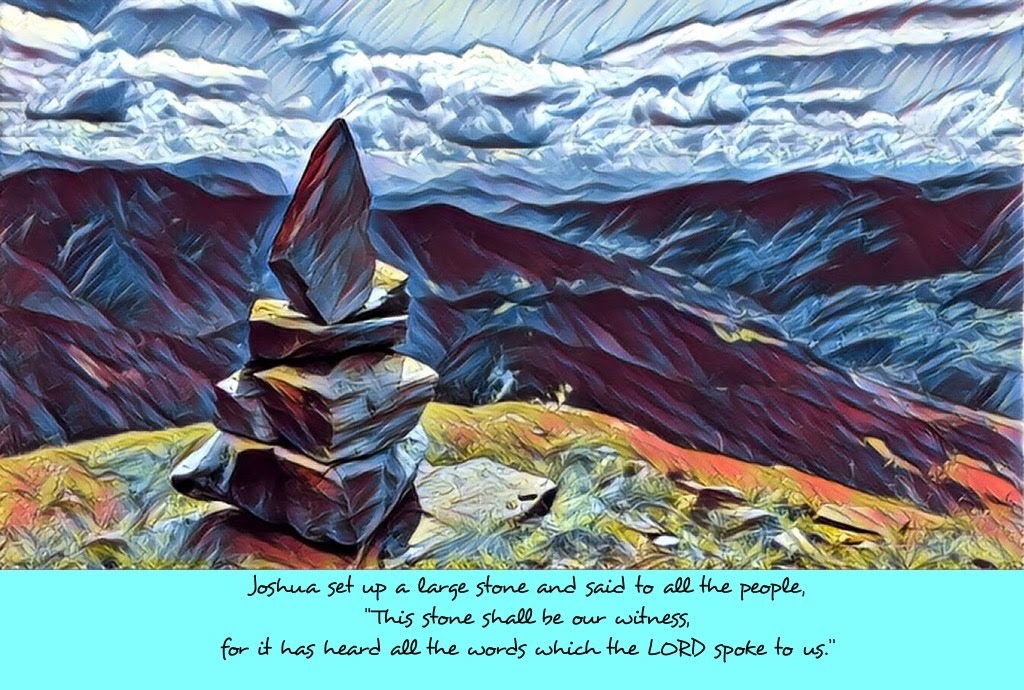
Today, in God’s Lavish Mercy, we have the last of our readings from the Book of Joshua, writings that tell the story of Israel from the conquest of Canaan to the Babylonian exile. Joshua is a difficult book to read for at least two reasons: it is dull and boring, and it is full of brutality and violence.
Modern scholars tend to agree that the bloody battles described in Joshua never happened and that the Book should be viewed more as legend or myth. So why is it even included in the Bible to which we look for inspiration in building a peaceful and just world? It is hard work to find nuggets of this kind of inspiration in the Book of Joshua! (But there are a few, I must admit. Here is one of my favorites:)
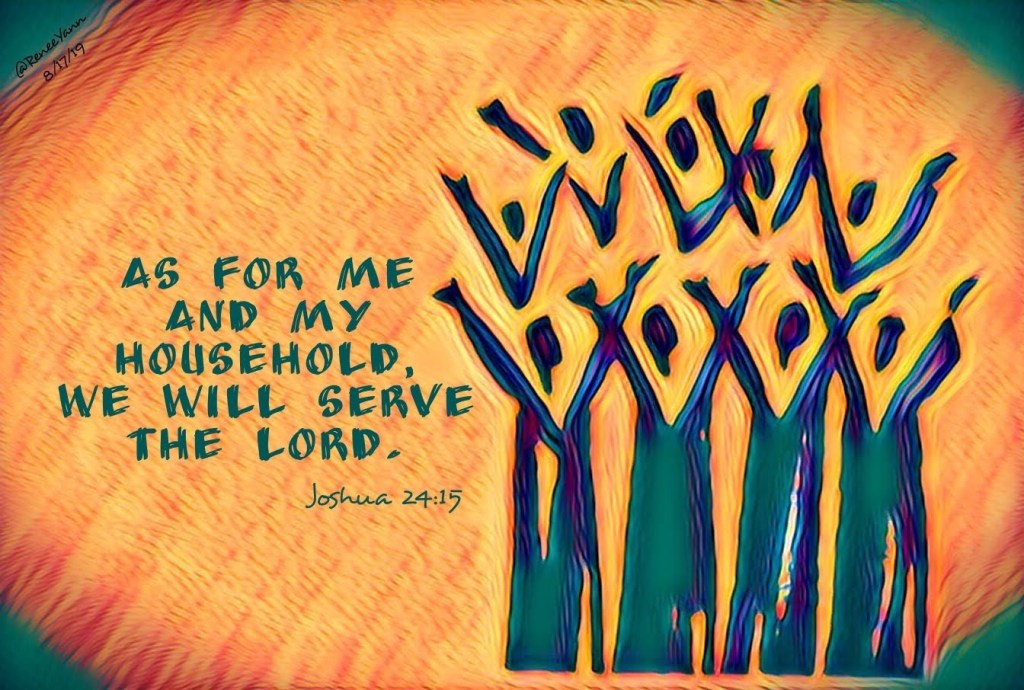
Actually, the Book of Joshua is not alone in the challenges it tosses at its readers.. There are many passages in the Hebrew Scriptures that might cause us to flinch at their tone or violence. They are particularly upsetting when they implicate God as a condoner of such violence.
God’s tone in today’s passage might strike us in this way:
Joshua in turn said to the people,
Joshua 24:19-20
“You may not be able to serve the LORD, for he is a holy God;
he is a jealous God who will not forgive
your transgressions or your sins.
If, after the good he has done for you,
you forsake the LORD and serve strange gods,
he will do evil to you and destroy you.“
When I read that passage I say to myself, “Wait a minute, Joshua!!! That’s not the God I know and love. So what can this passage teach me?”
Feminist theologian Carolyn Sharp writes that Joshua has “important potential to draw contemporary communities of faith into reflection on their own subjectivity, the power dynamics that energize and fracture their common life, and their need for robust and ongoing reformation. Joshua remains a disturbing book, and the first step toward ethical appropriation of its truth is to acknowledge that.”
We may choose to skip over disturbing and confusing passages like some found in Joshua. But the Church includes some of them in the liturgical readings because every scripture passage has something to teach us – just like every person has something to teach us.
From some people, we learn what we want to be like in life. And from others we learn exactly the opposite. So it is with scripture. Reading with a critical eye and a converted heart, we can benefit both from the positive and the negative energy in various Bible passages. And, as Christians, we must read all Scripture in the ultimate light of Jesus Christ and his Gospel.

Of course, as we pray with Scripture, we more readily appropriate those passages that touch our spirits with light and joy. We have such a passage in today’s Gospel:
Children were brought to Jesus
Matthew 19:13-15
that he might lay his hands on them and pray.
The disciples rebuked them, but Jesus said,
“Let the children come to me, and do not prevent them;
for the Kingdom of heaven belongs to such as these.”
After he placed his hands on them, he went away.
Poetry: God’s Grandeur – Gerard Manley Hopkins
The world is charged with the grandeur of God.
It will flame out, like shining from shook foil;
It gathers to a greatness, like the ooze of oil
Crushed. Why do men then now not reck his rod?
Generations have trod, have trod, have trod;
And all is seared with trade; bleared, smeared with toil;
And wears man’s smudge and shares man’s smell: the soil
Is bare now, nor can foot feel, being shod.
And for all this, nature is never spent;
There lives the dearest freshness deep down things;
And though the last lights off the black West went
Oh, morning, at the brown brink eastward, springs—
Because the Holy Ghost over the bent
World broods with warm breast and with ah! bright wings.
Music: Speak, O Lord – Stuart Townend






 Lavish Mercy