Wednesday of the Fifth Week of Easter

May 5, 2021

Today, in God’s Lavish Mercy, we pray with Psalm 122 which celebrates the beauty and stability of Jerusalem as a symbol of God’s enduring faithfulness to us.

I rejoiced because they said to me,
    “We will go up to the house of the LORD.”
And now we have set foot
    within your gates, O Jerusalem.

Psalm 122:1-2

Think of the peace this psalm brought to its reciters – the kind of peace we seek in a confusing world.

The disciples in our passage from Acts sought the same kind of peace. As the early Church – the “New Jerusalem” – developed, and diverse converts joined the community, everyone had an opinion about that development. We all know what that’s like! 😉


Many of us have been in discussions about how to use church/community resources, respond to new initiatives, or celebrate liturgy. While it’s great to have expanded energy in the discussion, it can be exhausting, particularly if some opinions are uninformed by prayer, justice, or humility.


The real issue for the early Christians wasn’t simply circumcision. The core challenge was how to remain true to the Gospel as it met the first of many generations of interpretation. To do so, they returned to the “compact unity of Jerusalem”. They held fast to the roots of Jesus’s teaching.

Jerusalem, built as a city
    with compact unity.
To it the tribes go up,
    the tribes of the LORD.

Psalm 122: 3-4

The topic of circumcision has long since been resolved by gathering the community in prayerful discernment and humble obedience. But as the ages pass, the Christian community will forever be called to return/remain in the “Jerusalem” of Christ’s teaching.

We do so by continually returning to the roots of the Gospel. That’s what it means to live in radical faith.

Remain in me, as I remain in you.
Just as a branch cannot bear fruit on its own
unless it remains on the vine,
so neither can you unless you remain in me.
I am the vine, you are the branches.
Whoever remains in me and I in him will bear much fruit,
because without me you can do nothing.

John 15: 4-5

May we constantly grow
in our love, understanding,
and obedience to the Gospel
so that we more fully contribute
to our community of faith.

Poetry: Palm Sunday by Malcolm Guite

Now to the gate of my Jerusalem,
The seething holy city of my heart,
The saviour comes. But will I welcome him?
Oh crowds of easy feelings make a start;
They raise their hands, get caught up in the singing,
And think the battle won. Too soon they’ll find
The challenge, the reversal he is bringing
Changes their tune. I know what lies behind
The surface flourish that so quickly fades;
Self-interest, and fearful guardedness,
The hardness of the heart, its barricades,
And at the core, the dreadful emptiness
Of a perverted temple. Jesus, come
Break my resistance and make me your home

Music: Pray for the Peace of Jerusalem – Herbert Howells

Lyrics:

O pray for the peace of Jerusalem.
They shall prosper that love thee.
Peace be within they walls
And plenteousness within thy palaces.
Psalm 122 vv. 6, 7

Tuesday of the Fourth Week of Easter

April 27, 2021

Today, in God’s Lavish Mercy, we pray with Psalm 87 which is both a celebration of and a longing for God’s Presence as symbolized for the psalmist in Jerusalem, Zion, the Temple.

His foundation upon the holy mountains
    the LORD loves:
The gates of Zion,
    more than any dwelling of Jacob.
Glorious things are said of you,
    O city of God!

Psalm 87: 1-3

For the psalmist, who is in exile, Zion was the visible expression of God’s exclusive relationship with Israel – the longed-for Kingdom.


In our reading from Acts, the concept of God’s Kingdom takes a larger shape. Jewish Christians, scattered in persecution, began to share the Good News with Gentiles. Barnabas blesses this sharing. He and Paul spend a year in Antioch teaching these new Christians who will not have the same devotion to “Zion”.


So where is “the Kingdom” now?

Our Gospel shows us Jesus, walking in the Temple portico one winter morning. He stands amidst the very symbols extolled in Psalm 87. He points his listeners, who are still resistant, toward the only true “kingdom”, one he has described before:

Now when He was asked by the Pharisees when the kingdom of God would come, He answered them and said, “The kingdom of God does not come with observation; nor will they say, ‘See here!’ or ‘See there!’ For indeed, the kingdom of God is within you.”

Luke 17: 20-21

We know from the Beatitudes that the “kingdom of God” belongs to the poor and the persecuted:

Blessed are the poor in spirit,
    for theirs is the Kingdom of Heaven…..
……Blessed are those who are persecuted because of righteousness,
    for theirs is the Kingdom of Heaven.


Perhaps there is a touch of biblical irony in the fact that our poor and persecuted psalmist, exiled from beautiful Zion, already possessed the “kingdom” within! But, without the benefit of Jesus’s teaching, it seems he didn’t realize it.

Do we realize it? 


Prose: from Hans Küng

(For my spiritual reading recently , I returned to an old favorite Hans Küng, a revered Catholic priest and Vatican II theologian who died earlier this month. Word of his death took me back to my 1960s heady theology days.🙏😇)

Here are two relevant quotes to our thoughts on “the Kingdom” today:

The meaning of the church does not reside in what it is but in what it is moving towards. It is the reign of God which the church hopes for, bears witness to and proclaims.

Hans Küng: The Church

The kingdom of God is creation healed.

Hans Küng: On Being a Christian

Music: The Holy City, Jerusalem sung by Jessye Norman

Psalm 23: The Shepherd

Feast of the Chair of Saint Peter, Apostle

February 22, 2021


Today, in God’s Lavish Mercy, on this Feast of St. Peter we pray with Psalm 23 – the Good Shepherd.

The LORD is my shepherd; I shall not want.
    In verdant pastures I am given repose;
Beside restful waters the Lord leads me;
    refreshing my soul.

Psalm 23

The history and devotion intrinsic to this feast can inspire us to pray especially today for our dear Pope Francis who carries Peter’s grace and burden in our time. He carries, in Primacy, the charge reflected in our first reading:

Tend the flock of God in your midst,
overseeing not by constraint but willingly,
as God would have it, not for shameful profit but eagerly.
Do not lord it over those assigned to you,
but be examples to the flock.
And when the chief Shepherd is revealed,
you will receive the unfading crown of glory.


Pope Francis faces resistances just as Peter did. There are always forces within a community who pull its energy in contradictory directions. When rooted in love and reverent dialogue, that counteraction can generate growth. But when born of selfishness and obstinance, such opposition poisons the whole Body.

Francis needs our prayer. The Church needs our prayer. According to Teresa of Avila, Saint and Doctor of the Church, that prayer should be scriptural:

All the troubles of the Church,
all the evils in the world,
flow from this source:
that human beings do not
by clear and sound knowledge
and serious consideration
penetrate into the truths
of Sacred Scripture.

St. Teresa of Avila

Today, Psalm 23 inspires our prayer for our Pope:

Even in the dark valley
    may you fear no evil; for you are at God’s side
Whose rod and staff
    give you courage.
May God spread graces before you
    in the sight of your troubles;
and anoint your head with oil;
    your cup overflowing.
May goodness and kindness follow you
    all the days of your life;
May you dwell in the LORD’s sanctuary
    for all your days.


Poetry: When I was a boy … (Da ich ein Knabe war …) – Friedrich Hölderlin

Pope Francis’s favorite poet is said to be the German writer Friedrich Hölderlin. Perhaps Francis, composer of the lyrical Laudato Sí and Fratelli Tutti, loves this rhapsodic poem.

When I was a boy
Often a god would save me
From the shouts and blows of men;
I played safely and well
With the flowers of the fields
And the winds of heaven
Played with me.

As you make happy
The hearts of plants
When they extend to you
Their delicate tendrils,
So you make my heart happy,
Father Sun, and like Endymion
I was your favorite,
Holy Moon!

All true and neighborly gods!
If only you knew
How much I loved you then!
True, at that time, I didn’t
Know your names, and you
Never bothered to name me, like men
Who only pretend to know one another.

Yet I know you better
Than I’ve ever known anyone,
I understood the silence of the upper air,
But I’ve never understood the words of men.
I was raised by the sounds
Of the rustling grove
And learned to love
Among the flowers.
I grew up in the arms of the gods.

Music: Psalm 23 with Bach’s Sheep May Safely Graze

Psalm 110:Through Paul’s Lens

Wednesday of the Third Week in Ordinary Time

January 27, 2021


Today, in God’s Lavish Mercy, we pray with Psalm 110, but through the lens of our first reading from Hebrews.

We have prayed with this psalm a few times recently, exploring its links to priesthood, ministry, and good old Melchizedek. When I saw it again this morning, I was at little exhausted by it. Then I read Hebrews and got a new perspective on Psalm 110.

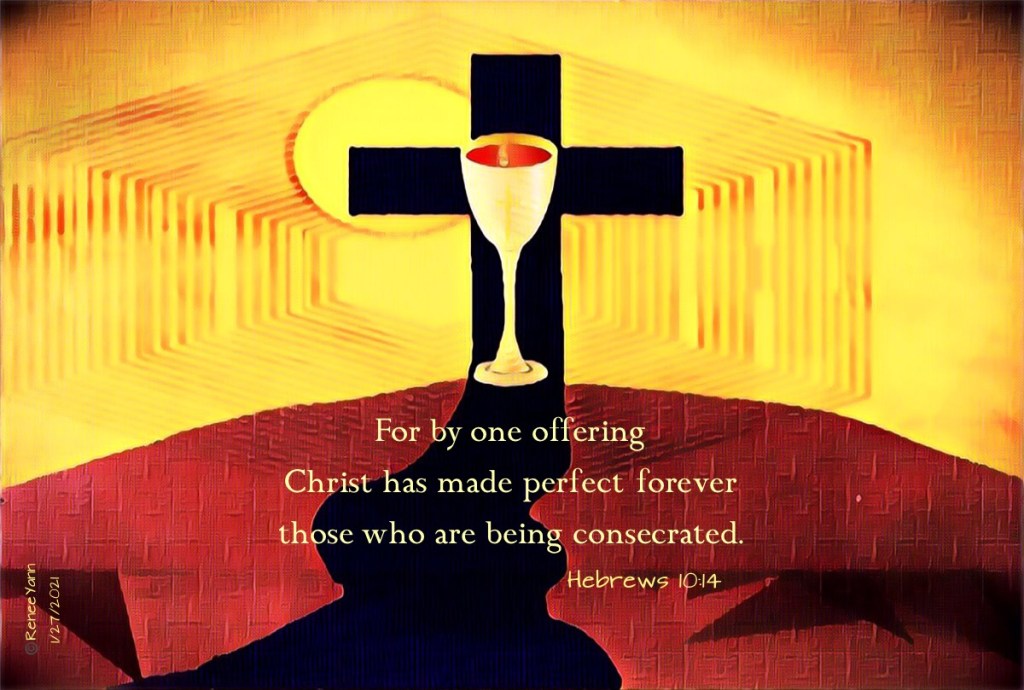
For by one offering Christ has made perfect forever 
those who are being consecrated.
The Holy Spirit also testifies to us, for after saying:
    This is the covenant I will establish with them
        after those days, says the Lord:
    “I will put my laws in their hearts,
        and I will write them upon their minds,”

Hebrews 10:14-16

This passage from Hebrews is a testament to Jesus Christ, the ultimate High Priest, the Complete Melchizedek. That which Christ sanctifies or consecrates is us – his Body, the Church.

This consecration places in our hearts the covenant once spoken of by Jeremiah:

See, days are coming says the LORD—
when I will make a new covenant with the house of Israel and the house of Judah.
It will not be like the covenant I made with their ancestors
the day I took them by the hand to lead them out of the land of Egypt.
They broke my covenant, though I was their master.
But this is the covenant I will make with the house of Israel after those days.
I will place my law within them, and write it upon their hearts;
I will be their God, and they shall be my people.

Jeremiah 31:31-33

Praying with Psalm 110 in this light, I give thanks for the Covenant expressed in my own life:

  • for my Baptism into Christ,
  • for the grace to witness to Christ’s law of love
  • for my inclusion into Christ’s ongoing ministry through the Holy Spirit

Poetry: The Covenant Prayer of John Wesley (1703–1791)

I am no longer my own, but thine.
Put me to what thou wilt, rank me with whom thou wilt.
Put me to doing, put me to suffering.
Let me be employed for thee or laid aside for thee,
exalted for thee or brought low for thee.
Let me be full, let me be empty.
Let me have all things, let me have nothing.
I freely and heartily yield all things to thy pleasure and disposal.
And now, O glorious and blessed God, Father, Son and Holy Spirit,
thou art mine, and I am thine.
So be it.
And the covenant which I have made on earth,
let it be ratified in heaven.
Amen.

Music: A New and Living Way – Michael Card

Year after year there the priest would stand
 An offering of blood held out in in his hand
 Before the curtain there he would stand in fright
 It hung there to hold in the holy ~ to keep in the light
 
A new and living way
 Through the curtain that was torn
 The climax of the cross
 The moment our hope was born
 By a new and living way
 
 And when time was full another Priest came to save
 He would offer forgiveness for He was the Offering He gave
 From the sacrifice ~ from that dark disgrace
 Came the power to make anywhere a Most Holy Place
 
 A new and living way
 Through the curtain that was torn
 The climax of the cross

Psalm 72: Governed with Mercy

Memorial of Saint John Neumann, Bishop

January 5, 2021

Today, in God’s Lavish Mercy, we pray with Psalm 72 which will be familiar to us because it is used six times throughout the Advent and Christmas seasons.

O God, with your judgment endow the king,
and with your justice, the king’s son;
He shall govern your people with justice
and your afflicted ones with judgment.

Psalm 72: 1-2

This short post-Epiphany season is all about “manifestation” – how Jesus begins to show us the face of God-become-flesh.

The core message, conveyed to us in the daily progressive reading of 1 John, is that God is Love.


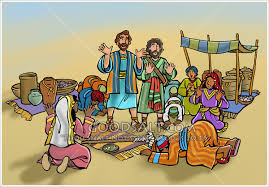
Our Gospel today, the feeding of the 5000, shows how that Love is expressed – merciful action for those in need.

Our psalm, written a thousand years before Christ, exults in the expectation of such a merciful Messiah:


The mountains shall yield peace for the people,
and the hills justice.
He shall defend the afflicted among the people,
save the children of the poor.
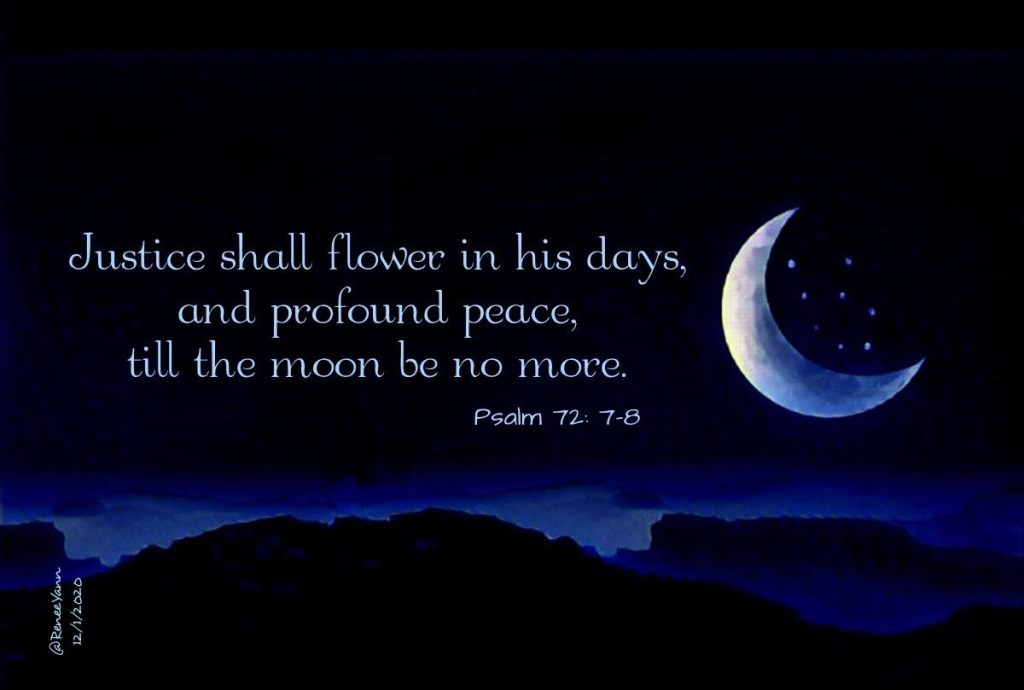
Justice shall flower in his days,
and profound peace, till the moon be no more.
May he rule from sea to sea,
and from the River to the ends of the earth.

Let us begin once again, in this new year,
to soak in the words and images
describing this longed-for and loving Savior.


Poetry: When Little Was Enough – Irene Zimmerman, OSF

(LUKE 9:10–17)

“Send the people away from this deserted place
to find food and lodgings,” the twelve urged Jesus,
“for the day is advanced and it is almost evening.”

Jesus looked at the crowd (there were about five thousand)
and looked at his disciples, still excited and tired
from their first mission journey.

What had they learned from the villagers of Galilee
who shared bread and sheltered them from cold night winds?
What had they learned of human coldness on the way?

He remembered the pain in his mother’s voice
as she told of his birth night when they found no room
in all of Bethlehem, House of Bread.

“You give them something to eat!” he said.

“We have only five loaves and two fish!” they protested.
“How can we feed so many with so little?”
He understood their incredulity.

They had yet to learn that a little was enough
when it was all they had—
that God could turn these very stones to bread.

“Have the crowd sit down in groups of fifty,” he said.
Jesus took the food and looked up to heaven.
He blessed it, broke it, gave it to the disciples
to distribute to the new-formed churches.

Afterwards, when everyone was satisfied,
the twelve filled twelve baskets of bread left over—
as faith stirred like yeast within them.


Music: Justice Shall Flourish – Rory Cooney

Psalm 95: Advent’s Threshold

Saturday of the Thirty-fourth Week in Ordinary Time

November 28, 2020


Today, in God’s Lavish Mercy, we pray with Psalm 95. As we pray its laudatory verses, we are invited to stand on the very threshold of Advent.

Come, let us sing joyfully to the LORD;
let us acclaim the Rock of our salvation.
Let us come into the Lord’s presence with thanksgiving;
let us joyfully sing psalms to our God.


Even though the pre-dawn sky seems essentially unchanged, we can sense the First Light waiting to spring over the horizon. And, oh, how we long for it! How we need it to illuminate the shadows of this pandemic year, to warm the long cold of separation and loss, to fill the stunned silence of our hearts with a new rising song!

For the LORD is a great God,
and a great king above all gods;
God holds the depths of the earth,
and the tops of the mountains
like jewels in a loving hand.
God made and owns the sea
and the dry land, forming them from the Divine Imagination!


We join the whole Church as we pray today’s psalm refrain:

We ask God to prepare Advent’s doors in our hearts and spirits. It is time to be renewed in faith, hope, and love. Over the coming season, God will guide us to that longed-for Light. 

So for this last pre-Advent day:

Come, let us bow down in worship;
let us kneel before the LORD who made us,
who is our God,
and we are the people Love shepherds, 
the flock Love guides.


Poetry: Advent Credo by Allan Boesak

It is not true that creation and the human family are doomed to destruction and loss—
This is true: For God so loved the world that He gave his only begotten Son, that whoever believes in Him shall not perish but have everlasting life;

It is not true that we must accept inhumanity and discrimination, hunger and poverty, death and destruction—
This is true: I have come that they may have life, and that abundantly.

It is not true that violence and hatred should have the last word, and that war and destruction rule forever—
This is true: Unto us a child is born, unto us a Son is given, and the government shall be upon his shoulder, his name shall be called wonderful councilor, mighty God, the Everlasting, the Prince of peace.

It is not true that we are simply victims of the powers of evil who seek to rule the world—
This is true: To me is given authority in heaven and on earth, and lo I am with you, even until the end of the world.

It is not true that we have to wait for those who are specially gifted, who are the prophets of the Church before we can be peacemakers—
This is true: I will pour out my spirit on all flesh and your sons and daughters shall prophesy, your young men shall see visions and your old men shall have dreams.

It is not true that our hopes for liberation of humankind, of justice, of human dignity of peace are not meant for this earth and for this history—
This is true: The hour comes, and it is now, that the true worshipers shall worship God in spirit and in truth.

So let us enter Advent in hope, even hope against hope. Let us see visions of love and peace and justice. Let us affirm with humility, with joy, with faith, with courage: Jesus Christ—the life of the world.

From Walking on Thorns, by Allan Boesak, Eerdmans, 2004.

Music: Threshold – Adam Hurst

Called to Be Saints

Solemnity of All Saints


Today, in Mercy, we celebrate all those canonized and uncanonized sisters and brothers who lived their lives in Christ with gusto and fidelity.

The feast of All Saints, on its current date, is traced to the foundation by Pope Gregory III by (731–741) of an oratory in St. Peter’s for the relics “of the holy apostles and of all saints, martyrs and confessors, of all the just made perfect who are at rest throughout the world”. (Wikipedia)


I’ve personally known many of these saints, whether I fully recognized their sanctity or not. I know you have too!

They have lived in my family, school, neighborhood, parish, ministries, and workplaces. Some were clothed as nuns and some as beggars. Some taught me by words and some by silence. I knew some by name, others by grace. Now they have all joined the eternal family watching over us and cheering for us.

There they have formed communion with my more recognized and favorite holy friends like Mary, Joseph, Teresa of Avila, Catherine of Siena, Kateri Tekawitha, Anna the Prophet, John XXIII, John Lewis, Ruth Bader Ginsberg, and of course Catherine McAuley.

What a wonderful day to know that these beloveds of God are our sisters and brothers, who pray with and for us that we may one day rejoice with them in eternal light.

Who are the saints that speak especially to your heart? Take time to have a grateful conversation with them on this glorious feastday! And I would so love to see them noted in the comments so that we all may rejoice in their lives!

In the comments, you are invited to list five or six of your personal saints who blessed your life with grace. Please share if you can. I am sure this community would love to pray in thanksgiving with you for those who have so blessed your life. Here are just a few of mine:

  • Eleanor Mellon Yann
  • Jim Yann
  • Sister Mary Giovanni Wynne
  • Mother Mary Bernard Graham
  • Eunice Hunt
  • Clare Costello
  • Sister Mary Joan Thompson
  • Joe, on the heat grate at 17th and Arch
  • Every single, sweet soul at McAuley Convent who has blessed me by their faith and goodness

Music:  All Saints Day – featuring “Lifesong” by Casting Crowns (lyrics below)

Empty hands held high
Such small sacrifice
Now joined with my life
I sing in vain tonight

May the words I say
And the things I do
Make my lifesong sing
Bring a smile to you

Let my lifesong sing to you
I want to sign your name
To the end of this day

Lord let my heart wash true
Let my lifesong sing to you
Lord I give my life
A living sacrifice
To reach a world in need
To be your hands and feet

So may the words I say
And the things I do
Make my lifesong sing
Bring a smile to you

Let my lifesong sing to you
I want to sign your name
To the end of this day

Knowing that my heart was true
Let my lifesong sing to you
Hallelujah, Hallelujah let my lifesong sing to you

Hallelujah,…
Let my lifesong sing to you
I want to sign your name
To the end of this day

Knowing that my heart was true
Let my lifesong sing to you
I want to sign your name
To the end of this day
Lord led my heart was true
Let my lifesong sing to you

The “Impossibler” and His Buddy

October 28, 2020

Today, in Mercy, we celebrate the feast of the Apostles Simon and Jude. Since we have reflected on Psalm 19 twice recently, I have republished a reflection on the Apostles Simon and Jude whom we honor today.

Not much is really known about either of these men. One tradition suggests that after the Ascension, they went together to carry the Gospel to Persia where they were eventually martyred.

Since we have so few facts, many legends and interpretations have grown up around these two men. Probably the strongest and most familiar of these is of St. Jude as the patron of hopeless cases.

There are probably very few of us who haven’t asked at least one favor from St. Jude in our lifetimes. This probability begs the question of why and how do we pray with the saints.

Our tradition holds that we exist in the Communion of Saints with all of God’s creatures, and that we inspire and support one another by the sharing of our lives. This sharing is not limited by time, nor is it constricted by death.

When we pray with the saints, we draw on their faithful witness to inspire, motivate and sustain us in our lives.

Today, we might pray within the spirit of these two great Christians whose witness, though historically muted, transcends time. May they inspire in us the passion and joy to speak Christ in our lives.

Music: Apostles’ Creed – sung here by Rebecca Gorzynska, a beautiful and talented artist (Latin and English text below.)

Credo in Deum Patrem omnipotentem, 
Creatorem caeli et terrae,
et in Iesum Christum, 
Filium Eius unicum, Dominum nostrum,
qui conceptus est de Spiritu Sancto, 
natus ex Maria Virgine,
passus sub Pontio Pilato, 
crucifixus, mortuus, et sepultus,
descendit ad ínferos, 
tertia die resurrexit a mortuis,
ascendit ad caelos, 
sedet ad dexteram Patris omnipotentis,
inde venturus est iudicare vivos et mortuos.
Credo in Spiritum Sanctum,
sanctam Ecclesiam catholicam, 
sanctorum communionem,
remissionem peccatorum,
carnis resurrectionem,
vitam aeternam.
Amen

I believe in God, the Father Almighty,
Creator of heaven and earth.
And in Jesus Christ, his only Son, our Lord:
who was conceived by the Holy Spirit,
born of the Virgin Mary,
suffered under Pontius Pilate,
was crucified, died, and was buried;
he descended into hell;
the third day he rose again from the dead;
he ascended into heaven;
sits at the right hand of God the Father Almighty;
from thence he shall come to judge the living and the dead.
I believe in the Holy Spirit,
the holy Catholic Church,
the communion of Saints,
the forgiveness of sins,
the resurrection of the body,
and life everlasting.
Amen. 
(Apostles’ Creed – Roman Ritual)

Psalm 1: Play Nice Together

Monday of the Thirtieth Week in Ordinary Time

October 26, 2020

2018 Reflection on the Bent-Over Woman

Click here ^


Today, in God’s Lavish Mercy, we pray with Psalm 1 which, together with our first reading from Ephesians, gives us a complete outline for moral behavior.

There are days when I feel like the world’s not doing too bad responding to that outline. But, to be honest, there are more days when I think we’re a pretty big mess. 

It may sound simplistic, I know, but why can’t we all just follow Paul’s advice and be kind?

Brothers and sisters:
Be kind to one another, compassionate,
forgiving one another as God has forgiven you in Christ.

Ephesians 4:32

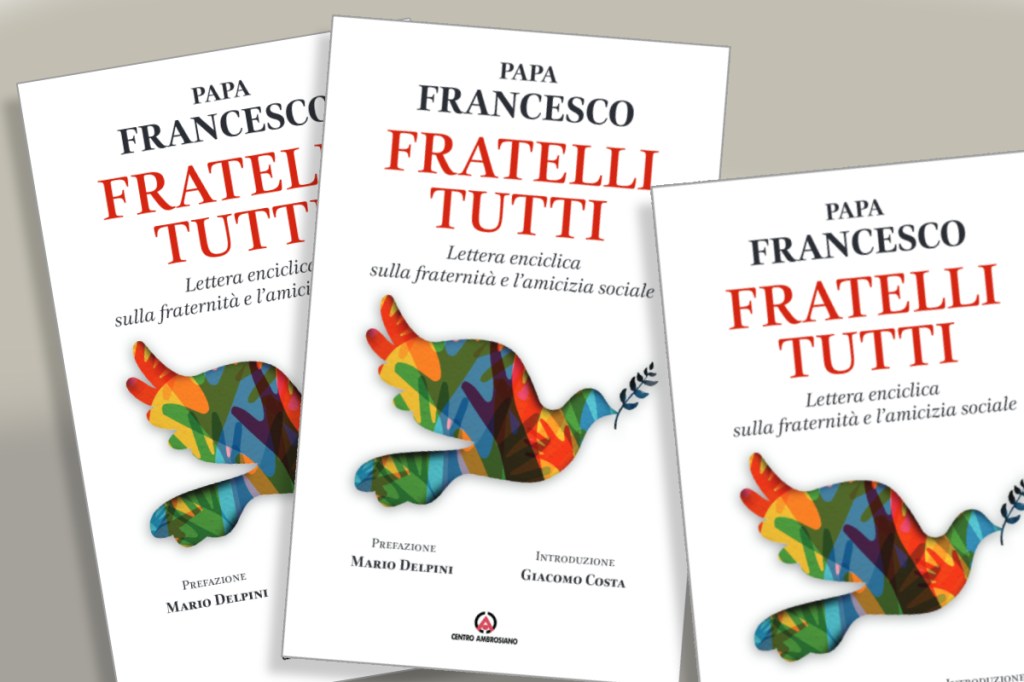
I think Pope Francis feels pretty much the same way as I do. Our reading from Ephesians could easily serve as a summary statement for Fratelli Tutti. Praying with this profound document, we can see the hope and agony of the world open before God’s Mercy, begging for healing.

(You may realize that I frequently refer to Fratelli Tutti. I believe this ground-breaking encyclical to be critically important for the future of our world. If you share my belief, you will be interested in this superb analysis written in Commonweal magazine by Austen Ivereigh.)


Psalm 1 gives us the peaceful picture of a person – and a world – centered on God’s loving law, the “plumb line” for holy balance in our lives. It is that same plumb line which Pope Francis drops for us in Fratelli Tutti.

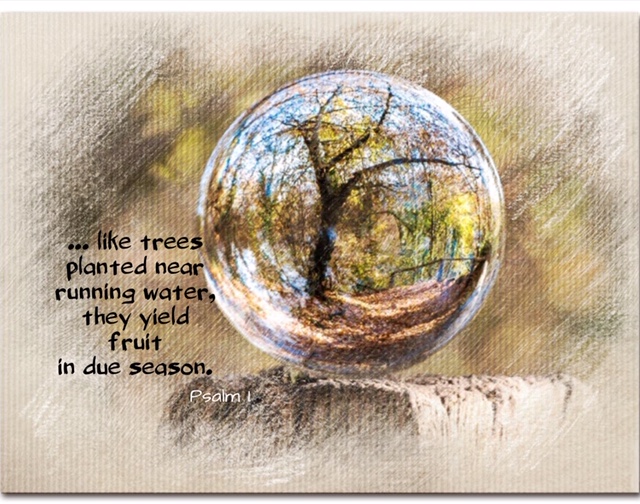
Blessed the one who follows not
the counsel of the wicked
Nor walks in the way of sinners,
nor sits in the company of the insolent,
But delights in the law of the LORD
and meditates on God’s law day and night.

Not so the wicked, not so;
they are like chaff which the wind drives away.
For the LORD watches over the way of the just,
but the way of the wicked vanishes.

Psalm 1

Poetry: A thought from Confucius:

If there is righteousness in the heart, 
there will be beauty in the character.

If there is beauty in the character, 
there will be harmony in the home.

If there is harmony in the home, 
there will be order in the nations.

When there is order in the nations, 
there will peace in the world.

Music: Blessed Be the Tie – Sara Groves remasters an enduring hymn on Ephesians 4:32. The original was written in 1782 by Baptist theologian John Fawcett

You for a father’s throne
We pour our art in prayer
Our fears and hopes are one
Out comforts and our cares

Blessed be the tie
That binds our hearts
In Christian love
We share each other’s walls
Our common burdens bear
And love for each other
The sympathizing tear

Blessed be the tie
That binds our hearts
In Christian love
Blessed be the tie
That binds our hearts
In Christian love
Oh, kindred heart

It’s like heaven above
It’s like heaven
Oh, kindred heart
It’s like heaven above
It’s like heaven

Blessed be the tie
That binds our hearts
In Christian love, oh
Blessed be the tie
That binds our hearts
In Christian love

Psalm 122: The Journey

Saturday of the Twenty-ninth Week in Ordinary Time

October 24, 2020


Today, in God’s Lavish Mercy, we pray with Psalm 122, one of my favorites.

I rejoiced when they said to me
“Let us go to the house of the LORD
And now our feet are standing
within your gates, O Jerusalem.


The year 1963 was a dynamic time in the Church. The landmark Second Vatican Council was reaching full steam.

Several changes resulted from the Council, including the renewal of consecrated life with a revised charism, ecumenical efforts towards dialogue with other religions, and the universal call to holiness which, according to Pope Paul VI, was “the most characteristic and ultimate purpose of the teachings of the Council”.

Wikipedia


Simultaneously, a love and engagement with sacred scripture was blossoming throughout the Church.  International scholars were completing their response to Pius XII’s 1943 call, in the encyclical Divino Afflante Spiritu, to translate scriptures from the ancient Hebrew and Greek texts. The incomparable Jerusalem Bible was the fruit of these endeavors. It had already been published in French, and was nearing its 1966 English publication.

One of these gifted Bible scholars was a French Jesuit priest, Joseph Gelineau. Gelineau was himself part of the working group for the French Jerusalem Bible, and he developed a revised version of that psalter which respected the rhythms of the Hebrew original.

In my senior year in high school, 1962-63, we were introduced to the Gelineau Psalms. That introduction came at a perfect time for me, as I discerned a call to religious life. In that discernment, Gelineau Psalm 122 became a central part of my prayer.

Jerusalem, built as a city
with compact unity.
To it the tribes go up,
the tribes of the LORD.


I felt rising in me a passionate desire to find and engage my “Jerusalem”, that journey which would pattern my life on the life of Jesus.

The outlines of the journey, the distant vision of “Jerusalem”, were so surreal and indefinite. And yet they were compelling. I came to believe and trust that I would find my path to holiness, my Jerusalem, as a Sister of Mercy. 

Like Jesus, I was given the grace and courage to “steadfastly set my face toward Jerusalem” ( Luke 9:51) And it has been an indescribably amazing journey ever since!


As Vatican II so beautifully stated in the document Lumen Gentium, chapter 5, we all share in the universal call to holiness. We all have our own path to that one, glorious Jerusalem. 

I know these Documents of Vatican II are over a half century old. But they are priceless classics that I never tire of studying. Here are some passages that might enrich our prayer today as we each consider our own call and response to God.

Therefore in the Church, everyone whether belonging to the hierarchy, or being cared for by it, is called to holiness, according to the saying of the Apostle: “For this is the will of God, your sanctification” (I Thes. 4:3; df. Eph. 1:4).

The classes and duties of life are many, but holiness is one-that sanctity which is cultivated by all who are moved by the Spirit of God, and who obey the voice of the Father and worship God the Father in spirit and in truth. These people follow the poor Christ, the humble and cross-bearing Christ in order to be worthy of being sharers in His glory. Every person must walk unhesitatingly according to his or her own personal gifts and duties in the path of living faith, which arouses hope and works through charity.

Finally all Christ’s faithful, whatever be the conditions, duties and circumstances of their lives-and indeed through all these, will daily increase in holiness, if they receive all things with faith from the hand of their heavenly Father and if they cooperate with the divine will. In this temporal service, they will manifest to all humanity the love with which God loved the world.


Poem: The Neophyte – Alice Meynell

Who knows what days I answer for to-day:
  Giving the bud I give the flower.  I bow
  This yet unfaded and a faded brow;
Bending these knees and feeble knees, I pray.

Thoughts yet unripe in me I bend one way,
  Give one repose to pain I know not now,
  One leaven to joy that comes, I guess not how.
I dedicate my fields when Spring is grey.

Oh, rash! (I smile) to pledge my hidden wheat.
  I fold to-day at altars far apart
Hands trembling with what toils?  In their retreat
  I seal my love to-be, my folded art.
I light the tapers at my head and feet,
  And lay the crucifix on this silent heart.

Music: Jerusalem, My Destiny – Rory Cooney (All lyrics below)

Refrain: I have fixed my eyes on your hills, Jerusalem, my Destiny. 
Though I cannot see the end for me I cannot turn away. 
We have set our hearts for the way; this journey is our destiny. 
Let no one walk alone. The journey makes us one.
1. Other spirits, lesser gods, have courted me with lies. 
Here among you I have found a truth that bids me rise. Refrain
2. See, I leave the past behind; a new land calls to me. 
Here among you now I find a glimpse of what might be. Refrain
3. In my thirst, you let me drink the waters of your life, 
Here among you I have met, the Savior, Jesus Christ. Refrain
4. All the worlds I have not seen you open to my view. 
Here among you I have found a vision bright and new. Refrain
5. To the tombs I went to mourn the hope I thought was gone, 
Here among you I awoke to unexpected dawn. Refrain