The Holy Family

Sunday, December 26, 2021

Sorry for the late post today. Blame it on my being the big cook today and on my Aunt Peg’s wonderful pineapple casserole. She went home to God almost 30 years ago. But she lives in my kitchen anytime I cook a ham…and so many other times in my heart. ❤️ Merry Christmas once again, my friends.

in case you’d like to try it!

Today, in God’s Lavish Mercy, our prayer is turned to the Holy Family, that unique configuration of love which nurtured the developing life of Jesus. Can you imagine how tenderly the Father shaped this triad, this nesting place of love for God’s own Word?

Today, we look to the Holy Family so that we might see our own families through their lens of grace and mercy. We pray to the Holy Family so that we might be strengthened in the virtues that will help us build our own families: sacrificial love, reverence, courage, unfailing support, committed presence, shared faith, gentle honesty, unconditional acceptance.

“Family” is the primordial place where we learn who we are. The lessons it teaches us about ourselves – for better or worse — remain with us forever. 

This is my crew. How blessed I am in them!

Not everyone is blessed by their family. Family can ground us in confidence or undermine us with self-doubt. It can free us from fear or cripple us with reservation. It can release either possibility or perpetual hesitation within us.

Some families are so dysfunctional that we spend the rest of our lives trying to recover from them. But some, like the Holy Family, allow God’s dream to be nurtured in us and to spread to new families, both of blood and spirit.


The challenge today is to thank God for whatever type of family bore us. Lessons can be learned from both lights and shadows. Let us spend time this morning looking  at our own families with love, gratitude, forgiveness, understanding. Where there are wounds to be healed, let us face them. Where there are belated thanks to be offered, let us give them. Where there are negligence and oversights to confess, let us use them as bridges to a new devotion.


For some, it may seem too late to heal or bless our family. Time may have swallowed some of our possibilities. But it is never too late to deepen relationships through prayer, both for and to our ancestors.

May this feast strengthen us for the families who need us today. May it be the beginning of refuge for families broken and tested by migration and worldwide inhospitality


Music: God Bless My Family ~ Anne Hampton Calloway

The Eternal Song

December 2, 2021
Thursday of the First Week of Advent

Today, in God’s Lavish Mercy, Isaiah promises the people that they will sing a song in the land of Judah.  It will be a song that celebrates confidence in God, justice, enduring faith, peace and trust.


Do you ever sing to God when your heart is filled like that? I don’t mean Church-singing or words somebody else wrote. 

I mean that sweet, indecipherable whisper a mother breathes over her child, or the mix of a hundred half-remembered melodies we hum when we are lost in the fullness of our lives.

And I don’t just mean the happy songs.

I mean the songs of loss and longing, awe and wonderment at life’s astounding turns. I mean even the sounds of silence when the refrain within us cannot be spoken.

When your heart is really stuck, unable to find the words to express the depth of your joy, longing or sorrow, try singing to God like that. So many times, I have done this while out on a solitary walk, or sitting by the water’s edge, or even driving on an open road. Sometimes, God even sings back!


Isaiah’s people were able to sing their song because they held on to faith and acted in justice. In our Gospel, Jesus tells us that this must be the way of our prayer too. He says that simply saying, “Lord, Lord” won’t cut it!

Real prayer is not just words. It is a life given to hearing God’s Word and acting on it. Real prayer is about always singing our lives in rhythm with the infinite, merciful melody of God.


Poetry: Every Riven Thing ~ Christian Wiman

God goes, belonging to every riven thing he’s made
sing his being simply by being
the thing it is:
stone and tree and sky,
man who sees and sings and wonders why

God goes. Belonging, to every riven thing he’s made,
means a storm of peace.
Think of the atoms inside the stone.
Think of the man who sits alone
trying to will himself into a stillness where

God goes belonging. To every riven thing he’s made
there is given one shade
shaped exactly to the thing itself:
under the tree a darker tree;
under the man the only man to see

God goes belonging to every riven thing. He’s made
the things that bring him near,
made the mind that makes him go.
A part of what man knows,
apart from what man knows,

God goes belonging to every riven thing he’s made.


Music: Bless the Lord, My Soul – Matt Redman

Table of Comfort

December 1, 2021
Wednesday of the First Week of Advent

Today, in God’s Lavish Mercy, our readings take us to the Lord’s banquet. It is a rich image that threads through scripture and helps us understand what characterizes the perfect reign of God.

The readings, coming just on the heels of Thanksgiving, present familiar images to us. Last week, you may have been part of the preparation of the feast for your family and friends. Maybe you’re the master carver, or brought sides of old family recipes. Or you might be the table decorator or, most important, the clean-up guru!

Or maybe you were the one who steered the conversation so that all felt welcomed and included in the gathering. Maybe you were the one who took someone aside if they needed an extra portion of care. Maybe you were the one who invited someone with no other place to go.


That Thanksgiving meal, and every meal, can be a symbol of the heavenly banquet.

Isaiah’s banquet is all elegance and fullness. He describes an end-time when, despite a path through suffering, all is brought to perfection in God:

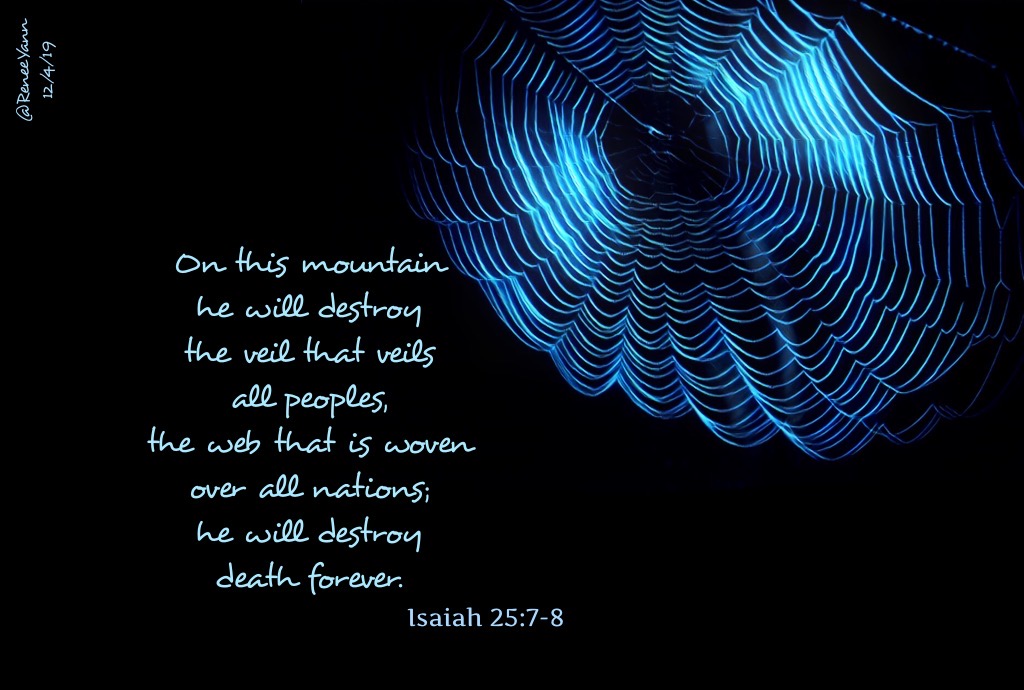
On this mountain the LORD of hosts
will provide for all peoples
A feast of rich food and choice wines,
juicy, rich food and pure, choice wines.


Jesus’s feast is more “now”, and more rustic. He takes the ordinary stuff of present life and transforms it to satisfy the immediate needs of those gathered. With sparse and simple ingredients, Jesus creates the “miracle meal” for the poor and hungry.

He ordered the crowd to sit down on the ground.
Then he took the seven loaves and the fish,
gave thanks, broke the loaves,
and gave them to the disciples,
who in turn gave them to the crowds.
They all ate and were satisfied. 


Christ’s presence with us in the Eucharist is both kinds of meal.

  • It points us to the perfection of heaven, where the “web” will be lifted from our eyes and we will see ourselves as one in Christ.
  • It calls us to be Christ for one another in this world – creating miracles of love and mercy so that all are adequately fed, in body and soul, for the journey we share.

Poetry: Love Bade Me Welcome – George Herbert, (1593 – 1633) – a Welsh-born poet, orator, and priest of the Church of England. His poetry is associated with the writings of the metaphysical poets, and he is recognized as “one of the foremost British devotional lyricists.


Love bade me welcome. Yet my soul drew back 
                              Guilty of dust and sin.
But quick-eyed Love, observing me grow slack 
                             From my first entrance in,
Drew nearer to me, sweetly questioning,
                             If I lacked any thing.
A guest, I answered, worthy to be here:
                             Love said, You shall be he.
I the unkind, ungrateful? Ah my dear,
                             I cannot look on thee.
Love took my hand, and smiling did reply,
                             Who made the eyes but I?
Truth Lord, but I have marred them: let my shame
                             Go where it doth deserve.
And know you not, says Love, who bore the blame?
                             My dear, then I will serve.
You must sit down, says Love, and taste my meat:
                           So I did sit and eat.

Music:  Banquet- Graham Kendrick (Lyrics below)

There’s no banquet so rich
As the bread and the wine
No table more holy
No welcome so kind
There’s no mercy so wide
As the arms of the cross
Come and taste, come and see
Come find and be found

There’s no banquet so rich
For what feast could compare
With the body of Jesus
Blessed, broken and shared?
Here is grace to forgive
Here is blood that atoned
Come and taste, come and see
Come know and be known

Take the bread, drink the wine
And remember His sacrifice
There’s no banquet so rich
As the feast we will share
When God gathers the nations
And dines with us here
When death’s shadow is gone
Every tear wiped away
Come and eat, come and drink
Come welcome that day

There’s no banquet so rich
For our Saviour we find
Present here in the mystery
Of these humble signs
Cleansed, renewed, reconciled
Let us go out as one
Live in love, and proclaim
His death till he comes

The Peaceable Kingdom

November 29, 2021
Monday of the First Week of Advent

Today, in God’s Lavish Mercy, we pray with Isaiah, Matthew and Psalm 122.

Our first reading sets us out on nearly two weeks of passages from Isaiah. The passionate hope of Isaiah’s writing, as well as its literary elegance, can reach into our hearts and powerfully renew us.

For these reasons, “Isaiah’s Vision” is among the most beloved and influential books of the Bible. The book has so influenced Christianity that it often is referred to as “The Fifth Gospel”.

They shall beat their swords into plowshares
    and their spears into pruning hooks;
One nation shall not raise the sword against another,
    nor shall they train for war again.

Isaiah 2:4

Isaiah’s images, written to fire the souls of the ancient Hebrews, still have the power to enkindle ours today as we await the quickening grace of our Prince of Peace. We still have little and big wars all around us, and some within us. Still there are swords and spears between us that cry for a peaceable bending.

Isaiah asks us to acknowledge them and offer them for transformation so that we may, with our psalmist, “go rejoicing to the house of the Lord.”


In our Gospel, Jesus paints a picture of the sacred house, an inclusive table where all are fed with Eternal Life.

I say to you, many will come from the east and the west,
and will recline with Abraham, Isaac, and Jacob
at the banquet in the Kingdom of heaven

Matthew 8:11

Today’s centurion
– by virtue of his humble, resolute faith –
already has partaken of that peaceable feast.
The early invitation is open to us as well.🤗


Poetry: An Appendix to the Vision of Peace by Yehuda Amichai

Yehuda Amichai is recognized as one of Israel’s finest poets. His poems, written in Hebrew, have been translated into 40 languages, and entire volumes of his work have been published in English, French, German, Swedish, Spanish, and Catalan. “Yehuda Amichai, it has been remarked with some justice,” according to translator Robert Alter, “is the most widely translated Hebrew poet since King David.”

  • from Poetry Foundation

    Don’t stop after beating the swords
    into plowshares, don’t stop! Go on beating
    and make musical instruments out of them.
    Whoever wants to make war again
    will have to turn them into plowshares first.


Music: Lo Yisa Goy – Utah Philharmonic

Lo Yisa Goy is a Jewish folk song based on Isaiah 2. Translation below.

Lo yisa goy
El goy cherev
Lo yil’medu
Od milchamah.

A nation shall not raise
A sword against a nation
And they shall not learn 
Any more war.

Toward Thanksgiving…

November 23, 2021
Tuesday of the Thirty-fourth Week in Ordinary Time

Today, in Mercy, our readings echo the end-time themes we have been considering for several days. And we may continue to pray with these as we approach Advent.


But as we approach Thanksgiving, I want to shift gears and offer you some reflections I have written over the years in celebration of this holiday. For these next few days, I will focus on these. In the past, readers have used them for their prayer and at their own Thanksgiving tables. I hope you find them beneficial.

You’re Welcome

Bill was a big Mid-western guy with the boots and belt buckles to prove it. His wife of thirty years was a patient in our east coast cancer wing. Hearing of a break-through experimental treatment, they had come seeking a cure despite every indication of its hopelessness.

Being away from home, Bill had a lot of empty time outside of visiting hours. He spent much of it observing things that would ordinarily go unnoticed in the bustle of his regular life: weather, nature and human idiosyncrasies.

During one cafeteria lunch, over a bowl of hot soup, he observed, “People around here don’t say ‘You’re welcome’. They hold a door. You say ‘Thank you’. They just say ‘Uh huh’”.  Bill didn’t like that. It made him feel invisible. He said it was like one hand clapping.

In this season of Thanksgiving, it’s something to consider. Thanks are not offered in a vacuum. They are given to benefactors, both human and Divine, on whom we depend for a reciprocity of love, companionship, care and courage. Bill, at such a vulnerable, lonely place in his life, was infinitely sensitive when his thanks received no answer.

During this special time, we may hear a “Thank You” offered to us. In this cold age of our digital distractions, can we receive it consciously? Can we return it with a mutuality of gratitude that says, “You’re welcome! You are welcome in the embrace of my life. I see you as a unique and precious life and I rejoice at any kindness I can give you.”? A simple, sincere smile can say all that. Such is the power of our conscious spirits!

Doing this, we might even hear the Creator’s whisper, saying the same thing to us as we offer our Thanksgiving prayers: “I have created you from an abundance of love. You are precious to me and I believe in you. I hear your “Thank You” and you are welcome in the embrace of my infinite love.”


Poetry/Prayer


Music:  Thanksgiving Classical Playlist (You may want to play this hour-long compilation during your Thanksgiving meal.)

Sacred Tears

November 18, 2021
Thursday of the Thirty-third Week in Ordinary Time

Today, in God’s Lavish Mercy, we pray with Psalm 50, “a prophetic imagining of God’s judgement on the Israelites”. (Wikipedia)

Our first reading from the Book of Maccabees introduces us to Mattathias, revered leader of the Jews in the city of Modein. He violently refuses the Greek Seleucid command to worship their gods, thus initiating the Maccabean Revolt. The wars lasted nearly a decade. Final victory is commemorated in the Feast of Hanukkah:

The Jewish festival of Hanukkah celebrates the re-dedication of the Temple following Judah Maccabee’s (Mattathias’s son)victory over the Seleucids. According to tradition, victorious Maccabees could find only a small jug of oil that had remained pure and uncontaminated by virtue of a seal, and although it contained only enough oil to sustain the Menorah for one day, it miraculously lasted for eight days, by which time further oil could be procured. (Wikipedia)

Our first reading is really describing the beginning of civil and intercultural wars by which dedicated Jews sought to establish both their religion and their nation. Core to their motivation was the desire to be in relationship with their one God according to their own custom and law.


In our Gospel, Jesus has come as the full manifestation of that One God. He has invited the Jewish people to a new and complete relationship with God, but they have resisted.

Now, as he nears his final fate in Jerusalem, Jesus realizes that his dream for the People will not be fully realized. They will experience a destruction like the one once feared by Mattathias. The reality causes Jesus to weep.

Are the passages only about the Jews, their religion and their history?

For us, these passages are about choosing a faithful,
evolving relationship with God
– a relationship that will demand truth,
action and at times suffering
as we pursue ever deeper understanding
of God’s Presence in our lives.

Our world and its culture place many godless choices before us, choices that could make Jesus weep because of the suffering they cause others. These choices are not as easy to identify as they were in the time of Mattathias. They don’t come dressed as a pagan soldier ready to quash our resistance.

They come in the large subtleties of politics, economics, human rights, global relationships. These choices show themselves in the small exercise of our respect, care, and reverence for all Creation. But they do come to us in every moment and they demand our witness.

Jesus wants the new Kingdom to rise in us when we open our hearts to his Word. It is an ongoing and daily Resurrection. Let’s pray for the courage for it!


Poetry: The World Is Too Much with Us – William Wordsworth

Wordsworth wrote this poem during the Industrial Revolution when he felt the complexities of the world were inhibiting our appreciation of the sacredness of nature.

The world is too much with us; late and soon,
Getting and spending, we lay waste our powers;—
Little we see in Nature that is ours;
We have given our hearts away, a sordid boon!
This Sea that bares her bosom to the moon;
The winds that will be howling at all hours,
And are up-gathered now like sleeping flowers;
For this, for everything, we are out of tune;
It moves us not. Great God! I’d rather be
A Pagan suckled in a creed outworn;
So might I, standing on this pleasant lea,
Have glimpses that would make me less forlorn;
Have sight of Proteus rising from the sea;
Or hear old Triton blow his wreathèd horn.

Music:  When Jesus Wept – William Billings

One of the most well-known of the early American canons, originally appeared in the New England Psalm Singer. It was written in 1770 by William Billings, a self-taught singing-school teacher and composer who served as choir leader at Old South Church in Boston.

(Lyrics below)

When Jesus wept, the falling tear
In Mercy flowed beyond all bound;
When Jesus groaned at rambling fear
Seized all the guilty world around.

Per a valued friend:

There is a statue in Oklahoma City called “Jesus Wept.”  It is on the grounds of St. Joseph Church in the city – which is right across from where the Oklahoma City Federal Building had been located.  The people of the parish wanted to erect the statue on their grounds because the memorial on the federal property couldn’t be religious.  It is a very moving statue.

We Are the Church

November 9, 2021
Feast of the Dedication of the Lateran Basilica in Rome

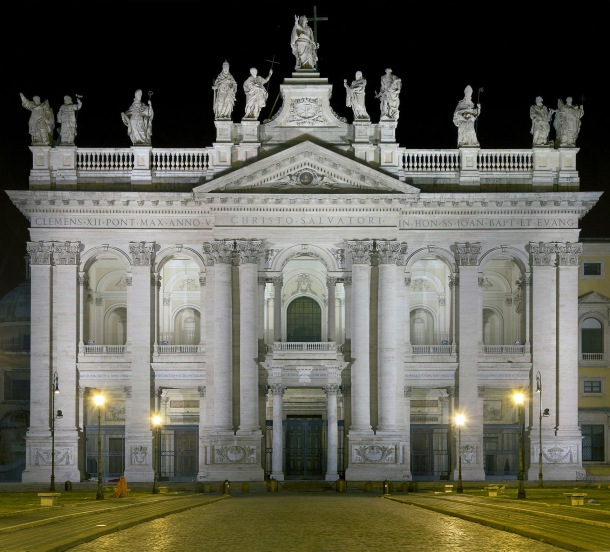
Today, in God’s Lavish Mercy, we celebrate a rare type of feast day – one that marks the dedication of a church building.  For many, that seems a little odd. We are accustomed to celebrating Mary, Joseph and other saints and feasts of Our Lord.

Here’s the thing: we are not actually celebrating a building.  We are celebrating what the building represents – the Body of Christ, the Church, made of living stones – us.

St. John Lateran Basilica in Rome

But sometimes it helps to have visible symbols of the things we venerate and celebrate. That’s why we have medals, rosary beads and candles – so that we can SEE something as we try to conceptualize a spiritual reality.


St. John Lateran is the Pope’s parish church.
Since he is the Bishop of the whole People of God,
his physical church has come to symbolize
the universal Body of Christ, the world Church.


Pope Benedict XVI in his Angelus Address, on November 9, 2008 said this:

Dear friends, today’s feast celebrates a mystery that is always relevant: God’s desire to build a spiritual temple in the world, a community that worships him in spirit and truth
(cf. John 4:23-24).
But this observance also reminds us of the importance of the material buildings in which the community gathers to celebrate the praises of God.
Every community therefore has the duty to take special care of its own sacred buildings, which are a precious religious and historical patrimony. For this we call upon the intercession of Mary Most Holy, that she help us to become, like her, the “house of God,” living temple of his love.


As we pray today, we might want to consider the gift of faith on which our own lives are built – a faith whose cornerstone is Jesus Christ. In our second reading, Paul says this:

Brothers and sisters:
You are God’s building…..
Do you not know that you are the temple of God,
and that the Spirit of God dwells in you?

1 Corinthians 3:16

And in our Gospel, Jesus speaks of his own body as a temple which, though apparently destroyed by his enemies, will be raised up in three days.

By our Baptism, that same spiritual temple lives in us and in all the community of faith. That same power of Resurrection is alive in us! So in a very real sense, what we celebrate today is ourselves – the Living Church – raised up and visible as a sign of God’s Life in the world.

Happy Feast Day, Church!


Poetry: A Perfect Church – the Roseville Bulletin. A light-hearted but honest look at ourselves as Church 🙂

I think that I will never see
A church that’s all it ought to be 
A church that has no empty pews
A church where people never get the blues
A church whose music is always great
A church where people are never late

Such perfect churches there may be 
But none of them are known to me 
If you could find the perfect church
Without one fault or smear
For goodness sake, don’t join that church
You’ll spoil the atmosphere

If you should find the perfect church
Then don’t you even dare
To tread upon such holy ground
You wouldn’t fit in there
But since no perfect church exists
Where people never sin
Then let’s stop looking for that church
And love the one we’re in

Amen


Music: Cornerstone – Hillsong

We Remember

November 2, 2021
All Souls Day

Today, in God’s Lavish Mercy, we pray with Psalm 23, that familiar pastoral which, for millennia, has comforted our griefs and fears.

The Lord is my shepherd; 
I shall not want.
You make me lie down in green pastures 
and lead me beside still waters.
You revive my soul
and guide me along right pathways for your name’s sake.

Psalm 23: 1-3

But even for us who believe, it’s a somber day.

Because we just don’t know, do we? We believe. We hope. We trust. But we just don’t know

  • how life can seem to end so finally
  • why love’s cord seems to break, or at least to tangle
  • where they go when they leave us
  • when we will see them again

That’s why I think that, in many ways, All Souls Day is for us, the living. The act of corporate remembrance lets us hold up before one another these profound “unanswerables” while saying, “Still, I believe; I hope; I love.”

We give one another strength on All Souls Day to choose eternal life in a world that often casts only a deadly shadow. 

Even though I walk through the valley of the shadow of death,
I will fear no evil, for you are with me;
your rod and your staff comfort me.

Psalm 23: 4

Today, we participate in a treasured spiritual exercise for us – those who remain:

We remember.

By our holy remembering:

  • We bless in our departed beloveds what – in life – we might have taken for granted.
  • We cherish their goodness and acknowledge their weaknesses.
  • We consider that our love and longing for them is but a pale reflection of God’s own.
  • We release our dear family and friends into that Immense Love.

As part of the great Communion of Saints, we release even those who have no one holding on to them. By our prayer for them, we attest our love to a heavenly family we have yet to meet.

Our dear Catherine McAuley said this, even in a time when she was faced with constant loss and bereavement:

Shall we all meet in Heaven?
Oh what joy even to think of it!

Venerable Catherine McAuley

On All Souls Day, we do think of it – and are consoled by a quiet, indescribable joy.

You spread a table before me
despite anything that troubles me;
you have anointed my head with oil;
Indeed, my cup is running over.
Surely this goodness and mercy follows us always
and we will dwell in your house for ever.

Psalm 23: 5-6

Poetry: Hildegard of Bingen (1098–1179) – O Shepherd of Souls

O Shepherd of souls
and O, First Voice
through whom all creation was summoned,
now to you,
to you may it give pleasure and dignity
to liberate us
from our miseries and languishing.

Music: Stand in the Light – Jordan Smith 

As we remember all our faithful departed today, we pray that we may all stand in the Light.

Becoming Saints

Monday, November 1, 2021
Feast of All Saints

Synaxis of All Saints – Anonymous Russian icon

Today, in God’s Lavish Mercy, we pray with Psalm 24, an exultant song of praise and celebration whose opening lines leave no doubt of God’s overarching Supremacy

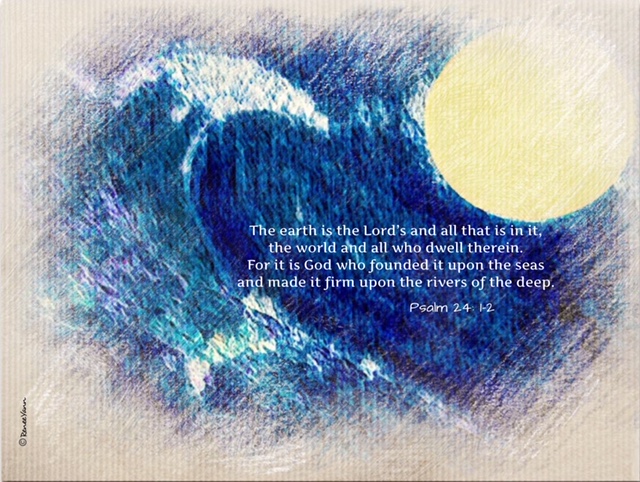
The earth is the Lord’s and all that is in it, 
the world and all who dwell therein.
For it is God who founded it upon the seas
and made it firm upon the rivers of the deep.

Psalm 24: 1-2

The psalmist then asks and answers the burning question of all spiritual seekers: who may come into the presence of this Omnipotent Being? Who may live in Eternal Love?

Who can ascend the mountain of the Lord,
and who can stand in the holy place of God?
Those who have clean hands and a pure heart, 
who have not pledged themselves to falsehood, 
nor sworn by what is a fraud.
They shall receive a blessing from the Lord
and a just reward from the God of their salvation.

Psalm 24: 3-5

It is these successful seekers whom we celebrate today,
the ones already embraced in everlasting glory.

As we consider their lives, we might ask the further question: how did they do it; how did they achieve holiness.

John, in our second reading, says the key to holiness is to honor the gift already given to each of us at our creation and confirmed in our Baptism:

Beloved:
See what love God has bestowed on us
that we may be called the children of God.
Yet so we are.
The reason the world does not know us
is that it did not know God.
Beloved, we are God’s children now;
what we shall be has not yet been revealed.
We do know that when it is revealed we shall be like God
for we shall see God as God truly is.
Everyone who shares this hope seeks a heart purified in God.


We honor all the Saints today, especially the multitudes whose names are unknown to us. They are the ones who lived lives of Beatitude among us, as our Gospel teaches. May they help us to learn the lessons of:

  • a liberated spirit
  • an unpretentious persistance
  • a hopeful endurance
  • a thirst for righteousness
  • a merciful and pure heart
  • a gentle peace-making
  • and a courageous pursuit of justice

These are the keys that will lift up the gates of Heaven for us, allowing the Holy One to make us holy:

Lift up your heads, O gates;
lift them high, O everlasting doors;
and the One who reigns in glory shall come in.

Psalm 24:7

Poetry: In Whom We Live and Move and Have Our Being – Denise Levertov 

Birds afloat in air’s current,
sacred breath? No, not breath of God,
it seems, but God
the air enveloping the whole
globe of being.
It’s we who breathe, in, out, in, the sacred,
leaves astir, our wings
rising, ruffled—but only saints
take flight. We cower
in cliff-crevice or edge out gingerly
on branches close to the nest. The wind
marks the passage of holy ones riding
that ocean of air. Slowly their wake
reaches us, rocks us.
But storm or still,
numb or poised in attention,
we inhale, exhale, inhale,
encompassed, encompassed.

Music: two songs for the big feast🤗

Psalm 24: Lift up your heads, ye gates – Georg Friedrich Handel
Sung by the Gramophone Chorus – Ghana


Give Us Clean Hands – Charlie Hall

A Blessed Mercy Day

Friday of the Twenty-fifth Week in Ordinary Time
September 24, 2021

The link below will take you to Mercy International Center’s website. About mid-page, you can click to see Catherine McAuley’s story, “In God Alone”. It is a wonderful short film. Please take time to enjoy it and to thank God with the Sisters of Mercy for our blessed founder, dear Catherine. Blessings and love to all our Mercy family throughout the world!

Music: In God Alone by Bernadette Farrell