At the Table of Mercy

Feast of Saint Matthew, Apostle and evangelist

September 21, 2019

Click here for readings

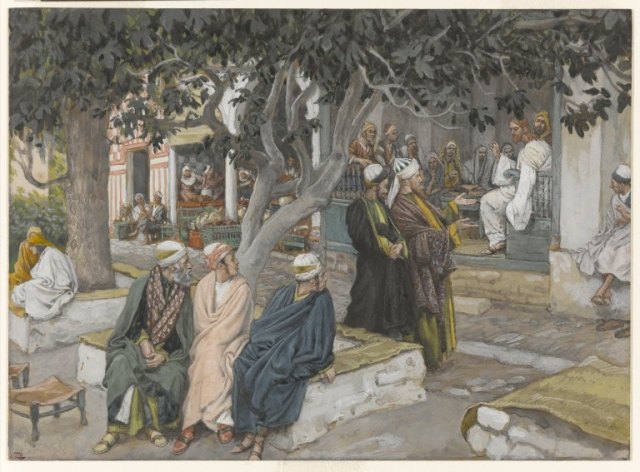
Today, in Mercy, we celebrate the feast of St. Matthew. The Gospel chosen for the day is Matthew’s own account of his call and the subsequent event lodged in his memory – the first meal he shared with Jesus.
tissot
The Meal in the House of Matthew by James Tissot from the Brooklyn Museum

Apparently Matthew’s house was a do-drop-in kind of house. Matthew’s friends easily gathered at the meal. Even the Pharisees got a view of his table. 

I doubt that Matthew did the cooking. Perhaps his wife or mother, though never mentioned, were the true authors of his hospitality. She may have been that type of cook who lifts the sweet and savory scent of spices into the air, capturing in their welcome all who pass by.

Mt9_10 table

Jesus settles in to that welcome as do his table companions – disciples, tax collectors and sinners. They seem comfortable in their shared humanity. But today, with Jesus, they are invited to the perfection of that humanity in his abundant grace. They too receive a call this day.

We know only how some of these guests responded to this amazing invitation in their lives.

  • Matthew became an apostle and a saint.
  • The Pharisees retreated to their self-protective criticisms and condemnations.

How the others embraced or rejected this graceful moment is left unspoken.

With every Eucharistic moment of our lives, Jesus invites us to humanity’s table – a table transformed by his becoming one of us. His presence changes us all from sinners, tax collectors, or however else we are categorized. With Jesus, we are simply God’s children, fed and replenished by mercy, changed by a sacred invitation.

May we be aware of our “eucharists ” today, every encounter with another human being. The table may or may not be visible in the everyday circumstances around which we gather. Jesus will not be visible either – unless we have the eyes to see him in ourselves and those with whom we share life.

Music:  Come to the Table – Sidewalk Prophets
Say But the Word

Memorial of Saints Cornelius, Pope, and Cyprian, Bishop, Martyrs

Monday, September 16, 2019

Click here for readings

Today, in Mercy, both our readings today offer us pivotal lessons about what nourishes true leadership: faith, humility, generosity, and inclusivity.

Many of us have been blessed, especially in our young lives, with the gift of wise and loving mentors. Certainly our parents, families and teachers are among the first and most critical.

A little later, our circle of mentors widens. We look for great coaches, wise employers, guiding trainers, caring councilors, trusted friends.

Paul’s letters to Timothy and Titus are biblical examples of such mentorship. In them, the author is guiding young ministers in the art and science of loving, Christ-like leadership.

Key to such leadership in today’s reading is a steadfast commitment to prayer which covers, blesses and includes all people.

In our Gospel, the centurion demonstrates that he is a leader who values these virtues.

The Jews urging Jesus to visit the centurion say that he deserves Christ’s attention because “he loves our nation and he built the synagogue for us.

 My guess is that Jesus wasn’t impelled by this argument, but solely by his splancha – his merciful gut response to the man’s plea.

When the centurion enters the story, his humility is immediately evident: 

Lord, do not trouble yourself,
for I am not worthy to have you enter under my roof.
Therefore, I did not consider myself worthy to come to you;
but say the word and let my servant be healed.

The miracle healing, of course, is granted but that is not the most important part of the story.

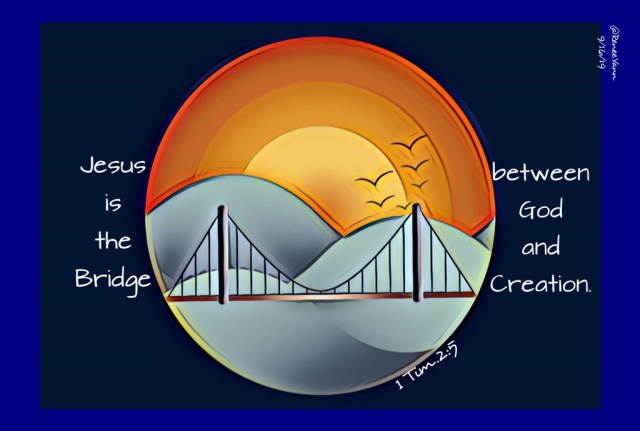
!Tim2_5 bridgeJPG

This civil leader’s acknowledgement of Christ’s sovereignty is an act of faith which serves as a model for all of us – to the extent that millennia later we echo his prayer as we prepare to receive Christ in communion.

His is a faith that places Christ at the center of all Creation, commanding the flow of grace and mercy to all creatures. That faith allows the centurion to care even for a suffering servant. It allowed him to support the worship even of a dominated people.

Timothy and Titus have shown that kind of faith. They are the next generation who will carry Christ’s legacy passed to them by Paul. He wants them to understand that humility, largeness of heart, kindness and steadfastness open the way for God’s life-giving will for all people.

Whether, in our current life state, we are leader, or protégé, or both, how do these readings help us to make a clearer way for God in the world? That’s what real leadership is all about. And, as Paul says, we learn it in prayer.

Video: a representation of Luke’s version of this Gospel story:

Faith of Centurion

Remembering Our Way Home…

Wednesday of the Twenty-third Week in Ordinary Time

September 11, 2019

Click here for readings

Today, in Mercy, the world will remember the abomination of the 9/11 attacks when nearly 3000 innocent lives were sacrificed to hatred, vengeance, and cowardice.

Some will remember in anger; some in forgiveness. Some will remember in grief; some in triumph. Some will remember with a will to seek peace; some with a drive to wreak endless retribution. Some with unquenchable sorrow; some with a false and self-destructive pride.

Some, too jaded by the years of savagery since then, will remember the day with despair.

Some, too young to remember at all, will simply try to grow up in the fragmented world it has left them.

Tragically, some throughout the world are so devastated by their own sufferings that there is no energy to remember. Some have endured war and oppression for so long that there is no peace to remember.

We in the human family were not created to live like this. 

Col3_4 christ appears

Paul tells us that we …

… were raised with Christ, so seek what is above,
where Christ is seated at the right hand of God.
Think of what is above, not of what is on earth.
For you have died, and your life is hidden with Christ in God.
When Christ your life appears,
then you too will appear with him in glory.

Jesus tells us that when that glory comes, it will be these who appear with him..

Blessed are you who are poor,
for the Kingdom of God is yours.
Blessed are you who are now hungry,
for you will be satisfied.
Blessed are you who are now weeping,
for you will laugh.
Blessed are you when people hate you,
and when they exclude and insult you,
and denounce your name as evil
on account of the Son of Man.
“Rejoice and leap for joy on that day!
Behold, your reward will be great in heaven.

On this anniversary of the 9/11 attacks, and on every day of our lives, we have a choice of how we will see the world, of how we will love or hate, embrace or exclude our sisters and brothers. Every day, we have choices to make about how we will allow, ignore, or stand against hate, division, oppression and indifference to human suffering.

We may think our power is small to change the world. But it is the only power we have or need. With those graced and intentional choices we…

… have taken off the old self with its practices
and have put on the new self,
which is being renewed, for knowledge,
in the image of its Creator.

Today, as we remember, let us also be excruciatingly aware of those who continue to suffer … at the world’s hard borders, in the Bahamas, Syria, Yemen, Rakhine, and in every place where abusive domination and greedy indifference crushes innocent life.

Music: When We Go Home, We Go Together- Pure Heart Ensemble 

Our Laboring Mother

Memorial of Saint Gregory the Great, Pope and Doctor of the Church

Tuesday, September  3, 2019

Click here for readings

Today, in Mercy, Paul again affirms the faith and prudence of the Thessalonians:

Concerning times and seasons, brothers and sisters,
you have no need for anything to be written to you.
For you yourselves know very well
that the day of the Lord will come like a thief at night.

He paints a dire picture of those “times and seasons”, likening them to the onset of labor pains. But like a mother’s labor, these pains ultimately yield life:

For God did not destine us for wrath,
but to gain salvation through our Lord Jesus Christ.

So Christ, our Laboring Mother, delivers us – even through seasons of suffering and evil – to a new day. And we – we are the midwives to one another’s salvation:

Therefore, encourage one another
and build one another up,
as indeed you do.

This honest encouragement is so essential for us in our faith communities because, without it, the mystery of suffering and evil overwhelm us. 

Ps27_13

It is both awesome and fearsome to truly encounter Mystery. In its presence, we are rudderless: we cannot explain, control, or humanly rationalize it. Mystery can only be comprehended by greater Mystery. Suffering can only be plumbed by the greater Mystery of Love.

And we know Love’s Name: Jesus by Roc O’Connor (Lyrics below)

Refrain:

Jesus, Jesus
Let all creation bend the knee to the Lord.

1. In Him we live, we move and have our being;
In Him the Christ, In Him the King!
Jesus the Lord.

2. Though Son, He did not cling to Godliness,
But emptied Himself, became a slave!
Jesus the Lord.

3. He lived obediently His Father’s will
Accepting His death, death on a cross!
Jesus the Lord.

The Chandelier

Monday of the Twenty-second Week in Ordinary Time

September 2, 2019

Click here for readings

Today, in Mercy,  our scriptures may lead us to think about where we have come from and where we are going.

Indeed, we tell you this, on the word of the Lord,
that we who are alive, who are left until the coming of the Lord,
will surely not precede those who have fallen asleep.

My reflection on this passage will be rather personal today. I hope you don’t mind.

As I write, I am blessed to be sitting in a beautiful breeze at our community’s vacation house. It couldn’t be a more lovely day.

1 Th4_17 chandelier

While I pray about these scriptures, a simple chandelier over our dining room table sways in the soft wind. Under its corona, I can’t help remembering all the friends who, over many years, have shared a meal and enjoyed past summer days here.

What an indescribable blessing it is to live in community with holy, joyful and loving women! 

Many of them, over these present days, drop in for a cup of home made soup or a glass of wine. We love one another, and we are entwined in each other’s journey to God. We inspire one another by our radical embrace of the Gospel, and our longing to give even more for God. What a comforting, sturdy, and supportive fabric we weave to enfold one another!

The chandelier rhythmically dances, like a fragrant censor over a sacred table. I remember with immense gratitude those beloved Sisters, now gone, who have blessed my life here at this refreshing seaside. Their names surround me in a grateful litany: Kitty, Marie, Fidelis, Jodi, Maureen, Suzanne, Ronnie, Janet, Giovanni, Mary Joan …

Others too who have sat at this table – not Sisters only, but family in faith, love and ministry bless me as I let the Holy Spirit of the waning summer waft over me.

We have shared crabs and meatballs, tears and laughter, prayer and politics, movies and ball games, hope and a holy, honest ember that warms the soul.

My dear Sisters, as you read this, you will have your own Sea Isle litanies to pray. Are we not indescribably blessed in one another!

Others of you, my dear readers, you will let you own loving list write itself across your heart as you pray.

A family is an eternal line between God and the generations, clear and stable.

A community is a wider path, rich in differences and, because of them, profound in its gifts.

In an interesting reversal, this holiday has come to be more about leisure than labor. And it is at leisure where we are most easily blessed by the joy, sincerity, trust and love of our families, friends, and communities.

Let us thank God for them today, remembering the past, cherishing the present, trusting the future.

Happy Labor Day!

Music: Sea Breeze – Keiko Matsui 

You’re Invited – (and so is everyone else)

Twenty-second Sunday in Ordinary Time

September 1, 2019

Click here for readings

Today, in Mercy, our readings share the common theme of humility, instructing us that the virtue is essential to our salvation.

Lk14_11 humbled

Humility, of course, gets a bad rap in our dominating, “me” culture. We tend to think of humiliation, servitude, inelegance rather than the actual root of the word: humus -“of the earth”.

I was fascinated last week by a small fracas arising from the unconsidered remarks of one of our Phillies baseball players. The team has been running hot and cold – with a little bit too much cold for some fans. The famous Philly “boos” have been flying. Frustrated with these, outfielder Sean Rodriguez referred to the disgruntled fans as “entitled”. 

angry

Uh oh! They didn’t like that. We prefer to think of ourselves as “deserving “, right?

Humility is that virtue which helps us realize that we are not “entitled” or “deserving” of anything over and above other human beings. It roots us in the respect for each other that refuses to rank the worth of other human beings. 

The social leverage that comes from wealth, power, and influence can beguile us. We become lost in a maze of stereotypes, rankings and prejudices which are the foundation of social injustice.


We hear among ourselves justifying phrases for our entitlement like:

  • well, I earned what I have
  • at least I paid for it
  • “they” need to work if they want to have …(food, healthcare, housing…)
  • it’s their own fault for … (dropping out of school, taking drugs, ….)
  • that’s just the way it is in “those” countries. The people are …(lazy, stupid, violent …)
  • “they” don’t need what I need. “They” are used to being … (poor, disabled, sick …)

And probably the most dangerous of all the phrases:

  • it’s not my problem
  • I’m not the one exiling, bombing, blocking, trafficking, enslaving “them”

Today’s readings enjoin us: it is my problem. My attitude, choices, vote, conversation, and lifestyle matter at the banquet of life we are all meant to share.

My intention to humbly join and rejoice with all Creation, to take a seat beside and never above my sister and brother – this is my “entitlement” to the one banquet that matters.

When you hold a banquet,
invite the poor, the crippled, the lame, the blind;
blessed indeed will you be because of their inability to repay you.
For you will be repaid at the resurrection of the righteous.

Music:  A Place at the Table – Lori True and Shirley Elena Murray

God’s Thank You Note

Monday of the Twenty-first Week in Ordinary Time

August 26, 2019

Click here for readings

Today, in Mercy, we begin eight days of Thessalonians, coupled with the final section of Matthew’s Gospel before the Passion, Death and Resurrection narrative.

First Thessalonians is a love note, a thank you note. In it, Paul speaks to the community with great affection and gratitude because they have caught fire with the Gospel he shared with them.

Paul’s words carry the loving, grateful voice of God to us who also try, with all our hearts, to give ourselves to the Gospel.

1 Thes 1:5 Thank You

In today’s Gospel, Matthew gives us the sad counterpoint to Paul’s joy. Jesus thunders woe over the Pharisees who, unlike the Thessalonians, smother the ardent message he offers them.

They bind. They control. They peddle a religion rooted in parsimonious law rather than generous freedom. They promote a system that sustains their privilege.

Jesus tells us that Pharisaical religion sucks the soul from people, binding them in a self-serving, spiritless law – where power and material prosperity supersede truth, loving community, and sincere worship.

In Paul’s words, God blesses and thanks us for our true faith which – by generosity, hope, love, sacrifice and hopeful endurance – builds the Community of God.

Throughout history, some people have used the scripture to justify the kind of pharisaical selfishness bewailed in today’s Gospel. They isolate and demonize other human beings by the deceitful turning of the holy Word. They are clever and convincing. They appeal to our rationality rather than our souls.

Today’s readings remind us to take great care in discerning the Spirit. We will never find Her where there is no love, mercy, kindness, freedom, forgiveness, and joy.

Music: one of my favorite hymns. Though from Ephesians, it carries the same message as our reading from Thessalonians today. I pray this prayer for all of you, dear friends.

Ephesians 1 – by Suzanne Toolan, RSM


Blessed be the God and Father of our Lord Jesus Christ.
In him we were chosen to live through love in his light.
That is why I never cease to give thanks to God for you.
And pray that the God of our Lord Jesus Christ
will grant you the Spirit of wisdom
and knowledge of himself
that you may  glory, glory in his goodness.

Walk in Mercy and Hope

Twenty-first Sunday in Ordinary Time

August 25, 2019

Click here for readings

Is66_18 great lightJPG

Today, in Mercy, our first reading gives us the conclusion of the magnificent Book of Isaiah. Most biblical scholars today attribute this book to at least three different authors writing over the period of two centuries. The book is thus divided into three sections: First, Second, and Third Isaiah – each reflecting a particular time and circumstance in the history of the Jewish people.

Despite its multi-authorship, the Book holds an essential integrity throughout. As a whole, it is the story of the displacement and restoration of Israel. That dynamic is poetically articulated through the themes of loss, grief, hope, and responsiveness to hope. These themes are so fundamentally human and universal that Isaiah stands as one of the most influential scriptures, both spiritually and culturally.

Today’s passage from Isaiah, combined with the Lukan symbol of the narrow gate, strike a powerful message for us – as individuals, as Church, as global citizens. 

There is one Kingdom in God and we ALL are invited to it.

I come to gather nations of every language;
they shall come and see my glory.

But we will find our way to this Kingdom by the twists of suffering and compassion, living on one side or the other of that reciprocal throughout our lives. 

faith reciprocal

How we support, include, love and minister with one another in our “displacement” determines our “restoration”:

And people will come from the east and the west
and from the north and the south
and will recline at table in the kingdom of God.
For behold, some are last who will be first,
and some are first who will be last

We know the works of mercy and our call to live them. Let’s pray for the strength to do so fully and joyfully.

Let’s pray for all nations, especially our own, to respond in mercy and hope to the displaced people of our time, knowing that it is only with them that we shall find the narrow gate.

Music: The People That Walked in Darkness (Is. 9:2) from Handel’s Messiah

Sung by James Milligan with Royal Liverpool Philharmonic Orchestra

Wherever … with Love

Friday of the Twentieth Week in Ordinary Time

August 23, 2019

Click here for readings

Today, in Mercy, I thank God that we have gotten to the Book of Ruth. The wars and subterfuges of the Judges we’re sorely testing me!😂 But the beautiful story of Ruth and Naomi, familiar and beloved, offers us a more spontaneous inspiration for prayer.

Naomi’s husband and only two sons have died. Her only remaining family are her two daughters-in-law, Ruth and Orpha. Naomi, resigning herself to a lonely death, urges these two young women to return to their kinsmen and begin new lives. Orpha acquiesces. 

Naomi RuthJPG
Ruth Swearing Allegiance to Naomi by Jans Victor (1619-1676)

But Ruth abides. Together, she and her mother-in-law return to Bethlehem, Naomi’s homeland. There, by her humble and steadfast work to support Naomi, Ruth attracts the love and admiration of Boaz, whom she eventually marries.

On the surface, and appropriately, we may read the story to be about Naomi and Ruth, their response to devastating bereavement, and their ultimate, fruitful devotion to each other.

However, on a deeper level, we may see Naomi as a symbol of suffering and need, and Ruth as an icon of God. In that manner of reading:

  • God suffers our diminishments with us
  • God refuses to abandon us 
  • God accompanies us to a new understanding of ourselves
  • God works to feed our poverty of mind, heart and spirit
  • God brings our brokenness to wholeness by loving fidelity to us

What a different kind of message from Judges the Book of Ruth brings us – a tender and merciful God more like the God of the Gospel. Although the author of the Book of Ruth is unknown, some think – because of the tone and characters – that it was written by a woman. I like that thought.

May our prayer today take us to the place where God abides with us in any suffering or spiritual longing we hold. May God’s faithful companionship heal and transform us. May God’s song of fidelity thrill, delight and sustain us. May we return it with generosity and joy.

Music: Covenant Song – Rory Cooney and Gary Daigle (Lyrics below)

Wherever you go, I will follow, Wherever you live is my home.
Though days be of blessing or sorrow, though house be of canvas or stone,
Though Eden be lost to the past, though mountains before us be vast,
Wherever you go, I am with you. I never will leave you alone.

Whatever you dream, I am with you, when stars call your name in the night
Though shadows and mist cloud the future,
together we bear there a light.
Like Abram and Sarah we stand, with only a promise in hand.
But lead where you dream: I will follow. To dream with you is my delight.

And though you should fall, you will find me, when no other friend can you claim,
when foes beat you down or betray you, and others desert you in shame.
When home and dreams aren’t enough, and you run away from my love,
I’ll raise you from where you have fallen. Faithful to you is my name.

Wherever you die, I will be there to sing you to sleep with a psalm,
to soothe you with tales our journey, your fears and your doubts I will calm.
We’ll live when journeys are done forever in mem’ry as one.
And we will be buried together, and awaken to greet a new dawn.

Wherever you go, I will follow. Behold! The horizon shines clear.
The possible gleams like a city: together we’ve nothing to fear.
So speak with words bold and true the message my heart speaks to you.
You won’t be alone, I have promised. Wherever you go, I am here.

On That Day & This One

Many things live, not just the plants, animals and humans that grace our world.  Memories and promises live.  Vows live. So do grudges and prejudices. Unlike our physical life, these less tangible realities become stronger with time.  Tales of valor and achievement live, often becoming epic with the passing of the years.

Simple kindness lives too, blessing not only the current receiver, but the unseen generations to whom it is passed. Every morning, old fears and new hopes wake up within us all.  They vie with each other to become the engines of our lives.  The happy ones among us have learned to let hope win.

mother Patricia with flower
Mother Patricia near her death in 1915

On this date in 1861, a small group of just such happy, hopeful people came to Philadelphia. On that hot August afternoon, the first Philadelphia Sisters of Mercy, led by 26-year old Patricia Waldron, arrived at Broad Street Station in North Philadelphia. They carried no worldly possessions. They came with only a dream for Mercy.  It was a dream so alive in them that it still inspires us today, over 150 years later.


Can’t you see them standing on the busy platform, the hissing steam trains encircling them in mist?  They must have felt “be-misted” themselves, these mostly Irish country girls engulfed in a big city.

Union troops heading south crowded the platform.  Busy Broad Street crackled with news of the burgeoning national strife.  Lincoln himself would visit the city in the coming weeks.

And hidden within the seams of this bustling city’s garment lay the poor – the ones for whom they had come.  How to reach them?  How to help them change their lives?

Ranging from sixteen to twenty-seven years old, these brave young women had been charged with establishing a kind of “new nation” themselves – not of politics, but of mercy.  I am sure they, like the young stout-hearted soldiers surrounding them, were also a little weak-kneed. They too had their battles to face. They too would see starvation, illness, attack and death – but they would endure for the sake of the Mercy dream, God’s dream for the poor.

cemetery
Today we honor our beloved foremothers who led the way in faith and commitment.

Enduring dreams begin with small first steps.  So, hailing a horse-drawn carriage, Mother Patricia Waldron led her young band to their new lives.  Thus she began the grace-filled saga many of us know so well and of which we are a part today.  Their dream lives in us who love Mercy:

  • in our continued effort to find those who are poor and sick in a world that ignores them
  • in our choice to be compassionate in a world that often chooses violence
  • in our commitment to care in a world of treacherous indifference

On that sultry August day 1861,  and on this one 2019, people have choices to make.  They have vows to keep. Some choices live forever.  In the name of Mercy, what will you choose today?