Today, in God’s Lavish Mercy, our readings call us to consider and to cherish our relationship with our merciful God.
In our first reading, God sends the prophet Nathan to confront David with the enormity of his sin. With the parable of the ravaged little lamb, Nathan captures all the horrific implications of David’s blind selfishness.
Nathan Denounces David’s Sin William Brassey Hole
David listens and agrees with the condemnation, still blind that the story is about him! Nathan then unleashes the zinger, “You are the man!”
But here is the key point of the passage. When David realizes his culpability, he does not retreat into his shame (as, for example, Judas does many years hence.) David acknowledges his fault and asks to be restored to relationship with the God Who has loved him so much.
David focuses on God not himself. He does not wallow in self-recrimination or excuses. David looks to God’s Mercy not into the mirror of self-justification:
Then David said to Nathan, “I have sinned against the LORD.” Nathan answered David: “For his part, the LORD has removed your sin. You shall not die…
2 Samuel 12:13
It all transpires in this one verse. That simple, definitive change wrought by divine forgiveness constitutes the structure of Psalm 51 as well as the 2 Samuel narrative. It is the same structure in Christian liturgy as well. In psalm, narrative, and liturgy, it is a move from failure to restoration, a move from confession to assurance, even if the assurance is only implied in Psalm 51. The exchange is between human failure and divine assurance, made possible by human honesty and a divine readiness to begin again in mercy, steadfast love, and compassion.
Walter Brueggemann - From Whom No Secrets Are Hid
For prayer today, a deep reflection on Psalm 51 may bring us light and healing, for our own spirits and for the spirit of the world we share.
Poetry: Psalm 51 – A New Heart – Christine Robinson
Have mercy on me, O God,
   For I’ve messed up again
Sinned against You in thought, word and deed,
   and in what I have left undone.
Been--all too human.

Can you make me a new heart, O God?
   and a right spirit? Can you break my willful plundering
   of all that is Yours?
If I got it together again, others would follow—
I could teach, guide, help—and I would!

O Lord, open my lips,
  that I may praise you.
I know you don’t want ritual sacrifice
   were I to give a burnt offering you’d be exasperated.
What you want is that new heart and right spirit.
   For this, I pray.
Music: Miserere Mei (Have Mercy on Me, O God) – Gregorio Allegri
Today, in God’s Lavish Mercy, we read about Paul’s “enlightening” ride on the road to Damascus. I have blogged about the feast several times, and you can access one of those blogs if you wish by searching on the right-hand side of the webpage.
Caravaggio – The Conversion of St. Paul
Before my own prayer today, I read a masterful poem by John Keble and listened to beautiful music by Felix Mendelssohn. I’d like to share them with you for today’s reflection.
Poetry: The Conversion of St. Paul – John Keble, an English churchman and poet, one of the leaders of the Oxford Movement. Keble College, Oxford, was named after him.
And he fell to the earth, and heard a voice saying unto him, Saul, Saul, why persecutest thou Me? And he said, Who art Thou, Lord? And the Lord said, I am Jesus whom thou persecutest. Acts ix. 4, 5. (KJV)
The mid-day sun, with fiercest glare,
Broods o’er the hazy twinkling air:
Along the level sand
The palm-tree’s shade unwavering lies,
Just as thy towers, Damascus, rise
To greet you wearied band.

The leader of that martial crew
Seems bent some mighty deed to do,
So steadily he speeds,
With lips firm closed and fixèd eye,
Like warrior when the fight is nigh,
Nor talk nor landscape heeds.

What sudden blaze is round him poured,
As though all Heaven’s refulgent hoard
 In one rich glory shone?
One moment—and to earth he falls:
What voice his inmost heart appalls?—
Voice heard by him alone.

For to the rest both words and form
Seem lost in lightning and in storm,
While Saul, in wakeful trance,
Sees deep within that dazzling field
His persecuted Lord revealed,
With keen yet pitying glance:

And hears time meek upbraiding call
As gently on his spirit fall,
As if th’ Almighty Son
Were prisoner yet in this dark earth,
Nor had proclaimed His royal birth,
Nor His great power begun.

“Ah! wherefore persecut’st thou Me?
”He heard and saw, and sought to free
His strained eyes from the sight:
But Heaven’s high magic bound it there,
Still gazing, though untaught to bear
Th’ insufferable light.

“Who art Thou, Lord?” he falters forth:—
So shall Sin ask of heaven and earth
At the last awful day.
“When did we see Thee suffering nigh,
And passed Thee with unheeding eye?
Great God of judgment, say!”

Ah! little dream our listless eyes
What glorious presence they despise,
While, in our noon of life,
To power or fame we rudely press.—
Christ is at hand, to scorn or bless,
Christ suffers in our strife.

And though heaven’s gate long since have closed,
And our dear Lord in bliss reposed,
High above mortal ken,
To every ear in every land
(Thought meek ears only understand)
He speaks as he did then.

“Ah! wherefore persecute ye Me?’
Tis hard, ye so in love should be
With your own endless woe.
Know, though at God’s right hand I live,
I feel each wound ye reckless give
To the least saint below.

“I in your care My brethren left,
Not willing ye should be bereft
Of waiting on your Lord.
The meanest offering ye can make—
A drop of water—for love’s sake,
In Heaven, be sure, is stored.”

O by those gentle tones and dear,
When thou hast stayed our wild career,
Thou only hope of souls,
Ne’er let us cast one look behind,
But in the thought of Jesus find
What every thought controls.
As to Thy last Apostle’s heart
Thy lightning glance did then impart
Zeal’s never-dying fire,
So teach us on Thy shrine to lay
Our hearts, and let them day by day
Intenser blaze and higher.
And as each mild and winning note
(Like pulses that round harp-strings float
When the full strain is o’er)
Left lingering on his inward ear
Music, that taught, as death drew near,
Love’s lesson more and more:

So, as we walk our earthly round,
Still may the echo of that sound
Be in our memory stored
“Christians! behold your happy state:
Christ is in these, who round you wait;
Make much of your dear Lord!”
Music: Paulus – Felix Mendelssohn – the Overture from the Oratorio
Today, in God’s Lavish Mercy, we are introduced to Saul and Matthew. Both these friends of God went through a spiritual process to confirm that Friendship. The process included:
Seeing Trusting Choosing
Seeing
In our first reading, Saul first appears chasing a bunch of asses. (I’m not even going there. Draw your own parallels 🤣)
But in his heart of hearts, Saul had another agenda. He wanted to confirm that a growing vision within him was also God’s vision:
Saul met Samuel in the gateway and said, “Please tell me where the seer lives.” Samuel answered Saul: “I am the seer. Go up ahead of me to the high place and eat with me today. In the morning, before dismissing you, I will tell you whatever you wish.”
1 Samuel 9:1-19
Trusting
Once our inner horizon begins to clear, our greatest challenge may be to trust what we see. For Saul, that power to trust came by benefit of Samuel’s anointing with oil.
As our jubilant psalm exerts, when we recognize God as our strength, our trust is confirmed:
O LORD, in your strength the king is glad; in your victory how greatly he rejoices! You have granted him his heart’s desire; you refused not the wish of his lips.
Psalm 21: 2-3
Choosing
Each one of us, in our own way, experiences this spiritual process. Certainly we see it in how we find our life’s vocation. But we see it in smaller, daily ways as well. Each choice we make in life is a step toward or away from God – toward or away from Love, Mercy, Wholeness and Justice as we learn it in the Gospel.
In our reading from Mark, we witness Matthew in a critical process of “seeing-trusting-choosing”.
Could more hidden drama be packed in two simple lines than in these!
Jesus said to him, “Follow me.” And he got up and followed Jesus.
Wrapped in those verses is Matthew’s whole life up to this point – all the choices that left him leaning so toward God that he could drop everything in one transforming moment to follow God’s call.
Ah, what might Saul and Matthew inspire in us today?
The Calling of St. Matthew – Caravaggio
Poetry: The Calling of the Apostle Matthew – James Lasdun
Not the abrupt way, frozen
In the one glance of a painter’s frame,
Christ in the doorway pointing, Matthew’s face
Bright with perplexity, the glaze
Of a lifetime at the counting house

Cracked in the split-second’s bolt of being chosen,
But over the years,slowly, Hinted at, an invisible curve;
Persistent bias always favoring
Backwardly the relinquished thing
Over the kept, the gold signet ring
Dropped in a beggar’s bowl, the eye not fully

Comprehending the hand, not yet;
Heirloom damask thrust in passing
Stranger’s hand, the ceremonial saddle
(Looped coins, crushed clouds of inlaid pearl)
Given on an irresistible
Impulse to a servant. Where it sat,

A saddle-shaped emptiness
Briefly, obscurely brimming … Flagons
Cellars of wine, then as impulse steadied
Into habit, habit to need,
Need to compulsion, the whole vineyard,
The land itself, groves, herds, the ancestral house,

Given any, each object’s
Hollowed-out void successively
More vivid in him than the thing itself,
As if renouncing merely gave
Density to having, as if
He’d glimpsed in nothingness a derelict’s

Secret of unabated
Inverse possession … And only then
Almost superfluous, does the figure
Step softly to the shelter door,
Casual, foreknown, almost familiar,
Calmly received, like someone long awaited.
Music: The Call – Vaughn Williams from a poem by George Herbert
Herbert’s short poem is simple and direct. It is almost completely composed of words of one syllable. Allusions to the Old and New testaments, as well as to the Church of England liturgy, abound in Herbert’s poetry. In this short poem there are references to Revelations 22:26: ‘Come, Lord Jesus..’ and to John 14:6, where Jesus is described as ‘the way, the truth and the life’. ‘Come’ is the call of the poet to God, but it is also the response of the poet to a call from God.
This poem has been set to music several times, notably by Ralph Vaughan Williams in his ‘Five Mystical Songs’.
Come, my Way, my Truth, my Life: Such a Way, as gives us breath: Such a Truth, as ends all strife: Such a Life, as killeth death.
Come, My Light, my Feast, my Strength: Such a Light, as shows a feast: Such a Feast, as mends in length: Such a Strength, as makes his guest.
Come, my Joy, my Love, my Heart: Such a Joy, as none can move: Such a Love, as none can part: Such a Heart, as joys in love.
Today, in God’s Lavish Mercy, our readings present a human cycle with which we all are familiar- the experience of falling and being lifted up again.
Failure then Mercy then Redemption
In our first reading, we hear about Hophni and Phinehas, sons of old Eli. They were not nice guys. They represent everything that happens when politics and power corrupt religion.
Now the sons of Eli were wicked; they had respect neither for the LORD nor for the priests’ duties toward the people.
1 Samuel 2: 13-14
After a first defeat by the Philistines, the elders of Israel sent for the Ark of the Covenant to fortify them in battle. Hophni and Phineas, being the Ark’s tenders, accompanied it from Shiloh. But the presence of the Ark, representing God, didn’t bring victory. Israel lost a second battle.
The Philistines fought and Israel was defeated; every man fled to his own tent. It was a disastrous defeat, in which Israel lost thirty thousand foot soldiers. The ark of God was captured, and Eli’s two sons, Hophni and Phinehas, were among the dead.
1 Samuel 4:11
Wow! You know it’s bad enough when we fail a first time! But after asking God to step in, we still fail??? Uh Oh!
Extraordinary Failure
Our Responsorial Psalm is the prayer of those recognizing themselves as utterly defeated, confused, and begging for redemption – the “Uh Oh People”!
Why do you hide your face, forgetting our woe and our oppression? For our souls are bowed down to the dust, our bodies are pressed to the earth. Redeem us, Lord, because of your mercy.
Psalm 44:24-25
Extraordinary Redemption
Mark’s Gospel tells the story of one devastated and utterly dependent on God to be restored, — a story of the immediacy of God’s Mercy when we open our hearts to it:
A leper came to him and kneeling down begged him and said, “If you wish, you can make me clean.” Moved with pity, he stretched out his hand, touched the leper, and said to him, “I do will it. Be made clean.”
Mark 1:40
Extraordinary Mercy
Listen, I’ve been an “uh oh person” many times in my life. Probably you have too. As we pray with these passages, our own failures and defeats may speak to us. Whether we are in their midst or simply wrapped in their recollection, let’s open our spirits to these extraordinary gifts:
honest recognition of our failures
a request for healing redemption
gratitude for God’s Lavish Mercy
Poetry: The Leper – by Nathaniel Parker Willis
It’s a rather long poem, and may delight only the literary nerds like me. But it paints a wonderful story if you can take time to read it sometime.
“ROOM for the leper! room!” And, as he came, The cry passed on—“Room for the leper! Room!” Sunrise was slanting on the city gates Rosy and beautiful, and from the hills The early risen poor were coming in, 5 Duly and cheerfully to their toil, and up Rose the sharp hammer’s clink and the far hum Of moving wheels and multitudes astir, And all that in a city murmur swells— Unheard but by the watcher’s weary ear, 10 Aching with night’s dull silence, or the sick Hailing the welcome light and sounds that chase The death-like images of the dark away. “Room for the leper!” And aside they stood— Matron, and child, and pitiless manhood—all 15 Who met him on his way—and let him pass. And onward through the open gate he came, A leper, with the ashes on his brow, Sackcloth about his loins, and on his lip A covering, stepping painfully and slow, 20 And with a difficult utterance, like one Whose heart is with an iron nerve put down, Crying, “Unclean! unclean!”
’Twas now the first
Of the Judean autumn, and the leaves, Whose shadows lay so still upon his path, 25 Had put their beauty forth beneath the eye Of Judah’s palmiest noble. He was young, And eminently beautiful, and life Mantled in eloquent fulness on his lip, And sparkled in his glance; and in his mien 30 There was a gracious pride that every eye Followed with benisons—and this was he! With the soft airs of summer there had come A torpor on his frame, which not the speed Of his best barb, nor music, nor the blast 35 Of the bold huntsman’s horn, nor aught that stirs The spirit to its bent, might drive away. The blood beat not as wont within his veins; Dimness crept o’er his eye: a drowsy sloth Fettered his limbs like palsy, and his mien, 40 With all its loftiness, seem’d struck with eld. Even his voice was changed; a languid moan Taking the place of the clear silver key; And brain and sense grew faint, as if the light And very air were steeped in sluggishness. 45 He strove with it awhile, as manhood will, Ever too proud for weakness, till the rein Slacken’d within his grasp, and in its poise The arrowy jeered like an aspen shook. Day after day, he lay, as if in sleep. 50 His skin grew dry and bloodless, and white scales, Circled with livid purple, cover’d him. And then his nails grew black, and fell away From the dull flesh about them, and the hues Deepen’d beneath the hard unmoisten’d scales, 55 And from their edges grew the rank white hair, —And Helon was a leper!
Day was breaking,
When at the altar of the temple stood The holy priest of God. The incense lamp Burn’d with a struggling light, and a low chant 60 Swell’d through the hollow arches of the roof Like an articulate wail, and there, alone, Wasted to ghastly thinness, Helon knelt. The echoes of the melancholy strain Died in the distant aisles, and he rose up, 65 Struggling with weakness, and bow’d down his head Unto the sprinkled ashes, and put off His costly raiment for the leper’s garb: And with the sackcloth round him, and his lip Hid in a loathsome covering, stood still, 70 Waiting to hear his doom:—
Depart! depart, O child Of Israel, from the temple of thy God! For He has smote thee with His chastening rod; And to the desert-wild, 75 From all thou lov’st away, thy feet must flee, That from thy plague His people may be free.
Depart! and come not near The busy mart, the crowded city, more; Nor set thy foot a human threshold o’er; 80 And stay thou not to hear Voices that call thee in the way; and fly From all who in the wilderness pass by.
Wet not thy burning lip In streams that to a human dwelling glide; 85 Nor rest thee where the covert fountains hide; Nor kneel thee down to dip The water where the pilgrim bends to drink, By desert well or river’s grassy brink;
And pass thou not between 90 The weary traveller and the cooling breeze; And lie not down to sleep beneath the trees Where human tracks are seen; Nor milk the goat that browseth on the plain, Nor pluck the standing corn, or yellow grain. 95
And now, depart! and when Thy heart is heavy, and thine eyes are dim, Lift up thy prayer beseechingly to Him Who, from the tribes of men, Selected thee to feel His chastening rod, 100 Depart! O Leper, and forget not God!
And he went forth—alone! not one of all The many whom he loved, nor she whose name Was woven in the fibres of the heart Breaking within him now, to come and speak 105 Comfort unto him. Yea—he went his way, Sick, and heart-broken, and alone—to die! For God had cursed the leper!
It was noon,
And Helon knelt beside a stagnant pool In the lone wilderness, and bathed his brow, 110 Hot with the burning leprosy, and touched The loathsome water to his fever’d lips, Praying that he might be so blest—to die! Footsteps approach’d, and with no strength to flee, He drew the covering closer on his lip, 115 Crying, “Unclean! unclean!” and in the folds Of the coarse sackcloth shrouding up his face, He fell upon the earth till they should pass. Nearer the Stranger came, and bending o’er The leper’s prostrate form, pronounced his name— 120 “Helon!” The voice was like the master-tone Of a rich instrument—most strangely sweet; And the dull pulses of disease awoke, And for a moment beat beneath the hot And leprous scales with a restoring thrill. 125 “Helon! arise!” and he forgot his curse, And rose and stood before Him.
Love and awe
Mingled in the regard of Helon’s eye As he beheld the Stranger. He was not In costly raiment clad, nor on His brow 130 The symbol of a princely lineage wore; No followers at His back, nor in His hand Buckler, or sword, or spear,—yet in His mien Command sat throned serene, and if He smiled, A kingly condescension graced His lips, 135 The lion would have crouch’d to in his lair. His garb was simple, and His sandals worn; His stature modell’d with a perfect grace; His countenance, the impress of a God, Touch’d with the open innocence of a child; 140 His eye was blue and calm, as is the sky In the serenest noon; His hair unshorn Fell to His shoulders; and his curling beard The fulness of perfected manhood bore. He looked on Helon earnestly awhile, 145 As if His heart were moved, and stooping down, He took a little water in His hand, And laved the sufferer’s brow, and said, “Be clean,” And lo! the scales fell from him, and his blood Coursed with delicious coolness through his veins, 150 And his dry palms grew moist, and his lips The dewy softness of an infant’s stole, His leprosy was cleansed, and he fell down Prostrate at Jesus’ feet and worshipped Him.
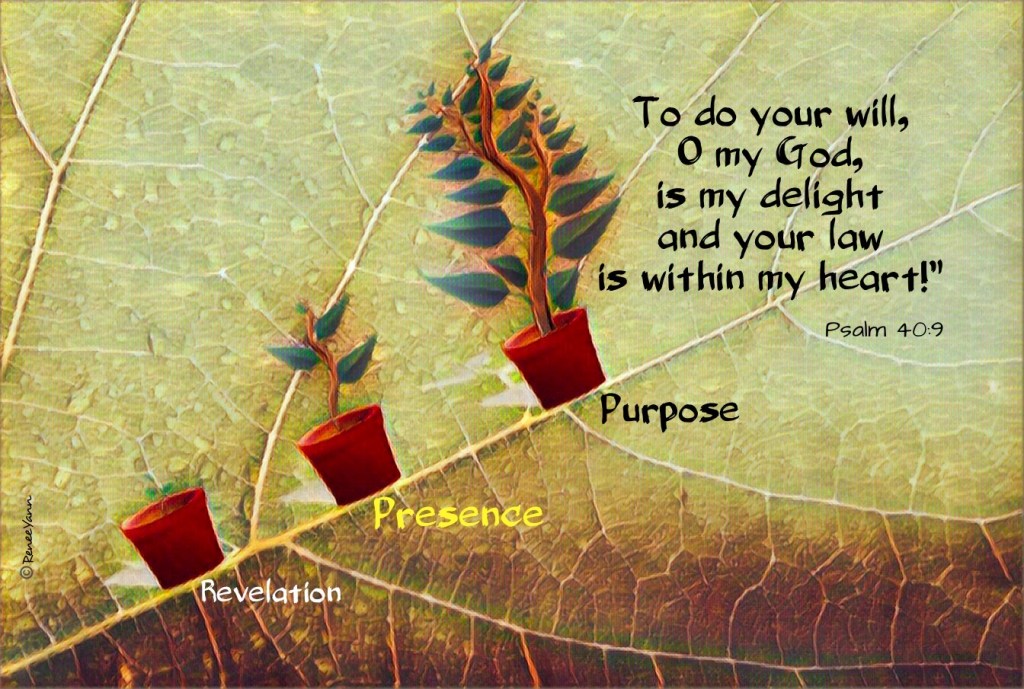
Today, in God’s Lavish Mercy, our readings lead us through an evolution of grace from:
Revelation to Presence to Purpose
How simply charming yet powerful is the wonderful story of Samuel’s call! We can picture the tousled-hair boy sleeping near the Ark of the Covenant, youthfully unaware of his awesome surroundings.
God’s voice insists into Samuel’s unawareness, finally capturing his attention after four tries.
Oil painting on canvas, The Calling of Samuel by Sir Joshua Reynolds PRA (Plympton 1723 – London 1792), circa 1770-6. A half-length portrait of a young boy, turned to the left, gazing upwards, his right hand outstretched, wearing a loose brown cloak. Stormy sky.
Extraordinary Revelation
From that moment, Samuel lives fully in the Presence of the Lord:
Samuel grew up, and the LORD was with him, not permitting any word of his to be without effect. Thus all Israel from Dan to Beersheba came to know that Samuel was an accredited prophet of the LORD.
1 Samuel 3: 19-20
The Prophet Samuel – Claude Vignon
Extraordinary Presence
Mark’s Gospel narrates another call for us – the emerging call of Jesus and his mentoring of his disciples to share his sacred ministry:
Rising very early before dawn, he left and went off to a deserted place, where he prayed. Simon and those who were with him pursued him and on finding him said, “Everyone is looking for you.” He told them, “Let us go on to the nearby villages that I may preach there also. For this purpose have I come.” So he went into their synagogues, preaching and driving out demons throughout the whole of Galilee.
Mark 1: 35-39
Extraordinary Purpose
As we pray this reflection today, we may be just waking up as Samuel was. We may be slowly emerging from the desert of our sleep. Or we may be at a point in our spiritual lives where the Light is dawning on us for some other reason.
Wherever we are, let’s be aware that each “dawning” brings
a newRevelation of grace
a deeper invitation to God’s Presence
a fresh call to engage God’s Purpose for our lives
Poetry: The Collar by George Herbert (1593 – 1633) a poet, orator, and priest of the Church of England. Herbert is considered one of the great metaphysical poets. In this poem, he writes about the evolution of his desire to fully answer God’s call, symbolized in the priestly collar that he wore. The final lines remind me of Samuel’s call.
I struck the board, and cried, “No more;
I will abroad!
What? shall I ever sigh and pine?
My lines and life are free, free as the road,
Loose as the wind, as large as store.
Shall I be still in suit?
Have I no harvest but a thorn
To let me blood, and not restore
What I have lost with cordial fruit?
Sure there was wine
Before my sighs did dry it; there was corn
Before my tears did drown it.
Is the year only lost to me?
Have I no bays to crown it,
No flowers, no garlands gay? All blasted?
All wasted?
Not so, my heart; but there is fruit,
And thou hast hands.
Recover all thy sigh-blown age
On double pleasures: leave thy cold dispute
Of what is fit and not. Forsake thy cage,
Thy rope of sands,
Which petty thoughts have made, and made to thee
Good cable, to enforce and draw,
And be thy law,
While thou didst wink and wouldst not see.
Away! take heed;
I will abroad.
Call in thy death’s-head there; tie up thy fears;
He that forbears
To suit and serve his need
Deserves his load.”
But as I raved and grew more fierce and wild
At every word,
Methought I heard one calling, Child!
And I replied My Lord.
Music: God’s Calling – George Melendez
I wonder if George Herbert could have appreciated this rap song😀
Ordinary Time 2022: The extraordinary reality is that we have been given the gift of life! Each day we are given a new portion of grace to deepen in God! Let us focus our reflections on the “hidden extraordinary” – a word, thought, or challenge in each day’s readings that we might otherwise have taken for granted. May God give us the graceful appreciation to unwrap these gifts!
Today, in God’s Lavish Mercy, we awaken to extraordinary gifts revealed in three words from our readings:
Downcast – Amazed – Exultant
In our first reading, Hannah’s story continues to unfold. And we feel for her, don’t we? The woman is desperate to bear life! Not only does she long for her own sweet child; she longs as well for restored standing in her neighborhood and family as one who is fertile not barren. This meant everything in Hannah’s community as fertility defined a woman’s importance.
Have you ever prayed like Hannah prays in this chapter? Has any need in your life ever so demanded God’s mercy? These are times that ask for our complete vulnerability before God’s Omnipotence.
In her bitterness she prayed to the LORD, weeping copiously, and she made a vow, promising: “O LORD of hosts, if you look with pity on the misery of your handmaid, if you remember me and do not forget me, if you give your handmaid a male child, I will give him to the LORD for as long as he lives…
1 Samuel 1: 10-11
Vasili Petrovich Vereshchagin (1864)
Eli witnesses Hannah’s vulnerable prayer. He blesses her and hope cracks through her gloom: She replied, “Think kindly of your maidservant,” and left. She went to her quarters, ate and drank with her husband, and no longer appeared downcast.
1 Samuel 1:18
Extraordinary Vulnerability!
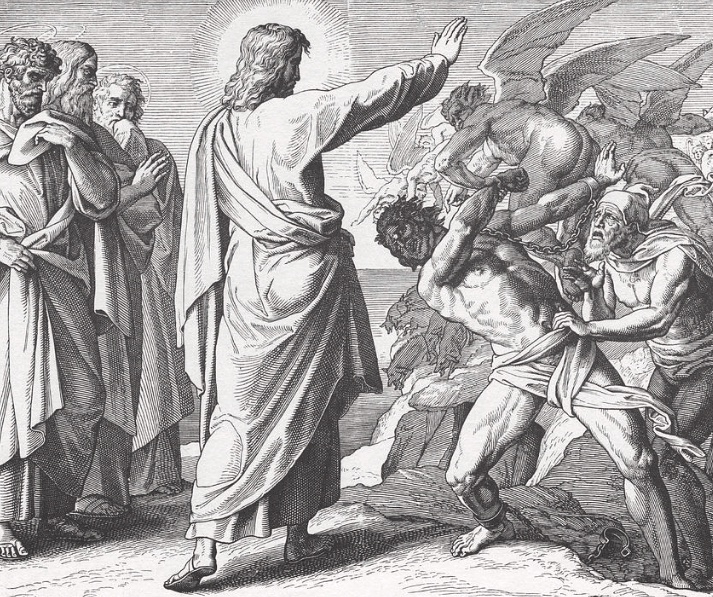
Jesus Casts Out Demons – Julius Schnorr von Carolsfeld
In the Gospel reading, Jesus is still very early in his ministry. He has come to the synagogue to teach and people are “astonished” to hear the depth of his authority. But their astonishment grows even more when Jesus successfully commands the unclean spirit to leave the tortured man. All were amazed and asked one another, “What is this? A new teaching with authority. He commands even the unclean spirits and they obey him.”
Mark 1:27
Can we let ourselves be constantly amazed at God’s Presence, Power, and Mercy in all Creation?
Extraordinary Holy Amazement!
Once again, our Responsorial Psalm offes a way to pray when our downcast desperation meets God’s amazing, transforming grace. It is the “Magnificat” of Hannah:
And Hannah prayed:
“My heart exults in the LORD, my horn is exalted by my God. I have swallowed up my enemies; I rejoice in your victory. There is no Holy One like the LORD; there is no Rock like our God. 1 Samuel 2: 1-2
1 Samual 2: 1-2
Extraordinary Exultation!
Through our scripture-nourished prayer, may we open the gifts of extraordinary vulnerability, extraordinary hope, and extraordinary exultation wrapped in our own ordinary lives this day.
Poetry: Bare Tree – Anne Morrow Lindbergh
Already I have shed the leaves of youth,
stripped by the wind of time down to the truth
of winter branches. Linear and alone
I stand, a lens for lives beyond my own,
a frame through which another's fire may glow,
a harp on which another's passion, blow.
The pattern of my boughs, an open chart
spread on the sky, to others may impart
its leafless mysteries that I once prized,
before bare roots and branches equalized,
tendrils that tap the rain or twigs the sun
are all the same, shadow and substance one.
Now that my vulnerable leaves are cast aside,
there's nothing left to shield, nothing to hide.
Blow through me, Life, pared down at last to bone,
so fragile and so fearless have I grown!
Today, in God’s Lavish Mercy, our readings offer us a theme of CONFIDENCE with a dash of JOY.
John begins with the reassuring verse:
From the Latin root meaning “to have full trust”, confidence is a rare and beautiful blessing in our lives. How many people or things are you able to trust that deeply? Are you blessed with a true confidant in your life?
John tells us that this is the kind of relationship we can and should have with God.
He says that when we pray with this confidence, we trust whatever answer we receive to bring us grace and life.
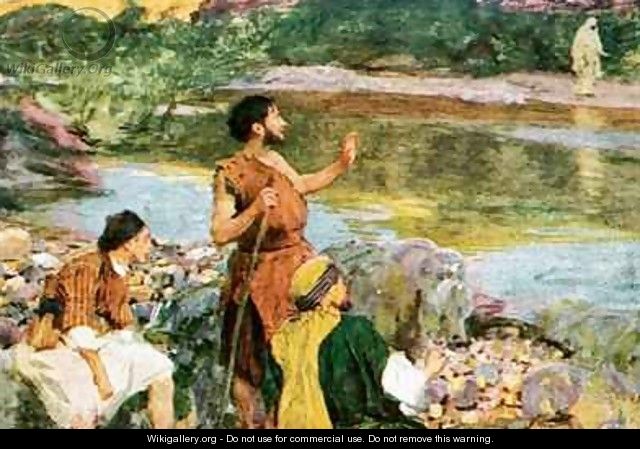
Behold the Lamb of God – William Hatherell, from wiki gallery
In our Gospel, John the Baptist’s followers are having a little trouble with their confidence. They are unsettled by the appearance and rising popularity of Jesus. John says to trust what is happening. He had already told them that a greater One would come after him.
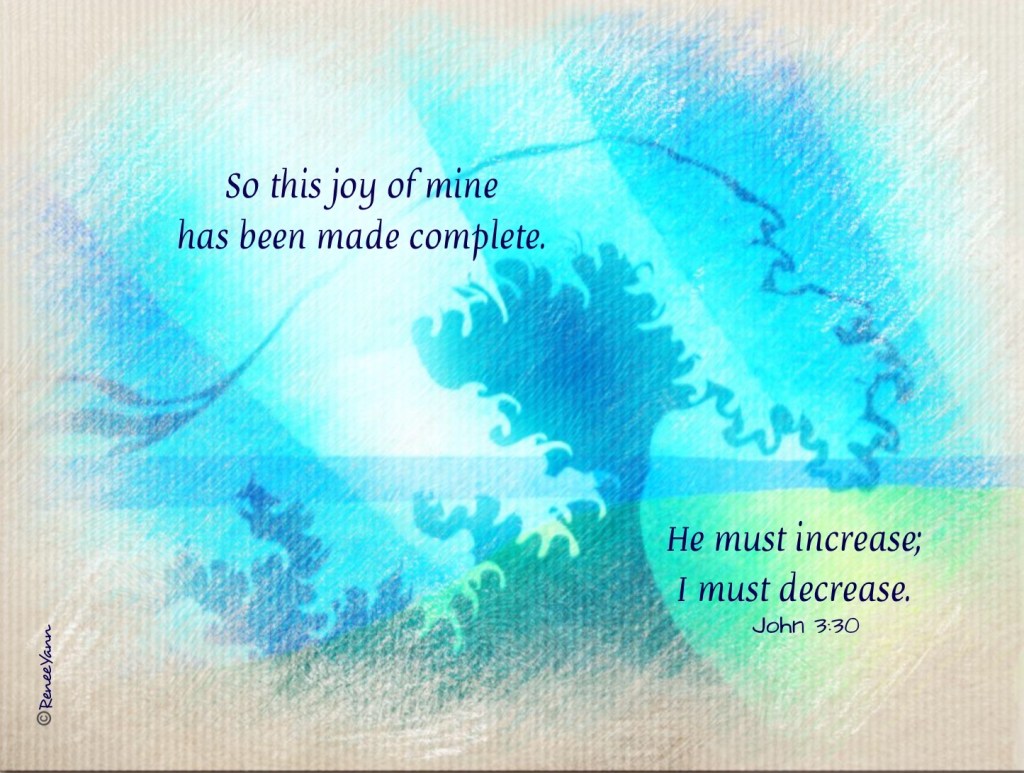
John’s ultimate response is worth repeating in prayer, “So this joy of mine has been made complete. He must increase; I must decrease.”
When Christ shines through us without hindrance of our pride or fears, how complete our joy will be, how profoundly rooted our confidence!
Poetry: JOHN THE BAPTIST: THE PASSOVER (JOHN 1:35–39) by Irene Zimmerman, OSF
For years he’d preached the coming was at hand. Now John saw Jesus walking on the strand. “Behold the Lamb of God!” he called, and sent his own disciples hurrying. They went, filling Jesus’ footprints in the sand faster than the water could. John stayed and poured the river on the people and passed them over to his Lord.
I know: the title sounds like a new TV series, doesn’t it? But it’s not. It’s a story as old as time!
Today, in God’s Lavish Mercy, John talks about liars. He made me really think.
Liar! Liar! Pants on Fire!
When I was a kid going to weekly Saturday night confession (yes, remember a lot of us did that!) I really had to scrape to get a decent pile of sins. I mean, honestly, how much evil can one eight-year-old generate in a week?
But lying was always a good fallback to report on. You know the deal:
I told my teacher that I forgot my homework when I really hadn’t done it.
I told Petey Nicolo I could beat him up when I knew I couldn’t.
I told Chickie Schmidt I could ride a big bike like hers when I had actually just fallen on my face off a smaller one.
I told Sister I wasn’t smoking in the girls’ room when my very own cousin Joanie threw me under the bus!
As you can see, I was your normal childhood compulsive liar – pretending to be and do lots of things I only wished I could be or do. But that’s just part of growing up. Like most people, I got over it when I began to realize the power and necessity of growing confidently into one’s true self.
People depend on us to be who we really are, to be the real deal. The value of our work and contributions to the world hinges on this. The depth and endurance of our relationships rest on such transparency and authenticity. Even our ability to love ourselves is rooted in honest self-awareness.
So how do we deepen in that kind of truthfulness, especially in a modern culture that so often abuses it? John tells us that love is the way:
Beloved, we love God because God first loved us. If anyone says, “I love God,” but hates their brother or sister , they are liars; for whoever does not love the one they can see cannot love God whom they have not seen. This is the commandment we have from God: Whoever loves God must also love their sister and brother.
1 John 4:19-21
Friends, we live in a culture drowning in lies. Some have come to believe that unless one lies, one cannot compete. Businesses lie to sell untested or worthless commodities. Manufacturers veil the danger of their drugs, tobacco and vaping products. Politicians lie to condemn their opponents and excuse themselves. Leaders lie to justify war. And criminals lie to hide their crimes.
These liars may never even consider that their tangled lives are related to the scriptures. But every one of these deceptions is fueled by a failure in reverence and love for our sisters and brothers, by a failure in courage to be responsible for and love one another.
We lie because we think our truth is not enough. John tells us differently. Our awesome Truth is that we all are God’s children! And that is not only enough–it is EVERYTHING!
Our reading closes today with these words, so critical to the rebuilding of a truthful world:
In this way we know that we love the children of God when we love God and obey the commandments. For the love of God is this, that we keep the commandments. These are not burdensome, for whoever is begotten by God conquers the world. And the victory that conquers the world is our faith.
1 John 5:2-4
Let’s pray for one another’s courage, dear Friends, to be and demand the Truth that Love requires.
Prose: from “Man’s Universe” by Rabindranath Tagore
On the surface of our being
we have the ever-changing phases of the individual self,
but in the depth there dwells
the Eternal Spirit of human unity beyond our direct knowledge.
It very often contradicts the trivialities of our daily life
and upsets the arrangements made for securing our personal exclusiveness
behind the walls of individual habits and superficial conventions.
It inspires in us works that are the expressions of a Universal Spirit;
it invokes unexpectedly in the midst of a self-centered life a supreme sacrifice.
At its call, we hasten to dedicate our lives to the cause of truth and beauty,
to unrewarded service of others.
Music: True Heart – Oak Ridge Boys
Often, I use a popular song for prayer, allowing its words to speak to God for me. You might like to try it with this song. No doubt intended as a human love song, it can be a divine love song too – and it’s sure a good wake up prayer 🙂
Making money they can hide away. They never know what they’re working for. All they think about is making more. And every time the world spins round There’s a few more hearts that can’t be found ‘Cause they never had nothing to hold on to The way that I’m holding you. All ever need is your true heart Next to me when it’s cold and dark. All I need to keep from falling apart Is the beat of your true heart. Some people spend day and night Trying to love everybody in sight They never know what love is for All they think about is keeping the score. And every time the world spins round There’s a few more hearts that can’t be found ‘Cause they never had nothing to hold on to The way that I’m holding you. All ever need is your true heart Next to me when it’s cold and dark. All I need to keep from falling apart Is the beat of your true heart. Your true heart. No they never had nothing to hold on to The way that I’m holding you. All ever need is your true heart Next to me when it’s cold and dark. All I need to keep from falling apart Is the beat of your true heart. All ever need is your true heart Next to me when it’s cold and dark. All I need to keep from falling apart Is the beat of your true heart. All ever need is your true heart Next to me when it’s cold and dark. All I need to keep from falling apart Is the beat of your true heart.
Rise up in splendor, Jerusalem! Your light has come, the glory of the Lord shines upon you. See, darkness covers the earth, and thick clouds cover the peoples; but upon you the LORD shines, and over you appears his glory.
Isaiah 60:1-2
The journey to the Epiphany is repeated in each our lives – many times over. As we – like young Jesus – grow in age and grace, God continually calls us to new Lights, ever deeper into Love’s Divine Universe.
And we, like the determined Wise Ones, move closer – by whatever means we can – to the Promised Revelation. We have our own trusted “camels” which carry us toward Truth: meditation, spiritual reading, sacred song, prayerful journaling, holy silence, merciful service, Gospel love.
Faithful commitment to our soul’s journey leads us to God’s beautiful promise. It is a difficult and sometimes challenging journey, as our poem will attest. But it is not a hopeless, pointless, or endless one:
Then you shall be radiant at what you see, your heart shall throb and overflow, for the riches of the sea shall be emptied out before you, the wealth of nations shall be brought to you.
Isaiah 60
In our second reading, Paul describes that “wealth” in these words:
“that we are heirs and partners in God’s promise in Christ through the Gospel.”
Ephesians 3:6
Poetry: Nativity Poem – Joseph Brodsky
Imagine striking a match that night in the cave: Imagine crockery, try to make use of its glaze To feel cold cracks in the floor, the blankness of hunger. Imagine the desert – but the desert is everywhere.
Imagine striking a match in that midnight cave, The fire, the farm beasts in outline, the farm tools and stuff; And imagine, as you towel your face in the enveloping folds, Mary, Joseph, and the Infant in swaddling clothes.
Imagine the kings, the caravans’ stilted procession As they make for the cave, or, rather, three beams closing in And in on the star, the creaking of loads, the clink of a cowbell; (No thronging of Heaven as yet, no peal of the bell
That will ring in the end for the infant once he has earned it). Imagine the Lord, for the first time, from darkness, and stranded Immensely in distance, recognizing Himself in the Son Of Man: His homelessness plain to him now in a homeless one.
Music: Magi Veniunt – Sistine Choir
Magi veniunt ab oriente Ierosolimam quaerentes et dicentes: Ubi est qui natus est [Rex Judaeorum] cujus stellam vídimus? Vidimus stellam eius in oriente, et venimus [cum muneribus] adorare Dominum. Interrogabit magos Herodes quod signum vidissent super natum regem? Stellam magnam fulgentem cuius splendor illuminat mundum et nos cognovimus. Vidimus et venimus adorare Dominum
The wise men came from the East to Jerusalem asking questions and saying: Where is he that is born [King of the Jews], whose star we have seen? We have seen that star in the East, and we have come [with gifts] to worship the Lord. Herod questioned the magi what sign they had seen above the new-born king? We recognized that brightly shining star whose lustre lights the world and us. We have seen, and have come to worship the Lord
Today, in Mercy, we are lifted to Light by John’s sacred words in our first reading:
Beloved: This is the message that we have heard from Jesus Christ and proclaim to you: God is light, and in God there is no darkness at all.
1 John 1:5
Simply hearing it, we long to abide in that whole and healing Light.
But then we read our Gospel, among the saddest accounts in all of Scripture – the slaughter of the Holy Innocents. Their needless deaths come at the hands of a power-crazed and fearful man. So hungry for his own aggrandizement, he tries to assure it by killing a generation of children.
It sounds impossible, doesn’t it, that anyone could be so hardened by evil? It sounds impossible that good people would execute this order of a mad man! It sounds impossible that human beings could be so blind to the sanctity of another’s life!
Dear friends, we must confront our own blindness. We must look into the eyes of our 21st century children – the border children, the victims of school shootings, the children of Yemen, Syria, Afghanistan … the children of war, violence, drugs and poverty.
We must hear the cry of God, their Mother, and choose legislators and leaders who will honor life; who will shape global policies and relationships recognizing the common life we share in God – who will make true pro-life choices regarding gun control, arms sales, and an economy of endless war.
Our attitudes, our advocacy and our votes will either condemn or exonerate us when that Great Light ultimately reveals our hearts. When a society’s children become the victims of its indefensible corruption, we must say “Enough!” and act on our word.
Poetry: Holy Innocents by Christina Rossetti – 1830-1894 We might offer this wish and prayer for all the world’s children.
Sleep, little Baby, sleep;
The holy Angels love thee,
And guard thy bed, and keep
A blessed watch above thee.
No spirit can come near
Nor evil beast to harm thee:
Sleep, Sweet, devoid of fear
Where nothing need alarm thee.

The Love which doth not sleep,
The eternal Arms surround thee:
The Shepherd of the sheep
In perfect love hath found thee.
Sleep through the holy night,
Christ-kept from snare and sorrow,
Until thou wake to light
And love and warmth to-morrow.
Music: The Mediaeval Baebes – Coventry Carol
The “Coventry Carol” is an English Christmas Carol dating from the 16th century. The carol was traditionally performed in Coventry, England as part of a mystery play called “The Pageant of the Shearmen and Tailors”. The play depicts the Christmas story from chapter two in the Matthew’s Gospel. The carol itself refers to the massacre of the Holy Innocents in which Herod ordered all male infants under the age of two in Bethlehem to be killed, and takes the form of a lullaby sung by mothers of the doomed children. (Information from Wikipedia)
Lullay, Thou little tiny child
By, by, lully, lullay.
Lullay, Thou little tiny Child.
By, by, lully, lullay.
O sisters, too, how may we do,
For to preserve this day;
This poor Youngling for whom we sing,
By, by, lully, lullay.
Herod the King, in his raging,
Charged he hath this day;
His men of might, in his own sight,
All children young, to slay.
Then woe is me, poor Child, for Thee,
And ever mourn and say;
For Thy parting, nor say nor sing,
By, by, lully, lullay.
















 Lavish Mercy