Saturday of the Eleventh Week in Ordinary Time

Saturday, June 19, 2021

Today, in God’s Lavish Mercy, we pray with Psalm 34 once again. With its two accompanying readings, the psalm hits me right between the eyes with this awareness:

Those of us trying to live in God’s presence, the world isn’t going to help us. We will be in contradiction to many, if not most, popular values. Our choices may be questioned, if not ridiculed. Our values may be explained away. Our integrity may be challenged. 

What’s it like to live a faith-based life in today’s culture? The image that comes to my mind is that of trying to play soccer with a square ball! 

Paul felt the dissonance:

But the Lord said to me, “My grace is sufficient for you,
for power is made perfect in weakness.”
So I will rather boast most gladly of my weaknesses,
in order that the power of Christ may dwell with me.
Therefore, I am content with weaknesses, insults,
hardships, persecutions, and constraints,
for the sake of Christ …


Jesus put the contradiction in a nutshell for us:

No one can serve two masters.
You will either hate one and love the other,
or be devoted to one and despise the other.
You cannot serve God and mammon.


So we need to figure out our “mammon” and vanquish it. We need to make the choice that Paul, the psalmist, and Jesus made. Let’s pray on it today.


Poetry: Contraband – Denise Levertov

The tree of knowledge was the tree of reason.
That’s why the taste of it
drove us from Eden. That fruit
was meant to be dried and milled to a fine powder
for use a pinch at a time, a condiment.
God had probably planned to tell us later
about this new pleasure.
                                   We stuffed our mouths full of it,
gorged on but and if and how and again
but, knowing no better.
It’s toxic in large quantities; fumes
swirled in our heads and around us
to form a dense cloud that hardened to steel,
a wall between us and God, Who was Paradise.
Not that God is unreasonable – but reason
in such excess was tyranny
and locked us into its own limits, a polished cell
reflecting our own faces. God lives
on the other side of that mirror,
but through the slit where the barrier doesn’t
quite touch ground, manages still
to squeeze in – as filtered light,
splinters of fire, a strain of music heard
then lost, then heard again.


Music: I Choose You Now – Rend Collective

Wednesday of the Tenth Week in Ordinary Time

June 9, 2021

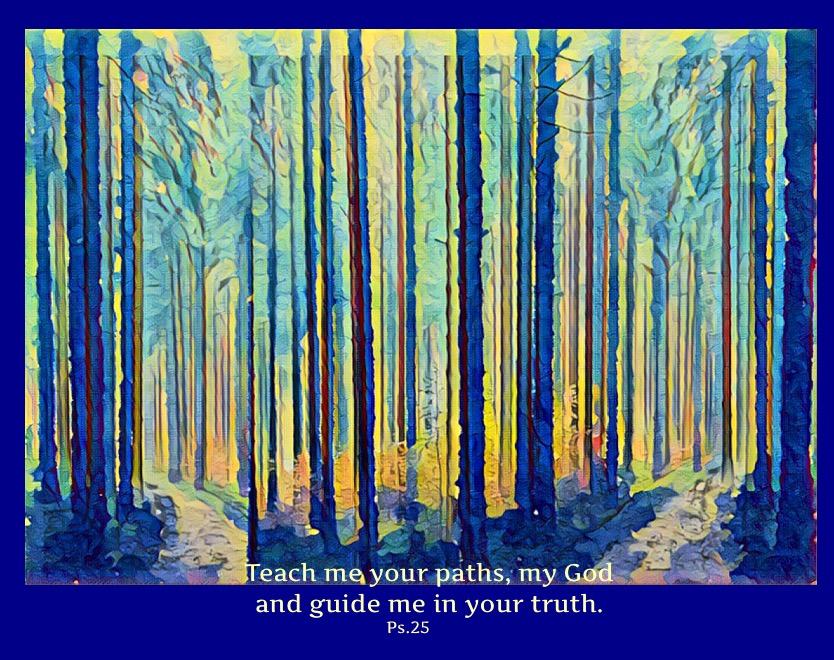
Today, in God’s Lavish Mercy, we pray with Psalm 25 which is our Alleluia Verse.

Psalm 25, in total, is a psalm of lament. But today’s single phrase is a golden thread in an otherwise somber weave. It is a simple act of faith and dependence on God. It is the yielding of one’s life into God’s unfolding promise.


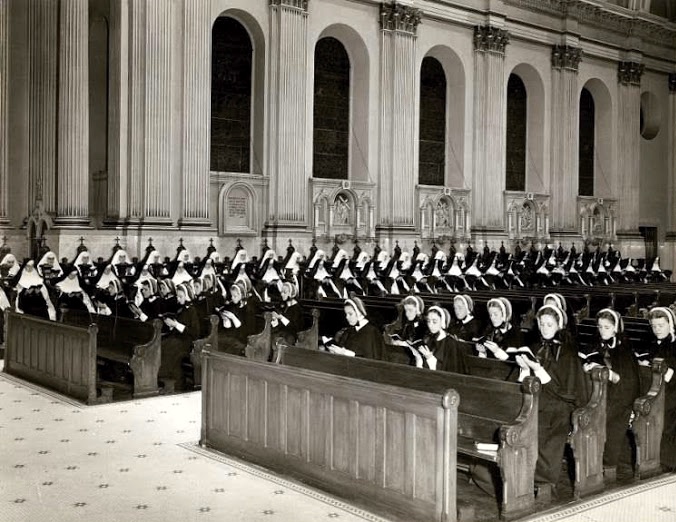
Praying with this psalm today, I am nostalgic. On June 9th, 58 years ago, I graduated from high school.

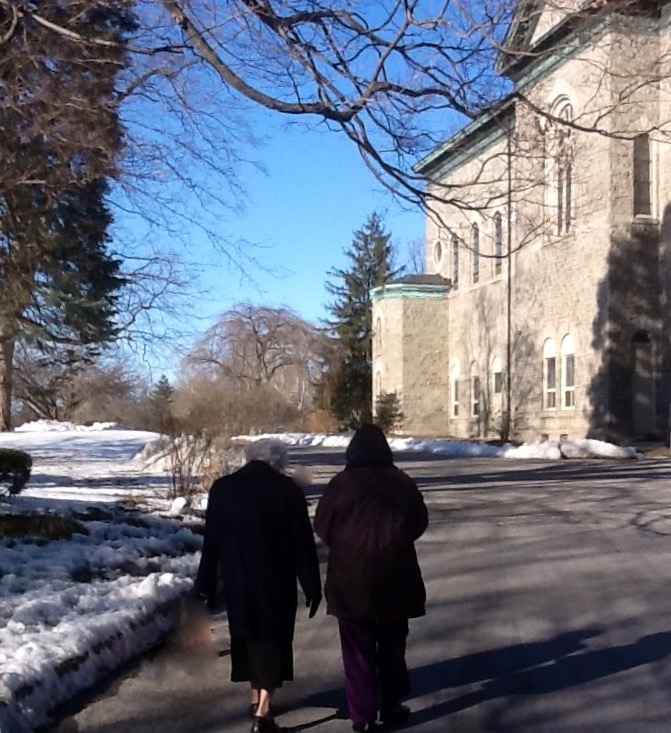
I guess for some, high school graduation isn’t a remarkable or memorable event. But for me, and the two other young women in this photo, it was a time of earth-shaking choices and profound commitments. It was a moment in our personal stories that would shape our lives forever – we had decided to become Sisters of Mercy.


Every life has one – or likely a few – such moments. They are the hinges on which our life story revolves. Praying gratefully with them helps us to recognize God’s enduring Presence in our lives and to rejuvenate our faith. 

When you get as old as I am, the accumulation of gratitude is overwhelming and the trust in God’s continued abiding is assuring.

Robert Frost seems to have been having such a prayer when he wrote his beloved poem. Maybe it will help your prayer today or at some other date of holy reminiscence in your life.


Poetry: The Road Not Taken – Robert Frost

Two roads diverged in a yellow wood,
And sorry I could not travel both
And be one traveler, long I stood
And looked down one as far as I could
To where it bent in the undergrowth;

Then took the other, as just as fair,
And having perhaps the better claim,
Because it was grassy and wanted wear;
Though as for that the passing there
Had worn them really about the same,

And both that morning equally lay
In leaves no step had trodden black.
Oh, I kept the first for another day!
Yet knowing how way leads on to way,
I doubted if I should ever come back.

I shall be telling this with a sigh
Somewhere ages and ages hence:
Two roads diverged in a wood, and I—
I took the one less traveled by,
And that has made all the difference.

Music: The Magnificat Medley – John Michael Talbot

I chose this song today for two reasons.

  1. It is the verse in our Responsorial Psalm:

Holy is the Lord our God.

Psalm 99:7

2. The Magnificat was such a moment in Mary’s life.

Memorial of Saint Boniface, Bishop and Martyr

Saturday, June 5, 2021

Today, in God’s Lavish Mercy, we pray with the final prayer of Tobit for our Responsorial Psalm.

The Church has  followed Tobit’s story for a little over a week. We have seen a man who, even through his dramatic ups and downs, remains a steadfast believer. 

For Tobit, the exigencies of his life do not dictate the intensity of his faith. Rather, that intense faith fuels his response to life.

The Lord scourges and then has mercy;
    casts down to the depths of the nether world,
    and brings up from the great abyss.
No one can escape the Lord’s hand.
So now consider what the Lord has done for you,
    and give praise with full voice.
Bless the Lord of righteousness,
    and exalt the King of ages.

Tobit 13: 2,6

Tobit realized that his faith stood as a sign to others. He preached by his attitude in life, not so much by his words:

In the land of my exile I praise him
    and show his power and majesty to a sinful nation.

Tobit 13:7

Written from a place of exile, the Book of Tobit gives us good advice to sustain faith in our own small “exiles”. Always bless and praise God. Find the points of light and joy. Cling to and celebrate them.

Bless the Lord, all you his chosen ones,
    and may all of you praise his majesty.
Celebrate days of gladness, and give the Lord praise.

Tobit 13:8

Tobit is a make-believe person. But our Gospel shows us a real woman who embodies the simple, steadfast faith which the Book of Tobit preaches. She also preached with her actions rather than her words.

Although she had little, she lived out of her abundance not her scarcity. That abundance was fired by the God she believed in and trusted, as was the faith of apocryphal Tobit.

As we pray with Tobit and the widow, we might share with them our own faith, both its strengths and it weaknesses, asking to draw inspiration and courage from their stories.


Poetry: This Place of Abundance – Catherine of Siena
~ from Love Poems from God – Twelve Sacred Voices from the East and West
by Daniel Ladinsky

We know nothing until we know everything.
    I have no object to defend
    for all is of equal value
    to me.

I cannot lose anything in this
place of abundance
I found.

    If something my heart cherishes
    is taken away,
    I just say, “Lord, what
    happened?”

And a hundred more
appear.

Music: Live Like You’re Loved – Hawk Nelson

Friday of the Ninth Week in Ordinary Time

June 4, 2021

Today, in God’s Lavish Mercy, we pray with Psalm 146, a song of uninhibited delight and thanksgiving to God.

Coming after our reading from Tobit, we see just what such utter delight looks like.

That “angelic fish gall” re-lit the world for Tobit in a way he had never imagined before!


Sometimes we too have to experience a profound blindness before we really begin to see rightly. Let’s be honest: haven’t we all been blind a few times in our lives.

  • Blessings unrecognized
  • Friendships taken for granted
  • Kindnesses overlooked
  • People misjudged 
  • Needs ignored
  • Expectations unsurrendered 
  • Biases unexamined
  • Opportunities bypassed
  • Perhaps even responsibilities shirked

Praying with Psalm 146, we might take note of those whom the Lord favors:

the oppressed, the hungry. captives, those who are bowed down; 
the just, strangers, orphans and widows

These favored of God share a common trait – a vulnerability learned through suffering.


None of us seeks suffering in our lives. But we all will encounter it personally at least to some degree. Further, all in the community of faith are called to share the sufferings of others by our works of mercy.

In both instances, can we allow suffering to let us see the world differently, to lift the scales of any blindness in our hearts? Because here is the beautiful mystery: the God of Mercy is with us in our lights and shadows — and is always Light.

Praise the LORD, O my soul;
    I will praise the LORD all my life;
    I will sing praise to my God while I live. 

Psalm 146:1

Poetry: God Pours Light – Hafiz

God
pours light
into every cup,
quenching darkness.
The proudly pious
stuff their cups with parchment
and critique the taste of ink
while God pours light
and the trees lift their limbs
without worry of redemption,
every blossom a chalice.
May I seduce those withered souls
with words that wet their parched lips
as light
pours like rain
into every empty cup
set adrift on the Infinite Ocean.


Music: Amazing Grace – Leo Rojas

Memorial of Saint Philip Neri, Priest

May 26, 2021

Today, in God’s Lavish Mercy, we pray with Psalm 79, one of the “Sad Songs of Zion”. While many of the Psalms are celebratory in nature, offering praise and thanksgiving, about a third of the Psalter is lament.

These mournful songs remind us that life is indeed full of both joys and sorrows. Faith calls us to live through these modulations within the presence of God.

The psalmist of 79 cries out from imprisonment and deathly fear, but is not without hope for a better future:

Let the prisoners’ sighing come before you;
    with your great power free those doomed to death.
Then we, your people and the sheep of your pasture,
    will give thanks to you forever;
    through all generations we will declare your praise.

Psalm 79: 11-13

This is the kind of resilient prayer we can learn from the Psalms. At times, we find ourselves “imprisoned” – locked away from what we most want in our lives – love, peace, security, health, freedom. To deny such suffering only buries us deeper in it. 


As we see in our Gospel today, Jesus calls us to face our truth and to seek God’s Presence within it. Doing so will allow us, as it did the disciples, to move beyond self-centered expectation to God-centered courageous hope.

Then James and John, the sons of Zebedee,
came to Jesus and said to him,
‘Teacher, we want you to do for us whatever we ask of you.”
He replied, ‘What do you wish me to do for you?”
They answered him,
“Grant that in your glory
we may sit one at your right and the other at your left.”
Jesus said to them, “You do not know what you are asking.
Can you drink the chalice that I drink
or be baptized with the baptism with which I am baptized?”
They said to him, ‘We can.”
Jesus said to them, “The chalice that I drink, you will drink,
and with the baptism with which I am baptized, you will be baptized;
but to sit at my right or at my left is not mine to give
but is for those for whom it has been prepared.”


As we look at our world, and perhaps our own lives, we see much suffering. How can God come to us from the midst of such pain? Psalm 79 tells us to keep inviting God and to be vigilant and attentive for God’s appearance. Just as in our Gospel, it will not look as we had expected it to look.

Remember us
Show us
Help us
Deliver us
Free us
Then we will give thanks and praise your Name

The Basic Prayer of Psalm 79

Poetry: A Blessing by Elizabeth Eiland Figueroa 

May the God of Surprises delight you, 
inviting you to accept gifts not yet imagined.
May the God of Transformation call you, 
opening you to continual renewal.
May the God of Justice confront you, 
daring you to see the world through God’s eyes.
May the God of Abundance affirm you, 
nudging you towards deeper trust.
May the God of Embrace hold you, 
encircling you in the hearth of God’s home.
May the God of Hopefulness bless you, 
encouraging you with the fruits of faith.
May the God of Welcoming invite you, 
drawing you nearer to the fullness of God’s expression in you.
May God Who is Present be with you, 
awakening you to God in all things, all people, and all moments.
May God be with you.
Amen.

Music: The Joys and Sorrows of Life – Johannes Bornlöff

Saturday of the Sixth Week of Easter

May 15, 2021

Today, in God’s Lavish Mercy, we pray with Psalm 47 which keeps us on point as we move toward Pentecost:

All you peoples, clap your hands;
    shout to God with cries of gladness.
For the LORD, the Most High, the awesome,
    is the great king over all the earth.

Psalm 47: 2-3

We can be confident. Christ’s work is accomplished. We await the Spirit which will accompany us now in living the Gospel fully.

For king of all the earth is God;
    sing hymns of praise.
God reigns over the nations,
    God sits upon his holy throne. 

Psalm 47: 8-9

Our Gospel today confirms us in our call, like the newly-gathered Twelve, to radical discipleship:

On that day you will ask in my name,
and I do not tell you that I will ask the Father for you.
For the Father himself loves you, because you have loved me
and have come to believe that I came from God.


These days before Pentecost
offer a good time to talk with God
about my call and my response.

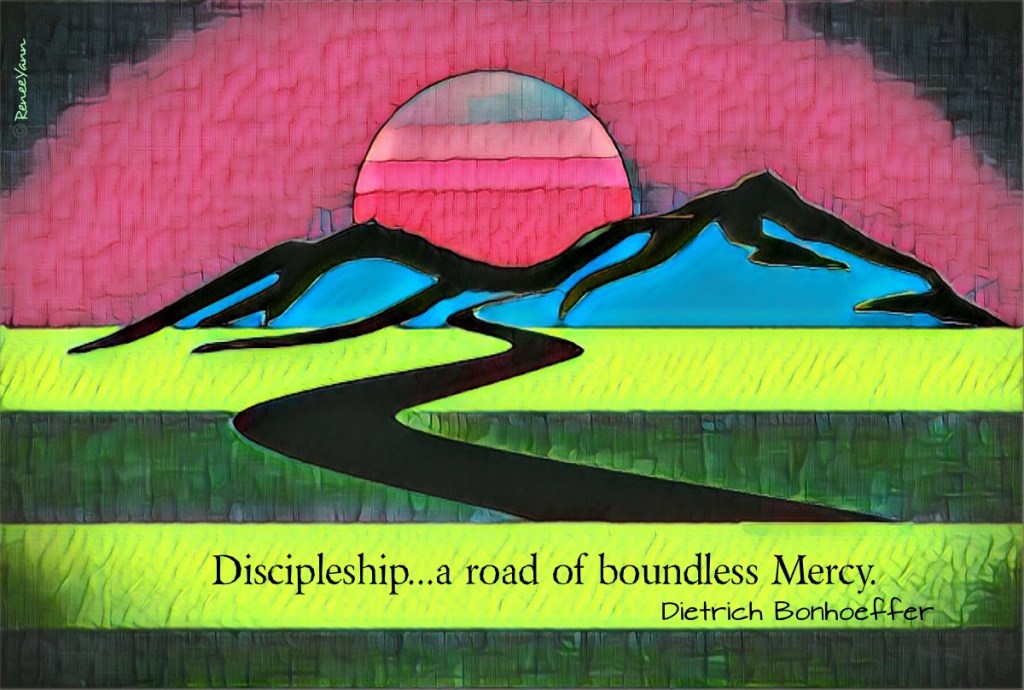
And if we answer the call to discipleship, where will it lead us? What decisions and partings will it demand? To answer this question we shall have to go to him, for only he knows the answer. Only Jesus Christ, who bids us follow him, knows the journey’s end. But we do know that it will be a road of boundless mercy. Discipleship means joy.

Dietrich Bonhoeffer

Music: A New Commandment

Solemnity of the Ascension of the Lord

May 13, 2021

Today, in God’s Lavish Mercy, we pray with Psalm 47, one of seven enthronement psalms which celebrate a “coronation” of God.

All you peoples, clap your hands,
    shout to God with cries of gladness,
For the LORD, the Most High, the awesome,
    is the great king over all the earth.

Psalm 47: 1

Used for the feast of the Ascension, the point of the psalm is much more than an exercise of pageantry. It is an act of faith and reverence to God, the Loving Omnipotence who chose to redeem us by assuming our humanity.

It is a confirmation that we believers do see the Supreme Being in the human Jesus we have come to love. This is what Paul prays for the Ephesians in our second reading:

May the eyes of your hearts be enlightened,
that you may know what is the hope that belongs to his call,
what are the riches of glory
in his inheritance among the holy ones,
and what is the surpassing greatness of his power
for us who believe,
in accord with the exercise of his great might,
which he worked in Christ,
raising him from the dead
and seating him at his right hand in the heavens,
far above every principality, authority, power, and dominion,
and every name that is named
not only in this age but also in the one to come.

Ephesians 1:18-21

The Great Commission, found in today’s Gospel, is the true gift of the Ascension.

Go into the whole world
and proclaim the gospel to every creature.

Mark 16:15

Jesus tells us that his time on earth is complete. The lesson of Love has been taught. We now are given the power to continue the message for all time. 

Jesus promises that our faith will:


overcome evil
-create new possibilities to preach the Gospel
-show courage against antagonism
-resist suppression
-heal and strengthen others to believe

These signs will accompany those who believe:

-in my name they will drive out demons,
-they will speak new languages.
-They will pick up serpents with their hands,
-drink any deadly thing, it will not harm them.
lay hands on the sick, and they will recover.


If we believe and open our hearts to this message, indeed, it is a day for trumpet blasts! Here are a few from one of my favorite triumphal pieces! If the Apostles had only had trumpets, they might have played something like this for the Lord as He ascended 🙂

Poetry: Ascension Sonnet – Malcolm Guite

We saw his light break through the cloud of glory
Whilst we were rooted still in time and place
As earth became a part of Heaven’s story
And heaven opened to his human face.

We saw him go and yet we were not parted
He took us with him to the heart of things
The heart that broke for all the broken-hearted
Is whole and Heaven-centred now, and sings,

Sings in the strength that rises out of weakness,
Sings through the clouds that veil him from our sight,
Whilst we our selves become his clouds of witness
And sing the waning darkness into light,

His light in us, and ours in him concealed,
Which all creation waits to see revealed.

Music: Psalm 47 – Rory Cooney

Friday of the Second Week of Easter

April 16, 2021


Today, in God’s Lavish Mercy, we pray with Psalm 27, the prayer of one confident in God’s loving protection, no matter any surrounding threat. The psalmist exudes the equanimity of one who has given everything over to Love, who seeks only one fulfillment:

One thing I ask of the LORD;
this I seek:
To dwell in the LORD’s house
all the days of my life,
To gaze on the LORD’s beauty,
to visit his temple.

Psalm 27:4

I remember praying this psalm so intently as a young novice! I so wanted to understand and deepen in the spiritual life. I so wanted to be completely in love with God.


Gamaliel, from our first reading, has grown into such a love. It has freed him to respond to the Spirit even when the Spirit astounds, contradicts, and demands change.

Gamaliel said to the Sanhedrin…“So now I tell you,
have nothing to do with these men, and let them go.
For if this endeavor or this activity is of human origin,
it will destroy itself.

But if it comes from God, you will not be able to destroy them; you may even find yourselves fighting against God.”

Acts 5: 38-39

It seems that Gamaliel is speaking from experience. He likely had his big or little tussles with the Spirit along the now long road of his life. He has one even today as Jesus’s pesky disciples challenge Gamaliel’s long-held religious practice.


But it is likely that a prayer like Psalm 27 rose up in the heart of this longtime friend of God:

The LORD is my light and my salvation;
whom should I fear?
The LORD is my life’s refuge;
of whom should I be afraid?

For I am protected in the Lord’s shelter
when troubles threaten,
wrapped in the folds of the Lord’s tent,
set high upon the rock’s safety.

Psalm 27: 1,5

As we pray beautiful Psalm 27 today, may we remember our early, enthusiastic love. May we give thanks for the accumulated blessings of the years that have enriched and matured us in wisdom and faith. May we seek the courage to journey ever deeper into God’s heart.

I believe that I shall see the bounty of the LORD
    in the land of the living.
Wait for the LORD with courage;
    be stouthearted, and wait for the LORD.

Psalm 27: 13-14

Poetry: Old Age by Edmund Waller

The seas are quiet when the winds give o’er; 
So calm are we when passions are no more. 
For then we know how vain it was to boast 
Of fleeting things, so certain to be lost. 
Clouds of affection from our younger eyes 
Conceal that emptiness which age descries. 
The soul’s dark cottage, batter’d and decay’d, 
Lets in new light through chinks that Time hath made: 
Stronger by weakness, wiser men become 
As they draw near to their eternal home. 
Leaving the old, both worlds at once they view 
That stand upon the threshold of the new.

Music: Depths – Hillsong

Easter Wednesday

Wednesday in the Octave of Easter

April 7, 2021

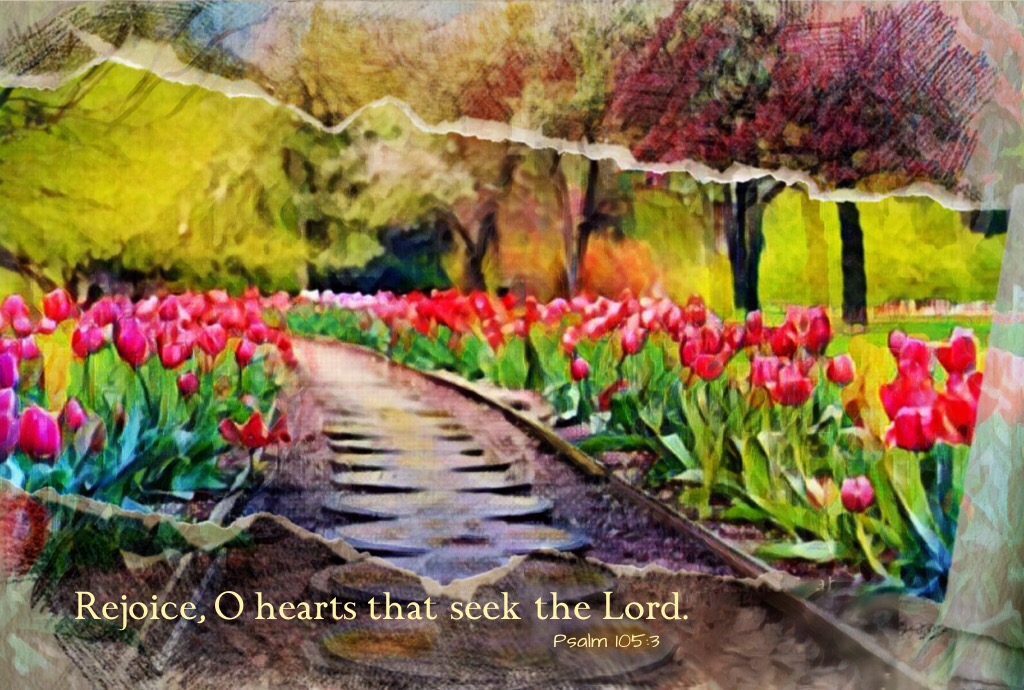
Today, in God’s Lavish Mercy, we pray with Psalm 105 as the psalmist rejoices in seeking and being found by God.

Our scripture passages today invite us to walk:

  • beside one long crippled and amazed at unexpected healing
  • beside the psalmist and all who seek the Lord
  • beside the Emmaus disciples as they shed their confusion into the already present Light

The readings call us to deeper, more faith-filled journeys that

  • challenge our passively accepted inhibitions
  • appreciate the journey as part of the destination
  • open our eyes to Grace otherwise invisible to our unhopeful hearts

Poetry: excerpt from The Wasteland by T.S.Eliot

Who is the third who walks always beside you?
When I count, there are only you and I together
But when I look ahead up the white road
There is always another one walking beside you
Gliding wrapt in a brown mantle, hooded
I do not know whether a man or a woman
—But who is that on the other side of you?

Music: Turn Around, Look at Me – The Vogues

Psalm 69: The Plea

Wednesday of Holy Week

Wednesday, March 31, 2021

Today, in God’s Lavish Mercy, we pray with Psalm 69. The verses offered for today’s liturgy describe someone who is abused and abandoned by the community he depended on:

Insult has broken my heart, and I am weak,
    I looked for sympathy, but there was none;
    for consolers, not one could I find.
Rather they put gall in my food,
    and in my thirst they gave me vinegar to drink.

Psalm 69: 21-22

The psalmist goes on, into today’s passage and throughout the whole psalm, to proclaim his innocence and call on God for justice – one might say even vengeance.

Heap punishment upon their punishment;
let them gain from you no vindication.
May they be blotted from the book of life;
not registered among the just!

Psalm 69: 28-29

Several Gospel writers include parts of Psalm 69 to describe Jesus’s situation throughout his Passion and Death. However, we find Jesus not invoking divine vengeance but forgiving those who persecute him.

Does Christ’s forgiveness mean that he didn’t feel heart-broken, angry, perhaps even wishing, as the psalmist does, that the tables would be turned onto his harassers? 

We don’t really know what he felt. We can only imagine. What we do know is what Jesus chose. Jesus chose forgiveness.

As we pray with Psalm 69 today, let us remember that we cannot help our feelings. They come unbidden. What we can control are our choices. In the sufferings of our lives, may we have the strength to choose as Jesus did.


Poetry: John Greenleaf Whittier, ‘Forgiveness’

My heart was heavy, for its trust had been
Abused, its kindness answered with foul wrong;
So, turning gloomily from my fellow-men,
One summer Sabbath day I strolled among
The green mounds of the village burial-place;
Where, pondering how all human love and hate
Find one sad level; and how, soon or late,
Wronged and wrongdoer, each with meekened face,
And cold hands folded over a still heart,
Pass the green threshold of our common grave,
Whither all footsteps tend, whence none depart,
Awed for myself, and pitying my race,
Our common sorrow, like a mighty wave,
Swept all my pride away, and trembling I forgave!


Music: Antonio Vivaldi – Domine ad adjuvandum me festina (Psalm 69)

Deus, in adjutorium meum intende.
Domine, ad adjuvandum me festina.
Gloria Patri et Filio et Spiritui Sancto,
sicut erat in principio et nunc et semper
et in saecula saeculorum. Amen. Alleluia

O Lord, make speed to save me:
O Lord, make haste to help me.
Glory be to the Father, and to the Son, and to the Holy Spirit:
As it was in the beginning, is now and ever shall be,
World without end, Amen. Alleluia.