Today, in God’s Lavish Mercy, we pray with a beautiful pastoral segment from Jeremiah. This Responsorial Psalm follows on the first reading, both passages affirming God’s everlasting love for us.
Jeremiah wrote at a time of great suffering and confusion for Israel. The Kingdom was falling apart, having been beset by overwhelming enemies. Near the end of Jeremiah’s life, the nation falls into the Babylonian Captivity. Much of the Book of Jeremiah prophesies, judges, and laments these troubles.
But today’s verses come from Chapters 30 – 33, part ofJeremiah often referred to as the “Book of Comfort” or “Little Book of Consolation.” These are the brighter and more hopeful chapters of an otherwise heavy set of writings.
Moreover, these three chapters speak to a significant shift in understanding God’s relationship with Israel. The original covenant with Abraham is stated in conditional terms- “You will be my People and I will be your God”. I hate to use the now sullied term, but it was sort of a “quid pro quo”.
The renewed covenant described in Jeremiah is an unconditional relationship sustained, despite Israel’s weaknesses, by a Divine and Everlasting Love, by the Good Shepherd:
As Israel comes forward to be given his rest, the LORD appears to him from afar: With age-old love I have loved you; so I have kept my mercy toward you.
As we look over our lives past and present, we can pray in gratitude that we are embraced by the same Ancient and Everlasting Love.
Probably each of us has had a few personal little “Babylons”. We may even have had some of our personal “temples” destroyed. You know, those self-absorbed campaigns and petty addictions that distract us from the sacred essence of our life that:
We are God’s Love made flesh, called to live in that Truth.
Video Poem: Three Poems from Rilke’s Book of Hours
Today, in Mercy, we pray for a persevering faith. Sometimes, it is very late into our prayer that the unexpected answer comes to us. May we recognize it and welcome it out of the darkness. We pray especially for those who have endured long years of prayerful waiting: for those with chronic illnesses, for the elderly, for widows and widowers, for those who want to believe but can’t.
Today, in God’s Lavish Mercy, we pray with a return to Psalm 119. Set today between fascinating passages from both Jeremiah and Matthew, our psalm presents us with a particularly strong challenge:
Let my heart be perfect in your statutes, that I be not put to shame.
In our first reading, the false prophet Hananiah tries to put Jeremiah to shame by preaching a rosy prophecy in contradiction to Jeremiah’s difficult but truthful “fire and brimstone” warnings. Hananiah eventually gets caught in his own lies.
In Matthew’s Gospel, Peter discovers another dimension of truth – that without faith, he cannot endure the storm
Psalm 119’s verses are a prayer to stay true to the Law, the Word, even in difficulty and storm.
The psalmist recognizes our human propensity sometimes to create the world we want rather than face the one we have. We do it by lying to ourselves and others until, eventually, our alternative universe falls apart – just like Hananiah’s.
Because, like Peter, we focus on ourselves and our fears, we miss Jesus’s invitation to walk in faith over our life’s rough waters.
Our psalm today voices our prayer not to get twisted on life’s road, to have the courage to embrace the truth of ourselves, our environment, and our world. That truth is revealed when we love and live God’s Law by our justice and mercy toward all Creation.
From your ordinances I turn not away, for you have instructed me.
Poetry: from Robert Frost
Two roads diverged in a yellow wood,
And sorry I could not travel both
And be one traveler, long I stood
And looked down one as far as I could
To where it bent in the undergrowth;
Then took the other, as just as fair,
And having perhaps the better claim,
Because it was grassy and wanted wear;
Though as for that the passing there
Had worn them really about the same,
And both that morning equally lay
In leaves no step had trodden black.
Oh, I kept the first for another day!
Yet knowing how way leads on to way,
I doubted if I should ever come back.
I shall be telling this with a sigh
Somewhere ages and ages hence:
Two roads diverged in a wood, and I—
I took the one less traveled by,a
And that has made all the difference.
Music: Long and Winding Road – Beatles song sung by David Archuleta
For my prayer this morning, I re-read Pope Francis magnificent encyclical Laudato Si’which instructs us and begs us to cherish the gift of our Common Home. – a world which God has so loved that God gave the only begotten Son that we should not perish. This sacred document has become even more meaningful as a global pandemic exposes the fragmentations we have wrought upon the earth.
Today, in God’s Lavish Mercy, we pray with Psalm 145, a song of complete confidence that God will sustain us.
Set like diamond amidst our three beautiful readings, Psalm 145 offers us a rich and melodious way to praise our Creator and to recognize the glory of God’s gift of Creation.
St. Francis of Assisi used this psalm to inspire his own well-known Canticle of the Sun – which, in turn, inspired Pope Francis’s magnificent encyclical Laudato Sí.
For our prayer today, we might choose any of these texts, even a small taste, and savor it with thanksgiving and hope, letting our hearts sing on this Sunday morning.
Poetry: Canticle of the Sun – Francis of Assisi
Original text in Umbrian dialect:
Altissimu, omnipotente bon Signore, Tue so le laude, la gloria e l’honore et onne benedictione. Ad Te solo, Altissimo, se konfano, et nullu homo ène dignu te mentouare. Laudato sie, mi Signore cum tucte le Tue creature, spetialmente messor lo frate Sole, lo qual è iorno, et allumini noi per lui. Et ellu è bellu e radiante cum grande splendore: de Te, Altissimo, porta significatione. Laudato si, mi Signore, per sora Luna e le stelle: in celu l’ài formate clarite et pretiose et belle. Laudato si, mi Signore, per frate Uento et per aere et nubilo et sereno et onne tempo, per lo quale, a le Tue creature dài sustentamento. Laudato si, mi Signore, per sor’Acqua, la quale è multo utile et humile et pretiosa et casta. Laudato si, mi Signore, per frate Focu, per lo quale ennallumini la nocte: ed ello è bello et iucundo et robustoso et forte. Laudato si, mi Signore, per sora nostra matre Terra, la quale ne sustenta et gouerna, et produce diuersi fructi con coloriti fior et herba. Laudato si, mi Signore, per quelli ke perdonano per lo Tuo amore et sostengono infirmitate et tribulatione. Beati quelli ke ‘l sosterranno in pace, ka da Te, Altissimo, sirano incoronati. Laudato si mi Signore, per sora nostra Morte corporale, da la quale nullu homo uiuente pò skappare: guai a quelli ke morrano ne le peccata mortali; beati quelli ke trouarà ne le Tue sanctissime uoluntati, ka la morte secunda no ‘l farrà male. Laudate et benedicete mi Signore et rengratiate e seruiteli cum grande humilitate.
English Translation:
Most High, all powerful, good Lord,
Yours are the praises, the glory, the honor, and all blessing.
To You alone, Most High, do they belong,
and no man is worthy to mention Your name.
Be praised, my Lord, through all your creatures,
especially through my lord Brother Sun,
who brings the day; and you give light through him.
And he is beautiful and radiant in all his splendor!
Of you, Most High, he bears the likeness.
Praised be You, my Lord, through Sister Moon and the stars,
in heaven you formed them clear and precious and beautiful.
Praised be You, my Lord, through Brother Wind,
and through the air, cloudy and serene,
and every kind of weather through which
You give sustenance to Your creatures.
Praised be You, my Lord, through Sister Water,
which is very useful and humble and precious and chaste.
Praised be You, my Lord, through Brother Fire,
through whom you light the night and he is beautiful
and playful and robust and strong.
Praised be You, my Lord, through Sister Mother Earth,
who sustains us and governs us and who produces
varied fruits with coloured flowers and herbs.
Praised be You, my Lord,
through those who give pardon for Your love,
and bear infirmity and tribulation.
Blessed are those who endure in peace
for by You, Most High, they shall be crowned.
Praised be You, my Lord,
through our Sister Bodily Death,
from whom no living man can escape.
Woe to those who die in mortal sin.
Blessed are those whom death will
find in Your most holy will,
for the second death shall do them no harm.
Praise and bless my Lord,
and give Him thanks
and serve Him with great humility.
Music: Biblical Songs, Op.99, No.5 (Psalm 145) by Antonín Dvořák and, an added selection, a populair hymn based on Psalm 145. Remember, to sing is to pray twice! 🙂
Today, in God’s Lavish Mercy, we pray with Jeremiah’s Psalm. The verses come from chapter 31, part of what is referred to as the “Book of Comfort”. (Chapter 31-33)
In total, the Book of Jeremiah is full of woe. It was written as a message to the Jews in Babylonian exile, blaming their faithlessness for their current predicament. The prophet admonishes the people, calling them to return to the Lord and allow themselves to be made new according to God’s design.
Jeremiah is notable for its complementary tactics of confronting the people with their sorrows while comforting them with God’s mercy.
Hear the word of the LORD, O nations, proclaim it on distant isles, and say: He who scattered Israel, now gathers them together, he guards them as a shepherd his flock.
Jeremiah forces his listeners to acknowledge that their destruction is deserved. They have shifted their trust from God’s Promise to a political power that devolved into greed, militarism, and the illusion of self-sufficiency. Once that acknowledgement is accomplished, repentance and renewal are possible.
Our passage today describes that possibility:
The LORD shall ransom Jacob, he shall redeem him from the hand of his conqueror. Shouting, they shall mount the heights of Zion, they shall come streaming to the LORD’s blessings: The grain, the wine, and the oil, the sheep and the oxen.
Believing that scripture speaks to our experiences as well as to their own times, we may discover stark parallels between our world and that of Jeremiah. As we pray with this psalm, let’s ask to see where we have shifted from God’s hope for Creation. Where do we feel a sense of loss, confusion, desperation or anger? Where have we lost truth, compassion, and reverence for the life we share with all the human community?
As my small community watches the evening news, we audibly mourn the sorry state to which our world has come. We encourage one another to moral and political responsibility to change the forces that have led to this collapse.
This cycle of acknowledgement and grace-filled action can allow us to return, as did Jeremiah’s community, to God’s dream for Creation:
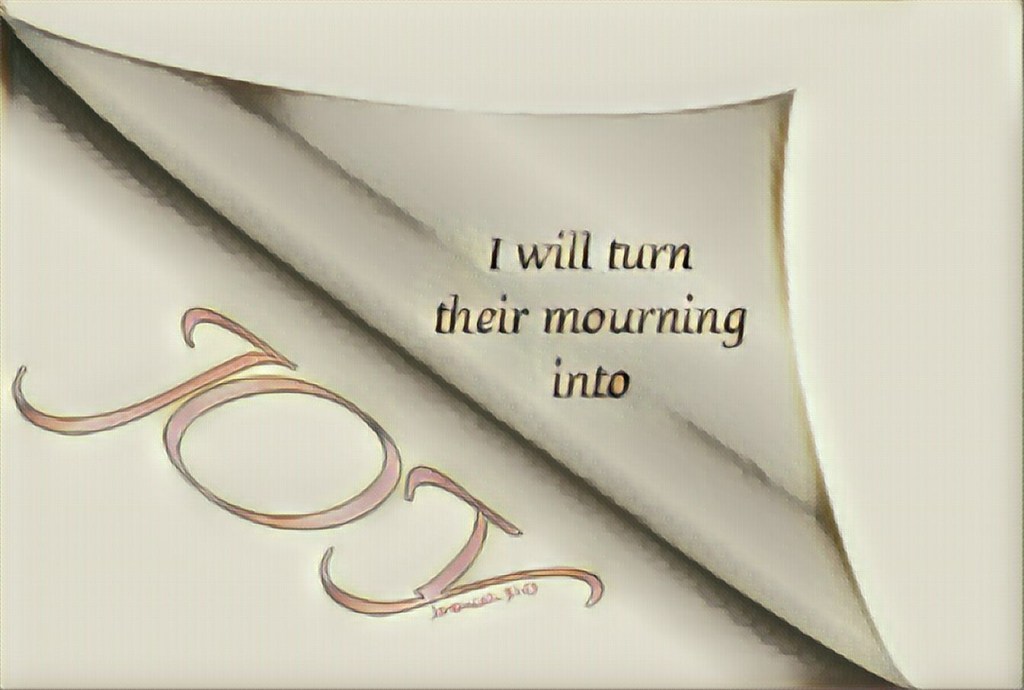
I will turn their mourning into joy, I will console and gladden them after their sorrows.
Poetry: What Babylon Was Built About – Judson Crews (1917- 2010) American poet
Music: I Will Restore – Maranatha Music
What was lost in battle What was taken unlawful Where the enemy has planted his seed And where health is ailing And where strength is falling I will restore to you all of this and more I will restore to you all of this and more
I will restore I will restore I will restore to you all of this and more
I will restore I will restore I will restore to you all of this and more I will restore to you all of this and more
Where your heart is breaking And where dreams are forsaken When it seems what was promised; will not be given to you And where peace is confusion And reality an illusion I will restore I will restore I will restore to you all of this and more
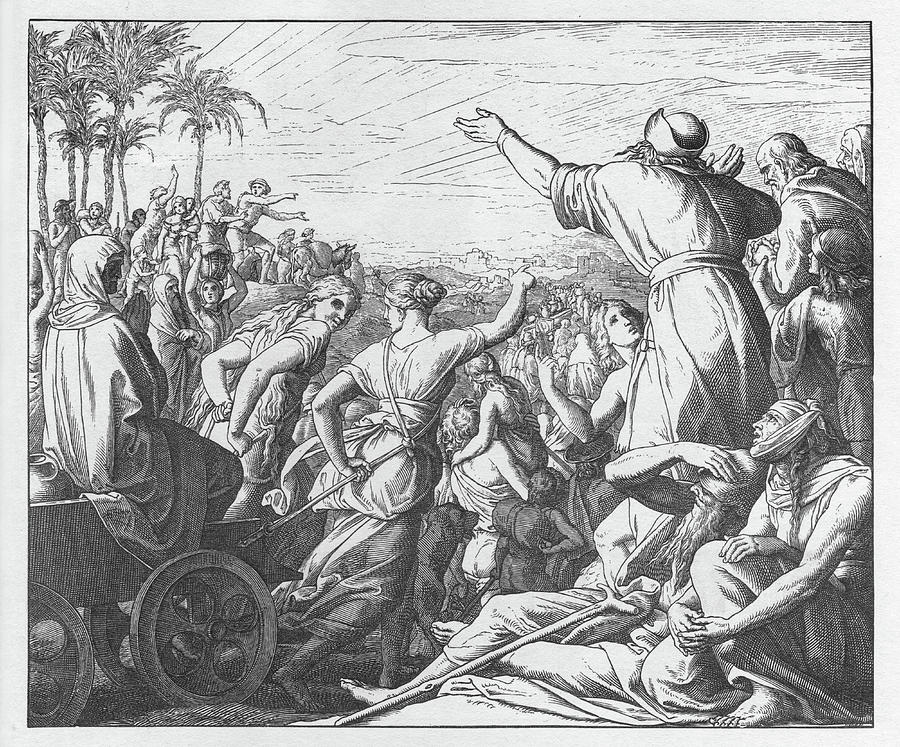
Return from Babylon by Julius Schnoor von Carolsfeld
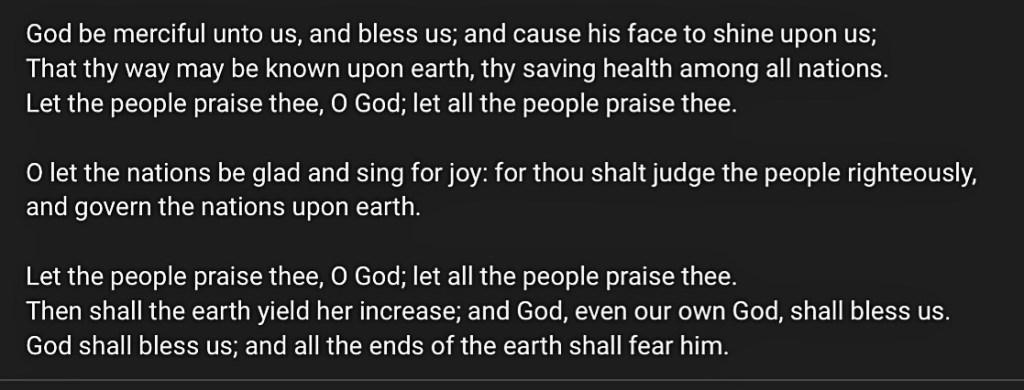
Today, in God’s Lavish Mercy, we pray with Psalm 85. In Judaism, it is called “a psalm of returned exiles” as it reflects the experience of the Jews returning to their ravished land after the Babylonian exile. Things are a mess, and they have to start all over again to rebuild their Abrahamic nation.
But they pray as if it is already accomplished.
Despite their suffering and captivity, the people have not lost hope in the promise of Yahweh. They expect its fulfillment and call on God to make it happen.
You have favored, O LORD, your land; you have brought back the captives of Jacob. You have forgiven the guilt of your people; you have covered all their sins. You have withdrawn all your wrath; you have revoked your burning anger.
This is the power and beauty of a pure and faithful heart. It is free to “believe” God into action. We find this prayerful power expressed over and over in the Psalms. It is answered by God’s almighty and active desire for our good.
The Psalms mediate to us the great promise keeper whose resolve guarantees that the world is not a closed system. Creation, instead, is a world very much in process, sure to come to full shalom. Despair is the fate of a world “without god,” where there are no new gifts to be given. The Psalms refuse that world, knowing that God is not yet finished. Consequently, the Psalms can gather all the great words of the covenant and apply them to the future …
Walter Bruggemann
During these pandemic times, don’t prayer and promises like these speak to our hearts?
I find myself wondering what the world will be like when we finally “return” – come out of our “Covid exile” – what it will be like to see and hug the family, friends and community we love and miss right now, or to fully mourn those we have lost – what it will be like to resume our soul’s unworried dance with Creation and Time.
As we imagine that world, how might we hope for it to be more reflective of God’s dream for us than the world we closed down last March, than the “Babylon” we are experiencing? How will our prayers and actions for merciful justice “believe” God’s promises into reality for all God’s People?
Will you not instead give us life; and shall not your people rejoice in you? Show us, O LORD, your kindness, and grant us your salvation.
I picture some ancient Jewish woman or man standing amidst the rubble of the ruined Temple. How deep did that person have to reach to find the faith and hope to move God?
I picture us standing in a very sick and dysfunctional world. Can we reach that deep ourselves by praying in the childlike, confident spirit of the Psalms:
Lord, show us your mercy and love.
Poetry: Antidotes to Fear of Death – by Rebecca Elson, a gifted Canadian–American astronomer and writer. Elson was diagnosed with non-Hodgkin’s lymphoma at the age of 29. With treatment, it went into remission, and in 1996 she married the Italian artist Angelo di Cintio. However, the cancer returned soon afterwards. Elson died of the disease in Cambridge in May 1999, at the age of 39.
A volume of wide-ranging poetry and essays she wrote from her teens until shortly before her death was published posthumously as A Responsibility to Awe in 2001 in the United Kingdom, and in 2002 in the United States.
Antidotes to the Fear of Death
Sometimes as an antidote
To fear of death,
I eat the stars.
Those nights, lying on my back,
I suck them from the quenching dark
Til they are all, all inside me,
Pepper hot and sharp.
Sometimes, instead, I stir myself
Into a universe still young,
Still warm as blood:
No outer space, just space,
The light of all the not yet stars
Drifting like a bright mist,
And all of us, and everything
Already there
But unconstrained by form.
And sometime it’s enough
To lie down here on earth
Beside our long ancestral bones:
To walk across the cobble fields
Of our discarded skulls,
Each like a treasure, like a chrysalis,
Thinking: whatever left these husks
Flew off on bright wings.
Music: Going Home– based on Antonin Dvořák’s Largo from New World Symphony, lyrics by William Arms Fisher, sung here by Alex Boyé with the Mormon Tabernacle Choir
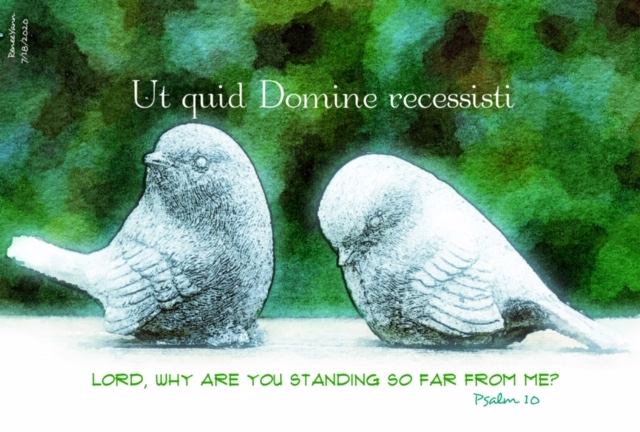
Today, in God’s Lavish Mercy, we pray with Psalm 10. It is known in Latin by its first mournful line:
Ut quid Domine recessisti
Lord, why are You standing so far from me?
The image that comes to my mind is of two people at a large social gathering. One is not speaking to the other because of a profound disagreement. But the other is desperately sorry and wants to be forgiven and restored. Still, the first person remains distant, off in the room’s far corner, and seems to ignore any imploring glances.
In Psalm 10, Israel is that imploring person. They lament all the discord around them and wonder why their powerful Friend seems to ignore them, failing to help.
I know that I have talked to God about this feeling hundreds of times. What about you?
I continually ask the age-old question, “Why do bad things happen to good people?” Are you not paying attention, Lord? Did you accidentally fire the “Bad Things Gun” in the wrong direction, or do you just not care?
Why do You seem not to notice or care?
But the psalmist eventually stills herself at the center of these spinning questions. In that stillness, she rests in utter dependency on God. We creatures do not see through the mystery of good and evil, but God does. When we accept that, and look for God in the circumstances, peace settles in.
You do see, for you behold misery and sorrow, taking them in your hands. On you the unfortunate one depends; of the fatherless you are the helper.
Psalm 10, for all its heart-wrenching mournfulness, is really a psalm of exultant victory. Within its prayer, the vulnerable one is transformed to comprehend the secret. God favors them and assures their deliverance by faith.
If for some reason, we might feel that God is on the other side of the room ignoring us, let us not turn away. Walk over and tug God’s sleeve with your prayer. Lift the burdens from your shoulders into God’s open arms.
You listen, LORD, to the needs of the poor; you strengthen their heart and incline your ear.
Poetry: another excerpt from Burnt Norton – T.S. Eliot
IV
Time and the bell have buried the day,
the black cloud carries the sun away.
Will the sunflower turn to us, will the clematis
Stray down, bend to us; tendril and spray
Clutch and cling?
Chill
Fingers of yew be curled
Down on us? After the kingfisher’s wing
Has answered light to light, and is silent, the light is still
At the still point of the turning world.
Music:D’où vient cela – Claudin de Sermisy – written in, and sung here, in French by a German choir. This melody was originally a popular love chanson, reworked in the 16th century to be Psalm 10. I could find only the French and German translations (below). For those, like me, who understand neither, the music itself is sufficiently beautiful.
Memorial of Saint Bonaventure, Bishop and Doctor of the Church
July 15, 2020
From 2016:
Today, in Mercy, on this feast of St. Bonaventure, we pray for God to be revealed across our battered globe. God does not hide from us. We hide God in our sinful choices. May we, no matter our religion or politics, find the means to confront terrorism, war and domination by uniting in the God who made and loves us all.
Today, in God’s Lavish Mercy, we pray with Psalm 94, a ruthless, stinging condemnation of greed, sinful arrogance, and hypocrisy. This morning’s prayer is not a comfortable one.
If you don’t think twice, you might feel like you’re reading today’s newspaper.
Set between Isaiah’s blistering condemnation of an “impious nation”, and Jesus’s expressed preference for the humble and innocent, this psalm scalds those who “trample” the widows, the stranger, the fatherless …
As I pray with the psalm’s uncompromising judgements, flashing before me are:
the faces of refugee families.
children in cages.
desperate parents pushed into buses to return to the terror they fled.
the Black and Brown faces of people consigned to our social and economic margins
the helpless eyes of those unfavored by a skewed justice system
Your people, O LORD, they trample down, your inheritance they afflict. Widow and stranger they slay, the fatherless they murder.
My prayer is soaked with angry frustration at the unabated moral torpitude and social injustice of many with political power. When will they answer for their soulless actions and inactions!
And they say, “The LORD sees not; the God of Jacob perceives not.” Understand, you senseless ones among the people; and, you fools, when will you be wise?
I take some solace in the promise of these final lines, stilling longing for a glimmer of the justice it describes:
For the LORD will not cast off his people, nor abandon his inheritance; But judgment shall again be with justice, and all the upright of heart shall follow it.
May that day come soon, dear God, for all Creation and for all your beloveds suffering under the willful injustice, selfishness, indifference, or complicity of others.
Poetry: Let America Be America Again – Langston Hughes
Let America be America again.
Let it be the dream it used to be.
Let it be the pioneer on the plain
Seeking a home where he himself is free.
(America never was America to me.)
Let America be the dream the dreamers dreamed—
Let it be that great strong land of love
Where never kings connive nor tyrants scheme
That any man be crushed by one above.
(It never was America to me.)
O, let my land be a land where Liberty
Is crowned with no false patriotic wreath,
But opportunity is real, and life is free,
Equality is in the air we breathe.
(There's never been equality for me,
Nor freedom in this "homeland of the free.")
Say, who are you that mumbles in the dark?And who are you that draws your veil across the stars?
I am the poor white, fooled and pushed apart,
I am the Negro bearing slavery's scars.
I am the red man driven from the land,
I am the immigrant clutching the hope I seek—
And finding only the same old stupid plan
Of dog eat dog, of mighty crush the weak.
I am the young man, full of strength and hope,
Tangled in that ancient endless chain
Of profit, power, gain, of grab the land!
Of grab the gold! Of grab the ways of satisfying need!
Of work the men! Of take the pay!
Of owning everything for one's own greed!
I am the farmer, bondsman to the soil.
I am the worker sold to the machine.
I am the Negro, servant to you all.
I am the people, humble, hungry, mean—
Hungry yet today despite the dream.
Beaten yet today—O, Pioneers!
I am the man who never got ahead,
The poorest worker bartered through the years.
Yet I'm the one who dreamt our basic dream
In the Old World while still a serf of kings,
Who dreamt a dream so strong, so brave, so true,
That even yet its mighty daring sings
In every brick and stone, in every furrow turned
That's made America the land it has become.
O, I'm the man who sailed those early seas
In search of what I meant to be my home—
For I'm the one who left dark Ireland's shore,
And Poland's plain, and England's grassy lea,
And torn from Black Africa's strand I came
To build a "homeland of the free."
The free?
Who said the free? Not me?
Surely not me? The millions on relief today?
The millions shot down when we strike?
The millions who have nothing for our pay?
For all the dreams we've dreamed
And all the songs we've sung
And all the hopes we've held
And all the flags we've hung,
The millions who have nothing for our pay—
Except the dream that's almost dead today.
O, let America be America again—
The land that never has been yet—
And yet must be—the land where every man is free.
The land that's mine—the poor man's, Indian's, Negro's, ME—
Who made America,
Whose sweat and blood, whose faith and pain,
Whose hand at the foundry, whose plow in the rain,
Must bring back our mighty dream again.
Sure, call me any ugly name you choose—
The steel of freedom does not stain.
From those who live like leeches on the people's lives,
We must take back our land again,
America!
O, yes,
I say it plain,
America never was America to me,
And yet I swear this oath—
America will be!
Out of the rack and ruin of our gangster death,
The rape and rot of graft, and stealth, and lies,
We, the people, must redeem
The land, the mines, the plants, the rivers.
The mountains and the endless plain—
All, all the stretch of these great green states—
And make America again
Music: All Who Love and Serve Your City – Eric Routley
All who love and serve your city, all who bear its daily stress, all who cry for peace and justice, all who curse and all who bless, In your day of loss and sorrow, in your day of helpless strife, honor, peace, and love retreating, seek the Lord, who is your life.
In your day of wrath and plenty, wasted work and wasted play, call to mind the word of Jesus, “I must work while it is day.” For all days are days of judgment, and the Lord is waiting still, drawing near a world that spurns him, offering peace from Calvary’s hill. Risen Lord! shall yet the city be the city of despair? Come today, our Judge, our Glory; be its name, “The Lord is there!”
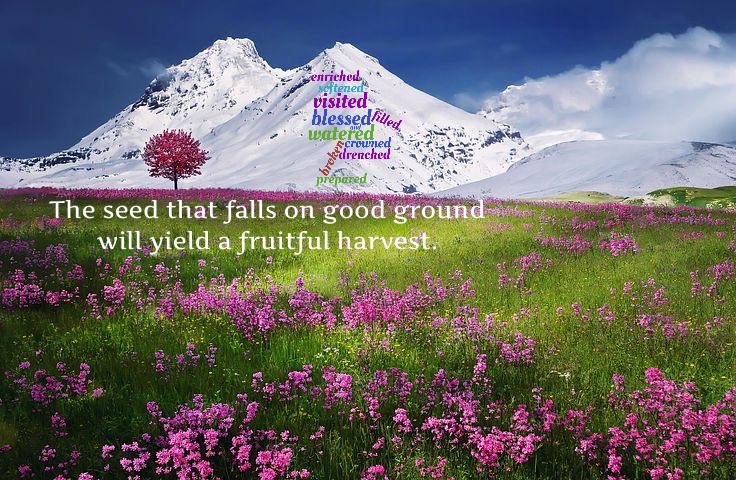
Today, in Mercy, we pray with the powerful and mysterious readings of today’s liturgy. They tell us that God breathes eternal inspiration into us and all Creation. The gift, like seed, is intended to bear fruit that is returned to God in love and praise. By participating in that return, we become children of God. May the seed of God’s Word fall on good ground in our spirits.
Today, in God’s Lavish Mercy, we pray with Psalm 65, a song poem probably written to celebrate the harvest season. The psalm describes an abundantly fruitful earth, filled with life and produce.
Though humans labor for these blessings, God is the bounty’s true agent. The power of that agency is found in the array of words used to describe God’s actions.
God has:
visited
watered
enriched
filled
prepared
drenched
broken up
softened
blessed and
crowned
What is it that has drawn all this intervention from God? Our readings tell us. It is the Word-Seed which is God’s own life.
Just as from the heavens the rain and snow come down…. so shall my Word be. (Isaiah 55)
For creation awaits with eager expectation the revealing Word of the children of God… (Romans 8)
The seed sown on rich soil is the one who hears the Word and understands it, who indeed bears fruit and yields a hundred or sixty or thirtyfold. (Matthew 13)
By our dedicated prayer with scripture and trusted spiritual reading, the Word works on our spirits just as the psalm describes. Our understanding, too, is visited, watered, enriched, filled, prepared, drenched, broken up, softened and ultimately blessed and crowned.
As we pray with Psalm 65 today, we can picture David looking out from hilltop over the abundance of his fields. His heart is filled with awe and praise for God’s generosity.
We all want to live in a spiritual landscape akin to the psalm’s bountiful picture. Inviting God’s Word, in humility, gratitude, and awe is a true path to such blessing.
Today, in God’s Lavish Mercy, we pray with Psalm 93, the first of the royal psalms (93-99) which praise God as King.
As we pray with today’s verses, we can easily feel the psalmist stretching for a description of God Who is, of course, indescribable. Never having seen God, we can only imagine the Divine Being in human terms. This writer imagines God as a King beyond even the greatness of human kings, and it is a beautiful image:
The LORD is king, in splendor robed; robed is the LORD and girt about with strength.
Like the psalmist, we may tend to paint God in the colors of those who have had greatest influence in our lives
those with power over us, like parents and teachers
those who have loved us, or failed to
those in positions of success, and strength
Because all human models are flawed in some way, this tendency can give us a blurry, if not distorted picture of God.
Jesus came to correct our perspective.
A beautiful extra hymn for today. Just love this one.
Jesus showed us that, while we live on this earth, the glory of God is a hidden glory. It is robed in the suffering of the poor and abandoned. Its splendor is in the innocence of children. Its strength is in the hope of the sick and weak. Its beauty shines out to us in the vulnerability of our sisters and brothers.
In today’s Gospel, Jesus gives us the tender image of God as One who cherishes every hair on our heads. As we pray today, we might let that gentle God reach down and caress any pain, exhaustion or fear, like a Mother brushing her child’s hair. Just be with God Who knows our needs. Be cradled in the splendrous robe.
Poetry: God’s True Cloak – Rainer Maria Rilke
We must not portray you in king’s robes,
you drifting mist that brought forth the morning.
Once again from the old paintboxes
we take the same gold for scepter and crown
that has disguised you through the ages.
Piously we produce our images of you
till they stand around you like a thousand walls.
And when our hearts would simply open,
our fervent hands hide you.
Music: George Frideric Handel – Chandos Anthem, #4/ Psalm 93 – O Sing Unto the Lord
Today, in God’s Lavish Mercy, we pray with Psalm 80, a powerful song poem written by a desperate and suffering poet.
Psalm 80 seems to have been written as a plea for deliverance of the northern kingdom of Israel just before the Assyrian armies conquered it. The psalmist pleads with God to remember God’s earlier kindness and to restore Israel’s wholeness.
Once again, O LORD of hosts, look down from heaven, and see: Take care of this vine, and protect what your right hand has planted, the son of man whom you yourself made strong.
When I read this psalm, I hear something like the plea of a confused child, asking a parent:
What happened to upset things?
I thought you loved me?
Why am I so afraid now?
Why are you so unconcerned about my fear?
Please remember and give me back your love and blessings.
Please make things all right again.
It is a prayer not unlike my own in this time of pandemic, profound loss, and moral confusion. There is so much to be mourned in these painful times, and yet so much to be learned. This video, shared with me by a dear Franciscan friend, captures both the mourning and the hope within these past months:
As we experience the continued spread of COVID 19, coupled with confused leadership and astounding popular ignorance, a plea like the psalmist’s might arise in our own hearts.
Much about our lives on and with the Earth has been broken. Let us pray from our brokenness today. May Creation be restored to its sacred vitality. May our human family be renewed with transformed integrity and reverence for Creation and for one another.
Poetry: I Am the Vine – Malcolm Guite
How might it feel to be part of the vine? Not just to see the vineyard from afar Or even pluck the clusters, press the wine, But to be grafted in, to feel the stir Of inward sap that rises from our root, Himself deep planted in the ground of Love, To feel a leaf unfold a tender shoot, As tendrils curled unfurl, as branches give A little to the swelling of the grape, In gradual perfection, round and full, To bear within oneself the joy and hope Of God’s good vintage, till it’s ripe and whole. What might it mean to bide and to abide In such rich love as makes the poor heart glad?