No Apples!

First Sunday of Lent

March 1, 2020

Click here for readings

Today, in Mercy, we encounter themes of creation, life, temptation, sin, death, and repentance. I’d say that’s a pretty loaded Sunday!
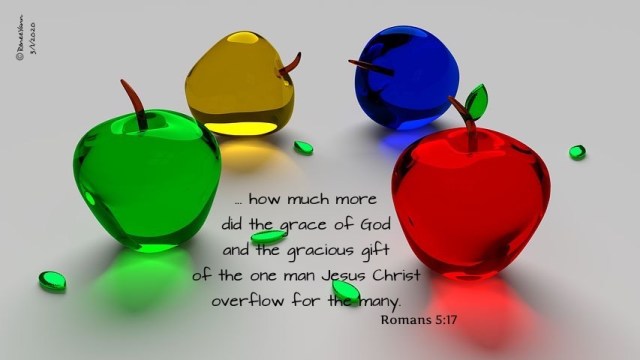
apples

We start out with the simple, but heavily misinterpreted, story of Adam and Eve. This creation myth shared by Judea-Christian and Islamic religions serves as a foundation of these great faith traditions. 

The story is often the first we learn as we are introduced to our family’s faith practice. We imagine Adam and Eve as historically real personalities and the snake as a flesh and blood devil. Some of us never get beyond that elementary understanding of the story.

A and EA few decades ago, I taught New Testament Studies to a class of men aspiring to become deacons. During the session on today’s reading from Romans, a discussion arose about whether an entire human race could descend from just a “first man and woman”. When I pointed out that the creation story uses mythical elements to represent a broader reality, one man reacted adamantly. He could not imagine that there were not a specific “Adam” and “Eve”, but that instead these names represented humankind in their evolving relationship with God. The thought was so shattering to him that he dropped the class. 

That made me sad. But it also caused me to focus on the creation story myself to examine ways in which I might be missing or blocking its deep spiritual significance. Is it really just about temptation, sin, punishment, and death? Or is there a much deeper message for our faith?

One of my go-to theologians has helped me significantly. Walter Brueggemann says this about our consideration of the Creation Story:


Like the people in this narrative, our concern is not finally the danger of sex, the origin of evil, the appearance of death, or the power of the fall. It is, rather, the summons of this calling God for us to be his creatures, to live in his world on his terms.


We struggle throughout our lives to understand God and God’s ways – to live on God’s terms. We will never accomplish it.  We will always meet the “snakes” of questions like:

why

  • Why is there evil in the world?
  • Why does God let innocent people suffer?
  • Why is “this” (Whatever trial) happening to me?
  • Why did he or she have to die so young?
  • Why don’t the bad people die instead?
  • Why? Why? Why?

We want KNOWLEDGE – just what the “serpent” facetiously offered from the forbidden tree!


But this beautiful creation story teaches us that what God desires from us is not knowledge but rather TRUST – trust to live in the unfolding, but never fully-unfolded, mystery of God’s faithfulness to us.

So much in us wants to pluck the magic apple that will make us the “gods” of our existence, controlling life as we would like it to be.

God says instead that we should trust, and delight in sitting under the mysterious, nurturing tree of God’s irreversible, covenantal love – the same love Jesus trusts in today’s challenging Gospel.

Music: Nothing I Hold on To – Will Reagan ( Listen to it like a mantra and let your breathing synch to it. Breathe in Love. Breathe out Trust. No apples necessary.)

Leap … and Be Held

Saturday after Ash Wednesday

February 29, 2020

Click here for readings

Today, in Mercy, Isaiah continues his advice begun in yesterday’s reading. When he finishes the list of things we should and should not do, Isaiah tells us how God will respond:

Then light shall rise for you in the darkness,
and the gloom shall become for you like midday;
Then the LORD will guide you always
and give you plenty even on the parched land.
God will renew your strength,
and you shall be like a watered garden,
like a spring whose water never fails.
The ancient ruins shall be rebuilt for your sake,
and the foundations from ages past you shall raise up ~

Oh, who can resist these glorious Isaiahan lines. It’s a beautiful picture, isn’t it? To imagine it offers us great encouragement as we lumber through Lent and out of the doldrums of February.

deer

How fitting that this should be our reading on “Leap Day”, a 24-hour period that many of us consider an extra gift.


Here’s a thought I wrote several years ago that I hope you will find beneficial:

Mitch Albom, the author who wrote “Tuesdays with Morrie”, wrote another book entitled “Just One More Day”.

It is an appropriate title to think about in this week in Leap Year when we will actually have “just one more day” than normal.

How often have we wished that phrase, perhaps near the end of a great vacation, or before an important project is due? Or maybe as Mitch Albom uses it: to have just one more day with someone who has passed from our lives.

With God, we always have one more day. God is Infinite Possibility and Eternal Generosity. Saturday – February 29 – is a good day to stretch our faith and ask what God would have us do with “just one more day” to witness to Divine Abundance in our lives.

Leap2020

Will it be one more day to love, to work, to be thankful, to be competitive, to take advantage or to give it?  The way we use that “one more day” will tell us a lot about how we are using all our days. Maybe we could consider a question that one of our older Sisters is famous for: “Wouldn’t it be sad to come to the last day of our lives – (no more days) —  and realize that we had missed the whole point?”


May all your “leaps” take you to blessed places, dear Friends.
Let go. Take the leap into God’s way, as Isaiah counsels. And just be held.

Music: Just Be Held – Casting Crown 

Lent: A Closer Walk

Thursday after Ash Wednesday

February 27, 2020

Click here for readings

Today, in Mercy, our readings confirm that a life patterned on Christ contradicts worldly definitions.

Dt.30_19 Chhose

Deuteronomy gives us stark, either-or, advice:

I have set before you life and death,
the blessing and the curse.
Choose life, then,
that you and your descendants may live,
by loving the LORD, your God,
heeding his voice,
and holding fast to him.

It’s definitive, but we could probably do that, right? Choose life, love God, heed God’s voice, hold fast to God? Sounds OK, doesn’t it?


It’s when Jesus comes along that it sounds difficult. 

Jesus tells us, “Here’s how you choose life –

“Whoever wishes to save his life will lose it,
but whoever loses his life for my sake will save it.”


Jesus tells us, “Here’s the God you must love, one who

“suffers greatly, is rejected, and is killed.”


Jesus tells us, “Here’s what my voice says to you –

“What profit is there for you to gain the whole world
yet lose or forfeit yourself?”


Jesus tells us, “Here’s how you hold fast to me –

‘Take up your cross daily and follow me.”

mcA Cross


Some have huge crosses to carry in their lives – perhaps famine, enslavement, untended illness, homelessness, persecution, poverty. Those who carry such crosses are singularly loved by God who dwells with them.

But if we don’t have big, obvious crosses in our lives – if we are among those the world deems fortunate – how do we follow the crucified Jesus to find our way to eternal life?

How do we really CHOOSE LIFE?


cross icon WP

We need to get close to the ones God singularly loves. We need to walk beside them and lift some of their heavy crosses. We need to help their voices be heard, their needs be met, their rights be honored.

Not all of us can do this by direct service. But we can do it by our advocacy, our material contributions, and our articulated support for justice.

We need to make these choices for life all the time. But Lent is a great time to examine the vigor and commitment of our choices, a time to take a closer walk with our suffering Christ and ask him to inspire our courage.

Music:  Just a Closer Walk with Thee – Patsy Cline and Willie Nelson

Creeping Up to Lent?

Tuesday of the Seventh Week of Ordinary Time

February 25, 2020

Click here for readings

Today, in Mercy, we are creeping up to Lent’s doorstep.

Doorstep

Are you beginning to consider your Lenten rituals? Our readings today might help orient us.

They leave this question hanging in the air: Who do I really want to be in my life?

Mk9_34 first last

James says that if we are someone who loves the world, we will find ourselves at enmity with God. James defines “the world” as a place in discord, conflicted by covetousness, envy, frustration, and death-dealing.

James is directly addressing damaging squabbles within the Church itself. Infighting has caused fractures within his believing community. Failures in mutual charity and sincere prayer have generated “wars” among the members.

Why would anybody choose to contribute to such a negative environment? 

James pins it on one thing: jealousy. We are jealous to be, have, control, and possess more than others. We are tempted by power, riches and esteem. We want our opinions to be honored, our needs to be met above and before others.


The reality exists today as well, as we know too well.

  • We see it in the Church from factions who want to bend the Gospel to their own agenda.
  • We see it within and between nations who raise the advantage of some over the welfare of others.
  • We see it in families, businesses, and social circles where individuals volley for position, influence, or control over others.

These conflicts pour out in criticism, judgements, biases, shunning, and all kinds of failures in compassion, respect, and honesty. They blind us to our common creaturehood in God, and to its demand for an equity of love, mercy, and justice.

Otherwise, 

  • How could we ever kill or enslave one another, either by aggression or neglect?
  • How could we separate parents from their children and put babies in cages?
  • How could we participate in a global economic tyranny that leaves some without land, homes, health care, or hope?
  • How could we use other human beings – or their vital resources – only for our own pleasure, power or enrichment?

Most of us do not outrightly choose these sinful behaviors. But we must ask ourselves to what degree we are complicit in them by our failures in just judgement, advocacy, political responsibility, globally sustainable choices, — just plain care and reverence for all human beings, all Creation.


The approach of Lent is a great time to revisit the question James hangs in the air for us:

  • Who do I really want to be in my life? 
  • Do I need to make changes to do that? 
  • How can I prepare for a Lent that helps me make those Grace-filled changes?

We are grown-ups now, and our Lenten repentances demand more than those we learned in grade school. Fasting from candy won’t cut it anymore. 

  • How about we fast from cable news that feeds our biases?
  • Or actually do something for our parish besides critique the Sunday sermon?
  • Maybe give up some of our polluting behaviors requiring plastic and other non-recyclables?
  • How about including a outsider in something where they are otherwise ignored?
  • Or providing for someone’s need who would hesitate to ask for your attention?

I think James would approve of choices like that because he says:

God bestows a greater grace; therefore, it says:
God resists the proud,
but gives grace to the humble.
So submit yourselves to God.

Resist the Devil, and he will flee from you.
Draw near to God, and he will draw near to you.

Music: When It’s All Been Said and Done – Robin Mark

Simple Not Easy

Seventh Sunday in Ordinary Time

February 23, 2020

Click here for readings

Today, in Mercy, our readings focus us on how to live a good,honest, holy life.

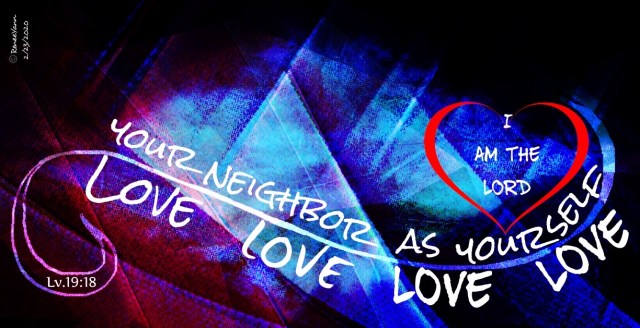
Leviticus makes it simple:

Lv19_18 neighbor

But “simple” does not mean easy. Jesus makes that clear in the Gospel. He tells us that we may thinks it’s enough to love our neighbor by:

  • an “eye for an eye” justice
  • accepting that one slap on the cheek
  • giving over some of our possessions
  • serving them for the time they ask

But Jesus says, “No. Not enough!” We must go all in for love:

  • take no “eye”, no legal repayment 
  • turn the other cheek
  • give both shirt AND jacket off your back
  • work twice as long and hard as demanded

kidding


Guess what? He’s not kidding. He goes on to double down on his words:

  • Don’t just love your neighbor as yourself, as Leviticus requires. Love your enemy that way too.
  • Do it because your Creator loves you, and all of us, that way — with Lavish Mercy.
  • Be that Mercy in the world.

Paul gives us an added incentive for living this challenge. He acknowledges that to live in Christian love and mercy seems foolish in the eyes of the world … BUT:

Let no one deceive himself.
If any one among you considers himself wise in this age,
let him become a fool, so as to become wise.
For the wisdom of this world is foolishness in the eyes of God,
for it is written:
God catches the wise in their own ruses,
and again:

The Lord knows the thoughts of the wise,
that they are vain.


As I said at the outset, it’s simple, but it’s not easy. So much in our culture promotes the opposite approach to life – me first, exclude others, win at all costs, money matters over everything, use people and things then discard them, and on and on…..

Using our beautiful Responsorial Psalm, let us pray for the insight to see through to God’s Truth and Love, and for the courage to live them. 

Music: The Lord Is Kind and Merciful – Jean Cotter 

Refrain
The Lord is kind and merciful;
The Lord is kind and merciful.
Slow to anger, rich in kindness,
The Lord is kind and merciful.

Bless the Lord, O my soul;
All my being bless God’s name.
Bless the Lord, O my soul;
Forget not all God’s blessings.

The Lord is gracious and merciful,
Slow to anger, full of kindness.
God is good to all creation,
Full of compassion.

The goodness of God is from age to age,
Blessing those who choose to love.
And justice toward God’s children;
On all who keep the covenant.

What Profit?

Friday of the Sixth Week in Ordinary Time

February 21, 2020

Click here for readings

Today, in Mercy, James actually made me chuckle out loud! In today’s celebrated passage about faith and works, James – ever direct and uncompromising – really takes it home. Get this verse:

Do you want proof, you ignoramus,
that faith without works is useless?

OK, James! Tell us what you really think!😂

Well, here’s what he really thinks:

For just as a body without a spirit is dead,
so also faith without works is dead.


whole world

In our Gospel, Jesus says that living a life of good works is hard. He did it through the Cross and says we must follow his example:

Whoever wishes to come after me must deny himself,
take up his cross, and follow me.
For whoever wishes to save his life will lose it,
but whoever loses his life for my sake
and that of the Gospel will save it.

The Gospel Jesus is talking about, and the “works” James refers to,  are summarized like this:


Corporal Works of Mercy

feed the hungry.
give water to the thirsty.
clothe the naked.
shelter the homeless.
visit the sick.
visit the imprisoned, ransom the captive.
bury the dead.

Spiritual Works of Mercy

instruct the ignorant.
counsel the doubtful.
admonish the sinners.
bear patiently those who wrong us.
forgive offenses.
comfort the afflicted.
pray for the living and the dead.


If we live by these, we will find the Cross – but we will also find the Crown.

Music: Lose My Soul – TobyMac, a multi-award winning Christian hip-hop singer. The music is a departure for me, but I thought the song was really good (maybe of use to some of my readers who are teachers.) I hope you agree.

Count It All Joy!

Monday of the Sixth Week in Ordinary Time

February 17, 2020

Click here for readings

Today, in Mercy, in this week and a half before Ash Wednesday, we begin the Epistle of James.

800px-Epistle_of_James_Chapter_1-2_(Bible_Illustrations_by_Sweet_Media)
The Epistle of James- Chapter 1: Illustration provided to Wikimedia Commons by Distant Shores Media/Sweet Publishing as part of a cooperation project. Sweet Publishing released these images, which are taken from now-out-of-print Read’n Grow Picture Bible Illustrations (Biblical illustrations by Jim Padgett, courtesy of Sweet Publishing, Ft. Worth, TX, and Gospel Light, Ventura, CA. Copyright 1984.), under new license, CC-BY-SA 3.0

This letter is one of the very earliest of the New Testament. Scholars are mixed about exactly which “James” wrote it, but agree that it was one of several who were very close to Jesus – perhaps one of “the brothers of Jesus” mentioned in several New Testament passages:

  • Matthew 12:46-50
  • Mark 3:31
  • Luke 8:19
  • John 2:12
  • Acts 1:14
  • 1 Corinthians 9:5
  • and specifically “the Lord’s brother James” in Galatians 1:19

James writes in the style of Wisdom Literature, those Old Testament books that give advice, proverbs, and insights for living a holy life. His immediate audience was a community of dispersed Christian Jews whose world was filled with increasing upheaval and persecution.

When I read the following description I thought how germane James’s letter could be for our world today. His themes echo the teachings of Pope Francis for our chaotic time:


The epistle is renowned for exhortions on fighting poverty and caring for the poor in practical ways (1:26–27; 2:1-4; 2:14-19; 5:1-6), standing up for the oppressed (2:1-4; 5:1-6) and not being “like the world” in the way one responds to evil in the world (1:26-27; 2:11; 3:13-18; 4:1-10). Worldly wisdom is rejected and people are exhorted to embrace heavenly wisdom, which includes peacemaking and pursuing righteousness and justice (3:13-18).
(Jim Reiher, “Violent Language – a clue to the Historical Occasion of James.”Evangelical Quarterly. Vol. LXXXV No. 3. July 2013)


  • Be joyful in trials. (Wait! What!)
  • Let trials increase your perseverance not discourage you.
  • Doing this is a sign of wisdom.
  • When your wisdom is depleted, ask God for more with an open and trusting heart.
  • Honor all people, high or low in circumstances
  • Don’t be fooled by riches. They fade away.

In our Gospel, Jesus is frustrated with the Pharisees who insincerely demand a magical sign from him. They demonstrate none of the spiritual wisdom and openness to grace that James describes.

scale

When we think about our own faith, where does it fall on the scale of sincerity, on the spectrum of counter-culturalism?

Music: Count It All Joy – Scripture Memory Songs

Deep Law of the Heart

Sixth Sunday in Ordinary Time

February 16, 2020

Click here for readings

Ps119 Law


Today, in Mercy, our readings are all about LAW.

It’s a word we hear a lot about today, isn’t it? 

  • Rule of Law. 
  • Breaking the Law. 
  • Immigration Law.
  • Mother-in-Law.

You name it, LAW is all around us. So we should already know all about what today’s scripture passages describe – right?

Not really. 

230-2303502_law-clipart-law-and-order-clip-art.png


The “law” we are accustomed to discussing is about agreements constructed by human beings – some of those “agreements” better than others. They are interpreted, stretched, amended, honored, ignored, bypassed, and dissolved by human beings as well.

Sometimes, we equate these “laws” with justice which, at their best, we hope they are. But the LAW of today’s readings is above and beyond these humanly defined agreements. 


This LAW emanates from God. It is pure, whole, complete and holy. It is derived from the perfect nature of God which is, at once, both justice and mercy.

Sirach invites us to thrive in the perfection of God’s Law:

If you choose you can keep the commandments,
they will save you;

if you trust in God, you too shall live.

Paul tells the Corinthians that those “mature” in grace are able to receive the mystery of this Divine Law.

We speak a wisdom to those who are mature,
not a wisdom of this age,
nor of the rulers of this age who are passing away.

It is a “mysterious and hidden” Wisdom which the rulers/law makers of Paul’s age did not understand. Because when the Perfect Law became flesh in Jesus Christ, they could not comprehend him.


In our Gospel, Jesus is very clear. He is the fulfillment, not the abolishment of the Law. To live truly within that fulfillment, his disciples must go the extra mile – that is, they must infuse their practice of law/justice with the essence of Love and Mercy.


soup

In the five years since I retired, I’ve gotten pretty good at making soup. When I’m a little lazy, I use a commercial stock for my broth. But when I want to make a soup extra special – truly my own – I make my own bone broth. It makes all the difference.


I think growing in our understanding of God’s Law is a little bit like that. It is the “perfect broth” that requires us to put our whole hearts into it. When we consume it, we are nourished, sustained, changed.

Paul says that we can’t even imagine the “broth” God has prepared for us when we live, delight, and become transformed in God’s Law:

Eye has not seen, and ear has not heard,
and what has not entered the human heart,
what God has prepared for those who love him,

Music:  Eye HAs Not Seen – Marty Haugen

Shine!

Fifth Sunday in Ordinary Time

February 9, 2020

Click here for readings

Today, in Mercy, our readings are threaded on a theme of light, justice, and healing.

Is58_8wound

Isaiah writes to a formerly exiled community trying to restore itself after returning to Jerusalem. Tensions, meanness, and dissatisfactions tear at the community. Focus on religious rituals becomes excessive while communitarian practices are ignored.

It is a sad and fractious time for Israel.

Isaiah tells them they are missing the whole point.  The path to healing their national soul is not through empty religious words and practices.

If you remove from your midst
oppression, false accusation and malicious speech;
if you bestow your bread on the hungry
and satisfy the afflicted;
then light shall rise for you in the darkness,
and the gloom shall become for you like midday.


In our second reading, Paul writes to the Corinthian community similarly disturbed. He reminds the Corinthians that he came to build Christian community among them humbly and open to the Holy Spirit. Like Isaiah in the first reading, Paul now reminds his community not to miss the point:

I came to you in weakness …
so that your faith might rest
not on human wisdom

but on the power of God.


Jesus tells his disciples to let that power of God shine in them by virtue of their good deeds — the very same deeds Isaiah recommends to his listeners:

Share your bread with the hungry,
shelter the oppressed and the homeless;
clothe the naked when you see them,
and do not turn your back on your own.


In sum, our readings caution us that failures in charity and mercy wound us, both as individuals and as a community. Meanness kills – not only its object, but its subject as well.

When we remove all meanness from our actions, the Light shines, healing all our wounds.

Music:  Let Your Light Shine – Mike Balhoff and Darryl Ducote

Eulogy

Friday of the Fourth Week in Ordinary Time

February 7, 2020

Click here for readings

Today, in Mercy, Sirach gives us a beautiful eulogy for King David.

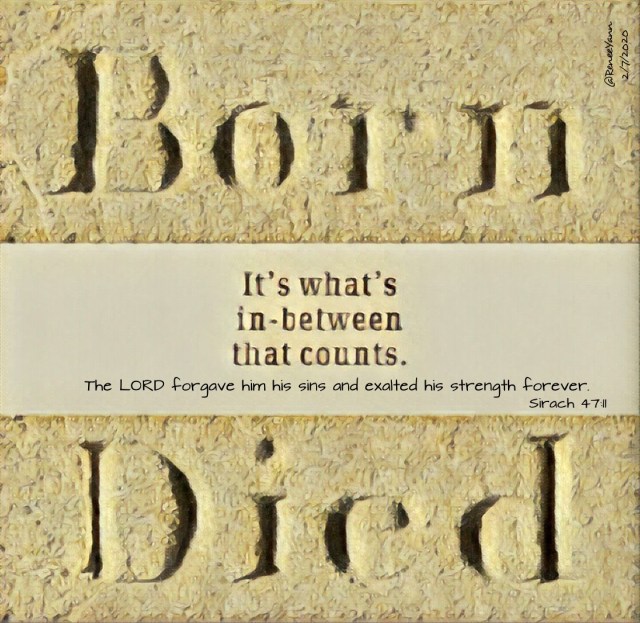
A eulogy sets a particular frame of remembrance around a person’s life. Like Sirach today, that frame tries to capture the positive accomplishments of the person who has died. We set aside any mistakes and negativity. Or we acknowledge them as Sirach has done for David by invoking God’s forgiveness:

The LORD forgave him his sins
and exalted his strength forever.


To tell the truth, I’ve attended a few funerals where I wondered what the speaker might come up with in a positive regard. You know, you need more than a sentence or two for a decent eulogy! Despite my wondering, every tribute has provided an enriching lesson on the sacred beauty of a human life.

Sir47_1 eulogy

There are times when I leave such a life celebration thinking, “Gosh, I never realized that about him!” or “Wow, there are so many things we don’t understand about someone’s life!” 

If only we could treat every living person with the same honor their eulogies inspire!


In our Gospel, we read the sad and violent story of John the Baptist’s martyrdom. It’s a passage filled with the best and the worst of the human heart. One would wonder what kind of eulogy could have eventually been crafted for the likes of Herod, Herodias, and Salome.

But for John the Baptist, Jesus had given him the perfect epitaph even before John died.

I say to you, among those born of women
there is no one greater than John;

In the verse, Jesus also reveals what it takes to earn greatest accolade in God’s eyes:

… yet the one who is least in the kingdom of God
is greater than John.

Luke 7:28


When Jesus spoke that verse, John had not yet died. If Jesus said anything about John after his death, the words are not recorded. All we have is this poignant response from Matthew:

Later, John’s disciples came for his body and buried it.
Then they went and told Jesus what had happened.
As soon as Jesus heard the news,
he left in a boat to a remote area to be alone.
But the crowds heard where he was headed
and followed on foot from many towns.
Jesus saw the huge crowd as he stepped from the boat,
and he had compassion on them and healed their sick.
Matthew 14: 12-14


As we pray today with the legacies of David and the Baptist, we might consider what we’d want to see engraved on our own tombstones. I’ve told my friends I’d like to see this:

She was kind.

Still working on it!😉

What about you?

Music: Lay Me Down – in this song, two icons of country music, Loretta Lynn and Willie Nelson sing their own kind of eulogy. (Lyrics below)

Lay Me Down
I raised my head and set myself
In the eye of the storm, in the belly of a whale
My spirit stood on solid ground
I’ll be at peace when they lay me down
When I was a child, I cried
Until my needs were satisfied
My needs have grown up, pound for pound
I’ll be at peace when they lay me down
When they lay me down someday
My soul will rise, then fly away
This old world will turn around
I’ll be at peace when they lay me down
This life isn’t fair, it seems
It’s filled with tears and broken dreams
There are no tears where I am bound
And I’ll be at peace when they lay me down
When they lay me down some day
My soul will rise, then fly away
This old world will turn around
I’ll be at peace when they lay down
When they lay me down some day
My soul will rise and fly away
This old world will turn around
I’ll be at peace when they lay me down
When I was a child, I cried