Thursday of the Fifth Week of Easter

May 19, 2022

Today, in God’s Lavish Mercy, Acts allows us to sit in on an early Church “convention”. The dynamics are fascinating, as well as amazingly familiar.

The community is a-bustle with concerns. Paul and Barnabas have been out gathering Gentile converts to the faith. The Jewish Christian community back in Jerusalem feels that these new converts should be required to submit to circumcision as a sign of their conversion. Peter offers an intense, lucid, yet gentle argument to convince the Jerusalem community that this is not necessary.

God, who knows the heart,
bore witness by granting them the Holy Spirit
just as he did us.
He made no distinction between us and them,
for by faith he purified their hearts.
Why, then, are you now putting God to the test
by placing on the shoulders of the disciples
a yoke that neither our ancestors nor we have been able to bear?

Acts 15:8-10

James, who appears to have influence in the Jerusalem Church, backs Peter up by referring to the prophet Amos who promised the rebuilding of the faith community:

After this I shall return
                        and rebuild the fallen hut of David;
            from its ruins I shall rebuild it
                        and raise it up again,
            so that the rest of humanity may seek out the Lord,
                        even all the Gentiles on whom my name is invoked.
            Thus says the Lord who accomplishes these things,
                        known from of old.

What a perfect reference to help convince the Jewish community that to be a Christian one did not have to also be a Jew nor follow the Old Law.

This passage helps us to be aware of our openness to new inspiration from the Holy Spirit not only in the Church but in our personal lives. God is the great “heart-reader” and knows when we are ready for growth and deepening. “Protecting” our faith with rituals and exercises that have lost meaning can be a way to avoid opening ourselves to conversion and spiritual transformation. The Holy Spirit invites us beyond such false securities:

And God, who knows the heart,
bore witness by granting them the Holy Spirit
just as he did us.

Acts 15:8

In our Gospel, Jesus reminds us of all that we need to make our faith — and our joy — complete:

Jesus said to his disciples:
“As the Father loves me, so I also love you.
Remain in my love.
If you keep my commandments, you will remain in my love,
just as I have kept my Father’s commandments
and remain in his love.

“I have told you this so that
my joy might be in you and
your joy might be complete.”

Poetry: Quench Your Heart’s Thirst – Hafiz

I know the way you can get
When you have not had a drink of Love:

Your face hardens,
Your sweet muscles cramp.
Children become concerned
About a strange look that appears in your eyes
Which even begins to worry your own mirror
And nose.

Squirrels and birds sense your sadness
And call an important conference in a tall tree.
They decide which secret code to chant
To help your mind and soul.

Even angels fear that brand of madness
That arrays itself against the world
And throws sharp stones and spears into
The innocent
And into one’s self.

O I know the way you can get
If you have not been drinking Love:

You might rip apart
Every sentence your friends and teachers say,
Looking for hidden clauses.

You might weigh every word on a scale
Like a dead fish.

You might pull out a ruler to measure
From every angle in your darkness
The beautiful dimensions of a heart you once
Trusted.

I know the way you can get
If you have not had a drink from Love’s
Hands.

That is why all the Great Ones speak of
The vital need
To keep remembering God,
So you will come to know and see Him
As being so Playful
And Wanting,
Just Wanting to help.

That is why Hafiz says:
Bring your cup near me.
For all I care about
Is quenching your thirst for freedom!

All a Sane man can ever care about
Is giving Love!”


Music: CHANGE MY HEART, O GOD
Monday of the Fifth Week of Easter

May 16, 2022

Today, in God’s Lavish Mercy, Acts recounts some of the challenges Paul and Barnabas met as they continued spreading the Gospel. With such a reading, we see the beginnings of theological arguments in the unfolding teaching of the Church.

The Apostles Barnabas and Paul tore their garments
when they heard this and rushed out into the crowd, shouting,
“Men, why are you doing this?
We are of the same nature as you, human beings.
We proclaim to you good news
that you should turn from these idols to the living God,
who made heaven and earth and sea and all that is in them.

Acts 14:14-15

One might wonder what turned yesterday’s Jewish and Gentile listeners into a stone-throwing mob. One wonders it today regarding some of the acrimonious factions within the Church.

It is one thing to receive the Gospel with one’s heart and spirit. It is another thing to receive it with one’s mind. As human beings, we resist mystery; we long for logic. We are more comfortable with a problem we can solve than with a Truth beyond our comprehension. Rather than Infinite Surprise, I think most of us prefer predictability and control.


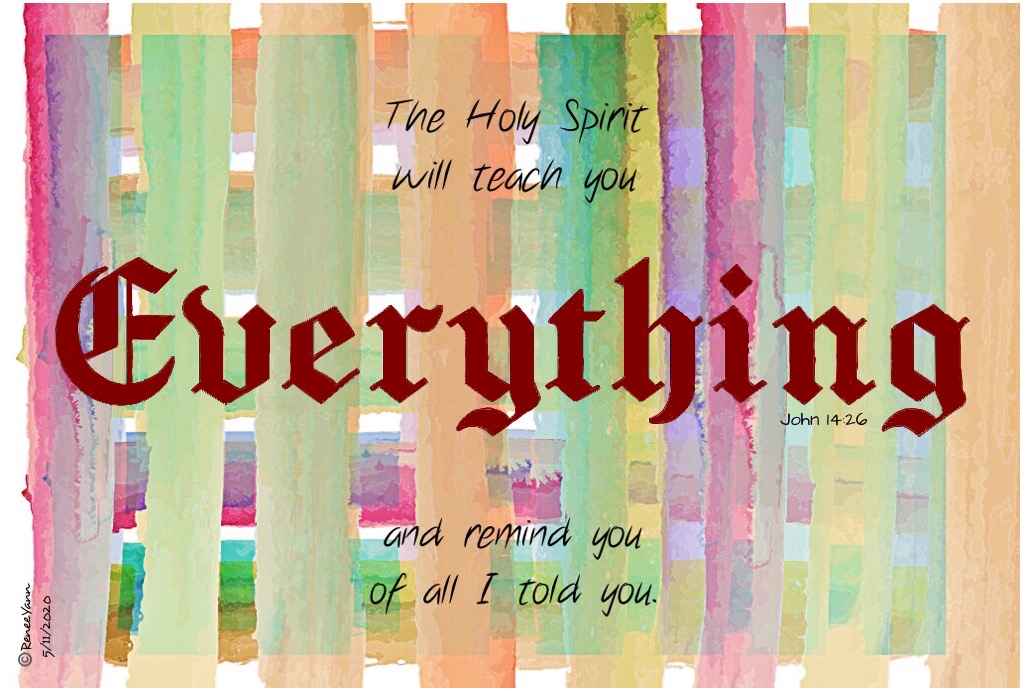
Jn14_26 Everything

The Gospel can be fearsome. It asks that we let go of our limited human “geometry”; that we entrust everything to the Inclusive Love who is Jesus Christ. It asks us to open ourselves to the Holy Spirit who, ultimately, will “teach us EVERYTHING”.


question

In our recent readings, we’ve seen Thomas, Philip, and today, Jude the Apostle trying to reach this level of spiritual trust. It’s hard because such trust is more than human. It is a trust bred of the Holy Spirit within us. It is a trust born of living fully in Peace with that Presence.

Judas, not the Iscariot, said to him,
“Master, then what happened that you will reveal yourself to us
and not to the world?”
Jesus answered and said to him,
“Whoever loves me will keep my word,
and my Father will love him,
and we will come to him and make our dwelling with him.

John 14:22-23


It is a trust described like this in tomorrow’s Gospel reading:

Peace I leave with you; my peace I give to you.
Not as the world gives do I give it to you.
Do not let your hearts be troubled or afraid.

Let us pray for trust and peace
in ourselves, our Church, and our world.

Poetry: The Peace of Wild Things – Wendell Berry

When despair for the world grows in me
and I wake in the night at the least sound
in fear of what my life and my children’s lives may be,
I go and lie down where the wood drake
rests in his beauty on the water, and the great heron feeds.
I come into the peace of wild things
who do not tax their lives with forethought
of grief. I come into the presence of still water.
And I feel above me the day-blind stars
waiting with their light. For a time
I rest in the grace of the world, and am free.

Music:  Wonderful Peace – an old Gospel song by Warren Cornell and William Cooper (1899), sung here by Don Moen 

Far away in the depths of my spirit tonight
Rolls a melody sweeter than psalm;
In celestial strains it unceasingly falls
O’er my soul like an infinite calm.

Peace, peace, wonderful peace,
Coming down from the Father above!
Sweep over my spirit forever, I pray
In fathomless billows of love!

Ah, soul! are you here without comfort and rest,
Marching down the rough pathway of time?
Make Jesus your Friend ere the shadows grow dark;
O accept of this peace so sublime!

What a treasure I have in this wonderful peace,
Buried deep in the heart of my soul,
So secure that no power can mine it away,
While the years of eternity roll!

I am resting tonight in this wonderful peace,
Resting sweetly in Jesus’ control;
For I’m kept from all danger by night and by day,
And His glory is flooding my soul!

And I think when I rise to that city of peace,
Where the Anchor of peace I shall see,
That one strain of the song which the ransomed will sing
In that heavenly kingdom will be:

Peace, peace, wonderful peace,
Coming down from the Father above!
Sweep over my spirit forever, I pray
In fathomless billows of love!

Fifth Sunday of Easter 2022

May 15, 2022

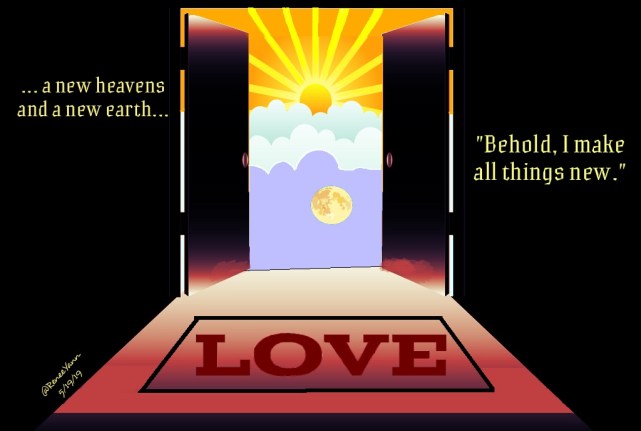
Today, in in God’s Lavish Mercy, our readings celebrate the New Creation given us in Jesus Christ.

Rev_ new

Acts describes the continuing whirlwind journey of Paul and Barnabas. They buzz all over the Mediterranean basin, carrying the Good News to Jews and Gentiles. Their work and enthusiasm teach us what the word “apostolic” truly signifies- reaching out to all people with the message of Jesus. Paul and Barnabas return home jubilant, 

… reporting what God had done with them
and how God had opened the door of faith to the Gentiles.

Acts 14:27

In our second reading, John, the visionary and poet, has another kind of door opened for him. His vision is of a New Creation, joined with God in a covenant of love. God renews the promise once made to Abraham, this time embodied in the gift of Jesus Christ to all humanity:

Behold, God’s dwelling is with the human race.
He will dwell with them and they will be his people
and God himself will always be with them as their God.

Revelation 21:3

In our Gospel, Jesus tells us once again how it is that we become part of this New Creation:

I give you a new commandment: love one another.
As I have loved you, so you also should love one another.

John 13:34

All of these glorious images may help us see our life in God through new eyes. Perhaps there are a few half-closed doors in our lives that need to be oiled with the grace of renewal. Simply recognizing these in prayer, in God’s presence, is a step toward a New Creation of our hearts and spirits. We are so beloved of God! Let us open our hearts to that renewing love.


Poetry: The Limits of Your Long – Ranier Marie Rilke, Book of Hours

Listen.

God speaks to each of us as he makes us,
then walks with us silently out of the night.

These are the words we dimly hear:

You, sent out beyond your recall,
go to the limits of your longing.
Embody me.

Flare up like a flame
and make big shadows I can move in.

Let everything happen to you: beauty and terror.
Just keep going. No feeling is final.
Don’t let yourself lose me.

Nearby is the country they call life.
You will know it by its seriousness.

Give me your hand.


Music: Heaven on Earth by Stars GO Dim ( Lyrics below.)

I’ve been asleep
Head in the sand
Watching the time just ticking
Clock runs around
Days in and out
Can’t really call it living
Somewhere I let light go dark
But here’s where my new story starts
Take my life and let it be
Set on fire for all to see
Break me down, build me up again
Don’t leave me the way I’ve been
Take my heart into Your hands
Come and finish what You began
‘Til I seek Your kingdom first
‘Til I shine, shine
Like Heaven on earth
I wanna wake, I wanna see
All of the ways You’re moving
Show me the need
‘Cause I wanna be a part of what You’re doing
In my heart, let Kingdom come
Not my will but Yours be done
Take my life and let it be
Set on fire for all to see
Break me down, build me up again
Don’t leave me the way I’ve been
Take my heart into Your hands
Come and finish what You began
‘Til I seek Your kingdom first
‘Til I shine, shine
Like Heaven on earth
Help me move when I should move
Help me rest when I should rest
Help me give what I should give
All of me, nothing less
Help me speak with grace and truth
Help me fight for those who can’t
Help me love the way You love
Never holding nothing back (yeah like Heaven on earth)
Take my life and let it be
Set on fire for all to see
Break me down, build me up again
Don’t leave me the way I’ve been
Take my heart into Your hands
Come and finish what You began
‘Til I seek Your kingdom first
‘Til I shine, shine
Like Heaven on earth

Feast of St. Matthias, Apostle

Saturday, May 14, 2022

12

Today, in God’s Lavish Mercy, Acts relates the story of Matthias and his inclusion as one of the Twelve. But besides Matthias, there was another man considered just as worthy of appointment, Justus. The lot did not fall on him and we never hear of him again.

So if there were two equally good men why didn’t they just widen the circle to thirteen Apostles?


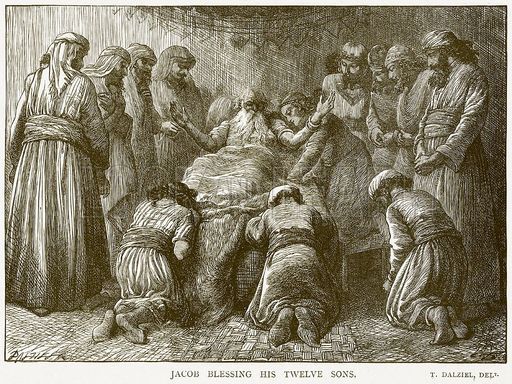
This appointment of the twelfth apostle reflects the importance of the number twelve throughout Scripture. It is a number which signifies perfection, heritage, and strength.

Jacob 12
Jacob Blessing His Twelve Sons – T. Daziel (c.1893)

The Book of Genesis states there were twelve sons of Jacob and those twelve sons formed the twelve tribes of Israel. The New Testament tells us that Jesus had twelve apostles. According to the Book of Revelation, the kingdom of God has twelve gates guarded by twelve angels. 

So Matthias, the Twelfth, brought the circle of Apostles to wholeness.


JofCross


In our Gospel, Jesus tells us that he chooses us all to be his friends. It is a friendship built on imitation of him, proven by keeping his commandments. His commandments are clear:

  • Love God
  • Love others as I have loved you

Every day, by prayer and reflective living, we deepen in our love for God and neighbor. We learn Love within the revelation of our own lives.

Jesus tells us that if we love like that our joy will be complete. May we be blessed by that holy joy.

Meditation: Instead of poetry and music today, a lovely meditation reflective of today’s Gospel, “No Longer Do I Call You Servants”

Share

Tuesday of the Fourth Week of Easter

May 10, 2022

Today, in God’s Lavish Mercy, the image of God’s hands emerges in each of our readings.

preachers

There were some …. proclaiming the Lord Jesus.
The hand of the Lord was with them
and a great number who believed turned to the Lord.

Acts 11:21

shepherd

I know them, and they follow me.
I give them eternal life, and they shall never perish.
No one can take them out of my hand.

John 10:28

My Father, who has given them to me, is greater than all,
and no one can take them out of the Father’s hand.

John 10:29

Each of these images evokes and inspires our trust that God abides with and sustains us – that we are in God’s hands.

We all know what it’s like to place ourself in someone else’s hands. Sometimes we do it willingly, sometimes not. Sometimes it is an act of trust, sometimes fear.

This morning, as I pray, I remember two parallel but distinctly different incidents of being in someone else’s hands. 


pikes

In the first, I went with friends on a drive to the top of Pike’s Peak in Colorado. It was before the serpentine road was paved in 1999. The driver was the young cowboy nephew of one of the passengers, and he thought it was really fun to scare us out of our wits. He took the many curves and switchbacks at headlong speed. I closed my eyes and started praying. It was uncomfortable being in his hands, so to speak.


doctor-clipart-transparent-12

The second memory is more recent. Just before my knee replacement surgery, as I lay slightly anesthetized in pre-op, my surgeon came to the bedside. He sat down, took my hand and said, “I want you to know that I will do the surgery myself and be with you the whole time. I am putting my initials on your knee so you can be certain I’ll fix the right one.” He smiled, and I again closed my eyes and started praying.


What different prayers they were! One was begging God to intervene and save me. The other was thanking God for putting me in trustworthy hands.

Jn10_29 hands

With God, we are always in trustworthy hands. Indeed, sometimes it may feel like God is flying over the edge of Pike’s Peak with us in the back seat. But here’s the thing: God is in the car with us – and God always lives! If we give ourselves completely to God in trust, we will live too.

Eventually, our practice of trust grows enough to comfort us in all things. We realize God is always sitting beside us, taking our hand, assuring us of that Loving Presence Who always abides.

A great freedom comes with that realization, steeped in years of trust and understanding that God’s Will for us is our eternal good. The preachers in Acts today, and the disciples in John rejoiced and acted in such trust. May we too be strengthened, blessed, and impelled by it.

Poetry: Reconciliation – Renee Yann, RSM

The hands of God love me
when I cannot see God’s face.
Like salve, they warmly run
over, in, and out of me,
pausing where my hurt is knotted,
barbed to their approach…
mother’s hands, lover’s, friend’s,
my own hands held in God’s hands,
healing self-estrangement.

I come to God’s hands 
like broken earth
stretches for redeeming rain.
Even in the deep night,
where God will not speak,
those loving hands are words
which I answer in the darkness.


Music:  Into Your Hands – Ray Rep

Into Your hands we commend our spirit –Ray Repp

Into Your hands we commend our spirits O Lord,
Into Your hands we commend our hearts.
For we must die to ourselves in loving You,
Into Your hands we commend our love.

O God, my God, why have You gone from me,
Far from my prayers, far from my cry?
To You I call and you never answer me,
You send no comfort and I don’t know why!

You’ve been my guide since I was very young,
You showed the way, you brought relief;
But now I’m lonely, nobody’s by my side:
Take heed, my Lord, listen to my prayer.

Monday of the Fourth Week of Easter

May 9, 2022

Click here for readings

800px-Domenico_Fetti_-_Peter's_vision_of_a_sheet_with_animals_-_Kunsthistorisches_Museum_Wien
Peter’s Vision of the Sheet – By Domenico Fetti – Kunsthistorisches Museum Wien, Bilddatenbank., Public Domain

Today, in God’s Lavish Mercy, we have the long story and explanation by Peter about who can be welcomed into the Community.

The earliest Christians were all Jews. Their beginning Christian rituals had deep roots in Jewish tradition. Their entire expectation of a Messiah was wrapped in the garment of the Old Testament. So it was hard for them to comprehend that Gentiles might also be saved by the Blood of Christ.

We might be tempted to consider these Jewish Christians very provincial, parochial, or even prejudiced in their closed attitudes. But maybe we should just look in the mirror!

It seems to be an enduring human inclination that, rather than – like Peter – seek a road to inclusion, we claim privilege for ourselves and exclude others on all kinds of bases:

  • She’s a woman, so she can’t…. whatever…
  • He’s gay, so he can’t …
  • She’s divorced, so she can’t…
  • He’s pro-life, or pro-choice, so he can’t…
  • She’s a Muslim, an atheist, and (irony of ironies) a Jew, so she can’t…
  • He’s too young – She’s too old – so they can’t …

Maybe in your own life, you have felt the pain of some of these suggested or blatant exclusions.


Jn10_4 Mine

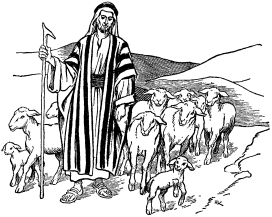
Jesus, in our Gospel, has a whole different approach to whom he loves. All creatures belong to him and will be brought to the Father in love.

I am the good shepherd,
and I know mine and mine know me,
just as the Father knows me and I know the Father;
and I will lay down my life for the sheep.
I have other sheep that do not belong to this fold.
These also I must lead, and they will hear my voice,
and there will be one flock, one shepherd.


Let us pray today to know and love our God ever more intensely. Let us ask to experience God’s infinite love and knowledge of us so that our unquenchable joy, humble gratitude, and limitless charity grow more evident.

Let us pray these gifts for all our sisters and brothers, no matter by what gate they come to the sheep fold.


Quote: I couldn’t find the original source, but it is a quote common in Eastern Spirituality:

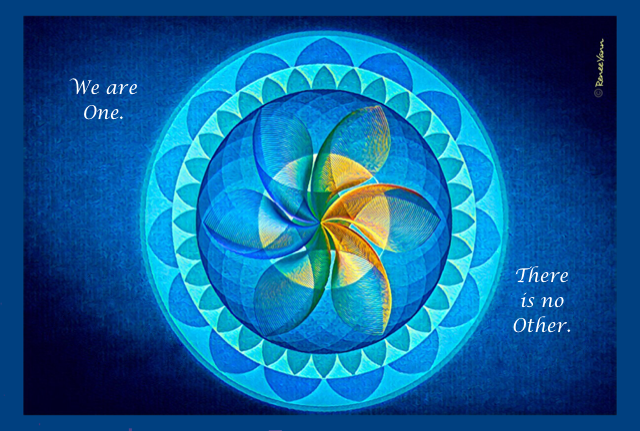
We are all One.
There is no Other.


Music: They’ll Know We Are Christians By Our Love

This is an interesting rendering of an old hymn. Kind of touched my heart.

Friday of the Third Week of Easter

May 6, 2022

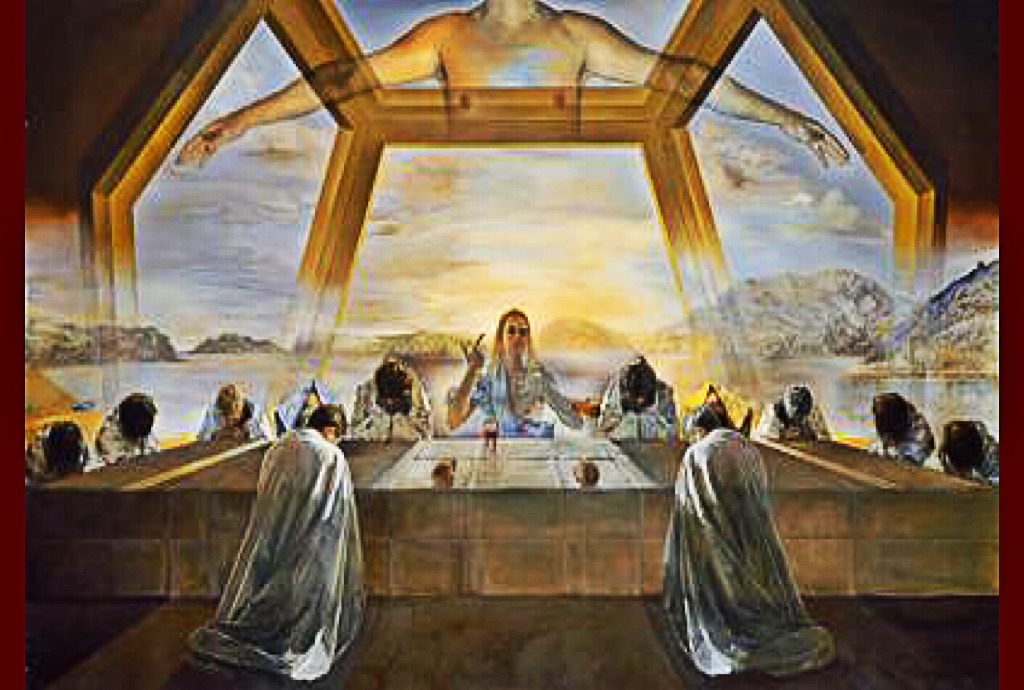
Dali
Institution of the Eucharist: Salvador Dali

Today, in God’s Lavish Mercy, our Gospel is serious business. In it, Jesus reveals the lynchpin of our sacramental faith.

Amen, amen, I say to you,
unless you eat the Flesh of the Son of Man and drink his Blood,
you do not have life within you.
Whoever eats my Flesh and drinks my Blood
has eternal life,
and I will raise him on the last day.

John 6: 53-54

It is a stark and shocking statement. The listening Jews “quarreled among themselves, saying, ‘How can this man give us his Flesh to eat?’.”

Down through the ages, struggling believers have grappled with the same question. Or, perhaps less preferable, complacent believers have never even considered it.

I think Jesus wanted us to consider it, absorb it, be changed by it, live within it, because “unless you eat the Flesh of the Son of Man and drink his Blood, you do not have life within you.”


As Catholics, we believe that Christ is truly and fully present in Eucharist and that, by Communion, becomes fully present in us, the Church.

When the Church celebrates the Eucharist, the memorial of her Lord’s death and resurrection, this central event of salvation becomes really present and “the work of our redemption is carried out”. This sacrifice is so decisive for the salvation of the human race that Jesus Christ offered it and returned to the Father only after he had left us a means of sharing in it as if we had been present there. Each member of the faithful can thus take part in it and inexhaustibly gain its fruits. This is the faith from which generations of Christians down the ages have lived.
(ECCLESIA DE EUCHARISTIA, Encyclical of John Paul II)


For me, it is a truth only appreciated when approached with more than the mind. It must be apprehended with the heart and soul. God so loves us in the person of Jesus Christ that God chooses to be eternally present with us, and in us, through the gift of Eucharist.

Praying with this truth over the years has led me to read authors like Edward Schillebeeckx (Christ the sacrament of the Encounter with God), Diarmuid O’Murchu (Quantum Theology), and Pierre Teilhard De Chardin (Hymn of the Universe).

deChardin

Me in my First Communion Dress
– and my handsome little brother

Still, despite all the Eucharistic theology, every time I receive the Eucharist, I let this simple hymn play in my heart – one I learned for my First Holy Communion. It still unites my heart to my desired faith which is, at once, both cosmic and intimate.


Poetry: “On the Blessed Sacrament of the Altar” by St Robert Southwell

Saint Robert Southwell (1561 – 1595) was an English Roman Catholic priest of the Jesuit Order. He was also a poet, hymnodist, and clandestine missionary in Elizabethan England. After being arrested and imprisoned in 1592, and intermittently tortured and questioned by Richard Topcliffe, Southwell was eventually tried and convicted of high treason for his links to the Holy See. On 21 February 1595, Father Southwell was hanged at Tyburn. In 1970, he was canonized by Pope Paul VI as one of the Forty Martyrs of England and Wales. (Wikipedia)

His poetry, written in Early Modern English, demonstrates deep devotion to the Eucharist. Although most of us can interpret the English of the 16th century, the translation below is modernized for convenience. It’s a long poem, but it is well worth your time.


“On the Blessed Sacrament of the Altar” by St. Robert Southwell
From The Poems of Robert Southwell, S.J. (Oxford: Clarendon Press, 1967),
edited by Fr James H. McDonald and Nancy Pollard Brown

In paschal feast the end of ancient rite
An entrance was to never ending grace,
Tips to the truth, dim glasses to the light,
Performing deed presaging signs did chase,
Christ's final meal was fountain of our good:
For mortal meat he gave immortal food.
That which he gave he was, O peerless gift,
Both God and man he was, and both he gave,
He in his hands himself did truly live:
Far off they see whom in themselves they have.
Twelve did he feed, twelve did their feeder eat,
He made, he dressed, he gave, he was their meat.
They saw, they heard, they felt him sitting near,
Unseen, unfelt, unheard, they him receiv'd,
No diverse thing though diverse it appear,
Though senses fail, yet faith is not deceiv'd.
And if the wonder of the work be new,
Believe the work because his word is true.
Here truth belief, belief inviteth love,
So sweet a truth love never yet enjoy'd,
What thought can think, what will doth best approve
Is here obtain'd where no desire is void.
The grace, the joy, the treasure here is such
No wit can with nor will embrace so much.
Self-love here cannot crave more than it finds,
Ambition to no higher worth aspire,
The eagerest famine of most hungry minds
May fill, yea far exceed their own desire:
In sum here is all in a sum express'd,
Of much the most, of every good the best.
To ravish eyes here heavenly beauties are,
To win the ear sweet music's sweetest sound,
To lure the taste the angels' heavenly fare,
To soothe the scent divine perfumes abound,
To please the touch he in our hearts doth bed,
Whose touch doth cure the deaf, the dumb, the dead.
Here to delight the wit true wisdom is,
To woo the will of every good the choice,
For memory a mirror shewing bliss,
Here all that can both sense and soul rejoice:
And if to all all this it do not bring,
The fault is in the men, not in the thing.
Though blind men see no light, the Sun doth shine,
Sweet cates are sweet, though fevered tastes deny it,
Pearls precious are, though trodden on by swine,
Each truth is true, though all men do not try it:
The best still to the bad doth work the worst,
Things bred to bliss do make them more accurst.
The angels' eyes whom veils cannot deceive
Might best disclose that best they do discern,
Men must with sound and silent faith receive
More than they can by sense or reason learn:
God's power our proofs, his works our wit exceed,
The doer's might is reason of His deed.
A body is endow'd with ghostly rights,
A nature's work from nature's law is free,
In heavenly Sun lie hidden eternal lights,
Lights clear and near yet them no eye can see,
Dead forms a never-dying life do shroud,
A boundless sea lies in a little cloud.

The God of Hosts in slender host doth dwell,
Yea God and man, with all to either due:
That God that rules the heavens and rifled hell,
That man whose death did us to life renew,
That God and man that is the angels’ bliss,
In form of bread and wine our nurture is.

Whole may his body be in smallest bread,
Whole in the whole, yea whole in every crumb,
With which be one or ten thousand fed
All to each one, to all but one doth come,
And though each one as much as all receive,
Not one too much, nor all too little have.
One soul in man is all in every part,
One face at once in many mirrors shines,
One fearful noise doth make a thousand start,
One eye at once of countless things defines:
If proofs of one in many nature frame,
God may in stranger sort perform the same.
God present is at once in every place,
Yet God in every place is ever one,
So may there be by gifts of ghostly grace
One man in many rooms yet filling none.
Sith angels may effects of bodies shew,
God angels' gifts on bodies may bestow.
What God as auctor made he alter may,
No change so hard as making all of nought:
If Adam framed was of slimy clay,
Bread may to Christ's most sacred flesh be wrought.
He may do this that made with mighty hand
Of water wine, a snake of Moses' wand.

Third Sunday of Easter

May 1, 2022

Today, in God’s Mercy, Jesus asks Peter an open-ended question, the kind that leaves both parties very vulnerable to the answer:

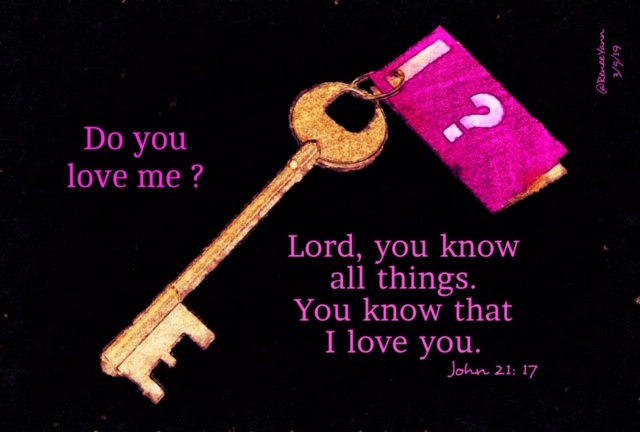
Do you love me?

Jn21_17

Wow! What if Peter says “No”, or “Sort of” or worse yet, just stares off into the distance in silence? Would that break Jesus’ heart?!

And the question is kind of scary for Peter too. Maybe he’s thinking, “OK, this is it. Jesus wants me to lay it all on the line. Am I ready?” — because, as Jesus says so clearly, the measure of true love is service and sacrifice:

Jesus said to him the third time,
“Simon, son of John, do you love me?”
Peter was distressed that Jesus had said to him a third time,
“Do you love me?” and he said to him,
“Lord, you know everything; you know that I love you.”
Jesus said to him, “Feed my sheep.
Amen, amen, I say to you, when you were younger,
you used to dress yourself and go where you wanted;
but when you grow old, you will stretch out your hands,
and someone else will dress you
and lead you where you do not want to go.”

John 21: 17-19

The Gospel poses questions to each of us today as well:

  • Who and what do I really love?
  • How does my primary love drive my life choices?
  • Are there places in my life that lack love – places where prejudice, blindness, selfishness or hate have filled in the emptiness?
  • How inclusive is my love? How redemptive? How merciful? How Christlike?
  • Where is God in my loves?


Prose: St. John of the Cross wrote this:

At the end of our lives we will be judged on love.
Learn therefore to love God as God wishes to be loved.


Music: Where Charity and Love Prevail – a lovely English translation of Ubi Caritas, written in Gregorian chant.

Second Sunday of Easter: Sacred Shadows

April 24, 2022

Today, in God’s Lavish Mercy,  our readings continue to show us the rising power of Christ after the Resurrection.

Acts5_15 shadow

Acts demonstrates how powerfully Jesus lives in his disciples, and in the faith of the emerging Church.

… the people esteemed them.
Yet more than ever, believers in the Lord,
great numbers of men and women, were added to them.
Thus they even carried the sick out into the streets
and laid them on cots and mats
so that when Peter came by,
at least his shadow might fall on one or another of them.

Acts 5: 13-15

Our Gospel recounts two Post-Resurrection appearances of Jesus where He bolsters that faith for these still fledgling followers. They were gathered in the Upper Room, doors locked and fearful. When Jesus appears, the first thing he says is, “Peace”, because that is what his little flock most needs.

In the course of the reading, we discover Thomas’s adamant doubt unless he can see and touch evidence of the Christ he once knew in the flesh. His doubt is so strong that his faith, when it comes, overwhelms him.

My Lord, and my God!


In these first sainted founders of the faith, we can find a mirror image of our own call to witness Christ. We are delegated to be his presence in the world, to cast a shadow that bears his blessing in the midst of suffering and confusion.

But in the locked room of our hearts, we may still be afraid. We may feel, like Thomas, that we were absent when the affirmation and courage were distributed!

Photo by Life Of Pix on Pexels.com

Knowing our own weaknesses – and captured in the maze of their little dramas – we may be skeptical that Christ desires to rise in us, to preach by our lives.

What Jesus said to these very fragile witnesses, he says to us

Peace be with you.
As the Father has sent me,
so I send you.

Let us look around today in awareness of those who fall in the shadow of our faith: our children and families, our religious communities, our elders, our neighbors, our friends and co-workers. As we pass through life together, does our presence bless them with a trace of God?

As we pray today, let us place our doubts, fears, weaknesses and self-concerns into Christ’s sacred wounds. Let us leave them there in confidence as we humbly choose to be his Presence and Mercy for others by the simple, selfless choices of our lives.


Poetry: In the Upper Room – by Fr. Charles O’Donnell, CSC – 11th President of Notre Dame University (unfortunately not as well known for his beautiful, mystical poetry)


Music: Under the Shadow of Your Wings – Chris Bowater

Holy Week: Wednesday – Darker and Deeper

April 13, 2022
Wednesday of Holy Week

Today, in God’s Lavish Mercy, the betrayal of Jesus continues, as does his mounting courage to endure its consequences.

In our first reading, the experience of the prophet Isaiah foreshadows that of Jesus. We can hear Jesus praying in Isaiah’s words:

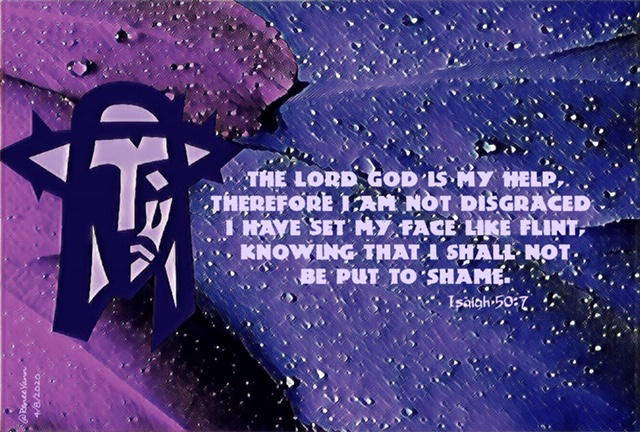
The Lord GOD is my help,
            therefore I am not disgraced;
I have set my face like flint,
            knowing that I shall not be put to shame.
He is near who upholds my right;
            if anyone wishes to oppose me,
            let us appear together.
Who disputes my right?
            Let him confront me.
See, the Lord GOD is my help;
            who will prove me wrong?

Isaiah 50:7-8

We hear Christ’s transcendent openness to the Father’s accompaniment:

Morning after morning
God opens my ear that I may hear;
And I have not rebelled,
have not turned back.


We hear Christ’s courage to face what life unfolds before him:

I gave my back to those who beat me,
my cheeks to those who plucked my beard;
My face I did not shield
from buffets and spitting.


We hear Christ’s utter commitment, despite suffering, to the Father’s Presence:

The Lord GOD is my help,
therefore I am not disgraced;
I have set my face like flint,
knowing that I shall not be put to shame.


As we pray with Jesus today, may we:

  • hear God’s purpose in our lives.
  • see grace unfold in all our circumstances
  • set our hearts, like flint, upon faith and trust in God

passover

As our Jewish sisters and brothers will begin the Passover celebration this Friday, their rich faith heritage inspires us always to find God in the journey, no matter where it leads us.

In the Gospel’s Passover moment, Jesus walks toward the painful experience of Gethsemane. He invites us to come and receive the reassuring blessing of his Father even as the night shadows fall.


Poetry: The Garden of Gethsemane – by Boris Pasternak who won the Nobel Prize for Literature after writing Dr. Zhivago

Indifferently, the glimmer of stars
Lit up the turning in the road.
The road went round the Mount of Olives,
Below it the Kedron flowed.

The meadow suddenly stopped half-way.
The Milky Way went on from there.
The grey and silver olive trees
Were trying to march into thin air.

There was a garden at the meadow’s end.
And leaving the disciples by the wall,
He said: ‘My soul is sorrowful unto death,
Tarry ye here, and watch with Me awhile.’

Without a struggle He renounced
Omnipotence and miracles
As if they had been borrowed things,
And now He was a mortal among mortals.

The night’s far reaches seemed a region
Of nothing and annihilation. All
The universe was uninhabited.
There was no life outside the garden wall.

And looking at those dark abysses,
Empty and endless, bottomless deeps,
He prayed the Father, in a bloody sweat,
To let this cup pass from His lips.

Assuaging mortal agony with prayer,
He left the garden. By the road he found
Disciples, overcome by drowsiness,
Asleep spreadeagled on the ground.

He wakened them: ‘The Lord has deemed you worthy
To live in My time. Is it worthiness
To sleep in the hour when the Son of Man
Must give Himself into the hands of sinners?’

And hardly had He spoken, when a mob
Of slaves, a ragged multitude, appeared
With torches, sowards, and Judas at their head
Shaping a traitor’s kiss behind his beard.

Peter with his sword resisted them
And severed one man’s ear. But then he heard
These words: ‘The sword is no solution.
Put up your blade, man, in its scabbard.

Could not My Father instantly send down
Legions of angels in one thunderous gust?
Before a hair of my head was touched,
My enemies would scatter like the dust.

But now the book of life has reached a page
Most precious and most holy. What the pen
Foretold in Scripture here must be fulfilled.
Let prophecy come to pass. Amen.

The course of centuries is like a parable
And, passing, can catch fire. Now, in the name
Of its dread majesty, I am content
To suffer and descend into the tomb.

I shall descend and on the third day rise,
And as the river rafts float into sight,
Towards My Judgement like a string of barges
The centuries will float out of the night.’


Music: I Come to the Garden Alone – Sean Clive 

I come to the garden alone
while the dew is still on the roses,
And the voice I hear falling on my ear,
The Son of God discloses

And He walks with me and He talks with me,
And He tells me I am his own;
And the joy we share as we tarry there,
None other has ever known

He speaks, and the sound of his voice is so sweet
The birds hush their singing,
And the melody that He give to me
Within my heart is to ringing.

And He walks with me and He talks with me,
And He tells me I am his own;
And the joy we share as we tarry there,
None other has ever known

I stay in the garden with Him,
Though the night around me is falling.
But He bids me go; through the voice of woe
His voice to me is calling.

And He walk with me and He talks with me,
And He tells me I am His own;
And the joy we share as we tarry there,
None other has ever known.