Psalm 119: Sweet Word

Memorial of Saint Clare, Virgin

August 11, 2020


Today, in God’s Lavish Mercy, on this feast of the beautiful St. Clare, we pray with Psalm 119. How perfect is the response phrase from our psalm!

How sweet to my taste is your promise!


Last night, we watched an old Colombo movie in which one of the characters was a vintner who had developed a peerless taste for fine wine. He could identify every detail – year, grape, region, price. He was the consummate connoisseur.

As I prayed this morning’s psalm, it struck me that through the intentional practice of prayer, we become connoisseurs of the spirit. We are able to discern ever more delicately those realities which carry grace to our souls.

How sweet to my palate are your promises,
sweeter than honey to my mouth!


As we deepen in spirit, we purify our taste from all that is not peace, goodness, justice, mercy, and charity. We let go of things that distract our souls from Love.

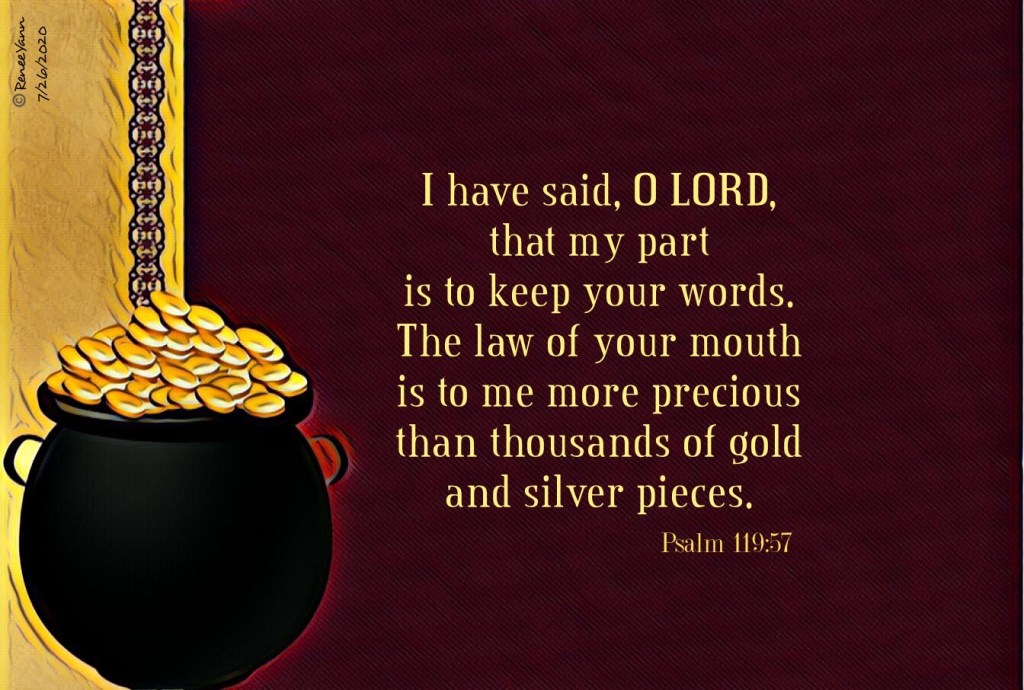
The law of your mouth is to me more precious
than thousands of gold and silver pieces.


By our choices for what is truly precious, we build a legacy of sacred joy which sustains us throughout our lives:

Your decrees are my inheritance forever;
the joy of my heart they are.
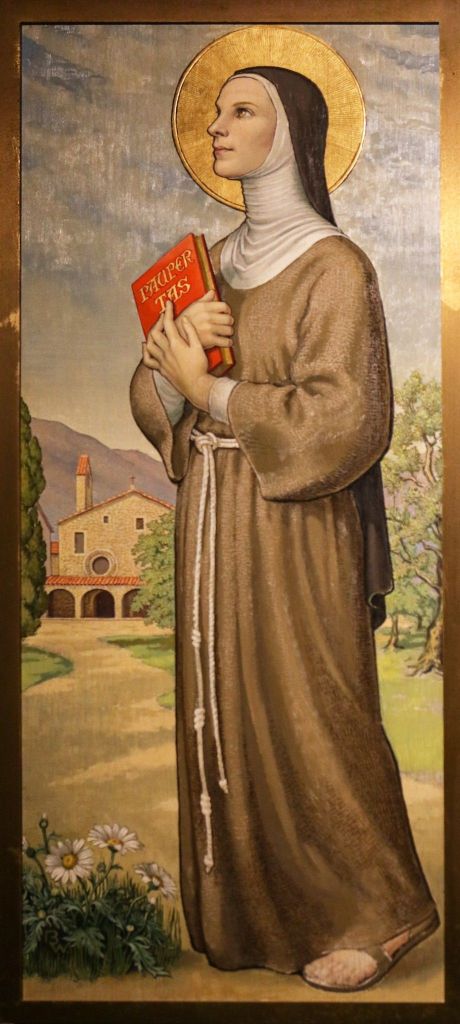

from National Shine, Detroit

Poetry: from Clare of Assisi 

We become what we love 
and who we love shapes what we become. 
If we love things, we become a thing. 
If we love nothing, we become nothing. 
Imitation is not a literal mimicking of Christ, 
rather it means becoming the image of the beloved, 
an image disclosed through transformation. 
This means we are to become vessels
of God's compassionate love for others.

Music: Mirror of Eternity (Clare of Assisi) – sung by John Michael Talbot

Place your mind before the mirror of eternity!
Place your soul in the brilliance of glory!
Place your heart in the figure of the divine substance!
And transform your whole being into the image of the Godhead Itself
      through contemplation!
So that you too may feel what His friends feel
      as they taste the hidden sweetness
      which God Himself has reserved
      from the beginning
      for those who love Him
~ Clare of Assisi

Psalm 112: Key to Blessedness

Feast of Saint Lawrence, Deacon and Martyr

August 10, 2020


“Beatus Vir” from a 9th Century Psalter

Today, in God’s Lavish Mercy, we pray with Psalm 112, a poetic description of what “holiness-in-action” looks like. The psalm’s tone is reminiscent of the beloved passage from Proverbs 31,  “Who shall find a valiant woman…” Only this passage says, “Blessed is the man… Beatus vir”.

Both these passages give us a glimpse into the righteousness expected of one who is in covenant with God. That person reflects the Divine Righteousness of God in both word and deed.

The “righteousness of God” comes down to concrete actions
that intend generous rehabilitation of those without resources.
The Psalms sing of these concrete acts.

Walter Brueggemann

A slow reading of the psalm is a good prayer today, asking God to help us open our hearts and choices to this graceful righteousness.  The heavily masculine translation can be a little off-putting for the women among us though. So you might like to use this translation as I did.


Happy are those who revere God 
    and delight in doing his will. 
Their children will be greatly honored 
    and their grandchildren greatly blessed. 
Abundance will fill their houses
     as gratitude fills their hearts. 
They conduct their affairs with justice; 
    their integrity cannot be shaken. 
They give of themselves to the poor 
    and share their wealth with the needy. 
They are patient, cheerful, compassionate, 
    generous, impeccably fair. 
They harbor no regrets for the past 
    and no worries about the future. 
Their minds are centered in God,
    and they trust him with all their hearts.
They honor themselves, and are honored; 
    they walk with their heads held high. 
Their rising is like the sunrise, 
    and their light fills heaven and earth. 
Their righteousness shines on all people; 
    their good works endure forever.
from A Book of Psalms: Selections Adapted from the Hebrew by Stephen Mitchell

Poetry: from Rumi

Your acts of kindness
are iridescent wings
of divine love
which linger and continue
to uplift others
long after your sharing.


Music:  Beatus Vir – Antonio Vivaldi

Beatus vir qui timet Dominum,
In mandatis ejus volet nimis.
Blessed the man who fears the Lord,
in his commandments he delights greatly.

Psalm 119:Acrostic Prayer

Seventeenth Sunday in Ordinary Time

July 26, 2020


Today, in Mercy, we pray with young Solomon, as God asks him to carry the weight of leadership. Of all that Solomon might have asked from God, he requested only wisdom, which is described in James 3:17. “But the wisdom that comes from heaven is first of all pure; then peace-loving, considerate, teachable, full of mercy and good fruit, impartial and sincere.” We pray for wisdom for ourselves in the discharge of our responsibilities. We pray for this gift for all who hold power in our world.

from 2017 – 17th Sunday in Ordinary Time

Today, in God’s Lavish Mercy, we pray with Psalm 119, the longest psalm, and a meticulously constructed poem. It is one of about twelve acrostic poems in the Bible, employing the twenty-two characters of the Hebrew alphabet to teach a lesson about love of the Torah, the Law.

Acrostic poems have been popular throughout history because they let the reader examine a theme from multiple, memorable perspectives. Although often tricky to compose, they are simple to read, and sometimes so commonplace as to be transparent.

Here is an example of an acrostic poem from 19th century America


So why did the psalmist take the trouble to compose a complicated verse like Psalm 119? The answer seems apparent, I think. The love of the Law was that important to the writer. It was the one true treasure, and he wanted others to share the treasure.

The theme of “treasure” ties together all of our Sunday readings.

In our first reading, young Solomon could have asked God for anything. But Solomon already treasures the Wisdom of God:

The LORD was pleased that Solomon made this request.
So God said to him:
“Because you have asked for this—
not for a long life for yourself,
nor for riches,
nor for the life of your enemies,
but for understanding so that you may know what is right—
I do as you requested.


Our second reading confirms that those who love God, like Solomon did, are blessed with the treasure of confidence and peace:

We know that all things work for good
for those who love God.


Matthew’s Gospel tells us to seek that treasure buried in the field of our lives. When we find it, we should give everything to make it our own:

When he finds a pearl of great price,
he goes and sells all that he has and buys it.


Praying Psalm 119 allows us to appreciate the treasure of God’s Law, God’s heartbeat, in our lives. It holds the Word up before us, facet by facet, the way we would lift a diamond to the Light. When we come to love Wisdom/Word/Law as Solomon did, we give everything to possess it fully.


Poetry: Last Hike Before Leaving Montana by Patricia Traxler.
In this poem, the poet is ostensibly talking about a bear, but listen a little deeper and she is talking about God.

Late winter, almost spring. It's like finding a diamond;
now I don't want to leave. I sit in the dirt and put my hands
in your tracks. For the first time in a long time I don't
doubt. Now I know I always knew you were here. You
are the beginning of disclosure, the long-felt presence

Suddenly incarnate. Behind me my friend warns, If we
see the bear, get into a fetal position. No problem,
I tell her, I'm always in a fetal position—I was born
in a fetal position. Did you know, she says, the body
of a shaved bear looks exactly like a human man?
I skip a stone, feel a sudden bloat of grief, then laugh.
I ask her, Who would shave a bear? We climb

Farther up Rattlesnake Creek, watch winter sun glitter
off dark water. No matter how high we go I look higher.
Sometimes absence can prove presence. That's not exactly
faith, I know. All day, everywhere, I feel you near at hand.
There's so much to understand, and everything to prove.
Up high the air is thin and hard, roars in the ears like love.

Music: Lord, You Are More Precious Than Silver – Divine Hymns

Psalm 63 A Passionate Prayer

Feast of Saint Mary Magdalen

July 22, 2020

Today, in God’s Lavish Mercy, we pray with Psalm 63, a perfect prayer for the Feast of Saint Mary Magdalen, who longed for and loved God with all her heart.

My soul is thirsting for you, O Lord my God.

Psalm 63, in the verses quoted today, is a love song. The psalmist longs for God, body and soul. Experience has taught her that without God her whole being is a desert.

O God, you are my God whom I seek;
for you my flesh pines and my soul thirsts
like the earth, parched, lifeless and without water.

And so she fixes her eyes on God, her heart on God. She looks for God’s Presence in the sanctuary of her life, in the temple of her soul.

Thus have I gazed toward you in the sanctuary
to see your power and your glory,
For your kindness is a greater good than life;
my lips shall glorify you.

The psalmist promises to bless God – to be grateful and attentive to God’s affectionate grace in all the circumstances of her life:

Thus will I bless you while I live;
lifting up my hands, I will call upon your name.
As with the riches of a banquet shall my soul be satisfied,
and with exultant lips my mouth shall praise you.

In her serene and confident prayer, she is like the fragile hatchling, protected under her Divine Mother’s wing. She clings to God’s merciful hand, no doubt kissing it in a prayer of grateful love.

You are my help,
and in the shadow of your wings I shout for joy.
My soul clings fast to you;
your right hand upholds me.


Poetry: The Living Flame Of Love – St. John of the Cross
Some find John of the Cross’s poetry challenging, if not shocking because, as well as being deeply mystical, it is often clearly erotic. But we are both mystical and erotic human beings made so by God in Whom Love has infinite dimensions. John channeled all his mystical erotic power into his profound love for God. His poems may help us to open that holy power to God as well.

Songs of the soul in the intimate communication of loving union with God.

O living flame of love
that tenderly wounds my soul
in its deepest center! Since
now you are not oppressive,
now consummate! if it be your will:
tear through the veil of this sweet encounter!

O sweet cautery,
O delightful wound!
O gentle hand! O delicate touch
that tastes of eternal life
and pays every debt!
In killing you changed death to life. 

O lamps of fire!
in whose splendors
the deep caverns of feeling,
once obscure and blind,
now give forth, so rarely, so exquisitely,
both warmth and light to their Beloved.

How gently and lovingly
you wake in my heart,
where in secret you dwell alone;
and in your sweet breathing,
filled with good and glory,
how tenderly you swell my heart with love.

Music:  Living Flame of Love – John Michael Talbot

Oh, Living Flame of Love
Tenderly wound my soul
To its deepest inner heart
Without oppression!

Come consumate our love
Tear through the veil of our union
If it be your will, come and rend
The veil of the temple!

Oh, lamps of fire
In deep caverns of feeling
Once obscured and blind
Are now leading
In the warmth and the passion
Of your love
(x2)

Yet gently Your hand does wound
As You rend through the veil of my temple
Come and take this life that I give
So that I might come to live in this our dying

Oh, Living Flame of Love
Tenderly wound my soul
To its deepest inner heart
Without oppression!

Psalm 95: The Real Voice

Monday of the Sixteenth Week in Ordinary Time

July 20, 2020

From this liturgical date in 2016:  

Monday, July 18, 2016: Today, in Mercy, we pray to do as the prophet Micah says. As our intense political season begins, we pray that our leaders – and we citizens – may do right, show real goodness, and find the courage to be humble. May we have the insight to shun a democracy built on values opposite to these. May God bless and inspire all who would lead us and may God bless and heal our country.


Today, in God’s Lavish Mercy, we will pray with Psalm 95, our Alleluia Verse. Today’s Responsorial is Psalm 50, which we have reflected on twice recently.

The verse from Psalm 95 is an often repeated one, and presents us with a clear ultimatum:

But how do we do that?
How do we hear God’s voice?
How do we avoid a hardened heart?


When I was a little girl, I loved to read the stories of the saints. I was particularly impressed by the life of the brave St. Joan of Arc, not only because she got to ride a horse, but because she heard heavenly voices. I thought it was very nice of God to tell Joan exactly what to do to be holy.

I waited a few years, probably from age six to nine, for God – or at least St. Michael, my parish patron – to speak to me. You know, just in case God had anything important for me to do, like take a small army over to New Jersey or something like that.

When I was 9 or 10, I fell in love with Jimmy Danvers and put my saint books in my bottom drawer. I still listened for God, but started not to expect an audible conversation.


What I failed to realize at that young age was that the conversation had already begun. I thought about God, prayed and tried to be a pretty good person. I went to Mass every day since 5th grade. I began to serve others in the way I thought Jesus would want to do it. With the help of my parents and teachers, I had made the choice to invite God’s heart into my heart.

Finally, I came to understand that God was speaking to me, and to everyone else, all the time. My job was to keep my heart’s ear open, softened, by my choices for Love.


Prayer is the communication of the soul with God. 
God is love, and love is goodness giving itself away. 
It is a fullness of being 
that does not want to remain enclosed in itself, 
but rather to share itself with others.

Saint Edith Stein

When we do this, each day brings us deeper and deeper into the Silent Word Who breathes forth the story of our lives. That sacred breath takes as many forms as there are creatures. Joan of Arc was one holy form. So am I. So are you.


Literature:  from Saint Joan by George Bernard Shaw

Charles VII:  Oh, your voices, your voices. Why don’t the voices come to me? I am king, not you!

Joan: They do come to you, but you do not hear them. You have not sat in the field in the evening listening for them. When the angelus rings, you cross yourself and have done with it. But if you prayed from your heart and listened to the thrilling of the bells in the air after they stopped ringing, you would hear the voices as well as I do.


Music: Holy Ground – John Michael Talbot

Verse 1
This is holy ground
We’re standing on holy ground
For the Lord is present
And where He is is holy
This is holy ground
We’re standing on holy ground
For the Lord is present
And where He is is holy

Verse 2
These are holy hands
He’s given us holy hands
He works through these hands
And so these hands are holy
These are holy hands
He’s given us holy hands
He works through these hands
And so these hands are holy

Verse 3
These are holy lips
He’s given us holy lips
He speaks through these lips
And so these lips are holy
These are holy lips
He’s given us holy lips
He speaks through these lips
And so these lips are holy

Psalm 19: God’s Perfect Law

Thursday of the Thirteenth Week in Ordinary Time

July 2, 2020


Previous Prayer on Today’s Readings
June 30, 2016: Today, in Mercy, we pray in praise of God’s laws which hold the sun and moon in place, and make night and day turn softly into each other. We pray to love God’s law in our own hearts, respecting life in all its stages and expressions. May we see our own life as a marvelous manifestation of God’s divine balance, and may we so honor its risings and settings.


Today, in God’s Lavish Mercy, we pray with Psalm 19. The entire psalm opens with a familiar hymn to the Beauty of God’s Creation. and closes with a meditation on the beauty of God’s Law. Today’s verses focus on the psalm’s second half, lauding God’s flawless law. 

In both cadence and meaning, Psalm 19 is a song of balance. It dances back and forth between the immutable elegance of God’s Law and the perfection it offers to those who pursue it.

The concept of “law” might not immediately engender spiritual enthusiasm in our hearts. In our modern culture, the word “law” has become removed from the biblical sense of “justice”. 

In modern parlance, “law” is a set proclamations we may or may not agree with. The validity of this “law” depends on the morality of those who make it.

But law and justice in scripture are meant to be reflections of God’s perfection . They are the means to attaining right-balance in our lives, and in all Creation, according the God’s desire for us.

In fact, living a true biblical dimension of law and justice may require us, at times, to live outside a cultural sense of these words.  This happens when we protest “unjust laws” – a phrase whose seeming contradiction shows us just how difficult living justly might be.


How do we stay sharply and accurately aware of those contradictions so that we may discern a life of true Godly justice and right-balance in a culture that has become confused and calloused?

Psalm 19 is a good guide. Trusting its advice, we will find the virtues that lead to joy and peace.

Any “law” which does not lead to these blessings needs to be examined in the light of this beautiful psalm.


Poetry: God’s Grandeur– In Gerard Manley Hopkins’s exquisite poem, we see the magnificence of nature juxtaposed with human fragility.

The world is charged with the grandeur of God.
    It will flame out, like shining from shook foil;
    It gathers to a greatness, like the ooze of oil
Crushed. Why do men then now not reck his rod?
Generations have trod, have trod, have trod;
    And all is seared with trade; bleared, smeared with toil;
    And wears man's smudge and shares man's smell: the soil
Is bare now, nor can foot feel, being shod.


And for all this, nature is never spent;
    There lives the dearest freshness deep down things;
And though the last lights off the black West went
    Oh, morning, at the brown brink eastward, springs —
Because the Holy Ghost over the bent
    World broods with warm breast and with ah! bright wings.

Music: More Precious Than Gold – Acappella


They are more precious than gold 
Sweeter than the honey 
They are more precious than gold 
And the honey comb 

The laws of the Lord are perfect 
Reviving the soul, reviving the soul 
Reviving the soul 

They are more precious than gold 
Sweeter than the honey 
They are more precious than gold 
And the honey comb 

They make wise the simple 
They give joy to the heart 
Light to the eyes 
Enduring forever 
Righteous altogether 
They bring great reward 

The laws of the Lord are perfect 
Reviving the soul, reviving the soul 
Reviving the soul 

May the words of my mouth 
And the meditation of my heart 
Be pleasing in your sight 
O Lord my rock 
My rock and my redeemer 
O Lord, my rock and my redeemer 

The laws of the Lord are perfect 
Reviving the soul, reviving the soul 
Reviving the soul 
They are more precious than gold Sweeter than the honey 
They are more precious than gold 
And the honey comb

Psalm 139: God of Our Secrets

Solemnity of the Nativity of Saint John the Baptist

June 24; 2020

Psalm 139 (stained glass window by Ted Felen)

Today, in God’s Lavish Mercy, on the great feast of John the Baptist, we pray with Psalm 139, the prayer of awed gratitude.

June 24th is a pivotal date in my life. It became so in 1966 on the day I was first professed as a Sister of Mercy. Our then Mother General, who chose our Profession date, had deep devotion to John, and often spoke to us wide-eyed novices about his holiness.


In one such lecture, she solemnly pronounced the core of his sanctity – how he considered himself in relation to his cousin Jesus:

He must increase and I must decrease. 

Mother Bernard told us that this was the key to the spiritual life: let God grow in you as self recedes.


It was a beautiful lesson but a hard one to swallow. We were a gaggle of 20-somethings fired up to find our adulthoods. We were all about growing – making our statement in the world! 

Learning to discover, rely on, and magnify the hidden omnipresence of God within would – at least for some of us – takes a lifetime, just as it probably should.


Psalm 139 is a prayer that can lead us to God’s powerful secrets in our hearts, ready to be unfolded as the years pass. These treasures include:

  • that we are made of earth and stars and must find vigor in harmony with them
  • that we are woven of both the dances and the dyings of our mothers, fathers, and ancestors – each a mysterious blessing
  • that as we live our lives, it is God living within us
  • that God knows, loves, and redeems everything about us

June 24, 1966 came clothed in noontime sun and trumpet blasts all those years ago – shouting youth, hope, and a good deal of ambition.

The date’s passing iterations have gently mellowed the song God sings to me. Now it goes something like this:


Autumn Colors – Zamfir

Today, the date’s rising carries the sustained melody of a gentle pan flute. Within its breathy music, I cherish the gift of years, how intimately accompanied and tenderly cared for I have been … even from my mother’s womb until now.

May each of us today – in whatever season and sound of the journey – pray with our hidden, ever-present God who cherishes our being.


Called to Become
From Edwina Gateley, There Was No Path So I Trod One (1996, 2013)

You are called to become
A perfect creation.
No one is called to become
Who you are called to be.
It does not matter
How short or tall
Or thick-set or slow
You may be.
It does not matter
Whether you sparkle with life
Or are as silent as a still pool.
Whether you sing your song aloud
Or weep alone in darkness.
It does not matter
Whether you feel loved and admired
Or unloved and alone
For you are called to become
A perfect creation.
No one's shadow
Should cloud your becoming.
No one's light
Should dispel your spark.
For the Lord delights in you.
Jealously looks upon you
And encourages with gentle joy
Every movement of the Spirit
Within you.
Unique and loved you stand.
Beautiful or stunted in your growth
But never without hope and life.
For you are called to become
A perfect creation.
This becoming may be
Gentle or harsh.
Subtle or violent.
But it never ceases.
Never pauses or hesitates.
Only is—
Creative force—
Calling you
Calling you to become
A perfect creation.

Music: If I Take the Wings of Morning – John Rutter

Psalm 48: You Are a Holy City

Tuesday of the Twelfth Week in Ordinary Time

June 23, 2020

Today, in God’s Lavish Mercy, we pray with Psalm 48 which is tied to today’s first reading from the Book of Kings. You may wish to refer to that reading, or the story is recounted in our poem today. In both these accounts, we read a war diary in which God miraculously intervenes for the beloved Holy City Jerusalem.

While, indeed, Jerusalem is the Holy City of the Old Testament, there are other ways to pray with this symbol as we consider Psalm 48.


Paul, in writing to the Hebrews, uses the “Holy City” symbol to describe the majesty of their new-found faith. The passage can remind us too of the glorious gift of being part of the Body of Christ.

You have come to Mount Zion, to the Holy City of the living God, the heavenly Jerusalem. You have come to thousands upon thousands of angels in joyful assembly, to the church of the firstborn, whose names are written in heaven. You have come to God, the Judge of all, to the spirits of the righteous made perfect, to Jesus the mediator of a new covenant, and to the sprinkled blood that speaks a better word than the blood of Abel.
Hebrews 12:22-24


That “City” is made holy by the presence of God in the Temple. In his letter to the Corinthians, Paul says that God abides in us and makes us a holy temple, a city where the Spirit dwells.

Do you not know that you are God’s temple and that God’s Spirit dwells in you? If anyone destroys God’s temple, God will destroy him. For God’s temple is holy, and you are that temple.
1 Corinthians 3: 16-17


Today, let us rejoice with the psalmist that the Spirit of God dwells among us and within us.  Let us pray for one another in this communion of saints which is the Holy City. With the psalmist, may we ponder, praise, and reach for that just and merciful hand – for the sake of our beautiful suffering cities and world.

O God, we ponder your mercy
within your temple.
As your name, O God, so also your praise
reaches to the ends of the earth.
Of justice your right hand is full.


Poetry: The poem for today is the story Sennacherib’s attempt to destroy Jerusalem. You can work hard and find some spiritual meaning in it. But I put it here because it’s just a wonderfully cadenced poem that retells today’s first EXCITING reading. Notice the fabulous sense of color Lord Byron had!

The Destruction of Sennacherib
by Lord Byron

The Assyrian came down like the wolf on the fold,
And his cohorts were gleaming in purple and gold;
And the sheen of their spears was like stars on the sea,
When the blue wave rolls nightly on deep Galilee.

Like the leaves of the forest when Summer is green,
That host with their banners at sunset were seen:
Like the leaves of the forest when Autumn hath blown,
That host on the morrow lay withered and strown.

For the Angel of Death spread his wings on the blast,
And breathed in the face of the foe as he passed;
And the eyes of the sleepers waxed deadly and chill,
And their hearts but once heaved, and for ever grew still!

And there lay the steed with his nostril all wide,
But through it there rolled not the breath of his pride;
And the foam of his gasping lay white on the turf,
And cold as the spray of the rock-beating surf.

And there lay the rider distorted and pale,
With the dew on his brow, and the rust on his mail:
And the tents were all silent, the banners alone,
The lances unlifted, the trumpet unblown.

And the widows of Ashur are loud in their wail,
And the idols are broke in the temple of Baal;
And the might of the Gentile, unsmote by the sword,
Hath melted like snow in the glance of the Lord!

Music:  The Holy City – written by Michael Maybrick, and sung by the magnificent tenor Stanford Olsen with the Mormon Tabernacle Choir. I have always loved this gloriously uplifting hymn. The song has an interesting history which you might enjoy reading as well.

Last night I lay asleeping
There came a dream so fair
I stood in old Jerusalem
Beside the temple there.
I heard the children singing
And ever as they sang,
Methought the voice of Angels
From Heaven in answer rang.

“Jerusalem, Jerusalem!
Lift up your gates and sing,
Hosanna in the highest.
Hosanna to your King!”

And then methought my dream was chang’d
The streets no longer rang
Hushed were the glad Hosannas
The little children sang.
The sun grew dark with mystery
The morn was cold and chill
As the shadow of a cross arose
Upon a lonely hill.

“Jerusalem, Jerusalem!
Hark! How the Angels sing,
Hosanna in the highest,
Hosanna to your King!”

And once again the scene was changed
New earth there seemed to be
I saw the Holy City
Beside the tideless sea
The light of God was on its streets
The gates were open wide
And all who would might enter
And no one was denied.

No need of moon or stars by night
Or sun to shine by day
It was the new Jerusalem
That would not pass away

“Jerusalem! Jerusalem
Sing for the night is o’er
Hosanna in the highest
Hosanna for evermore!”

Psalm 16: A Night Prayer

Memorial of Saint Anthony of Padua, Priest and Doctor of the Church

Saturday, June 13, 2020

Click here for readings

psalm16 path2

Today, in God’s Lavish Mercy, we pray once again with Psalm 16. Verses 1-10 strike me as a perfect “nighttime” prayer.

In his musical Phantom of the Opera, Andrew Lloyd Weber lyricizes about the “beauty of the night”.  

It’s a soulful song, and in itself could be used for prayer, especially when we pray in times of spiritual darkness or unknowing. In many ways, it reminds me of John of the Cross’s poem, “The Dark Night”. (Verses below for our poetry today).


All of us have times when our prayer seems to echo back to us without a response from God. Our faith may be tested and our trust stretched very thin. God seems so distant that we wonder what happened to cloud the relationship! We linger in a spiritual darkness that is dry and disconcerting.

Dali John of Cross
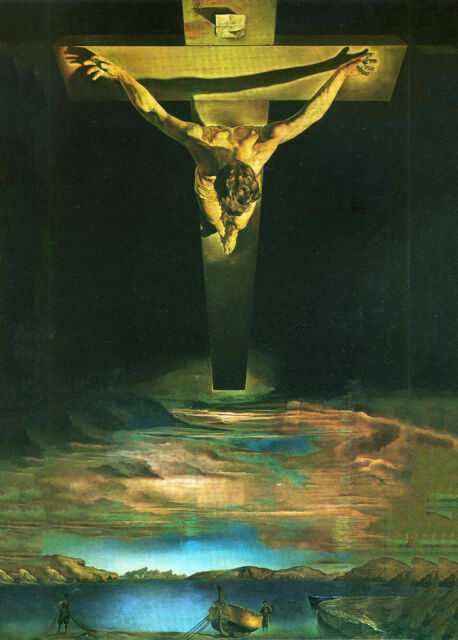
Christ of St. John of the Cross by Salvador Dali (1951) – Kenmore Art Gallery, Glasgow

These times in the spiritual life were experienced and described by writers like John of the Cross and the author of “The Cloud of Unknowing”. They are times when our experiences and prayer invite us to a new and deeper understanding of God. They ask us to let go of our intellectual certainties and abandon ourselves to God without demands.


Recently, while describing how disappointed he was in God, a friend told me that he had “lost” his faith long ago. Well, obviously, he hadn’t because he still held expectations of the “God” who was disappointing him. I told him that I had lost my faith a few times too, and that every time I got it back, it was new and deeper than the one I had lost. My “septuagenarian God” is very different from the one I came to follow when I was eighteen!


Our minds and souls are so small next to God’s Infinity. But slowly, through a life of prayerful fidelity and loving service, God stretches our capacity to know and return a Love which is beyond reason.

But the stretching times can be dark – times when Psalm 16 is a comforting prayer.

I like to pray with this transliteration by Steven Mitchell – A Book of Psalms

Unnamable God,
I feel you with me at every moment.
You are my food, my drink,
my sunlight, and the air I breathe.
You are the ground I have built on
and the beauty that rejoices my heart. 

I give thanks to you at all times
for lifting me from my confusion,
for teaching me in the dark
and showing me the path of life. 

I have come to the center of the universe;
I rest in your perfect love.
In your presence there is fullness of joy
and blessedness forever and ever.

Music: Path of Life – The Dameans

Poetry: The Dark Night – Stanzas Of The Soul

( Some people find John of the Cross surprising, if not strange or shocking, in his imagery. He was a grace-filled mystic and poet whose images of God expanded beyond the boundaries we might be accustomed to. And that very extravagance is John’s beauty — he invites us to a place we might not otherwise think to go.)

1. One dark night,
fired with love’s urgent longings
— ah, the sheer grace! —
I went out unseen,
my house being now all stilled.

2. In darkness, and secure,
by the secret ladder, disguised,
— ah, the sheer grace! —
in darkness and concealment,
my house being now all stilled.

3. On that glad night,
in secret, for no one saw me,
nor did I look at anything,
with no other light or guide
than the one that burned in my heart.

4. This guided me
more surely than the light of noon
to where he was awaiting me
— him I knew so well —
there in a place where no one appeared.

5. O guiding night!
O night more lovely than the dawn!
O night that has united
the Lover with his beloved,
transforming the beloved in her Lover.

6. Upon my flowering breast
which I kept wholly for him alone,
there he lay sleeping,
and I caressing him
there in a breeze from the fanning cedars.

7. When the breeze blew from the turret,
as I parted his hair,
it wounded my neck
with its gentle hand,
suspending all my senses.

8. I abandoned and forgot myself,
laying my face on my Beloved;
all things ceased; I went out from myself,
leaving my cares
forgotten among the lilies.

Psalm 25: Through the Maze

Thursday of the Ninth Week in Ordinary Time

June 4, 2020

Click here for today’s readings

Today, in God’s Lavish Mercy, we pray with Psalm 25.

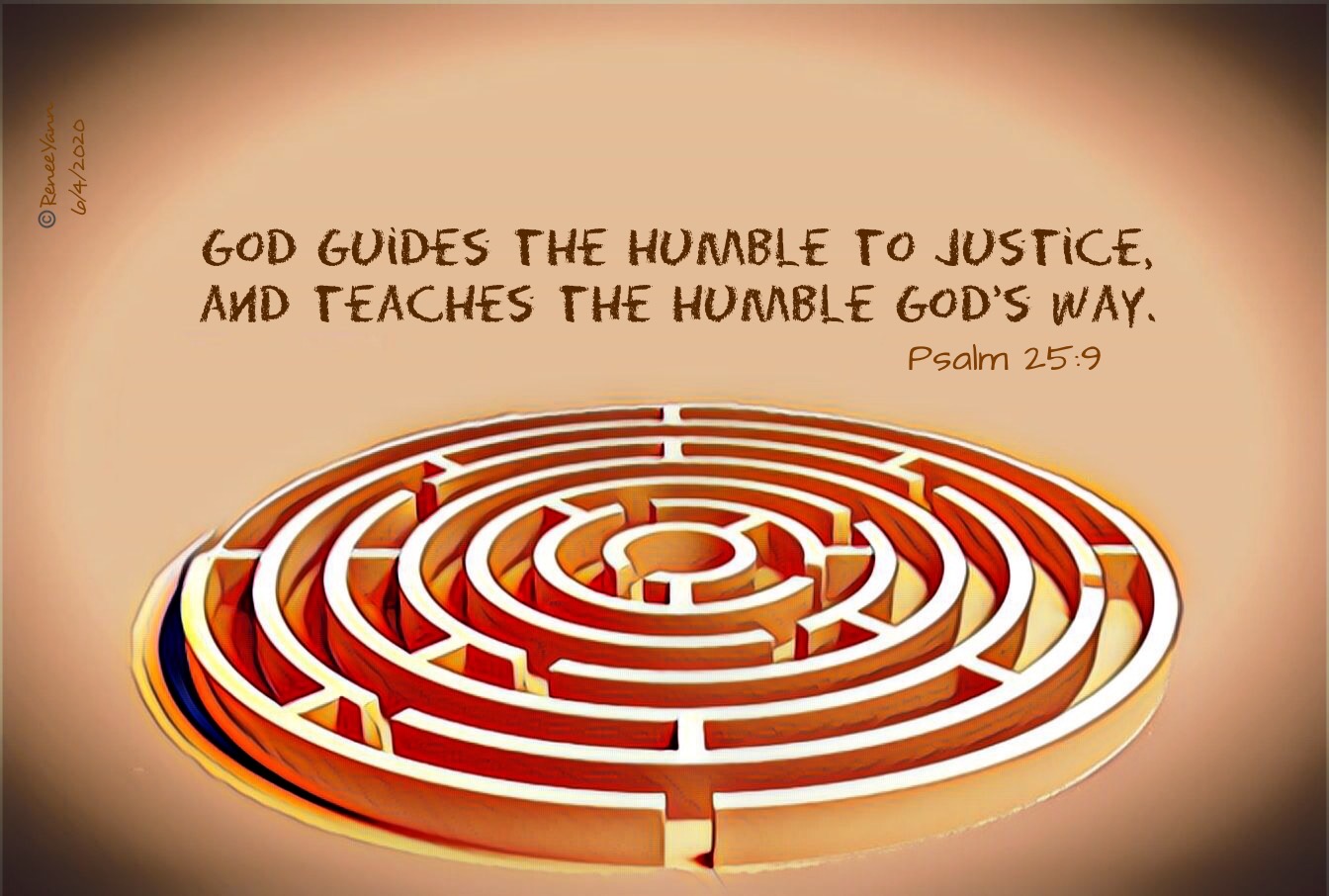
Psalm 25_9JPG

In today’s liturgy, this Psalm clearly ties together our first and second readings where both Timothy and a scribe seek clearer understanding of what faith requires:

  • Paul reminds Timothy that it takes perseverance and fidelity to live our faith
  • Jesus affirms for the scribe that there is no greater commandment than love

In Psalm 25, we find David working through his own faith challenges. He is asking God to show him the way, presumably out of some trouble or dilemma, one of the many faced by David over his lifetime.

Like Paul, Timothy, and the Gospel scribe, David realizes that the pursuit of justice is a circuitous journey, one that requires the accompaniment of God.


In today’s excerpt, we have only a few verses of Psalm 25, but the entire psalm paints David as feeling a bit lost and overwhelmed. Nevertheless, in his prayer, he draws on his long, trusting relationship with God.

Walter Brueggemann calls Psalm 25 a “psalm of candor”, one in which the psalmist honestly lays out his confusion, need, or pain. Praying the psalm today, we might do the same, asking God’s merciful insight and direction for ourselves, our loved ones, our country or our world.

There is certainly enough need for a lot of candor on our part! I know that I am feeling more than a bit overwhelmed by our current realities. Racial injustice, pandemic, economic hurt, and political confusion have all combined to make these very troubling times. 

  • But like David, we can lay down our fears, needs and concerns before a loving God.
  • Like David, we can trust God’s desire to lead us.
  • Like David, we can remember God’s mercies and be confident they will continue.
  • Like David, we can ask for and follow God’s direction to justice and peace.

degrebber_david-plagen_grt
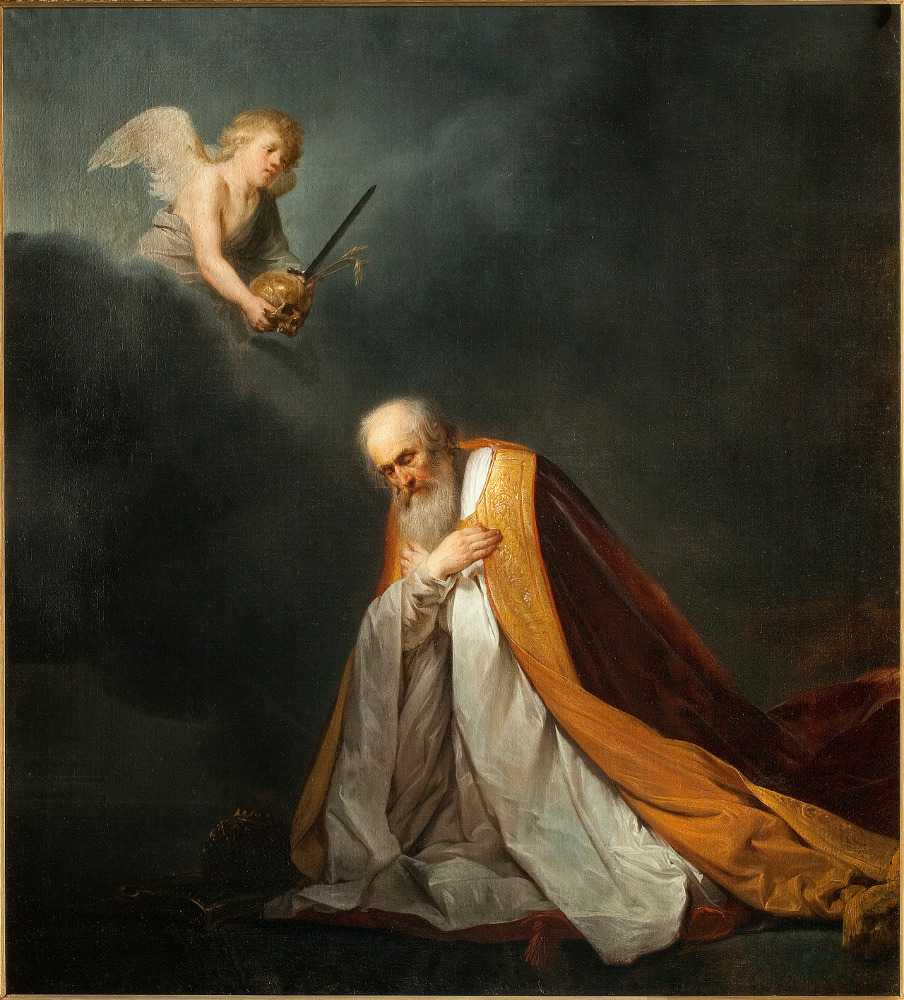
King David at Prayer by Pieter deGrabber


swords
Let Us Beat Swords into Plowshares, a sculpture by Evgeniy Vuchetich in the United Nations Art Collection

In our poem today, Rudyard Kipling does much the opposite of what I suggest above. He is deeply angry after WWI has claimed the life of his son John. His poem speaks of “justice” but suggests revenge or retribution. The justice he describes is one that demands the last drop of the opponent’s blood before it is satisfied .

I read the poem to better understand my own feelings.  What fragments of darkness still hide in my longing for light?

Kipling’s poem is available here.


Kipling’s angry passion is completely understandable, rational, and politically powerful. But it is not the justice or “right relationship“ of the Gospel. The pursuit of such Gospel justice is an arduous and winding journey of the heart and soul. It is the trying walk of sacrificial love which Jesus taught us. May we have the courage to walk it for our time. Thus the cry of our Psalm 25:


Your ways, O LORD, make known to me;
teach me your paths,
Guide me in your truth and teach me,
for you are God my savior.

Music: Psalm 25 – Karl Kolhase