Today, in Mercy,Paulmakes clear that Jesus came to redeem ALL people.
For there is no distinction; all have sinned and are deprived of the glory of God. They are justified freely by his grace through the redemption in Christ Jesus…
This is the magnificent message of the Good News, the Gospel, to which Paul dedicated his apostolic life.
We celebrate another champion of the Gospel today in St. Ignatius of Antioch, (not to be confused with the 16th century founder of the Jesuits, Ignatius of Loyola.)
St. Ignatius of Antioch lived just a short time after Paul, dying in 107 BC. Like Paul, Ignatius was martyred in Rome. He too wrote many letters to his Church, although these are not included in the Bible.
Christianity is not a matter
of persuading people of particular ideas,
but of inviting them to share in the greatness of Christ.
So pray that I may never fall into the trap
of impressing people with clever speech,
but instead I may learn to speak with humility,
desiring only to impress people with Christ himself.
Ignatius lived a life of humble, faithful witness. He took to heart the cautions Jesus offers in today’s Gospel to those who teach and preach about faith:
Woe to you, scholars of the law! You have taken away the key of knowledge. You yourselves did not enter and you stopped those trying to enter.
We are all called to preach the Gospel by the witness of our lives. May we have humility,courage and insight like that of Ignatius, so that we make it easier, not harder, for people to come to God.
Today, in Mercy, we celebrate the feast of the great Saint Teresa of Avila.
Teresawas a Spanish noblewoman who became a Carmelite nun, mystic, religious reformer, author, theologian, and one of the 36 Doctors of the Church.
(Until 1970, no woman had been named a Doctor in the Church, but since then four women have been designated: Saints Teresa of Àvila, Catherine of Siena, Therese of the Child Jesus, and Hildegard of Bingen)
Our reading today from Romans is a good one for Teresa’s feast. In it, Paul expresses his complete trust in and devotion to the Gospel of Jesus Christ. By this, Paul means more than the written words of Matthew, Mark, Luke and John. He means the entire gift of the Incarnation, Life, Passion, Death and Resurrection, continuing among us in the indwelling Holy Spirit.
Teresa understood and lived this same trust and devotion. She said:
Christ has no body now, but yours. No hands, no feet on earth, but yours. Yours are the eyes through which Christ looks compassion into the world. Yours are the feet with which Christ walks to do good. Yours are the hands with which Christ blesses the world.
Like Paul, Teresa was not ashamed to proclaim and live the Gospel. May these two strong and amazing saints help us to do the same.
Music: Christ Has No Body Now But Yours – David Ogden
(Some of you may recognize this reflection as a “recycle”, but I think it may be worth another read.)
Today, in Mercy,Jesus teaches his disciples how to pray. His prayer is simple and direct, like talking to your Dad over a morning cup of coffee.
What about us? How do we pray?
Our first learned prayers are a lot like Jesus’s simple Our Father. We praise God, giving thanks, and asking for what we need.
Then we grow up and get sophisticated. We may begin to “say” or read prayers rather than use our own words. While such a practice can deepen our understanding of prayer, it places a layer between us and our conversation with God.
Sometimes others lead our prayer in the community of faith. This too can enrich us as we are inspired by a shared faith. But it is a little like trying to have a private conversation in an elevator.
Just as Jesus often went off in solitude to pray, this kind of prayer is our most intimate time with God – a time when God allows us to know God and ourselves in a deeper way. This sacred time alone with God may be spent in words, song, or the silence that speaks beyond words.
It is a time to be with the Beloved as we would our dearest, most faithful companion. We rest in the field of our experiences, letting them flow over God’s heart in tenderness. We listen with the ear of absolute trust to the secrets God tells us in the quiet.
Today, in Mercy, our first reading is from the Book of Jonah, a drama with which we are all familiar.Because of the fantastical nature of the tale, we may tend to read it simply on the level of allegory – the way we might read Aesop’s fables. But there is much spiritual depth to be found in this well-known story.
As I pray with the Jonah passages for these three days, I am using an article by Walter Bruggemann to inform my prayer.
Since today is the feast of the Holy Rosary, a prayer which has blessed the Church for centuries, Bruggemann’s consideration of Jonah’s prayer caught my attention:
The complexity of (Jonah’s) prayer is reflective of the complexity of all prayer. Prayer purports to be single-minded in its communication with Yahweh. Everyone who prays is complex, given to deception, distortion, and willfulness; our prayers are most often thick with mixed motives, distortions, and exhibits, even if only to the self. There are “saints” who are more mature and more disciplined than this in their prayer. But evidently Jonah is not among those mature, disciplined saints. For that reason his compromising and manipulative maneuvers are highly visible in the prayer. We may spot such maneuvers in his prayer and be driven to reflect on our own acts of seduction in prayer whereby we deceive ourselves, even if God is not deceived.
The Rosary, intended as a contemplation not a recitation, allows us the silence and time to sort out the complexities of our own prayer. It is a prayer not to be rushed. Praying it well requires us to lay aside our busy existence and excuses, and to place ourselves in the stillness of Divine Transparency.
The Rosary invites us to enter more deeply into the truth of Christ’s life, but also into our own. Seen in the light of Mary’s and Jesus’s lives, what is our own life teaching us?
So many of us have a Rosary in our drawer or purse that we haven’t touched for a while. Many of these beads were given to us by, or belonged to, someone who loved us – who wished us the blessings that come from its devotion. Perhaps we might like to rekindle our love for the Rosary today while remembering that beloved person. In the drawer beside my bed, my Dad’s well worn rosary is waiting for me.
Today, in Mercy,our readings combine to offer us a powerful message: we are the translators of God’s Word for our time. Our choices and actions for justice and mercy make the vision “readable” – visible for our sisters and brothers.
Habakkuk starts our challenge. He is in a bit of a struggle with God, asking repeatedly how long God is going to allow the people to suffer. ( I have had similar conversations with God, especially during these charged political times).
In so many words, God tells Habakkuk to look to his faith – his vision through God’s eyes. God sees that “the just one, because of his faith, shall live.” God tells him to “write the vision down”, to make it apparent in his own choices and actions for justice and mercy. In other words, Habakkuk, I’ve done what I am going to do. The rest is up to you, Buddy!
In a similar way, Paul reminds Timothy to “stir up the flame” – the gift of God given at his profession of faith. Paul reminds Timothy that, by grace, he knows what is right and just. He must not be chicken about living and speaking that Truth – to write the vision down by his choices and actions for justice and mercy.
In our Gospel, the disciples seem to want their faith increased because the commitment to witness is scary. They think they might feel a little better about it all if their faith consoled them more. But “writing the vision with our lives” takes guts, and the disciples seem a little lacking in today’s reading.
Jesus tells them to buck up. They are blessed to serve the Word of God by the witness of their lives. It won’t always feel good, safe or successful. Still they, and we, must unfailingly write the vision down by our choices and actions for justice and mercy, because even …
When you have done all you have been commanded, say, ‘We are unprofitable servants; we have done what we were obliged to do.
Jesus calls it like it is today. We are blessed to be God’s translators. We have an undeniable call to live God’s just and merciful vision. No excuses. Get it together. Keep the pencil sharp. No asking God when He’s going to make things better. The legible (just and merciful) translation depends on us!
Today, in Mercy, we read from the Book of Baruch, a little book with a big punch. Baruch authored “scribal literature”, that which completed the message of another writer. Baruch was Jeremiah’s scribe, working to finish the edges of this most complex of the prophets.
Our reading today reflects this complexity. The Israelites have a history of intertwined faith and faithlessness. They also have current overwhelming sufferings. How does the prophet employ these two realities to impel hearts toward God?
Baruch characterizes God as angry and vengeful, punishing the people for their idolatry. It’s a model that works for Baruch’s time and purposes. But it’s not the God I know and love. So how can the passage speak to me?
The core of Baruch’s message is that things can be really bad sometimes in life, but that God is with us even in those times. Our turning to God in trust and patience will allow us to remain faithful and to deepen spiritually even in suffering. That fidelity brings joy and peace.
It’s hard to have that kind of faith. We want to manage our lives, and even manage God, in order to make sense of the chaos of life – to provide sensible, rectifiable reasons for suffering and evil.
We want to control demons like the early disciples did.
In our Gospel, these disciples return from their missionary trips all puffed up with their powers over evil. Jesus cautions them saying that’s not at all what it’s all about. Any miraculous power they have in a given moment is only a sign of a Greatness beyond them.
Instead, their names a written in Heaven by the long, unshakeable fidelity that comes with keeping their eyes on God; by giving themselves to the mysterious, sometimes hidden, presence of God in every reality; by allowing that Presence to transform them and their circumstances.
(Speaking of prophets, a beautiful poem, Advice to a Prophet, came across my email today thanks to Joe Riley at Panhala. The poem is fitting as we close this Season of Creation. I will include it in a second post in case you’d like to read it.)
Music:a little revival music today, New Name Written Down in Glory. Picture the disciples singing this after Jesus instructs them in today’s Gospel.
Today, in Mercy, we celebrate St. Thérèse, popularly venerated as The Little Flower. She propagated a spirituality that has become known as “The Little Way”.
Rev. John F. Russell, O.Carm. describes the Little Way like this: The Little Way is an image that tries to capture St. Thérèse’s understanding of being a disciple of Jesus Christ, of seeking holiness of life in the ordinary and the everyday.
Saint Therese based her “little way” on two fundamental convictions:
God shows love by mercy and forgiveness
She could not be perfect in following the Lord.
Both our readings today also talk about a “way”.
Zechariah has a vision of all nations following the way to a New Jerusalem.
Thus says the LORD of hosts: In those days ten men of every nationality, speaking different tongues, shall take hold, yes, take hold of every Jew by the edge of his garment and say, “Let us go with you, for we have heard that God is with you.”
In our Gospel, Jesus begins his way on his final journey. He knows now that the way will be through suffering and death yet, He dared…
When the days for Jesus to be taken up were fulfilled, he resolutely set his face toward Jerusalem…
Grace makes a way in our lives too. As with Thérèse, the ancient Jews, and Jesus, our particular way will unfold before us through prayer and a listening heart. It is the way of love that leads away from selfishness to God and God-in-Others.
Rumi’s poem captures it:
The way of love is not a subtle argument.
The door there is devastation.
Birds make great sky-circles of their freedom. How do they learn it?
They fall, and falling, they’re given wings.
(In a later post today, I will share a poem by Amy Lowell which I feel could describe “the journey “ — Christ’s, mine, yours… and perhaps offer further food for prayer.)
Today, we pray for the courage and freedom to follow the Way, the Truth, and the Life.
Music: from the musical Godspell – By My Side
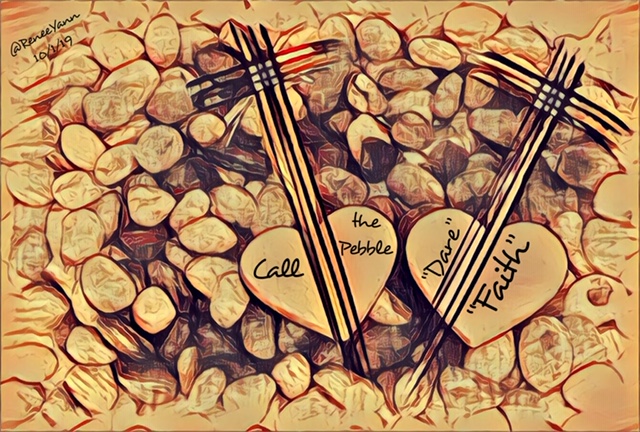
The song conveys the desire of Jesus’s disciples, all but Judas, to accompany him on his Way. They were not perfect – but they dared. As we consider our lives, have we dared? What “pebbles” have we willingly “put in our shoes” to follow Jesus?
Today, in Mercy,Zechariah channels God, with the most intense of human emotion.
The prophet wants Israel to have some understanding of God’s infinite love and hope for them, so he puts these words in God’s mouth:
I am intensely jealous for Zion, stirred to jealous wrath for her.
Like a spouse longing for a lost beloved, God longs for the restoration of Israel to the Divine embrace.
Wherever our relationship with God is frayed or broken, God is jealous for us too. If we can turn our hearts in repentance, prayer, and hope, we too will hear God’s longing for us.
In our Gospel, Jesus tries to refocus his disciples on that loving call. In a classic example of missing the obvious, they are distracted over who is the most important. Here is the Lord of all sitting beside them, and they are arguing about their personal status!
By pointing to a child in their midst, Jesus reminds his followers of the innocence and transparency we need in order to open ourselves to God.
Let’s pray for that openness today so that we can hear and rejoice in a promise such as Israel heard through Zechariah:
You shall be my people, and I will be your God, with faithfulness and justice.
Today, in Mercy, our readings will challenge us in ways we might rather not hear.
In our first reading, feisty Amos lambastes the Israelites for their sumptuous lifestyle which is indifferent to the plight of those who are poor. He calls them “complacent”, “at ease” in their prosperous, privileged existence, a condition that has numbed them to the harrowing inequities from which others suffer.
In our second reading, Paul gives a final, impassioned charge to his dear protégé Timothy. He tells him not just to avoid, but to flee such complacency and the greedy materialism which feeds it. He outlines the elements of a Christian life, enjoining Timothy to “pursue righteousness, devotion, faith, love, patience, and gentleness”.
Paul gives Timothy the key to true Christian life:
Keep the commandment without stain or reproach …
…. “the commandment” being to love God above all, and love neighbor as self.
Dives and Lazarus by Bonifazio di Pitati The National Gallery – London
Our Gospel is, perhaps painfully, familiar to all of us – the story of Lazarus and Dives. It is a parable which puts the economic divide under the crystalline light of the Gospel, challenging us as to where we fit in it.
Most of us like comfort. We would rather be “haves” than “have nots”. But we struggle within our comfortable lives to discern our responsibility for others. We’re certainly not intentionally hard-hearted, “lying on ivory couches” and “drinking wine from bowls” while modern day Lazarus languishes right beside us.
We do try, in many ways, to respond to the call for charity and service. But don’t we still measure ourselves after hearing this Gospel? Don’t we still worry about any “Lazarus” unnoticed at our door?
Amos, Paul, and Jesus are charging us – just as they charged their immediate listeners – to live a life based in Biblical and Gospel justice. Justice seeks fullness of life for all the community. Jesus teaches us that “the community” is all Creation, and that how we treat the community is how we treat him.
Every day we might remind ourselves that, however hard we try, it is never enough. We must keep on peeling away any indifference or blindness we have to the injustices of our culture and times, our economic and political systems. And we too must flee them, running toward justice, righteousness, and mercy.
We must ask ourselves this hard question:
Does my “wealth” – however large or small, material or immaterial- nourish the community or only consume it?
Music: Five Variants of Dives & Lazarus – Ralph Vaughn Williams’s beautiful interpretation of the folk song “Dives and Lazarus”.
If you might be interested in the original song – a great example of folk art: Sung here by Maddy Prior (Lyrics below)
as it fell out upon one day
rich Diverus he made a feast
and he invited all his friends
and gentry of the best
then Lazarus laid him down and down
even down at Diverus’ door
some meat, some drink, brother Diverus
do bestow upon the poor
thou art none of mine, brother Lazarus
that lies begging at my door
no meat, no drink I’ll give to thee
nor bestow upon the poor
then Lazarus laid him down and down
even down at Diverus’ wall
some meat, some drink, brother Diverus
or with hunger starve I shall
thou art none of mine, brother Lazarus
that lies begging at my wall
no meat, no drink I’ll give to thee
but with hunger starve you shall
then Lazarus laid him down and down
even down at Diverus’ gate
some meat, some drink, brother Diverus
for Jesus Christ His sake
thou art none of mine, brother Lazarus
that lies begging at my gate
no meat, no drink I’ll give to you
for Jesus Christ His sake
then Diverus sent out his serving men
to whip poor Lazarus away
they had no power to whip one whip
and they threw their whips away
then Diverus sent out his hungry dogs
to worry poor Lazarus away
but they had no power to bite one bite
and they licked his sores away
as it fell out upon one day
poor Lazarus sickened and died
there came two angels out of Heaven
his soul thereto to guide
rise up, rise up brother Lazarus
come along with me
there’s a place for you in Heaven
sitting on an angel’s knee
as it fell out all on one day
Diverus sickened and died
there came two serpents out of Hell
his soul thereto to guide
rise up, rise up brother Diverus
come along with me
there is a place for you in Hell
sitting on a serpent’s knee
Diverus lifted up his eyes and he saw poor Lazarus blessed
a drop of water brother Lazarus
for to quench my flaming thirst
if I had as many years to live as there are blades of grass
I would make it in my will secure
that the Devil should have no power
Hell is dark, Hell is deep Hell is full of mice
it’s a pity that any poor sinful soul should be barred from our saviour Christ
Today, in Mercy, we begin a few weeks of readings from the minor prophets – Zechariah being today’s writer.We also continue with Luke’s Gospel which will take us through to the season of Advent.
The combination of readings today brought to my mind a treasured and bittersweet quote from our beloved founder:
Zechariah writes for a community with a foot in both worlds – joys and sorrows. They are freed from captivity but burdened with its harsh memory. They have committed in hope to the rebuilding of the temple, but they are filled with doubts about their ability to deliver. They have a plan for their restoration, but realize that God’s plan is beyond their imagination. They see a protected, walled-in future. God sees a “Jerusalem” without walls, circled only by the fire of God’s love.
Zechariah tells them to let go and fall into God’s Imagination, no matter how scary that might be for them:
People will live in Jerusalem as though in open country, because of the multitude of men and beasts in her midst. But I will be for her an encircling wall of fire, says the LORD, and I will be the glory in her midst.
In our Gospel, Jesus has begun to gently hint that the disciples’ future may not be as they would like to imagine. At this point in the Gospel story, joys are running pretty high- lots of miracles, crowds growing, the awesomeness of the Transfiguration still lighting up their dreams.
But Jesus drops a little reality, a little sorrow into the mix:
Pay attention to what I am telling you. The Son of Man is to be handed over to men.
The disciples don’t fully comprehend the warning. It is too much for them to take. We understand, don’t we? Is there anything harder to swallow than sorrow, loss, the crash of a bright dream?
Remembering Zechariah ‘s words may strengthen us when the mix of sorrow seems too much for us:
But I will be for her an encircling wall of fire, says the LORD, and I will be the glory in her midst. … Sing and rejoice, O daughter Zion! See, I am coming to dwell among you, says the LORD.
Music: Where Joy and Sorrow Meet – Ultimate Tracks







 Lavish Mercy