Psalm 123: Song of the Caged Bird

Memorial of Saint Charles Lwanga and Companions, Martyrs

Charles Lwango
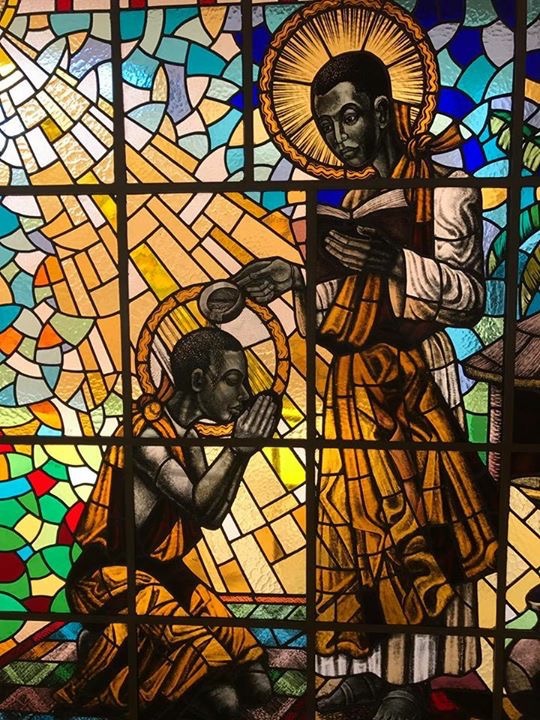
St. Kizito being baptised by St. Charles Lwanga at Munyonyo – stained glass at Munyonyo Martyrs Shrine

Charles Lwanga (1860 – 1886) was a Ugandan convert to the Catholic Church, who was martyred for his faith and is revered as a saint by both the Catholic Church and the Anglican Communion.


June 3, 2020

Click here for today’s readings

Today, in God’s Lavish Mercy, we pray with Psalm 123. How fitting that this particular prayer should bless us at this time!

Psalm 123 is one of the fifteen Psalms of Ascent (120-134). It is thought that these prayer songs were sung by pilgrims ascending to Jerusalem, expressing the joys, sorrows, needs and sufferings of the community.

Among them Psalm 123 is a lament, particularly for the scorn and contempt the Israelites felt as they tried to live lives of faith in a hostile world. Verses 3 and 4, (not included in today’s passage) plead:

Show us favor, LORD, show us favor,
for we have our fill of contempt.
Our souls are more than sated
with mockery from the insolent,
with contempt from the arrogant.

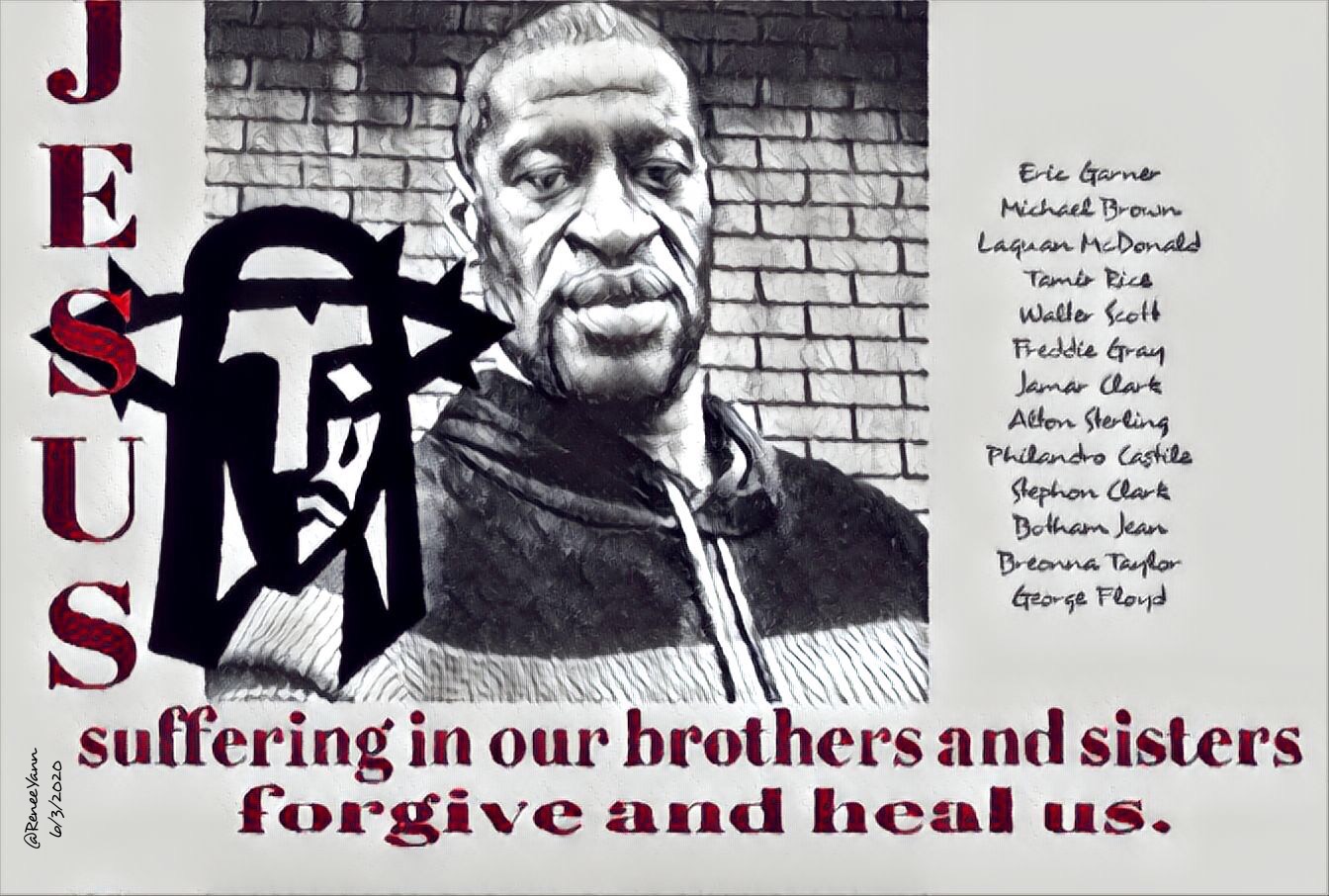
Praying with Psalm 123, we might think of today’s “pilgrims”, traveling the streets in protest of racial injustice. The integrity of their cause has been polluted by the rioters and looters infiltrating them, drawing contempt even from some who might otherwise have supported them.

Geo_Floyd

Still, people of faith must not be distracted from the truth, nor should we hide from the reality of our own complicity in normalizing unjust systems.  We must hear the lament of all those who long for justice. We must acknowledge that our current structures have grievously failed people of color, the poor and the refugee. We must make the choices that justice and mercy demand of us.


Today’s Responsorial verses may help us. In our hearts and souls, let us stand beside one another as we pray, each of us created to serve God by serving one another:

To you I raise my eyes,
to you enthroned in heaven.
Yes, like the eyes of servants
on the hand of their masters,

Like the eyes of a maid
on the hand of her mistress,
So our eyes are on the LORD our God,
till we are shown favor.


A poem to enrich your reflection:

cage

Caged Bird
A free bird leaps
on the back of the wind
and floats downstream
till the current ends
and dips his wing
in the orange sun rays
and dares to claim the sky.

But a bird that stalks
down his narrow cage
can seldom see through
his bars of rage
his wings are clipped and
his feet are tied
so he opens his throat to sing.

The caged bird sings
with a fearful trill
of things unknown
but longed for still
and his tune is heard
on the distant hill
for the caged bird
sings of freedom.

The free bird thinks of another breeze
and the trade winds soft through the sighing trees
and the fat worms waiting on a dawn bright lawn
and he names the sky his own

But a caged bird stands on the grave of dreams
his shadow shouts on a nightmare scream
his wings are clipped and his feet are tied
so he opens his throat to sing.

The caged bird sings
with a fearful trill
of things unknown
but longed for still
and his tune is heard
on the distant hill
for the caged bird
sings of freedom.
~ Maya Angelou


Music: Giovanni Pierluigi da Palestrina: Ad te levavi oculos meos (Psalm 123)

Ad te levavi oculos meos, qui habitas in caelis.
Ecce sicut oculi servorum in manibus dominorum suorum;
sicut oculi ancillae in  manibus dominae suae:
ita oculi nostri ad Dominum Deum nostrum,
donec misereatur nostri.

Miserere nostri, Domine, miserere nostri,
quia multum repleti sumus despectione;
quia multum repleta est anima nostra
opprobrium abundantibus, et despectio superbis.

What “World” Do You Live In?

Saturday of the Fifth Week of Easter

May 16, 2020

Click here for readings

Jn15:18 world

Today, in Mercy, Jesus talks about “the world”.

That word can cause a little confusion, both as we find it in scripture and in the history of Christian thought.

Baker’s Evangelical Dictionary of Biblical Theology says five connotations for “world” may be found in scripture:

  • The physical world – the actual plant Earth
  • The human world – the land and seas we can navigate
  • The moral world – the universe of good and evil
  • The temporal world – the world that will someday end
  • The coming world – eternal existence 

In today’s Gospel, Jesus is talking about the moral world which, in the New Testament, refers to those people who are indifferent and hostile to Christ’s teaching.

If the world hates you, realize that it hated me first.
If you belonged to the world, the world would love its own;
but because you do not belong to the world…
the world hates you.


wolf-clipart-57
A Wolf in Sheep’s Clothing

We understand this use of the word. We see the evil in the world. We are saddened, angered and confounded by it when we recognize it.

But do we always recognize it?

Blatant evils like murder are readily recognized. But the most insidious evils are those that masquerade as good.

These masquerading evils often pretend to protect our rights, our security, our safety. But they usually do so at the expense of someone else’s rights – the poor, the refugee, the aged, the homeless, people of color……and all who have become “disposable” in our society.


These deceptions hide behind brave and noble words like “America First”, “Second Amendment Rights”, “Protect Life” and a rash of other slogans which fail to examine the whole impact of single-issue politics. 

It’s confusing because we love America, right? We believe in people’s constitutional rights, right? We respect life, right?

What if our slogans instead more clearly reflected Gospel values:

  • The Human Family First
  • Safety Rights for Everyone
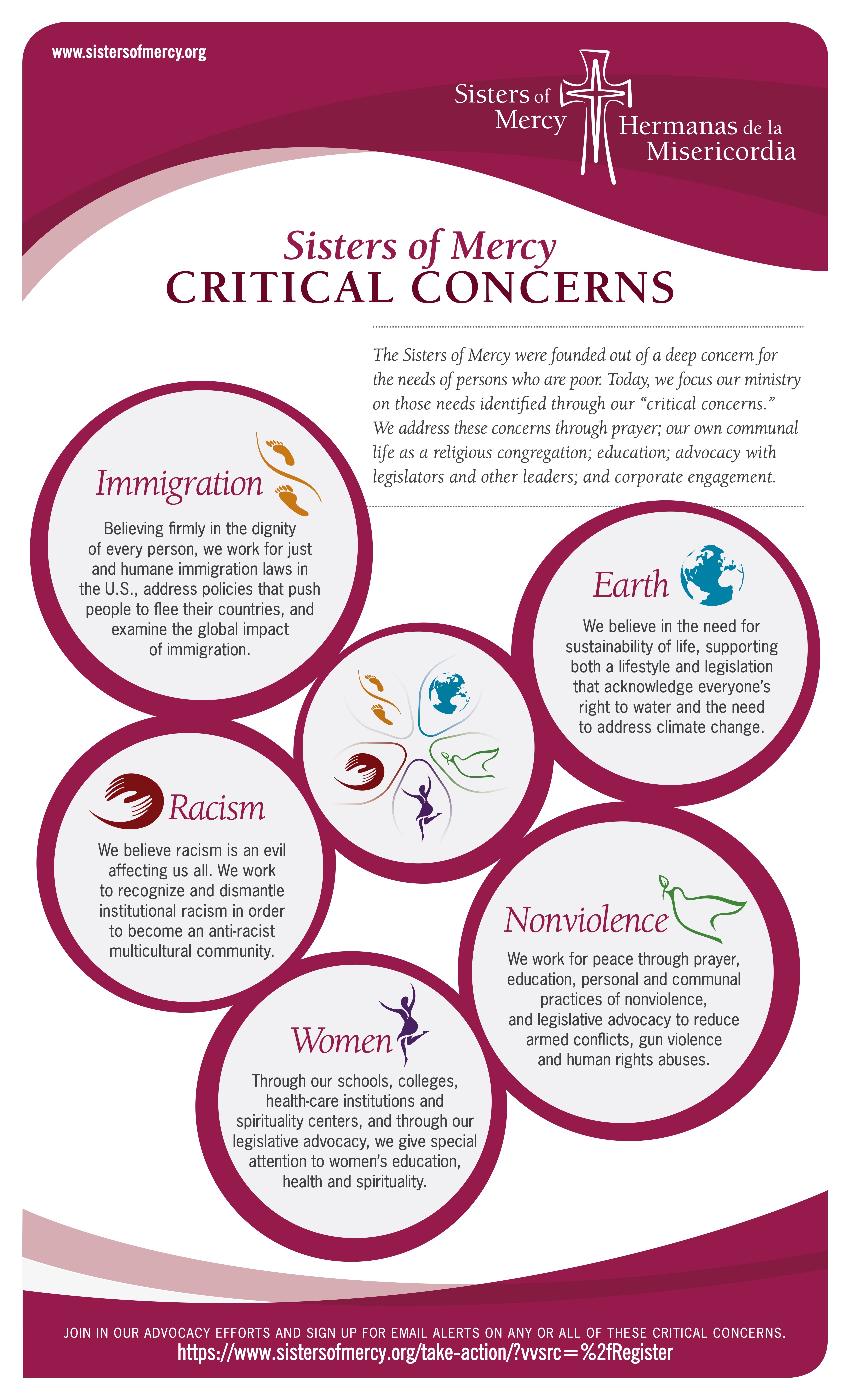
  • Health Security for All Life – Womb to Tomb

CriticalConcerns-Poster-FINAL

How can we be spiritually discerning about what is good within such realities and what is rooted in sinful self-interest? Jesus tells us in these words:

Remember the word I spoke to you,
‘No slave is greater than his master.’
If they persecuted me, they will also persecute you.

We must look to the one who is hated and persecuted to find the Face of Christ. We must love that Face and learn its heartaches. We must become a companion in their search for wholeness. We must set aside any costume of self-righteousness and put on the garment of Mercy:

Therefore, as God’s chosen people, holy and dearly loved, clothe yourselves with mercy, kindness, humility, gentleness and patience. Bear with each other and forgive one another if any of you has a grievance against someone. Forgive as the Lord forgave you. And over all these virtues put on love, which binds them all together in perfect unity.
Colossians 3:14-16

Music: The Mercy Song – Paul Alexander

Our Golden Calf

Thursday of the Fourth Week of Lent

March 26, 2020

Click here for today’s readings

calf

Today, in Mercy, God sends Moses down to straighten out his “depraved people” because, despite all God’s  goodness to them, they have preferred “the golden calf”.

In the deprivations of this pandemic time, when all of us are doing a lot of soul-searching, we are discovering quite a few golden calves still running around in our times.


One of them jumped out at me last night when I read this headline:

Texas’ lieutenant governor suggests grandparents
are willing to die for US economy


I woke up this morning still appalled by the statement.  But upon reflection, I realized that Mr. Patrick may have unwittingly done us a great service if we ruthlessly unpack his cavalier remarks.

How have we gotten to a world where such a statement can be uttered and even approved by some? How can we so blatantly ignore basic moral principles such as the sanctity of every life, and that the ends never justify the means? Well, let’s take a look at Moses’ “depraved” community. They seem to have reached a similar moral deprivation.

I think the key lies with the golden calf.  The idol is a symbol of the Israelite community’s economy, what they really deem most important, what they really worship when they think God isn’t looking. When they look upon its golden reflection, they see themselves mirrored back the way they want to be – rich, powerful, and dominant. Lt. Governor Patrick’s statement should make us consider how we have become hypnotized by the same idolatries.

Let’s face it.  We live in a culture that has normalized war, capital punishment, abortion, illegal detention, corporate hijacking of natural resources, unchecked pollution, and commercialization of deadly substances like tobacco. Why are we surprised that we’re ready to sacrifice the elderly to preserve the sheen on our “golden calf”?

We have created a world where we welcome information sources that tell us lies just so we can be falsely convinced and dangerously indifferent. It’s really hard to discern a moral path amidst today’s political complexities. So let’s just build that golden calf whose mesmerizing patina permits us to remain morally comatose!


I hope we allow this man’s callous commentary to continue to stab our consciences:

Somebody’s beloved can die
not only so that my beloved can live,
but can also have an undamaged economy.


What “economy”, for God’s sake? Does he mean the one where over 40 million Americans and nearly 800 million worldwide face daily hunger? Or where 80 million Americans have inadequate or no health insurance? Or does he mean the extractive economy which causes two-thirds of the world population to live on less than $10 per day?

I’m pretty sure he means instead the economy of the “ golden calf” where 

  • half of the world’s net wealth belongs to the top 1%
  • top 10% of adults hold 85%
  • while the bottom 90% eke out existence on  the remaining 15% of the world’s total wealth

I’m not willing to die to shore up that economy, are you? But I’m sure willing to fight to change it.

So, at least, thanks for inspiring me, Lt. Governor Patrick and God help you!

Music: If There’s a God in Heaven – Elton John – (a song that could reflect how the ancient Israelites struggled with their tortuous journey. (Lyrics below)

Torn from their families
Mothers go hungry
To feed their children
But children go hungry
There’s so many big men
They’re out making millions
When poverty’s profits
Just blame the children
If there’s a God in heaven
What’s he waiting for
If He can’t hear the children
Then he must see the war
But it seems to me
That he leads his lambs
To the slaughter house
And not the promised land
Dying for causes
They don’t understand
We’ve been taking their futures
Right out of their handsThey need the handouts
To hold back the tears
There’s so many crying
But so few that hear

If there’s a God in heaven

Well, what’s he waiting for

If there’s a God in heaven
What’s he waiting for


Leap … and Be Held

Saturday after Ash Wednesday

February 29, 2020

Click here for readings

Today, in Mercy, Isaiah continues his advice begun in yesterday’s reading. When he finishes the list of things we should and should not do, Isaiah tells us how God will respond:

Then light shall rise for you in the darkness,
and the gloom shall become for you like midday;
Then the LORD will guide you always
and give you plenty even on the parched land.
God will renew your strength,
and you shall be like a watered garden,
like a spring whose water never fails.
The ancient ruins shall be rebuilt for your sake,
and the foundations from ages past you shall raise up ~

Oh, who can resist these glorious Isaiahan lines. It’s a beautiful picture, isn’t it? To imagine it offers us great encouragement as we lumber through Lent and out of the doldrums of February.

deer

How fitting that this should be our reading on “Leap Day”, a 24-hour period that many of us consider an extra gift.


Here’s a thought I wrote several years ago that I hope you will find beneficial:

Mitch Albom, the author who wrote “Tuesdays with Morrie”, wrote another book entitled “Just One More Day”.

It is an appropriate title to think about in this week in Leap Year when we will actually have “just one more day” than normal.

How often have we wished that phrase, perhaps near the end of a great vacation, or before an important project is due? Or maybe as Mitch Albom uses it: to have just one more day with someone who has passed from our lives.

With God, we always have one more day. God is Infinite Possibility and Eternal Generosity. Saturday – February 29 – is a good day to stretch our faith and ask what God would have us do with “just one more day” to witness to Divine Abundance in our lives.

Leap2020

Will it be one more day to love, to work, to be thankful, to be competitive, to take advantage or to give it?  The way we use that “one more day” will tell us a lot about how we are using all our days. Maybe we could consider a question that one of our older Sisters is famous for: “Wouldn’t it be sad to come to the last day of our lives – (no more days) —  and realize that we had missed the whole point?”


May all your “leaps” take you to blessed places, dear Friends.
Let go. Take the leap into God’s way, as Isaiah counsels. And just be held.

Music: Just Be Held – Casting Crown 

Lent: The Wound

Friday after Ash Wednesday

February 28, 2020

Click here for readings

Today, in Mercy, Isaiah cuts his listeners no slack — and we too are his listeners.

Is58_7_10

In this powerful passage, the prophet shatters the pretenses of those who make a show of religion. Speaking with God’s voice, Isaiah lambastes those who fast and pray but practice no works of justice and mercy.

“Lo, on your fast day you carry out your own pursuits,
and drive all your laborers.
Yes, your fast ends in quarreling and fighting,
striking with wicked claw.”

These “fake fasters” are left wondering why God doesn’t answer their prayers. The prophet tells them that God isn’t fooled by their pretenses:

Is this the manner of fasting I wish,
of keeping a day of penance:
That a man bow his head like a reed
and lie in sackcloth and ashes?

Isaiah says that God’s not into sackcloth and ashes. God’s into good works of mercy and justice. These are the actions that change our hearts, opening us to deeper relationship with God.

This, rather, is the fasting that I wish:
releasing those bound unjustly,
untying the thongs of the yoke;
Setting free the oppressed,
breaking every yoke;
Sharing your bread with the hungry,
sheltering the oppressed and the homeless;
Clothing the naked when you see them,
and not turning your back on your own.


Listen, dear friends. It can’t be clearer than that.

priscilla-du-preez-FOsina4f7qM-unsplash
Photo by Priscilla Du Preez on Unsplash

In a world full of prosperity gospels, false piety and pretend religion – used to justify all kinds of injustice – we may get mixed up sometimes about what pleases God.

Let’s really open our hearts to Isaiah’s message and try to rid our own lives of any pretense about these things.

Let’s confront such hypocrisy when we see it used to subtly oppress rather than to lift up others.


Then your light shall break forth like the dawn,
and your wound shall quickly be healed.

Perhaps we might spend sometime today thinking about that “wound” we need healed. Might there be some harbored prejudice, indifference, fear, or ignorance that distances us from others who are different, vulnerable, or in need?

Isaiah cautions that until that wound is healed, we will never hear God’s true answer to our prayers.

Music:  Respond – Collin Campbell (Lyrics below)


Oh how long will you cry out
And never truly seek my face
You come to me with heavy hearts
But you ignore what makes mine break

I see your thoughts, I hear your words
And I have watched you as you’ve prayed
I’ve told you my desires
But you don’t follow all the way

Children, I’m crying out
Break the chains
Let the oppressed go free
Empty yourselves to those in need
Be my hands Be my feet
What you do unto them You do unto Me

Every day you lift your voice
And await my swift response
But I see only what’s inside
And it’s (what i see on the inside) an offering I don’t want

Children, I’m crying out
Break the chains
Let the oppressed go free
Empty yourselves to those in need
Be my hands Be my feet
What you do unto them You do unto Me

Then your Salvation will come like the dawn
And my glory will be your shield
When you call on My name I will not turn away
I am Your God And I am here
And your light it will shine from the dark
You will be like a free flowing stream
And when you call on My name I will not turn away
I am your God And I am here

Be Impartial, or Not?

Thursday of the Sixth Week in Ordinary Time

February 20, 2020

Click here for readings

Today, in Mercy, two Apostles of Jesus are our teachers. James advises us on what to do. Beloved Peter, as so often is the case, shows us what not to do.

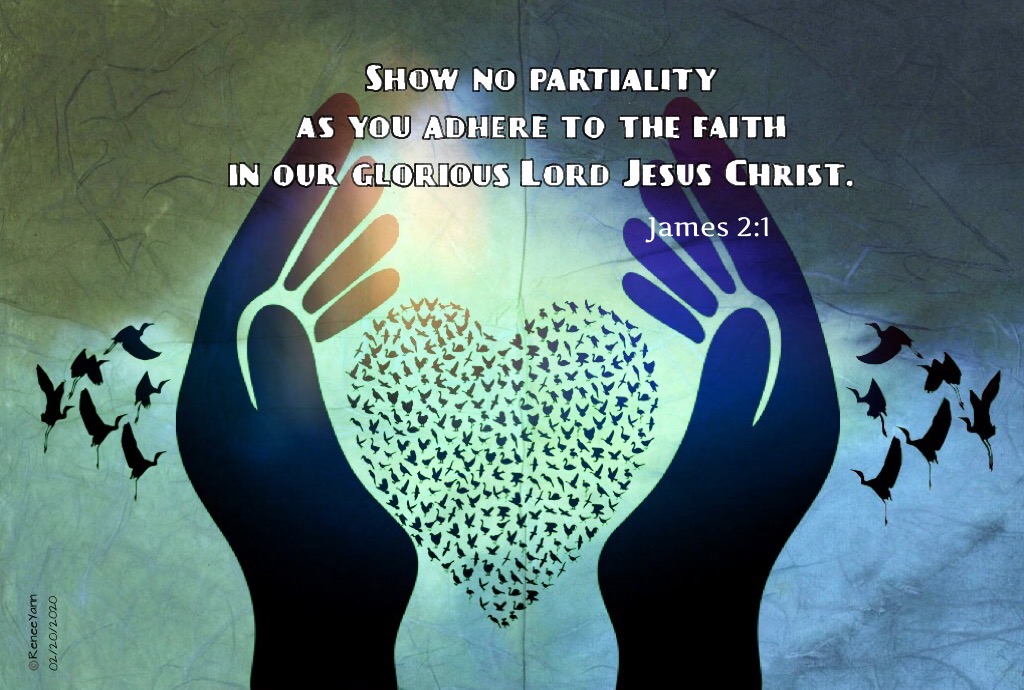
James tells us to show no partiality. He makes clear that he is talking about impartiality toward those who are materially poor. It’s a maxim that Jesus gave us time and again in the Gospel.

James2_1 partiality

James reminds us that Jesus is not just impartial toward the poor, he actually has a preferential love for them. So Jesus was partial to the poor, right? Hmm!

Yes, I think that’s right. In order to balance our human inclination to the richest, best, strongest, etc., Jesus teaches us to go all out in the other direction.

It’s like this great cartoon that’s popped up on Facebook recently:

equity


Our Gospel picks up the theme.

Because of his great love for the poor and his passion for mercy, Jesus tells his followers that suffering is coming. Peter doesn’t like hearing that. Can you see Peter take Jesus aside and say, “Listen, Jesus, negative talk is going to hurt you campaign. You’re God! You can just zap suffering out of your life!


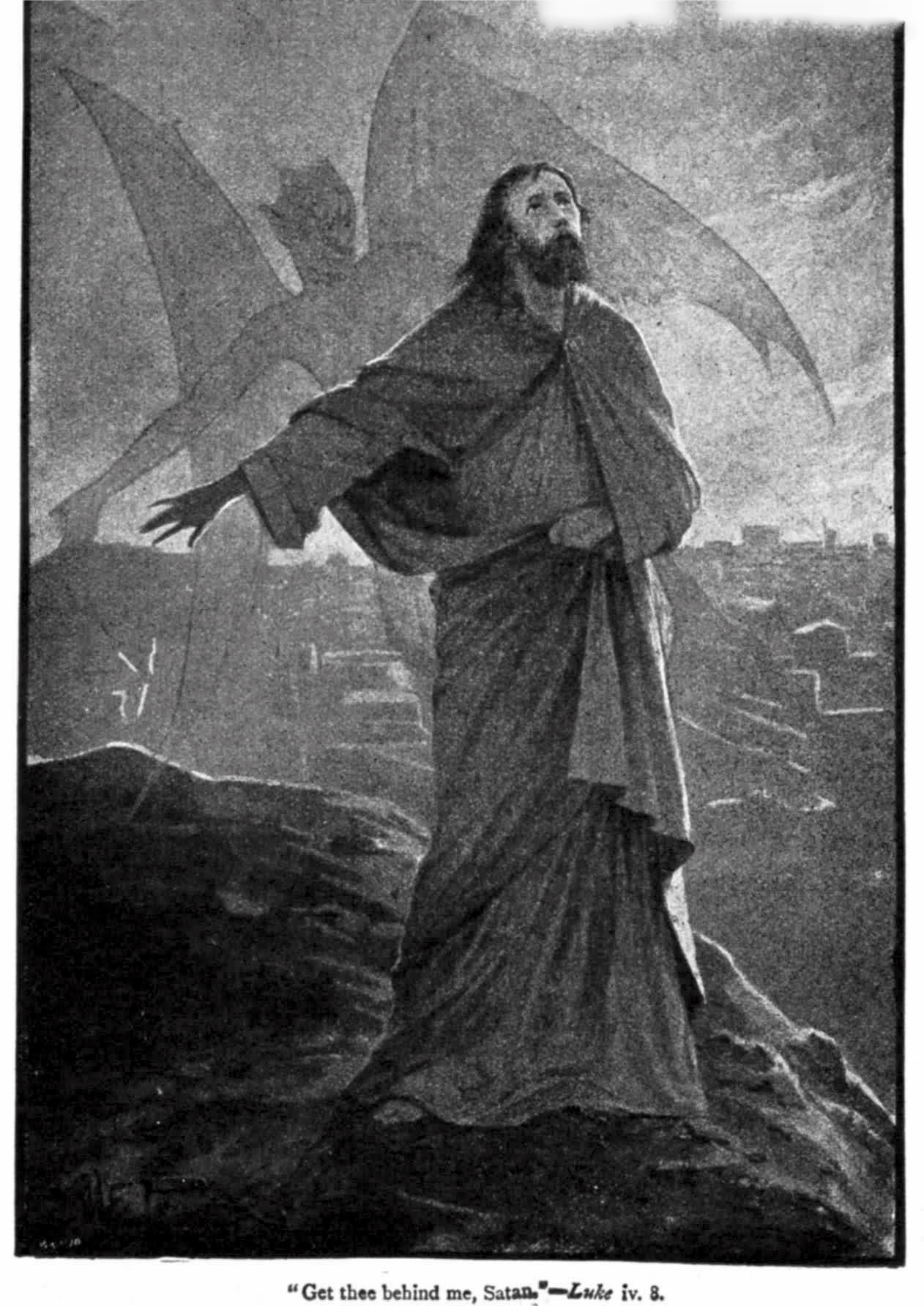
behind me satan

Jesus responds to Peter definitively: “Get thee behind me, Satan!

Wow! That must have stung! But that’s how important it was to Jesus that his followers understood his mission: to preach Mercy to the poor, sick, and broken by sharing and transforming their experience.

Jesus wants us to understand that too.


Music: Beauty for Brokenness – Graham Kendrick

A Queenly Message

Wednesday of the Fifth Week in Ordinary Time

February 12, 2020

Click here for readings

Today, in Mercy, the Queen of Sheba visits Solomon. It’s another Solomon story worthy of the big screen where, in fact, it has been loosely fictionalized and adulterated many times.

sheba

Many trusted scripture scholars question the historicity of the story. Several agree that Solomon never rose to the kind of material glory described in the passage. The two books of Kings were written 500 years after Solomon lived. In many aspects, the writings offer a reflection on the meaning of his reign in Israel’s covenanted life rather than a strict account of his life.

So what might we glean from today’s passage on the mysterious queen. The story demonstrates that Solomon is so accomplished that a revered leader will come to learn from him. Once she arrives, she is overwhelmed by his material successes and strength. Solomon has constructed a dominant, rich and subservient culture.

But wait. Is there a bit of ironic judgement and, perhaps, prophetic reminder woven into the Queen’s accolades? Shifting the focus from an increasingly arrogant Solomon back to Israel’s God, she says:

Blessed be the LORD, your God,
whom it has pleased to place you on the throne of Israel.
In his enduring love for Israel,
the LORD has made you king to carry out judgment and justice

In fact, the great wealth and power of Solomon’s kingdom was built, not on justice and judgement, but on the backs of the poor and excluded. For example, Walter Brueggemann says this:

(Solomon’s kingdom) … was an economy of extraction that regularly transferred wealth from subsistence farmers to the elite in Jerusalem, who lived off the surplus and the device and the strategy for that extraction was an exploitative tax system.

When the Biblical scribe puts the words judgment and justice into the Queen’s remarks, it may be intended to forecast the miserable end Solomon will meet because he has abandoned his responsibilities to care for all the people according the the Lord’s covenant.

This glorious, shining realm which so impressed the Queen is a kingdom built on corruption, greed, militarism, and manipulation of the poor.

The lessons for our world are obvious.


As Jesus tells us in today’s Gospel, it doesn’t matter whether we’re gilded in gold on the outside and spin our words in glorious promises. What matters are the true intentions of our hearts and the compassionate actions they inspire:

But what comes out of the person, that is what defiles him.
From within, from the heart,
come evil thoughts, unchastity, theft, murder,
adultery, greed, malice, deceit,
licentiousness, envy, blasphemy, arrogance, folly.

Ultimately, the great Solomon misses the boat on this. May his story help us not to do the same.


Also, as we pray, we may want to remember the devastated people of Yemen, the land identified as the historical Sheba. For some background on the current crisis in Yemen, see this article from Catholic Bishops


Music: La Reine de Saba – Raymond LeFevre

Shine!

Fifth Sunday in Ordinary Time

February 9, 2020

Click here for readings

Today, in Mercy, our readings are threaded on a theme of light, justice, and healing.

Is58_8wound

Isaiah writes to a formerly exiled community trying to restore itself after returning to Jerusalem. Tensions, meanness, and dissatisfactions tear at the community. Focus on religious rituals becomes excessive while communitarian practices are ignored.

It is a sad and fractious time for Israel.

Isaiah tells them they are missing the whole point.  The path to healing their national soul is not through empty religious words and practices.

If you remove from your midst
oppression, false accusation and malicious speech;
if you bestow your bread on the hungry
and satisfy the afflicted;
then light shall rise for you in the darkness,
and the gloom shall become for you like midday.


In our second reading, Paul writes to the Corinthian community similarly disturbed. He reminds the Corinthians that he came to build Christian community among them humbly and open to the Holy Spirit. Like Isaiah in the first reading, Paul now reminds his community not to miss the point:

I came to you in weakness …
so that your faith might rest
not on human wisdom

but on the power of God.


Jesus tells his disciples to let that power of God shine in them by virtue of their good deeds — the very same deeds Isaiah recommends to his listeners:

Share your bread with the hungry,
shelter the oppressed and the homeless;
clothe the naked when you see them,
and do not turn your back on your own.


In sum, our readings caution us that failures in charity and mercy wound us, both as individuals and as a community. Meanness kills – not only its object, but its subject as well.

When we remove all meanness from our actions, the Light shines, healing all our wounds.

Music:  Let Your Light Shine – Mike Balhoff and Darryl Ducote

Choices

Friday of the Third Week of Ordinary Time

January 31, 2020

Click here for readings

Today, in Mercy, if this first reading doesn’t smack you right between the eyes, check your political pulse, dear Friends!

David has become King, called to lead his people with a largeness of heart for their good…. but…

power


Power tends to corrupt, and the corruption is hard to resist even for the likes of David. With no checks and balances on him, David commandeers anything he desires – nations, goods, women, human lives! He is convinced that he can do anything he wants to do. His choices lurch him into a spinning culture of death, evil, and selfishness.

This passage from 2 Samuel is threaded with the very same lines woven into this morning’s newspapers: plotting, manipulation, lying, obstruction, projection, irresponsibility, crudeness, disrespect….

Aren’t we just so sick and tired of it all!?

Over the coming days, we will see how David’s corruption affects him – and it’s quite a drama! But for our prayer today, what can we learn?


Perhaps the Gospel offers us a key.

Mk4_30

Jesus talks about “the Kingdom of Heaven”. He uses the symbols of a healthy harvest and a tiny mustard seed. He teaches his listeners that when the things of God are planted deep in us, we too yield a life-giving harvest. We become large-hearted, God-hearted.

Through the gift of free will, God gives us power. We can choose between good and evil, self and others, life and death. In today’s passage, David makes some huge, selfish mistakes in his choices.

Throughout history and even today, people make the same good and bad choices. When leaders make such choices, the whole world feels the impact.

Today, I might want to check how I’m doing, not only in my personal choices, but in my advocacy for a moral and just world for all people.

Music:  A Pure Heart – Rusty Nelson

To Save A Life …

Day of Prayer for the Legal Protection of Unborn Children

January 22, 2020

Click here for readings

Today, in Mercy, our first reading is stuff worthy of an action movie! Even today, in my seventh decade, I remember the first time I heard it as a spellbound child. Could young, virtually unarmed David really conquer a GIANT!

Goliath

Wrapped in the story, of course, is the spiritual nugget we are meant to take to our own heart:

…thus the whole land shall learn that Israel has a God.
All this multitude, too,
shall learn that it is not by sword or spear that the LORD saves.
                    For the battle is the LORD’s
       and he shall deliver you into our hands.


We have battles of every description all around us: military, political, economic, cultural, moral, and personal. Today’s Day of Prayer highlights one of those battles – the right to life for unborn children.

On January 22, 1973, the Supreme Court issued a 7–2 decision in favor of Roe that held that women in the United States have a fundamental right to choose whether or not to have abortions without excessive government restriction, and struck down Texas’s abortion ban as unconstitutional. (Wikipedia)

Since that fateful day, many people of faith, and certainly the Catholic Church, have fought this decision. It has been a contentious and divisive battle which has divided people into pro and anti-abortion factions.

From my perspective, one unfortunate dimension of the situation is an insufficient effort by Catholic bishops to provide wholistic definition, research, teaching, and support to Catholics on the moral imperative for the right to life in all its aspects.

Mk3_4_life

Episcopal support for right to life often degenerates into a single-issue approach which fails to instruct on other life issues such as war, death penalty, poverty, adequate health care, civil and women’s rights, and environmental justice.

At the same time, morality statements around these issues often fail to address legitimate concerns around birth control, maternity care, newborn nutritional programs, and other issues parents struggle with.

Probably what most infuriates me is the political hijacking of this single issue by those whose own moral and policy choices mock a comprehensive culture of life.

Benedictine Sister Joan Chittister said this in a 2004 interview:

“I do not believe that just because you are opposed to abortion, that that makes you pro-life. In fact, I think in many cases, your morality is deeply lacking if all you want is a child born but not a child fed, a child educated, a child housed. And why would I think that you don’t? Because you don’t want any tax money to go there. That’s not pro-life. That’s pro-birth. We need a much broader conversation on what the morality of pro-life is.”

Personally, I am deeply opposed to abortion. And I am just as deeply opposed to an inconsistent morality and a policy-making which isolates this issue to the point of stagnating ignorance and indifference on other critical life issues.

A phrase in today’s Gospel struck me as I prayed on these things. Perhaps it will strike you as well:

Jesus said to the Pharisees,
“Is it lawful to do good on the sabbath
rather than to do evil,

to save life rather than to destroy it?

Jesus acknowledges that finding moral perfection requires a balancing of goods, some of which are weightier than others. The Sabbath laws were designed to foster the spiritual life. But if their observance consigns this crippled man to hopelessness, have the laws met their goal?

If indeed a life is saved from abortion, society must continue to save that life by fostering a culture which supports it for ALL of its life..

Music: Hymn of Life – St. Teresa of Calcutta