Psalm 145: Grateful Songs

Wednesday of the Fourth Week of Lent

March 17, 2021
Today, in God’s Lavish Mercy, we pray with Psalm 145, a hymn of exuberant and confident gratitude to an infinitely generous God.

The LORD is gracious and merciful,
    slow to anger and of great kindness.
The LORD is good to all
    and compassionate toward all his works.

Psalm 145: 8-9

It’s a good psalm for this St. Patrick’s Day. Even though the liturgy stays with the Lenten Mass, today the Irish are praying with their patron Saint. 

So when we read the following psalm verse, we think of the witness of our ancestors who suffered for and remained steadfast in the Faith:

The LORD is faithful in all his words
    and holy in all his works.
The LORD lifts up all who are falling
    and raises up all who are bowed down.

Psalm 145: 13-14

Nana (Ellen)

With an unquestioning allegiance, they transmitted that faith to the next generations. My great-grandmother was such a transmitter. Sixteen years old in 1884, she came alone to the U.S. carrying the thick Londonderry accent that made it hard for me to fully understand her.

When I was still a toddler, Nana would call me to her side to teach me the Hail Mary. I was resistant, wanting to wear the rosary for a necklace instead. But my mother told me that nevertheless, for my very young night prayers, I would repeat the prayer’s phrases with an evident Irish accent.

Of course, the accent did not remain. And Nana, although she lived until she was 83, slipped into dementia in her later years. But Ellen McGone’s mark on my spirit abides. It was burnished by her children, my grandmother and especially my granduncles. They chose to transmit the heritage by songs sung at every family gathering to the accompaniment of harmonica, pipe whistle, and a small squeezebox. Of course, they didn’t sound like the great John McCormack. But they thought they did, and so did I!


Happy Saint Paddy’s Day

CHORUS

When Irish Eyes are Smiling sure it’s like a morn in spring
In the lilt of Irish laughter you can hear the angels sing
when Irish hearts are happy all the world seems bright and gay
but when Irish eyes are smiling sure they’ll steal your heart away

There’s a tear in your eye and I’m wondering why
that it ever should be there at all
with such power in your smile sure a stone you’d beguile
and there’s never a teardrop should fall

when your sweet lilting laughter’s like some fairy song
and your eyes sparkle bright as can be
Oh then laugh all the while and all other times smile
and then smile a smile for me

For your smile is a part of the love in your heart, 
And it makes even sunshine more bright. 
Like the linnet’s sweet song, crooning all the day long, 
Comes your laughter and light for the springtime of life 
Is the sweetest of all 
There is ne’er a real care or regret; and while springtime is ours 
Throughout all of youth’s hours, let us smile each chance we get. 


On this feast of the great and glorious St. Patrick, we might – no matter our heritage – want to pray with and for our treasured forbears who have nurtured in us the gifts of love, faith and heritage:

Great is the LORD and worthy of much praise,
whose grandeur is beyond understanding.

One generation praises your deeds to the next
and proclaims your mighty works.

They speak of the splendor of your majestic glory,
tell of your wonderful deeds.

They speak of the power of your awesome acts
and recount your great deeds.

They celebrate your abounding goodness
and joyfully sing of your justice.

The LORD is gracious and merciful,
slow to anger and abounding in mercy.

Psalm 145: 4-8

Poetry: Songs of Our Land by Frances Brown

Songs of our land, ye are with us for ever,
The power and the splendor of thrones pass away;
But yours is the might of some far flowing river.
Through Summer's bright roses or Autumn's decay.

Ye treasure each voice of the swift passing ages,
And truth which time writeth on leaves or on sand;
Ye bring us the thoughs of poets and sages,
And keep them among us, old songs of our land.

The bards may go down to the place of their slumbers,
The lyre of the charmer be hushed in the grave,
But far in the future the power of their numbers
Shall kindle the hearts of our faithful and brave,

It will waken an echo in souls deep and lonely,
Like voices of reeds by the summer breeze fanned;
It will call up a spirit for freedom, when only
Her breathings are heard in the songs of our land.

For they keep a record of those, the true-hearted,
Who fell with the cause they had vowed to maintain;
They show us bright shadows of glory departed,
Of love that grew cold and hope that was vain.

The page may be lost and the pen long forsaken,
And weeds may grow wild o'er the brave heart and hand;
But ye are still left when all else hath been taken,
Like streams in the desert, sweet songs of our land.

Songs of our land, ye have followed the stranger,
With power over ocean and desert afar,
Ye have gone with our wanderers through distance and danger,
And gladdened their path like a homeguiding star.

With the breath of our mountains in summers long vanished,
And visions that passed like a wave from the sand,
With hope for their country and joy from her banished.
Ye come to us ever, sweet songs of our land.

The spring time may come with the song of our glory,
To bid the green heart of the forest rejoice,
But the pine of the mountain though blasted and hoary,
And the rock in the desert, can send forth a voice,

It was thus in their triumph for deep desolations,
While ocean waves roll or the mountains shall stand,
Still hearts that are bravest and best of the nations,
Shall glory and live in the songs of our land

Music: Hymn to Our Lady of Knock sung by The McBennett Sisters, a trio from Co. Armagh, Northern Ireland

They were people of all ages
Gathered round the gabled wall
Poor and humble, men and women
Little children at your call,
We are gathered here before you
And our hearts are just the same
Filled with joy at such a vision
As we praise your name.

      Golden Rose, Queen of Ireland
      All my cares and troubles cease
      As I kneel with love before you
      Lady of Knock, My Queen of Peace

Though your message was unspoken
Still the truth and silence reigns
As I gaze upon your vision
And the truth I tried to find
Here I stand with John the Teacher
And with Joseph at your side
And I see the Lamb of God
On the altar glorified.

Golden rose …

And the lamb will conquer,
And the woman clothed in the sun,
Will shine her light on everyone.
Yes, the lamb will conquer,
And the woman clothed in the sun,
Will shine her light on everyone.

Golden rose … 

Psalm 46: Secret Stream

Tuesday of the Fourth Week of Lent

March 16, 2021

Today, in God’s Lavish Mercy, we pray with Psalm 46 which celebrates the felt assurance of God’s presence no matter surrounding circumstances.

God is our refuge and our strength,
    an ever-present help in distress.
Therefore we fear not, though the earth be shaken
    and mountains plunge into the depths of the sea.

Psalm 46: 2-3

That kind of faith is pretty amazing! It’s easy to celebrate God when things are going well – but earth shaking and mountains plunging? That’s something else. What’s the secret to that kind of faith?


Such believers seem to have found the “stream”:

There is a stream whose runlets gladden the city of God,
    the holy dwelling of the Most High.
God is in its midst; it shall not be disturbed;
    God will help it at the break of dawn.

Psalm 46: 4-5

In her “Four Waters of Prayer”, St. Teresa of Ávila describes how we find this stream. Imagine your soul as a garden that needs to be nourished by prayer.

  • The first way to nourish it is like drawing water from a well. It is a very active kind of prayer in which we use our faculties to come closer to God.
  • The second way is like a water-wheel. As we accustom ourselves to prayer, it becomes easier to enter a sacred space.
  • The third way is a stream. It is the point in our spiritual lives where prayer, awareness of God, flows throughout our day.
  • The Fourth Water is the prayer of ecstasy when we are filled with and by God as by a luxuriant rain.

You can read St. Teresa’s descriptions here. The language is that of the 16th century but the wisdom is eternal. 


Poetry: Poem for St. John of the Cross by Lisa Zimmerman

 In the dark night of the soul,
bright flows the river of God

John of the Cross
Saint John of the Cross,
Your father married for love
an orphan below his noble station.
Discarded by his wealthy kindred
they say your parents nurtured you in poverty—
and the bread was as sweet as any bread

and the days offered their shiny hands
and their little streams of water
singing in the glades.

I see you wandering happily as a boy,
the sun a crown on your small head,
your bare feet scuffing the dust.
God chirped like a wood lark
in the throat of afternoon
and the lonely months in prison
were far ahead beneath the great shadow
of the future.

I try to follow you there, O mystic,
to watch you defy your greedy brethren
monks who will reject your reforms, your love
of less, of days returned to prayer and fasting.

Fat and threatened, they silenced you
in a narrow stone cell, one tiny window
like the one in the soul where day after day
the voice of God pierced your suffering.

Out of emptiness, a full heart—
out of abandonment, a poem of seeking—
out of utter darkness, a gleam of pure light—
love’s last trembling boat waiting for you
to get in, and row.

Music: Streams in the Desert – Abigail Miller

Laetare Sunday — Remember Joy!


In preparing for today’s reflection, I decided to look back a year ago to Laetare Sunday 2020. We were just beginning a very troubling and painful journey. We had no idea the depths to which it would take us. I hadn’t even learned to call our enemy “Covid”, as you will see. 

Yet as I read the past reflection in the light of where we are today, I was filled with awe, gratitude, sadness and remembrance.

I thought it might be good to offer the selection as a re-read for today as we stand on the brink of hope, Daylight Savings Time and a Spring that, for twelve terrible months, we couldn’t count on seeing.

As we begin to help one another heal, hope, and fully live again, let’s continue to pray for another. Thank you all for being part of the Lavish Mercy community whose prayer helped carry us all through these times.

May God bless you all  — and good health, good heart, good Spirit to every one of you.


Laetare! Rejoice! Lent has run half its distance to Easter.

I know it may be a bit difficult to rejoice in this Corona time, but think of this:
Spring has stepped over the horizon!  The long winter watch is over. But before we shake off its black velvet wraps for good, it might be well to think about what winter has taught us. It may strengthen us for this unusually challenging spring!

The stretch of time between November and April is all about waiting. Bulbs wait under the frozen earth.  Bears hibernate in the cold mountains.  Birds migrate, their old nests empty until the spring. All creation seems to enter a time of patience and unrealized expectation.  But it is not a time of desolation.  It is a time of hope for things yet unseen. Perhaps we can make our Corona time that kind of hopeful time.

We human beings also experience “winter” – not simply the seasonal one – but “winters of the spirit”.  We all go through times when our nests have been emptied; times when all the beautiful flowering aspects of our lives seem dormant; times when our vigor and strength seem to hide in the cave of depression or sadness.  These “winters” take many forms.  We may find ourselves sick of a job we had always loved. We may find a long, committed relationship wavering.  We may find the burdens of age or economics overwhelming us.  We may be the unwilling bearers of responsibilities we had not bargained for.

But if we listen, under the deep silence of waning winter, the wind rustles.  It carries the hint of a new season.  It carries the hope of the renewing cycle of our lives.  In that silence, we may be able to hear our own heartbeat more clearly.  We may come to a clearer understanding of what is most important in our lives.  In the stillness, we may be forced to know and understand ourselves in a deeper way.

In this time of global angst and uncertainty, I think of a powerful image from the works of St. Teresa of Avila.  St. Teresa imagines God as a warm healer leaning over our frozen world, setting free the beauty of our spirits. This is what she says:

And God is always there, if you feel wounded.
He kneels over this earth like a divine medic,
and His love thaws the holy in us.

Teresa of Avila

Every time you touch another person’s life,  — in these times, from at least six feet away — you have the chance to change winter into spring.  You have a chance to be like God.

Call someone who may feel very alone.  Be “Laetare” for them! Pray for someone suffering illness or loss. Send healing hopes to those you may not even know in distant places of our shared earth. Light, Easter rising and renewed life will come. Let us trust God and hold one another up as we wait.


Music: Laetare Jerusalem – Discantus

Laetáre Jerúsalem:
et convéntum fácite
ómnes qui dilígitis éam:
gaudéte cum laetítia,
qui in tristítia fuístis:
ut exsultétis, et satiémini
abubéribus consolatiónis véstrae.

Ps.: Laetátus sum in his quae dícta sunt míhi:
in dómum Dómini íbimus. 

Glória Pátri, et Fílio,
et Spirítui Sáncto.
Sicut erat in princípio,
et nunc, et semper,
et in saécula saeculórum. Amen. 

Laetáre Jerúsalem:
et convéntum fácite
ómnes qui dilígitis éam:
gaudéte cum laetítia,
qui in tristítia fuístis:
ut exsultétis, et satiémini
abubéribus consolatiónis véstrae.

Rejoice, O Jerusalem: 
and come together all you that love her: 
rejoice with joy you that have been in sorrow: 
that you may exult, 
and be filled from the breasts of your consolation

Ps.: I rejoiced at the things that were said to me: 
we shall go into the house of the Lord. 

Glory be to the Father, 
and to the Son, and to the Holy Spirit;
as it was in the beginning, 
is now, and ever shall be, world without end. Amen.

Psalm 81: Through the Storm

Friday of the Third Week of Lent

March 12, 2021


Today, in God’s Lavish Mercy, we pray with Psalm 81, another call to listen to God’s Word in order to find the fullness of life:

If only my people would hear me,
    and Israel walk in my ways,
I would feed them with the best of wheat,
    and with honey from the rock I would fill them.


But honestly, isn’t it hard to listen sometimes. Even the psalm suggests that there are such loud, distracting events in our lives that we sometimes can’t hear that Word:

In distress you called, and I rescued you.
 Unseen, I answered you in thunder;
    I tested you at the waters of Meribah.
Hear, my people, and I will admonish you;
    O Israel, will you not hear me?


The psalm shows us that God’s deepest Word
comes to us in thunder, in storm.
It is a truth Jesus embraced on Calvary.
It is a truth our lives will sometimes require of us.


This morning my prayer is filled with thoughts of my friend whose young daughter died last week. When even I, who never met Emily, can feel the overwhelming sadness of her untimely death, what unbearable storm must surround her parents! How can they hear the word of faith in the tumult?


Many years ago, I attended an evening event on the other side of my state. During the ceremony, a tornado touched down very nearby. After several frightening hours, I was able to travel back to my hotel, about five miles away.

But the roads were blocked with debris. The streets lights and signs had been blown down. And I was completely unfamiliar with the vicinity. I did eventually make it “home” to the hotel, but it wasn’t the same as I had left it. Part of the roof lay across the street. The window in my room had been fractured and boarded up.

For me, the memory is a parable about suffering. When the storm comes, we may pass through it, but we are not unchanged. Our world is not unchanged.

Jesus was not unchanged by Good Friday and Easter Sunday. By hearing God’s Word in the storm, Jesus was transformed. This is the legacy of faith Christ has given us in the Paschal Mystery. May it strengthen, heal, and transform us this Lent. May it comfort all those who so dearly love Emily.


Poetry: The Man Watching  by Rainer Maria Rilke, Translated by Robert Bly

I can tell by the way the trees beat, after
so many dull days, on my worried windowpanes
that a storm is coming,
and I hear the far-off fields say things
I can’t bear without a friend,
I can’t love without a sister.

The storm, the shifter of shapes, drives on 
across the woods and across time,
and the world looks as if it had no age:
the landscape, like a line in the psalm book, 
is seriousness and weight and eternity.

What we choose to fight is so tiny! 
What fights with us is so great. 
If only we would let ourselves be dominated
as things do by some immense storm, 
we would become strong too, and not need names.

When we win it’s with small things, 
and the triumph itself makes us small. 
What is extraordinary and eternal
does not want to be bent by us. 
I mean the Angel who appeared
to the wrestlers of the Old Testament:
when the wrestlers’ sinews 
grew long like metal strings, 
he felt them under his fingers 
like chords of deep music.

Whoever was beaten by this Angel 
(who often simply declined the fight) 
went away proud and strengthened
and great from that harsh hand, 
that kneaded him as if to change his shape. 
Winning does not tempt that man. 
This is how he grows: by being defeated, decisively, 
by constantly greater beings.


Music: Moonlight Sonata in a Thunderstorm 

Psalm 95: Image of God

Thursday of the Third Week of Lent

March 11, 2021


Today, in God’s Lavish Mercy, we pray with Psalm 95, another frequent friend of our prayer.

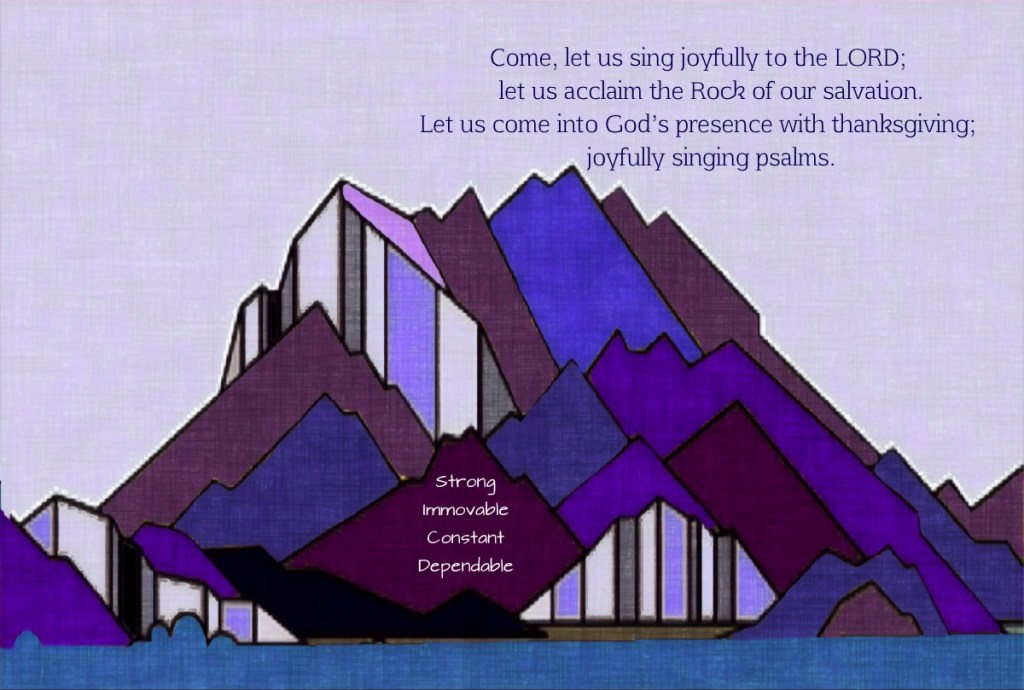
Psalm 95 is an “enthronement psalm” which calls us to worship God as Ruler. Our verses today also use the images of Rock and Shepherd as images to help us understand the nature of God’s presence in our lives.

We can know God only through images. Most of us don’t have direct revelations. 😉 The images we choose and cultivate have a profound impact on our relationship with God and on how we live our lives in God’s image.

Psalm 95 offers us two pictures of God today. These two metaphors evoke some similar sentiments. They also contrast in other ways. Praying with ikons like these can be a beneficial way to come deeply into God’s Presence by touching into our deepest spiritual needs.


Poetry: Rainer Maria Rilke, Poems from the Book of Hours

You are the future, the great sunrise red
above the broad plains of eternity.
You are the cock-crow when time’s night has fled,
You are the dew, the matins, and the maid,
the stranger and the mother, you are death.
You are the changeful shape that out of Fate
rears up in everlasting solitude,
the unlamented and the unacclaimed,
beyond describing as some savage wood.
You are the deep epitome of things
that keeps its being’s secret with locked lip,
and shows itself to others otherwise:
to the ship, a haven — to the land, a ship.


Music: Made in the Image of God – We Are Messengers

Psalm 147: Count Your Blessings

Wednesday of the Third Week of Lent

March 10, 2021

Today, in God’s Lavish Mercy, we pray with Psalm 147, a poem filled with reasons to love and praise God. Today’s selected verses mention just a few of those reasons.

The blessings of security and family:

Worship the Lord, O Jerusalem; praise your God, O Zion,
who has strengthened the bars of your gates, 
who has blessed your children within you.

Psalm 147: 12-13

The blessings of diverse Creation:

The Lord sends out a command to the earth, 
and this word runs very swiftly.
The Lord gives snow like wool 
and scatters hoarfrost like ashes

Psalm 147: 15-16

The blessings of faith and religious heritage:

The Lord declares the word to Jacob, 
statutes and judgements to Israel.
The Lord has not done so to any other nation; 
to them these judgements have not been revealed.

Psalm 147: 19-20

Sometimes we spend a lot of energy praying over the things we think we need rather than recognizing all that we have.

This morning as I prayed, a personal thanksgiving psalm unfolded in my heart:

  • Hundreds of snow geese followed their yearly flight path right over my home, honking a symphony of hope.
  • The sun rose warm, tugging a clear promise of spring up over the horizon.
  • The Psalms lay open in my lap, a rich gift of the ages to my sometimes thin prayer.
  • My beloved communities slowly awakened and blossomed around me – my Mercy sisters, the toddlers in the daycare below me, the daily hum of the Motherhouse across the path outside my window, the buses carrying children to our Mercy schools
  • My family texting from their faraway homes.
  • I imagined myself as a small part of the magnificent communities described by beloved Pope Francis in Laudato Sí and Fratelli Tutti.
  • I felt those communities slowly beginning to recover from this past year’s devastation.
  • I prayed my sense of blessing into those still so deeply broken by global suffering, begging for their healing.

Gratitude for my blessings overwhelmed me, as it did our psalmist in #147:

Hallelujah!
How good to sing praise to our God;
how pleasant to give fitting praise.

Psalm 147:1

Poem: God Moves in a Mysterious Way – William Cowper

God moves in a mysterious way,
    His wonders to perform;
He plants his footsteps in the sea,
    And rides upon the storm.

Deep in unfathomable mines
    Of never failing skill;
He treasures up his bright designs,
    And works His sovereign will.

Ye fearful saints fresh courage take,
    The clouds ye so much dread
Are big with mercy, and shall break
    In blessings on your head.

Judge not the Lord by feeble sense,
    But trust him for his grace;
Behind a frowning providence,
    He hides a smiling face.

His purposes will ripen fast,
    Unfolding ev'ry hour;
The bud may have a bitter taste,
    But sweet will be the flow'r.

Blind unbelief is sure to err,
    And scan his work in vain;
God is his own interpreter,
    And he will make it plain.

Music: The Snow Goose – John Ritchie

Speaking of geese this morning, one of my all time favorite stories is “The Snow Goose” by Paul Gallico. I hope many of you have read it. It’s beautiful. I found a website that talks all about it, even with a Richard Harris movie included! For those who might be interested in a literary excursion 😀:

Psalm 19: The Law

Third Sunday of Lent

March 7, 2021


Today, in God’s Lavish Mercy, we pray with Psalm 19.

Those of you who click through to our daily readings on the USCCB website may notice that two sets of readings are offered for this 3rd Sunday in Lent. The alternative set is for a Mass which incorporates “The Scrutinies”.

“The Scrutinies” are part of the process of admitting adults into the Catholic Church which typically takes place throughout Lent and culminates in Easter Baptism. 

There are several steps in the admission process beginning with discernment and in-depth education. The Scrutinies occur near the end, during the 3rd, 4th, and 5th Sundays of Lent. As the name indicates, these exercises have us look deep into our hearts and souls for the healing and forgiveness we need in faith.


However, most of us attending this Sunday’s liturgy will hear the Year B readings which center on LAW and how our developing faith understands it.


For the ancient Israelites, as Exodus tells us, that understanding took the form of a specified discipline in the Ten Commandments.

For I, the LORD, your God, am a jealous God, 
inflicting punishment for their fathers’ wickedness 
on the children of those who reproach me …

Exodus 20:5

In our second reading, Paul preaches a new understanding of Law – the Law of Sacrificial Love revealed in the sacred contradiction of Cross.

… but we proclaim Christ crucified, 
a stumbling block to Jews and foolishness to Gentiles, 
but to those who are called, Jews and Greeks alike, 
Christ the power of God and the wisdom of God.

1 Corinthians 1: 23-25

And in our Gospel, Jesus confronts those whose faith is hardened against the new Law which he embodies:

While he was in Jerusalem for the feast of Passover, 
many began to believe in his name 
when they saw the signs he was doing.
But Jesus would not trust himself to them because he knew them all, 
and did not need anyone to testify about human nature.
He himself understood it well.

John 2:23-25

Our psalm offers us an opportunity to “scrutinize” the sincerity of this prayer in our own hearts:


Poetry: As Kingfishers Catch Fire Gerard Manley Hopkins sees the law as acting in God’s eye…

As kingfishers catch fire, dragonflies dráw fláme;
As tumbled over rim in roundy wells
Stones ring; like each tucked string tells, each hung bell’s
Bow swung finds tongue to fling out broad its name;
Each mortal thing does one thing and the same:
Deals out that being indoors each one dwells;
Selves–goes itself; _myself_ it speaks and spells,
Crying _Whát I do is me: for that I came.

Í say móre: the just man justices;
Kéeps grace: thát keeps all his goings graces;
Acts in God’s eye what in God’s eye he is–
Chríst–for Christ plays in ten thousand places,
Lovely in limbs, and lovely in eyes not his
To the Father through the features of men’s faces.

Music: The Law of the Lord is Perfect

Psalm 103: #BeLike

Saturday of the Second Week of Lent

March 6, 2021


Today, in God’s Lavish Mercy, we pray with Psalm 103, an effusive canticle on God’s unbounded Mercy.

Bless the LORD, O my soul;
    and all my being, bless his holy name.
Bless the LORD, O my soul,
    and forget not all his benefits.
He pardons all your iniquities,
    he heals all your ills.
He redeems your life from destruction,
    he crowns you with kindness and compassion.

Psalm 103:1-4

A sufficient prayer today would be to thank God for our experiences of this overflowing mercy. But our Gospel tells us there is more to it. There is a response required of us.


If you’re into social media like Facebook or Twitter, you may have noticed the popular meme “BeLike”.  (A meme is an idea, behavior, or style that becomes a fad and spreads by means of imitation from person to person within a culture, often carrying a symbolic meaning.) Here is an example of the  #BeLike meme posted by the NJ State Police.


If our psalmist and evangelist were writing a meme for today’s readings, it might look like this:


That’s the message.
I’m spending my prayer time with just that today.


Poetry: The Prodigal’s Mother Speaks to God by Allison Frank

When he returned a second time,
the straps of his sandals broken,
his robe stained with wine,

it was not as easy to forgive.

By then his father
was long gone himself,
leaving me with my other son, the sullen one
whose anger is the instrument he tunes
from good morning on.

I know.

There’s no room for a man
in the womb.

But when I saw my youngest coming from far off,
so small he seemed, a kid
unsteady on its legs.

She-goat
what will you do? I thought,
remembering when he learned to walk.

Shape shifter! It’s like looking through water—
the heat bends, it blurs everything: brush, precipice.

A shambles between us.

Music: Father, I Have Sinned – Eugene O’Reilly

Psalm 79: Prisoners

Monday of the Second Week in Lent

March 1, 2021


Today, in God’s Lavish Mercy, we pray with Psalm 79, marked in some translations as “A Prayer for Jerusalem”. The psalm is also considered one of the “Sad Songs of Zion” which lament the destruction of the Temple and the ensuing Babylonian Captivity.

We might compare the context for Psalm 79 to what Americans felt on 9/11 or Pearl Harbor. All serenity, confidence, and trust were shattered. The world was broken and we didn’t know if it could be mended.


Praying Psalm 79, I think of the experience of prisoners – prisoners of all kinds. I think of those whose bodies are in jail, and of those whose minds, hearts and souls are similarly confined. Their worlds have been broken, as has their victim’s, even if the victim was themselves.

Let the prisoners’ sighing come before you;
    with your great power free those doomed to death.

Psalm 79:11

I think how our crimes, or addictions, or hateful prejudices – or whatever shape our sinfulness takes – eventually incarcerate us.

And I think of James.


I remember being presented with the “opportunity”. I was about 12 years old and I hero-worshipped my 7th grade teacher, Sister Helen Carmel, SSJ. But I wasn’t so sure about what she was inviting us to do.

Sister had a list of prisoners in Eastern State Penitentiary. She painted a picture of them as lonely and often abandoned people who needed prayers and kindness. She wondered if some of us might like to take a prisoner as a pen pal.

Now, I’ll be honest, the last thing I wanted was a prisoner pen pal! I was becoming a teenager! I wanted new ice skates, an A on my math test, and Jimmy Danvers to hold my hand and treat me to pizza some Friday night.

But because I loved Sister Helen Carmel like a second mother, I got a pen pal. And, maybe because she loved me like a daughter, she gave me a doozie: James, who was on death row.

James and I corresponded occasionally for about three years until he wrote to say there would be no more letters. He didn’t say why, but I knew his time had come either for release or execution. I never learned which. I didn’t want to.


Around the time that James and I corresponded, a teenage girl was brutally raped and murdered, her ravaged body left in the mud of Fairmount Park. 

She went to Catholic high school like I did! She was a teenager like I was! She liked movies and friends and Friday nights like I did! I realized that what had happened to her could have happened to me! Her name, Mary Anne, was perpetually sealed in my mind. When her killer was apprehended and eventually sentenced to death, I was glad. 

But because of James, my gladness was conflicted. These two men have fought a tug of war in my soul ever since. 

Does a human being ever really forfeit the right to life because of their heinous actions? Does society ever have the right to take a life in retribution for crime? I still struggle with the feelings these questions generate. I have spent decades trying to learn how to change my heart from a retributive to a restorative model of justice.

It doesn’t just happen. It takes prayer, education, and right choices. It has taken me the help of more enlightened spirits like St. Joseph Sister Helen Prejean  and Mercy Sister Mary Healy.


Today we state clearly that ‘the death penalty is inadmissible’ and the Church is firmly committed
to calling for its abolition worldwide.

Pope Francis

The Pope has revised the Catechism
of the Roman Catholic Church to state that, 
“The death penalty is an attack
on the inviolability and dignity of the person
that is inadmissible in all cases.”

As we pray with Psalm 79 today, may we have the charity and courage to pray for condemned prisoners, their victim’s beloveds, and for a society that can create effective reform to heal the root causes of major crime.

Help us, O God our savior,
    because of the glory of your name;
Deliver us and pardon our sins
  for your name’s sake.

Psalm 79:9

No poem today. Some music though: The Prisoners’ Chorus from Beethoven’s opera “Fidelio”

Psalm 116: Listen!

Second Sunday of Lent

February 28, 2021


Today, in God’s Lavish Mercy, we pray with Psalm 116 which Pope John Paul II called “A Prayer of Thanksgiving to the Lord”.

Praying the psalm today, in the context of our other Sunday readings, leads us deeper into the nature of that “thanksgiving” and its relationship to sacrifice.

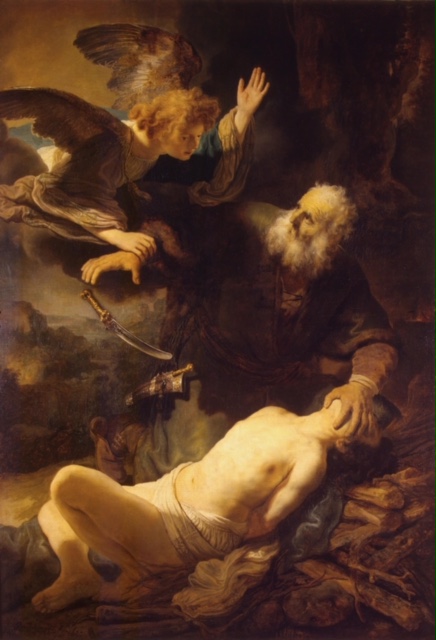
Abraham and Isaac by Rembrandt

In our first reading, we meet Abraham, full of thanks that God reconsidered the command to sacrifice his dear son.


But then our second reading expresses thanks that God was willing to sacrifice his own Son for our sakes.

The Transfiguration by Titian

Finally, our Gospel takes us to the Transfiguration where that Son who will be sacrificed is revealed in his true glory.

What is the thread binding these readings? I think it can be found in this Gospel verse:

This is my beloved Son.  
Listen to him.

True listening is obedience. The words come from the same root: obedience = listen to,” from ob “to” + audire “listen, hear”.

  • Abraham listens, no matter how hard, and finally hears God’s real command to love.
  • Jesus listens to the Will of the Father even through his suffering, and is led to Resurrection.
  • We, like Peter, James and John, are called to listen to Jesus who will transfigure our perceptions about what life is really calling us to.

In each case, intent “obedience” allows the listener to hear and see beneath circumstances to the deeper Grace beyond appearances. Deep spiritual listening transfigures us!

This is the whole point of the spiritual life. Our lives are so much more than mere circumstances or appearance. Our psalm calls us to believe this even in difficulty:

I believed, even when I said,
    “I am greatly afflicted.”
Precious in the eyes of the LORD
    is the death of his faithful ones.

Psalm 116:10

When we do this, we are freed to engage our lives at the level of God’s Will which is always for our good, which is always from Love. The long tradition of faith, learned from our forbearers, assures us of this:

O LORD, I am your servant;
    I am your servant, the child of your faithful ones;
    you have loosed my bonds.
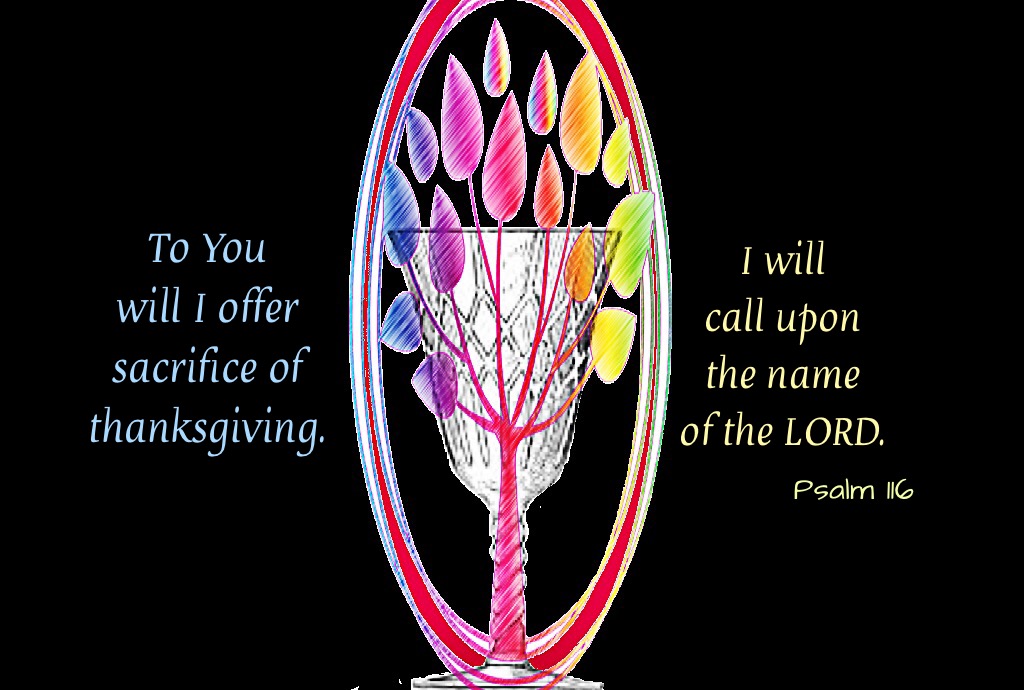
To you will I offer sacrifice of thanksgiving,
    and I will call upon the name of the LORD.

Psalm 116:16-17

Some of us go through life continually angry, frustrated, or overwhelmed by our challenges. Others, experiencing similar or even greater challenges, reflect a spirit of joy, peace, and gratitude. Why is that? I think today’s readings give us a big clue. Let’s listen to them!


Poetry: Story of Isaac, written and chanted by the bard Leonard Cohen who also wrote the currently popular “Hallelujah “.


Music: Psalm 116: Steve Green

Lyrics

I love the Lord, He heard my voice
He heard my voice. He heard my voice
He heard my cry for mercy
Because He has turned His ear to me
I will call (I will call)
I will call on the Lord for as long as I live

I love the Lord, He heard my voice
He heard my voice. He heard my voice
He heard my cry
I love the Lord, He heard my voice
He heard my voice. He heard my voice
He heard my cry for mercy