Hope and Resilience

Friday of the Twentieth Week in Ordinary Time
August 25, 2023

Today’s Readings:

https://bible.usccb.org/bible/readings/082523.cfm


Today, in God’s Lavish Mercy, we read the tender and beloved story of Ruth and Naomi. We have come to love the beautiful exchange between these two women, filled with devotion and selfless love:

But Ruth said to Naomi, “Do not ask me to abandon or forsake you!
For wherever you go, I will go, wherever you lodge I will lodge,
your people shall be my people, and your God my God.
Where you die I will die,
and there be buried.
May the LORD do thus to me, and more,
if even death separates me from you!”

Ruth 1: 16-17

Who doesn’t long to be devoutly loved the way Ruth loved Naomi?
Who, especially in elder years or lonely times, isn’t filled with gratitude for the faithful companionship of dear ones?
Who isn’t moved at a wedding ceremony when young couples make brave promises like Ruth’s, having no idea what their vow will require down the years?


Reading the story of Ruth from these perspectives can carry us to deep reflection, but it can also leave us with an insubstantial or idealized perception of the infinite Love mirrored in this Scripture.

The Book of Ruth is so much more than an admirable devotion.

In the Book of Ruth, significant theological formation occurs, presenting a beautifully written story placed distinctively between the chaos of the Book of Judges and the epic struggle between the prophet Samuel and the intractable King Saul in the first book of Samuel. Nestled in between this chaotic downward spiral and the recalcitrance of Saul, Ruth exhibits resilience amidst vulnerability, an outsider grafted into the Davidic lineage and its climactic conclusion in Christ. A theology of hope for those found outside the normative structures of patriarchal, religious, and cultural normative spheres.

Bradford Parker: Ruth: A Theology of Resilience Amidst Vulnerability

Various authors suggest a host of underlying theological themes in Ruth:

  • the community is responsible for those who are hungry;
  • the experience of despair cannot be ignored;
  • people young and old are to be cared for; and
  • the marginalized are to push to the center, and those at the center are to move toward the marginalized. (Katherine Doob Sakenfeld: Ruth, Interpretation)

Another writer sees “Ruth is herself the “mirror of God” by reflecting Yahweh through her actions of devotion throughout the narrative.” (John C. Holbert: Preaching the Old Testament)

Andre LaCocque argues that “Ruth belongs to the extraordinary. She is characterized by hesed (Mercy).” (Ruth: Continental Commentary)


The Book of Ruth, on surface appearance, is a simple yet compelling story. But reading under its words, we will find astounding depth:

  • a faithful elder who now feels abandoned by God (Naomi),
  • a vulnerable young woman who chooses to act for mercy and justice (Ruth)
  • a man who, by aligning himself unselfishly to the Law, allows the continuation of the familial line which will lead through Obed to David and ultimately to Jesus.(Boaz)

Naomi teaches us how to respond from the depths of loss, sadness, diminishment, or fear. Ruth shows us how courage, fidelity, and mercy act in the everyday world.
Boaz models faithfulness, responsibility, and justice given without question when needed.


It is not a stretch to say that Ruth is a Christ figure, foreshadowing the Merciful Jesus who accompanies us in our vulnerabilities and who, by loving us, teaches us how to love:

“Teacher, which commandment in the law is the greatest?”
He said to him,
“You shall love the Lord, your God, with all your heart,
with all your soul, and with all your mind.
This is the greatest and the first commandment.
The second is like it:
You shall love your neighbor as yourself.
The whole law and the prophets depend on these two commandments.”

Matthew 22:36-40

Poetry: Rather than choose a single poem for you, here is the link to a series of thoughtful, poetic reflections on the characters in the Book of Ruth.

Poems from the Velveteen Rabbit blog

Music: Ruth’s Song – Misha and Marty Goetz

Parable of the Trees

Wednesday of the Twentieth Week in Ordinary Time
August 23, 2023

Today’s Readings:

https://bible.usccb.org/bible/readings/082323.cfm


Today, in God’s Lavish Mercy, our first reading delivers a powerful message if we can decipher it. The passage, sometimes known as “Jotham’s Fable”, depicts the rise of Jotham’s felonious brother Abimelech as leader of Israel.

Abimelech was a bad guy, and the story of his tenure is so full of treacherous violence that it would be an “X” movie if shown in theaters today. Jotham, the only surviving brother of Abimelech’s fratricide, preaches his fable to warn the people against his murderous brother.

Jotham went to the top of Mount Gerizim and, standing there,
cried out to them in a loud voice:
“Hear me, citizens of Shechem, that God may then hear you!
Once the trees went to anoint a king over themselves.

Judges 9:7-8

Let’s take a look at the fable. What significance might it have for us today?

The fable describes humanized trees who seek a strong leader from among the most revered trees in Israel: the olive, the fig, and the grapevine. Each of the three trees is asked to assume leadership because each has proven honest and true in sustaining the people. However each, when asked, refuses because they are committed to the current success of their own chosen work. As a result, a vacuum of leadership is left. This vacuum allows the “bramble”, a self-absorbed, non-productive weed to slip in and grasp control over the people. It doesn’t turn out well.


Walter Bruggemann interprets the parable in this way:

The point of the parable is not obscure. The parable is simply a clever way to assert that if good people with positive political potential default on governing responsibility, then rule will be exercised by less desirable, more dangerous alternatives. The point is clear; nonetheless there is merit in lining out the parable. Not only is it entertaining in its imagery, but the repetition of patterned speech reinforces the danger and the possibility concerning governance. In the case of this narrative, the parable implies that Abimelech came to power because better candidates refused to have their productive lives interrupted by public responsibility.

It takes no great imagination for us to see the contemporaneity of the parable for us. If responsible people eschew public responsibility, the way is open for those who would misuse power in a governing space.

Walter Brueggemann: “Refusing the Bramble” from churchanew.org

It takes both generous courage and insightful self-examination to answer a call to true leadership which is a ministry of God’s merciful love. Every one of us will hear that call in some way in our lives – not necessarily to be President, Queen, or Pope – but as parent, teacher, coach, counselor, minister, board member, supervisor, or simply a true friend … and all the other ways we have the power to influence another’s life.


On the flip side, it takes reflective awareness to choose and support good leaders. In our complex society, we must be intentional not to be caught in the “brambles” of a self-absorbed wannabe who, like Jotham’s combustible weed, cannot nourish the community. Achieving that awareness is not as easy as it might seem. Potential leaders, at any level, can fool us by subtly appealing to our own unexamined “brambles” – those flashpoints which exploit our fears and prejudices rather than leading to a communally successful way through them.


In our Gospel, Jesus tells us what God’s “leadership” is like. God is like the selfless landowner who meets his people’s need with unmeasured generosity. Whether we come early or late to God’s vineyard, we are fully embraced and rewarded. Jesus’s parable suggests that we should be wary of “leaders” who divide communities into “them” and “us” in order to ration God’s Mercy.

Instead, the Gospel-inspired community is amazingly able to embrace each member at the place where they can best be led to wholeness. A sound, selfless leader is essential to building that kind of community whether it be civic or religious.

In reply, the landowner said to one of the complainers,
‘My friend, I am not cheating you.
Did you not agree with me for the usual daily wage?
Take what is yours and go.
What if I wish to give this last one the same as you?
Or am I not free to do as I wish with my own money?
Are you envious because I am generous?’
Thus, the last will be first, and the first will be last.”

Matthew 20:13-16

Praying with these passages, we might ask for “justice-eyes” and a “mercy-heart” as we navigate our world as both leaders and as those who discern leaders.


Poetry: Nobility by Alice Cary (1820-1871)

True worth is in being, not seeming,-
In doing, each day that goes by,
Some little good, not in the dreaming
Of great things to do by and by.
For whatever men say in their blindness,
And spite of the fancies of youth,
There’s nothing so kingly as kindness,
And nothing so royal as truth.


Music: Song for the Journey – not the greatest music ever written, but still the song captures the message of servant leadership.

In the Name of Mercy

August 22, 2023
Foundation Day: Sisters of Mercy Philadelphia/Merion


On August 22, 1861, a small group of hopeful women arrived at the railroad station in North Philadelphia. On that hot afternoon, the first Philadelphia Sisters of Mercy, led by a 27-year-old Irish immigrant Patricia Waldron, disembarked from the train and caught their first amazed glimpse of the busy city.  They carried few worldly possessions. They came with only a dream for Mercy.  It was a dream so alive in them that it still inspires us today, over 160 years later.


Can you see them standing on the cramped platform, the hissing steam trains encircling them in mist?  They must have felt “be-misted” themselves, these mostly Irish country girls engulfed in a noisy teeming city.

Union troops heading south crowded the platform.  Busy Broad Street crackled with news of the burgeoning national strife.  Lincoln himself would visit the city in the coming weeks.


Visiting Old Moyamensing Prison

Where would they begin? And how? Hidden within the seams of this bustling city’s garment lay the poor – the ones for whom they had come.  How to reach them?  How to help them change their lives?

Ranging from sixteen to twenty-seven years old, these brave young women had been charged with establishing a kind of “new nation” themselves – not of politics, but of mercy.  They, like the young stout-hearted soldiers around them, were also a little weak-kneed. They too had their battles to face. They too would see starvation, illness, attack, and death – but they would endure for the sake of the Mercy dream, God’s dream for all those in need.


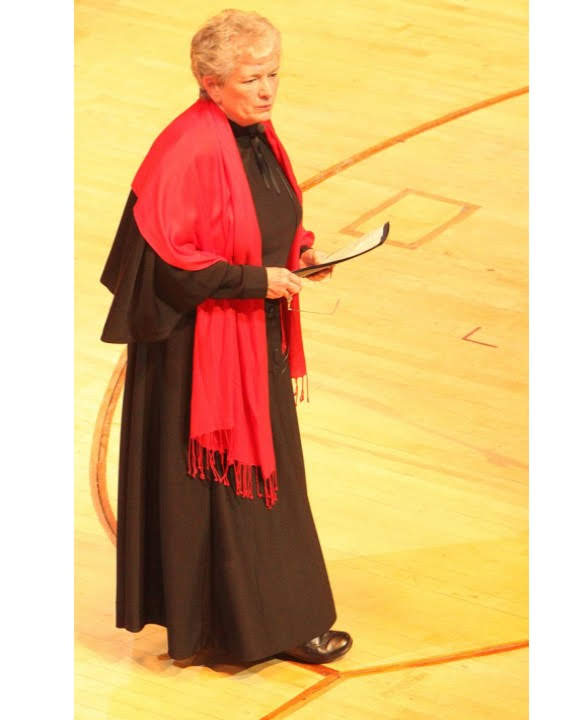
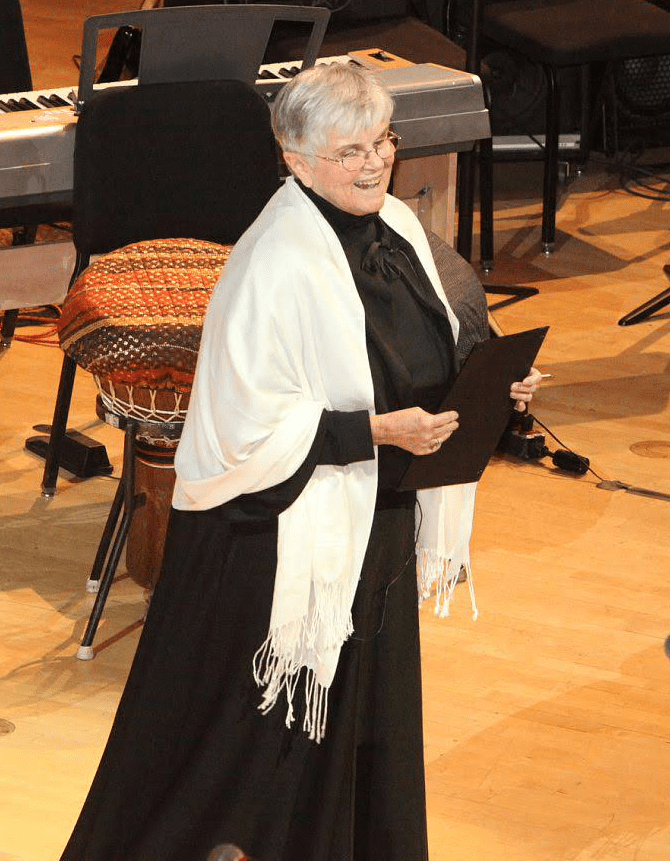
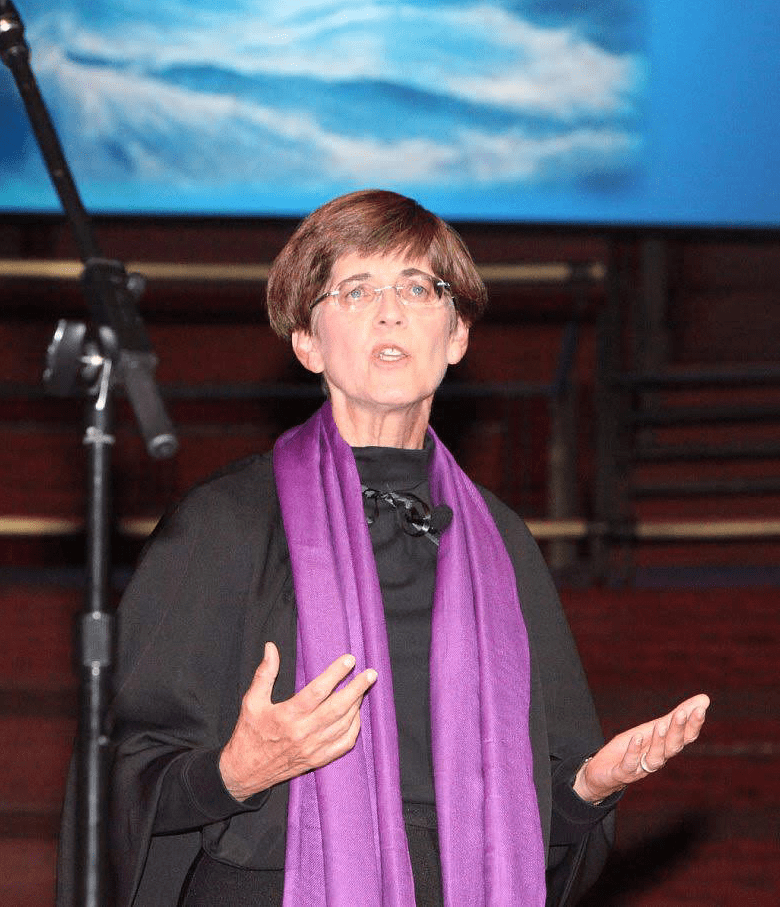
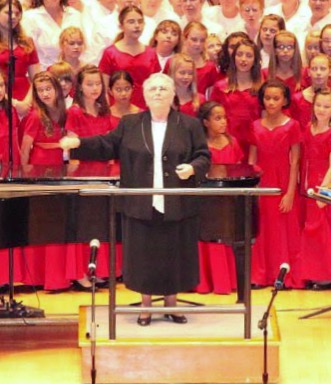
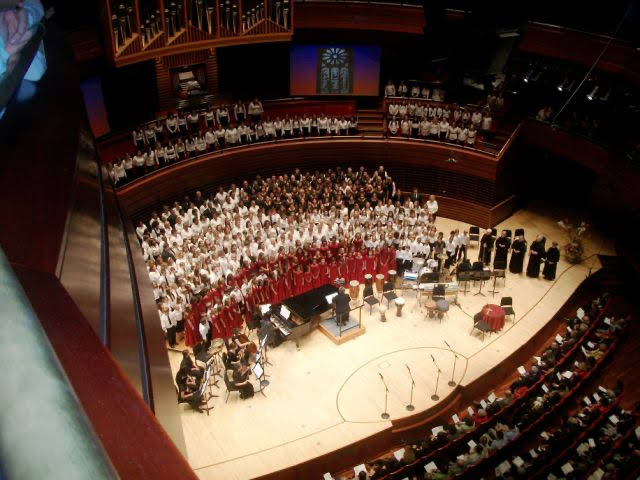
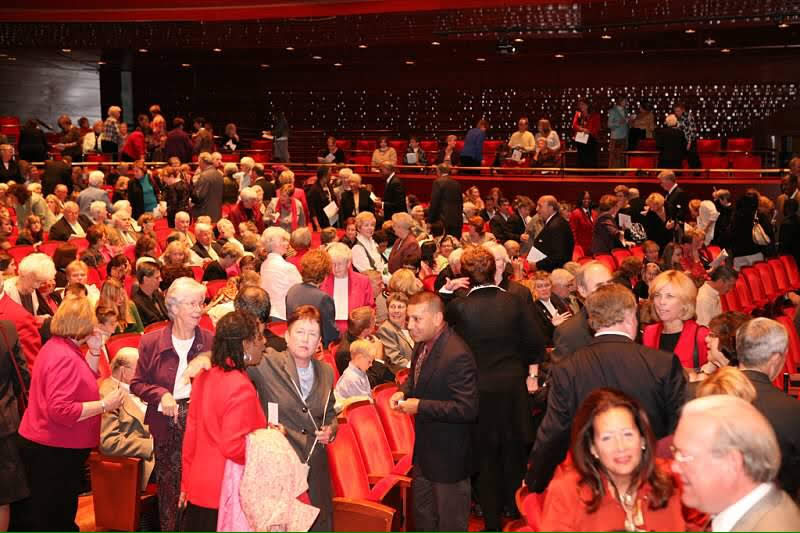
In 2011, the Philadelphia/Merion Sisters of Mercy celebrated our Sesquicentennial. One of our celebratory events was a thrilling performance at the Kimmel Center commemorating these founding sisters and the decades of ministry built on their commitment.

The performance opened with these imagined comments from Patricia Waldron.

Mother Patricia Waldron
(played by our dear late Sister Mimi Connor, RSM
)

Have you ever noticed how our dreams unfold?
They never happen in the way we first imagined.
Instead, they weave – your dreams and mine ---
Among each other in a latticework of grace.
By the way, my name is Anne Waldron.
known in my life as Mother Patricia –
“Reverend Mother” really.
A rather weighty title, don’t you think?
But my own dream of mercy was not weighty.
I was born in Tuam (pronounced “Choom”), County Galway, Ireland.
‘Tis a precious place, a mere 20 miles from the glorious bay to the south,
Where the soft air carries a hint of the sea
And the sweet land holds both a deep promise and a deep scar of famine.
I must seem a long way from you now, after these 150 years 
– almost like a shadow on your memories.
And you must think me a particularly courageous part of your history.
After all, you have named buildings after me, I see!
But tonight, I want you to know me in a new way.

I was only 27 when I came here to this strange city.
I walked these same streets as you, fraught as they are with their dangers and beauties.
Do you know that a century and a half ago
we sisters lived just two miles north of this very spot -
you call it “The Kimmel” I think!
Ah, but the Philadelphia of the 1860s was a far different sight 
from what I saw outside tonight.
I see that a million and a half souls live here now!
Oh my! Just a third that number in the city then.
We thought it an amazing number having come mostly from our small villages.

I was young then – like all of you are or were once –
Young and full of dreams.
We all were – I and these my dear companions.

We were not different because of our courage, 
our spirit of adventure, our dedication, or our generosity—
although these marked our lives
as we grew deeper into God.

No – what made us who we were was this:
We clearly knew and trusted that the dream in us
was God’s dream for a wounded world.
In our deepest hearts,
we were Sisters of Mercy!

As you listen to our stories tonight,
Hold this question in your own hearts:
What dream lived in you when you were young?
What dream lives in you now?

Enduring dreams begin with small first steps.  So, hailing a horse-drawn carriage, Mother Patricia Waldron led her young band to their new lives.  Thus she began the grace-filled saga many of us know so well and of which we are a part today.  Their dream lives in us who love Mercy:

  • in our continued effort to find those who are poor and sick in a world that ignores their suffering
  • in our choice to be compassionate in a world that often chooses violence
  • in our commitment to care in a world of treacherous indifference
cemetery
Today we honor our beloved foremothers
who led the way in faith and commitment.

On that sultry August day in 1861, and on this one in 2023, people have choices to make.  They have vows to keep. Some choices live forever.  In the name of Mercy, what will you choose today?


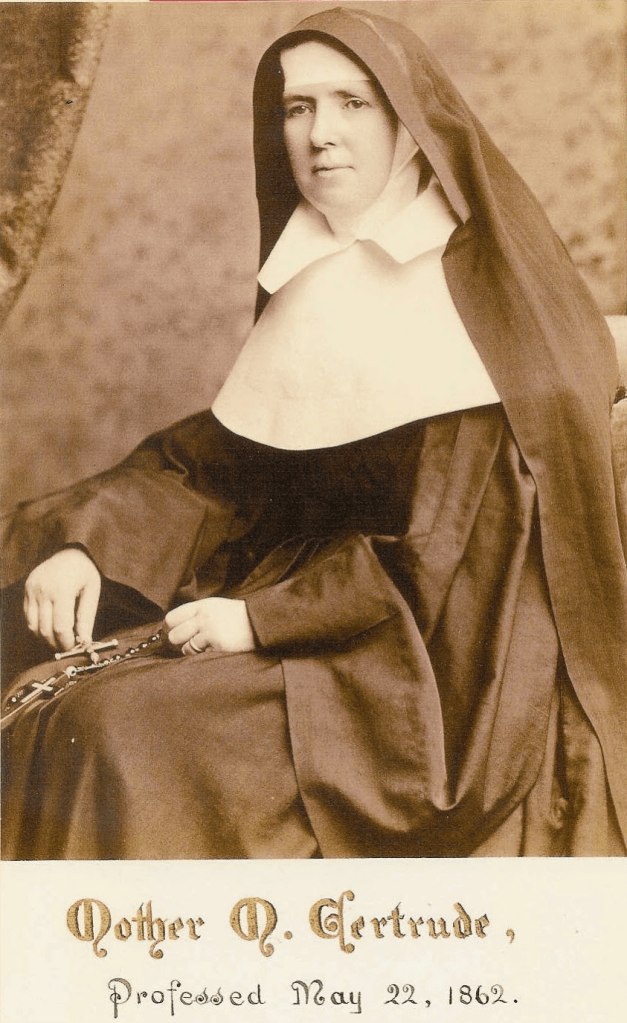
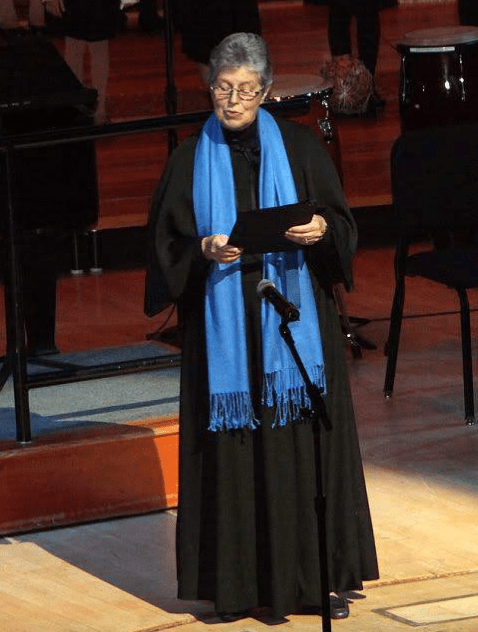
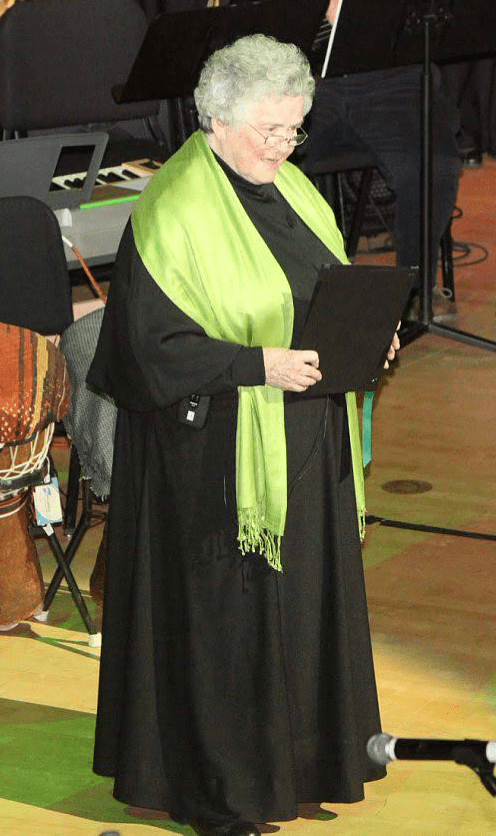
I think many of you might enjoy a photo review of the Kimmel Celebration. I have only a few photos of the original sisters which I connected with the performer where possible.

Mother Gertrude Dowling
(played by Sister Kathleen Mary Long)


Sister Marie Madeleine Mathey
(played by Sister Suzanne Neisser)


Sister Mary Philomena Hughes

(played by Sister Mary Hentz)


Sister Mary Angela Curtin
(played by Sister Connie Haughton)


Sister Mary Ann Coveney

(played by Sister Diane Guerin)


Sister Francis de Sales Geraghty
(played by Sister Mary Klock)


Sister Mary Rose Davies
(played by Sister Marie Carolyn Levand)


Sister Mary Veronica O’Reilley
(played by Sister Eileen Sizer)


Virtuoso Sister Marie Ann Ellmer plays the magnifcent
Kimmel organ


Maestro Sister Jeanette Goglia
leads a resounding rendition
of her composition “The Circle of Mercy”
sung by 2500 attendees

(Click the white arrowhead to enjoy “The Circle of Mercy” as you peruse these photos.
Happy Foundation Day to all who love and live Mercy!)

God’s Mercy Endures Forever

Friday of the Nineteenth Week in Ordinary Time
August 18, 2023

Today’s Readings:

https://bible.usccb.org/bible/readings/081823.cfm

Today, in God’s Lavish Mercy, we pray with Psalm 136 – a short course in Bible history – some of which we also read in the first reading from Joshua:

Thus says the LORD, the God of Israel:
In times past your fathers, down to Terah,
father of Abraham and Nahor,
dwelt beyond the River and served other gods.
But I brought your father Abraham from the region beyond the River
and led him through the entire land of Canaan.
I made his descendants numerous, and gave him Isaac.
To Isaac I gave Jacob and Esau.
To Esau I assigned the mountain region of Seir in which to settle,
while Jacob and his children went down to Egypt ……

Joshua 24:2-4

Didn’t you love Bible History when you were in school? I remember my little 1950’s McLoughlin Notes and my old Benzinger Bible History book. 

An exciting Bible story was a welcome change to droll history and geography. Sister Stella Mercedes had the great Bible figures pinned over the blackboard, just above the permanent, perfectly painted border which warned me, (fruitlessly🤣), never to lie:

Oh, what a tangled net we weave, when first we practice to deceive.


Psalm 136 could serve as an index for those wonderful Old Testament stories. As Walter Brueggemann notes:

In Psalm 136, the whole history is again recited, punctuated this time with the repeated refrain, “for his steadfast love endures forever.” All of Israel’s history, indeed all of world history, is an arena that exhibits God’s abiding fidelity.

Walter Brueggemann: From Whom No Secrets Are Hid

With this encouragement, today we might reflect on what our own catalogue of God’s fidelity might look like. 

  • How has God’s mercy and love endured in my life? 
  • How has God loved, protected, and delivered me? 
  • How has God deepened in me the call to responsive love?

Poetry: We might like to pray with Rev. Christine Robinson’s prayer “Mercy Forever”:

Give thanks to God, who is good—
whose mercy endures forever.
Whose love expands with the expanding universe–
whose mercy endures forever.
Whose breath gives life to matter–
whose mercy endures forever.
Who animates life with spirit–
whose mercy endures forever.
Who plants a fierce unrest in our hearts–
whose mercy endures forever.
Who bends the universe towards justice–
whose mercy endures forever.
Who holds the whole world, and our hearts–
whose mercy endures forever.
Give thanks to God, who is good—
whose mercy endures forever.


Music: How Deep, How Simple – Kathryn Kaye

In Grateful Awe

Memorial of Saint Maximilian Kolbe, Priest and Martyr
Monday of the Nineteenth Week in Ordinary Time
August 14, 2023

Today’s Readings:

https://bible.usccb.org/bible/readings/081423.cfm


Today, in God’s Lavish Mercy, Moses recounts for the people God’s immense generosity toward them.

Dt10_7awesome God

Have you ever heard yourself, or someone dear to you, saying, “God has been so good to me!” Such a statement rises out of our awe at God’s love and mercy to us.

The deeper our faith, the clearer our insight into these gifts. I have heard people in the sparest of circumstances utter such a prayer. How can they do that, we might ask?


In all cases, there is a beautiful humility, trust, and generosity emanating from their spirits. Gratitude has transformed them. Hope, not wishing, has freed them.

Moses wants his People to be like that. He says:

Think! The heavens, even the highest heavens,
belong to the LORD, your God,
as well as the earth and everything on it.
Yet in his love for your fathers the LORD was so attached to them
as to choose you, their descendants …

This is your glory, he, your God,
who has done for you those great and awesome things
which your own eyes have seen.


I want to be that kind of grateful, faith-filled person too. Don’t you?

Today’s profound advice from Moses can help us as we pray its words into our own lives.


Poetry: Praying the whole of today’s Responsorial Psalm 147 can also help us recognize our blessings. I love this transliteration by Christine Robinson.

Psalm 147 - Mother of All Creation
It is good to sing praises to you,
Mother of all creation.
And to recognize the touch of your love.
You bring us home, help us heal,
You love your creation
You call every one of your stars by name.
You bless the young, the poor, the ill
You wait forever for the lost to turn to you.
Your love is music to our hearts, and we sing.
You are in the clouds that darken the sky
You send the rain which gives us life.
The cycles of the seasons and the growth of the plants
are your delight.
You provide food for the wild animals
even the young ravens when they cry.
You love the horse’s proud strength
and the athlete’s prowess.
You crave our love and attention.
And so we pray.
We give thanks for life, for children, for the beauty of the snow
that lies soft in the morning.
We give thanks for the storm,
the hail, scattered like popcorn on the grass.
We are in awe of your power.
When the seasons turn, the growing warmth
reminds us of your warmth
The flowing waters remind us
of the life which comes from you.
Thank you, Mother of us all, help us
to keep your love in our hearts and to love your creation.

Music: Your Grace Still Amazes Me – Philips, Craig and Dean

Jubilee!

Saturday of the Seventeenth Week in Ordinary Time
Saturday, August 5, 2023

Today’s Readings:

https://bible.usccb.org/bible/readings/080523.cfm


One in a series of 60 paintings by Jacob Lawrence which captures
the journeys of millions of African-Americans
who left the Jim Crow South
in search of better lives elsewhere.


Today, in God’s Lavish Mercy, Leviticus offers us a reading critical to our moral clarity.

This fiftieth year you shall make sacred
by proclaiming liberty in the land for all its inhabitants.
It shall be a jubilee for you,
when every one of you shall return to his own property,
every one to his own family estate.

Leviticus 25:10

Leviticus 25 is the account of Jubilee which, for the Mosaic community, was the quintessential practice of justice.

When the Israelites came to the Promised Land, they came as an emancipated people to share in the abundance to which God had delivered them. There was initial equity in the sharing. But over time, power, influence and wealth were hoarded – endangerments that threaten all communities.

In the proclamation of Jubilee, God directs the people to return to an original justice in which all persons are freed from indebtedness of any kind in order to live in communal harmony.


Consider the hypothetical example of an Israelite family that lost their land twelve years before the Jubilee Year. On the tenth day of the seventh month, the entire community participates in the Day of Atonement and its ritual purging of sin. On this very same day, the trumpet is blown and the Jubilee year is announced; in this year, both sins and debts are forgiven, and the family that had been forced to live and work in another’s household for more than a decade regain possession of their land.

Imagine the joy of this moment! Imagine the dreams and desires! After having served as hired hands for a generation, now to be restored to a position of social and economic strength!

Michael J. Rhodes – Jubilee Formation: Cultivating Desire and Dependence in Leviticus 25

The concept of this type of justice is alien to our capitalist and consumerist orientations. We may have heard the attitude expressed, or we may hold it ourselves, that some people have and some people don’t. And the ones who “have” earned it and deserve it.

“Jubilee” instructs us that this is a false context for fulfilling God’s Will for the wholeness of Creation. In such a false context, reward ensues from avarice, dominance, possessiveness, and aggression, yielding a continually deeper gap between those who have and those who do not, between those who influence and those who cannot, between those who thrive and those who do not.


“Jubilee” resets the game board and in so doing resets attitudes about who owns what and how they must use it to enact the Reign of God.

I recently heard a story which speaks of forgetting to whom things belong. A very proper lady went to a tea shop. She sat at a table for two, ordered a pot of tea, and prepared to eat some cookies which she had in her purse. Because the tea shop was crowded, a man took the other chair and also ordered tea. As it happened, he was a Jamaican black, though that is not essential to the story. The woman was prepared for a leisurely time, so she began to read her paper. As she did so, she took a cookie from the package. As she read, she noticed that the man across also took a cookie from the package. This upset her greatly, but she ignored it and kept reading. After a while she took another cookie. And so did he. This unnerved her and she glared at the man. While she glared, he reached for the fifth and last cookie, smiled and offered her half of it. She was indignant. She paid her money and left in a great hurry, enraged at such a presumptuous man. She hurried to her bus stop just ouside. She opened her purse to get a coin for her bus ticket. And then she saw, much to her distress, that in her purse was her package of cookies unopened. The lady is not different from all of us. Sometimes we possess things so long that do not really belong to us that we come to think they are ours. Sometimes, by the mercy of God, we have occasion to see to whom these things in fact belong.

Walter Brueggemann, “Voices of the Night—Against Justice,” in To Act Justly, Love Tenderly, Walk Humbly: An Agenda for Ministers

The applications are abundant, obvious, and profound for our own lives in the various communites in which we live. But they are not easy applications to confront or practice. They pose the ultimate question to us: where do we place our security? The answer determines how fully we understand “Jubilee”.


You have two meaningful prose passages to consider today so let’s just add a little music for your prayer time.

Gabriel’s Oboe – Ennio Morricone played by Henrik Chaim Goldschmidt

Sowers of Goodness

Memorial of Saints Joachim and Anne,
Parents of the Blessed Virgin Mary
Wednesday of the Sixteenth Week in Ordinary Time
July 26, 2023

Today’s Readings:

https://bible.usccb.org/bible/readings/072623.cfm


Mary with Joachim and Anne – Pietro Ayers


Today, in God’s Lavish Mercy, we pray with Anne and Joachim, parents of Mary, Mother of Jesus. Praying with them is challenging because we know little or nothing about this holy couple. Their names appear nowhere in the Bible. There are no canonical readings about them. So how can we imagine what they might have been like in order to imitate their spirituality?

What we have come to venerate as the miraculous story of Anne and Joachim comes to us primarily from the 2nd century apocryphal Gospel of St. James which is part of the New Testament Apocrypha.

The term “Apocrypha” refers to scores of manuscripts written about Christ and early Christianity which, for any number of reasons, have not been included in the scriptural canon – the Bible as we know it.


If you are interested in learning more about these books, their influence, and why they are not part of the cureent canon, this Wikipedia article is a great place to start. I found it fascinating:

https://en.wikipedia.org/wiki/New_Testament_apocrypha


For our prayer today, we might think of Anne and Joachim in the light of our passage from Matthew. We are quite familiar with the image of the “sower” as someone working in a field for the purpose of a successful crop.

But let’s expand that image to be one who “sows” good deeds – righteousness – within the fields of family, neighbohood and world. This was Anne and Joachim’s work which generated the wholesome being who was Mary. This then was the work of Mary who was the mothering cradle for the Incarnation. Their lives, fertile with goodness, were the life-giving fields for the first-fruits of Christ.


The kind of seed we sow, and how we sow it, matters, as our Gospel tells us:

A sower went out to sow.
And as he sowed, some seed fell on the path,
and birds came and ate it up.
Some fell on rocky ground, where it had little soil.
It sprang up at once because the soil was not deep,
and when the sun rose it was scorched,
and it withered for lack of roots.
Some seed fell among thorns, and the thorns grew up and choked it.
But some seed fell on rich soil, and produced fruit,
a hundred or sixty or thirtyfold.
Whoever has ears ought to hear.

Matthew 13:3-9

Most of us went out many years ago to “sow” in our life’s field. Certainly the seed, good or bad, has fallen on a number of both hospitable and inhopitable places. Reflecting today, and committing for the future, we might look to this first Holy Family. Their stories buried deeply in history, still by their fruits we know them. Such fruit yields from grace planted in faithful hearts. Let’s ask them to help us be their imitators.


Prose Prayer: My mother had great devotion to St. Anne and, when our family had a need, often made an offering through the Shrine of St. Anne de Beaupre in Canada. Mom and I would recite this prayer together, especially on Tuesday which an old tradition dedicates to St. Anne. When Mom passed away on a Tuesday, I felt it was a special gift and that surely St. Anne came to accompany her to heaven.


Music: Lamb of God from the Mass of St. Ann composed by Ed Bolduc who is Director of Music at St. Ann’s Parish in Marietta, Georgia. I was familiar with the Gloria but not other parts of the composition. I thought this Lamb of God was appropriate for today’s feast because it sounds like a lullaby good St. Anne might sing to her Grandchild.

Unbound by Mercy

Memorial of Saint Benedict, Abbot
Tuesday of the Fourteenth Week in Ordinary Time
July 11, 2023

Today’s Readings:

https://bible.usccb.org/bible/readings/071123.cfm


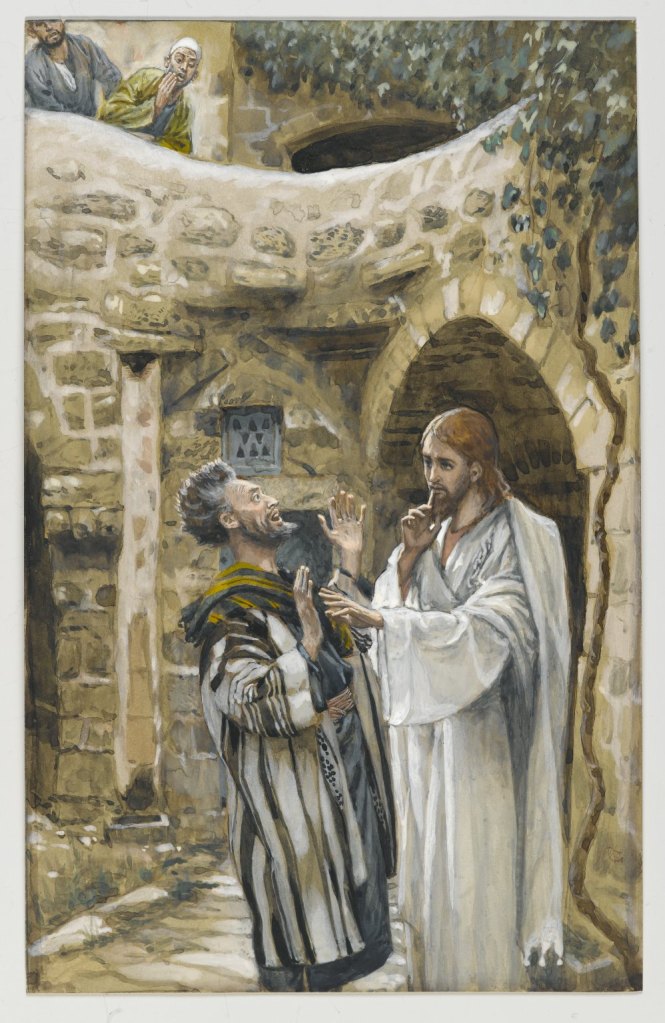
Today, in God’s Lavish Mercy, Jacob wrestles with an angel and Jesus cures a man muted by demons.

Jesus Cures a Deaf Mute – Tissot Jacob Wrestles with an Angel – Bonnat

Thinking of these two figures this morning, I was reminded of one of my all-time most influential books, “Womanspirit Rising“. In the late 1970s, I first read this now classic anthology of feminist theology. It changed the whole framework of how I saw the world.


A key concept in the collection is a phrase written by theologian Nelle Morton which describes how women, despite the obstructions of patriarchy, can help one another to self-realization by practicing deep listening to one another. Morton calls this ministry:

“hearing one another into speech”

The point is that when our pain and struggles are truly listened to, we can begin to name and explore our own healing.


I think this is exactly what Jesus did for the man muted by demons. Jesus heard this man’s pain before the man could speak it. The Spirit of Jesus was one so attuned to all Creation that he could hear the “Sound beyond sound” within this man’s suffering.

Jesus’ unspoken response to the speechless man is the same that he offers to all of us …. Infinite, Lavish Mercy:

At the sight of the crowds,
his heart was moved to breaking for them
because they were troubled and abandoned,
like sheep without a shepherd.

Matthew 9:32-36

In our Genesis passage, Jacob is fighting his own form of “demons” — one that, in this case, turns out to be an angel, a giver of blessing!

Some man wrestled with him until the break of dawn.
When the man saw that he could not prevail over him,
he struck Jacob’s hip at its socket,
so that the hip socket was wrenched as they wrestled.
The man then said, “Let me go, for it is daybreak.”
But Jacob said, “I will not let you go until you bless me.”
The man asked, “What is your name?”
He answered, “Jacob.”
Then the man said,
“You shall no longer be spoken of as Jacob, but as Israel,
because you have contended with divine and human beings
and have prevailed.”

Genesis 32:25-29

The entire night’s struggle is executed in silence. It is not until dawn that the combatants speak. Like the Gosple mute, Jacob’s true self is liberated by a silent hearing. As a result, he is blessed with a new identity and a new name – “Israel”.


When we were very young nuns, our Mistress of Postulants was filled with unexpected, old-fashioned wisdom. For example, her recommendation to our vocational doubts was to “sleep on them”. She counseled that “everything looks better in the morning.” Simplistic though it may have sounded, she was right!

Some of the turbulent adjustments, which could not be articulated in the dark hours, found expression and resolve in morning light – when we could see one another clearly and listen heartily to each other’s confusions. Such listening helped to either evaporate the troubles or to suggest a clear path through them.


That early experience was a simple time for me of growing in self-understanding. But it offered a more complex truth – that, not only we, but all the suffering world needs to be “heard into speech“. This is the work of Mercy as we see it so tenderly expressed in today’s Gospel.


In such times of deep listening and new naming, the God of miracles is with us. These times in our lives can help us become deep listeners to the world’s pain, re-christeners of the world’s hope, humble architects of God’s tender design for our wholeness:

For Professor Nelle Morton, the hearing to speech is not just a human phenomenon, but one that occurs because of a prior divine hearing and listening. We are able to hear one another into speech (and thus, perhaps, into full humanity) because we are first heard by “a prior great Listening Ear . . . an ear that hears . . . our own”

Dr. Elaine Graham – Professor of Social and Pastoral Theology at the University of Manchester.

Poetry: Listening – from Rumi

What is the deep listening? Sama is
a greeting from the secret ones inside
the heart, a letter. The branches of
your intelligence grow new leaves in
the wind of this listening. The body
reaches a peace. Rooster sound comes,
reminding you of your love for dawn.
The reed flute and the singer's lips:
the knack of how spirit breathes into
us becomes as simple and ordinary as
eating and drinking. The dead rise with
the pleasure of listening. If someone
can't hear a trumpet melody, sprinkle
dirt on his head and declare him dead.
Listen, and feel the beauty of your
separation, the unsayable absence.
There's a moon inside every human being.
Learn to be companions with it. Give
more of your life to this listening. As
brightness is to time, so you are to
the one who talks to the deep ear in
your chest. I should sell my tongue
and buy a thousand ears when that
one steps near and begins to speak.

Music: Whispering Sea – Tony O’Connor


The Letter

Friday of the Fifth Week of Easter
May 12, 2023

Today’s Readings:

https://bible.usccb.org/bible/readings/051223.cfm

Today, in God’s Lavish Mercy, Judas Barsabbas and Silas are chosen to deliver a letter from the Apostles to the Gentiles in Antioch. It’s a critical letter – containing the apostolic decision regarding how the Antiochan church must observe religious practice.


Have you ever waited for a “decision letter”, one for which you were not sure of the outcome? Maybe a college or job acceptance letter? A bid on a new house? Or maybe a contest you entered desperate to win?

I remember waiting for the letter announcing whether or not the Sisters of Mercy would accept me into their community. It was a nerve-wracking wait for many reasons. I really wanted to be a Sister of Mercy but, after the initial interview, I wasn’t sure I could fill the bill.

The ride to the interview had seemed so distant from where I lived – in many ways. I had never seen such beautiful houses as those in the neighborhood surrounding the Motherhouse. And the entrance to the convent itself was, and still is, breath-taking. My six-foot self felt extremely small.

Sister Mary Assisium, who interviewed my parents and me, was an icon of the pre-Vatican II religious. She was perfection in her beautiful habit, cultured speech, quiet gait, and ultra-serious tone of voice. Her eyes seemed like big lakes in a sacred monument.

She scared me to death! I was a lanky, loping, gum-chewing teenager who still dropped the “g”s on my “ing”s. As we drove home from the meeting, I was pretty sure there was no way these women were going to invite me to join them! I think my parents were pretty sure too.


That interview happened on April 7, 1963. On June 2nd, I came home from work at the neighborhood deli, carrying a pastrami sandwich, to find an unopened letter lying on our dining room credenza. About ten feet away, Mom sat in the kitchen staring back and forth from the letter to me. For a few minutes, I stared back and forth from the letter to Mom, then finally got the guts to open it. It was dated May 31, 1963, Feast of the Queenship of Mary. ( After 1969, that date became Feast of the Visitation)


It said this, but in a lot of different, more beautiful words:


But the letter also implied, although not stated, an understanding that reassured my doubts.


Judas Barsabbas and Silas carried the same kind of letter to the Chrisitan Gentiles in Antioch. “You’re in. Just as you are.” And our Gospel today, tells us why that is so – Love.

Love is the test which measures us for Christianity – not religious practice, rituals, or personaility traits. The apostolic decision-makers understood this and came to a conclusion based on Gospel love.

Jesus makes this clear in our reading today, and how blessed are we to receive his invitation:

This is my commandment: love one another as I love you.
No one has greater love than this,
to lay down one’s life for one’s friends.
You are my friends if you do what I command you.
I no longer call you slaves,
because a slave does not know what his master is doing.
I have called you friends,
because I have told you everything I have heard from my Father.
It was not you who chose me, but I who chose you
and appointed you to go and bear fruit that will remain,
so that whatever you ask the Father in my name he may give you.
This I command you: love one another.


Poetry: Acceptance – Robert Frost

When the spent sun throws up its rays on cloud
And goes down burning into the gulf below,
No voice in nature is heard to cry aloud
At what has happened. Birds, at least must know
It is the change to darkness in the sky.
Murmuring something quiet in her breast,
One bird begins to close a faded eye;
Or overtaken too far from his nest,
Hurrying low above the grove, some waif
Swoops just in time to his remembered tree.
At most he thinks or twitters softly, 'Safe!
Now let the night be dark for all of me.
Let the night be too dark for me to see
Into the future. Let what will be, be.'

Music: The Letter – by the Boxtops: Well, the Sisters of Mercy didn’t exactly say they “couldn’t live without me no more”. But that’s the way I read it! 🙂

A Perfect Heart

Friday of the Third Week in Advent
December 16, 2022

Today’s Readings:

https://bible.usccb.org/bible/readings/121622.cfm

Today, in God’s Lavish Mercy, we stand at the edge of the final deep dive into Christmas.

Tomorrow, we will begin the magnificent O Antiphons with their rich and repeated invitation for God, not only to enter, but to take up residence our lives. We hear the hint of those invitations in today’s Responsorial Psalm:

Alleluia, alleluia.
Come, Lord, bring us your peace
that we may rejoice before you
with a perfect heart.


It’s a perfect prayer for these last few days before Christmas, because so many of us get caught up in a contradictory kind of frenzy of shopping, gifts, parties, decorating, cooking, wrapping, buying…. and on, and on, and on.

The hyperactivity doesn’t leave a lot of space for peace and the perfection of our hearts to welcome the Savior.


This lovely poem by Geoffrey Brown has always helped focus me on the peace-making of my heart so that I could welcome Grace as it comes to me.


The Heart Cave

I must remember
To go down to the heart cave
& sweep it clean; make it warm
with a fire on the hearth,
& candles in their niches,
the pictures on the walls
       glowing with a quiet light.
       I must remember
To go down to the heart cave
       & make the bed
with the quilt from home,
strew
the rushes on the floor
hang
lavender and sage
         from the corners.
         I must go down
        To the heart cave & be there
         when You come.

Isaiah, with a powerful “how-to”, reminds us that we are all called to this spiritual readying:

Thus says the LORD:
Observe what is right, do what is just,
for my salvation is about to come,
my justice, about to be revealed.
Happy is the one who does this,
whoever holds fast to it:
Keeping the sabbath without profaning it,
keeping one’s hand from doing any evil


As a last reminder before our journey through the O Antiphons, Isaiah coaches us in inclusivity – assuring us that all people are welcome in the arms of the One Who is to come:

Let not the foreigners say,
when they would join themselves to the LORD,
“The LORD will surely exclude me from the people.”
The foreigners who join themselves to the LORD,
ministering to and
Loving the name of the LORD,
and becoming God’s servants–
All who keep the sabbath free from profanation
and hold to my covenant,
Them I will bring to my holy mountain
and make joyful in my house of prayer …


Music: Rorate Caeli – sung by Harpa Dei

“Rorate caeli” (Drop down, ye heavens) are the opening words of Isaiah 45:8. The text is frequently sung to plainsong at Mass and in the Divine Office during Advent where it gives expression to the longings of Patriarchs and Prophets, and symbolically of the Church, for the coming of the Messiah.