Psalm 59: Did Martha Pray It?

Memorial of Saint Martha

July 29, 2020

Today, in God’s Lavish Mercy, on this feast of St. Martha, we pray with Psalm 59.

The psalm is introduced with an interesting phrase: a miktam of David, when Saul sent people to watch his house and kill him. 

The meaning of the word mitkam is unclear, but the meaning of the rest of the phrase is abundantly evident. David felt threatened by the forces of King Saul who surrounded his house day and night awaiting an opportunity to attack him.

The psalm bemoans that situation. In two complementary stanzas, the psalmist asks God for victory and deliverance. Each ends with a refrain of praise and gratitude.
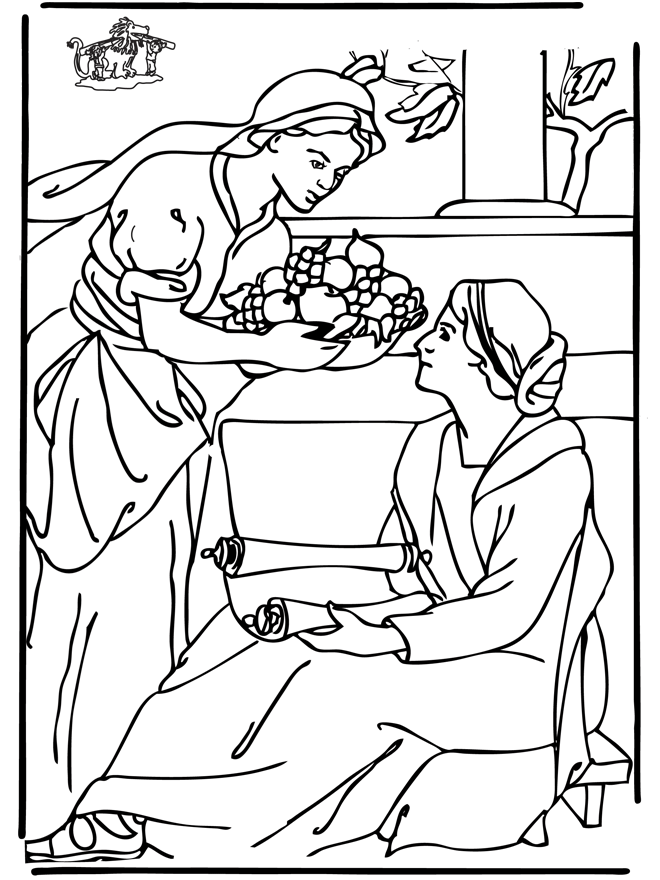

As I pray this psalm today, my mind goes to a house in Bethany. Three siblings live there who are friends of Jesus. Each loves Jesus in her or his own way, according to their personalities. 

The Gospels give us a vivid perception of Mary’s love. We can easily imagine the immensely grateful love of resurrected Lazarus. 

Then there is Martha of whom we know so little. A woman who found comfort in creating a hospitable home. A woman who commanded a well-functioning kitchen. A woman who, silent except for her famous sisterly complaint, let her works speak her love.

As their friendship with Jesus grew, and as Jesus became more notorious to the Jewish leaders, their little house no doubt became the object of inimical fascination.

Jesus’s enemies watched him, but that also watched his friends, frightening many away from Jesus’s side.

As this reality intensified, perhaps phrases of Psalm 59 rose in Martha’s heart as she prayed:

Rescue me from my enemies, O my God;
from my adversaries defend me….
… For behold, they lie in wait for my life;
mighty men come together against me,
Not for any offense or sin of mine, O LORD.

We can only guess what this little family suffered in order to be Jesus’s friends, both during his lifetime and by their witness in the subsequent early Christian Church. But by faith, we can be certain they rejoiced in the Divine Gift these sufferings brought them.

But I will sing of your strength
and revel at dawn in your mercy;
You have been my stronghold,
my refuge in the day of distress.
O my strength! your praise will I sing;
for you, O God, are my stronghold,
my merciful God!

Let us pray today to be, like Martha of Bethany, devoted friends of God.

Poetry:  You, neighbor God – Rainer Maria Rilke

You, neighbor god, if sometimes in the night
I rouse you with loud knocking, I do so
only because I seldom hear you breathe
and know: you are alone.
And should you need a drink, no one is there
to reach it to you, groping in the dark.
Always I hearken. Give but a small sign.
I am quite near.
Between us there is but a narrow wall,
and by sheer chance; for it would take
merely a call from your lips or from mine
to break it down,
and that without a sound.
The wall is builded of your images.
They stand before you hiding you like names.
And when the light within me blazes high
that in my inmost soul I know you by,
the radiance is squandered on their frames.
And then my senses, which too soon grow lame,
exiled from you, must go their homeless ways.

Music: Psalm 59 – Esther Mui
Psalm 79: Brought Low, O Lord!

Tuesday of the Seventeenth Week in Ordinary Time

July 28, 2020


Today, in God’s Lavish Mercy, we pray with Psalm 79, which is identified as “a psalm of Asaph”. The Psalms of Asaph are the twelve psalms numbered as 50 and 73–83 and either transcribed by Asaph or sung by the Asaphic choir. So Asaph is a bit like the Andrew Lloyd Weber of the Psalms, absorbing David’s prayers and rendering them in song.

One of the most important aspects of the Psalms is the deep honesty of their prayer. Those praying do not pretend to be anything but what they are: frightened, bereft, angry, delighted, grateful beyond words – whatever the situation of their lives.

Psalm 79 is a particularly moving hymn of communal lament. The psalmist prays for all the People with a nearly startling honesty:

Remember not against us the iniquities of the past;
may your compassion quickly come to us,
for we are brought very low.

Each evening, in this pandemic time, I find myself saying a very similar prayer.

Dear God, please be merciful to all our world.
We are in terrible trouble.

Help us to hold on and lead us out of darkness.


Psalm 79 compares the troubles to being imprisoned… trapped, no escape. Certainly, that is the feeling for many of us during these days when “we are brought very low” by a global disease and a dysfunctional political culture.

Let the prisoners’ sighing come before you;
with your great power free those doomed to death.


Ah, there is the hinge for our faith to hold on to … God’s great Power in all things. That merciful Power is at work despite appearances. God is able and will bring Light out of darkness, Life out of destruction.

One day – perhaps not now – but one day, we will recognize that Power. The waiting is called Faith.

Then we, your people and the sheep of your pasture,
will give thanks to you forever;
through all generations we will declare your praise.


Poetry: Prayer by John Frederick Nims


Music: Psalm 79 by Psalms Reborn

Deuteronomy 32: Moses’ Psalm

Monday of the Seventeenth Week in Ordinary Time

July 26, 2020

Today, in God’s Lavish Mercy, we pray with Deuteronomy 32, commonly referred to as the Song of Moses. Most biblical scholars agree that the selection was composed long after Moses died and inserted in Deuteronomy perhaps at the time of the prophet Samuel.

As literature, the poem shows Moses prophesying the troubles that will come upon the people because of their faithlessness. As history, these troubles have already occurred and are referenced as a lesson for the future.


The verses highlighted today are unhappy ones. With exaggerated anthropomorphism, God is characterized as really mad and passive-aggressive with Israel. It’s not a nice picture of how God relates to us. It’s not real either.

Still, the writer was a human being searching for some rational way to understand the trauma Israel was experiencing at the hands of their enemies. The logic, or illogic, goes something like this:

  • things are a mess
  • it must be our fault
  • we did bad things
  • so God’s mad and did bad things back
  • we better straighten up
  • then God might relent

We are all tempted to reason like this when we experience misfortune, pain, and trauma. We think evil should make sense. It doesn’t. The interplay of good and evil is a mystery we will never understand in this life.


What we can understand is faithfulness – God’s to us, and ours to God.

God, you are my Rock—how faultless are your deeds,
how right all your ways!
You are faithful God, without deceit,
You are Justice, Righteousness, and Mercy

This is the true message of the Song of Moses: Our merciful God is always faithful. When we experience suffering in life, – even the kind we bring on ourselves and one another – let our sorrow draw us ever closer to God’s Mercy which abides with us in all our troubles. Within the sacred mystery of grace, that Mercy seeks to transform us into Mercy ourselves.


Poetry:  Possible Answers to Prayer by Scott Cairns
The poem gives a wake up call about self-absorption in our prayers, and – with its own touch of anthropomorphism – images how God might perceive narrow prayers. The poem encourages us to accompany others in their greater sufferings.

Your petitions—though they continue to bear
just the one signature—have been duly recorded.
Your anxieties—despite their constant,

relatively narrow scope and inadvertent
entertainment value—nonetheless serve
to bring your person vividly to mind.

Your repentance—all but obscured beneath
a burgeoning, yellow fog of frankly more
conspicuous resentment—is sufficient.

Your intermittent concern for the sick,
the suffering, the needy poor is sometimes
recognizable to me, if not to them.

Your angers, your zeal, your lipsmackingly
righteous indignation toward the many
whose habits and sympathies offend you— 
      
these must burn away before you’ll apprehend
how near I am, with what fervor I adore
precisely these, the several who rouse your passions.

Music: Audite Caeli – Michel Richard Delalande

This motet captures the opening words of the Song of Moses, Deuteronomy 32.

Audite, caeli, quae loquor: audiat terra verba oris mei.
Concrescat ut pluvia doctrina mea, fluat ut ros eloquium meum,
quasi imber super herbam, et quasi stillae super gramina.
Quia nomen Domini invocabo: date magnificentiam Deo nostro.
Dei perfecta sunt opera, et omnes viae ejus judicia.

Hear, O ye heavens, the things I speak,
let the earth give ear to the words of my mouth.Let my doctrine gather as the rain, let my speech distil as the dew,
as a shower upon the herb, and as drops upon the grass.
Because I will invoke the name of the Lord: give ye magnificence to our God.
The works of God are perfect, and all his ways are judgments.

Psalm 119:Acrostic Prayer

Seventeenth Sunday in Ordinary Time

July 26, 2020


Today, in Mercy, we pray with young Solomon, as God asks him to carry the weight of leadership. Of all that Solomon might have asked from God, he requested only wisdom, which is described in James 3:17. “But the wisdom that comes from heaven is first of all pure; then peace-loving, considerate, teachable, full of mercy and good fruit, impartial and sincere.” We pray for wisdom for ourselves in the discharge of our responsibilities. We pray for this gift for all who hold power in our world.

from 2017 – 17th Sunday in Ordinary Time

Today, in God’s Lavish Mercy, we pray with Psalm 119, the longest psalm, and a meticulously constructed poem. It is one of about twelve acrostic poems in the Bible, employing the twenty-two characters of the Hebrew alphabet to teach a lesson about love of the Torah, the Law.

Acrostic poems have been popular throughout history because they let the reader examine a theme from multiple, memorable perspectives. Although often tricky to compose, they are simple to read, and sometimes so commonplace as to be transparent.

Here is an example of an acrostic poem from 19th century America


So why did the psalmist take the trouble to compose a complicated verse like Psalm 119? The answer seems apparent, I think. The love of the Law was that important to the writer. It was the one true treasure, and he wanted others to share the treasure.

The theme of “treasure” ties together all of our Sunday readings.

In our first reading, young Solomon could have asked God for anything. But Solomon already treasures the Wisdom of God:

The LORD was pleased that Solomon made this request.
So God said to him:
“Because you have asked for this—
not for a long life for yourself,
nor for riches,
nor for the life of your enemies,
but for understanding so that you may know what is right—
I do as you requested.


Our second reading confirms that those who love God, like Solomon did, are blessed with the treasure of confidence and peace:

We know that all things work for good
for those who love God.


Matthew’s Gospel tells us to seek that treasure buried in the field of our lives. When we find it, we should give everything to make it our own:

When he finds a pearl of great price,
he goes and sells all that he has and buys it.


Praying Psalm 119 allows us to appreciate the treasure of God’s Law, God’s heartbeat, in our lives. It holds the Word up before us, facet by facet, the way we would lift a diamond to the Light. When we come to love Wisdom/Word/Law as Solomon did, we give everything to possess it fully.


Poetry: Last Hike Before Leaving Montana by Patricia Traxler.
In this poem, the poet is ostensibly talking about a bear, but listen a little deeper and she is talking about God.

Late winter, almost spring. It's like finding a diamond;
now I don't want to leave. I sit in the dirt and put my hands
in your tracks. For the first time in a long time I don't
doubt. Now I know I always knew you were here. You
are the beginning of disclosure, the long-felt presence

Suddenly incarnate. Behind me my friend warns, If we
see the bear, get into a fetal position. No problem,
I tell her, I'm always in a fetal position—I was born
in a fetal position. Did you know, she says, the body
of a shaved bear looks exactly like a human man?
I skip a stone, feel a sudden bloat of grief, then laugh.
I ask her, Who would shave a bear? We climb

Farther up Rattlesnake Creek, watch winter sun glitter
off dark water. No matter how high we go I look higher.
Sometimes absence can prove presence. That's not exactly
faith, I know. All day, everywhere, I feel you near at hand.
There's so much to understand, and everything to prove.
Up high the air is thin and hard, roars in the ears like love.

Music: Lord, You Are More Precious Than Silver – Divine Hymns

Psalm 126: The Rhythm of Life

Feast of Saint James, Apostle

July 25, 2020 

Today, in God’s Lavish Mercy, we pray with Psalm 126, one of fifteen Psalms of Ascent, which meant it would be sung in gratitude when “ascending” for prayer.

You may enjoy listening to the Psalm read accompanied by music.
Psalm 126 – Milken Archive, Jewish Choral Art in America.


Psalm 126 is popular and immediately recognizable to Jews and Christians. Thought to be written by either Ezra or the prophets at the return from the Babylonian Captivity, the psalm celebrates restoration while remembering the lessons of exile.

Israel is overwhelmed with gratitude at their deliverance, barely able to comprehend God’s goodness.

When the LORD brought back the captives of Zion,
we were like men dreaming.
Then our mouth was filled with laughter,
and our tongue with rejoicing.


Have you ever had a feeling like that, perhaps when you’ve gotten to the other side of a really rough patch in your life? Feeling like we’ve come through a dream – maybe a bad one – we can’t even find the words to thank God for helping us. We might simply laugh or cry for joy.

Psalm 126 reminds us not to let that tumultuous gratitude dissipate. The repetition of the psalm inscribes that gratitude on our hearts, transforming it to renewed hope and trust in God. As Catherine McAuley reminds us, life is a series of joys and sorrows. Both cycles can deepen our faith when we receive them in union with God.

This is your life,
joys and sorrow mingled,
one succeeding the other.

Letter to Francis Warde – May 28, 1841

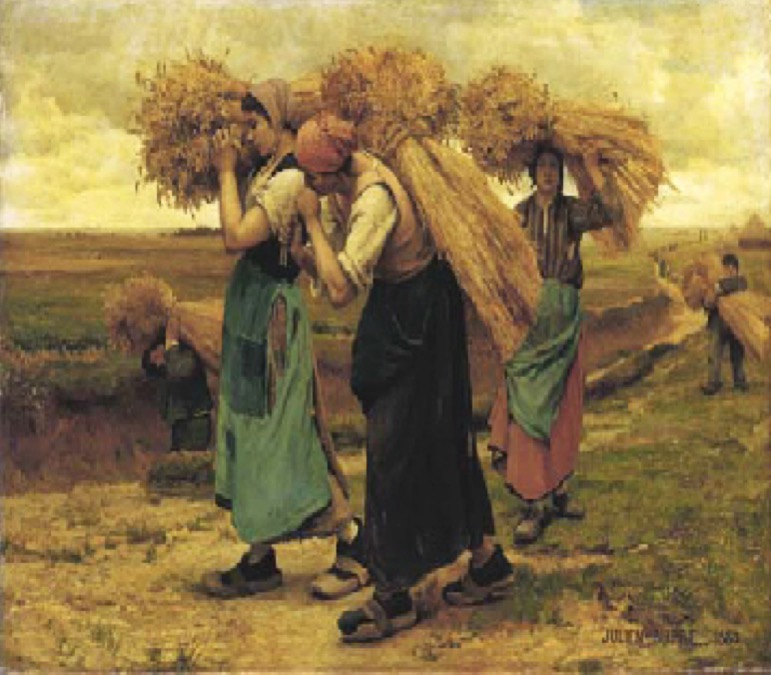
Julien Dupré (French, 1851-1910)

Psalm 126 assures us that we can meet our life experiences with hope and trust because God is faithful. Within both our “comings” and our “goings”, God abides with us and will deliver us to joy.

Although they go forth weeping,
carrying the seed to be sown,
They shall come back rejoicing,
carrying their sheaves.


Poetry:  A Short Testament by Anne Porter

Whatever harm I may have done 
In all my life in all your wide creation creation
If I cannot repair it 
I beg you to repair it, 

And then there are all the wounded 
The poor the deaf the lonely and the old
Whom I have roughly dismissed 
As if I were not one of them. 
Where I have wronged them by it 
And cannot make amends 
I ask you 
To comfort them to overflowing,

And where there are lives I may have withered around me,
Or lives of strangers far or near 
That I've destroyed in blind complicity, 
And if I cannot find them 
Or have no way to serve them,

Remember them. I beg you to remember them

When winter is over 
And all your unimaginable promises
Burst into song on death's bare branches.

Music: Hallelujah- Leonard Cohen

Jeremiah’s Psalm

Friday of the Sixteenth Week in Ordinary Time

July 24, 2020

Today, in God’s Lavish Mercy, we pray with Jeremiah’s Psalm. The verses come from chapter 31, part of what is referred to as the “Book of Comfort”. (Chapter 31-33)

In total, the Book of Jeremiah is full of woe. It was written as a message to the Jews in Babylonian exile, blaming their faithlessness for their current predicament. The prophet admonishes the people, calling them to return to the Lord and allow themselves to be made new according to God’s design.

Jeremiah is notable for its complementary tactics of confronting the people with their sorrows while comforting them with God’s mercy. 

Hear the word of the LORD, O nations,
proclaim it on distant isles, and say:
He who scattered Israel, now gathers them together,
he guards them as a shepherd his flock.


Jeremiah forces his listeners to acknowledge that their destruction is deserved. They have shifted their trust from God’s Promise to a political power that devolved into greed, militarism, and the illusion of self-sufficiency. Once that acknowledgement is accomplished, repentance and renewal are possible.

Our passage today describes that possibility:

The LORD shall ransom Jacob,
he shall redeem him from the hand of his conqueror.
Shouting, they shall mount the heights of Zion,
they shall come streaming to the LORD’s blessings:
The grain, the wine, and the oil,
the sheep and the oxen.


Believing that scripture speaks to our experiences as well as to their own times, we may discover stark parallels between our world and that of Jeremiah. As we pray with this psalm, let’s ask to see where we have shifted from God’s hope for Creation. Where do we feel a sense of loss, confusion, desperation or anger? Where have we lost truth, compassion, and reverence for the life we share with all the human community?


As my small community watches the evening news, we audibly mourn the sorry state to which our world has come. We encourage one another to moral and political responsibility to change the forces that have led to this collapse.

This cycle of acknowledgement and grace-filled action can allow us to return, as did Jeremiah’s community, to God’s dream for Creation:

I will turn their mourning into joy,
I will console and gladden them after their sorrows.


Poetry:  What Babylon Was Built About – Judson Crews (1917- 2010) American poet

Music: I Will Restore – Maranatha Music

What was lost in battle
What was taken unlawful
Where the enemy has planted his seed
And where health is ailing
And where strength is falling
I will restore to you all of this and more

I will restore
I will restore
I will restore to you all of this and more

I will restore
I will restore
I will restore to you all of this and more

Where your heart is breaking
And where dreams are forsaken
When it seems what was promised; will not be given to you
And where peace is confusion
And reality an illusion
I will restore
I will restore
I will restore to you all of this and more

Psalm 36: Whew!

Thursday of the Sixteenth Week in Ordinary Time

July 23, 2020

From 2016:
Today, in Mercy, we pray to be childlike. As life seasons us, it also sometimes hardens us with an impermeability that prevents continued spiritual growth. We pray for the gifts of trust, hope and faith to return our hearts to the openness of a child that we may respond joyfully to the Holy Spirit.


Today, in God’s Lavish Mercy, we pray with Psalm 36, a praise hymn of David after a frightening encounter with an enemy.

I could have used this psalm last week. Someone immensely dear to me was hospitalized with suspicion of Covid 19. The fear, for him and for all who love him, was pretty overwhelming.

I did manage a prayer of abandonment before the negative diagnosis was returned about 36 hours later. But I’m rather sure that, like most of my attempts at abandonment, it was somewhat half-hearted. I really wanted my own will and hoped God’s Will was in alignment. Blessedly, it was.

But I would like to deepen in true trust and abandonment to God’s care for me and for all of us.


Psalm 36 gives us a chance to examine David’s prayer of abandonment, which drawing on a long history of God’s wisdom and favor, deeply trusts himself to God.

In our prayer today, we might recall God’s faithful care throughout our lives and release into God’s hands any worries we carry. Let us simply receive that infinite, refreshing fountain of grace pouring over all Creation.

Fountain of Life stained glass window at the Church of St. Maria del Mar in Barcelona,  copyright José Luíz Bernardes Ribeiro, https://creativecommons.org/licenses/by-sa/3.0/

Poetry:  Fountains in the sea by Marin Sorescu, translated by Seamus Heaney

Sorescu was a Romanian poet and playwright and one of the most popular figures to emerge from Romanian literary culture since the 1960s. He died in 1996, the year he was nominated for the Nobel Prize in Literature

Seamus Heaney, who died in 2013, was an Irish poet, playwright and translator. He received the 1995 Nobel Prize in Literature.

Fountains in the sea

Water: no matter how much, there is still not enough.
Cunning life keeps asking for more and then a drop more.
Our ankles are weighted with lead, we delve under the wave.
We bend to our spades, we survive the force of the gusher.

Our bodies fountain with sweat in the deeps of the sea,
Our forehead aches and holds like a sunken prow.
We are out of breath, divining the heart of the geyser,
Constellations are bobbing like corks above on the swell.

Earth is a waterwheel, the buckets go up and go down,
But to keep the whole aqueous architecture standing its ground
We must make a ring with our bodies and dance out a round
On the dreamt eye of water, the dreamt eye of water, the dreamt eye of water.

Water: no matter how much, there is still not enough.
Come rain, come thunder, come deluged dams washed away,
Our thirst is unquenchable. A cloud in the water’s a siren.
We become two shades, deliquescent, drowning in song.

My love, under the tall sky of hope
Our love and our love alone
Keeps dowsing for water.
Sinking the well of each other, digging together.
Each one the other’s phantom limb in the sea.

Music: Your Love, Oh Lord – Third Day

Psalm 85: Believe a New World into Being

Tuesday of the Sixteenth Week in Ordinary Time

July 21, 2020


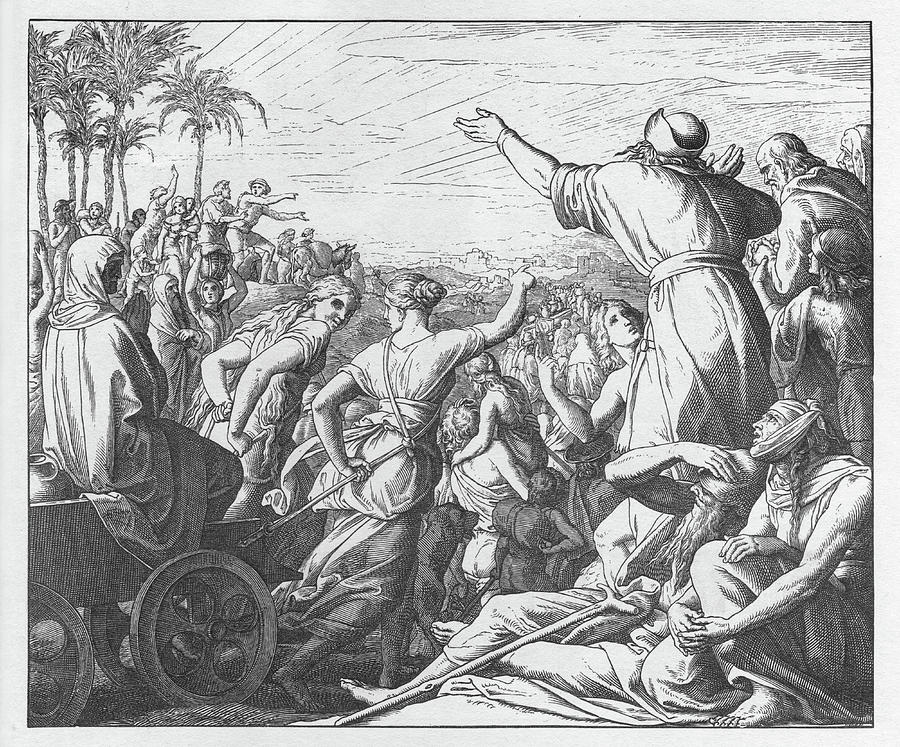
Return from Babylon by Julius Schnoor von Carolsfeld

Today, in God’s Lavish Mercy, we pray with Psalm 85. In Judaism, it is called “a psalm of returned exiles” as it reflects the experience of the Jews returning to their ravished land after the Babylonian exile. Things are a mess, and they have to start all over again to rebuild their Abrahamic nation. 

But they pray as if it is already accomplished.

Despite their suffering and captivity, the people have not lost hope in the promise of Yahweh. They expect its fulfillment and call on God to make it happen.

You have favored, O LORD, your land;
you have brought back the captives of Jacob.
You have forgiven the guilt of your people;
you have covered all their sins.
You have withdrawn all your wrath;
you have revoked your burning anger.


This is the power and beauty of a pure and faithful heart. It is free to “believe” God into action. We find this prayerful power expressed over and over in the Psalms. It is answered by God’s almighty and active desire for our good.


The Psalms mediate to us the great promise keeper whose resolve guarantees that the world is not a closed system. Creation, instead, is a world very much in process, sure to come to full shalom. Despair is the fate of a world “without god,” where there are no new gifts to be given. The Psalms refuse that world, knowing that God is not yet finished. Consequently, the Psalms can gather all the great words of the covenant and apply them to the future …

Walter Bruggemann

During these pandemic times, don’t prayer and promises like these speak to our hearts?

I find myself wondering what the world will be like when we finally “return” – come out of our “Covid exile” – what it will be like to see and hug the family, friends and community we love and miss right now, or to fully mourn those we have lost – what it will be like to resume our soul’s unworried dance with Creation and Time.


As we imagine that world, how might we hope for it to be more reflective of God’s dream for us than the world we closed down last March, than the “Babylon” we are experiencing? How will our prayers and actions for merciful justice “believe” God’s promises into reality for all God’s People?

Will you not instead give us life;
and shall not your people rejoice in you?
Show us, O LORD, your kindness,
and grant us your salvation.

I picture some ancient Jewish woman or man standing amidst the rubble of the ruined Temple. How deep did that person have to reach to find the faith and hope to move God?

I picture us standing in a very sick and dysfunctional world. Can we reach that deep ourselves by praying in the childlike, confident spirit of the Psalms:

Lord, show us your mercy and love.


Poetry: Antidotes to Fear of Death – by Rebecca Elson, a gifted Canadian–American astronomer and writer. Elson was diagnosed with non-Hodgkin’s lymphoma at the age of 29. With treatment, it went into remission, and in 1996 she married the Italian artist Angelo di Cintio. However, the cancer returned soon afterwards. Elson died of the disease in Cambridge in May 1999, at the age of 39.

A volume of wide-ranging poetry and essays she wrote from her teens until shortly before her death was published posthumously as A Responsibility to Awe in 2001 in the United Kingdom, and in 2002 in the United States. 

Antidotes to the Fear of Death

Sometimes as an antidote
To fear of death,
I eat the stars.

Those nights, lying on my back,
I suck them from the quenching dark
Til they are all, all inside me,
Pepper hot and sharp.

Sometimes, instead, I stir myself
Into a universe still young,
Still warm as blood:

No outer space, just space,
The light of all the not yet stars
Drifting like a bright mist,
And all of us, and everything
Already there
But unconstrained by form.

And sometime it’s enough
To lie down here on earth
Beside our long ancestral bones:

To walk across the cobble fields
Of our discarded skulls,
Each like a treasure, like a chrysalis,
Thinking: whatever left these husks
Flew off on bright wings.

Music: Going Home– based on Antonin Dvořák’s Largo from New World Symphony, lyrics by William Arms Fisher, sung here by Alex Boyé with the Mormon Tabernacle Choir

Psalm 95: The Real Voice

Monday of the Sixteenth Week in Ordinary Time

July 20, 2020

From this liturgical date in 2016:  

Monday, July 18, 2016: Today, in Mercy, we pray to do as the prophet Micah says. As our intense political season begins, we pray that our leaders – and we citizens – may do right, show real goodness, and find the courage to be humble. May we have the insight to shun a democracy built on values opposite to these. May God bless and inspire all who would lead us and may God bless and heal our country.


Today, in God’s Lavish Mercy, we will pray with Psalm 95, our Alleluia Verse. Today’s Responsorial is Psalm 50, which we have reflected on twice recently.

The verse from Psalm 95 is an often repeated one, and presents us with a clear ultimatum:

But how do we do that?
How do we hear God’s voice?
How do we avoid a hardened heart?


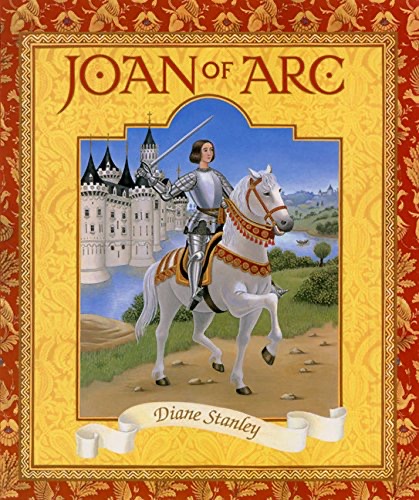
When I was a little girl, I loved to read the stories of the saints. I was particularly impressed by the life of the brave St. Joan of Arc, not only because she got to ride a horse, but because she heard heavenly voices. I thought it was very nice of God to tell Joan exactly what to do to be holy.

I waited a few years, probably from age six to nine, for God – or at least St. Michael, my parish patron – to speak to me. You know, just in case God had anything important for me to do, like take a small army over to New Jersey or something like that.

When I was 9 or 10, I fell in love with Jimmy Danvers and put my saint books in my bottom drawer. I still listened for God, but started not to expect an audible conversation.


What I failed to realize at that young age was that the conversation had already begun. I thought about God, prayed and tried to be a pretty good person. I went to Mass every day since 5th grade. I began to serve others in the way I thought Jesus would want to do it. With the help of my parents and teachers, I had made the choice to invite God’s heart into my heart.

Finally, I came to understand that God was speaking to me, and to everyone else, all the time. My job was to keep my heart’s ear open, softened, by my choices for Love.


Prayer is the communication of the soul with God. 
God is love, and love is goodness giving itself away. 
It is a fullness of being 
that does not want to remain enclosed in itself, 
but rather to share itself with others.

Saint Edith Stein

When we do this, each day brings us deeper and deeper into the Silent Word Who breathes forth the story of our lives. That sacred breath takes as many forms as there are creatures. Joan of Arc was one holy form. So am I. So are you.


Literature:  from Saint Joan by George Bernard Shaw

Charles VII:  Oh, your voices, your voices. Why don’t the voices come to me? I am king, not you!

Joan: They do come to you, but you do not hear them. You have not sat in the field in the evening listening for them. When the angelus rings, you cross yourself and have done with it. But if you prayed from your heart and listened to the thrilling of the bells in the air after they stopped ringing, you would hear the voices as well as I do.


Music: Holy Ground – John Michael Talbot

Verse 1
This is holy ground
We’re standing on holy ground
For the Lord is present
And where He is is holy
This is holy ground
We’re standing on holy ground
For the Lord is present
And where He is is holy

Verse 2
These are holy hands
He’s given us holy hands
He works through these hands
And so these hands are holy
These are holy hands
He’s given us holy hands
He works through these hands
And so these hands are holy

Verse 3
These are holy lips
He’s given us holy lips
He speaks through these lips
And so these lips are holy
These are holy lips
He’s given us holy lips
He speaks through these lips
And so these lips are holy

Psalm 86: Incline Your Ear to Me, O Lord

Sixteenth Sunday in Ordinary Time

July 19, 2020

From 2017:

Today, in Mercy, we pray with a tiny mustard seed. Like this seed, any small act of kindness, courage or faith multiplies and yields a harvest greater than seems possible. A holy life is made of such small seeds… given daily with loving intention. We pray today for a vibrant and firmly rooted faith that, like the mature tree, offers a haven for others on the journey.


Today, in God’s Lavish Mercy, we pray with Psalm 86, “a prayer of David”. Today’s verses provide a bridge between our first and second readings, as is usually the case on Sundays.

The thread holding all three passages together is the topic of prayer.

Both the first reading and psalm display a particular type of prayer, which I think of as a “Butter God Up” prayer. Both the Wisdom writer and psalmist tell God how good God is, presumably hoping that God will be good to them:

There is no god besides you who have the care of all,
that you need show you have not unjustly condemned….
…. But though you are master of might, you judge with clemency,
and with much lenience you govern us .

Wisdom 12

You, O LORD, are good and forgiving,
abounding in kindness to all who call upon you.
Hearken, O LORD, to my prayer
and attend to the sound of my pleading.

Psalm 86

There’s nothing wrong with the human psychology here. I used it on my parents a few times when I was young:

Mom, Dad, you’ve always trusted me.
Would it be OK if I go to the shore overnight with my friends?

In other words, “You are good, so bless me.” It’s an innocent prayer that pleads for the Provider’s benevolence and mercy on our petition


But Paul, in our second reading, teaches another, deeper way of prayer:

The Spirit comes to the aid of our weakness;
for we do not know how to pray as we ought,
but the Spirit himself intercedes with inexpressible groanings.

This deeper prayer arises out of a complete confidence and abandonment to God’s Mercy. Convinced that God loves us and wills our good, our prayer becomes an underlying, often wordless, relationship with God.

And the one who searches hearts
knows what is the intention of the Spirit,
because the Spirit intercedes for the holy ones
according to God’s will.


Poetry: Primary Wonder – Denise Levertov

Days pass when I forget the mystery.
Problems insoluble and problems offering
their own ignored solutions
jostle for my attention, they crowd its antechamber
along with a host of diversions, my courtiers, wearing
their colored clothes; cap and bells.
                                                        And then
once more the quiet mystery
is present to me, the throng's clamor
recedes: the mystery
that there is anything, anything at all,
let alone cosmos, joy, memory, everything,
rather than void: and that, O Lord,
Creator, Hallowed One, You still,
hour by hour sustain it.

Music:  Bow Thine Ear, O Lord – by William Byrd, sung here by The Cambridge Singers with John Rutter
The loss of Jerusalem is an inspiration for William Byrd (1539-1623) in his setting of Bow thine ear, O Lord.

Bow thine ear, O Lord, and hear us:
Let thine anger cease from us.
Sion is wasted and brought low,
Jerusalem desolate and void.