Psalm 1: Don’t Sit There!

Thursday of the Second Week of Lent

March 4, 2021


Today, in God’s Lavish Mercy, we pray with Psalm 1. We’ve prayed with it several times, but today a particular word and verse struck me.

“Insolent” — I’ll bet it’s a word you seldom, if ever, said out loud. The last time I think I heard it  was when my sixth grade teacher caught me smoking in the girls’ lav. I didn’t know what the word meant, but I knew it wasn’t good.

Even etymologists are uncertain of the origin of the word, but it has come to define one who is contemptuous of rightful authority.


Despite its current infrequent use, the Bible likes the word and uses it at least 23 times to instruct our spiritual life.

Psalm 1 declares that even hobnobbing with the insolent is a bad idea. Insolence rubs off on us if we’re not careful. You know, “birds of a feather” and all that.


And isn’t it true? Haven’t you run into one or two cliques of contemptuous, snidely belligerent people in your lifetime who feed on one another’s insolence?

Those are the kind of folks Psalm 1 is talking about. We meet them everywhere – school, church, work, socially. They are the ones gossiping, passing judgment, stereotyping, slandering … Perhaps we’ve even joined them at times 🥲

In their worst form, they are the ones in the white hoods, carrying the burning torches, pushing kids into cages. We should pray for them because, as our psalmist suggests, they have been emptied of their souls:


… they are like chaff which the wind drives away.

Psalm 1:4


It’s been a long time since sixth grade and, even if I still don’t know the etymology of the word, I’ve come to understand what severe insolence does to a soul.

I don’t want to harbor even an ounce of it. Reflecting on Psalm 1 today, that is my heartfelt prayer.


Poetry: Know Yourself –   Meister Eckert

A human being has so many skins inside, 
covering the depths of the heart. 
We know so many things, 
but we don’t know ourselves! 
Why, thirty or forty skins or hides, 
as thick and hard as an ox’s or bear’s, 
cover the soul. 
Go into your own ground 
and learn to know yourself there.

Music: Grace Is – Paul Avgerinos 

Psalm 31: The Plot

Wednesday of the Second Week of Lent

March 3, 2021

Today, in God’s Lavish Mercy, we pray with Psalm 31 which expresses a pleading reflective of our first powerful reading from Jeremiah.

Come, let us contrive a plot against Jeremiah.
… let us destroy him by his own tongue;
let us carefully note his every word.

Jeremiah 18:18

This verse (18:18) is the pivotal turning point where everything goes south for Jeremiah. The Israelite power structure really didn’t want to hear what Jeremiah was telling them. He pins their troubles – the destruction the Temple and Babylonian Captivity – on one thing: their faithlessness to the Covenant with Yahweh.


Jeremiah is an archetype of the condemned prophet whom we meet in Jesus. Today’s Gospel reveals the same pivotal turning point for Jesus:

We are going up to Jerusalem,
and the Son of Man will be handed over to the chief priests
and the scribes,
and they will condemn him to death,
and hand him over to the Gentiles
to be mocked and scourged and crucified,
and he will be raised on the third day.

Matthew 20:18-19

They told the Truth – that we must continually discern God’s Word for our lives, always seeking love, mercy and justice. Few had the courage to listen. Most chose sinful resistance.

The suffering prophet has only one recourse when “hearing the whispers of the crowd, that frighten me from every side, as they consult together against me, plotting to take my life.” Psalm 31:14

That recourse is complete and trusting surrender to God. Psalm 31 reveals this surrender in a verse Jesus ultimately prays from the Cross:

Into your hands I commend my spirit;
    you will redeem me, O LORD, O faithful God.

Psalm 31:6

Lent calls us to the message of Jeremiah and Jesus – to examine our lives in light of love, mercy and justice. Let us pray in the spirit of Jesus today to be open to Truth in our own lives and to build Truth in our communities.


Poetry: The Paradox by Paul Laurence Dunbar
The poem carries a tone similar to sorrowful Jeremiah’s poetry.

I am the mother of sorrows,
I am the ender of grief;
I am the bud and the blossom,
I am the late-falling leaf.

I am thy priest and thy poet,
I am thy serf and thy king;
I cure the tears of the heartsick,
When I come near they shall sing.

White are my hands as the snowdrop;
Swart are my fingers as clay;
Dark is my frown as the midnight,
Fair is my brow as the day.

Battle and war are my minions,
Doing my will as divine;
I am the calmer of passions,
Peace is a nursling of mine.

Speak to me gently or curse me,
Seek me or fly from my sight;
I am thy fool in the morning,
Thou art my slave in the night.

Down to the grave will I take thee,
Out from the noise of the strife;
Then shalt thou see me and know me–
Death, then, no longer, but life.

Then shalt thou sing at my coming.
Kiss me with passionate breath,
Clasp me and smile to have thought me
Aught save the foeman of Death.

Come to me, brother, when weary,
Come when thy lonely heart swells;
I ‘ll guide thy footsteps and lead thee
Down where the Dream Woman dwells.

Music: Symphony No.1 – Jeremiah by Leonard Bernstein 

Summary: an excellent introduction to this symphony

Entire Symphony:

Psalm 50: Clean It Up!

Tuesday of the Second Week of Lent

March 2, 2021


Today, in God’s Lavish Mercy, we pray with Psalm 50 which Wikipedia describes as “a prophetic imagining of God’s judgement on the Israelites”.


It’s a rainy day here, after a foggy yesterday. A cheery psalm this morning would have been nice…. but, well it’s Lent.

Why do you recite my statutes,
    and profess my covenant with your mouth,
Though you hate discipline
    and cast my words behind you?

Psalm 50: 16-17

The psalm is a divine rebuke. It shouts, “Wake up! You’re missing the point!”

Psalm 50 calls us to examine the failures in love that we might bury under routine. It demands that we look under the surface of our daily practice for the depths of grace and transformation that we might be overlooking.


We can get pretty comfortable with our beliefs, our judgements, our attitudes, our habits. Left unexamined, these can deteriorate into prejudices and indifferences, into bigotry and self-righteousness, into betrayals of mercy.

Today’s Gospel gives us a perfect description of what happens to us when we fail to discern the “hardening of our spiritual arteries”. We get Pharisaical! Here’s what Jesus says about pharisees:

… they preach but they do not practice.
They tie up heavy burdens hard to carry
and lay them on people’s shoulders,
but they will not lift a finger to move them.
All their works are performed to be seen.
They widen their phylacteries and lengthen their tassels.
They love places of honor at banquets, seats of honor in synagogues,
greetings in marketplaces, and the salutation ‘Rabbi.’

Matthew 23:4-7

Let’s learn humble, contrite self-examination by sincerely praying Psalm 50:

Those who offer praise as a sacrifice glorify me;
    and to those who go the right way 
    I will show the salvation of God.

Psalm 50: 23

Our first reading from Isaiah sums it up:

Wash yourselves clean!
Put away your misdeeds from before my eyes;
    cease doing evil; learn to do good.
Make justice your aim: redress the wronged,
    hear the orphan’s plea, defend the widow.

Isaiah 1:16-17

Poetry: God must give us a renewed mind (from Vale Millies) by Hadewijch. She was mystic of the 13th century
English version by Mother Columba Hart, Original Language Dutch

God must give us a renewed mind
     For nobler and freer love,
To make us so new in our life
     That Love may bless us
And renew, with new taste,
     Those to whom she can give new fulness;
Love is the new and powerful recompense
     Of those whose life renews itself for Love alone.
— Ay, vale, vale, millies — (farewell, farewell, a million times)
     That renewing of new Love
— Si dixero, non satis est — (If I can speak, it is not enough)
     Which renewal will newly experience.


Music: Psalm 50

Psalm 79: Prisoners

Monday of the Second Week in Lent

March 1, 2021


Today, in God’s Lavish Mercy, we pray with Psalm 79, marked in some translations as “A Prayer for Jerusalem”. The psalm is also considered one of the “Sad Songs of Zion” which lament the destruction of the Temple and the ensuing Babylonian Captivity.

We might compare the context for Psalm 79 to what Americans felt on 9/11 or Pearl Harbor. All serenity, confidence, and trust were shattered. The world was broken and we didn’t know if it could be mended.


Praying Psalm 79, I think of the experience of prisoners – prisoners of all kinds. I think of those whose bodies are in jail, and of those whose minds, hearts and souls are similarly confined. Their worlds have been broken, as has their victim’s, even if the victim was themselves.

Let the prisoners’ sighing come before you;
    with your great power free those doomed to death.

Psalm 79:11

I think how our crimes, or addictions, or hateful prejudices – or whatever shape our sinfulness takes – eventually incarcerate us.

And I think of James.


I remember being presented with the “opportunity”. I was about 12 years old and I hero-worshipped my 7th grade teacher, Sister Helen Carmel, SSJ. But I wasn’t so sure about what she was inviting us to do.

Sister had a list of prisoners in Eastern State Penitentiary. She painted a picture of them as lonely and often abandoned people who needed prayers and kindness. She wondered if some of us might like to take a prisoner as a pen pal.

Now, I’ll be honest, the last thing I wanted was a prisoner pen pal! I was becoming a teenager! I wanted new ice skates, an A on my math test, and Jimmy Danvers to hold my hand and treat me to pizza some Friday night.

But because I loved Sister Helen Carmel like a second mother, I got a pen pal. And, maybe because she loved me like a daughter, she gave me a doozie: James, who was on death row.

James and I corresponded occasionally for about three years until he wrote to say there would be no more letters. He didn’t say why, but I knew his time had come either for release or execution. I never learned which. I didn’t want to.


Around the time that James and I corresponded, a teenage girl was brutally raped and murdered, her ravaged body left in the mud of Fairmount Park. 

She went to Catholic high school like I did! She was a teenager like I was! She liked movies and friends and Friday nights like I did! I realized that what had happened to her could have happened to me! Her name, Mary Anne, was perpetually sealed in my mind. When her killer was apprehended and eventually sentenced to death, I was glad. 

But because of James, my gladness was conflicted. These two men have fought a tug of war in my soul ever since. 

Does a human being ever really forfeit the right to life because of their heinous actions? Does society ever have the right to take a life in retribution for crime? I still struggle with the feelings these questions generate. I have spent decades trying to learn how to change my heart from a retributive to a restorative model of justice.

It doesn’t just happen. It takes prayer, education, and right choices. It has taken me the help of more enlightened spirits like St. Joseph Sister Helen Prejean  and Mercy Sister Mary Healy.


Today we state clearly that ‘the death penalty is inadmissible’ and the Church is firmly committed
to calling for its abolition worldwide.

Pope Francis

The Pope has revised the Catechism
of the Roman Catholic Church to state that, 
“The death penalty is an attack
on the inviolability and dignity of the person
that is inadmissible in all cases.”

As we pray with Psalm 79 today, may we have the charity and courage to pray for condemned prisoners, their victim’s beloveds, and for a society that can create effective reform to heal the root causes of major crime.

Help us, O God our savior,
    because of the glory of your name;
Deliver us and pardon our sins
  for your name’s sake.

Psalm 79:9

No poem today. Some music though: The Prisoners’ Chorus from Beethoven’s opera “Fidelio”

Psalm 116: Listen!

Second Sunday of Lent

February 28, 2021


Today, in God’s Lavish Mercy, we pray with Psalm 116 which Pope John Paul II called “A Prayer of Thanksgiving to the Lord”.

Praying the psalm today, in the context of our other Sunday readings, leads us deeper into the nature of that “thanksgiving” and its relationship to sacrifice.

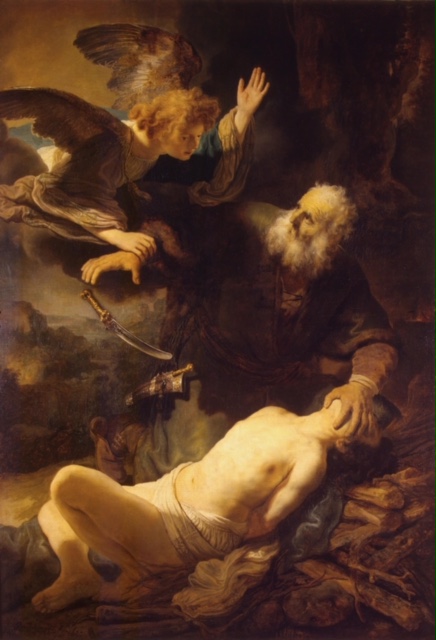
Abraham and Isaac by Rembrandt

In our first reading, we meet Abraham, full of thanks that God reconsidered the command to sacrifice his dear son.


But then our second reading expresses thanks that God was willing to sacrifice his own Son for our sakes.

The Transfiguration by Titian

Finally, our Gospel takes us to the Transfiguration where that Son who will be sacrificed is revealed in his true glory.

What is the thread binding these readings? I think it can be found in this Gospel verse:

This is my beloved Son.  
Listen to him.

True listening is obedience. The words come from the same root: obedience = listen to,” from ob “to” + audire “listen, hear”.

  • Abraham listens, no matter how hard, and finally hears God’s real command to love.
  • Jesus listens to the Will of the Father even through his suffering, and is led to Resurrection.
  • We, like Peter, James and John, are called to listen to Jesus who will transfigure our perceptions about what life is really calling us to.

In each case, intent “obedience” allows the listener to hear and see beneath circumstances to the deeper Grace beyond appearances. Deep spiritual listening transfigures us!

This is the whole point of the spiritual life. Our lives are so much more than mere circumstances or appearance. Our psalm calls us to believe this even in difficulty:

I believed, even when I said,
    “I am greatly afflicted.”
Precious in the eyes of the LORD
    is the death of his faithful ones.

Psalm 116:10

When we do this, we are freed to engage our lives at the level of God’s Will which is always for our good, which is always from Love. The long tradition of faith, learned from our forbearers, assures us of this:

O LORD, I am your servant;
    I am your servant, the child of your faithful ones;
    you have loosed my bonds.
To you will I offer sacrifice of thanksgiving,
    and I will call upon the name of the LORD.

Psalm 116:16-17

Some of us go through life continually angry, frustrated, or overwhelmed by our challenges. Others, experiencing similar or even greater challenges, reflect a spirit of joy, peace, and gratitude. Why is that? I think today’s readings give us a big clue. Let’s listen to them!


Poetry: Story of Isaac, written and chanted by the bard Leonard Cohen who also wrote the currently popular “Hallelujah “.


Music: Psalm 116: Steve Green

Lyrics

I love the Lord, He heard my voice
He heard my voice. He heard my voice
He heard my cry for mercy
Because He has turned His ear to me
I will call (I will call)
I will call on the Lord for as long as I live

I love the Lord, He heard my voice
He heard my voice. He heard my voice
He heard my cry
I love the Lord, He heard my voice
He heard my voice. He heard my voice
He heard my cry for mercy

Psalm 119: DiliGENTLY

Saturday of the First Week of Lent

February 27, 2021


Today, in God’s Lavish Mercy, we pray with our familiar Psalm 119. Because it is the longest of the Psalms, there is plenty of material for its frequent use.


But sometimes, when things are frequent and familiar, they can also become “humdrum”. Our prayers, especially repeated vocal prayers such as those we say at Mass, can become veiled in monotony.


Thinking of this, I read Psalm 119 with new eyes today, looking for a dynamic word to pop out and speak to me. And here it was:

You have commanded that your precepts
    be diligently kept.
Oh, that I might be firm in the ways
    of keeping your statutes!

Psalm 119: 4-5

Diligently” – it is a wonderful word that suggests a range of attitudes we should hold in the Presence of God.

The word is derived from the Latin diligere: “to single out, value highly, esteem, prize, love; aspire to, be content with, appreciate”.

The psalmist suggests that God wants us to esteem and love God’s Word in a singular manner – that we should pay sharp attention, prize, and develop a deep appreciation for God’s precepts.


Our careful engagement of the Word of God must be delicate and gentle, as the root of “diligently” implies. We might imagine careful fingers peeling ripe fruit so delicately that nothing is lost of its pulp or juice.

In our daily prayer, we then savor that sweetness over and over, releasing its eternal meaning into the circumstances of our lives, feeding our spirits with its graces.

I will give you thanks with an upright heart,
    when I have learned your just ordinances.

Psalm 119:7

Poetic Advice: Taken from “The Journey of the Mind to God” by St. Bonaventure (1221–1274)

Do not assume that mere
Reading will suffice without fervor,
Speculation without devotion,
Investigation without admiration,
Observation without exaltation,
Industry without piety,
Knowledge without love,
Understanding without humility,
Study without divine grace.

Music: Wonderful Words of Life – Philip Bliss, 1874.
This is a lesser known hymn by the prolific Bliss who also composed the music for the more popular “It Is Well with My Soul”.

Psalm 130: The Depths

Friday of the First Week of Lent

February 26, 2021


Today, in God’s Lavish Mercy, we pray with Psalm 130, the De Profundis. This is a transformative prayer whose power we may not fully realize.

Have you ever been disappointed with God? Have you ever let God know it in your prayer? 

Psalm 130 is the psalmist’s complaint to God that things are as bad as they can get and God doesn’t appear to care. It is a plea – even a demand- for God to pay attention and do something. (See my poem, sent a little later, called “These Things”.)

Out of the depths I cry to you, O LORD;
    LORD, hear my voice!
Let your ears be attentive
    to my voice in supplication.


But Psalm 130 is not just a private complaint. As well as being a penitential psalm, 130 is marked as a “Psalm of Ascent”. This means that it was sung by the community as they went to the Temple to worship.

Psalm 130 carries the tone of a national or global lament. It has the feeling of a deeply bruised people bearing a desperate hope mixed with some bewilderment. It is a feeling we all recognize.

Remembrance of Lives Lost to Covid 19

Yesterday in my neighborhood, we had our first hint of spring weather. On a short walk, I met a few people whose winter-weary eyes, above their masks, held a spark of resurrection hope.

With distribution of COVID vaccines, hope for deliverance from the pandemic surfaces like a tentative bud. We are starting the slow ascent from the depths we have all shared. We are on our way to the temple of thanksgiving and praise.


But Psalm 130 reminds that, on that ascent, fully voicing our lament is imperative for true healing. In reference to the pandemic, and to any other devastation we face in life, we must be honest with God about our fear, confusion, sadness, hopelessness, and shaken faith … about our disappointment in God, our splintered expectations which need healing.

If you, O LORD, mark iniquities,
    LORD, who can stand?

It is only by asking God how these things – whatever they might be – could be allowed to happen to us, or to any of God’s beloved, that we will open ourselves to the Divine answer – a mystery too deep for words.

I trust you, LORD;
    my soul trusts in your word.
My soul waits for you
    more than sentinels wait for the dawn.
    Let me wait for the LORD.

Such prayer heals, leading us to a deeper, truer relationship with God.

For with the LORD is kindness
    and plenteous redemption;
And the Lord will redeem Israel
    from all their suffering and sin.

Poetry: Spring – Mary Oliver

Somewhere
a black bear
has just risen from sleep
and is staring

down the mountain.
All night
in the brisk and shallow restlessness
of early spring

I think of her,
her four black fists
flicking the gravel,
her tongue

like a red fire
touching the grass,
the cold water.
There is only one question:

how to love this world.
I think of her 
rising
like a black and leafy ledge

to sharpen her claws against 
the silence
of the trees.
Whatever else

my life is
with its poems
and its music
and its cities,

it is also this dazzling darkness
coming 
down the mountain,
breathing and tasting;

all day I think of her –
her white teeth,
her wordlessness, 
her perfect love.

Music: Pié Jesu – Michael Hoppé

Psalm 138: Favors Received

Thursday of the First Week of Lent

February 25, 2021


Today, in God’s Lavish Mercy, we pray with Psalm 138, an ardent thanksgiving for favors received.

Lord, on the day I called for help,
you answered me.

Psalm 138:3
Queen Esther by Andrea del Castagno – 15th C.

The psalm today reflects back to our first reading from the Book of Esther. The “favor received” in that story is a monumental one: saving the Jewish people from extinction. This deliverance is commemorated on the Jewish Feast of Purim which, coincidental to our liturgical reading, is celebrated this year on February 25th.


 Reflecting on “favors received”, we might be moved to thank God for the blessings in our lives. Some blessings are evident from the get-go. But some come initially wrapped in challenge, worry, even anguish:

Queen Esther, seized with mortal anguish,
had recourse to the LORD.
She lay prostrate upon the ground, together with her handmaids, 
from morning until evening, and said:
“God of Abraham, God of Isaac, and God of Jacob, blessed are you. 
Help me, who am alone and have no help but you,
for I am taking my life in my hand.

Esther C: 12-16

What is it that changes these darknesses into Light? Psalm 138 offers us this clue:

When I called, you answered me;
    you built up strength within me.
    Your right hand saves me.
The LORD will complete what he has done for me;
    your kindness, O LORD, endures forever;
    forsake not the work of your hands.

Psalm 138: 3,7-8

Certainly a positive outcome to our prayer, like Esther’s, allows us to see a blessing. But what about the times when the outcome disappoints or even devastates us?

The answer has something to do with spiritual “strength”, with a long faith like Esther’s. She puts her hope in the Lord and waits for the answer to unfold even at the risk of her life.

Trusting God like this means that we believe in God’s bigger picture for us and for all that we love. 

  • It means that, by faith, we live partly in the eternal world we cannot yet see. 
  • It means that the quintessential things of our heart and soul exist beyond time, in the unbounded love of God.
  • It means that we trust God to complete all things in lavish mercy.

The LORD is with me to the end.
LORD, your Mercy endures forever.
Never forsake the work of your hands!

Psalm 138: 7-8

That kind of faith won’t just pop up when we are in trouble. It has to be ingrained – the very fabric of our lives, knitted there by the prayerful surrender of our daily lives to God’s amazing Grace.


Poetry: Rock of My Salvation BY MORDECAI BEN ISAAC
TRANSLATED BY SOLOMON SOLIS-COHEN

Mighty, praised beyond compare,
Rock of my salvation,
Build again my house of prayer,
For Thy habitation!
Offering and libation, shall a ransomed nation
Joyful bring
There, and sing
Psalms of Dedication!

Woe was mine in Egypt-land,
(Tyrant kings enslaved me);
Till Thy mighty, out-stretched Hand
From oppression saved me.
Pharaoh, rash pursuing, vowed my swift undoing—
Soon, his host
That proud boast
’Neath the waves was rueing!

To Thy Holy Hill, the way
Madest Thou clear before me;
With false gods I went astray—
Foes to exile bore me.
Torn from all I cherished, almost had I perished—
Babylon fell,
   Ze-ru-ba-bel
Badest Thou to restore me!

Then the vengeful Haman wrought
Subtly, to betray me;
In his snare himself he caught—
He that plann’d to slay me.
(Hauled from Esther’s palace; hanged on his own gallows!)
Seal and ring
Persia’s king
Gave Thy servant zealous.

When the brave Asmonéans broke
Javan’s chain in sunder,
Through the holy oil, Thy folk
Didst Thou show a wonder—
Ever full remained the vessel unprofanèd;
These eight days,
Lights and praise,
Therefore were ordainèd.

Lord, Thy Holy Arm make bare,
Speed my restoration;
Be my martyr’s blood Thy care—
Judge each guilty nation.
Long is my probation; sore my tribulation—
Bid, from Heaven,
Thy shepherds seven
Haste to my salvation!

Music: Rock of My Salvation – Maranatha Music

Psalm 34: Together

Tuesday of the First Week of Lent

February 23, 2021


Today, in God’s Lavish Mercy, we pray with Psalm 34, thought to be a young David’s thanksgiving prayer after God saved him from one of his many dangerous escapades.

In telling his deliverance story, David invites his friends to celebrate with him and to learn the faith-lesson he has learned:

Glorify the LORD with me,
    let us together extol his name.
I sought the LORD, and he answered me
    and delivered me from all my fears. 


I picture myself sitting in David’s audience, absorbing the words of his prayer. This line strikes me:

The LORD has eyes for the just,
    and ears for their cry.

Ah, the Lord has eyes for me….for ME! It conjures up sounds of The Flamingos, doesn’t it? (Sorry for the transcriber’s misspelling 😀)

Most of us want to think that we are individually special to God. This desire is at the core of the Protestant Evangelical model, “a personal relationship with Jesus Christ”. But for some, this model has become confused with a prosperity gospel that is quite misleading.

The only prosperity we should seek from God is the gift of grace because:

Yahweh’s peculiar inclinations are with the broken-hearted and the ones with crushed spirit. That is, Yahweh’s solidarity is not with the ones who go from success to success, but the ones denied success.

Walter Brueggemann The Message of the Psalms A Theological Commentary Ausberg Publishing House 1984

Still, such a personal relationship is not alien to a full and complete faith:

Faith is above all a personal, intimate encounter with Jesus, and to experience his closeness, his friendship, his love; only in this way does one learn to know him ever more, and to love and follow him ever more. May this happen to each one of us.

Pope Benedict XVI, General Audience, 2009

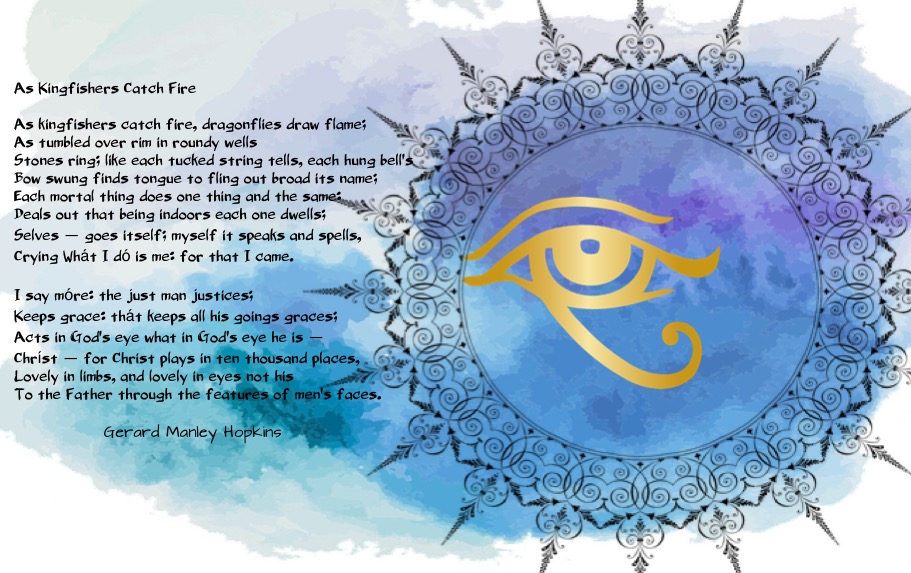
(Look for an extra prayer about “The Eye of God” in another post today.)


However, our psalm alerts us that this deeply personal dimension is only part of relationship with God.

When the just cry out, the LORD hears them,
    and from all their distress he rescues them.
The LORD is close to the brokenhearted;
   and those who are crushed in spirit he saves.

To be seen and heard by God, one must be part of the just community. To be close to God, one must feel the brokenheartedness of the poor. We come to the psalmist’s exuberant praise only by walking with suffering, either in our own lives, or beside others who bear distress.

From all their distress
God rescues the just.

Psalm 34 teaches us that our personal relationship with God is interdependent with our relationship with the whole community. David calls his community to share in his praise-song because they- together -recognize God’s mercy and share it in concern for one another.

The LORD has eyes for the just,
    and ears for their cry.


Our Gospel today confirms that a personal love for God thrives only within a communal love. The prayer Jesus shares is not “My Father”. It is “Our Father”. We come to the depths of God’s merciful heart with our sisters and brothers.


Poetry: An Inclusive Lord’s Prayer – Author unknown

Loving God, 
in whom is heaven, 
may Your name be honored everywhere.
May Your Mercy reign.
May the desire of Your heart for the world 
be done, 
in us, by us and through us.
Give us each and all
the bread we need for the day.
Forgive us.
Free us to forgive others.
Keep us from all anxiety, fear, and selfishness.
For You reign in the power that comes from love 
which is Your glory
forever and ever.
Amen.

Music: Our Father – Joe Wise

Psalm 23: The Shepherd

Feast of the Chair of Saint Peter, Apostle

February 22, 2021


Today, in God’s Lavish Mercy, on this Feast of St. Peter we pray with Psalm 23 – the Good Shepherd.

The LORD is my shepherd; I shall not want.
    In verdant pastures I am given repose;
Beside restful waters the Lord leads me;
    refreshing my soul.

Psalm 23

The history and devotion intrinsic to this feast can inspire us to pray especially today for our dear Pope Francis who carries Peter’s grace and burden in our time. He carries, in Primacy, the charge reflected in our first reading:

Tend the flock of God in your midst,
overseeing not by constraint but willingly,
as God would have it, not for shameful profit but eagerly.
Do not lord it over those assigned to you,
but be examples to the flock.
And when the chief Shepherd is revealed,
you will receive the unfading crown of glory.


Pope Francis faces resistances just as Peter did. There are always forces within a community who pull its energy in contradictory directions. When rooted in love and reverent dialogue, that counteraction can generate growth. But when born of selfishness and obstinance, such opposition poisons the whole Body.

Francis needs our prayer. The Church needs our prayer. According to Teresa of Avila, Saint and Doctor of the Church, that prayer should be scriptural:

All the troubles of the Church,
all the evils in the world,
flow from this source:
that human beings do not
by clear and sound knowledge
and serious consideration
penetrate into the truths
of Sacred Scripture.

St. Teresa of Avila

Today, Psalm 23 inspires our prayer for our Pope:

Even in the dark valley
    may you fear no evil; for you are at God’s side
Whose rod and staff
    give you courage.
May God spread graces before you
    in the sight of your troubles;
and anoint your head with oil;
    your cup overflowing.
May goodness and kindness follow you
    all the days of your life;
May you dwell in the LORD’s sanctuary
    for all your days.


Poetry: When I was a boy … (Da ich ein Knabe war …) – Friedrich Hölderlin

Pope Francis’s favorite poet is said to be the German writer Friedrich Hölderlin. Perhaps Francis, composer of the lyrical Laudato Sí and Fratelli Tutti, loves this rhapsodic poem.

When I was a boy
Often a god would save me
From the shouts and blows of men;
I played safely and well
With the flowers of the fields
And the winds of heaven
Played with me.

As you make happy
The hearts of plants
When they extend to you
Their delicate tendrils,
So you make my heart happy,
Father Sun, and like Endymion
I was your favorite,
Holy Moon!

All true and neighborly gods!
If only you knew
How much I loved you then!
True, at that time, I didn’t
Know your names, and you
Never bothered to name me, like men
Who only pretend to know one another.

Yet I know you better
Than I’ve ever known anyone,
I understood the silence of the upper air,
But I’ve never understood the words of men.
I was raised by the sounds
Of the rustling grove
And learned to love
Among the flowers.
I grew up in the arms of the gods.

Music: Psalm 23 with Bach’s Sheep May Safely Graze