Lent: Pray for the Enemy

March 24, 2022
Thursday of the Third Week of Lent

Today in God’s Lavish Mercy, Jeremiah begins our readings by describing the evil heart:

… they obeyed not, nor did they pay heed.
They walked in the hardness of their evil hearts
and turned their backs, not their faces, to Me.

Jeremiah :24

It is a terrible thing to encounter a truly evil-hearted person – someone who exudes a twisted energy which is the polar opposite of God’s Love.

I believe we are seeing such a individual now in the person of Vladimir Putin. His actions leave us astounded at their arrogance and cruelty. How can such a person face himself, and certainly, how can he face God?


But our Psalm and Gospel Verse, lead me to ask myself the question:

What if we prayed FOR Vladimir Putin?

Come, let us bow down in worship;
let us kneel before the LORD who made us.
For he is our God,
and we are the people he shepherds, the flock he guides.
R. If today you hear his voice, harden not your hearts.

What if we took pity on the wretched soul he has become and asked God to heal his mind and give him a new heart? He has become sick with evil, and that is a tragic thing to see in a leader responsible for millions of lives!


All of us feel tremendous sorrow and compassion toward the Ukrainian people. But in the end, no matter what, they will triumph through their sincerity, courage and faithfulness.

Putin, on the other hand, is otherwise lost for all eternity.


Will you consider praying today for Putin and those who share his evil culpabilities that they may yet hear the voice of goodness, justice, peace, and reverence for human life?

As we witness the power of God revealed in our Gospel story, let us ask that the evil of war be driven out of the hearts of all those responsible for the outrageous suffering and inhumanity being perpetrated again the people of Ukraine and in all war-infested parts of our world.


Music: Shchedryk by Mykola Leontovich

One of the world’s most famous Christmas songs – The Carol of the Bells – was based on the Ukrainian song Shchedryk, written in 1916 by composer Mykola Leontovich, which was in turn based on the melody and lyrics of a pre-Christian folk song.

This is Gimnazija Kranj Symphony Orchestra and Choir’s dedication to brave Ukrainian people who suffer under the brutal Russian invasion. Our musicians performed this beautiful love song a couple of years ago. Tine Bec did an amazing arrangement. It was composed by Mykola Leontovych: Shchedryk (Carol the Bells) with a splendid arrangement, made by composer Slovenian Tine Bec.

This arrangement is magical. It starts like deep sad mourning and continues to strengthen, unitarian voice, which is stronger than any steel, any armoury and any Russian bullet, rocket or trank grande. Music is a winner. It gives hope, unites us in a way, that no aggression will ever win.

Arrangement: Tine Bec
Piano: Monika Podlogar; Cello: Katarina Minatti

Lent: A Heart Become Christ’s

March 17, 2022
Thursday of the Second Week of Lent
St. Patrick’s Day

Sláinte means “health” in Irish and Scottish Gaelic

Today, in God’s Lavish Mercy, Jeremiah challenges us with this powerful question:

More tortuous than all else is the human heart,
beyond remedy; who can understand it?

Jeremiah 7:9

Fortunately, Jeremiah also provides an answer to the question:

I, the LORD, alone probe the mind
and test the heart,
To reward everyone according to their ways,
according to the merit of their deeds.

Jeremiah 17:10

If we invite God into our hearts, we will be guided to this blessing:

Blessed is the one who trusts in the LORD,
            whose hope is the LORD.
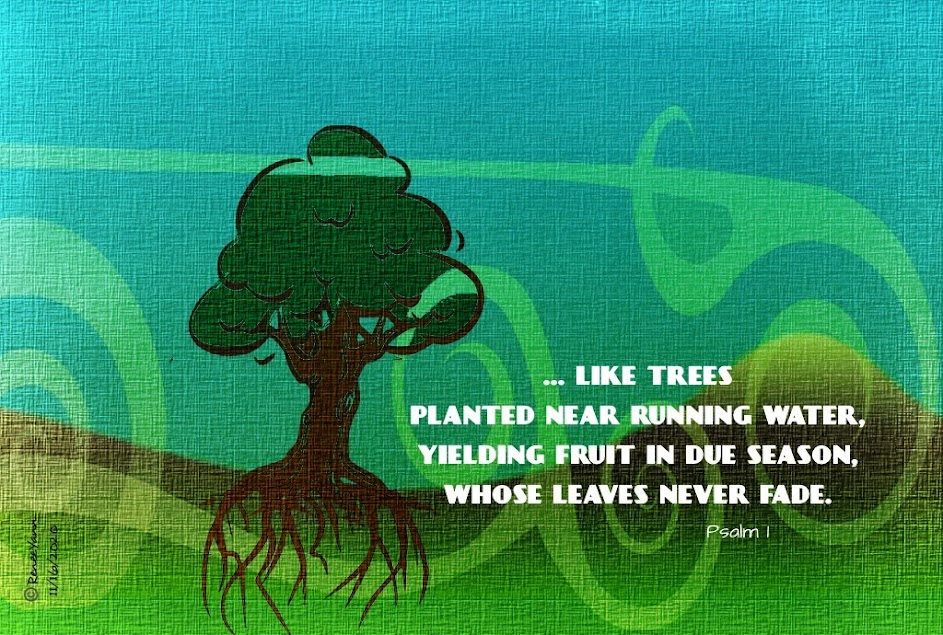
That person is like a tree planted beside the waters
            that stretches out its roots to the stream:
It fears not the heat when it comes,
            its leaves stay green;
In the year of drought it shows no distress,
            but still bears fruit.

Jeremiah 17: 7-8

Poetry: Our dear St. Patrick, on this glorious feast, gives us the perfect prayer to strengthen and direct our hearts:

I arise today
Through the strength of heaven;
Light of the sun,
Splendor of fire,
Speed of lightning,
Swiftness of the wind,
Depth of the sea,
Stability of the earth,
Firmness of the rock.
I arise today
Through God’s strength to pilot me;
God’s might to uphold me,
God’s wisdom to guide me,
God’s eye to look before me,
God’s ear to hear me,
God’s word to speak for me,
God’s hand to guard me,
God’s way to lie before me,
God’s shield to protect me,
God’s hosts to save me
Afar and anear,
Alone or in a mulitude.
Christ shield me today
Against wounding
Christ with me, Christ before me, Christ behind me,
Christ in me, Christ beneath me, Christ above me,
Christ on my right, Christ on my left,
Christ when I lie down, Christ when I sit down,
Christ in the heart of everyone who thinks of me,
Christ in the mouth of everyone who speaks of me,
Christ in the eye that sees me,
Christ in the ear that hears me.
I arise today
Through the mighty strength
Of the Lord of creation

Music: The Breastplate of St. Patrick – Sara Hart

And an added prayer for the ancestral homeland and the ancestors who have blessed us with its spirit …

There were people of all ages
Gathered ’round the gable wall
Poor and humble men and women,
Little children that you called
We are gathered here before you
And our hearts are just the same
Filled with joy at such a vision
As we praise your name

Golden Rose, Queen of Ireland
All my cares and troubles cease
As I kneel with love before you
Lady of Knock, our Queen of Peace

Though your message was unspoken
Still the truth in silence lies
As we gaze upon your vision,
And the truth I try to find
Here I stand with John the teacher,
And with Joseph at your side
And I see the Lamb of God
On the Altar glorified

Golden Rose, Queen of Ireland
All my cares and troubles cease
As we kneel with love before you
Lady of Knock, our Queen of Peace

And the Lamb will conquer
And the woman clothed in the sun
Will shine Her light on everyone
Yes,
The Lamb will conquer
And the woman clothed in the sun
Will shine Her light on everyone

Golden Rose, Queen of Ireland
All my cares and troubles cease
As I kneel with love before you
Lady of Knock, my Queen of Peace
Lady of Knock, my queen of peace

Love – The Unfailing Bridge

Today, in God’s Lavish Mercy,  we begin our readings with God’s stern but magnificent commission to the prophet Jeremiah: 

… stand up and tell them
all that I command you.

What Jeremiah had to tell the Israelites was not comforting news. He prophesied that if they didn’t repent from their idolatry, Jerusalem would fall into the hands of foreign oppressors. Nobody wanted to hear it. They led Jeremiah a life, to the point that he is often referred to as “The Weeping Prophet”. Over the course of forty years and the reign of five Judean kings, Jeremiah’s message continues until, in the end, it comes to fulfillment in the Babylonian Captivity.

Jeremiah Lamenting the Fall of Jerusalem
Rembrandt

How did Jeremiah sustain such confrontational preaching in the face of intractable resistance?

Perhaps the answer lies in our second reading. He did it out of love.

Arthur Cundall, a British scripture scholar writes:

“God wanted a person
with a very gentle and tender heart
for this unrewarding ministry of condemnation.
Jeremiah’s subsequent career shows that
he had this quality in full measure.”

Jeremiah is a living example of the loving, humble, truth-seeking, hope-impelled soul described in 1 Corinthians, our second reading.

Strive eagerly for the greatest spiritual gifts.
But I shall show you a still more excellent way.
If I speak in human and angelic tongues,
but do not have love,
I am a resounding gong or a clashing cymbal.
And if I have the gift of prophecy,
and comprehend all mysteries and all knowledge;
if I have all faith so as to move mountains,
but do not have love, I am nothing.

1 Corinthians 13: 1-2

In Luke’s Gospel today, we see Jesus rejected in the same manner as Jeremiah. Jesus’s message calls his listeners to deep conversion of heart in order to be redeemed. Like the ancient Israelites, they don’t want to hear it. They cannot break through their comfortable existence to acknowledge its emptiness.

Jesus is Rejected at Nazareth
Maerten de Vos – 16th Century

And he said, “Amen, I say to you,
no prophet is accepted in his own native place….

… When the people in the synagogue heard this,
they were all filled with fury.
They rose up, drove him out of the town,
and led him to the brow of the hill
on which their town had been built,
to hurl him down headlong.
But Jesus passed through the midst of them and went away.

Luke 4:24; 28-30

The message for us today? Is there an emptiness somewhere in our hearts that we have not yet given over to God? Are we filling it with “false gods”, rather than the loving virtues described in Corinthians? Is there even a small resistance to the Word that keeps us in a “dead space”.

We know where our “dead spaces” are, and we deeply intend them to come alive again. Today, let’s choose to walk the bridge from intention to practice.


Poetry: Jeremiah – Saint John Henry Newman

"WOE'S me!" the peaceful prophet cried,
"Spare me this troubled life;
To stem man's wrath, to school his pride,
To head the sacred strife!

"O place me in some silent vale,
Where groves and flowers abound;
Nor eyes that grudge, nor tongues that rail,
Vex the truth-haunted ground!"

If his meek spirit err'd, opprest
That God denied repose,
What sin is ours, to whom Heaven's rest
Is pledged, to heal earth's woes?

Music:  One of my all time favorite songs (Wow! And how about the snow geese at the end of this video!)

Psalm 31: The Plot

Wednesday of the Second Week of Lent

March 3, 2021

Today, in God’s Lavish Mercy, we pray with Psalm 31 which expresses a pleading reflective of our first powerful reading from Jeremiah.

Come, let us contrive a plot against Jeremiah.
… let us destroy him by his own tongue;
let us carefully note his every word.

Jeremiah 18:18

This verse (18:18) is the pivotal turning point where everything goes south for Jeremiah. The Israelite power structure really didn’t want to hear what Jeremiah was telling them. He pins their troubles – the destruction the Temple and Babylonian Captivity – on one thing: their faithlessness to the Covenant with Yahweh.


Jeremiah is an archetype of the condemned prophet whom we meet in Jesus. Today’s Gospel reveals the same pivotal turning point for Jesus:

We are going up to Jerusalem,
and the Son of Man will be handed over to the chief priests
and the scribes,
and they will condemn him to death,
and hand him over to the Gentiles
to be mocked and scourged and crucified,
and he will be raised on the third day.

Matthew 20:18-19

They told the Truth – that we must continually discern God’s Word for our lives, always seeking love, mercy and justice. Few had the courage to listen. Most chose sinful resistance.

The suffering prophet has only one recourse when “hearing the whispers of the crowd, that frighten me from every side, as they consult together against me, plotting to take my life.” Psalm 31:14

That recourse is complete and trusting surrender to God. Psalm 31 reveals this surrender in a verse Jesus ultimately prays from the Cross:

Into your hands I commend my spirit;
    you will redeem me, O LORD, O faithful God.

Psalm 31:6

Lent calls us to the message of Jeremiah and Jesus – to examine our lives in light of love, mercy and justice. Let us pray in the spirit of Jesus today to be open to Truth in our own lives and to build Truth in our communities.


Poetry: The Paradox by Paul Laurence Dunbar
The poem carries a tone similar to sorrowful Jeremiah’s poetry.

I am the mother of sorrows,
I am the ender of grief;
I am the bud and the blossom,
I am the late-falling leaf.

I am thy priest and thy poet,
I am thy serf and thy king;
I cure the tears of the heartsick,
When I come near they shall sing.

White are my hands as the snowdrop;
Swart are my fingers as clay;
Dark is my frown as the midnight,
Fair is my brow as the day.

Battle and war are my minions,
Doing my will as divine;
I am the calmer of passions,
Peace is a nursling of mine.

Speak to me gently or curse me,
Seek me or fly from my sight;
I am thy fool in the morning,
Thou art my slave in the night.

Down to the grave will I take thee,
Out from the noise of the strife;
Then shalt thou see me and know me–
Death, then, no longer, but life.

Then shalt thou sing at my coming.
Kiss me with passionate breath,
Clasp me and smile to have thought me
Aught save the foeman of Death.

Come to me, brother, when weary,
Come when thy lonely heart swells;
I ‘ll guide thy footsteps and lead thee
Down where the Dream Woman dwells.

Music: Symphony No.1 – Jeremiah by Leonard Bernstein 

Summary: an excellent introduction to this symphony

Entire Symphony:

Psalm 63: The Longing

Twenty-second Sunday in Ordinary Time

August 30, 2020

Today, in God’s Lavish Mercy, we pray with the magnificent Psalm 63 which captures the soul’s deep longing for God.

It is a longing that, once released in the heart, must be satisfied.


In our first reading, Jeremiah experiences it akin to an addiction, the power of it consuming his life:

I say to myself, I will not mention him,
I will speak in his name no more.
But then it becomes like fire burning in my heart,
imprisoned in my bones;
I grow weary holding it in, I cannot endure it.

Jeremiah 20:9

Paul, in his letter to the Romans, says not to resist the longing, but to let ourselves be consumed by it like a sacrificial offering:

I urge you, brothers and sisters, by the mercies of God,
to offer your bodies as a living sacrifice,
holy and pleasing to God, your spiritual worship. 

Romans 12:1

Jesus, in our Gospel, is the One who surrenders himself fully to that holy longing. He calls us to imitate him:

For whoever wishes to save his life will lose it,
but whoever loses his life for my sake will find it.


These are profound readings calling us a place that words cannot describe, a place where the Cross intersects with the truth of our lives. May we have the grace to hear and believe.


Poetry: The Longing – Rumi

There is a candle in your heart,
ready to be kindled.
There is a void in your soul,
ready to be filled.

You feel it, don't you?
You feel the separation
from the Beloved.

Invite Love to quench you,
embrace the fire.

Remind those who tell you otherwise that 
Love
comes to you of its own accord, 
and the longing for it cannot be learned in any school.

Music: The Prayer – Montserrat Cabalé

Jeremiah: An Ancient Love

Wednesday of the Eighteenth Week in Ordinary Time

August 5, 2020


Today, in God’s Lavish Mercy, we pray with a beautiful pastoral segment from Jeremiah. This Responsorial Psalm follows on the first reading, both passages affirming God’s everlasting love for us.

Jeremiah wrote at a time of great suffering and confusion for Israel. The Kingdom was falling apart, having been beset by overwhelming enemies. Near the end of Jeremiah’s life, the nation falls into the Babylonian Captivity. Much of the Book of Jeremiah prophesies, judges, and laments these troubles.

But today’s verses come from Chapters 30 – 33, part ofJeremiah often referred to as the “Book of Comfort” or “Little Book of Consolation.” These are the brighter and more hopeful chapters of an otherwise heavy set of writings.

Moreover, these three chapters speak to a significant shift in understanding God’s relationship with Israel. The original covenant with Abraham is stated in conditional terms- “You will be my People and I will be your God”. I hate to use the now sullied term, but it was sort of a “quid pro quo”.

The renewed covenant described in Jeremiah is an unconditional relationship sustained, despite Israel’s weaknesses, by a Divine and Everlasting Love, by the Good Shepherd:

As Israel comes forward to be given his rest,
the LORD appears to him from afar:
With age-old love I have loved you;
so I have kept my mercy toward you.


As we look over our lives past and present, we can pray in gratitude that we are embraced by the same Ancient and Everlasting Love.

Probably each of us has had a few personal little “Babylons”. We may even have had some of our personal “temples” destroyed. You know, those self-absorbed campaigns and petty addictions that distract us from the sacred essence of our life that:

We are God’s Love made flesh,
called to live in that Truth.


Video Poem: Three Poems from Rilke’s Book of Hours

Music: This Ancient Love – Carolyn McDade

Psalm 119: The Truth

Monday of the Eighteenth Week in Ordinary Time

August 3, 2020


Today, in Mercy, we pray for a persevering faith. Sometimes, it is very late into our prayer that the unexpected answer comes to us. May we recognize it and welcome it out of the darkness. We pray especially for those who have endured long years of prayerful waiting: for those with chronic illnesses, for the elderly, for widows and widowers, for those who want to believe but can’t.

from 2016

Today, in God’s Lavish Mercy, we pray with a return to Psalm 119. Set today between fascinating passages from both Jeremiah and Matthew, our psalm presents us with a particularly strong challenge:

Let my heart be perfect in your statutes,
that I be not put to shame.

In our first reading, the false prophet Hananiah tries to put Jeremiah to shame by preaching a rosy prophecy in contradiction to Jeremiah’s difficult but truthful “fire and brimstone” warnings. Hananiah eventually gets caught in his own lies.

In Matthew’s Gospel, Peter discovers another dimension of truth – that without faith, he cannot endure the storm


Psalm 119’s verses are a prayer to stay true to the Law, the Word, even in difficulty and storm. 

The psalmist recognizes our human propensity sometimes to create the world we want rather than face the one we have. We do it by lying to ourselves and others until, eventually, our alternative universe falls apart – just like Hananiah’s.

Because, like Peter, we focus on ourselves and our fears, we miss Jesus’s invitation to walk in faith over our life’s rough waters.


Our psalm today voices our prayer not to get twisted on life’s road, to have the courage to embrace the truth of ourselves, our environment, and our world. That truth is revealed when we love and live God’s Law by our justice and mercy toward all Creation.

From your ordinances I turn not away,
for you have instructed me.


Poetry: from Robert Frost

Two roads diverged in a yellow wood,
And sorry I could not travel both
And be one traveler, long I stood
And looked down one as far as I could
To where it bent in the undergrowth;

Then took the other, as just as fair,
And having perhaps the better claim,
Because it was grassy and wanted wear;
Though as for that the passing there
Had worn them really about the same,

And both that morning equally lay
In leaves no step had trodden black.
Oh, I kept the first for another day!
Yet knowing how way leads on to way,
I doubted if I should ever come back.

I shall be telling this with a sigh
Somewhere ages and ages hence:
Two roads diverged in a wood, and I—
I took the one less traveled by,a
And that has made all the difference.

Music: Long and Winding Road – Beatles song sung by David Archuleta

Psalm 69: Stuck!

Memorial of Saint Alphonsus Liguori, Bishop and Doctor of the Church

August 1, 2020

Today, in Mercy, we pray for the light of God’s Word in our hearts. God speaks to us in all things. Sometimes, all we need to do is ask God, “What are You saying to me in this circumstance?” Then listen for Love. The answer is always wrapped in Love – and Love is not always easy.

Thought from 2016, Friday of the 17th Week

Today, in God’s Lavish Mercy, we pray again with Psalm 69.  In today’s accompanying readings, Jeremiah and John the Baptist are living out the meaning.of the psalm.

Each of these great prophets has been ensnared by the civic evil of their times, personified in Old Testament princes and New Testament Herod and Herodias. The power structure surrounding each prophet stood in direct contradiction to their witness to God’s Word. Those structures, when confronted with a sacred truth, tried to overwhelm the messenger, like quicksand swallows an innocent traveler.

Rescue me out of the mire; may I not sink!
may I be rescued from my foes,
and from the watery depths.
Let not the flood-waters overwhelm me,
nor the abyss swallow me up,
nor the pit close its mouth over me.


The psalm raises to our prayer the reality that such struggles continue in our time. We live in a wonderful but still sinful world where every person decides, everyday, where he or she will stand in the contest between good and evil.

The decision is sometimes very clear. At other times, the waters are so muddied with lies, propaganda, greed, fear, bias. and unexamined privilege that we feel mired in confusion or resistance.

But I am afflicted and in pain;
let your saving help, O God, protect me.
I will praise the name of God in song,
and I will glorify him with thanksgiving.

Psalm 69 throws us a rescue line in today’s final verse:

See, you lowly ones, and be glad;
you who seek God, may your hearts revive!
For the LORD hears the poor,
and his own who are in bonds God spurns not.

The steady path to truth lies with those who seek God among the humble and poor. The humble are the ones through whom the Lord speaks. They are God’s own. Jeremiah and the Baptist understood this truth and preached it by their lives.

We might examine our lives today in the light of their witness and the message of this challenging psalm.


Poetry:  Beginners – Denise Levertov


‘From too much love of living,
Hope and desire set free,
Even the weariest river
Winds somewhere to the sea—‘


But we have only begun
to love the earth.
We have only begun
to imagine the fullness of life.
How could we tire of hope?
—so much is in bud.
How can desire fail?
—we have only begun
to imagine justice and mercy,
only begun to envision
how it might be
to live as siblings with beast and flower,
not as oppressors.
Surely our river
cannot already be hastening
into the sea of nonbeing?
Surely it cannot
drag, in the silt,
all that is innocent?
Not yet, not yet—
there is too much broken
that must be mended,
too much hurt we have done to each other
that cannot yet be forgiven.
We have only begun to know
the power that is in us if we would join
our solitudes in the communion of struggle.
So much is unfolding that must
complete its gesture,
so much is in bud.

Music:  The Cry of the Poor – John Foley, SJ

Psalm 69: Answer Me, O Lord

Memorial of Saint Ignatius of Loyola, Priest

July 31, 2020


Today, in God’s Lavish Mercy, we pray with Psalm 69, a heart-felt lament whose verses are often paralleled with the sufferings of Jesus.

I have become an outcast to my brothers,
a stranger to my mother’s sons,
Because zeal for your house consumes me,
and the insults of those who blaspheme you fall upon me.

Psalm 69: 9

Christ did not please Himself; but as it is written,
“The reproaches of those who reproached You fell on Me”.

Roman 15: 3

Praying with Psalm 69 this morning, and in the light of both our first reading and Gospel, I am aware of how God’s prophets suffer to proclaim mercy, justice, and truth.

Jeremiah suffered in the hope and conviction that God imagined a future of justice for all God’s people. He stood in the midst of the Temple worshippers and condemned their pretense of righteousness.

Jesus stood at the center of his hometown synagogue to proclaim that the long hoped-for redemption had come. But like Jeremiah’s listeners, Jesus’s neighbors also turned on him.

In our own lifetimes, we see the persecution and hatred which is leveled at modern prophets who call the world to justice and mercy. Even within our own Church, we see how Pope Francis is vilified by those whose privileged excesses are threatened by his charity.


As I write this reflection, our country celebrates the life of one of its noblest prophets, the sainted John Lewis. In the image of all the great Justice Witnesses, John endured incredible suffering for the sake of people’s dignity and freedom. He was able to do so because, like Jeremiah and Jesus, he didn’t look inward at his wounds. He looked outward for the redemption of others … the prize of justice:

Never give up, never give in, never give out. 
Keep the faith, and keep your eyes on the prize. 
Together, we can redeem the soul of America.

John Lewis

Let us pray today that the voices of true prophets may be heard and heeded. In this age when technology and social media can quickly disseminate vitriol, hatred, and conspiracy, let us pray for discerning hearts and courageous wills.

But I pray to you, O LORD,
for the time of your favor, O God!
In your great kindness answer me
with your constant help.

Psalm 69; 14

Poetry: Prophet by Carl Dennis

Prophet
You'll never be much of a prophet if, when the call comes
To preach to Nineveh, you flee on the ship for Tarshish
That Jonah fled on, afraid like him of the people's outrage
Were they to hear the edict that in thirty days
Their city in all its glory will be overthrown.

The sea storm that harried Jonah won't harry you.
No big fish will be waiting to swallow you whole
And keep you down in the dark till your mood
Shifts from fear to thankfulness and you want to serve.
No. You'll land safe at Tarshish and learn the language
And get a job in a countinghouse by the harbor
And marry and raise a family you can be proud of
In a neighborhood not too rowdy for comfort.

If you're going to be a prophet, you must listen the first time.
Setting off at sunrise, you can't be disheartened
If you arrive at Nineveh long past midnight,
On foot, your donkey having run off with your baggage.
You'll have to settle for a room in the cheapest hotel
And toss all night on the lice-ridden mattress
That Jonah is spared. In the space of three sentences
He jumps from his donkey, speaks out, and is heeded, while you,

Preaching next day in the rain on a noisy corner,
Are likely to be ignored, outshouted by old-clothes dealers
And fishwives, mocked by schoolboys for your accent.
And then it's a week in jail for disturbing the peace.
There you'll have time, as you sit in a dungeon
Darker than a whale's belly, to ask if the trip
Is a big mistake, the heavenly voice mere mood,

The mission a fancy. Jonah's biggest complaint
Is that God, when the people repent and ask forgiveness,
Is glad to forgive them and cancels the doomsday
Specified in the prophecy, leaving his prophet
To look like a fool. So God takes time to explain
How it's wrong to want a city like this one to burn,
How a prophet's supposed to redeem the future,
Not predict it. But you'll be left with the question
Why your city's been spared when nobody's different,

Nobody in the soup kitchen you open,
Though one or two of the hungriest
May be grateful enough for the soup to listen
When you talk about turning their lives around.
It will be hard to believe these are the saving remnant
Kin to the ten just men that would have sufficed
To save Gomorrah if Abraham could have found them.

You'll have to tell them frankly you can't explain
Why Nineveh is still standing though you hope to learn
At the feet of a prophet who for all you know
May be turning his donkey toward Nineveh even now.
[from Practical Gods (2001)

Music: Lord, in Your Great Love – Orchard Enterprises

Jeremiah’s Psalm

Friday of the Sixteenth Week in Ordinary Time

July 24, 2020

Today, in God’s Lavish Mercy, we pray with Jeremiah’s Psalm. The verses come from chapter 31, part of what is referred to as the “Book of Comfort”. (Chapter 31-33)

In total, the Book of Jeremiah is full of woe. It was written as a message to the Jews in Babylonian exile, blaming their faithlessness for their current predicament. The prophet admonishes the people, calling them to return to the Lord and allow themselves to be made new according to God’s design.

Jeremiah is notable for its complementary tactics of confronting the people with their sorrows while comforting them with God’s mercy. 

Hear the word of the LORD, O nations,
proclaim it on distant isles, and say:
He who scattered Israel, now gathers them together,
he guards them as a shepherd his flock.


Jeremiah forces his listeners to acknowledge that their destruction is deserved. They have shifted their trust from God’s Promise to a political power that devolved into greed, militarism, and the illusion of self-sufficiency. Once that acknowledgement is accomplished, repentance and renewal are possible.

Our passage today describes that possibility:

The LORD shall ransom Jacob,
he shall redeem him from the hand of his conqueror.
Shouting, they shall mount the heights of Zion,
they shall come streaming to the LORD’s blessings:
The grain, the wine, and the oil,
the sheep and the oxen.


Believing that scripture speaks to our experiences as well as to their own times, we may discover stark parallels between our world and that of Jeremiah. As we pray with this psalm, let’s ask to see where we have shifted from God’s hope for Creation. Where do we feel a sense of loss, confusion, desperation or anger? Where have we lost truth, compassion, and reverence for the life we share with all the human community?


As my small community watches the evening news, we audibly mourn the sorry state to which our world has come. We encourage one another to moral and political responsibility to change the forces that have led to this collapse.

This cycle of acknowledgement and grace-filled action can allow us to return, as did Jeremiah’s community, to God’s dream for Creation:

I will turn their mourning into joy,
I will console and gladden them after their sorrows.


Poetry:  What Babylon Was Built About – Judson Crews (1917- 2010) American poet

Music: I Will Restore – Maranatha Music

What was lost in battle
What was taken unlawful
Where the enemy has planted his seed
And where health is ailing
And where strength is falling
I will restore to you all of this and more

I will restore
I will restore
I will restore to you all of this and more

I will restore
I will restore
I will restore to you all of this and more

Where your heart is breaking
And where dreams are forsaken
When it seems what was promised; will not be given to you
And where peace is confusion
And reality an illusion
I will restore
I will restore
I will restore to you all of this and more