A Good Heart, an “Easter-ed Heart”

Thursday of the Second Week of Easter
April 20, 2023

Today’s Readings:

https://bible.usccb.org/bible/readings/042023.cfm

Today, in God’s Lavish Mercy, the post-Resurrection Apostles continue their unstoppable testimony to Jesus Christ. Their persistence “infuriates” the Sanhedrin who fear the blood of Christ being called down upon them!

“We gave you strict orders did we not,
to stop teaching in that name.
Yet you have filled Jerusalem with your teaching
and want to bring this man’s blood upon us.”
But Peter and the Apostles said in reply,
“We must obey God rather than men. 
The God of our ancestors raised Jesus,
though you had him killed by hanging him on a tree.
God exalted him at his right hand as leader and savior
to grant Israel repentance and forgiveness of sins.
We are witnesses of these things,
as is the Holy Spirit whom God has given to those who obey him.”

Acts 5: 28-33

There is an interesting play in the words and concepts of this reading from Acts.

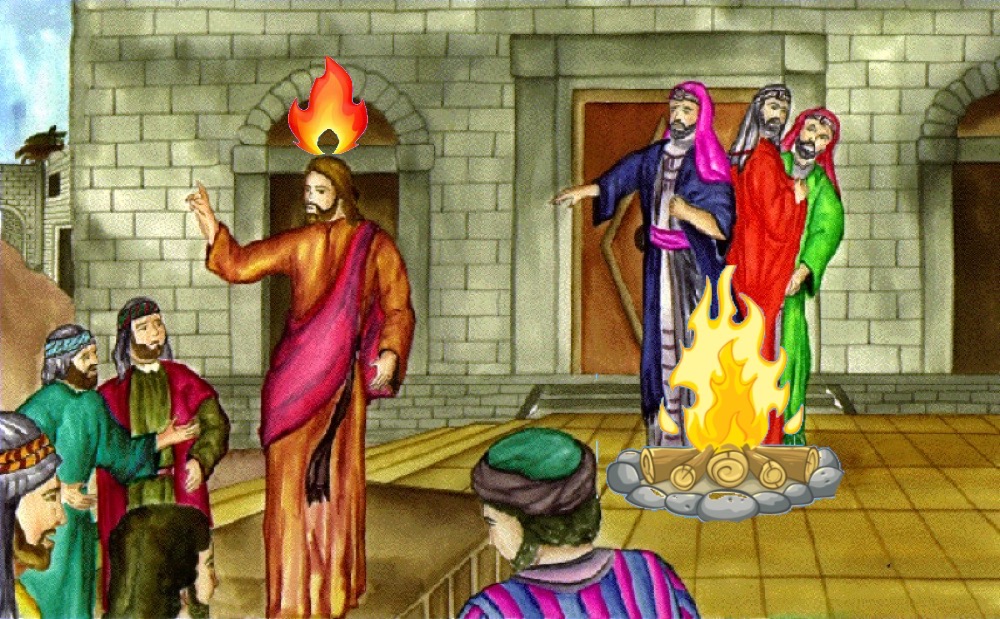
  • While the Sanhedrin are infuriated, or filled with the fire of denial and sin, the Apostles are inflamed with the unquenchable Fire of the Holy Spirit.
  • While the Sanhedrin fear the blood of Christ called down upon them, the disciples hearts are transformed by its power.

The contrast in their responses to God’s Word is stunning.

In our Gospel, John captures this contrast in a nutshell:

The one who comes from above is above all.
The one who is of the earth is earthly
and speaks of earthly things.

John 3:31

In other words, those transformed in the power of the Resurrection see the world with God’s eyes — “from above”. Those unconverted by that Power still see the world in godlessness.


Our Gospel calls us to be like the disciples not like the Sanhedrin.  It calls us to open our hearts:

  • to see the Truth Who is Jesus Christ
  • to believe that the Truth of his Resurrection lives in us
  • to become that Truth through the witness of our lives.

The Gospel calls us to live a whole-hearted faith which allows the Holy Spirit to be expressed in every aspect of our lives. Jesus does not ration the gift of the Spirit, nor should we:

Whoever does accept Christ’s testimony certifies that God is trustworthy.
For the one whom God sent speaks the words of God.
He does not ration his gift of the Spirit.

John 3:33-34

How do we live such a life of Christian witness? Do we have to shout the witness out loud with every action of our lives?  I don’t think so.

Brother David Steindl-Rast describes believers like this:

People who have faith in life are like swimmers who entrust themselves to a rushing river. They neither abandon themselves to its current nor try to resist it. Rather, they adjust their every movement to the watercourse, use it with purpose and skill, and enjoy the adventure.


And the great St. Teresa of Avila blesses believers with this prayer:

May today there be peace within.
May you trust God that you are exactly where you are meant to be.
May you not forget the infinite possibilities that are born of faith.
May you use those gifts that you have received,
and pass on the love that has been given to you.
May you be content knowing you are a child of God.
Let this presence settle into your bones,
and allow your soul the freedom to sing, dance, praise and love.
It is there for each and every one of us.


Poetry: Little Summer Poem Touching The Subject Of Faith by Mary Oliver

Every summer
I listen and look 
under the sun’s brass and even
into the moonlight, but I can’t hear

anything, I can’t see anything — 
not the pale roots digging down, nor the green 
stalks muscling up,
nor the leaves
deepening their damp pleats,

nor the tassels making,
nor the shucks, nor the cobs.
And still,
every day,

the leafy fields
grow taller and thicker — 
green gowns lofting up in the night,
showered with silk. 

And so, every summer,
I fail as a witness, seeing nothing — 
I am deaf too
to the tick of the leaves, 

the tapping of downwardness from the banyan feet — 
all of it
happening
beyond any seeable proof, or hearable hum. 

And, therefore, let the immeasurable come.
Let the unknowable touch the buckle of my spine.
Let the wind turn in the trees,
and the mystery hidden in the dirt

swing through the air.
How could I look at anything in this world
and tremble, and grip my hands over my heart?
What should I fear? 

One morning
in the leafy green ocean
the honeycomb of the corn’s beautiful body
is sure to be there.


Music: A Good Heart – Marc Enfroy
So Loved …

Wednesday of the Second Week of Easter
April 19, 2023

Today’s Readings:

https://bible.usccb.org/bible/readings/041923.cfm

Today, in God’s Lavish Mercy, we continue what we began on Monday, a long immersion in John’s Gospel which will not conclude until Pentecost.

As a guide in praying with the glorious Gospel, I am using a book from the series “A Catholic Commentary on Sacred Scripture”. This particular volume is “The Gospel of John” by Francis Martin and William M. Wright. These authors open their work with this beautiful introduction:

Pope St. Gregory the Great compared Scripture to
a “smooth, deep river
in which a lamb may walk
and an elephant may swim.


These words certainly apply to the Gospel of John.
Within its pages are found divine teachings
articulated with simple images such as water and light,
memorable stories composed with literary and dramatic skill,
and glimpses into the very mystery of God,
proceeding from the most profound mystical illumination.
Like the loaves and fishes multiplied by Jesus,
the Gospel of John provides a superabundance
of spiritual teaching, edification, and challenges to all its readers,
whether beginners or experienced.


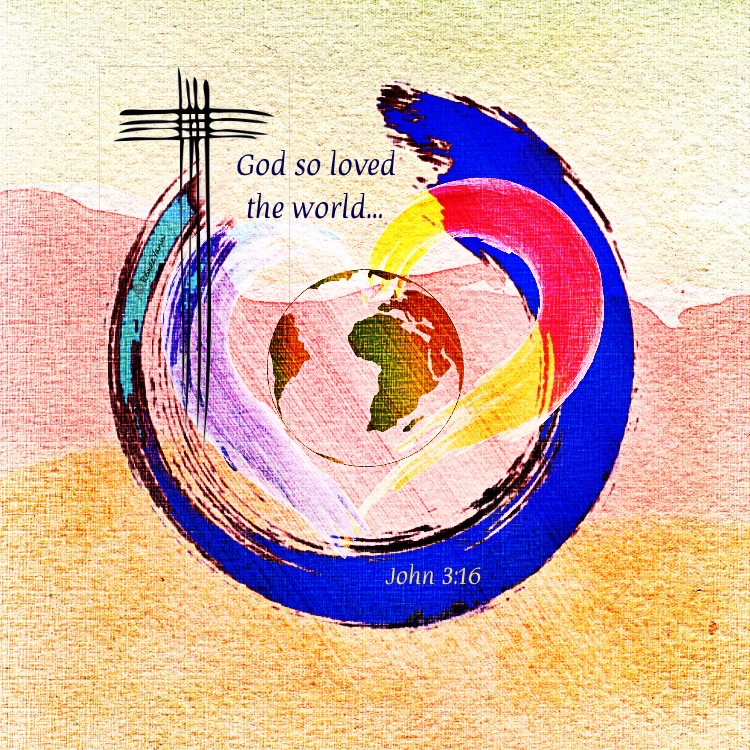
Our Gospel today gives us the central point inspiring John’s entire Gospel:

God so loved the world that he gave his only-begotten Son,
so that everyone who believes in him might not perish
but might have eternal life.

John 3:16

As we go deeper into our post-Easter journey, on the way to the confirmation of Pentecost, we need to keep repeating this amazing truth to ourselves …

And it helps to remind ourselves as well that “God so loved ME … that God gave God’s ALL for me.”


As we pray with John’s Gospel over the next several weeks, we will be doing the same work that the Apostles are doing in our first reading from Acts.  We will be telling the story of Love – the story of Jesus who lived, died and rose from the dead to save us.

Each little part of that story can teach us and change us.  By our choice to believe, and to act on that faith, we are transformed from darkness to Light in the power of the Resurrection.

And this is the verdict,
that the light came into the world,
but people preferred darkness to light,
because their works were evil.
For everyone who does wicked things hates the light
and does not come toward the light,
so that his works might not be exposed.
But whoever lives the truth comes to the light,
so that his works may be clearly seen as done in God.

John 3:19-21

For today, we may want to consider any darkness in our world or in ourselves that we wish to carry into God’s amazing Light and Love. There, let us lay the darkness down and pray to live the truth which John encourages us to live.


Poetry: “Truth”, said a traveller by Stephen Crane

“Truth," said a traveller,
“Is a rock, a mighty fortress;
“Often have I been to it,
“Even to its highest tower,
“From whence the world looks black.”

“Truth," said a traveller,
“Is a breath, a wind,
“A shadow, a phantom;
“Long have I pursued it,
“But never have I touched
“The hem of its garment.”

And I believed the second traveller;
For truth was to me
A breath, a wind,
A shadow, a phantom,
And never had I touched
The hem of its garment.

Music: God So Loved the World – Sir John Stainer

God so loved the world,
that He gave His only-begotten Son,
that whoso believeth in Him should not perish,
but have everlasting life.
For God sent not His Son into the world
to condemn the world;
but that the world through Him
might be saved. Amen.

Friday of the Third Week of Easter

May 6, 2022

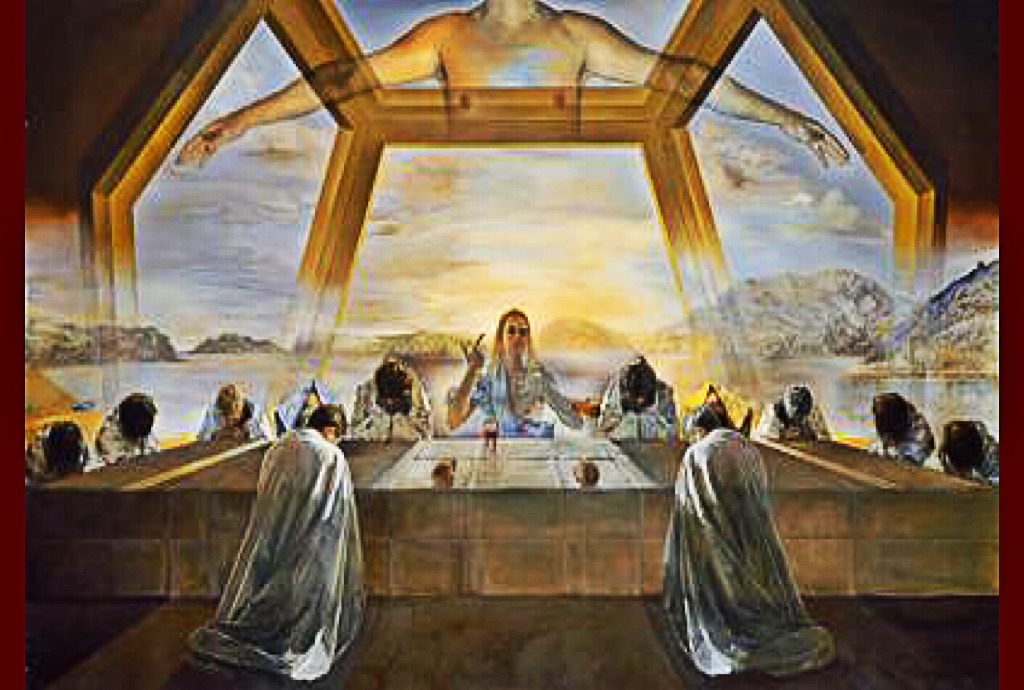
Dali
Institution of the Eucharist: Salvador Dali

Today, in God’s Lavish Mercy, our Gospel is serious business. In it, Jesus reveals the lynchpin of our sacramental faith.

Amen, amen, I say to you,
unless you eat the Flesh of the Son of Man and drink his Blood,
you do not have life within you.
Whoever eats my Flesh and drinks my Blood
has eternal life,
and I will raise him on the last day.

John 6: 53-54

It is a stark and shocking statement. The listening Jews “quarreled among themselves, saying, ‘How can this man give us his Flesh to eat?’.”

Down through the ages, struggling believers have grappled with the same question. Or, perhaps less preferable, complacent believers have never even considered it.

I think Jesus wanted us to consider it, absorb it, be changed by it, live within it, because “unless you eat the Flesh of the Son of Man and drink his Blood, you do not have life within you.”


As Catholics, we believe that Christ is truly and fully present in Eucharist and that, by Communion, becomes fully present in us, the Church.

When the Church celebrates the Eucharist, the memorial of her Lord’s death and resurrection, this central event of salvation becomes really present and “the work of our redemption is carried out”. This sacrifice is so decisive for the salvation of the human race that Jesus Christ offered it and returned to the Father only after he had left us a means of sharing in it as if we had been present there. Each member of the faithful can thus take part in it and inexhaustibly gain its fruits. This is the faith from which generations of Christians down the ages have lived.
(ECCLESIA DE EUCHARISTIA, Encyclical of John Paul II)


For me, it is a truth only appreciated when approached with more than the mind. It must be apprehended with the heart and soul. God so loves us in the person of Jesus Christ that God chooses to be eternally present with us, and in us, through the gift of Eucharist.

Praying with this truth over the years has led me to read authors like Edward Schillebeeckx (Christ the sacrament of the Encounter with God), Diarmuid O’Murchu (Quantum Theology), and Pierre Teilhard De Chardin (Hymn of the Universe).

deChardin

Me in my First Communion Dress
– and my handsome little brother

Still, despite all the Eucharistic theology, every time I receive the Eucharist, I let this simple hymn play in my heart – one I learned for my First Holy Communion. It still unites my heart to my desired faith which is, at once, both cosmic and intimate.


Poetry: “On the Blessed Sacrament of the Altar” by St Robert Southwell

Saint Robert Southwell (1561 – 1595) was an English Roman Catholic priest of the Jesuit Order. He was also a poet, hymnodist, and clandestine missionary in Elizabethan England. After being arrested and imprisoned in 1592, and intermittently tortured and questioned by Richard Topcliffe, Southwell was eventually tried and convicted of high treason for his links to the Holy See. On 21 February 1595, Father Southwell was hanged at Tyburn. In 1970, he was canonized by Pope Paul VI as one of the Forty Martyrs of England and Wales. (Wikipedia)

His poetry, written in Early Modern English, demonstrates deep devotion to the Eucharist. Although most of us can interpret the English of the 16th century, the translation below is modernized for convenience. It’s a long poem, but it is well worth your time.


“On the Blessed Sacrament of the Altar” by St. Robert Southwell
From The Poems of Robert Southwell, S.J. (Oxford: Clarendon Press, 1967),
edited by Fr James H. McDonald and Nancy Pollard Brown

In paschal feast the end of ancient rite
An entrance was to never ending grace,
Tips to the truth, dim glasses to the light,
Performing deed presaging signs did chase,
Christ's final meal was fountain of our good:
For mortal meat he gave immortal food.
That which he gave he was, O peerless gift,
Both God and man he was, and both he gave,
He in his hands himself did truly live:
Far off they see whom in themselves they have.
Twelve did he feed, twelve did their feeder eat,
He made, he dressed, he gave, he was their meat.
They saw, they heard, they felt him sitting near,
Unseen, unfelt, unheard, they him receiv'd,
No diverse thing though diverse it appear,
Though senses fail, yet faith is not deceiv'd.
And if the wonder of the work be new,
Believe the work because his word is true.
Here truth belief, belief inviteth love,
So sweet a truth love never yet enjoy'd,
What thought can think, what will doth best approve
Is here obtain'd where no desire is void.
The grace, the joy, the treasure here is such
No wit can with nor will embrace so much.
Self-love here cannot crave more than it finds,
Ambition to no higher worth aspire,
The eagerest famine of most hungry minds
May fill, yea far exceed their own desire:
In sum here is all in a sum express'd,
Of much the most, of every good the best.
To ravish eyes here heavenly beauties are,
To win the ear sweet music's sweetest sound,
To lure the taste the angels' heavenly fare,
To soothe the scent divine perfumes abound,
To please the touch he in our hearts doth bed,
Whose touch doth cure the deaf, the dumb, the dead.
Here to delight the wit true wisdom is,
To woo the will of every good the choice,
For memory a mirror shewing bliss,
Here all that can both sense and soul rejoice:
And if to all all this it do not bring,
The fault is in the men, not in the thing.
Though blind men see no light, the Sun doth shine,
Sweet cates are sweet, though fevered tastes deny it,
Pearls precious are, though trodden on by swine,
Each truth is true, though all men do not try it:
The best still to the bad doth work the worst,
Things bred to bliss do make them more accurst.
The angels' eyes whom veils cannot deceive
Might best disclose that best they do discern,
Men must with sound and silent faith receive
More than they can by sense or reason learn:
God's power our proofs, his works our wit exceed,
The doer's might is reason of His deed.
A body is endow'd with ghostly rights,
A nature's work from nature's law is free,
In heavenly Sun lie hidden eternal lights,
Lights clear and near yet them no eye can see,
Dead forms a never-dying life do shroud,
A boundless sea lies in a little cloud.

The God of Hosts in slender host doth dwell,
Yea God and man, with all to either due:
That God that rules the heavens and rifled hell,
That man whose death did us to life renew,
That God and man that is the angels’ bliss,
In form of bread and wine our nurture is.

Whole may his body be in smallest bread,
Whole in the whole, yea whole in every crumb,
With which be one or ten thousand fed
All to each one, to all but one doth come,
And though each one as much as all receive,
Not one too much, nor all too little have.
One soul in man is all in every part,
One face at once in many mirrors shines,
One fearful noise doth make a thousand start,
One eye at once of countless things defines:
If proofs of one in many nature frame,
God may in stranger sort perform the same.
God present is at once in every place,
Yet God in every place is ever one,
So may there be by gifts of ghostly grace
One man in many rooms yet filling none.
Sith angels may effects of bodies shew,
God angels' gifts on bodies may bestow.
What God as auctor made he alter may,
No change so hard as making all of nought:
If Adam framed was of slimy clay,
Bread may to Christ's most sacred flesh be wrought.
He may do this that made with mighty hand
Of water wine, a snake of Moses' wand.

Wednesday of the Second Week of Easter: The Light

April 27, 2022

Today, in God’s Lavish Mercy, we read about miracles and Light. These are good things, right? It would seem that we shouldn’t be slow to acknowledge the miracles around us, nor to open our eyes to the Light.

Well, let’s see….


In our reading from Acts, we read about a miracle:

The high priest rose up and all his companions,
that is, the party of the Sadducees,
and, filled with jealousy,
laid hands upon the Apostles and put them in the public jail.
But during the night, the angel of the Lord opened the doors of the prison,
led them out, and said,
“Go and take your place in the temple area,
and tell the people everything about this life.”

Acts 5: 17-20

Still when the Temple guards and the High Priest discover God’s miraculous action, they re-arrest the disciples and try again to stop the spread of the Light!

When I read this I say, “Come on, guys! Take a hint! Maybe there is something to this preaching!”

But the truth is that it can be really hard to take that hint — to wake up, to acknowledge the miracles around us, and to choose Light over darkness. Why? Because miracles and Light get in the way of our agendas, our lazy choices, our indifference to others’ needs and our own excesses.

Most of us don’t want to live completely bereft of blessings and inspiration. We’d like a miracle now and again, but not enough to demand our deep conversion. We’d prefer a little shade and shadow, a little spiritual oblivion in our lives.

In our Gospel, John will have none of it! The Light demands our conversion to the fullness of the Gospel.

Listen to John’s astonishment that people choose darkness over Light.

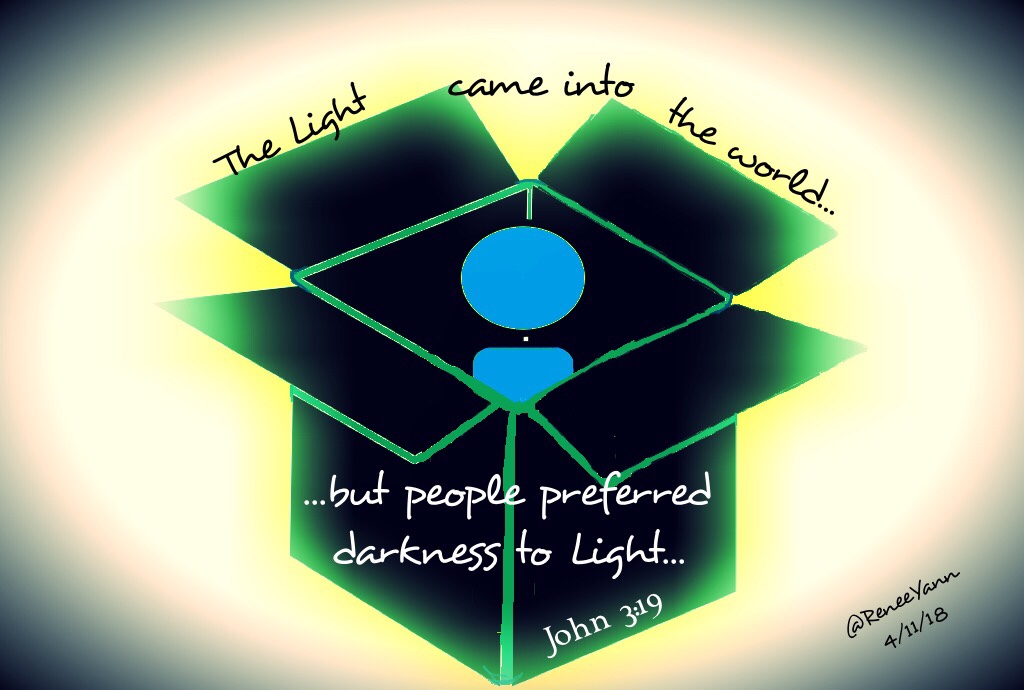
And this is the verdict,
that the Light came into the world,
but people preferred darkness to light,
because their works were evil.

John 3:19

And yet, we see it all the time, don’t we? Even, unfortunately, sometimes in ourselves?

Let’s pray today for the strength to always choose God’s stunning yet healing Light. Let’s pray that strength for our terribly shadowed world – that we may open our prisoned hearts to the miracle of Light God has planted in each one of us.

Poetry: The Uses of Sorrow | Mary Oliver

(In my sleep I dreamed this poem)
Someone I loved once gave me
a box full of darkness.

It took me years to understand
that this, too, was a gift.


Music: Coulin – James Last

God’s Whispers

December 27, 2021
Feast of St. John, Apostle and Evangelist

Today, in God’s Lavish Mercy, we celebrate John, “the Beloved Disciple”.

Throughout John’s magnificent writings, the themes of Love and Light stretch our perception of God, and challenge us to love like God loves.

John’s deep love of God, and devotion to the Gospel of Jesus Christ, pour out in his epistles which we will be blessed with over the next several weeks.

Sometimes John’s poetic style can be a little off-setting to those more comfortable with practical prose. But if we can allow our minds to savor the rich layers of meaning within the words, we will start to experience the lyrical mystery of John’s relationship with God.

On these holy days, while we still bask in Christmas glory, we might ask in prayer to be deepened in our friendship with God. We might imagine ourselves resting our head on Jesus’s shoulder, just as John did at the Last Supper. We might listen there for the holy secrets God wants to whisper into our lives.

Jesus and St. John at Last Supper from 19th century – in St. Michaels church (Michelskerk).

Poetry: To Imagination – Emily Brontë.
Brontë wrote this poem to imagination, but I think it could easily be addressed to the Spirit of God in our souls.

When weary with the long day’s care,
And earthly change from pain to pain,
And lost and ready to despair,
Thy kind voice calls me back again:
Oh, my true friend! I am not lone,
While thou canst speak with such a tone! 

So hopeless is the world without;
The world within I doubly prize;
Thy world, where guile, and hate, and doubt,
And cold suspicion never rise;
Where thou, and I, and Liberty,
Have undisputed sovereignty.

What matters it, that, all around,
Danger, and guilt, and darkness lie,
If but within our bosom’s bound
We hold a bright, untroubled sky
Warm with ten thousand mingled rays
Of suns that know no winter days? 

Reason, indeed, may oft complain
For Nature’s sad reality,
And tell the suffering heart, how vain
Its cherished dreams must always be;
And Truth may rudely trample down
The flowers of Fancy, newly-blown: 

But, thou art ever there, to bring
The hovering vision back, and breathe
New glories o’er the blighted spring,
And call a lovelier Life from Death,
And whisper, with a voice divine,
Of real worlds, as bright as thine.

I trust not to thy phantom bliss,
Yet, still, in evening’s quiet hour,
With never-failing thankfulness,
I welcome thee, Benignant Power;
Sure solacer of human cares,
And sweeter hope, when hope despairs!


Music: Whisper – Jason Upton

Closing the Book

Saturday of the Seventh Week of Easter

May 30, 2020

Click here for readings

Today, in Mercy, on this day before Pentecost, we close the book on both Acts and John’s Gospel, companions we have been praying with since mid-April.

When I read a really great book, I hate it to end. The characters and their story linger in my mind. The places where I’ve pictured them seem real – as if I’ve visited there myself. And the core of their stories becomes part of me, a reference point for my own experience.

Hopefully, the same thing happens when we read and pray with scripture. 

bible


apostles

As we leave Acts today, we should feel like we know the early disciples better, especially Peter, Paul, Barnabas, Stephen, Lydia and others whose story might have touched us. We should better understand the ups and downs of the early Church, the passion for mission, and the evolution of faith – and how these speak to our own times.


Finishing John, we have a slightly different picture of Jesus from that of the Synoptic Gospels of Matthew, Mark, and Luke. We see a Jesus full of Light, his human existence described through the lens of his Divinity. Johannine scholar Raymond E. Brown describes the difference like this:

That Jesus is the center of John’s message is confirmed by even a hasty reading of the Gospel itself. The emphasis on the Kingdom of God, so prominent in the Synoptic Gospels, has yielded in John to an emphasis on Jesus as the embodiment of life, truth, and light. No more is the parabolic language introduced by “The kingdom of God is like,..”; rather we hear the majestic “I am ” Whereas it is the Kingdom that the Synoptic Gospels describe in terms of vineyard, wheat, shepherd and sheep, in John it is Jesus who is the vine, the bread, the shepherd, and the sheepgate.


shepherdvineeucharist


Today, in our prayer, we might want to glance back through these books, reminding ourselves of the words, phrases and stories that touched our own experience most deeply. 

John_I

Sketching such phrases – perhaps in a daily prayer journal –  is a good way to let our minds turn them over and over again in prayer, discovering new depths with each turn.


Music:  Cavalleria Rusticana: Easter Hymn – Pietro Mascagni, featuring Australian soprano Kiandra Howarth

I thought we’d close these two wonderful books, and the Easter Season, with a bang. (Lyrics and explanation below)


Click here to learn more about Cavalleria rusticana: The Easter Hymn

Lyrics:
LATIN AND ENGLISH:
CHORUS (within the church)
Regina coeli, laetare—Alleluia!
Quia, quem meruisti portare—Alleluia!
Resurrexit sicut dixit—Alleluia!

CHORUS (in the square)
We rejoice that our Saviour is living!
He all-glorious arose from the dead;
Joys of heaven the Lord to us giving,
All the sorrows of darkness are fled!
(The chorus goes out slowly)


ITALIAN:
CORO INTERNO (dalla Chiesa.)
Regina coeli, laetare—Alleluja!
Quia, quem meruisti portare—Alleluja!
Resurrexit sicut dixit—Alleluja!

CORO ESTERNO (sulla piazza.)
Inneggiamo, il Signor non è morto.
Ei fulgente ha dischiuso l’avel,
inneggiamo al Signore risorto
oggi asceso alla gloria del Ciel!
(il Coro esce lentamente)


What “World” Do You Live In?

Saturday of the Fifth Week of Easter

May 16, 2020

Click here for readings

Jn15:18 world

Today, in Mercy, Jesus talks about “the world”.

That word can cause a little confusion, both as we find it in scripture and in the history of Christian thought.

Baker’s Evangelical Dictionary of Biblical Theology says five connotations for “world” may be found in scripture:

  • The physical world – the actual plant Earth
  • The human world – the land and seas we can navigate
  • The moral world – the universe of good and evil
  • The temporal world – the world that will someday end
  • The coming world – eternal existence 

In today’s Gospel, Jesus is talking about the moral world which, in the New Testament, refers to those people who are indifferent and hostile to Christ’s teaching.

If the world hates you, realize that it hated me first.
If you belonged to the world, the world would love its own;
but because you do not belong to the world…
the world hates you.


wolf-clipart-57
A Wolf in Sheep’s Clothing

We understand this use of the word. We see the evil in the world. We are saddened, angered and confounded by it when we recognize it.

But do we always recognize it?

Blatant evils like murder are readily recognized. But the most insidious evils are those that masquerade as good.

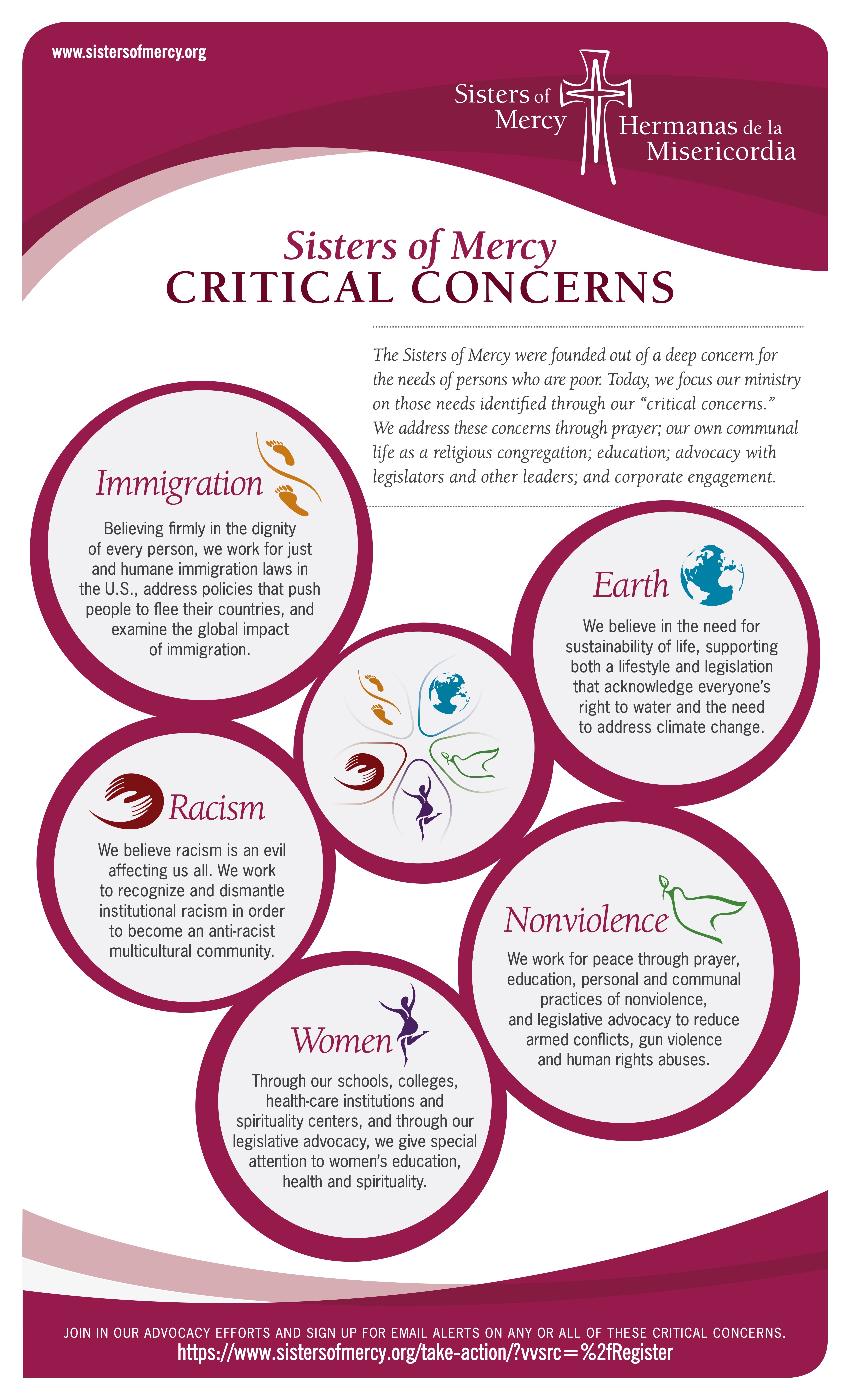
These masquerading evils often pretend to protect our rights, our security, our safety. But they usually do so at the expense of someone else’s rights – the poor, the refugee, the aged, the homeless, people of color……and all who have become “disposable” in our society.


These deceptions hide behind brave and noble words like “America First”, “Second Amendment Rights”, “Protect Life” and a rash of other slogans which fail to examine the whole impact of single-issue politics. 

It’s confusing because we love America, right? We believe in people’s constitutional rights, right? We respect life, right?

What if our slogans instead more clearly reflected Gospel values:

  • The Human Family First
  • Safety Rights for Everyone
  • Health Security for All Life – Womb to Tomb

CriticalConcerns-Poster-FINAL

How can we be spiritually discerning about what is good within such realities and what is rooted in sinful self-interest? Jesus tells us in these words:

Remember the word I spoke to you,
‘No slave is greater than his master.’
If they persecuted me, they will also persecute you.

We must look to the one who is hated and persecuted to find the Face of Christ. We must love that Face and learn its heartaches. We must become a companion in their search for wholeness. We must set aside any costume of self-righteousness and put on the garment of Mercy:

Therefore, as God’s chosen people, holy and dearly loved, clothe yourselves with mercy, kindness, humility, gentleness and patience. Bear with each other and forgive one another if any of you has a grievance against someone. Forgive as the Lord forgave you. And over all these virtues put on love, which binds them all together in perfect unity.
Colossians 3:14-16

Music: The Mercy Song – Paul Alexander

God’s Friends

Friday of the Fifth Week of Easte


May 15, 2020

Click here for readings

Today, in Mercy, Jesus calls us friends. Just think about that!

Think about what it means to really be a friend.

We might have a little trouble reclaiming the true meaning in today’s culture. After all, in our world, you can be “friends” with thousands of people on Facebook, many of whom you might not even know.

On the other hand, if you have been blessed to have really good friends in your life, consider what created that friendship: love, honesty, acceptance, sacrifice, forgiveness, reverence, trust, fidelity, humor.

This is the kind of relationship to which Jesus invites each one of us – where He is part of us and we of Him..

Jn15_15 Friends

If we listen to Jesus in today’s Gospel, we’ll see clearly what makes us a Friend of God:

  • We love God to the point of laying down our lives.
  • We obey God’s command to love unselfishly and inclusively.
  • We seek ever to know God more fully.
  • We acknowledge God’s love as a blessing and gift, not a right.
  • We act on our responsibility to share the love we have received.

Pope Francis has said that the saints are “Friends of God” because they loved with all their hearts. But he stresses that:

“They are like us; they are like each of us: They are people who, before reaching the glory of heaven, lived a normal life, with joys and griefs,
struggles and hopes….When they recognized the love of God, they
followed him with all their heart, without conditions and hypocrisies.”

Pope Francis encourages us, “The saints give us a message. They tell us: Be faithful to the Lord, because the Lord does not disappoint! He does not disappoint ever, and he is a good friend, always at our side.”

Let’s spend some prayer time in thanksgiving for God’s gift of friendship, asking how we might learn to be an even better friend, to love God even more.

Music: Bridge Over Troubled Water – Simon and Garfunkel


Remain

Wednesday of the Fifth Week of Easter

May 13, 2020

Click here for readings

Today, in Mercy, Acts reveals the tensions in the Church between Jewish and Gentile believers. For the Jews, the ritual of circumcision was a key expression of covenantal faith. Some felt it was necessary for Gentile converts to undergo the ritual in order to become Christians.

Like all start-ups, the Church had many friction points which required decisions about what was essential and what was only customary. Those customs being thousands of years old, the decisions become even harder. Readings later this week describe more conflict points.

Nevertheless, under the guidance of the Holy Spirit, and despite the venerability of custom, the nascent Church was able embrace a new reality rooted in Christ’s inclusive love.

These kinds of philosophical and theological tugs-of-war have accompanied the Church down through history. Some of them have helped reveal deeper insights into our faith. But, as in all human communities, some of the tugs have been motivated by fear, greed, power, and other selfish interests.

Watching how the early Church handles their particular situation may give us hints about how we should handle them today.


In our Gospel, Jesus makes clear what is essential and inviolable to the faith:

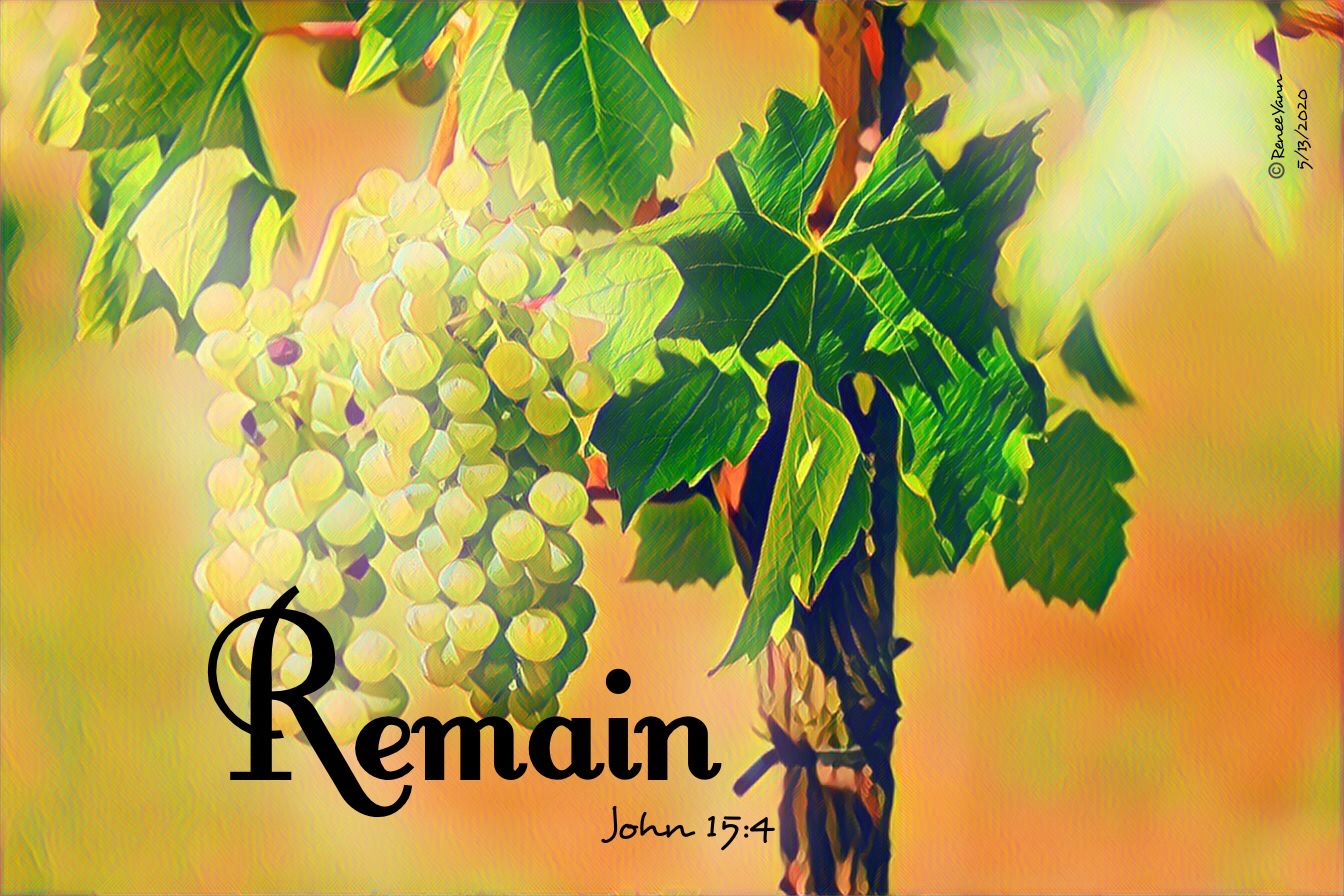
I am the vine, you are the branches.
Whoever remains in me and I in him will bear much fruit,
because without me you can do nothing.

John15_4 Remain

I think “Remain” is a beautiful word. In the dictionary, it will be defined as ‘stay’. But it connotes much more to me.  Re–main asks us not just to choose to stay with Jesus, but to choose it over and over – like reenlist, renew, recommit.

Remain means to endure with the Beloved Vine through every season – winter’s cold and summer’s heat, and all that’s in between.

Remain means “Love Me, stay beside me, even when others fall away.”

May we remain.


Music: I Am the Vine – John Michael Talbot

In God’s Hands

Tuesday of the Fourth Week of Easter

May 5, 2020

Click here for readings

Today, in Mercy, the image of God’s hands emerges in each of our readings.

preachers

There were some …. proclaiming the Lord Jesus.
The hand of the Lord was with them
and a great number who believed turned to the Lord.
Acts 11:21


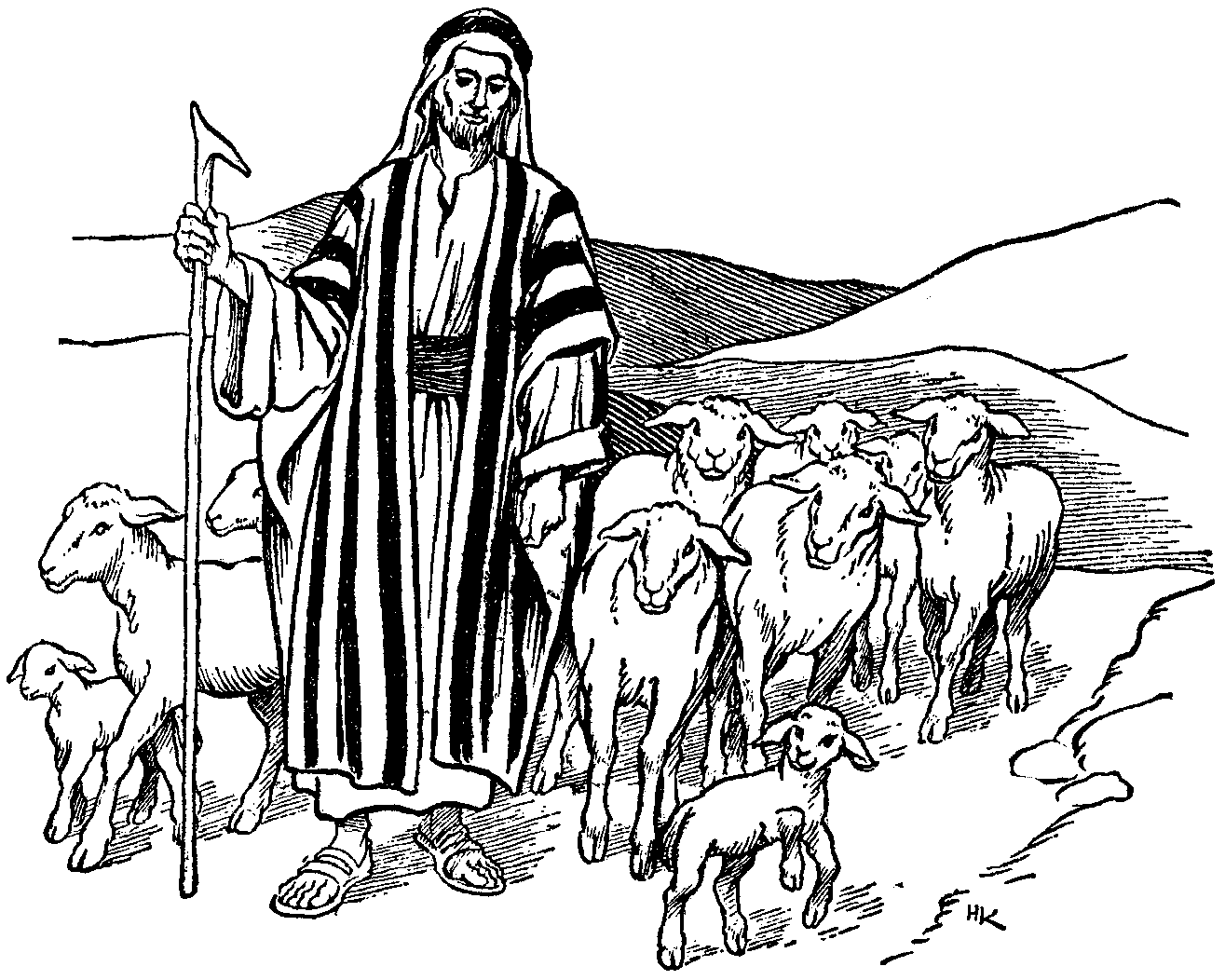
shepherd


I know them, and they follow me.
I give them eternal life, and they shall never perish.
No one can take them out of my hand.
John 10:28


My Father, who has given them to me, is greater than all,
and no one can take them out of the Father’s hand.
John 10:29


Each of these images evokes and inspires our trust that God abides with and sustains us – that we are in God’s hands.

We all know what it’s like to place ourself in someone else’s hands. Sometimes we do it willingly, sometimes not. Sometimes it is an act of trust, sometimes fear.

This morning, as I pray, I remember two parallel but distinctly different incidents of being in someone else’s hands. 


pikesIn the first, I went with friends on a drive to the top of Pike’s Peak in Colorado. It was before the serpentine road was paved in 1999. The driver was the young cowboy nephew of one of the passengers, and he thought it was really fun to scare us out of our wits. He took the many curves and switchbacks at headlong speed. I closed my eyes and started praying.


doctor-clipart-transparent-12The second memory is recent. Just before my knee replacement surgery, as I lay slightly anesthetized in pre-op, my surgeon came to the bedside. He sat down, took my hand and said, “I want you to know that I will do the surgery myself and be with you the whole time. I am putting my initials on your knee so you can be certain I’ll fix the right one.” He smiled, and I again closed my eyes and started praying.

What different prayers they were! One was begging God to intervene and save me. The other was thanking God for putting me in trustworthy hands.

Jn10_29 hands

With God, we are always in trustworthy hands. Indeed, sometimes it may feel like God is flying over the edge of Pike’s Peak with us in the back seat. But here’s the thing: God is in the car with us – and God always lives! If we give ourselves completely to God in trust, we will live too.

Eventually, our practice of trust grows enough to comfort us in all things. We realize God is always sitting beside us, taking our hand, assuring us of that Loving Presence Who always abides.

A great freedom comes with that realization, steeped in years of trust and understanding that God’s Will for us is our eternal good. The preachers in Acts today, and the disciples in John rejoiced and acted in such trust. May we too be strengthened, blessed, and impelled by it.

Music:  Into Your Hands – Ray Rep

Into Your hands we commend our spirit –Ray Repp

Into Your hands we commend our spirits O Lord,
Into Your hands we commend our hearts.
For we must die to ourselves in loving You,
Into Your hands we commend our love.

O God, my God, why have You gone from me,
Far from my prayers, far from my cry?
To You I call and you never answer me,
You send no comfort and I don’t know why!

You’ve been my guide since I was very young,
You showed the way, you brought relief;
But now I’m lonely, nobody’s by my side:
Take heed, my Lord, listen to my prayer.