A Dynamic Faith

Wednesday of the Third Week of Easter
April 26, 2023

Today’s Readings:

https://bible.usccb.org/bible/readings/042623.cfm

Today, in God’s Lavish Mercy, our readings allow us to experience the dynamic nature of faith, as it was experienced in the early Church.And it wasn’t always pretty!

The Stoning of St. Stephen – Rembrandt

Acts tells us of a rising violence toward the Christians, especially those considered “Hellenistic Jews”. There was prejudice against them among the Pharisees even before these Jews converted to Christianity. They were “outsiders “:

The Hellenistic Jews are those who speak mainly Greek, and formerly lived outside of Judea and Galilee. But they had settled in Jerusalem — retired, as it were, to the homeland. Nevertheless, they still have affinities with lands of the Jewish dispersion from which they came. The Hebraic Jews are those who speak mainly Aramaic, and were born in Jerusalem or Judea.

Michael Morrison, PhD, professor of Biblical Studies at Grace Communion Seminary


Stephen, the first Christian martyr, was a Hellenist, as was Philip mentioned today as the first Christian missionary. He is a different Philip from the Apostle who remained in Jerusalem according to the passage.
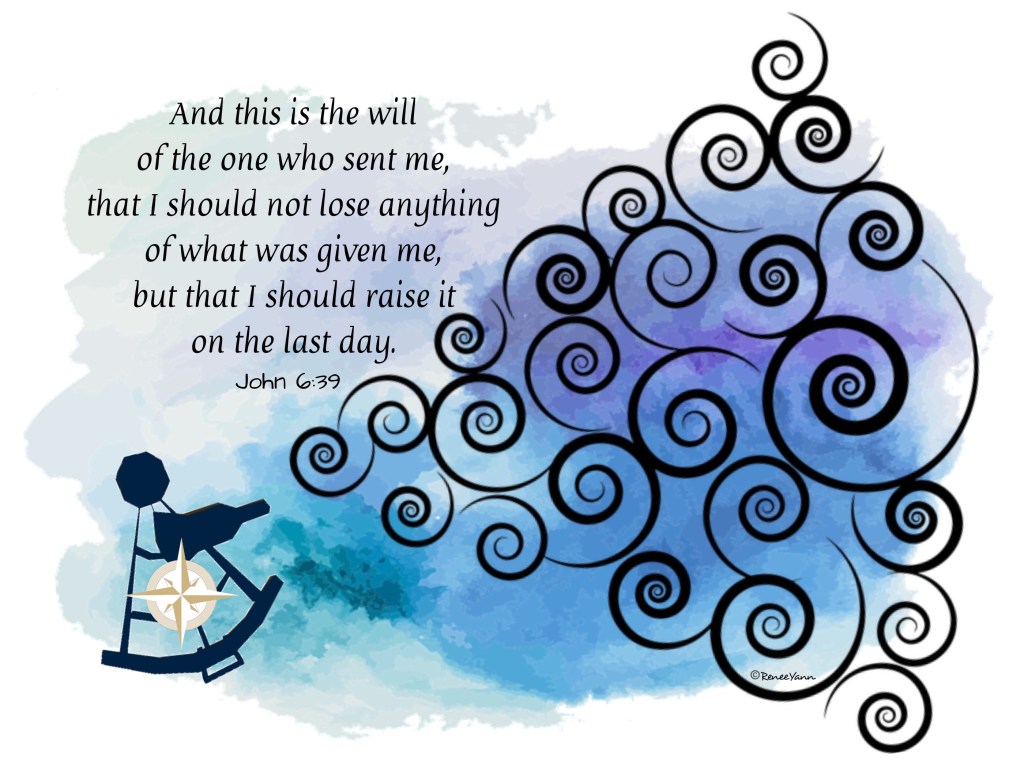

As I picture the forces at work in the early Church, I am reminded of the ocean, ever-changing in its flow from peace to storm, yet ever-constant in its tides.

Faith is the anchor holding us steady in the waves, the sextant pointing us toward Christ’s Promise. As our Gospel says:

And this is the will of the one who sent me,
that I should not lose anything of what he gave me,
but that I should raise it on the last day.
For this is the will of my Father,
that everyone who sees the Son and believes in him
may have eternal life,
and I shall raise him on the last day.

John 6: 39-40

Stephen had this vital and tenacious faith, and died for it. Philip had it and shared it. The Apostles had it and held it steady for the rest of us.

How is the vital and dynamic faith living in me? How deeply do I believe and live the Promise? Let’s ask God today to strengthen our faith and to keep our focus on the Promise of eternal life.


Poetry: In Whom We Live and Move and Have Our Being – Denise Levertov 

Birds afloat in air's current,
sacred breath?  No, not breath of God,
it seems, but God
the air enveloping the whole
globe of being.
It's we who breathe, in, out, in, in the sacred,
leaves astir, our wings
rising, ruffled -- but only the saints
take flight.  We cower
in cliff-crevice or edge out gingerly
on branches close to the nest.  The wind
marks the passage of holy ones riding
that ocean of air.  Slowly their wake
reaches us, rocks us.
But storms or still,
numb or poised in attention,
we inhale, exhale, inhale,
encompassed, encompassed.

Music: The Promise – Marc Enfroy
… that you believe…

Monday of the Third Week of Easter
April 24, 2023

Today’s Readings:

https://bible.usccb.org/bible/readings/042423.cfm

Today, in God’s Lavish Mercy, our readings remind us that being a Christian is simple, but not easy.

Stephen, presented to us in our reading from Acts, must have been a beautiful, simple person — almost angelic according to Acts’ description:

Stephen, filled with grace and power,
was working great wonders and signs among the people.

Acts 6:8

All those who sat in the Sanhedrin looked intently at him
and saw that his face was like the face of an angel.

Acts 6:15

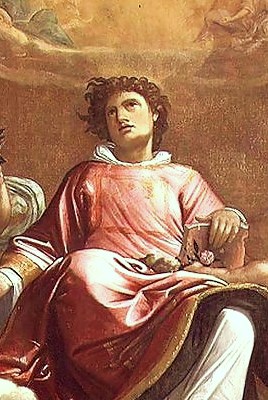
St. Stephen – Giacomo Cavedone – c. 1601


Despite his goodness, Stephen became an object of hate and persecution by many:

Certain members of the so-called Synagogue of Freedmen,
Cyreneans, and Alexandrians,
and people from Cilicia and Asia,
came forward and debated with Stephen,
but they could not withstand the wisdom and the Spirit with which he spoke.
Then they instigated some men to say,
“We have heard him speaking blasphemous words
against Moses and God.”

Acts 6:9-11

This is such a revealing passage! Stephen’s persecutors cannot challenge his preaching themselves, so they create a web of poisonous lies and entangle some other men in its venom. They instigate these men to spread false allegations against Stephen which will eventually lead to his martyrdom.


There is a vital lesson here for us. Truth matters. Lies matter. They are the engines that drive not only our relationships and actions, but our very culture. And a hard look at our modern culture suggests that we are becoming a culture of lies.

I don’t need to give examples here. We know just from glancing at the newspaper, or perhaps – unfortunately – from reflecting on our own experiences.

We know the people who pretend they are what they are not.

We know who pretends that they are not what they actually are.


Jesus is a Truth Teller. In our Gospel, he gently confronts a bunch of people who are “pretending” their faith. Jesus tells them they’re not so much interested in the Truth he preaches as in the food he provided just yesterday. After all, everybody loves a good picnic!

Jesus answered them and said,
“Amen, amen, I say to you, you are looking for me
not because you saw signs
but because you ate the loaves and were filled.
Do not work for food that perishes
but for the food that endures for eternal life,
which the Son of Man will give you. 
For on him the Father, God, has set his seal.” 

John 6: 26-27

These bread seekers in our Gospel hear Jesus’s challenge so they ask him

“What can we do to accomplish the works of God?”
Jesus answered and said to them,

“This is the work of God,
that you believe in the one he sent.”

Just believe. Doing so will lead us to Truth and to a holy simplicity like that which radiated from Stephen. It’s that simple …. and that hard.


Poetry: A Christmas Hymn – by Richard Wilbur

Although the following poem is out of season, and does not mention Stephen, its refrain references his method of martyrdom: “every stone shall cry”. The poem is also a succinct and lyrical summary of the life of Christ and its meaning for us — a good thing to consider during this Eastertide.

A stable lamp is lighted
whose glow shall wake the sky;
the stars shall bend their voices,
and every stone shall cry.
And every stone shall cry,
and straw like gold shall shine;
a barn shall harbour heaven,
a stall become a shrine.
This child through David’s city
shall ride in triumph by;
the palm shall strew its branches,
and every stone shall cry.
And every stone shall cry,
though heavy, dull and dumb,
and lie within the roadway
to pave his kingdom come.
Yet he shall be forsaken,
and yielded up to die;
the sky shall groan and darken,
and every stone shall cry.
And every stone shall cry
for gifts of love abused;
God’s blood upon the spearhead,
God’s blood again refused.
But now, as at the ending,
the low is lifted high;
the stars shall bend their voices,
and every stone shall cry.
And every stone shall cry
in praises of the child
by whose descent among us
the worlds are reconciled.

Music: Every Stone Shall Cry – Steve Bell musically interprets Wilbur’s poem.

O Earliest Witness!

Feast of Saint Stephen, first martyr
December 26, 2022

Today’s Readings:

https://bible.usccb.org/bible/readings/122622.cfm

The Demidoff Altarpiece: Saint Stephen
Representation of St. Stephen from The Demidoff Altarpiece by Carlo Crivelli, an Italian Renaissance painter of the late fifteenth century. This many-panelled altarpiece or polyptic painted by Crivelli in 1476, sat on the high altar of the church of San Domenico in Ascoli Piceno, east central Italy. It is now in the National Gallery in London, England.

Today, in God’s Lavish Mercy, we celebrate the Feast of St. Stephen, first martyr for the Christian faith. He must have been a beautiful soul.

Stephen, filled with grace and power,
was working great wonders and signs among the people.
Certain members of the so-called Synagogue of Freedmen,
Cyrenians, and Alexandrians,
and people from Cilicia and Asia,
came forward and debated with Stephen,
but they could not withstand the wisdom and the spirit with which he spoke.

Acts of the Apostles 6: 8-10

The commemoration and readings are a drastic turn from singing angels and worshiping shepherds.The Liturgy moves quickly from welcoming a cooing baby to weeping at the death of innocence.

They threw him out of the city, and began to stone him.
The witnesses laid down their cloaks
at the feet of a young man named Saul.
As they were stoning Stephen, he called out
“Lord Jesus, receive my spirit.”

Acts 7: 54-59

Why does the Church make such a drastic turn in the tone of worship? One thought might be to keep us practical and focused on what life in Christ truly means, even as we’re all still wrapped in angels and alleluias.

Stephen, like Jesus, “was filled with grace and power, … working great wonders and signs among the people.” He, as Jesus would, met vicious resistance to his message of love and reconciliation. He, as Jesus would, died a martyr’s death while forgiving his enemies.


The Church turns us to the stark truth for anyone who lets Christ truly be born in their hearts. WE will suffer as Jesus did – as Stephen did. The grace and power of Christ in our life will be met with resistance, or at least indifference.

We may not shed blood but, in Christ, we will die to self. When we act for justice for the poor and mercy for the suffering, we will be politically frustrated and persecuted. When we forgive rather than hate, we will be mocked. Powerful people, like the yet unconverted Saul in today’s second reading, may catalyze our suffering by their determined hard-heartedness.

Our Gospel confirms the painful truth as Jesus says:

You will be hated by all because of my name,
but whoever endures to the end will be saved.

Matthew 10:22

Tomorrow, the liturgy picks up the poetic readings from John’s letters. These are delights to the soul. 

But for today, it is a hard look, with Stephen, at what Christmas ultimately invites us to.


Poetry: O Captain of the Martyr Host – This is an English adaptation of a medieval hymn O qui tuo, dux martyrum, written by Jean Baptiste de Santeüil. It appeared in the Cluniac Breviary, 1686.

O Captain of the Martyr Host!
O peerless in renown! 

Not from the fading flowers of earth 
Weave we for thee a crown.
The stones that smote thee, in thy blood 
Made beauteous and divine, 
All in a halo heavenly bright 
About thy temples shine. 
The scars upon thy sacred brow 
Throw beams of glory round; 
The splendours of thy bruised face 
The very sun confound. 
Oh, earliest Victim sacrificed 
To thy dear Victim Lord! 
Oh, earliest witness to the Faith 
Of thy Incarnate God! 
Thou to the heavenly Canaan first 
Through the Red Sea didst go, 
And to the Martyrs' countless host, 
Their path of glory show. 
Erewhile a servant of the poor, 
Now at the Lamb's high Feast, 
In blood-empurpled robe array'd, 
A welcome nuptial guest! 
To Jesus, born of Virgin bright, 
Praise with the Father be; 
Praise to the Spirit Paraclete, 
Through all eternity.

Music: Gabriel’s Oboe from the movie “The Mission”, played by Henrik Chaim Goldschmidt,  principal oboist of The Royal Danish Orchestra in Copenhagen, Denmark.