Flee Toward Justice

Twenty-sixth Sunday in Ordinary Time

September 29, 2019

Click here for readings

Today, in Mercy, our readings will challenge us in ways we might rather not hear.

In our first reading, feisty Amos lambastes the Israelites for their sumptuous lifestyle which is indifferent to the plight of those who are poor. He calls them “complacent”, “at ease” in their prosperous, privileged existence, a condition that has numbed them to the harrowing inequities from which others suffer.

In our second reading, Paul gives a final, impassioned charge to his dear protégé Timothy. He tells him not just to avoid, but to flee such complacency and the greedy materialism which feeds it. He outlines the elements of a Christian life, enjoining Timothy to “pursue righteousness, devotion, faith, love, patience, and gentleness”.


Paul gives Timothy the key to true Christian life:

Keep the commandment without stain or reproach …

…. “the commandment” being to love God above all, and love neighbor as self.


Dives
Dives and Lazarus by Bonifazio di Pitati The National Gallery – London

Our Gospel is, perhaps painfully, familiar to all of us – the story of Lazarus and Dives. It is a parable which puts the economic divide under the crystalline light of the Gospel, challenging us as to where we fit in it.

Most of us like comfort. We would rather be “haves” than “have nots”. But we struggle within our comfortable lives to discern our responsibility for others. We’re certainly not intentionally hard-hearted, “lying on ivory couches” and “drinking wine from bowls” while modern day Lazarus languishes right beside us.

We do try, in many ways, to respond to the call for charity and service. But don’t we still measure ourselves after hearing this Gospel? Don’t we still worry about any “Lazarus” unnoticed at our door?

Amos, Paul, and Jesus are charging us – just as they charged their immediate listeners – to live a life based in Biblical and Gospel justice. Justice seeks fullness of life for all the community. Jesus teaches us that “the community” is all Creation, and that how we treat the community is how we treat him.

Every day we might remind ourselves that, however hard we try, it is never enough. We must keep on peeling away any indifference or blindness we have to the injustices of our culture and times, our economic and political systems. And we too must flee them, running toward justice, righteousness, and mercy.

We must ask ourselves this hard question:

Does my “wealth”
– however large or small,
material or immaterial-
nourish the community or only consume it?

Music: Five Variants of Dives & Lazarus – Ralph Vaughn Williams’s beautiful interpretation of the folk song “Dives and Lazarus”.

If you might be interested in the original song – a great example of folk art: Sung here by Maddy Prior (Lyrics below)

as it fell out upon one day
rich Diverus he made a feast
and he invited all his friends
and gentry of the best
then Lazarus laid him down and down
even down at Diverus’ door
some meat, some drink, brother Diverus
do bestow upon the poor
thou art none of mine, brother Lazarus
that lies begging at my door
no meat, no drink I’ll give to thee
nor bestow upon the poor

then Lazarus laid him down and down
even down at Diverus’ wall
some meat, some drink, brother Diverus
or with hunger starve I shall
thou art none of mine, brother Lazarus
that lies begging at my wall
no meat, no drink I’ll give to thee
but with hunger starve you shall

then Lazarus laid him down and down
even down at Diverus’ gate
some meat, some drink, brother Diverus
for Jesus Christ His sake
thou art none of mine, brother Lazarus
that lies begging at my gate
no meat, no drink I’ll give to you
for Jesus Christ His sake

then Diverus sent out his serving men
to whip poor Lazarus away
they had no power to whip one whip
and they threw their whips away
then Diverus sent out his hungry dogs
to worry poor Lazarus away
but they had no power to bite one bite
and they licked his sores away

as it fell out upon one day
poor Lazarus sickened and died
there came two angels out of Heaven
his soul thereto to guide
rise up, rise up brother Lazarus
come along with me
there’s a place for you in Heaven
sitting on an angel’s knee

as it fell out all on one day
Diverus sickened and died
there came two serpents out of Hell
his soul thereto to guide
rise up, rise up brother Diverus
come along with me
there is a place for you in Hell
sitting on a serpent’s knee

Diverus lifted up his eyes
and he saw poor Lazarus blessed
a drop of water brother Lazarus
for to quench my flaming thirst
if I had as many years to live
as there are blades of grass
I would make it in my will secure
that the Devil should have no power
Hell is dark, Hell is deep
Hell is full of mice
it’s a pity that any poor sinful soul
should be barred from our saviour Christ

Do Your Best. Leave the Rest.

Memorial of Saint Vincent de Paul, Priest

Friday, September 27, 2019

Click here for today’s readings

Today, in Mercy, we celebrate the feast of St. Vincent de Paul, a name some of us know only by the writing on the side of the charity pick-up truck. But there’s a reason that name was chosen.

St. Vincent de Paul
St. Stephen’s Cathedral Saint Vincent establishing Daughters of Charity by Jean-François Faure (Toulouse Cathedral [CC BY-SA 4.0 (https://creativecommons.org/licenses/by-sa/4.0)%5D)
Vincent was a French priest, recognized for his deep compassion, generosity, and love for poor persons. He founded two religious orders dedicated to these values: the Congregation of the Mission (Vincentians) for priests and brothers, and (with the assistance of St. Louise de Marillac) the Daughters of Charity for women religious. He and the men and women who followed him have blessed the world with immeasurable Christian charity.

Vincent encountered many seemingly insurmountable obstacles in his ministry pursuits. But he continued on. He wrote this in one of his letters:

Let us allow God to act;
God brings things to completion
when we least expect it.


Vincent’s advice is not very different from the encouragement Haggai offers the Israelites in today’s reading. They have taken up the task of rebuilding the Temple. But it’s hard, and it looks like their results will pale when compared to the glory of the First Temple. Some of their elders remember that glory and they are crestfallen at the currents efforts. Discouragement begins to overwhelm them.

Haggai2_5JPG

But Haggai refocuses the community, reminding them that this is God’s work, not theirs.

And take courage, all you people of the land,
says the LORD, and work!
For I am with you, says the LORD of hosts.
This is the pact that I made with you
when you came out of Egypt,
And my spirit continues in your midst 
do not fear!

In striking poetic symbolism, God then promises to fill the house with glory!

As good people, we try throughout our lives to do things right and well for God. Sometimes our efforts disappoint ourselves and others. We get discouraged. We think the work belongs to us and that we have done it poorly.

Today’s passage is for us. As Haggai speaks in God’s voice: Take courage and work. Leave the rest in God’s accompanying hands.

Music: In God’s Safe Hand – Skjulte Skatter

God’s Guts

Thursday of the Twenty-third Week in Ordinary Time

September 12, 2019

Click here for readings

Today, in Mercy, we have one of the most beautiful yet demanding readings in the Bible – Colossians 3:12-17.

Therefore, as God’s chosen people, holy and dearly loved,
clothe yourselves with compassion, kindness,
humility, gentleness and patience.

Bear with each other and forgive one another
if any of you has a grievance against someone.
Forgive as the Lord forgave you.

And over all these virtues put on love,
which binds them all together in perfect unity.


I remember our beloved Mother Mary Bernard recommending this passage to us when we were only novices – so unripe in our pursuit of spirituality. Since that treasured recommendation, I have prayed with this passage thousands of times. It never fails to reveal something new, deeper, and challenging.

A particularly pregnant verse is this:

Put on, as God’s chosen ones, holy and beloved,
heartfelt compassion…

Gosh, the way it’s translated there makes it sound like a Valentine, doesn’t it?  


But take a look at the Douay-Rheims Version, the translation popular before the Jerusalem Bible of the 1960s:

Put ye on therefore, as the elect of God, holy, and beloved,
the bowels of mercy…

The Greek word for “mercy” here is σπλάγχνα splagchnon or splancha. And it means “guts” – bowels. So there goes our Valentine! You wouldn’t want to get that picture on a greeting card!


What Paul is preaching is not a lovey-dovey sweet religiosity. He wants mercy, and all the accompanying virtues, to grab our guts and never let go until we love as radically as Jesus loves.

We all know what “splancha” feels like: 

  • It’s the way your heart twists with adrenaline when a truck runs the red light just hair in front of you.
  • It’s the way your stomach tosses when it’s your turn for your first public speaking foray.
  • It’s the way your throat catches when you have to speak the words of a beloved’s death.
  • It’s the tears that well up unbidden when you kiss your sleeping child.

Splancha is the place where we are tied to other human beings so deeply that it is visible only to God.

Jms Keenan copy

It is the place where our soul’s umbilical cord is knit with God’s womb, that sacred place where we are recreated again and again in the Holy Spirit by our acts of mercy and love for one another.

God wants us to have “splancha love” for every one of God’s Creatures. God wants us to make that love real in our acts of mercy and justice. Paul is telling us how to do it today.

Music: How He Loves Us – sung by Kim Walker Smith with Jesus Culture

This song was composed by John Mark McMillan. This beautiful video about his composition is a real witness story. I encourage you to take the time to watch it.

The Wisdom of God

Twenty-third Sunday in Ordinary Time

September 8, 2019

Click here for readings

Today, in Mercy, the Church links three readings which, at first glance, seem unrelated.

  • Our first reading from Wisdom reminds us of God’s infinite wisdom, incomprehensible to our human minds.
  • Paul, in his letter to Philemon, begs for the loving inclusion of Onesimus, an enslaved person, into the Colossian community.
  • In today’s Gospel, Jesus  makes the harsh pronouncement:

If anyone comes to me without hating his father and mother,
wife and children, brothers and sisters,
and even his own life,
he cannot be my disciple.

How might we interpret these disparate passages to find a message of wholeness for our prayer?

Wis9_13 gods mind

Let’s start with Jesus. In no uncertain terms, he challenges his disciples to move out of their small worlds into God’s big world. That Godly world is not defined by family, nor by any condition other than our common Creaturehood in God … not by:

word gram

Jesus says the sacred community is defined only by shared and irrevocable commitment to the Gospel of love and mercy.

Paul knows and loves Onesimus, the slave, as a brother in this community. In his letter, Paul encourages Philemon to do the same.

Sometimes as human beings, filled with all kinds of insecurities, we tend to build enclaves that make us feel safe. We like to be with “our kind”. We invent borders to filter out those whose differences we don’t understand. We allow fear to grow out of that lack of understanding. Within the enclosure of our self-protectionism, we eventually forget that we are all one, equal, precious, beautiful and beloved by God.

Such toxic attitudes are the soil for slavery, war, ethnic cleansing, racial supremacy,   human trafficking, destructive nationalism, and all the other sacrileges committed by humans against the human family.

Wisdom reminds us that only God can open the tight circle of our fears, judgments and isolations – only God whose infinite love encompasses all. Jesus tells us that we find that love only by lifting up the cross and following him.

Wisdom tells us to put it in God’s hands, and to respond to God’s challenge in the preaching of Jesus Christ.

Who can know your way of thinking, O God
… except you give us wisdom

 and send your Holy Spirit from on high
 thus stretching the hearts of those on earth

Today I pray, may God do this for me, and for all our tight, convoluted and troubled world.

Music: Who Has Known (an Advent hymn, but perfect I think for today’s readings)

God Invests in Us

Saturday of the Twenty-first Week in Ordinary Time

August 31, 2019

Click here for readings

Today, in Mercy, Paul again shows his great admiration for the commitment of the Thessalonians:

You have no need for anyone to write you about fraternal charity…
( in other words, you already live it.)

Don’t we all wish that line could be written, without reservation, to us?

In our Gospel, Jesus tells us the familiar parable of the talents which shows what God would look for in order to say as much to us.

Mt25_25

On the surface this story looks like one about material goods or personal capabilities – about how we use our individual gifts to further God’s reign. Certainly that is one valuable interpretation.

But think about the talents in the story. They did not belong to the servants. They belonged to the master.

This parable is about God’s talents, God’s nature, and how we either frustrate or facilitate their effectiveness in God’s Creation.

We are the means by which God is present in the world.

God invests God’s own heart  in us – Unconditional Love, Lavish Mercy, Infinite Hope, the Perfection of Compassion, Sacred Accompaniment, Abiding Fidelity.

If we tender these divine “talents” to others with care and generosity, we become good and faithful reflections of God’s own presence.

What about the poor soul who buried the talents under his own fear and small-mindedness? Sad, right? But that self-protective, parsimonious little burier hides in all of us.

We know the blockades we put up against God’s Grace. Let us look sincerely at them today, asking to be worthy of the trust invested in us to multiply God’s grace in the world.

Music: Psalm 131 – written by Marty Goetz

Faithful Monica

Memorial of Saint Monica

Tuesday, August 27, 2019

Click here for readings

Today, in Mercy, we celebrate St. Monica, mother of St. Augustine of Hippo.

Monica
Santa Monica e Sant’Agostino by Giuseppe Riva (This work is in the public domain n its country of origin and other countries and areas where the copyright is the author’s life plus 100 years or less.)

Monica had a difficult life, burdened by an autocratic pagan husband. She was forbidden to have her children baptized. Augustine worried her deeply because he developed into a wayward and lazy young man. Eventually he was wooed by the Manichaean heresy which denied Christ as God. This was too much for Monica. She asked him to leave her house.

But Monica continued for seventeen years to pray for and encourage Augustine to return to a faithful, moral life. Finally through the influence of St. Ambrose, Augustine was converted.

How many mothers and fathers, friends and spouses have prayed like this for someone they love? How many of us have had a “lost sheep” right in the center of our family but beyond its touch?

Monica’s great love and faithful devotion to her son are reminiscent of Paul’s love for his Thessalonian flock:

… we were gentle among you,
as a nursing mother cares for her children.
With such affection for you, we were determined to share with you
not only the Gospel of God, but our very selves as well,
so dearly beloved had you become to us.

This is the way God loves us and draws us to himself. It is the way that we, who carry God’s love in the world, must be with one another.

Our Gospel gives us another example of how disgusted Jesus is with those who pretend the “exteriors” of faith but on the inside are “blind hypocrites… full of plunder and self-indulgence”.

Instead, we need a faith like Monica’s, humble and generous but at the same time tenacious and persevering in seeking good.

Music: Give Me the Faith Which Can Remove – written by Charles Wesley, younger brother of John Wesley, founder of Methodism

God’s Thank You Note

Monday of the Twenty-first Week in Ordinary Time

August 26, 2019

Click here for readings

Today, in Mercy, we begin eight days of Thessalonians, coupled with the final section of Matthew’s Gospel before the Passion, Death and Resurrection narrative.

First Thessalonians is a love note, a thank you note. In it, Paul speaks to the community with great affection and gratitude because they have caught fire with the Gospel he shared with them.

Paul’s words carry the loving, grateful voice of God to us who also try, with all our hearts, to give ourselves to the Gospel.

1 Thes 1:5 Thank You

In today’s Gospel, Matthew gives us the sad counterpoint to Paul’s joy. Jesus thunders woe over the Pharisees who, unlike the Thessalonians, smother the ardent message he offers them.

They bind. They control. They peddle a religion rooted in parsimonious law rather than generous freedom. They promote a system that sustains their privilege.

Jesus tells us that Pharisaical religion sucks the soul from people, binding them in a self-serving, spiritless law – where power and material prosperity supersede truth, loving community, and sincere worship.

In Paul’s words, God blesses and thanks us for our true faith which – by generosity, hope, love, sacrifice and hopeful endurance – builds the Community of God.

Throughout history, some people have used the scripture to justify the kind of pharisaical selfishness bewailed in today’s Gospel. They isolate and demonize other human beings by the deceitful turning of the holy Word. They are clever and convincing. They appeal to our rationality rather than our souls.

Today’s readings remind us to take great care in discerning the Spirit. We will never find Her where there is no love, mercy, kindness, freedom, forgiveness, and joy.

Music: one of my favorite hymns. Though from Ephesians, it carries the same message as our reading from Thessalonians today. I pray this prayer for all of you, dear friends.

Ephesians 1 – by Suzanne Toolan, RSM


Blessed be the God and Father of our Lord Jesus Christ.
In him we were chosen to live through love in his light.
That is why I never cease to give thanks to God for you.
And pray that the God of our Lord Jesus Christ
will grant you the Spirit of wisdom
and knowledge of himself
that you may  glory, glory in his goodness.

Walk in Mercy and Hope

Twenty-first Sunday in Ordinary Time

August 25, 2019

Click here for readings

Is66_18 great lightJPG

Today, in Mercy, our first reading gives us the conclusion of the magnificent Book of Isaiah. Most biblical scholars today attribute this book to at least three different authors writing over the period of two centuries. The book is thus divided into three sections: First, Second, and Third Isaiah – each reflecting a particular time and circumstance in the history of the Jewish people.

Despite its multi-authorship, the Book holds an essential integrity throughout. As a whole, it is the story of the displacement and restoration of Israel. That dynamic is poetically articulated through the themes of loss, grief, hope, and responsiveness to hope. These themes are so fundamentally human and universal that Isaiah stands as one of the most influential scriptures, both spiritually and culturally.

Today’s passage from Isaiah, combined with the Lukan symbol of the narrow gate, strike a powerful message for us – as individuals, as Church, as global citizens. 

There is one Kingdom in God and we ALL are invited to it.

I come to gather nations of every language;
they shall come and see my glory.

But we will find our way to this Kingdom by the twists of suffering and compassion, living on one side or the other of that reciprocal throughout our lives. 

faith reciprocal

How we support, include, love and minister with one another in our “displacement” determines our “restoration”:

And people will come from the east and the west
and from the north and the south
and will recline at table in the kingdom of God.
For behold, some are last who will be first,
and some are first who will be last

We know the works of mercy and our call to live them. Let’s pray for the strength to do so fully and joyfully.

Let’s pray for all nations, especially our own, to respond in mercy and hope to the displaced people of our time, knowing that it is only with them that we shall find the narrow gate.

Music: The People That Walked in Darkness (Is. 9:2) from Handel’s Messiah

Sung by James Milligan with Royal Liverpool Philharmonic Orchestra

Wherever … with Love

Friday of the Twentieth Week in Ordinary Time

August 23, 2019

Click here for readings

Today, in Mercy, I thank God that we have gotten to the Book of Ruth. The wars and subterfuges of the Judges we’re sorely testing me!😂 But the beautiful story of Ruth and Naomi, familiar and beloved, offers us a more spontaneous inspiration for prayer.

Naomi’s husband and only two sons have died. Her only remaining family are her two daughters-in-law, Ruth and Orpha. Naomi, resigning herself to a lonely death, urges these two young women to return to their kinsmen and begin new lives. Orpha acquiesces. 

Naomi RuthJPG
Ruth Swearing Allegiance to Naomi by Jans Victor (1619-1676)

But Ruth abides. Together, she and her mother-in-law return to Bethlehem, Naomi’s homeland. There, by her humble and steadfast work to support Naomi, Ruth attracts the love and admiration of Boaz, whom she eventually marries.

On the surface, and appropriately, we may read the story to be about Naomi and Ruth, their response to devastating bereavement, and their ultimate, fruitful devotion to each other.

However, on a deeper level, we may see Naomi as a symbol of suffering and need, and Ruth as an icon of God. In that manner of reading:

  • God suffers our diminishments with us
  • God refuses to abandon us 
  • God accompanies us to a new understanding of ourselves
  • God works to feed our poverty of mind, heart and spirit
  • God brings our brokenness to wholeness by loving fidelity to us

What a different kind of message from Judges the Book of Ruth brings us – a tender and merciful God more like the God of the Gospel. Although the author of the Book of Ruth is unknown, some think – because of the tone and characters – that it was written by a woman. I like that thought.

May our prayer today take us to the place where God abides with us in any suffering or spiritual longing we hold. May God’s faithful companionship heal and transform us. May God’s song of fidelity thrill, delight and sustain us. May we return it with generosity and joy.

Music: Covenant Song – Rory Cooney and Gary Daigle (Lyrics below)

Wherever you go, I will follow, Wherever you live is my home.
Though days be of blessing or sorrow, though house be of canvas or stone,
Though Eden be lost to the past, though mountains before us be vast,
Wherever you go, I am with you. I never will leave you alone.

Whatever you dream, I am with you, when stars call your name in the night
Though shadows and mist cloud the future,
together we bear there a light.
Like Abram and Sarah we stand, with only a promise in hand.
But lead where you dream: I will follow. To dream with you is my delight.

And though you should fall, you will find me, when no other friend can you claim,
when foes beat you down or betray you, and others desert you in shame.
When home and dreams aren’t enough, and you run away from my love,
I’ll raise you from where you have fallen. Faithful to you is my name.

Wherever you die, I will be there to sing you to sleep with a psalm,
to soothe you with tales our journey, your fears and your doubts I will calm.
We’ll live when journeys are done forever in mem’ry as one.
And we will be buried together, and awaken to greet a new dawn.

Wherever you go, I will follow. Behold! The horizon shines clear.
The possible gleams like a city: together we’ve nothing to fear.
So speak with words bold and true the message my heart speaks to you.
You won’t be alone, I have promised. Wherever you go, I am here.

Bearer of Hope

Nineteenth Sunday in Ordinary Time

August 11, 2019

Click here for readings

Hebrews11_1 Fith_hope

Today, in Mercy, we have a few slightly complex readings. But, as with all Sunday lectionary choices, they are strung together by a single theme. 

Upon first reading, we might think that theme is FAITH since the word is mentioned at least eight times. And, indeed, “faith” is the foundation of these readings – the faith of Abraham, Isaac, Jacob, the Desert Jews, the disciples, and the new Christian community. 

It is the testimony of this ancient and enduring faith that encourages us to be ready, as Jesus says in today’s Gospel:

Do not be afraid any longer, little flock,
for your Father is pleased to give you the kingdom.

This phrase of Jesus reveals another, deeper, theme: courageous hope.

How awesome that God, in covenant with God’s People, could keep alive – for 400 years- the hope of salvation! How miraculous that these ordinary farmers, milkmaids, herdsman, and shepherds could sustain their hope through numerous generations!

Today’s readings are sending us this message:


Be courageous!
You are the Bearer of Hope
to this generation!


It may seem in our world, and in our individual lives, that God tarries beyond tolerance in answering our hope – for peace, civility, equality, security, goodness.  But we must remember that with God there is no time. God is already responding within the long fidelity of our hope. (Our clocks and Apple watches just are obscuring our view. 😉)

That faithful hope creates the space for charity. And charity is the human face of Divine Love already Abiding.

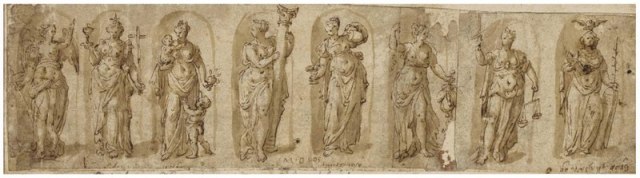
Faith, Hope, and Charity – the theological virtues (Remember that from your Baltimore Catechism?). 

Virtues
The Theological and Cardinal Virtues with Wisdom: Hope, Faith, Charity, Fortitude, Temperance, Liberality, Justice and Sapientia by Maarten de Vos (1532-1603)

These virtues are the foundation of the spiritual life. Contemporary theology ties these irrevocably to the virtue of justice – the seeking of right relationship in all Creation.

Anselm Min, Professor of Religion at Claremont Graduate University, has edited a powerful book on this subject. (Unfortunately, now out print and thus hugely expensive). One reviewer of the book, Lameck Banda, Professor at Justo Mwale University in Lusaka, Zambia, offers this insight into Min’s collection:

“The running thread throughout this book is that, whichever way the contemporary culture may seek to view and treat faith, hope, and love, the ultimate goal of these virtues is to radically and comprehensively address issues which tend to undermine the agenda of justice.”

That summary in itself gave me a lot to think and pray about. I hope it inspires you as well. God bless your Sunday!

Rohr

Music: Hymn of Hope from The Secret Garden by Rolf Lovland