Today, in God’s Lavish Mercy, we celebrate the Feast of the Visitation, when a newly-pregnant Mary travels to be with her shockingly pregnant older cousin, Elizabeth. Although a universal feast, it is certainly a feast for women to treasure.
The Carmignano Visitation, a unique masterpiece by one of sixteenth-century Italy’s greatest painters, Jacopo da Pontormo (1494-1557)
The Gospel is replete with the quiet but powerful understandings women share with one another:
the haste to support one another
the blessing and bolstering of each other’s faith
the shared joy to cause a baby’s leap in the womb
the desire for mercy and justice for the suffering
the “staying with” until need’s end
Of course, men too experience many of these holy sensibilities, but today most certainly invites women to celebrate the gifts of God within their bodies, minds and spirits.
Perhaps we might pray on these things while watching this movie clip of the imagined scene:
Poetry: Two poems to honor the two blessed women of this scene
The Visitation by Joyce Kilmer (For Louise Imogen Guiney)
There is a wall of flesh before the eyes Of John, who yet perceives and hails his King. It is Our Lady’s painful bliss to bring Before mankind the Glory of the skies. Her cousin feels her womb’s sweet burden rise And leap with joy, and she comes forth to sing, With trembling mouth, her words of welcoming. She knows her hidden God, and prophesies. Saint John, pray for us, weary souls that tarry Where life is withered by sin’s deadly breath. Pray for us, whom the dogs of Satan harry, Saint John, Saint Anne, and Saint Elizabeth. And, Mother Mary, give us Christ to carry Within our hearts, that we may conquer death.
Visitation Villanelle by Sarah O’Brien
She came to me, the mother of my Lord, and grinned with amazement at the sight. All creation with me seemed to roar.
Grey haired, belly swollen like a gourd, I stood to kiss her in the morning light. She came to me, the mother of my Lord.
Her voice, as she crossed the threshold of my door, rang through my womb – from a great height, all creation with me seemed to roar.
The baby leapt – tethered only by the cord. The joy coursing through us! I shouted outright. She came to me, the mother of my Lord.
Already she faced her share of the sword She who believed all God said would be, might – All creation with me seemed to roar.
Blessed one! With your yes you moved us toward the home we long for, and all things made right. She came to me, the mother of my Lord. All creation with me seemed to roar.
Music: Also two selections for this wonderful Feastday:
Ave Maria (Schubert) sung in German, as Schubert wrote it, by the incomparable Marian Anderson
Magnificat (Bach) Imagine composing this powerful first movement based on only a single word: “Magnificat”
Today, in God’s Lavish Mercy, we pray with Psalm 98, an exuberant celebration of God’s predilection and fidelity toward Israel. But at the same time, it is a call to recognize God’s love for ALL Creation:
The LORD has made his victory known; has revealed his triumph in the sight of the nations
Psalm 98;2
If we read the whole psalm, we might imagine all Creation assembled like a magnificent choir and orchestra – something like a supersized Mormon Tabernacle Choir. As the psalm progresses, the choirmaster-psalmist incorporates successive components into an awakened awareness until there is one universal melody of praise.
First, in a theme we met recently, the call to a NEW song:
Sing a new song to the LORD, who has done marvelous deeds… ..remembering mercy and faithfulness toward the house of Israel. All the ends of the earth have seen the victory of our God.
Psalm 98: 1-3
Next, the vocals and the instruments
Shout with joy to the LORD, all the earth; break into song; sing praise. Sing praise to the LORD with the lyre, with the lyre and melodious song. With trumpets and the sound of the horn shout with joy to the King, the LORD.
Psalm 98: 4-6
Then nature’s “orchestra”
Let the sea and what fills it resound, the world and all who dwell in it!
And even the suggestion of tambourine dancers along the river’s edge
Let the rivers clap their hands the mountains shout with them for joy, before the LORD who comes, who comes to govern the earth, To govern the world with justice and the peoples with fairness.
Psalm 98: 8-9
This inclusive psalm serves our other readings so well. The early Church in Acts has folded the Gentiles into the chorus.
Then Peter proceeded to speak and said, “In truth, I see that God shows no partiality. Rather, in every nation whoever fears him and acts uprightly is acceptable to him.”
Acts 10: 34-35
And Jesus gives us the underlying truth that, in his Love, we are ALL part of this cosmic symphony:
“As the Father loves me, so I also love you. Remain in my love. If you keep my commandments, you will remain in my love, just as I have kept my Father’s commandments and remain in his love. “I have told you this so that my joy may be in you and your joy might be complete.
This is my commandment: love one another as I love you.
Poetry: Shoulders – Naomi Shihab Nye
A man crosses the street in rain,
stepping gently, looking two times north and south,
because his son is asleep on his shoulder.
No car must splash him.
No car drive too near to his shadow.
This man carries the world's most sensitive cargo
but he's not marked.
Nowhere does his jacket say FRAGILE,
HANDLE WITH CARE.
His ear fills up with breathing.
He hears the hum of a boy's dream
deep inside him.
We're not going to be able
to live in this world
if we're not willing to do what he's doing
with one another.
The road will only be wide.
The rain will never stop falling.
Music: OK – it’s not the Mormon Tabernacle 😀 but it captures the spirit for me! I hope it puts you in the rhythm too, beloveds!
Today, in God’s Lavish Mercy, we pray with Psalm 122 which celebrates the beauty and stability of Jerusalem as a symbol of God’s enduring faithfulness to us.
I rejoiced because they said to me, “We will go up to the house of the LORD.” And now we have set foot within your gates, O Jerusalem.
Psalm 122:1-2
Think of the peace this psalm brought to its reciters – the kind of peace we seek in a confusing world.
The disciples in our passage from Acts sought the same kind of peace. As the early Church – the “New Jerusalem” – developed, and diverse converts joined the community, everyone had an opinion about that development. We all know what that’s like! 😉
Many of us have been in discussions about how to use church/community resources, respond to new initiatives, or celebrate liturgy. While it’s great to have expanded energy in the discussion, it can be exhausting, particularly if some opinions are uninformed by prayer, justice, or humility.
The real issue for the early Christians wasn’t simply circumcision. The core challenge was how to remain true to the Gospel as it met the first of many generations of interpretation. To do so, they returned to the “compact unity of Jerusalem”. They held fast to the roots of Jesus’s teaching.
Jerusalem, built as a city with compact unity. To it the tribes go up, the tribes of the LORD.
Psalm 122: 3-4
The topic of circumcision has long since been resolved by gathering the community in prayerful discernment and humble obedience. But as the ages pass, the Christian community will forever be called to return/remain in the “Jerusalem” of Christ’s teaching.
We do so by continually returning to the roots of the Gospel. That’s what it means to live in radical faith.
Remain in me, as I remain in you. Just as a branch cannot bear fruit on its own unless it remains on the vine, so neither can you unless you remain in me. I am the vine, you are the branches. Whoever remains in me and I in him will bear much fruit, because without me you can do nothing.
John 15: 4-5
May we constantly grow in our love, understanding, and obedience to the Gospel so that we more fully contribute to our community of faith.
Poetry: Palm Sunday by Malcolm Guite
Now to the gate of my Jerusalem,
The seething holy city of my heart,
The saviour comes. But will I welcome him?
Oh crowds of easy feelings make a start;
They raise their hands, get caught up in the singing,
And think the battle won. Too soon they’ll find
The challenge, the reversal he is bringing
Changes their tune. I know what lies behind
The surface flourish that so quickly fades;
Self-interest, and fearful guardedness,
The hardness of the heart, its barricades,
And at the core, the dreadful emptiness
Of a perverted temple. Jesus, come
Break my resistance and make me your home
Music: Pray for the Peace of Jerusalem – Herbert Howells
Lyrics:
O pray for the peace of Jerusalem.
They shall prosper that love thee.
Peace be within they walls
And plenteousness within thy palaces.
Psalm 122 vv. 6, 7
Today, in God’s Lavish Mercy, we pray with Psalm 87 which is both a celebration of and a longing for God’s Presence as symbolized for the psalmist in Jerusalem, Zion, the Temple.
His foundation upon the holy mountains the LORD loves: The gates of Zion, more than any dwelling of Jacob. Glorious things are said of you, O city of God!
Psalm 87: 1-3
For the psalmist, who is in exile, Zion was the visible expression of God’s exclusive relationship with Israel – the longed-for Kingdom.
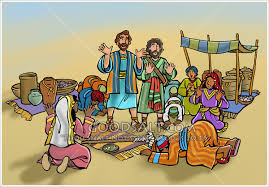
In our reading from Acts, the concept of God’s Kingdom takes a larger shape. Jewish Christians, scattered in persecution, began to share the Good News with Gentiles. Barnabas blesses this sharing. He and Paul spend a year in Antioch teaching these new Christians who will not have the same devotion to “Zion”.
So where is “the Kingdom” now?
Our Gospel shows us Jesus, walking in the Temple portico one winter morning. He stands amidst the very symbols extolled in Psalm 87. He points his listeners, who are still resistant, toward the only true “kingdom”, one he has described before:
Now when He was asked by the Pharisees when the kingdom of God would come, He answered them and said, “The kingdom of God does not come with observation; nor will they say, ‘See here!’ or ‘See there!’ For indeed, the kingdom of God is within you.”
Luke 17: 20-21
We know from the Beatitudes that the “kingdom of God” belongs to the poor and the persecuted:
Blessed are the poor in spirit, for theirs is the Kingdom of Heaven….. ……Blessed are those who are persecuted because of righteousness, for theirs is the Kingdom of Heaven.
Perhaps there is a touch of biblical irony in the fact that our poor and persecuted psalmist, exiled from beautiful Zion, already possessed the “kingdom” within! But, without the benefit of Jesus’s teaching, it seems he didn’t realize it.
Do we realize it?
Prose: from Hans Küng
(For my spiritual reading recently , I returned to an old favorite Hans Küng, a revered Catholic priest and Vatican II theologian who died earlier this month. Word of his death took me back to my 1960s heady theology days.🙏😇)
Here are two relevant quotes to our thoughts on “the Kingdom” today:
The meaning of the church does not reside in what it is but in what it is moving towards. It is the reign of God which the church hopes for, bears witness to and proclaims.
Hans Küng: The Church
The kingdom of God is creation healed.
Hans Küng: On Being a Christian
Music: The Holy City, Jerusalem sung by Jessye Norman
Today, in God’s Lavish Mercy, we pray with Psalm 2 which poses an eternally recurring question:
Yesterday I read that it was the 21st anniversary of The Belfast Agreement. This is also known as the Good Friday Agreement, because it was reached on Good Friday, 10 April 1998. It was an agreement between the British and Irish governments, and most of the political parties in Northern Ireland, on how Northern Ireland should be governed. The talks leading to the Agreement addressed issues which had caused conflict during previous decades. The aim was establish a new, “devolved government” for Northern Ireland in which unionists and nationalists would share power.
But at the same time I also read another current article:
For nearly a week, crowds of Protestant and Catholic youth have provoked one another through the gaps in the wall, video footage from journalists at the scene shows. Stemming from decades-old tensions referred to as “the troubles,” the reignited violence has been, in part, caused by Britain’s exit from the European Union.
On any given day, we could take these stories and substitute the names of other countries, each struggling through cycles of strife, attempts at peace, and recurrence of violence.
The psalmist’s question echoes and the answer, over the ages, remains the same.
Why do the nations rage? They rage from the abuse of power, money, and human dignity.
What is the antidote to this recurring rage? Our psalm tells us it is simple – not easy – but simple. We must take refuge in God, govern our lives by God’s desire for good for every person, every creature.
Every war leaves our world worse than it was before. War is a failure of politics and of humanity, a shameful capitulation, a stinging defeat before the forces of evil. Let us not remain mired in theoretical discussions, but touch the wounded flesh of the victims. Let us look once more at all those civilians whose killing was considered “collateral damage”. Let us ask the victims themselves. Let us think of the refugees and displaced, those who suffered the effects of atomic radiation or chemical attacks, the mothers who lost their children, and the boys and girls maimed or deprived of their childhood. Let us hear the true stories of these victims of violence, look at reality through their eyes, and listen with an open heart to the stories they tell. In this way, we will be able to grasp the abyss of evil at the heart of war. Nor will it trouble us to be deemed naive for choosing peace.
Pope Francis: Fratelli Tutti #261
Poetry: Dover Beach by Matthew Arnold
The sea is calm to-night,
The tide is full, the moon lies fair
Upon the straits; on the French coast the light
Gleams and is gone; the cliffs of England stand,
Glimmering and vast, out in the tranquil bay.
Come to the window, sweet is the night-air!
Only, from the long line of spray
Where the sea meets the moon-blanched land,
Listen! you hear the grating roar
Of pebbles which the waves draw back, and fling,
At their return, up the high strand,
Begin, and cease, and then again begin,
With tremulous cadence slow, and bring
The eternal note of sadness in.

Sophocles long ago
Heard it on the Aegean, and it brought
Into his mind the turbid ebb and flow
Of human misery; we
Find also in the sound a thought,
Hearing it by this distant northern sea.

The sea of faith
Was once, too, at the full, and round earth's shore
Lay like the folds of a bright girdle furled.
But now I only hear
Its melancholy, long, withdrawing roar,
Retreating, to the breath
Of the night-wind, down the vast edges drear
And naked shingles of the world.

Ah, love, let us be true
To one another! for the world which seems
To lie before us like a land of dreams,
So various, so beautiful, so new,
Hath really neither joy, nor love, nor light,
Nor certitude, nor peace, nor help for pain;
And we are here as on a darkling plain
Swept with confused alarms of struggle and flight,
Where ignorant armies clash by night.
Today, in God’s Lavish Mercy, we pray with Psalm 118 which ties together our other readings in a celebration of confirmed faith:
Christ IS risen
He has been SEEN even by one with severest doubts
the community IS RESPONDING wholeheartedly to the Easter mission
The stone which the builders rejected has become the cornerstone. By the LORD has this been done; it is wonderful in our eyes. This is the day the LORD has made; let us be glad and rejoice in it.
Psalm 118
For the early Church, which comes alive in today’s readings, faith and experience have been “married”. These are early “honeymoon days” for a young faith community where Jesus might still pop up any minute by a charcoal fire or in a locked Upper Room.
These are days of heady enthusiasm where everything seems possible in the healing tenderness of five transfigured wounds.
The Incredulity of St. Thomas – Caravaggio
Last week, I offered a staff presentation during which we discussed the blocks to effective communication – poor planning, noise, cultural differences, assumptions, etc. But I think of one block in particular this morning.
Time and Distance
The farther we are from the original message the more likely we might lose its full power and truth.
Think of that childhood game, “Whisper Down the Lane”. As the original message traveled along the long line of squirming children, it repeatedly morphed into its multiple distortions.
Our readings today enjoin us to take care that such distortion never weakens our Easter Truth: Jesus Christ is risen and lives in us, the faith community.
… whoever is begotten by God conquers the world. And the victory that conquers the world is our faith. Who indeed is the victor over the world but the one who believes that Jesus is the Son of God?
As Jesus describes us in today’s Gospel, we are the ones “who have not SEEN”. Still, we long for the blessing that comes from our unseeing fidelity:
You believe in me, Thomas, because you have seen me. Blessed are those who have not seen me, but still believe!
Let us pray for one another, the whole faith community. As the Easter Word passes down through the ages and out over the earth, may it stay fully alive in our faithful love and active mercy:
The community of believers was of one heart and mind, and no one claimed that any of his possessions was his own, but they had everything in common. With great power the apostles bore witness to the resurrection of the Lord Jesus, and great favor was accorded them all.
Poem:
St. Thomas Didymus by Denise Levertov
In the hot street at noon I saw him
a small man
gray but vivid, standing forth
beyond the crowd’s buzzing
holding in desperate grip his shaking
teethgnashing son,

and thought him my brother.

I heard him cry out, weeping and speak
those words,
Lord, I believe, help thou
mine unbelief,

and knew him
my twin:

a man whose entire being
had knotted itself
into the one tightdrawn question,
Why,
why has this child lost his childhood in suffering,
why is this child who will soon be a man
tormented, torn, twisted?
Why is he cruelly punished
who has done nothing except be born?

The twin of my birth
was not so close
as that man I heard
say what my heart
sighed with each beat, my breath silently
cried in and out,
in and out.

After the healing,
he, with his wondering
newly peaceful boy, receded;
no one
dwells on the gratitude, the astonished joy,
the swift
acceptance and forgetting.
I did not follow
to see their changed lives.
What I retained
was the flash of kinship.
Despite
all that I witnessed,
his question remained
my question, throbbed like a stealthy cancer,
known
only to doctor and patient. To others
I seemed well enough.

So it was
that after Golgotha
my spirit in secret
lurched in the same convulsed writhings
that tore that child
before he was healed.
And after the empty tomb
when they told me that He lived, had spoken to Magdalen,
told me
that though He had passed through the door like a ghost
He had breathed on them
the breath of a living man —
even then
when hope tried with a flutter of wings
to lift me —
still, alone with myself,
my heavy cry was the same: Lord
I believe,
help thou mine unbelief.

I needed
blood to tell me the truth,
the touch
of blood. Even
my sight of the dark crust of it
round the nailholes
didn’t thrust its meaning all the way through
to that manifold knot in me
that willed to possess all knowledge,
refusing to loosen
unless that insistence won
the battle I fought with life

But when my hand
led by His hand’s firm clasp
entered the unhealed wound,
my fingers encountering
rib-bone and pulsing heat,
what I felt was not
scalding pain, shame for my
obstinate need,
but light, light streaming
into me, over me, filling the room
as I had lived till then
in a cold cave, and now
coming forth for the first time,
the knot that bound me unravelling,
I witnessed
all things quicken to color, to form,
my question
not answered but given
its part
in a vast unfolding design lit
by a risen sun.
Music: Thomas Song
Thomas’ Song – Hallal Music
Jesu you were all to me, Why did you die on Calvary? O Lamb of God, I fail to see How this could be part of the plan. They say that you’re alive again But I saw death and every sin Reach out to claim their darkest whim How could this part if the plan? If I could only Hold your hand And touch the scars Where nail were driven, I would need To feel your side Where holy flesh A spear was riven, Then I’d believe, Only then I’d believe Your cruel death Was part of a heavenly plan. Holy presence, holy face A vision filling time and space Your newness makes my spirit race Could this be part of the plan? I see the wounds that caused the cry From heaven, ocean, earth, and sky When people watched their savior die Could this be part of the plan? Reaching out To hold your hand And touch the scars Where nails were driven Coming near I feel your side Where holy flesh A spear was riven Now I believe Jesus now I believe Your cruel death Was part of a heavenly plan I proudly say With blazen cry You are my Lord and my God
Today, in God’s Lavish Mercy, we pray with Psalm 33 which connects two powerful readings from Acts and John’s Gospel.
Acts describes for us a gathered crowd which, upon Peter’s inspired preaching, become a repentant, converting community. Peter speaks a word that changes them. They are struck through to their core by the enormity of Christ’s sacrifice for them.
Now when they heard (Peter’s preaching), they were cut to the heart, and they asked Peter and the other Apostles, “What are we to do, my brothers?”
Acts 2:37
In our Gospel, a bereaved Mary Magdalene’s heart is cut as well – with sorrow, confusion, and grief. But in that moment when Jesus simply speaks her name, she is awakened, healed, and energized.
What Word is it that our heart longs for today as we pray? What healing, light, and conversion do these readings hold for us as we open our hearts to Easter grace?
We, too, like Peter’s congregation, have come to hear a Word that transforms us. We, too, like Mary have been waiting in Hope outside the tomb. As we pray today’s scriptures, let’s listen for our name.
Our soul waits for the LORD, who is our help and our shield. May your kindness, O LORD, be upon us who have put our hope in you.
Psalm 33:20,22
Poetry: Say My Name – Meleika Gesa-Fatafehi
It is a good day to think about how important one’s name is to them, especially as it expresses our spiritual, familial and cultural rootedness. Meleika Gesa-Fatafehi is a proud Black/Indigenous, Pasifika and West Asian writer. She is from Murray (Mer) Island, from the Zagareb and Dauareb tribes.
My name was my name before I walked among the living before I could breathe before I had lungs to fill before my great grandmother passed and everyone was left to grieve
My name was birthed from a dream A whisper from gods to a king A shout into the stars that produced another that shone as bright They held me without being burnt, humming lullabies in pidgin
My name was passed down from my ancestors They acknowledged my roots grew in two places So, they ripped my name from the ocean and mixed it into the bloodlines of my totems
My name has survived the destruction of worlds and the genocidal rebirthing of so-called ones It’s escaped the overwhelmed jaw of the death bringer Many a time It has survived the conflicts that resulted in my gods, from both lands, knowing me as kin, but noticing that I am painfully unrecognisable and lost They are incapable of understanding the foreign tongue that was forced on me
My name has escaped cyclones and their daughters It has been blessed by the dead As they mixed dirt, salt and liquid red, into my flesh My name is the definition of resilience It is a warrior that manifested because of warriors
So, excuse me as I roll my eyes or sigh as you mispronounce my name over and over again Or when you give me another that dishonours my mother and father That doesn’t acknowledge my lineage to my island home or the scents of rainforest and ocean foam You will not stand here on stolen land and whitewash my name For it is two words intertwined holding as much power as a hurricane Say it right or don’t say it at all For I am Meleika I will answer when you call
Music: You Know My Name – Brooklyn Tabernacle Choir
(You may come upon an ad in the middle of today’s music — because it is rather long. Just clip the “Skip Ads” after a few seconds and you’ll get back to the choir)
Today, in God’s Lavish Mercy, we pray with Psalm 102, the prayer of someone in the midst of suffering. The psalm is introduced with stark honesty:
The prayer of one afflicted and wasting away whose anguish is poured out before the LORD.
Psalm 102: 1
Psalm 102 speaks to those places in life’s journey where we experience intense, perhaps overwhelming suffering.
In our first reading, the Israelites suffer through what seems like a never-ending journey of homelessness. In our Gospel, Jesus begins his final journey toward his Passion and Death. These both were journeys with suffering as a constant companion
No one avoids suffering in some way. It is part of being human. Even our beloved Catherine McAuley left us this succinct maxim:
This is your life, joys and sorrow mingled, one succeeding the other.
Letter to Frances Warde (May 28, 1841)
The psalmist, in the midst of his suffering, calls out to God for a return of the promised joy.
O LORD, hear my prayer, and let my cry come to you. Hide not your face from me in the day of my distress. Incline your ear to me; in the day when I call, answer me speedily.
This prayer attests to the psalmist’s undaunted faith and to God’s unwavering fidelity.
This mutual faithfulness is where we all must stand in sorrow so that we may come, as Jesus did, to the fullness of Resurrection grace.
As we come closer to the profound mysteries of Holy Week, let us not only reverence our own joys and sorrows. Let us ask to enter more deeply into the experience of Jesus in this final unfolding of his life. May we deepen in the understanding that the suffering of Jesus is one with the suffering of our sisters and brothers.
Poetry: On Another’s Sorrow – William Blake
Can I see another's woe,
And not be in sorrow too?
Can I see another's grief,
And not seek for kind relief?

Can I see a falling tear,
And not feel my sorrow's share?
Can a father see his child
Weep, nor be with sorrow filled?

Can a mother sit and hear
An infant groan, an infant fear?
No, no!  never can it be!
Never, never can it be!

And can He who smiles on all
Hear the wren with sorrows small,
Hear the small bird's grief and care,
Hear the woes that infants bear --

And not sit beside the next,
Pouring pity in their breast,
And not sit the cradle near,
Weeping tear on infant's tear?

And not sit both night and day,
Wiping all our tears away?
Oh no! never can it be!
Never, never can it be!

He doth give his joy to all:
He becomes an infant small,
He becomes a man of woe,
He doth feel the sorrow too.

Think not thou canst sigh a sigh,
And thy Maker is not by:
Think not thou canst weep a tear,
And thy Maker is not near.

Oh He gives to us his joy,
That our grief He may destroy:
Till our grief is fled an gone
He doth sit by us and moan
Today, in God’s Lavish Mercy, we pray with Psalm 145, a hymn of exuberant and confident gratitude to an infinitely generous God.
The LORD is gracious and merciful, slow to anger and of great kindness. The LORD is good to all and compassionate toward all his works.
Psalm 145: 8-9
It’s a good psalm for this St. Patrick’s Day. Even though the liturgy stays with the Lenten Mass, today the Irish are praying with their patron Saint.
So when we read the following psalm verse, we think of the witness of our ancestors who suffered for and remained steadfast in the Faith:
The LORD is faithful in all his words and holy in all his works. The LORD lifts up all who are falling and raises up all who are bowed down.
Psalm 145: 13-14
Nana (Ellen)
With an unquestioning allegiance, they transmitted that faith to the next generations. My great-grandmother was such a transmitter. Sixteen years old in 1884, she came alone to the U.S. carrying the thick Londonderry accent that made it hard for me to fully understand her.
When I was still a toddler, Nana would call me to her side to teach me the Hail Mary. I was resistant, wanting to wear the rosary for a necklace instead. But my mother told me that nevertheless, for my very young night prayers, I would repeat the prayer’s phrases with an evident Irish accent.
Of course, the accent did not remain. And Nana, although she lived until she was 83, slipped into dementia in her later years. But Ellen McGone’s mark on my spirit abides. It was burnished by her children, my grandmother and especially my granduncles. They chose to transmit the heritage by songs sung at every family gathering to the accompaniment of harmonica, pipe whistle, and a small squeezebox. Of course, they didn’t sound like the great John McCormack. But they thought they did, and so did I!
Happy Saint Paddy’s Day
CHORUS
When Irish Eyes are Smiling sure it’s like a morn in spring In the lilt of Irish laughter you can hear the angels sing when Irish hearts are happy all the world seems bright and gay but when Irish eyes are smiling sure they’ll steal your heart away
There’s a tear in your eye and I’m wondering why that it ever should be there at all with such power in your smile sure a stone you’d beguile and there’s never a teardrop should fall
when your sweet lilting laughter’s like some fairy song and your eyes sparkle bright as can be Oh then laugh all the while and all other times smile and then smile a smile for me
For your smile is a part of the love in your heart, And it makes even sunshine more bright. Like the linnet’s sweet song, crooning all the day long, Comes your laughter and light for the springtime of life Is the sweetest of all There is ne’er a real care or regret; and while springtime is ours Throughout all of youth’s hours, let us smile each chance we get.
On this feast of the great and glorious St. Patrick, we might – no matter our heritage – want to pray with and for our treasured forbears who have nurtured in us the gifts of love, faith and heritage:
Great is the LORD and worthy of much praise, whose grandeur is beyond understanding.
One generation praises your deeds to the next and proclaims your mighty works.
They speak of the splendor of your majestic glory, tell of your wonderful deeds.
They speak of the power of your awesome acts and recount your great deeds.
They celebrate your abounding goodness and joyfully sing of your justice.
The LORD is gracious and merciful, slow to anger and abounding in mercy.
Psalm 145: 4-8
Poetry: Songs of Our Land by Frances Brown
Songs of our land, ye are with us for ever,
The power and the splendor of thrones pass away;
But yours is the might of some far flowing river.
Through Summer's bright roses or Autumn's decay.

Ye treasure each voice of the swift passing ages,
And truth which time writeth on leaves or on sand;
Ye bring us the thoughs of poets and sages,
And keep them among us, old songs of our land.

The bards may go down to the place of their slumbers,
The lyre of the charmer be hushed in the grave,
But far in the future the power of their numbers
Shall kindle the hearts of our faithful and brave,

It will waken an echo in souls deep and lonely,
Like voices of reeds by the summer breeze fanned;
It will call up a spirit for freedom, when only
Her breathings are heard in the songs of our land.

For they keep a record of those, the true-hearted,
Who fell with the cause they had vowed to maintain;
They show us bright shadows of glory departed,
Of love that grew cold and hope that was vain.

The page may be lost and the pen long forsaken,
And weeds may grow wild o'er the brave heart and hand;
But ye are still left when all else hath been taken,
Like streams in the desert, sweet songs of our land.

Songs of our land, ye have followed the stranger,
With power over ocean and desert afar,
Ye have gone with our wanderers through distance and danger,
And gladdened their path like a homeguiding star.

With the breath of our mountains in summers long vanished,
And visions that passed like a wave from the sand,
With hope for their country and joy from her banished.
Ye come to us ever, sweet songs of our land.

The spring time may come with the song of our glory,
To bid the green heart of the forest rejoice,
But the pine of the mountain though blasted and hoary,
And the rock in the desert, can send forth a voice,

It was thus in their triumph for deep desolations,
While ocean waves roll or the mountains shall stand,
Still hearts that are bravest and best of the nations,
Shall glory and live in the songs of our land
Music: Hymn to Our Lady of Knock sung by The McBennett Sisters, a trio from Co. Armagh, Northern Ireland
They were people of all ages Gathered round the gabled wall Poor and humble, men and women Little children at your call, We are gathered here before you And our hearts are just the same Filled with joy at such a vision As we praise your name.
Golden Rose, Queen of Ireland All my cares and troubles cease As I kneel with love before you Lady of Knock, My Queen of Peace
Though your message was unspoken Still the truth and silence reigns As I gaze upon your vision And the truth I tried to find Here I stand with John the Teacher And with Joseph at your side And I see the Lamb of God On the altar glorified.
Golden rose …
And the lamb will conquer, And the woman clothed in the sun, Will shine her light on everyone. Yes, the lamb will conquer, And the woman clothed in the sun, Will shine her light on everyone.
In preparing for today’s reflection, I decided to look back a year ago to Laetare Sunday 2020. We were just beginning a very troubling and painful journey. We had no idea the depths to which it would take us. I hadn’t even learned to call our enemy “Covid”, as you will see.
Yet as I read the past reflection in the light of where we are today, I was filled with awe, gratitude, sadness and remembrance.
I thought it might be good to offer the selection as a re-read for today as we stand on the brink of hope, Daylight Savings Time and a Spring that, for twelve terrible months, we couldn’t count on seeing.
As we begin to help one another heal, hope, and fully live again, let’s continue to pray for another. Thank you all for being part of the Lavish Mercy community whose prayer helped carry us all through these times.
May God bless you all — and good health, good heart, good Spirit to every one of you.
Laetare! Rejoice! Lent has run half its distance to Easter.
I know it may be a bit difficult to rejoice in this Corona time, but think of this: Spring has stepped over the horizon! The long winter watch is over. But before we shake off its black velvet wraps for good, it might be well to think about what winter has taught us. It may strengthen us for this unusually challenging spring!
The stretch of time between November and April is all about waiting. Bulbs wait under the frozen earth. Bears hibernate in the cold mountains. Birds migrate, their old nests empty until the spring. All creation seems to enter a time of patience and unrealized expectation. But it is not a time of desolation. It is a time of hope for things yet unseen. Perhaps we can make our Corona time that kind of hopeful time.
We human beings also experience “winter” – not simply the seasonal one – but “winters of the spirit”. We all go through times when our nests have been emptied; times when all the beautiful flowering aspects of our lives seem dormant; times when our vigor and strength seem to hide in the cave of depression or sadness. These “winters” take many forms. We may find ourselves sick of a job we had always loved. We may find a long, committed relationship wavering. We may find the burdens of age or economics overwhelming us. We may be the unwilling bearers of responsibilities we had not bargained for.
But if we listen, under the deep silence of waning winter, the wind rustles. It carries the hint of a new season. It carries the hope of the renewing cycle of our lives. In that silence, we may be able to hear our own heartbeat more clearly. We may come to a clearer understanding of what is most important in our lives. In the stillness, we may be forced to know and understand ourselves in a deeper way.
In this time of global angst and uncertainty, I think of a powerful image from the works of St. Teresa of Avila. St. Teresa imagines God as a warm healer leaning over our frozen world, setting free the beauty of our spirits. This is what she says:
And God is always there, if you feel wounded. He kneels over this earth like a divine medic, and His love thaws the holy in us.
Teresa of Avila
Every time you touch another person’s life, — in these times, from at least six feet away — you have the chance to change winter into spring. You have a chance to be like God.
Call someone who may feel very alone. Be “Laetare” for them! Pray for someone suffering illness or loss. Send healing hopes to those you may not even know in distant places of our shared earth. Light, Easter rising and renewed life will come. Let us trust God and hold one another up as we wait.
Music: Laetare Jerusalem – Discantus
Laetáre Jerúsalem: et convéntum fácite ómnes qui dilígitis éam: gaudéte cum laetítia, qui in tristítia fuístis: ut exsultétis, et satiémini abubéribus consolatiónis véstrae.
Ps.: Laetátus sum in his quae dícta sunt míhi: in dómum Dómini íbimus.
Glória Pátri, et Fílio, et Spirítui Sáncto. Sicut erat in princípio, et nunc, et semper, et in saécula saeculórum. Amen.
Laetáre Jerúsalem: et convéntum fácite ómnes qui dilígitis éam: gaudéte cum laetítia, qui in tristítia fuístis: ut exsultétis, et satiémini abubéribus consolatiónis véstrae.
Rejoice, O Jerusalem: and come together all you that love her: rejoice with joy you that have been in sorrow: that you may exult, and be filled from the breasts of your consolation
Ps.: I rejoiced at the things that were said to me: we shall go into the house of the Lord.
Glory be to the Father, and to the Son, and to the Holy Spirit; as it was in the beginning, is now, and ever shall be, world without end. Amen.















 Lavish Mercy