Psalm 69: Snapping Out on God

Twelfth Sunday in Ordinary Time

June 21, 2020

Today, in God’s Lavish Mercy, we pray with Psalm 69 which Brueggemann describes as

“a script for unburdening negation in God’s presence. It is a script for rehabilitation to the community of praise and thanks.”

Walter Bruggemann: From Whom No Secrets Are Hid

This Sunday’s reading are not happy ones. Jeremiah is plagued by his persecutors. Romans describes the reign of sin and death before Christ’s act of redemption. And, in our Gospel, Jesus tells his followers not to be afraid of those who kill the body but cannot kill the soul!

Guess what! Despite the Gospel’s advice, I am afraid of that kind of stuff — persecution, sin, evil, murder…. and all the other terrible consequences in the larger reading of all of Psalm 69.

And guess what else. The psalmist is not only afraid. He is angry… and I mean infuriated, outraged and massively ticked off.

No one wants to listen to him about his grievances either so who gets an earful? Yes, you got it — God. 


In verses 22-28, the writer spews a line of curses for his enemies. And they’re masterpieces — very satisfying ideations if you ever find yourself in similar straits.

But that’s the whole beauty of this psalm. All the negativity remains in the prayer’s imagination. It is not acted out. Once vehemently expressed to God, the catharsis slowly evolves to healing. This happens because the complaining psalmist all of a sudden realizes to Whom he is complaining — the Merciful One, the Patient One, the Forgiving One who has given all these generosities repeatedly to him.

I pray to you, O LORD,
for the time of your favor, O God!
In your great kindness answer me
with your constant help.
Answer me, O LORD, for bounteous is your kindness;
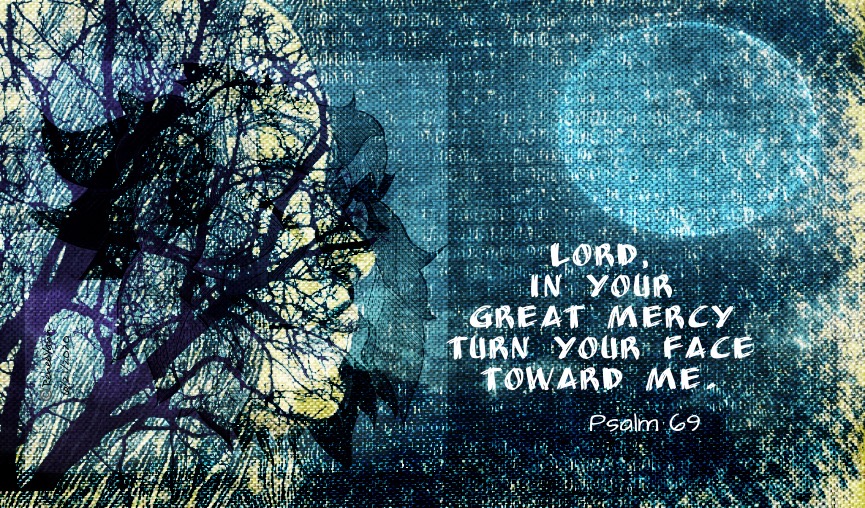
in your great mercy turn toward me.


Seeing God’s Face turn toward him in prayer, the psalmist regains balance. The final verse of the psalm rests on the hope and confidence God has promised in the covenantal relationship.

For God will rescue Zion,
and rebuild the cities of Judah.
They will dwell there and possess it
the descendants of God’s servants will inherit it;
those who love God’s name will dwell in it.


Anger visits all of us, sometimes in response to persecution, misunderstanding or disrespect. We feel it for personal grievances and for meanness in the world toward the helpless.  Praying with Psalm 69 may help us, too, find our balance, as did the psalmist, so that the anger leads to wholeness rather than destruction.


Poetry: Time’s Lesson – Emily Dickinson

Mine enemy is growing old, —
I have at last revenge.
The palate of the hate departs;
If any would avenge, —

Let him be quick, the viand flits,
It is a faded meat.
Anger as soon as fed is dead;
'T is starving makes it fat.

Music: Liberty and Justice for All – Brandon Williams

Psalm 51: A Contrite Spirit

Tuesday of the Eleventh Week in Ordinary Time

June 16, 2020

Today, in God’s Lavish Mercy, we pray with Psalm 51, the Miserere. Perhaps the most recognized of the penitential psalms, it is said to have been written by David after his adulterous affair with Bathsheba. ( although it more likely was written separately and applied to David’s situation later.)

This psalm is so rich in deep spiritual psychology that it would be a shame to dismiss it simply as a “confessional”. The psalm truly teaches us how our soul’s vigor and wholeness may be restored in an environment of sin where we are often both consciously and unconsciously complicit.


Let me give an example of how I see this. Last night in my city, a group of protesters gathered around a statue of Christopher Columbus, supposedly, “to protect it” from dismantling by “them”. Many in the group carried clubs and bats; a few carried military-style weapons. All of the “defenders” were white, angry, and mostly men.

I ask myself what were they really there to do. What did they really feel they had to defend? Did their violent public intimidation scream out, “We love Christopher Columbus!”? Or did it shout, “We refuse to acknowledge that our heritage is laced with racism and sinful domination!”?


For me, this is the kind of sinful circumstance which Psalm 51 can help us redeem. We may not act out our culpable ignorance, violence, defensiveness, or racism like last night’s threatening mob. But we must examine what we retain of these sins in our choices, attitudes, speech, and complicit silence.

How does Psalm 51 guide us to that kind of redemption?

First, there is a broken-hearted recognition of failure in holding up our end of relationship with God. Because, as David acknowledges, it is God whom we ultimately offend in our crassness toward one another. It’s not about only one sinful act, like the list we made before our grade school confessions. It’s about a fissure in love, honesty, and loyalty to the One who gives us all life.


Second, there is confession – saying out loud the failure that has replaced love. My favorite Biblical scholar, Walter Brueggemann, describes it as Truth-telling:

Psalm 51 makes available the truth of our life before God. On the one hand, it resists arrogant autonomy that imagines (with David) that we can live without accountability or dependence on the will and purpose of God. On the other hand, it contradicts the practice of denial that is so seductive in a society that has no time, patience, or energy for the nurture of an interior life. It turns out that truth-telling before God is an indispensable condition for joyous existence. Such emancipation makes for exuberant singing and glad generosity. (Walter Brueggemann: From Whom No Secrets are Hid)

Third, and most important because it is woven through and sustains the other two, is the immovable confidence in God’s mercy and God’s desire to give it.

For you do not desire sacrifice or I would give it;
a burnt offering you would not accept.

My sacrifice, O God, is a contrite spirit;
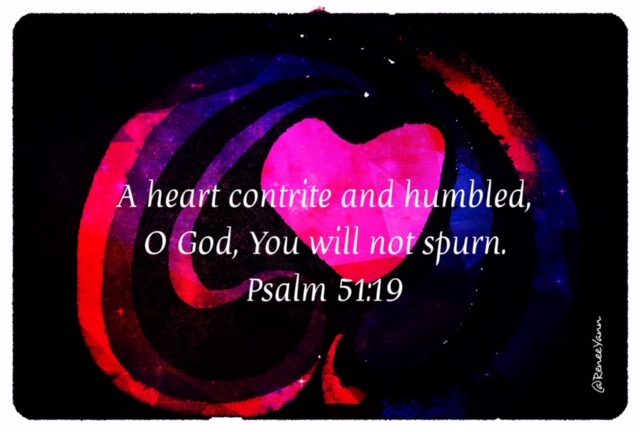
a contrite, humbled heart, O God, you will not scorn.

Psalm 51 is a big one. If you have time, read the whole thing reflectively. It’s good medicine once we have the courage to swallow it.


Poetry: To Live in the Mercy of God – Denise Levertov

To lie back under the tallest
oldest trees. How far the stems
rise, rise
               before ribs of shelter
                                           open!

To live in the mercy of God. The complete
sentence too adequate, has no give.
Awe, not comfort. Stone, elbows of
stony wood beneath lenient
moss bed.

And awe suddenly
passing beyond itself. Becomes
a form of comfort.
                      Becomes the steady
air you glide on, arms
stretched like the wings of flying foxes.
To hear the multiple silence
of trees, the rainy
forest depths of their listening.

To float, upheld,
                as salt water
                would hold you,
                                        once you dared.

 To live in the mercy of God.

To feel vibrate the enraptured
waterfall flinging itself
unabating down and down
                              to clenched fists of rock.

Swiftness of plunge,
hour after year after century,
                                                   O or Ah
uninterrupted, voice
many-stranded.
                              To breathe
spray. The smoke of it.
                              Arcs
of steelwhite foam, glissades
of fugitive jade barely perceptible. Such passion—
rage or joy?

                              Thus, not mild, not temperate,
God’s love for the world. Vast
flood of mercy
                      flung on resistance.

Music: Miserere Mei Deus – Gregorio Allegri 

Psalm 16: A Night Prayer

Memorial of Saint Anthony of Padua, Priest and Doctor of the Church

Saturday, June 13, 2020

Click here for readings

psalm16 path2

Today, in God’s Lavish Mercy, we pray once again with Psalm 16. Verses 1-10 strike me as a perfect “nighttime” prayer.

In his musical Phantom of the Opera, Andrew Lloyd Weber lyricizes about the “beauty of the night”.  

It’s a soulful song, and in itself could be used for prayer, especially when we pray in times of spiritual darkness or unknowing. In many ways, it reminds me of John of the Cross’s poem, “The Dark Night”. (Verses below for our poetry today).


All of us have times when our prayer seems to echo back to us without a response from God. Our faith may be tested and our trust stretched very thin. God seems so distant that we wonder what happened to cloud the relationship! We linger in a spiritual darkness that is dry and disconcerting.

Dali John of Cross
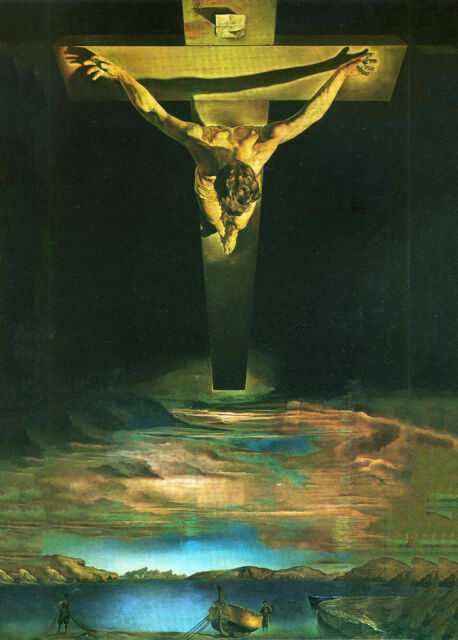
Christ of St. John of the Cross by Salvador Dali (1951) – Kenmore Art Gallery, Glasgow

These times in the spiritual life were experienced and described by writers like John of the Cross and the author of “The Cloud of Unknowing”. They are times when our experiences and prayer invite us to a new and deeper understanding of God. They ask us to let go of our intellectual certainties and abandon ourselves to God without demands.


Recently, while describing how disappointed he was in God, a friend told me that he had “lost” his faith long ago. Well, obviously, he hadn’t because he still held expectations of the “God” who was disappointing him. I told him that I had lost my faith a few times too, and that every time I got it back, it was new and deeper than the one I had lost. My “septuagenarian God” is very different from the one I came to follow when I was eighteen!


Our minds and souls are so small next to God’s Infinity. But slowly, through a life of prayerful fidelity and loving service, God stretches our capacity to know and return a Love which is beyond reason.

But the stretching times can be dark – times when Psalm 16 is a comforting prayer.

I like to pray with this transliteration by Steven Mitchell – A Book of Psalms

Unnamable God,
I feel you with me at every moment.
You are my food, my drink,
my sunlight, and the air I breathe.
You are the ground I have built on
and the beauty that rejoices my heart. 

I give thanks to you at all times
for lifting me from my confusion,
for teaching me in the dark
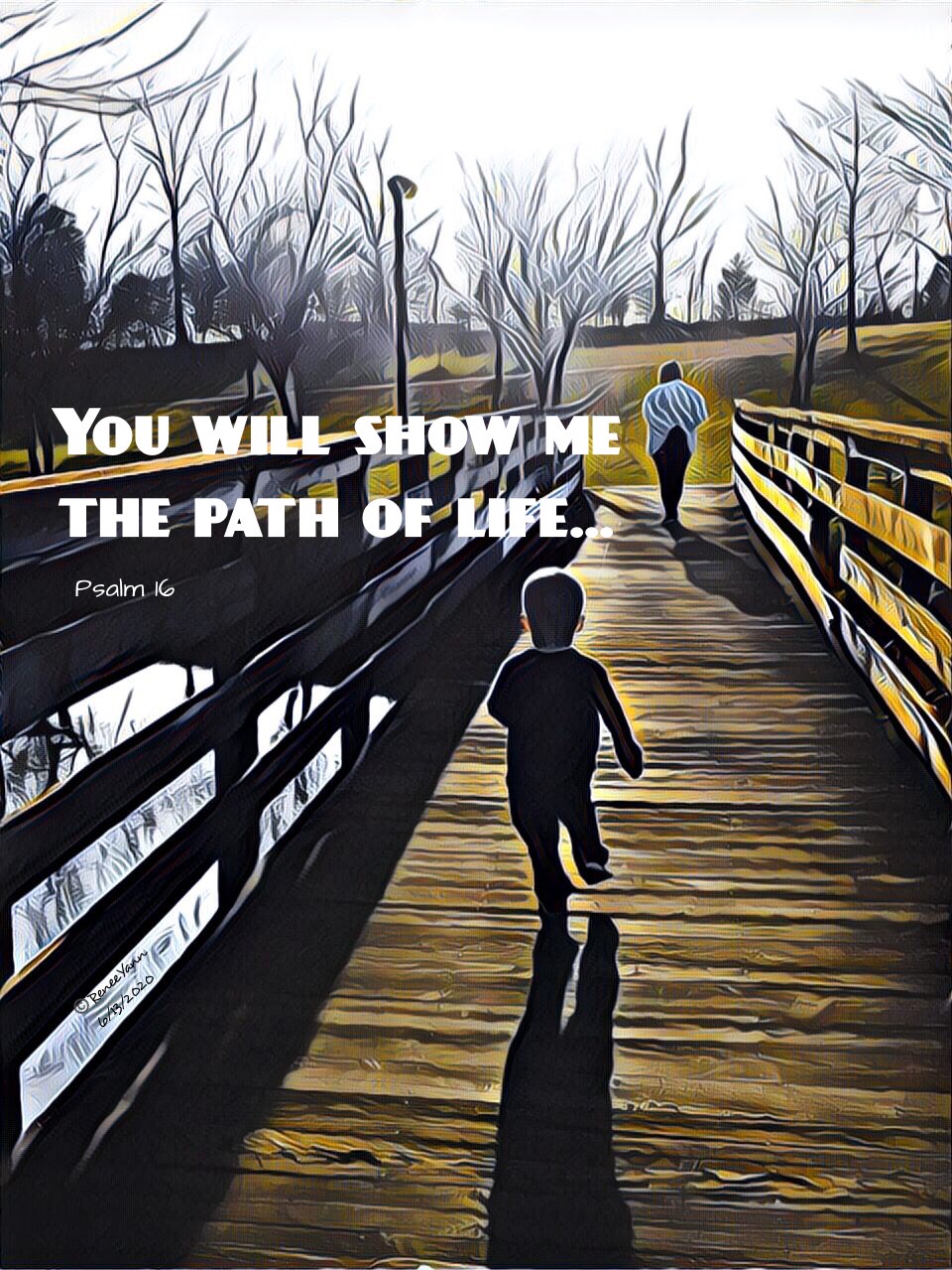
and showing me the path of life. 

I have come to the center of the universe;
I rest in your perfect love.
In your presence there is fullness of joy
and blessedness forever and ever.

Music: Path of Life – The Dameans

Poetry: The Dark Night – Stanzas Of The Soul

( Some people find John of the Cross surprising, if not strange or shocking, in his imagery. He was a grace-filled mystic and poet whose images of God expanded beyond the boundaries we might be accustomed to. And that very extravagance is John’s beauty — he invites us to a place we might not otherwise think to go.)

1. One dark night,
fired with love’s urgent longings
— ah, the sheer grace! —
I went out unseen,
my house being now all stilled.

2. In darkness, and secure,
by the secret ladder, disguised,
— ah, the sheer grace! —
in darkness and concealment,
my house being now all stilled.

3. On that glad night,
in secret, for no one saw me,
nor did I look at anything,
with no other light or guide
than the one that burned in my heart.

4. This guided me
more surely than the light of noon
to where he was awaiting me
— him I knew so well —
there in a place where no one appeared.

5. O guiding night!
O night more lovely than the dawn!
O night that has united
the Lover with his beloved,
transforming the beloved in her Lover.

6. Upon my flowering breast
which I kept wholly for him alone,
there he lay sleeping,
and I caressing him
there in a breeze from the fanning cedars.

7. When the breeze blew from the turret,
as I parted his hair,
it wounded my neck
with its gentle hand,
suspending all my senses.

8. I abandoned and forgot myself,
laying my face on my Beloved;
all things ceased; I went out from myself,
leaving my cares
forgotten among the lilies.

Psalm 4: To See God’s Face

Tuesday of the Tenth Week in Ordinary Time

June 9, 2020

Click here for readings

king harp

Today, in God’s Lavish Mercy, we pray with Psalm 4, a lament written to be sung with stringed instruments.

The psalmist expresses confidence that God rewards the prayer of the just, warning the “dull of heart” to wake up!


When I call, answer me, O my just God,
you who relieve me when I am in distress;
Have pity on me, and hear my prayer!
Men of rank, how long will you be dull of heart?
Why do you love what is vain and seek after falsehood?

Surely, the psalmist’s sentiments echo in our hearts:

  • We all pray, in these conflicted times, for the grace to wake up to the justice and mercy of God.
  • We pray, like the psalmist, to see the face of God in ourselves and in our neighbor.
  • We pray to finally be able to break through the falsehood of racism to the Presence of our Creator in every person.

shane mccrae
The poem I offer today was written by Shane McCrae, an American poet and recipient of a 2011 Whiting Award. McCrae earned a BA at Linfield College, an MA at the University of Iowa, an MFA at the Iowa Writers’ Workshop, and a JD at Harvard Law School. He currently teaches at Columbia University.

In this poem, the poet and his young daughter trace faces in the waves, the way many of us have in waves or clouds.

psalm4

Like all great poems, this one allows us to find our own meaning within it. I see a father looking to find the reflection of his own face in our representations of God, and hoping that his little child might do so a well. We sense their hopes disappear in the waves and in a culture that has enthroned God’s image as a white male.

Still When I Picture It the Face of God Is a White Man’s Face

Before it disappears
on the sand his long white      beard before it disappears
The face of the man
in the waves I ask her does she see it ask her does
The old man in the waves      as the waves crest she see it does
she see the old man his
White     his face crumbling face it looks
as old as he’s as old as
The ocean looks
and for a moment almost looks
His face like it’s     all the way him
As never such old skin
looks my / Daughter age four
She thinks it might he might be real she shouts Hello
And after there’s no answer answers No


Music:
  The Whole Book of Psalmes: Psalm 4, “Oxford Tune”
written by – Thomas Ravenscroft (1588 – 1635)
rendered here by Richard Muenz


Psalm 119: Your Awesome Word

Memorial of Saint Boniface, Bishop and Martyr

June 5, 2020

Click here for readings

Psalm 119_word

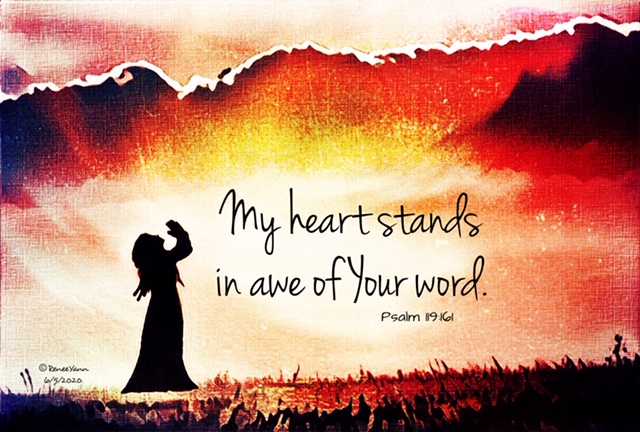
Today, in God’s Lavish Mercy, we pray with Psalm 119 which is considered a hymn psalm, meant for offering praise for God’s handiwork.

bird

This psalm, the longest in the Bible, is an extended string of delight in God’s beauty, power, and tenderness. It reminds me of a mockingbird’s lovely, tireless song, lilting up into the morning or evening sky.

Though long, the psalm is a very simple yet profound prayer. Seeing its length, we might tend to set it aside for a shorter psalm. Instead, don’t tackle the whole thing. Pick one verse that speaks to you. Sit down beside it. Let it crawl into to your lap like a small child. Cradle it and let your soul hum with it.


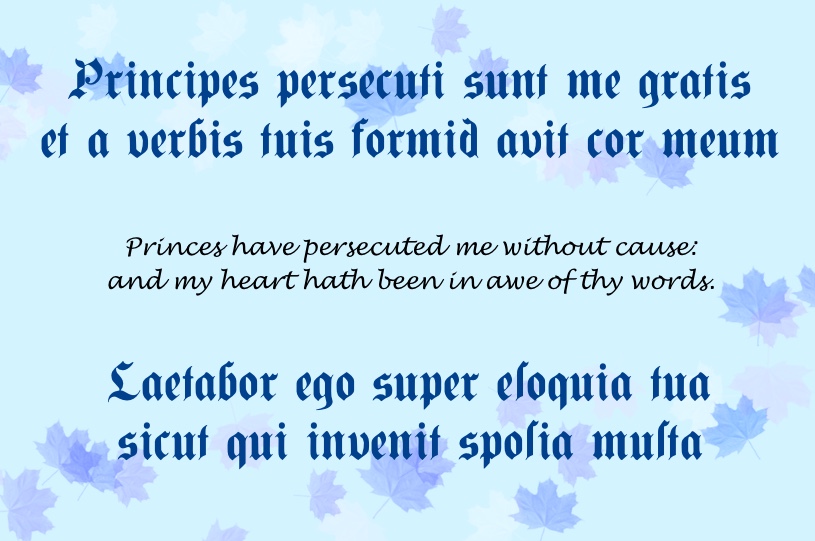
I remember, as a young novice, learning to pray this beautiful psalm in Latin. Its innocent clarity echoed my desire simply to deepen in God’s ways. Psalm 119 has been one of my favorites for nearly sixty years now, carrying God’s Word to me in myriad ways.

119


Today in our prayer, we might want to contemplate what single word God is speaking most clearly to us in this moment. The words vary over the course and circumstances of our lives. Let us listen and respond to what we hear today in quiet prayer.

wordcloud

Music: Word of God, Speak – MercyMe

Psalm 123: Song of the Caged Bird

Memorial of Saint Charles Lwanga and Companions, Martyrs

Charles Lwango
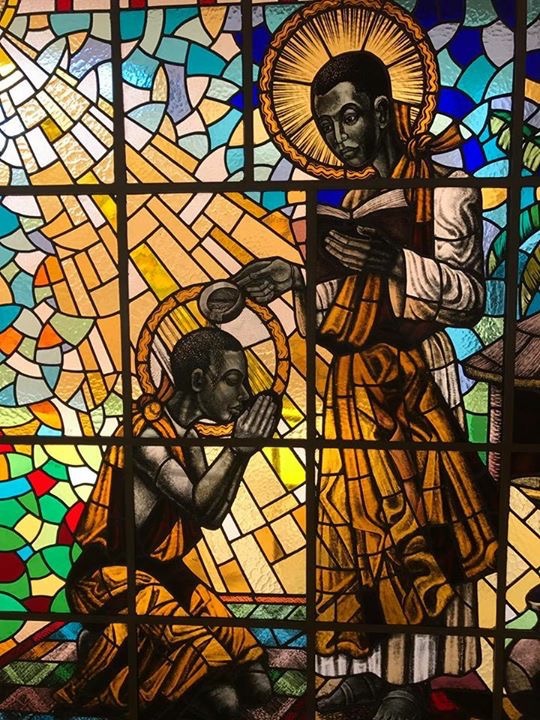
St. Kizito being baptised by St. Charles Lwanga at Munyonyo – stained glass at Munyonyo Martyrs Shrine

Charles Lwanga (1860 – 1886) was a Ugandan convert to the Catholic Church, who was martyred for his faith and is revered as a saint by both the Catholic Church and the Anglican Communion.


June 3, 2020

Click here for today’s readings

Today, in God’s Lavish Mercy, we pray with Psalm 123. How fitting that this particular prayer should bless us at this time!

Psalm 123 is one of the fifteen Psalms of Ascent (120-134). It is thought that these prayer songs were sung by pilgrims ascending to Jerusalem, expressing the joys, sorrows, needs and sufferings of the community.

Among them Psalm 123 is a lament, particularly for the scorn and contempt the Israelites felt as they tried to live lives of faith in a hostile world. Verses 3 and 4, (not included in today’s passage) plead:

Show us favor, LORD, show us favor,
for we have our fill of contempt.
Our souls are more than sated
with mockery from the insolent,
with contempt from the arrogant.

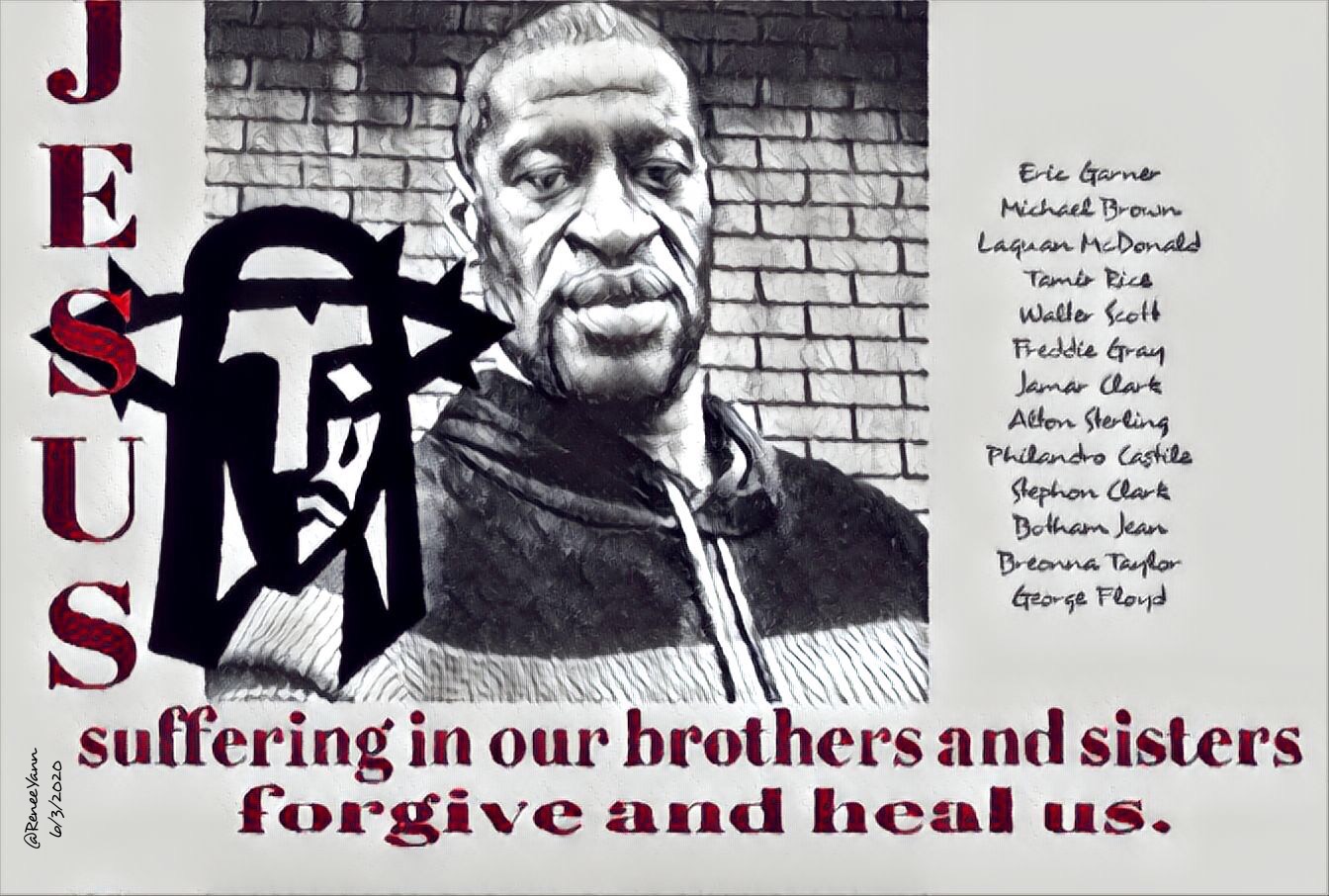
Praying with Psalm 123, we might think of today’s “pilgrims”, traveling the streets in protest of racial injustice. The integrity of their cause has been polluted by the rioters and looters infiltrating them, drawing contempt even from some who might otherwise have supported them.

Geo_Floyd

Still, people of faith must not be distracted from the truth, nor should we hide from the reality of our own complicity in normalizing unjust systems.  We must hear the lament of all those who long for justice. We must acknowledge that our current structures have grievously failed people of color, the poor and the refugee. We must make the choices that justice and mercy demand of us.


Today’s Responsorial verses may help us. In our hearts and souls, let us stand beside one another as we pray, each of us created to serve God by serving one another:

To you I raise my eyes,
to you enthroned in heaven.
Yes, like the eyes of servants
on the hand of their masters,

Like the eyes of a maid
on the hand of her mistress,
So our eyes are on the LORD our God,
till we are shown favor.


A poem to enrich your reflection:

cage

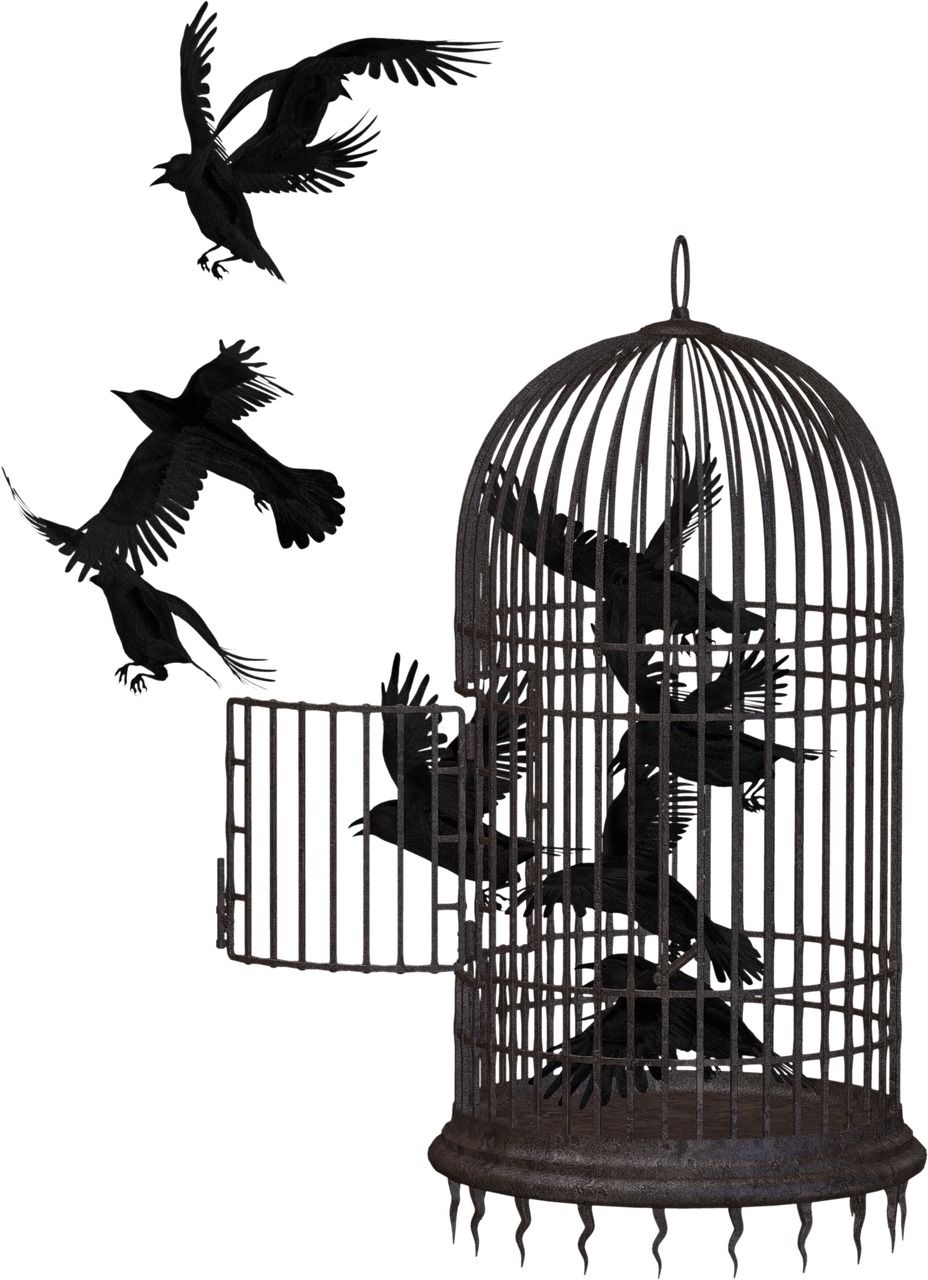
Caged Bird
A free bird leaps
on the back of the wind
and floats downstream
till the current ends
and dips his wing
in the orange sun rays
and dares to claim the sky.

But a bird that stalks
down his narrow cage
can seldom see through
his bars of rage
his wings are clipped and
his feet are tied
so he opens his throat to sing.

The caged bird sings
with a fearful trill
of things unknown
but longed for still
and his tune is heard
on the distant hill
for the caged bird
sings of freedom.

The free bird thinks of another breeze
and the trade winds soft through the sighing trees
and the fat worms waiting on a dawn bright lawn
and he names the sky his own

But a caged bird stands on the grave of dreams
his shadow shouts on a nightmare scream
his wings are clipped and his feet are tied
so he opens his throat to sing.

The caged bird sings
with a fearful trill
of things unknown
but longed for still
and his tune is heard
on the distant hill
for the caged bird
sings of freedom.
~ Maya Angelou


Music: Giovanni Pierluigi da Palestrina: Ad te levavi oculos meos (Psalm 123)

Ad te levavi oculos meos, qui habitas in caelis.
Ecce sicut oculi servorum in manibus dominorum suorum;
sicut oculi ancillae in  manibus dominae suae:
ita oculi nostri ad Dominum Deum nostrum,
donec misereatur nostri.

Miserere nostri, Domine, miserere nostri,
quia multum repleti sumus despectione;
quia multum repleta est anima nostra
opprobrium abundantibus, et despectio superbis.

Take My Hand

Friday of the Seventh Week of Easter

May 29, 2020

Click here for readings

festus
Window in St. Paul’s Cathedral, Melbourne – Paul Pleads His Case (Festus in yellow)

Today, in Mercy, Paul’s case goes before Festus and King Herod Agrippa. Just in case you are confused, like I was, about just who this particular Herod is, this family tree from Wikipedia helped:

chart

This King Agrippa was Marcus Julius Agrippa II (A.D. 27-100), son of Agrippa I (Acts 12:1-25) and great-grandson of Herod the Great (Mt 2:1-23). 

I offer these facts for no real spiritual reason, but they remind me that these biblical characters were real people, like us, engaging (or not) a real life of faith. (Also, I thought it was fun to see how uncreative they were in naming their babies 🙂


In our Gospel, Jesus once again prepares Peter for his tremendous responsibility in the building of that faith. Jesus asks Peter three times, “Do you love Me?”. By the third interrogation, Peter’s answer sounds a little intense:

“Lord, you know everything; you know that I love you.”

Hearing this response, Jesus lays the full burden of Peter’s life upon his shoulders. Not only must Peter “feed” the faith of Jesus’s followers, he must do so by giving over all control to God:

“Amen, amen, I say to you, when you were younger,
you used to dress yourself and go where you wanted;
but when you grow old, you will stretch out your hands,
and someone else will dress you
and lead you where you do not want to go.”

hand

Like Peter,
we too are given the gift and responsibility
of living a faithful life.
Like Peter, we all learn through the years,
that life comes to us in unexpected ways.
In reality, life often chooses us
rather than the other way around.

As we pray with these passages, we might want to look back over our lives for those points where life challenged or unbalanced us. What unexpected blessings came from those surprises/shocks? When God’s plan contradicted our own, how were we eventually blessed with courage, hope and insight?

We are the person we are today because of how we responded to God’s mysterious plan for our lives. Did we reach out our hand and let God lead us? Do we still need to do some letting go in order to enjoy that kind of freedom?

Music:  Precious Lord, Take My Hand – written by Thomas A. Dorsey, sung here by the Great Mahalia Jackson

When my way groweth drear

Precious Lord, linger near-ear

When my li-ight is almost gone

Hear my cry, hear my call

Hold my ha-and lest I fa-all

Take my hand, precious Lor-ord

Lead me on

Precious Lord, take my hand

Lead me on, let me sta-and

I am tired, I’m weak, I am worn

Through the storm, through the night

Lead me on to the li-ight

Take my ha-and, precious Lor-ord

Lead me home

When my work is all done

And my race here is are you-un

Let me see-ee by the light

Thou hast shown

That fair city so bright

Where the lantern is the li-ight

Take my ha-and, precious Lor-ord

Lead me on

Precious Lord, take my hand

Lead me on, let me sta-and

I am tired, I’m weak, I am worn

Through the storm, through the night

Lead me on to the li-ight

Take my ha-and, precious Lor-ord

Lead me home

Under Her Fiery Wings

Monday of the Seventh Week of Easter

May 25, 2020

Click here for readings

Today , in Mercy, we read in Acts about Baptism in the Spirit and the powers it bestows. When Paul encounters some believers who have received the Baptist’s rite of repentance, he asks if they had received the Holy Spirit.

Their simple answer kind of amuses me:

We’ve never even heard of him!

Paul remedies the situation with a few quick sacramental steps and:

… they were baptized in the name of the Lord Jesus.
And when Paul laid his hands on them,
the Holy Spirit came upon them,
and they spoke in tongues and prophesied.


When I read passages like this, I sometimes wonder what has happened in the millennia since those early Spirit-filled Baptisms… since the days when the Holy Spirits seems to have burst out all over in flames, wonders and eloquence.

batteryHas the Holy Spirit changed? Diminished? Is Her battery running low? Or have we changed … the Church and we members who comprise it?

Well, I guess we all know the answer, given our faith in a changeless God.


So why doesn’t the Holy Spirit blaze for us as She did for those twelve Ephesians in today’s reading?

I think it’s a matter of how we see, and listen. 

Sir John Lubbock, a 19th century scientist and polymath wrote this:
“What we see depends mainly on what we look for. … In the same field the farmer will notice the crop, the geologists the fossils, botanists the flowers, artists the colouring, sportmen the cover for the game. Though we may all look at the same things, it does not all follow that we should see them.”

― John Lubbock, The Beauties of Nature and the Wonders of the World We Live In


Might not this wisdom apply as well to how we perceive the Spirit in our lives?

If in our daily experiences and interactions, we remain on a superficial, distracted relationship with the Holy then we, like the fellows in our reading, may “never even hear” of the Holy Spirit.

But if, by prayer and contemplation, we open ourselves to the Sacred within all Creation, what we see and hear, what we feel and respond to begins to change — to catch fire.

Hopkins_wings
During this week leading up to Pentecost, we might try this practice: let’s look more intensely for the Spirit in our daily lives by noticing the presence (or absence) of the Spirit’s gifts.

  • How are our choices, conversations, judgements, reactions reflective of these gifts?
  • In my experiences each day, what persons or circumstances have mirrored these gifts? What has overshadowed or eradicated them?

The Holy Spirit’s heart beats alive and well within all Creation. I might just need to dust off my stethoscope a bit!🤗 Maybe this beautiful poem will help.

God’s Grandeur- Gerard Manley Hopkins, SJ

The world is charged with the grandeur of God.
It will flame out, like shining from shook foil;
It gathers to a greatness, like the ooze of oil
Crushed. Why do men then now not reck his rod?

Generations have trod, have trod, have trod;
And all is seared with trade; bleared, smeared with toil;
And wears man’s smudge and shares man’s smell: the soil
Is bare now, nor can foot feel, being shod.
And for all this, nature is never spent;

There lives the dearest freshness deep down things;
And though the last lights off the black West went
Oh, morning, at the brown brink eastward, springs —
Because the Holy Ghost over the bent
World broods with warm breast and with ah! bright wings.

Meditation: God’s Grandeur- read so beautifully by Samuel West

Paul’s Great Sermon

Wednesday of the Sixth Week of Easter

May 20, 2020

Click here for readings

Today, in Mercy, Paul gives a magnificent oration at the Areopagus in Athens. It was a big deal billing!

V&A_-_Raphael,_St_Paul_Preaching_in_Athens_(1515)
St. Paul at the Areopagus by Raphael (c.1515)

Areopagus, earliest aristocratic council of ancient Athens. The name was taken from the Areopagus (“Ares’ Hill”), a low hill northwest of the Acropolis, which was its meeting place.

In pre-classical times (before the 5th century BC), the Areopagus was the council of elders of the city, similar to the Roman Senate. Like the Senate, its membership was restricted to those who had held high public office.

The Areopagus, like most city-state institutions, continued to function in Roman times, and it was from this location, drawing from the potential significance of the Athenian altar to the Unknown God that Paul is said to have delivered the famous speech, “Now what you worship as something unknown I am going to proclaim to you. The God who made the world and everything in it is the Lord of heaven and earth and does not live in temples built by hands.” (Wikipedia)


diamonds
The sermon has so many beautiful lines, like glorious diamonds that can be turned over and over in prayer. Here are a few that glistened for me:


God … does not dwell in sanctuaries made by human hands
(Instead, God dwells within us)


God is not served by human hands because God needs nothing.
(Instead, our everything comes from God)


God made from one the whole human race to dwell on the entire surface of the earth.
(We are all connected in the One Creation)


God fixed the ordered seasons and the boundaries of their regions,
so that people might seek God,
even perhaps grope for him and find him,
though indeed he is not far from any one of us.
(We do grope, sometimes in darkness.)


God has overlooked the times of ignorance,
but now he demands that all people everywhere repent…
(Without Christ, we were in shadows of unknowing. With Christ, we are in Light.)


And my favorite:

Acts17_24 everything

What is the “everything” that God is giving you today? What is the abundance of grace, or hope, or longing in your heart as you pray today? Let God’s fullness embrace any emptiness as you offer God your silence and waiting.

Music: Everything – Lauren Daigle

Be Kindled

Tuesday of the Sixth Week of Easter

May 19, 2020

Click here for readings

Today, in Mercy, Jesus counsels the disciples as they grieve his impending departure. He assures them that they will be consoled and animated by the Holy Spirit whom he will send to them.

Jn16_7 spiritJPG

We all understand how the disciples feel. They love Jesus. They have been through hell and high water with him. They are comfortable with him. They have learned to be brave with him beside them.

All in all, they can’t imagine going on without him by their side.

Jesus, as he has so often had to tell them, says “You don’t quite get it!”. He explains that there will be no vacuum – that the Divine Presence will forever be with them in the form of the Holy Spirit. They are about to catch fire with the Love between Jesus and the Father! They should rejoice!

Balance Plus Minus

But, you know, it took these disciples three years of see-saw living with Jesus to fully embrace his Presence. It’s going to take more than a speech to kindle in them the full wonder of the Holy Spirit. It’s going to take a lifetime. It’s going to take thousands of little matches striking again and again in their hearts.

Decision by decision, action by action, they must now allow the Spirit to bring God’s Presence to life within them.


Slide1

When Catherine McAuley, the first Sister of Mercy, died, her beloved sisters kneeling at her bedside felt a lot like the disciples in today’s Gospel. How would they carry on the works of mercy without Catherine beside them? But as those of us who never knew Catherine realize, she left a living Spirit burning within those sisters which has descended to all her followers for nearly 200 years.

Within Catherine, as within all faithful disciples of Jesus, the Holy Spirit inspires, generates, and sustains the Presence of God for the sanctification of all Creation. The Spirit pours out over the world in our works of mercy toward all who hunger for Life.


Like the early disciples, we may wish Jesus would come along and cook us a beach breakfast so we could just sit down and talk to him in the flesh. But Jesus tells us today, as he told his disciples:

But I tell you the truth, it is better for you that I go.
For if I do not go, the Advocate will not come to you.
But if I go, I will send the Spirit to you.

Let us ask for the kind of faith that can believe, see, and sit down with that Holy Spirit in our hearts, catching Her fire, lighting the world with Mercy.

Music: Holy Spirit, Living Breath of God – The Gettys
(with Gabriel’s Oboe from the movie  “The Mission”)