Today, in God’s Lavish Mercy, we pray with Psalm 24 in which the psalmist expresses the heart’s deep longing for God:
Who can ascend the mountain of the LORD? or who may stand in that holy place? The one whose hands are sinless, whose heart is clean, who desires not what is vain. Who shall receive a blessing from the LORD, a reward from God the savior. Such is the race that seeks for God, that seeks the face of the God of Jacob.
Psalm 24: 5-6
But achieving those sinless hands and clean heart is not always an easy task. It takes a life focused on faith and rooted in love.
Jesus talks about that focus in today’s Gospel.
Jesus gives us a parable which, at first, appears to say, “Get your act together fast, or God might zap you.” From Jesus’s words, we can assume that some public disasters have recently occurred. Those in the gathered crowd are unnerved by these events.
Jesus uses that nervousness to talk about repentance. He tells the people that tragedy can make us wake up to the fact that life is fragile and fleeting. That awareness should make us want to use our time on earth well, to give glory to God.
The repentance Jesus encourages is not just a contrition, or turning from sin. It is an opening of the soul’s eyes to see our lives and circumstances as God sees them.
Is God going to zap us if we don’t have that kind of repentance? No, I think not.
God is always Mercy … always, always Mercy.
With the parable of the fruitless fig tree, Jesus assures us that God is with us, giving us every grace and opportunity to bear spiritual fruit. God is patient and nurturing. But, in every human life, there is a limit to the time we have to respond.
Poetry: The Facts of Life – Pádraig Ó Tuama
That you were born and you will die.
That you will sometimes love enough and sometimes not.
That you will lie if only to yourself.
That you will get tired.
That you will learn most from the situations you did not choose.
That there will be some things that move you more than you can say.
That you will live that you must be loved.
That you will avoid questions most urgently in need of your attention.
That you began as the fusion of a sperm and an egg of two people who once were strangers and may well still be.
That life isn’t fair. That life is sometimes good and sometimes better than good.
That life is often not so good.
That life is real and if you can survive it, well, survive it well with love and art and meaning given where meaning’s scarce.
That you will learn to live with regret. That you will learn to live with respect.
That the structures that constrict you may not be permanently constricting.
That you will probably be okay.
That you must accept change before you die but you will die anyway.
So you might as well live and you might as well love. You might as well love. You might as well love.
Today, in God’s Lavish Mercy, we pray with Psalm 33 which
“proclaims the LORD as the one
in whom the righteous may place their trust and hope.”
James L. Mays: Psalms (Interpretation: A Bible Commentary for Teaching and Preaching)
Upright is the word of the LORD, and all his works are trustworthy. God loves justice and right; of the kindness of the LORD the earth is full.
See, the eyes of the LORD are upon those in awe, upon those who hope for God’s kindness, To deliver them from death and preserve them in spite of famine.
Psalm 33: 4-5; 18-19
This is a good psalm to be reminded of as we encounter readings from Isaiah and Mark which sound almost Lenten in tone. Our psalm reminds us that, despite adverse appearances, God abides with us and fosters our well-being.
Isaiah gives us the image of a broken Jesus, crushed by a “suffering that justifies many”.
Christ as the Man of Sorrows – Albert Durer
Mark recounts the story of the two rather oblivious disciples asking to sit in glory beside Jesus. They do not realize that the path to this glory is through Gethsemane and Calvary.
Jesus asks these disciples the same question he asks us throughout our lives:
“Can you drink the cup that I will drink?”
Each of our sufferings and sacrifices may be small or large in life. But when they are united with Christ in faith and hope, they all are redemptive.
We will be asked, as Jesus was, to lay down our life in love.
It may be in the unselfish raising of a family, or the humble pastoring of a church community.
It may be in the long-term care of an elderly parent or neighbor.
It may be in a ministry of healing, teaching, or encouragement where another requires our labor, patience and mercy.
It may be as a public servant who actually serves, or as a private nurse who tenderly nurses.
It may be as a community member who builds life by respect, responsibility, and mutuality.
We will come to realize, as did the ambitious sons of Zebedee, that true discipleship is not flash and glam. It is the daily choice to quietly lift the cup we have been given, and raise it to the honor of God – in openness, trust, joy and delight that we are called to share in the life of Christ.
Poetry: Can you Drink the Cup – Scott Surrency, OFM.Cap
Can you drink the cup? Drink, not survey or analyze, ponder or scrutinize – from a distance. But drink – imbibe, ingest, take into you so that it becomes a piece of your inmost self. And not with cautious sips that barely moisten your lips, but with audacious drafts that spill down your chin and onto your chest. (Forget decorum – reserve would give offense.)
Can you drink the cup? The cup of rejection and opposition, betrayal and regret. Like vinegar and gall, pungent and tart, making you wince and recoil. But not only that – for the cup is deceptively deep – there are hopes and joys in there, too, like thrilling champagne with bubbles that tickle your nose on New Year’s Eve, and fleeting moments of almost – almost – sheer ecstasy that last as long as an eye-blink, or a champagne bubble, but mysteriously satisfy and sustain.
Can you drink the cup? Yes, you — with your insecurities, visible and invisible. You with the doubts that nibble around the edges and the ones that devour in one great big gulp. You with your impetuous starts and youth-like bursts of love and devotion. You with your giving up too soon – or too late – and being tyrannically hard on yourself. You with your Yes, but’s and I’m sorry’s – again. Yes, you – but with my grace.
Can you drink the cup?
Can I drink the cup?
Yes.
Music: The Cup of Salvation ~Shane & Shane (Lyrics below.)
I love the Lord for He heard my voice And answered my cry for mercy Because He listened to me I will call upon Him as long as I live
CHORUS
What shall I render to the Giver of life and who all things are made What shall I render to the One who paints the oceans blue Jesus Christ
I will lift up a cup of salvation Call on the Name of the Lord How do I repay the life that You gave I’ll call on the Name of the Lord Lift up a cup, You have already poured
What kind of rendering is found in this taking Found in this drinking of love Love so abundant He meets me in depravity With one thing to give
CHORUS
You have delivered my soul from death My eyes from tears My feet from stumbling And I will walk before the Lord In the land of the living
Today, in God’s Lavish Mercy, we pray with Psalm 98
God has made salvation known: in the sight of the nations revealing justice. God has remembered mercy and faithfulness toward God’s People.
Psalm 98: 2-3
Indeed God has made salvation known through the gift of Sacred Scripture. And I feel so enthused about the next month’s prayer because, also today, we begin about a month of readings from Paul’s letter to the Romans. (We will also continue with Luke’s Gospel all the way up to Advent.)
Like the rest of Sacred Scripture, which has God for its transcendent author, Paul’s Letter to the Romans has a spiritual and theological depth that is literally inexhaustible.
Scott W. Hahn: Romans
In praying with Romans, I am using a book by Scott W. Hahn, Father Michael Scanlan Chair of Biblical Theology at Steubenville University. In his introduction, Hahn says this:
Today’s reading offered me these elements to ponder and pray with:
Paul calls himself a “slave” of Jesus Christ
He invokes his call as an Apostle
He sets himself in the company of the prophets
He appeals to Jews who revere David
but proclaims Christ, through his Resurrection, as Messiah beyond human lineage
He proclaims his mission to the Gentiles
to bring about “the obedience of faith”
I’ll be honest with you. I’ve read or heard this passage maybe a hundred times in my lifetime, and it has meant little or nothing to me. At best, it has sounded like a formal introduction such as those we hear from government “whereas” type decrees.
But I took Dr. Hahn’s advice, studying the passage, and reading it slowly and prayerfully. Here’s what I received:
Paul’s Apostolic call, to which he willingly enslaved his heart, was to preach the Good News of our redemption in Jesus Christ – to preach it to Jews, Romans, Gentiles, and all people.
It is an awesomely incredible message that can be received only through the gift of faith.
It is a message rooted in the scripture stories we love, and where we look to find a reflection of our own life stories.
Learning from these realities will help us come to a faith which expresses itself in action and gives glory to God in our own time.
Luke gives us one such story today. Jesus reminds the crowd of two familiar passages – that of Jonah and the “Queen of the South” (the Queen of Sheba, 1 Kings 10).
Jesus indicates that the people in these stories believed without a sign.
Jesus tells the people gathered around him to learn from this. The crowd demands a sign, but Jesus says the sign is right in front of you – it is only your open heart that is lacking.
In his introduction, Paul prays for such open hearts in the Romans:
Grace to you and peace from God our Father and the Lord Jesus Christ.
By that same grace, may we receive faith’s blessing as well.
Poetry: The Avowal – Denise Levertov
As swimmers dare
to lie face to the sky
and water bears them,
as hawks rest upon air
and air sustains them,
so would I learn to attain
freefall, and float
into Creator Spirit’s deep embrace,
knowing no effort earns
that all-surrounding GRACE.
Today, in God’s Lavish Mercy, we pray with Psalm 90 along with readings that are both beautiful and poignant.
In our first passage, we drink from Wisdom’s sweet nectar. This book, written about fifty years before Christ’s birth, is the work of an unnamed Jewish poet and scholar. At points, as in today’s segment, the writer assumes the persona of Solomon, speaking in his name.
We know from the Book of Kings, chapter 3, that Solomon, as a young king, led a faithful and righteous life. Because of this, God offered Solomon “whatever you want me to give you.”
Think of the possibilities for this young man, just on the cusp of kingship! Power, wealth, longevity, peace, prosperity, political dominance – all the things we are inclined to covet in this world.
But Solomon prays instead for wisdom, as described in today’s reading:
Beyond health and comeliness I loved her, and I chose to have her rather than the light, because the splendor of her never yields to sleep.
Our Gospel tells of a young man offered an opportunity similar to Solomon’s. Already living a faithful life, he wants to go deeper into God’s heart.
Jesus, looking at him, loved him and said to him,
“You are lacking in one thing. Go, sell what you have, and give to the poor and you will have treasure in heaven; then come, follow me.”
But this young man, unlike Solomon, cannot accept the invitation to this deep place of love and devotion. Instead, he goes away sad. It makes me sad, too, whenever I read these verses. I always wish that, after a few steps, he had turned around and shouted, “Yes! I will do what you ask. I love God that much. Help me!”
Like these young men, we have a deep desire to live within God’s love. But are we walking toward that love or away from it? Most of us don’t say an outright “No” to God’s invitation. Instead, we are distracted, lazy, or just not paying attention to the the whispers of grace.
Let’s pray today’s powerful Psalm 90 to open our minds and hearts to God’s hope for us.
Poetry: Based on Psalm 90 – Christine Robinson
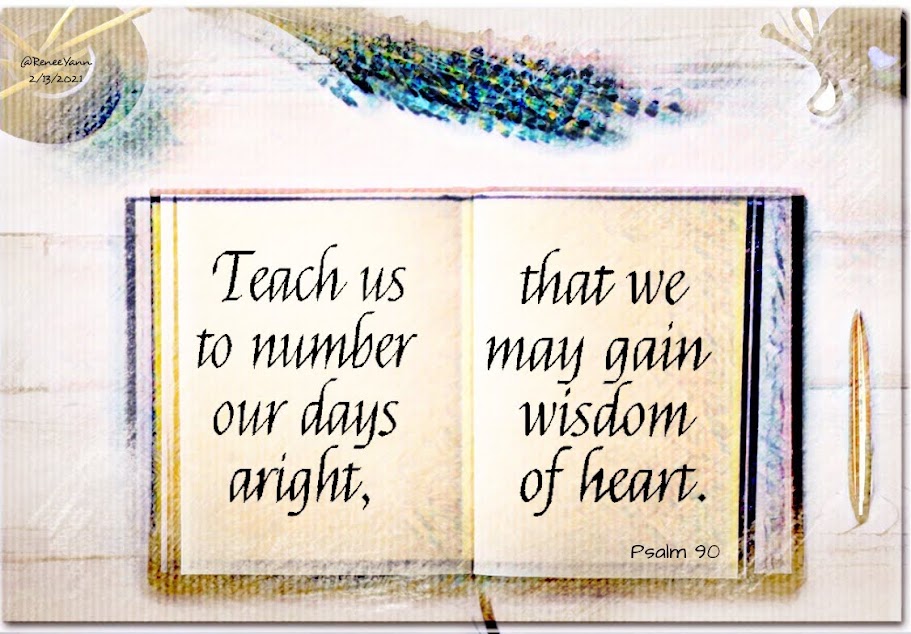
We have come out of the Earth and to the Earth we return Our lives are but a flash in the light of Eternity. We are like beautiful flowers which live only a day. We might live 70 years—more if our strength holds. So much work and hardship! How quickly the time passes.
Teach us then, to value our days to treat each one as a sacred trust. Fill our hearts with wisdom. and a love for our lives. In spite of all the grief and suffering May we be always glad of this precious gift And hallow the good in each day.
Today, in God’s Lavish Mercy, we pray with Psalm 97 which is built on two themes:
God reigns over all the earth
those who acknowledge God’s power have abundant reason to rejoice
This is good news for the people to whom Joel is preaching! Joel’s community has been devastated by locusts and drought. They are surrounded by adversaries. Life is just not easy for them. They have felt abandoned by God.
But Joel tells them that indeed God is annoyed, but still is always on the side of the faithful.
The LORD roars from Zion, and from Jerusalem raises his voice; The heavens and the earth quake, but the LORD is a refuge to his people, a stronghold to the children of Israel. Then shall you know that I, the LORD, am your God, dwelling on Zion, my holy mountain; Jerusalem shall be holy, and strangers shall pass through her no more.
Psalm 97 reflects the same confident promise to all who suffer. Despite everything we are to rejoice!
The mountains melt like wax before the LORD, before the LORD of all the earth. The heavens proclaim God’s justice, and all peoples see God’s glory. R. Rejoice in the Lord, you just! Light dawns for the just; and gladness, for the upright of heart. Be glad in the LORD, you just, and give thanks to God’s holy name.
So we are encouraged to heed Joel’s advice – to stir up our hearts in faith, to look around at all the faith-filled promises of nature mentioned in our first reading. We can learn:
from the sun which both rises and sets
from the moon which turns its mood but never disappears
from snow and rain which cycle invisibly through the years
from the leaves which hold the secret of eternal life
God abides with us, even amidst the “droughts” and “locusts”. And if we are faithful, all will be well.
Poetry: There are many wonderful images in Joel 4. One is that of the “Valley of Decision”, an image that has lent itself to many applications in art and literature. Here is one such poem:
OK — two of my “favoritest” actors!!!!
The Valley of Decision by John Oxenham
The World is in the Valley of Decision; It is standing at the parting of the ways; Will it climb the steps of God to realm elysian — Or fall on horror of still darker days?
Will it free itself of every shameful shackle? Will it claim the glorious freedom of the brave? Will it lose the soul of Life in this debacle, And sink into a mean dishonored grave?
All the world is in the Valley of Decision, And out of it there is but one sure road; Eyes unsealed can still foresee the mighty vision Of a world in travail turning unto God.
All the world is in the Valley of Decision. Who shall dare its future destiny foretell? Will it yield its soul unto the Heavenly Vision, Or sink despairing into its own hell?
The World is in the Valley of Decision; — It is standing at the parting of the ways; Will it climb the steps of God to realm elysian — — Or fall on horror of still darker days?
Will it free itself of every shameful shackle? — Will it claim the glorious freedom of the brave? Will it lose the soul of Life in this debacle, — And sink into a mean dishonored grave?
All the world is in the Valley of Decision, — And out of it there is but one sure road; Eyes unsealed can still foresee the mighty vision — Of a world in travail turning unto God.
All the world is in the Valley of Decision. — Who shall dare its future destiny foretell? Will it yield its soul unto the Heavenly Vision, — Or sink despairing into its own hell?
Today, in God’s Lavish Mercy, we pray with Psalm 16 whose words beautifully capture the spirit of St. Francis of Assisi:
Keep me, O God, for in you I take refuge. I say to God, “My Lord are you.” O God, my allotted portion and my cup, you it is who hold fast my lot.
Psalm 16:1-2
Saint Francis by Sano DiPietro
Francis is among the most venerated Saints in Christianity.
We are deeply moved by his utter embrace of poverty out of love for the poor.
We are inspired to reverence Creation by his love for all living things.
We are deepened in sacramental devotion by his dedication to Christ in the Eucharist.
But above all, Francis speaks to us because he was a person who fell completely in love with God. His way and his words encourage us toward the same kind of unconditional love.
I bless my God who counsels me; even in the night my heart exhorts me. I set God ever before me; with God at my right hand I shall not be disturbed.
Psalm 16:7-8
Francis can teach us so much and companion us as we grow deeper in our love for God, Creation, and all our sisters and brothers.
We pray in blessing and gratitude today for all our Franciscan sisters and brothers who bless our time with the spirit of their beloved founder – especially for our wonderful Sisters of St. Francis in Aston, PA.
Poem-Prayer: Fall in Love – Pedro Arrupe, SJ
Nothing is more practical than finding God, than falling in Love in a quite absolute, final way. What you are in love with, what seizes your imagination, will affect everything. It will decide what will get you out of bed in the morning, what you do with your evenings, how you spend your weekends, what you read, whom you know, what breaks your heart, and what amazes you with joy and gratitude. Fall in Love, stay in love,and it will decide everything.
Music: Make Me a Channel of Your Peace written by Sebastian Temple, sung by Susan Boyle
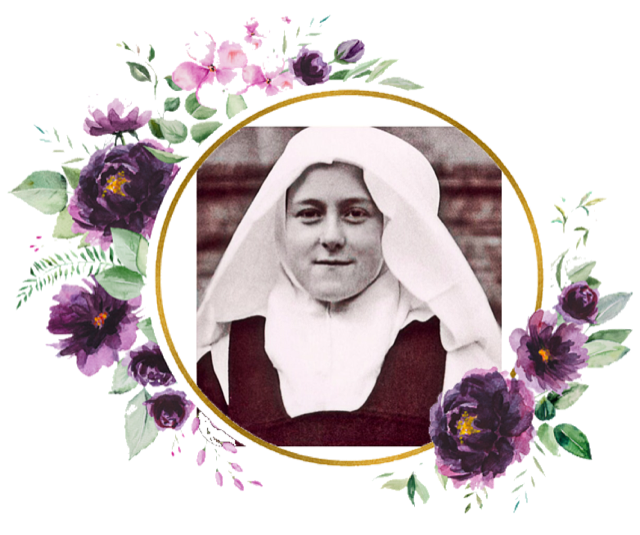
Thérèse of Lisieux (2 January 1873 – 30 September 1897)
was a French Catholic Discalced Carmelite nun
who is widely venerated in modern times.
She is popularly known in English as "The Little Flower”.
In her short life, she radiated a sacred simplicity,
often referred to as “The Little Way”
which has inspired generations of spiritual seekers.
Pope Pius X called her the greatest saint of modern times.
Today, in God’s Lavish Mercy, in place of the dour readings of the day, we pray with some thoughts from the Little Flower herself:
For me, prayer is a surge of the heart; it is a simple look turned toward heaven, it is a cry of recognition and of love, embracing both trial and joy.
When one loves, one does not calculate.
The world’s your ship and not your home.
Poetry: To Live in Love by Thérèse of the Child Jesus – a beautiful long prayer-poem. You may wish to use just a stanza or two, or to pray with the musical version below.
If any one love Me, they will keep My word and My Father will love them and We will come to them and make Our abode with them… My peace I give unto you … Abide in My love.” (John 14, 23,27,-15:9)
The eve His life of love drew near its end, Thus Jesus spoke: “Whoever loveth Me, And keeps My word as Mine own faithful friend, My Father, then and I his guests will be; Within his heart will make Our dwelling above. Our palace home, true type of heaven above. There, filled with peace, We will that he shall rest, With us, in love.
Incarnate Word! Thou Word of God alone! To live of love, ’tis to abide with Thee. Thou knowest I love Thee, Jesus Christ, my Own! Thy Spirit’s fire of love enkindleth me. By loving Thee, I draw the Father here Down to my heart, to stay with me always. Blest Trinity! Thou art my prisoner dear, Of love, to-day.
To live of love, ’tis by Thy life to live, O glorious King, my chosen, sole Delight! Hid in the Host, how often Thou dost give Thyself to those who seek Thy radiant light. Then hid shall be my life, unmarked, unknown, That I may have Thee heart to heart with me; For loving souls desire to be alone, With love, and Thee!
To live of love, ’tis not to fix one’s tent On Tabor’s height and there with Thee remain. ‘Tis to climb Calvary with strength nigh spent, And count Thy heavy cross our truest gain. In heaven, my life a life of joy shall be, The heavy cross shall then be gone for aye. Here upon earth, in suffering with Thee, Love! let me stay.
To live of love, ’tis without stint to give, An never count the cost, nor ask reward; So, counting not the cost, I long to live And show my dauntless love for Thee, dear Lord! O Heart Divine, o’erflowing with tenderness, How swift I run, who all to Thee has given! Naught but Thy love I need, my life to bless. That love is heaven!
To live of love, it is to know no fear; No memory of past faults can I recall; No imprint of my sins remaineth here; The fire of Love divine effaces all. O sacred flames! O furnace of delight! I sing my safe sweet happiness to prove. In these mild fires I dwell by day, by night. I live of love!
To live of love, ’tis in my heart to guard A mighty treasure in a fragile vase. Weak, weak, am I, O well beloved Lord! Nor have I yet an angel’s perfect grace. But, if I fall each hour that hurries by, Thou com’st to me from Thy bright home above, And, raising me, dost give me strength to cry: I live of love!
To live of love it is to sail afar And bring both peace and joy where’er I be. 0 Pilot blest! love is my guiding star; In every soul I meet, Thyself I see. Safe sail I on, through wind or rain or ice; Love urges me, love conquers every gale. High on my mast behold is my device: “By love I sail!”
To live of love, it is when Jesus sleeps To sleep near Him, though stormy waves beat nigh. Deem not I shall awake Him! On these deeps Peace reigns, like that the Blessed know on high. To Hope, the voyage seems one little day; Faith’s hand shall soon the veil between remove; ‘Tis Charity that swells my sail always. I live of love!
To live of love, 0 Master dearest, best! It is to beg Thee light Thy holiest fires Within the soul of each anointed priest, Till he shall feel the Seraphim’s desires; It is to beg Thee guard Thy Church, 0 Christ! For this I plead with Thee by night, by day; And give myself, in sacrifice unpriced, With love always!
To live of love, it is to dry Thy tears, To seek for pardon for each sinful soul, To strive to save all men from doubts and fears, And bring them home to Thy benign control. Comes to my ear sin’s wild and blasphemous roar; So, to efface each day, that burning shame, I cry: ” 0 Jesus Christ! I Thee adore. I love Thy Name!”
To live of love, ’tis Mary’s part to share, To bathe with tears and odorous perfume Thy holy feet, to wipe them with my hair, To kiss them; then still loftier lot assume, To rise, and by Thy side to take my place, And pour my ointments on Thy holy head. But with no balsams I embalm Thy Face! ‘Tis love, instead!
“To live of love, what foolishness she sings!” So cries the world. “Renounce such idle joy! Waste not thy perfumes on such trivial things. In useful arts thy talents now employ!” To love Thee, Jesus! Ah, this loss is gain; For all my perfumes no reward seek I. Quitting the world, I sing in death’s sweet pain: Of love I die!
To die of love, O martyrdom most blest! For this I long, this is my heart’s desire; My exile ends; I soon will be at rest. Ye Cherubim, lend, lend to me your lyre! O dart of Seraphim, O flame of love, Consume me wholly; hear my ardent cry! Jesu, make real my dream! Come Holy Dove! Of love I die!
To die of love, behold my life’s long hope! God is my one exceeding great reward. He of my wishes forms the end and scope; Him only do I seek; my dearest Lord. With passionate love for Him my heart is riven. O may He quickly come! He draweth nigh! Behold my destiny, behold my heaven, OF LOVE TO DIE.
February 25, 1895
Music: St. Thérèse’s Canticle of Love – Sister Marie Thérèse Sokol, OCD
Today, in God’s Lavish Mercy, we pray with Psalm 87, a Song of Zion which imagines the future Jerusalem as the world’s center of worship.
The foundation upon the holy mountains the LORD loves: The gates of Zion, more than any dwelling of Jacob. Glorious things are said of you, O city of God!
Psalm 87: 1-3
For centuries, the Jews had been scattered through many alien countries. Some had lost their ties to their inherited faith. The psalm calls all people “home” to the worship of the one, true God.
Jerusalem from the Mount of Olives by Frederic Edwin Church
Jerusalem is a profoundly unifying symbol for Jews. That is why it is so important for Jesus to “go up to Jerusalem” in order to accomplish our redemption. As our Gospel tells us:
When the days for Jesus to be taken up were fulfilled, he steadfastly turned his face to Jerusalem.
Luke 9:51
Praying with these passages may seem difficult for Christians if we have no emotional ties to the city of Jerusalem. But for us, Jerusalem serves as a symbol of that stable and committed faith which allows us to live our lives in the pattern of Jesus.
We journey too, as Jesus did toward the fullness of life in God. Our journey takes singular steadfastness, just as his did, a commitment rooted in faith and grace.
Together in faith, we form a New Jerusalem, glorious in each one of us through our Baptism into Christ.
Poetry: A Sonnet – Malcolm Guite
Now to the gate of my Jerusalem, The seething holy city of my heart, The saviour comes. But will I welcome him? Oh crowds of easy feelings make a start; They raise their hands, get caught up in the singing, And think the battle won. Too soon they’ll find The challenge, the reversal he is bringing Changes their tune. I know what lies behind The surface flourish that so quickly fades; Self-interest, and fearful guardedness, The hardness of the heart, its barricades, And at the core, the dreadful emptiness Of a perverted temple. Jesus come Break my resistance and make me your home.
Today, in God’s Lavish Mercy, our reading from the Book of Numbers reveals a very human moment between Joshua and Moses.
Moses Blesses Joshua – James Tissot
Moses is getting older. He realizes that the time is approaching for him to hand over the leadership of his people. God seems to realize that too.
The LORD came down in the cloud and spoke to Moses. Taking some of the spirit that was on Moses, the LORD bestowed it on the seventy elders; and as the spirit came to rest on them, they prophesied.
Joshua, ever since his youth, has been aide to Moses. Moses is his hero – the one, who having spoken with God, led the People out of Egypt. Now Joshua sees other ordinary guys assuming some of Moses’s roles. Joshua feels his own security and comfort shifting beneath him – hints of a spiritual earthquake.
An outraged Joshua alerts Moses, begging him to stop these supposed imposters. But Moses assures Joshua with words no hero-worshipper ever wants to hear:
Are you jealous for my sake? Would that all the people of the LORD were prophets! Would that the LORD might bestow his spirit on them all!
What a powerful question Moses poses. It searches Joshua’s heart:
Are you jealous for my sake?
Are you fearful, biased, closed-hearted, and self-protective because you fear that you and I will lose position and power?
Surely Moses senses Joshua emerging as the next leader of Israel — even though Joshua might not share that awareness yet. Moses wants him to see that it is the Spirit of God Who leads the People through any human means She wishes.
When we presume to control the Spirit, or think to invest Her power only in our own particular “heroes”, we close ourselves to the amazing, surprising power of God. This Divine Power cannot be controlled and, like wildflowers through concrete, will bloom where She chooses.
We see the fruits of such presumption all over our histories: the falsely assumed superiority of men over women, whiteness over color, wealth over labor, or any form of dominance over mutuality. These assumptions become concretized in our culture, hardening us to the movements of the Spirit.
If we have any hold on privilege in our lives, we might be inclined to profit by these assumptions. It is just such an inclination that Moses nips in Joshua in this powerful exchange between revered teacher and apprentice.
The story offers us much to consider in prayer.
Music: An oldie, but goodie. Always brings me a deep peace. I hope it does the same for you, dear reader. Come Holy Ghost – The Singing Nuns
Today, in God’s Lavish Mercy, on this feast of St. Matthew, Apostle and Evangelist, we are blessed with a deeply inspiring reading from Ephesians.
… live in a manner worthy of the call you have received, with all humility and gentleness, with patience, bearing with one another through love, striving to preserve the unity of the Spirit through the bond of peace…
Ephesians 4: 1-3
We are reminded that each of us is called in God according to our particular gifts. Paul encourages us to live “in a manner worthy of the call we have received” in our Baptism.
… grace was given to each of us according to the measure of Christ’s gift.
… some as Apostles, others as prophets, others as evangelists, others as pastors and teachers, to equip the holy ones for the work of ministry, for building up the Body of Christ.
Ephesians 4: 7, 11-12
For most of us, it has been quite a while since we were washed in the waters of our Baptism. A lot of other waters have passed under the bridge since then. We may, or may not, have recognized and responded to our call, continually carried to us on those life waters.
Each moment, each choice, each act and decision asks us once again to choose Christ – over sin, over self, over meaninglessness. Each life opportunity calls us closer to Jesus, to the pattern of his Cross, to the witness of his Resurrection.
Matthew heard such a call as he sat, perhaps dulled by the unconscious disengagement of his life, by the failure to live with intention and openness to grace. As He passed by Matthew, Jesus reached into that ennui, calling Matthew to evangelize all the future generations by his Gospel.
Jesus calls us to be evangelists too – every moment, every day. Our “Yes” to our particular call writes its own Gospel, telling the Good News through our faith, hope and love.
Pope Francis says this:
Poetry: Isaiah 43:1-2 (Isaiah is actually my favorite poet!)
But now, this is what the Lord says— he who created you, Jacob, he who formed you, Israel: “Do not fear, for I have redeemed you; I have called you by name; you are mine. When you pass through the waters, I will be with you; and when you pass through the rivers, they will not sweep over you. When you walk through the fire, you will not be burned; the flames will not set you ablaze.
Music: When You Call My Name ~ Brian Doerksen & Steve Mitchinson