Purity of heart is to be without guile, hidden agendas. It is to be honestly intentioned in our actions and words.
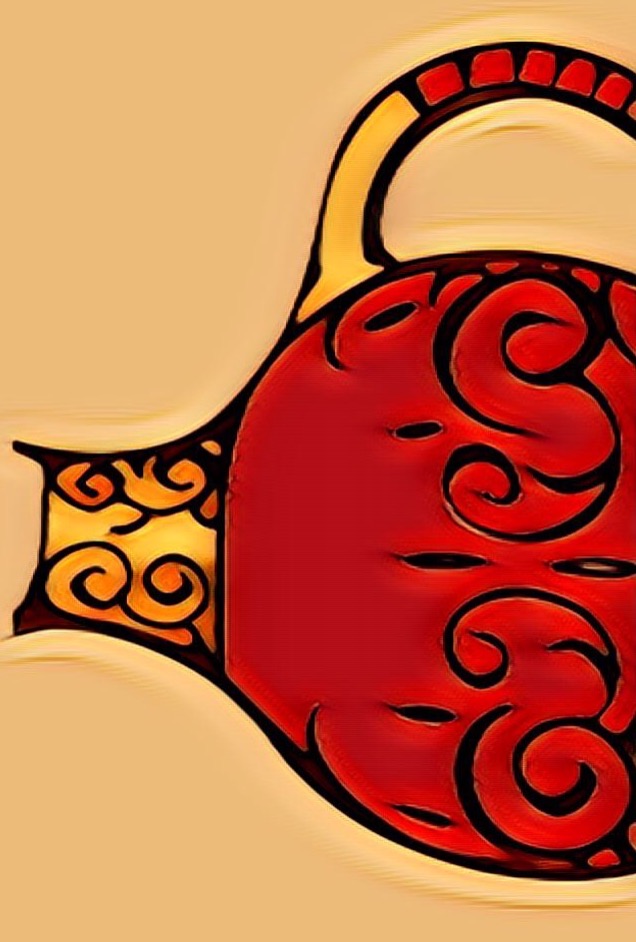
During Holy Week, a fundamental question comes before us. How should the precious oil be used – tenderly poured out or reasonably saved? It is a question that challenges us to balance justice with mercy, reality with hope, law with passion, to be pure of heart. How are we being asked to open our alabaster jar?
After Peg’s father died, she rummaged through parts of his house preparing it for sale. When Peg was a child, the bottom drawer of the china closet was always her dad’s exclusive domain. She prepared to open it now like a priest approaching the sacred altar. Inside, Peg found the normal treasures stored against a rainy day: rubber bands, expired coupons, Band-aids, and a Swiss Army knife.
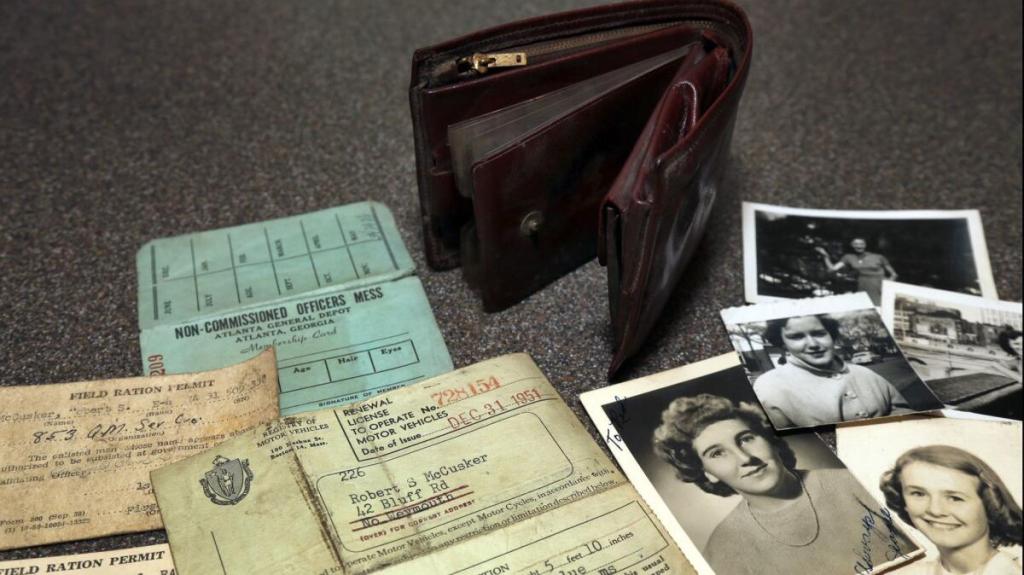
In an old wallet, she discovered a forgotten twenty-dollar bill and a creased, browning paper. Unfolded, the note revealed a 1960’s Christmas shopping list. Beside Peg’s name was scribbled “skates, pajamas and Slinky.” Beside her mother’s name, there was a single phrase: “Chanel N°5.”
Peg’s middle class family avoided extravagance. With four children, they could not afford it. Her father’s one excursion into luxury was to anoint her mother with this prized perfume. The annual act released a balm of silent devotion between them redeeming any of the year’s frayed misunderstandings.
During Holy Week, we see Mary anoint Jesus’s feet with costly aromatic nard. We watch Jesus kneel to pour a sacred blessing over his disciples’ feet. We experience God’s lavish mercy wash over us in blood and water, in sacrament and sacrifice. These acts draw us into God’s infinite, unquenchable love.
Our names have been folded eternally into God’s heart. An extravagant mercy has been given for us. This week, walking with Jesus from the supper table, through the garden and on to Calvary, may we embrace the deep anointing of God’s Passion for us. May it redeem us and open us to full Easter joy!
Music: Agnus Dei – Monks of the Abbey of Notre Dame
Often, we see someone more clearly in death than we do in life.
One Sunday, nearly 25 years ago, our religious community gathered to commemorate the precious life of our Sister Germaine Donohue. Germaine, who was more familiarly called Mercedes (Mercy), was one of our missionaries in Peru. She was vivacious, compassionate, holy, and too young to die. While ministering in our remote mountain home village of Pacaipampa, Peru, this marathon runner who loved to dance suffered an unexpected heart attack. By the time the neighboring villagers brought her down the eight-hour descent to Lima, she lived only a few more hours. It was All Saints Day.
At her funeral liturgy, the legacy of love she had quietly planted throughout her life blossomed like a field of vibrant wildflowers. Listening to stories that spanned the 40 years of her religious life, it was easy to see how consistently she chose to be with others in simplicity, honesty, and joy. It became clear that everything in her life had led her to a remote mountain village among the poor, who perfectly mirrored her deepest values. They were her heart’s companions.
Just like producing a prize-winning garden, bringing one’s life to such a degree of simplicity and beauty is no easy task. As human beings, we are constantly battling the weeds of self-interest and the complexity it breeds. But when, like Germaine, we choose to learn from those who are poor, we can grow in our capacity to trust a Power greater than ourselves to sustain our lives. We thus become freer to celebrate the beauty of others and of life around us.
For their first ten years in Pacaipampa, our Mercy community had been laboring — without success – to bloom roses in their tiny garden. When the sisters returned from Lima with Sister Germaine’s body to bury her among her beloved poor, they were greeted with the miracle of the first Pacaipampa rose. It blossomed there, a new life among the simple “pueblos jóvenes”. Perhaps they named that rose “Mercedes”.
I share the story of Sister Germaine’s passing because I hope it will offer you the gift it gave to me. The slow, daily, and sometimes frustrating work of building our lives around truly important values will — in the long run — transform and bless us. In everyday decisions, it is difficult to get enough perspective always to realize that. But when our lives are gathered someday in the story-telling of our children, our friends, and our communities, may we be fortunate enough to have left a legacy of beauty — our own miracle “rose”.
Music: El Condor Pasa
This song, popularized by Simon and Garfunkel, is actually drawn from a Peruvian folk song.
For Your Reflection
What feelings or reactions do I have after reading this reflection?
Do my feelings or reactions remind me of any passage or event in scripture, especially in the life of Christ?
What actions might I take today because of my response to these readings?
Suggested Scripture: Proverbs 31 (Adaptation)
Who can find a merciful woman? She is worth far more than rubies. Her community has full confidence in her and lacks nothing of value. She brings them good, not harm, all the days of her life. She gets up while it is still night; she provides food for her neighbors and portions for the very poor. She considers a field and buys it; out of her earnings she plants a vineyard. She sets about her work vigorously; her arms are strong for her tasks. She sees that her work is fruitful, and her lamp does not go out at night. In her hand she holds the distaff and grasps the spindle with her fingers. She opens her arms to the poor and extends her hands to the needy. When it snows, she has no fear for her household; for all of them are clothed in scarlet. She is clothed with strength and dignity; she can laugh at the days to come. She speaks with wisdom, and faithful instruction is on her tongue. She watches over the affairs of her beloved community and does not eat the bread of idleness. Her neighbors arise and call her blessed; her family also praises her: “Many women do noble things, but you surpass them all.” Charm is deceptive, and beauty is fleeting; but a woman of mercy is to be praised. Honor her for all that her hands have done, and let her works bring her praise at the heavenly gate.
That long-ago October was particularly brilliant. It was one of those rare seasons where each morning was filled with sunshine and promise. It was a month that measured up to the poet, Helen Hunt Jackson’s, description:
O suns and skies and clouds of June, And flowers of June together, Ye cannot rival for one hour October’s bright blue weather.
I remember that October so well because one of my friends was dying, stricken suddenly and irrevocably by a severe pneumonia. Only two of us could visit at a time, so I, along with her many other friends, would gather at times on the bench outside the hospital where she struggled to survive. We would watch that bright blue sky and turn over and over in our minds those questions that have no answers. Why so young, why now, why her?
Starling Murmuration – Joe Hisaishi
Flocks of starlings were in their seasonal dance, bold against that brilliant blue sky. Maybe you have noticed a few already this month, swerving through the air in their perfectly balanced helix, like smoke at the wind’s disposal. I remember watching them during that distant October, wondering if we had told Gail often enough how precious she was. She was a small, humble, and joyous person – very quiet and unassuming. I wondered if people fully understood the powerhouse of generosity and goodness underneath that humility.
Gail De Macedo, RSM August 11, 1937 – October 14, 1995
I found the answer at her funeral. Hundreds of people jammed the lanes to our Motherhouse and filled the chapel with their song to celebrate her life. She had quietly made her mark – and what a mark it was! Now, years later, the sharp edge of her loss has dulled somewhat, but her bold, quiet, courageous legacy has only deepened. In times when I need the gifts of humility, patience, generosity, and kindness, I pray to her. She always helps me.
Over this weekend, we should begin to see that “bright blue weather”. Watch for the graceful starlings, pirouetting their way to a winter refuge. Above all, as you wonder at Creation, reflect on love and kindness. Honor these virtues where you find them in yourself and your neighbors. They endure beyond all seasons.
Music: No More Goodbyes – Tom Dermody
For Your Reflection
What feelings or reactions do I have after reading this reflection?
Do my feelings or reactions remind me of any passage or event in scripture, especially in the life of Christ?
What actions might I take today because of my response to these readings?
Today, for your reflection, a poem I wrote decades go. I offer it today in memory of Judy Ward, RSM who passed away on September 27, 2025. Her life will be celebrated on October 2nd in a Mass of Christian Burialin the chapel at Mt. St. Mary, where Judy attended school, became a Sister of Mercy, and taught for many years.
Judy, a gifted artist, did so much to encourage me and to illustrate and promulgate my work. I will miss her generous kindness and her friendship.
October is a time when nature changes clothes. Leaves, like miniature volcanoes, flare up and die, ashes at the foot of a silent, seemingly immortal tree. Geese, having dawdled all summer in veiled expectation, suddenly leap into the clouds and disappear. These solemn miracles may incline us to consider our own impermanence and the gossamer phenomenon we call life.
Healing
Music: A Playlist of Autumn Music
For Your Reflection
What feelings or reactions do I have after reading this reflection?
Do my feelings or reactions remind me of any passage or event in scripture, especially in the life of Christ?
What actions might I take today because of my response to these readings?
I hope that, where you live, it is a glorious day – a perfect vestibule to a season of amazing beauty. In the northern hemisphere, Nature prepares to shed the plush accretions of summer in a multi-colored ritual of leave-taking. It is time to return to the essentials – back to the branch, back to the buried root, back to the bare, sturdy reality that will anchor us in eventual winter.
Each day, some green leaf or blade will ignite like a phoenix – a blaze of scarlet or gold, only to extinguish that flame for a long winter’s sleep. Nature knows when things are finished. It knows when it has had enough. It knows its need for a season of emptying, for a clearing of the clutter, for the deep hibernation of its spirit.
But we humans often ignore the need for an “autumning” of our spirits. We try to live every moment in the high energy of summer – producing, moving, anticipating, and stuffing our lives with abundance.
But simplicity, solitude, and clarity are necessary for our spirit to renew itself. Autumn is the perfect time to examine prayerfully the harvest of our lives – reaping the essentials and sifting out the superfluous. In the quiet shade of a rusting tree, we may discover what we truly love, deeply believe, and really need to be fully happy.
Take time on these crystal days to ask yourself what is essential in your life. If something besides them inhibits you, let it go.
Nurture your “essentials” with attention and care. Don’t take them for granted. After the flare of life’s summer has passed, these are the things that will sustain you: a strong faith, a faithful love, and a loving compassion. Tend them in this season of harvest
Music: The Four Seasons: Autumn – Antonio Vivaldi
For Your Reflection
What feelings or reactions do I have after reading this reflection?
Do my feelings or reactions remind me of any passage or event in scripture, especially in the life of Christ?
What actions might I take today because of my response to these readings?
Today is the 80th anniversary of the bombings of Hiroshima and Nagasaki
Dona Nobis Pacem – Yo-Yo Ma and Illia Bondarenko
On a hot August 6th over 40 years ago, I sat quietly in the Nevada desert just outside Las Vegas. Most maps call the place the Nevada Test Site. Established as the Atomic Energy Commission’s on-continent proving ground, the Nevada Test Site has seen multiple decades of nuclear weapons testing.
But to the native peoples, the land is known as Newe Sogobia (Earth Mother), or the Western Shoshone homelands.
I had come to the place with over 200 other peace activists to pray for the end of nuclear wars, bombings and weapons proliferation. As part of our prayer, each one of us found a private spot in that massive desert where we could sit alone to meditate. I rested by a low bush to capture its small shady triangle in the dry, threatening heat even of that early morning.
At first, to the unappreciative eye, the desert seems a monochromatic place. The earth, the few stones, the sparse vegetation all appear to wear a beige garment of anonymity – almost as if they are saying, “Don’t see me. Don’t change me by noticing me.” But after many minutes of peeling away the multiple blindfolds we all carry, I became aware of muted majesty breaking from that desert like tender life from an egg.
A tiny hummingbird, the color of slate and sand, hovered inches from my hand. It drew my eyes to another small white object hidden under the lowest branches of the bush. It was a perfectly executed origami crane, no bigger than my thumb. I learned later of the Japanese activists who had preceded us into the desert, and whose custom it was to leave behind these beautiful “peace cranes” as mute reminders of the horrors of Hiroshima and of the hope for universal peace.
Later that evening, thinking about the cranes, I found myself straddling a confusing range of emotions. In the late 40’s and 50’s, I had grown up in a household that despised Japan. On my mother’s birthday in 1945, her 19 year old brother had been killed at Iwo Jima. It was a scar my mother bore the rest of her life.
But as with many scars we have earned or inherited in life, the years had taught me that there is an inner grace to every pain. Holding one of the delicate cranes, I thought about the innumerable Japanese lives – mostly innocent civilians – that had been lost or disfigured on August 6, 1945. I thought about the fact that life is never served by war – whether that war is global, local or personal. War serves only death.
The quest for peace is a complicated and endless pursuit. I ask myself – and each of you – to renew that quest today by harboring peace in our own lives. Refuse to solve conflicts by aggression. Look beyond the battle to the person. Be an agent of mutuality not of domination. Resist the normalization and glorification of violence and war, and defend their victims.
Eighty years after Hiroshima, we still see abominable inhumanity exploding in Gaza, Ukraine, Haiti, Sudan, and the immigrant communities of the Americas. We cannot be silent in the face of what we see. We are called to witness for peace and justice by our words, our attitudes, our votes, and our advocacy.
God knows our world – our streets – need this from us. If we unfold the wings of our own hearts, perhaps the crane of peace can be freed to change the world.
Music: Peace Train – Cat Stevens
For Your Reflection
What feelings or reactions do I have after reading this reflection?
Do my feelings or reactions remind me of any passage or event in scripture, especially in the life of Christ?
What actions might I take today because of my response to these readings?
On the way to to the library today, I passed an Amoroso truck. We native Philadelphians are very serious about our sandwich rolls – and very biased. We think they’re the best in the world. For those of you outside Philadelphia, Amoroso is a local baking company famous for delicious Italian rolls. Every morning, their crisp white trucks with the red and green detailing can be seen delivering rolls all over our hungry city.
Many years ago, when I worked in an inner city ER, an Amoroso driver was brought in by fire rescue. The man had suffered a heart attack in the stifling July heat. Despite intense efforts by staff, he could not be revived.
My responsibility, after praying with him and for him, was to determine his identity and to inform his family of his death. There were only a few things in the chest pocket of his shirt, which lay ripped and tossed on the ER floor. There was a thin, well-used prayer book and an even thinner wallet with a couple of dollars, a lottery ticket, and a picture of his grandchildren. My eyes filled with tears as I laid these few items out on my desk. Here was a simple, good man’s life – faith, family, hope and responsibility. He carried what was most important to him close to his heart.
Passing the Amoroso truck today, on a warm July morning nearly forty years later, made me ask myself, “What do I keep close to my heart?”
It’s a good question, both literally and symbolically. In the space next to my heart do I have the things that most matter – faith, love, generosity, and joy. Or is there only a vacuum there, made empty by the common killers of our culture: cynicism, self-absorption, materialism, indifference, and competitiveness?
Life is short. Live it for what matters. And if you’re lucky, share an Amoroso roll to bless your journey.
Music: Simple Gifts
For Your Reflection:
What feelings or reactions do I have after reading this reflection?
Do my feelings or reactions remind me of any passage or event in scripture, especially in the life of Christ?
What actions might I take today because of my response to these readings?
After my mother died, it was my sad honor to sift through our home in preparation for its sale. The long years of our family’s story had accumulated in closets, cabinets, and a few storage boxes. So many half-forgotten treasures lay hidden in the corners and niches of our now-empty home.
Among these ordinary reliquaries was one unique spot, reserved for the most precious markers on our ancestral line. It was a 19th century “games table” whose leaf folded and whose top swiveled to reveal a hidden compartment. Inside this table, in a shallow space spiced with the essence of history, lay our family’s sad and joyful relics.
Each was a treasure, but as Memorial Day dawns, I remember one in particular. The telegram had been tear-stained and folded into a three-inch square, almost as if to hold the words inside and prevent them from wounding again. Its message, like so many messages down through the ages, fell like a guillotine on the heart of another “Gold Star Mother”: “We deeply regret to inform you that your son James…”
None of our currently living family ever met Uncle Jim. But his memory lives with us. The dreaded telegram resides with me. His Purple Heart and other medals are with my brother. A cousin treasures a picture of Jim’s memorial at the USS Arizona. The story of his death on the shores of Iwo Jima saddens us. Although we never knew his presence, we have espoused his legend as part of our legacy.
But beyond his legend, we need to embrace his truth: he must have been a frightened hero, as are most heroes. He was a 19-year-old boy who loved his country and was brave enough to stand for its ideal of freedom. But he was nonetheless conscripted to an untimely death because more powerful men succumbed to the moral failures of aggression, greed, rampant nationalism, and war.
Each Memorial Day offers us the challenge to balance two eternally contradictory realities: the awesome self-sacrifice of our brave warriors against the moral imperative to disavow war as a means to peace.
Sadly, every family has its fallen and broken heroes. Their relics may rest on our mantle pieces or hide folded in our cedar-scented wardrobes. They may be creased and softened with age or as painfully fresh as the rip of yesterday’s mail.
On Memorial Day, let us remember and honor these heroes for their courage, generosity, and hope. Let us treasure their willingness to stand in harm’s way for us and for their belief that war could be won.
But let us recognize in their loss that wars are never won. War’s collateral loss — fractured bodies, stunted dreams, orphaned children, victimized women, hopeless elders, and a ravaged earth — is a price too great to pay. These expenses of war break the heart of God and God’s people. War, despite its profound costs, is a cheap answer to the failed pursuit of peace.
Let us commit ourselves and commission our leaders to do the daunting work of building true peace through honest politics, globally sensitive financial policies, mutual nation-building, and respect for human life. The sacrifice of our heroes demands it of us. The unfolded memory of Uncle Jim demands it of me.
For Your Reflection
What feelings or reactions do I have after reading this reflection?
Do my feelings or reactions remind me of any passage or event in scripture, especially in the life of Christ?
I had been away – busy and incommunicado for several days. The message was the last one on my answering machine when I got home. It lay curled like a wounded kitten at the end of a long line of incidentals.
Mag had died at 101 years of age – the long faithful friend of my grandmother, my mother, and me.
My Grandmother
The manner of Mag’s faithfulness to each of our generations had been different: a companion to Grandmom, a guide and confidant to Mom, a distant but vigilant observer and encourager of my life in my mother’s stead after Mom had died.
When I called back to acknowledge the message, there was only one meaningful way to announce myself: “This is Eleanor’s daughter.” Just that said everything – it paid tribute to both Mag’s and my mother’s lives. It recognized the duty I owed in both their names. Mag’s daughter said, “We don’t expect you to come… we just wanted you to know.” My mother’s voice spoke in the silence of my heart – “Of course, you will go.”
Eleanor, my Mother
So I traveled to the place where I grew up. There will never be any place that you know more intimately than your childhood neighborhood. You ran through its alleyways and knew its secret hiding places. You explored every inch of its terrain and, to this day, can remember its textures, smells, dangers, and promises. That day, I drove into its heart, remembering.
As I approached the neighborhood, I saw that its edge had frayed like a tattered fabric. The industrial and commercial corridor that had hemmed the old neighborhood had disappeared. Abandoned lots had replaced the thriving factories and immigrant-run shops of my youth. The bustling avenues where I had once threaded my shiny Schwinn bike now echoed like empty canyons under my tires. Loss rose up in my throat like a bitter aftertaste.
But as I neared the church, the fabric began to re-weave. People still lived in the houses and gathered on the brick pavements. I saw neighbors walking to church, as my family had when I was young. I was to learn that the deep human links that had embraced our parish family remained unbroken.
It had been nearly fifty years since I last worshipped in St. Michael’s, but the church of my childhood was perfectly intact. Not only had it been physically restored to the perfection of its 200-year-old origin, but the descendants of many original families remained or had returned for the funeral. During the wake, we reconnected, weaving names and histories into a warm swaddling of belonging.
During preparation for the solemn funeral service, many people came to visit me in the silence of my heart: my parents who had taught me to pray, the sisters and priests who had nurtured my call to religious life, my neighbors and friends whose lives had found graceful regeneration each Sunday in this sanctuary. This place had been the heart of our “village”. It was where we learned and acknowledged that we live life together, not alone – and that the myriad pieces which make up who we are belong in some way to every person who has ever touched us. Every one of us attending Mag’s funeral was paying honor to that reality.
It takes a lifetime to fully learn the office of honor. As a teenager, I was uncomfortable accompanying my mother on her many dutiful journeys: not wanting to visit my old maiden aunts in their very Victorian home, to take a pot of soup to a house in mourning, not knowing what to say at a neighbor’s wake. I remember my mother’s words on such occasions: “We show up. It’s what we do – because it’s all that we can do. It’s an honor to be with someone at these moments of their lives.”
I am old enough now to cherish that role of honor guard. I have learned its beauty and character from the many – including Mag — who have kept vigil beside me and my family in the challenges and blessings of life. I went to Mag’s funeral privileged to exercise that role in my mother’s name – to assume the duty of our family to “show up”.
To stand within duty is to be like a surfer poised inside the huge curl of a powerful wave. It is to ride on an energy that does not belong to you – to open yourself to it with gratitude, awe, and trust. It is to know – in an indescribable way – the profound power of God that holds all life together beyond time and beyond burden.
At Mag’s funeral, I was – once again – proud to be Eleanor’s daughter. I know that she and Mag smiled as I rejoiced in that pride. On this Mother’s Day, I remember that day as a very intentional gift to me, and I treasure it beyond telling.
Mom and I when Pope John Paul II visited for the Eucharistic Congress
Music: Thank You
For Your Reflection
What feelings or reactions do I have after reading this reflection?
Do my feelings or reactions remind me of any passage or event in scripture, especially in the life of Christ?
What actions might I take today because of my response to these readings?
Suggested Scripture: Proverbs 31 (Adaptation)
Who can find a valiant woman? She is worth far more than rubies. Her family has full confidence in her and lacks nothing of value. She brings them good, not harm, all the days of her life. She gets up while it is still night; she provides food for her neighbors and portions for the very poor. She considers a field and buys it; out of her earnings she plants a vineyard. She sets about her work vigorously; her arms are strong for her tasks. She sees that her work is fruitful, and her lamp does not go out at night. In her hand she holds the distaff and grasps the spindle with her fingers. She opens her arms to the poor and extends her hands to the needy. When it snows, she has no fear for her household; for all of them are clothed in scarlet. She is clothed with strength and dignity; she can laugh at the days to come. She speaks with wisdom, and faithful instruction is on her tongue. She watches over the affairs of her beloveds and does not eat the bread of idleness. Her neighbors arise and call her blessed; her family also praises her: “Many women do noble things, but you surpass them all.” Charm is deceptive, and beauty is fleeting; but a generous woman is to be praised. Honor her for all that her hands have done, and let her works bring her praise at the heavenly gate.
Tears of the Earth- Michael Hoppè and Tim Whheater
The Buriers of Jesus
In this world, we know much of dying. It is the inverse of our living. It is what we do here, alone, and with each other.
What we do not know is death itself. We think we know, but these are death’s imposters: isolation, self-absorption, dark despair.
The only persons who, living, may have fathomed death were the buriers of Jesus who carried him through space immediately bereft of God. All creation was a tomb, and they within it, tombed.
Those buriers of Christ watched God’s own Body blanch to white, to blue, distancing Itself to pallor on the far horizon that is all lost possibility.
They listened, paralyzed, as Life sucked Breath from the miracle of Christ, in horror at the blasphemy Rejected Gift had turned to.
Left with just the ivory casing of a once warm God, the buriers of Jesus tendered it in perfumed cloths.
The rest of earth was dry, unscented. Herbs and flowers closed against the giving of themselves to air that held the final breath of Christ. They dared not fracture the least of his remains.
Even earth, unbreathing, accepted Christ into her womb, a mother turned within to mourn her own Stillborn Redemption.
No other moment anywhere in time has known a death like that. It was so infinite, so huge it ripples now to every life, a nameless anguish, distancing itself to pallor in the pining soul.
Music: In Paradisum – Michael Hoppé
In paradisum deducant te angeli; in tuo adventu suscipiant te martyres, et perducant te in civitatem sanctam Jerusalem. Chorus angelorum te suscipiat, et cum Lazaro quondam paupere æternam habeas requiem.
May the angels lead you into paradise; may the martyrs receive you at your arrival and lead you to the holy city Jerusalem. May choirs of angels receive you and with Lazarus who once was poor, may you have eternal rest.
For Your Reflection
What feelings or reactions do I have after reading this reflection?
Do my feelings or reactions remind me of any passage or event in scripture, especially in the life of Christ?
What actions might I take today because of my response to these readings?


















 Lavish Mercy