So Loved …

Wednesday of the Second Week of Easter
April 19, 2023

Today’s Readings:

https://bible.usccb.org/bible/readings/041923.cfm

Today, in God’s Lavish Mercy, we continue what we began on Monday, a long immersion in John’s Gospel which will not conclude until Pentecost.

As a guide in praying with the glorious Gospel, I am using a book from the series “A Catholic Commentary on Sacred Scripture”. This particular volume is “The Gospel of John” by Francis Martin and William M. Wright. These authors open their work with this beautiful introduction:

Pope St. Gregory the Great compared Scripture to
a “smooth, deep river
in which a lamb may walk
and an elephant may swim.


These words certainly apply to the Gospel of John.
Within its pages are found divine teachings
articulated with simple images such as water and light,
memorable stories composed with literary and dramatic skill,
and glimpses into the very mystery of God,
proceeding from the most profound mystical illumination.
Like the loaves and fishes multiplied by Jesus,
the Gospel of John provides a superabundance
of spiritual teaching, edification, and challenges to all its readers,
whether beginners or experienced.


Our Gospel today gives us the central point inspiring John’s entire Gospel:

God so loved the world that he gave his only-begotten Son,
so that everyone who believes in him might not perish
but might have eternal life.

John 3:16

As we go deeper into our post-Easter journey, on the way to the confirmation of Pentecost, we need to keep repeating this amazing truth to ourselves …

And it helps to remind ourselves as well that “God so loved ME … that God gave God’s ALL for me.”


As we pray with John’s Gospel over the next several weeks, we will be doing the same work that the Apostles are doing in our first reading from Acts.  We will be telling the story of Love – the story of Jesus who lived, died and rose from the dead to save us.

Each little part of that story can teach us and change us.  By our choice to believe, and to act on that faith, we are transformed from darkness to Light in the power of the Resurrection.

And this is the verdict,
that the light came into the world,
but people preferred darkness to light,
because their works were evil.
For everyone who does wicked things hates the light
and does not come toward the light,
so that his works might not be exposed.
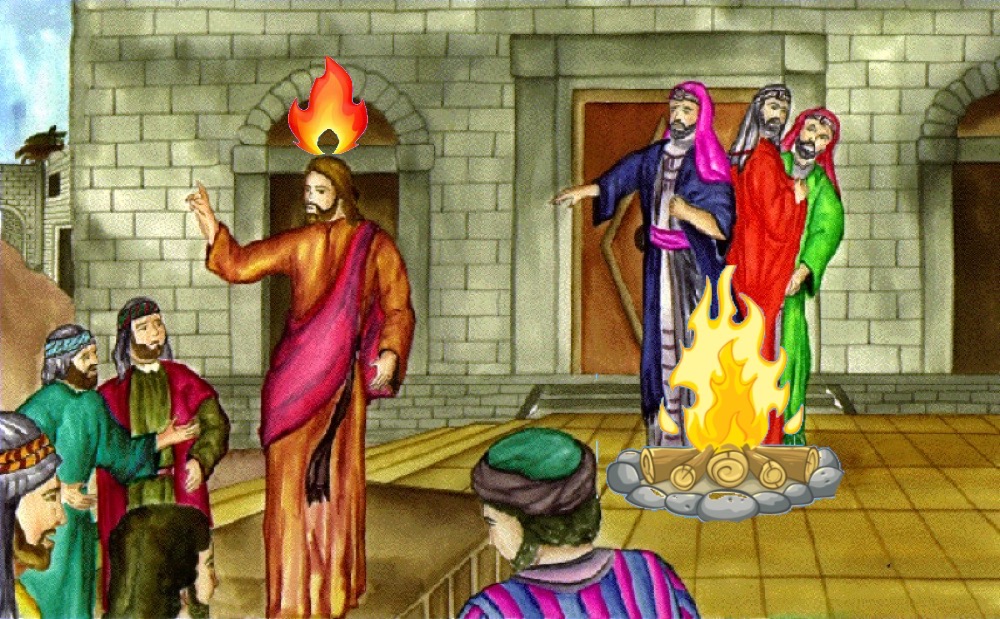
But whoever lives the truth comes to the light,
so that his works may be clearly seen as done in God.

John 3:19-21

For today, we may want to consider any darkness in our world or in ourselves that we wish to carry into God’s amazing Light and Love. There, let us lay the darkness down and pray to live the truth which John encourages us to live.


Poetry: “Truth”, said a traveller by Stephen Crane

“Truth," said a traveller,
“Is a rock, a mighty fortress;
“Often have I been to it,
“Even to its highest tower,
“From whence the world looks black.”

“Truth," said a traveller,
“Is a breath, a wind,
“A shadow, a phantom;
“Long have I pursued it,
“But never have I touched
“The hem of its garment.”

And I believed the second traveller;
For truth was to me
A breath, a wind,
A shadow, a phantom,
And never had I touched
The hem of its garment.

Music: God So Loved the World – Sir John Stainer

God so loved the world,
that He gave His only-begotten Son,
that whoso believeth in Him should not perish,
but have everlasting life.
For God sent not His Son into the world
to condemn the world;
but that the world through Him
might be saved. Amen.

Impossible Not to Speak the Name

Saturday in the Octave of Easter
April 15, 2023

Today’s Readings:

https://bible.usccb.org/bible/readings/041523.cfm

Today, in God’s Lavish Mercy, the reasonable Sanhedrin try to deal with Peter and John’s “bold” testimony for Christ.

Observing the boldness of Peter and John
and perceiving them to be uneducated, ordinary men,
the leaders, elders, and scribes were amazed,
and they recognized them as the companions of Jesus.
Then when they saw the man who had been cured standing there with them,
they could say nothing in reply.

Acts 4: 13-14

The Sanhedrin was an assembly of elders or rabbis appointed to sit as a tribunal in every city in the ancient Israel. As a body, they claimed powers that lesser Jewish courts did not have. As such, they were the only ones who could try the king, extend the boundaries of the Temple and Jerusalem, and were the ones to whom all questions of law were finally put.

from Wikipedia

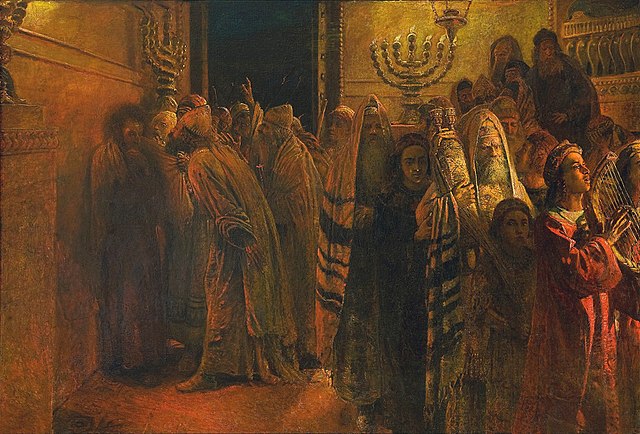
Peter Before the Sanhedrin by Nikolai Ge (1892)

These men existed on the ultimate power they had over the people. It was the source of their influence, wealth and independence. Now this Jesus and his bold buddies come along trying to upset the apple cart. The old familiar, comfortable world is threatened and they don’t like it.

Their solution is overly simplistic. They tell Peter and John to just shut up:

The Sanhedrin conferred with one another, saying,
“What are we to do with these men?
Everyone living in Jerusalem knows that a remarkable sign
was done through them, and we cannot deny it.
But so that it may not be spread any further among the people,
let us give them a stern warning
never again to speak to anyone in this name.”
So they called them back
and ordered them not to speak or teach at all in the name of Jesus.

Acts 4: 15-17

Peter and John say “sorry guys”! Easter-inspired faith doesn’t work that way:

Peter and John, however, said to them in reply,
“Whether it is right in the sight of God
for us to obey you rather than God, you be the judges.
It is impossible for us not to speak about what we have seen and heard.

Acts 4:18

Peter and John make it sound simple too, don’t they. They tell us that it is impossible not to live our witness to the Gospel.

But I think we all know that it’s not that simple. Witnessing our faith in a morally complex world takes courage, insight, humility and wisdom. 

We are not passive participants in the often crippled world around us. Like Peter and John, we are called to pay attention to suffering, and to be healers. We are called to be witnesses to the Resurrection by the faithful generosity of our lives.


Prose: Marianne Williamson – from A Return to Love

Our deepest fear is not that we are inadequate. 
Our deepest fear is that we are powerful beyond measure. 
It is our light not our darkness that frightens us. 
We ask ourselves 'who am I to be brilliant, gorgeous, talented and fabulous?'
Actually, who are you not to be?

You are a child of God. 
You’re playing small doesn't serve the world. 
There's nothing enlightened about shrinking 
so that other people won't feel insecure around you. 
We were born to make manifest the glory of God that is within us.

It's not just in some of us; its in everyone. 
And as we let our own light shine, 
we unconsciously give other people permission to do the same.
As we are liberated from our own fear,
our presence automatically liberates others

Music: Speak the Name – Koryn Hawthorne 

Extra Song: I can’t help thinking of — Perry Como singing “Impossible”. Of course, this is a romantic song, but the same principles hold in our devotion to God, and God’s to us. Think about it 🙂

Breakfast with Jesus

Friday in the Octave of Easter
April 14, 2023

Today’s Readings:

https://bible.usccb.org/bible/readings/041423.cfm

Today, in God’s Lavish Mercy, we once again have readings sprinkled with the names of ancient people who lived in the immediate Resurrection light.

In our first reading from Acts:

After the crippled man had been cured,
while Peter and John were still speaking to the people,
the priests, the captain of the temple guard,
and the Sadducees confronted them,
disturbed that they were teaching the people
and proclaiming in Jesus the resurrection of the dead.

Acts 4:1-2
  • Peter and John, courageously, exuberantly sharing the Word
  • Annas, the retired but still influential high priest to whom Jesus was first brought when arrested
  • Caiaphas, the reigning high priest, who plotted to kill Jesus, condemned him for blasphemy, and sent him for judgment to Pilate
  • John and Alexander, less known priestly trainees, but known well enough to have their names recorded

Christ Before Caiaphas- Matthias Stom


In our Gospel, John names some of the group lolling along the beach one day. It’s interesting how he remembers and identifies them as he tells the story many years later:

  • Simon Peter – remembered with both his original and later Christ-given name
  • Thomas called Didymus – a name meaning “twin”, who was his twin and why is he never mentioned as a disciple?
  • Nathanael from Cana in Galilee – identified here by his home town of Cana. Had it been at his home, perhaps his wedding, that Christ’s first miracle occurred?
  • Zebedee’s sons – John, writer of the Gospel identifies himself and his brother (James) only by their relationship to their very influential father
  • two others of his disciples – what about these two? Why has John, who was there, conveniently forgotten their names? Were they women, whom custom often left unnamed and perhaps overlooked?

Breakfast with Jesus – C.Michael Dudash


These readings offer us rich opportunities to chose one of these people and sit with them as they condition their hearts to the overwhelming truth of the Resurrection.

How does each one respond to their redeemed reality? We have the same choice these ancient persons had. Do we:

  • live and preach the Good News by our choices, as Peter and John did?
  • resist its call to us like the high priests?
  • dive whole-heartedly toward Jesus like half-clad Peter?
  • surrender our doubts and finally believe like Thomas?
  • invite Jesus into our life, home and celebrations like Nathaniel may have?
  • realize how our elders have gifted us with faith and honor them as Zebedee’s sons did?

And what about the “two others of his disciples” left in the unnamed shadows of history? Perhaps we are more like them – quietly doing, praying, loving, hoping to respond with humble hearts to the Easter gift we have been given.


This morning, let’s sit beside Jesus and his barbecued fish to talk about it. Let’s listen to what he hopes for and loves in us.

Jesus said to them, “Come, have breakfast.”
And none of the disciples dared to ask him, “Who are you?”
because they realized it was the Lord.
Jesus came over and took the bread and gave it to them,
and in like manner the fish.
This was now the third time Jesus was revealed to his disciples
after being raised from the dead.

John 21:12-14

Poetry:  Jesus Makes Breakfast: A Poem about John 21:1-14 
– by Carol Penner, Mennonite pastor currently teaching theology at Conrad Grebel University College in Waterloo, Ontario.

I could smell that charcoal fire a long way off
while we were still rowing far from shore.
As we got closer I could smell the fish cooking,
I imagined I could hear it sizzling.
When you’re hungry, your mind works that way.

When the man by the fire called out asking us about our catch,
we held up the empty nets.
And his advice to throw the nets in once more
is something we might have ignored,
except for the smell of cooking fish…
this guy must know something  about catching fish!

The catch took our breath away;
never in my life have we pulled so many in one heave.
I was concentrating on the catch,
but John wasn’t even paying attention,
he was staring at the shore
as if his life depended on it.
Then he clutched my shoulder, crying,
“It is the Lord!”

Suddenly, everything came into focus,
the man, the catch, the voice,
and nothing could stop me,
I had to be with the Master.

There were no words at breakfast,
beyond, “Pass the fish,”
or “I’ll have a bit more bread.”
We sat there, eating our fill,
basking in the sunrise.
We didn’t have to say anything.
Jesus just smiled and served.


Music: Spend some time on that morning beach with Jesus:

We Begin Again

Palm Sunday of the Lord’s Passion
April 2, 2023

Today’s Readings:

https://bible.usccb.org/bible/readings/040223.cfm

Today, in God’s Lavish Mercy, we begin once again – and we know the journey so well.

When Jesus and the disciples drew near Jerusalem
and came to Bethphage on the Mount of Olives,
Jesus sent two disciples, saying to them,
“Go into the village opposite you,
and immediately you will find an ass tethered,
and a colt with her.
Untie them and bring them here to me.

Matthew 21:1-2

We have traveled this story many times with Jesus. We have seen the Sunday-green palms shrivel and darken by Friday. We have heard the careless cheers turn to frightened whispers. We have seen the thick crowd thin with fear and faithlessness.

The very large crowd spread their cloaks on the road,
while others cut branches from the trees
and strewed them on the road.
The crowds preceding him and those following
kept crying out and saying:
“Hosanna to the Son of David;
blessed is he who comes in the name of the Lord;
hosanna in the highest.”
And when he entered Jerusalem
the whole city was shaken and asked, “Who is this?”
And the crowds replied,
“This is Jesus the prophet, from Nazareth in Galilee.”

Matthew 21: 8-11

With each succeeding Holy Week, if we give ourselves to grace, Love maps itself more deeply in our souls. Our own lives, laid beside his in prayer, align us more closely to our own unique Redemption, as we can pray in this most beautiful of scripture passages:

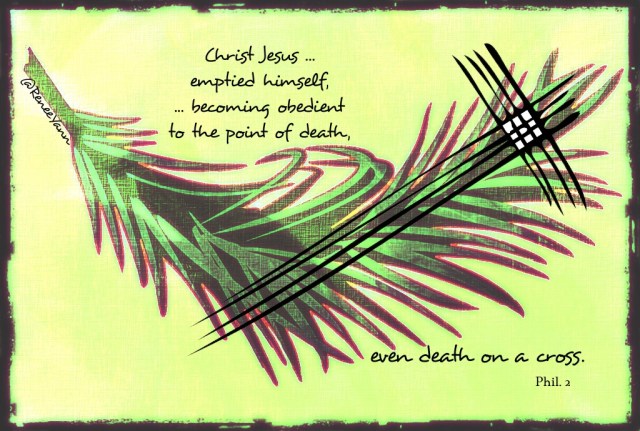
Christ Jesus, though he was in the form of God,
    did not regard equality with God
    something to be grasped.
Rather, he emptied himself,
    taking the form of a slave,
    coming in human likeness;
    and found human in appearance,
    he humbled himself,
    becoming obedient to the point of death,
    even death on a cross.

Philippians 2:6-8

The rich treasures of our Holy Week readings and rituals carry us deeper into the eternal current of Love Who is Jesus Christ. We are changed, if we let ourselves, because we witness and believe the Divine Contradiction of the Cross and Resurrection – and we let it happen within our own souls.

Indeed, we are privy to the profound intimacy between Jesus and his Father … between Love Incarnate and Love Enlivening. It is an intimacy we pray to be part of because it changes everything to Love.

Because of this, God greatly exalted him
    and bestowed on him the name
    which is above every name,
    that at the name of Jesus
    every knee should bend,
    of those in heaven and on earth and under the earth,    
    and every tongue confess that
    Jesus Christ is Lord,
    to the glory of God the Father.

Philippians 2: 9-11

In our readings today, and each day this week, try to find the small phrase where your life meets Christ’s journey. Listen with Jesus to the Father’s stunning revelation that Life is accomplished through death to all that is not born of God.

But Jesus cried out again in a loud voice,
and gave up his spirit.
And behold, the veil of the sanctuary
was torn in two from top to bottom.
The earth quaked, rocks were split, tombs were opened,
and the bodies of many saints who had fallen asleep were raised.
And coming forth from their tombs after his resurrection,
they entered the holy city and appeared to many.
The centurion and the men with him who were keeping watch over Jesus
feared greatly when they saw the earthquake
and all that was happening, and they said,
“Truly, this was the Son of God!”

Matthew 27:50-54

Poetry: Primary Wonder – Denise Levertov

Days pass when I forget the mystery.
Problems insoluble and problems offering
their own ignored solutions
jostle for my attention, they crowd its antechamber
along with a host of diversions, my courtiers, wearing
their colored clothes; cap and bells.
                                                        And then
once more the quiet mystery
is present to me, the throng's clamor
recedes: the mystery
that there is anything, anything at all,
let alone cosmos, joy, memory, everything,
rather than void: and that, O Lord,
Creator, Hallowed One, You still,
hour by hour sustain it.

Music: Jerusalem, My Destiny by Rory Cooney

The Other Side of Light

April 1, 2023

Dear Friends,

It feels appropriate that, before we resume gathering together in Lavish Mercy tomorrow, I comment a bit on my time away from the blog.

First, I sincerely thank you all for your prayers and encouragement. In a shadowy time, you gave me the generous lights of comfort and joy. I am deeply grateful.

Now, as I continue to heal from a time of unexpected vulnerability, I have the advantage of being able to reflect in peace on what has happened to me. 

Part of that peace and healing has been a move to our Motherhouse, a loving community where I have the support and care I need right now. I am blessed beyond words by this gift.


This photo was taken in the early 1900s for the Merion Historical Society


My new room is on the very western end of the building (See blue arrow above.) However, I look out my ample windows not to a sunset horizon – but instead to the imposing wall of our magnificent chapel. Some were concerned that the “wall view” might not be optimal. They didn’t realize that the wall housed an unexpected gift – a bird’s eye view of the glorious rose window that, for over a century, has blessed our chapel with dawn Light.

And I am now on the other side of that Light as it flows over my beloved community – a place that feels ever closer to God with each sunrise.


Sometimes, especially in the evening, I will catch a lovely glow within chapel on one of the several stained glass windows. I consider these my own special sunsets given only to me for my unique reflection. These windows are icons for me as I pray and learn from my own little “passover experience” this winter. 

Evening Window from the Outside!

During times of suffering, loss, or unchosen change in our lives, it is hard to turn to the Light. As we begin our Holy Week walk, consider that Jesus faced this struggle in the shadows of Gethsemane. There, he taught us what it takes not only to turn toward Light, but to become It.

Then going out he went, as was his custom, to the Mount of Olives, and the disciples followed him. 

When he arrived at the place he said to them, “Pray that you may not undergo the test.”

After withdrawing about a stone’s throw from them and kneeling, he prayed, saying, “Father, if you are willing, take this cup away from me; still, not my will but yours be done.”

And to strengthen him an angel from heaven appeared to him.

Matthew 22: 40-43

As it was with Jesus, a “Gethsemane moment” in any of our lives is an invitation to abandon ourselves in trust to God’s inscrutable Love — a falling helplessly, but hopefully, into a Love that changes everything.

For Jesus, his embrace of God’s Will in that tenebrous garden opened his heart to the glory of the Resurrection and led him to the other side of Light. How might such self-giving open and lead us?


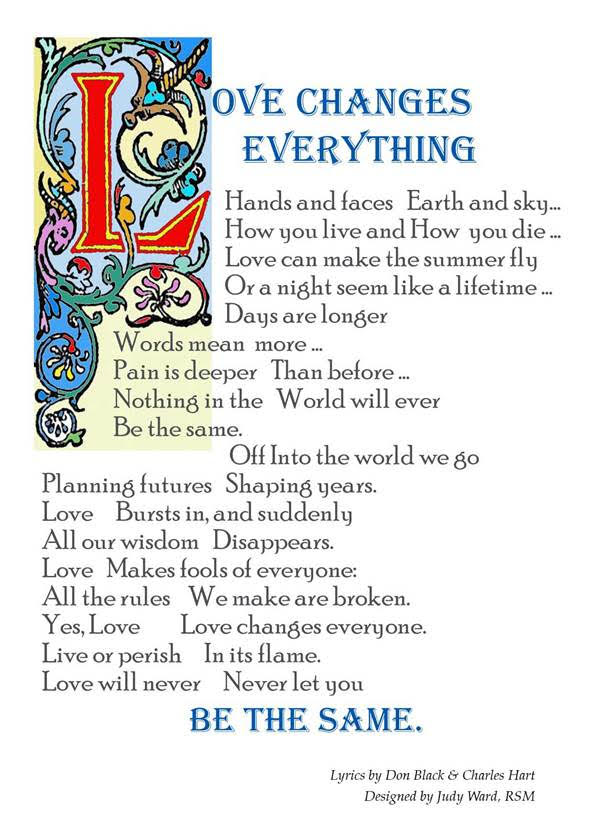
Love Changes Everything – Andrew Lloyd Webber, Don Black, and Charles Hart

Law Yields to Love

Wednesday of the Second Week in Ordinary Time
January 18, 2023

Today’s Readings:

https://bible.usccb.org/bible/readings/011823.cfm

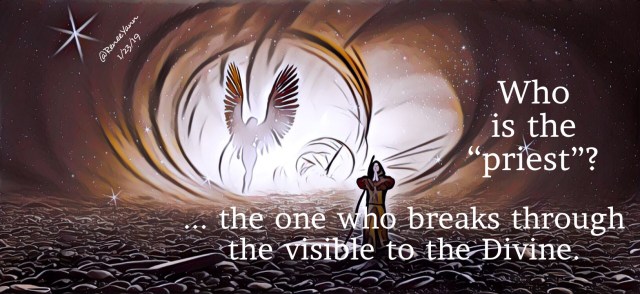
Today, in God’s Lavish Mercy,  the writer of Hebrews continues to shine light on the superior “priesthood” of Jesus Christ – that aspect of Christ’s ministry that breaks heaven open for us and reinstates us as God’s children.

heb2 priest

Hebrews calls Christ a priest “according to the order of Melchizedek” – an order above and beyond the priesthood of Aaron and Levi.

Although there are a few references to Melchizedek in scripture, only one narrative refers to him:

After Abram returned from defeating Kedorlaomer and the kings allied with him,
the king of Sodom came out to meet him in the Valley of Shaveh (that is, the King’s Valley).
Then Melchizedek king of Salem brought out bread and wine.
He was priest of God Most High, and he blessed Abram, saying,
“Blessed be Abram by God Most High,
    Creator of heaven and earth.
And praise be to God Most High,
    who delivered your enemies into your hand.”
Then Abram gave him a tenth of everything.

Genesis 14: 17-20

Melchizedek, whose priesthood preceded even Abraham, is offered in Hebrews as a prototype of Jesus who fulfills and perfects the Old Testament promises.

Does this matter to us modern day Christians who can barely say “Melchizedek “, let alone spell it? And if it does matter, how?

An answer may be revealed in our Gospel today. 

In it, Jesus challenges the old, pharisaical, law-bound way of thinking. As the new and perfect “priest”, Jesus breaks that way of thinking with the transformation of love. Jesus is the perfection of that which Melchizedek was only the forerunner.

Then he said to the Pharisees,
“Is it lawful to do good on the sabbath rather than to do evil,
to save life rather than to destroy it?”
But they remained silent.
Looking around at them with anger
and grieved at their hardness of heart,
Jesus said to the man, “Stretch out your hand.”
He stretched it out and his hand was restored.
The Pharisees went out and immediately took counsel
with the Herodians against him to put him to death.

Mark 3:3-6
  • This man with the withered hand is more important than the law. 
  • This act of healing and wholeness is more important than ritual adherence. 
  • The priesthood of Jesus is the breakthrough revelation of what God really desires – mercy, not sacrifice.

Poetry: Excerpt from John Berryman’s Eleven Addresses to the Lord

John Berryman (1914 – 1972) was an American poet and scholar. He was a major figure in American poetry in the second half of the 20th century and is considered a key figure in the “confessional” school of poetry. Eleven Addresses to the Lord describes, with an interplay of sincerity and irony, the poet’s struggle to believe. Section 10 below reveals love over law as a key factor in Berryman’s evolving faith.

10

Fearful I peer upon the mountain path
where once Your shadow passed, Limner of the clouds
up their phantastic guesses. I am afraid,
I never until now confessed.
I fell back in love with you, Father, for two reasons:
You were good to me, & a delicious author,
rational & passionate. Come on me again,
as twice you came to Azarias & Misael.
President of the brethren, our mild assemblies
inspire, & bother the priest not to be dull;
keep us week-long in order; love my children,
my mother far & ill, far brother, my spouse.
Oil all my turbulence as at Thy dictation
I sweat out my wayward works.
Father Hopkins said the only true literary critic is Christ.
Let me lie down exhausted, content with that.

Music: Love Broke Thru ~ Toby Mac

Pray for the Church

Monday of the Second Week in Ordinary Time
January 16, 2023

Today’s Readings:

https://bible.usccb.org/bible/readings/011623.cfm

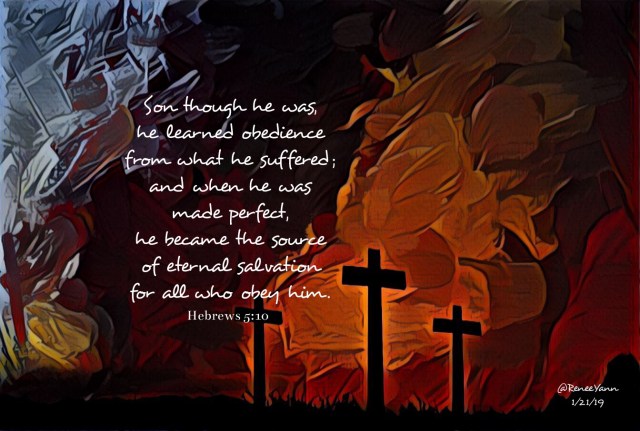
Today, in God’s Lavish Mercy, our reading from Hebrews describes Jesus as the perfect high priest.  Through the Father’s call, Jesus took on our imperfect nature and transformed it by his Life, Death and Resurrection. In the Eucharist, Jesus left us a living memorial of this transformation so that we might participate in its saving mystery.

heb5_10 priest

Paul’s “perfected priest” is patient because his own weakness humbles him. He does not take honor upon himself, but receives it humbly from God.

Jesus, the model of this priesthood, 

… in the days when he was in the Flesh,
… offered prayers and supplications with loud cries and tears
to the one who was able to save him from death,
and he was heard because of his reverence.


The perfection of Christ’s priesthood was accomplished through suffering and obedience. This is how Jesus teaches us to live in reverence and humble service.

As I read and pray with this scriptural understanding of priesthood, I pray for our Church. The catastrophic scandals involving our priests and leaders have deeply shaken the faith of many Catholics over the past several years.

Many are frustrated by the continued refusal of some in our Church to open themselves to new models of priestly service which are grounded in mutuality, inclusivity and simplicity.

The accretions of institutionalization, hierarchical camouflage, and sexist rationale have mitigated the Church’s credibility to touch the lives of ordinary people, especially our emerging adults.


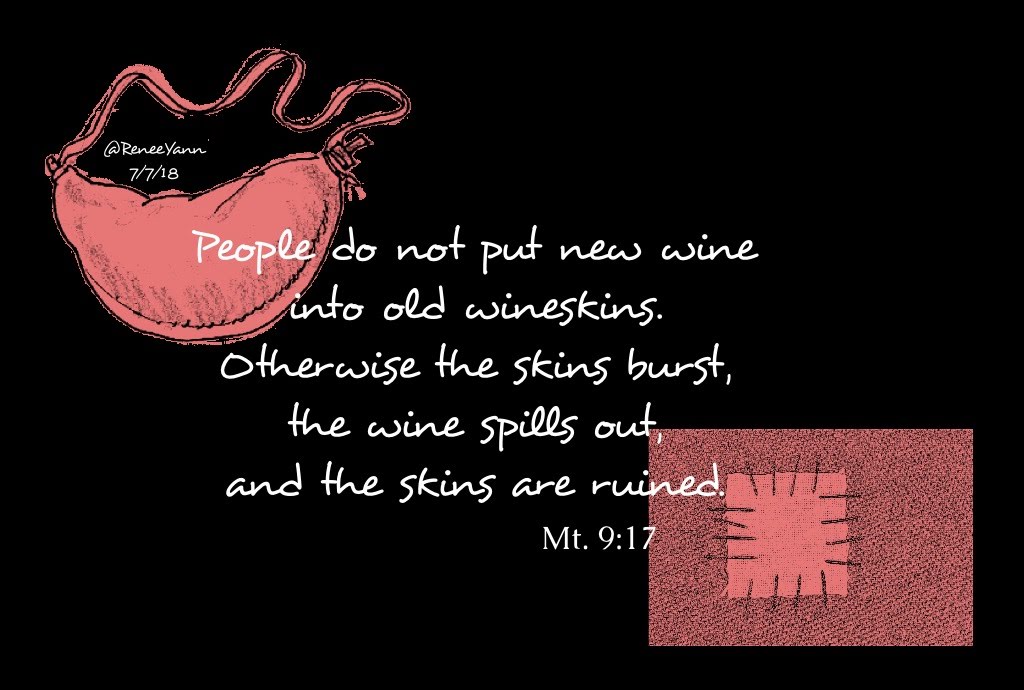
In our Gospel, Jesus talks about an old cloak that needs a patch to make it whole again. He talks about new wine that must be captured and preserved in new wine skins. For me, he is talking about our Church which must be continually renewed and grounded in the truth of the Gospel.

Let us pray that the Church may continue to be transformed by humble obedience to God’s call – just as the high priest of our first reading was perfected.

Let us pray today for our good Pope Francs, bishops, theologians and spiritual leaders – and for the whole People of God – that we may hear and respond.


Prayer: In place of a poem today, this beautiful prayer written in 2019 by Rita Thiron, from the Federation of Diocesan Liturgical Commissions

Prayer for the Church

Heavenly Father,
In every age, you have been our refuge. 
Yet again and still, we stand before you 
asking for your protection on your holy Church.

For the victims of abuse and their families, 
pour out your healing and your peace.
For the Bishops of this country, 
inspire their decisions, 
and guide them with your Spirit.

For the thousands of good and faithful priests, 
who have followed your call 
to serve you and your people in holiness,
sustain them by your grace.

For the faithful who are angry, confused, 
and searching for answers, 
embrace them with your love,
restore their trust,
console them with your clear Gospel message, 
and renew them with your sacraments.

We place our Church in your hands, 
for without you we can do nothing.

May Jesus, our High Priest and true compass, 
continue to lead her in every thought and action
 – to be an instrument of justice,
a source of consolation,
a sacrament of unity,
and a manifestation of your faithful covenant.

Grant this through that same Jesus Christ, our Lord, 
who lives and reigns with you
in the unity of the Holy Spirit,
one God, for ever and ever.
Amen.

Music: Even Death on a Cross ~ Jason Silver

I Come to Do Your Will

Second Sunday in Ordinary Time
January 15, 2023

Today’s Readings

https://bible.usccb.org/bible/readings/011523.cfm

Today, in God’s Lavish Mercy, we see Jesus fully enrobed in the power of his mission and ready to embark on its accomplishment.


When I prayed with today’s readings, I pictured Jesus standing proudly before the Father saying, “I’m fully ready now to answer the call and become all that I am meant to be for the world.”

The image reminded me of a day long ago when I finally received the last little piece of the outfit I would wear as Mercy postulant. It was late August 1963, just a month before entrance, and very hot. Nevertheless, in a bit of girlish giddiness, I decided to don the entire regalia for the first time and see what my future would look like. After struggling into a few of the unfamiliar pieces, I ran down the stairs to my mother waiting in our living room.

I’ll never forget her face. It was an immense mix of pride, loss, hope, love and astonishment. Neither one of us said, nor had to say, a word. Everything that had been only a dream in my heart went forward – for real – from that moment. Mom knew I meant to do this thing. And, maybe for the first time, I knew it too.

I can picture God the Father looking on Jesus in somewhat the same way as Jesus now stands at the edge of a future he cannot yet imagine.


In our first reading, we see Jesus clothed in the fulfillment of Isaiah’s ancient prophecy:

The LORD said to me: You are my servant,
Israel, through whom I show my glory.
Now the LORD has spoken
who formed me as his servant from the womb,
that Jacob may be brought back to him
and Israel gathered to him;
and I am made glorious in the sight of the LORD,
and my God is now my strength!

Isaiah 49:3,5

In our Responsorial Psalm, we can hear Jesus exuding Messianic commitment:

Here I am, Lord; I come to do your will.
“In the written scroll it is prescribed for me,
to do your will, O my God, is my delight,
and your law is within my heart!”
I announced your justice in the vast assembly;
I did not restrain my lips, as you, O LORD, know.
Here am I, Lord; I come to do your will.


In John’s Gospel, John the Baptist stands as a witness to Christ’s messianic authority to execute the Redemptive Act promised in Isaiah:

It is too little, the LORD says, for you to be my servant,
to raise up the tribes of Jacob,
and restore the survivors of Israel;
I will make you a light to the nations,
that my salvation may reach to the ends of the earth.

Isaiah 9:6

John testified further, saying,
“I saw the Spirit come down like a dove from heaven
and remain upon him.
I did not know him,
but the one who sent me to baptize with water told me,
‘On whomever you see the Spirit come down and remain,
he is the one who will baptize with the Holy Spirit.’
Now I have seen and testified that he is the Son of God.”

John 1:32-34

With today’s readings, Jesus begins the great journey to redeem us. We begin with him, praying that throughout this liturgical year, we may be ever more deepened in the grace of that Redemption.


Poetry: The Lamb – William Blake

Little Lamb who made thee
Dost thou know who made thee
Gave thee life & bid thee feed.
By the stream & o'er the mead;
Gave thee clothing of delight,
Softest clothing wooly bright;
Gave thee such a tender voice,
Making all the vales rejoice!
Little Lamb who made thee
Dost thou know who made thee

Little Lamb, I'll tell thee,
Little Lamb, I'll tell thee!

He is called by thy name,
For he calls himself a Lamb:
He is meek & he is mild,
He became a little child:
I a child & thou a lamb,
We are called by his name.
Little Lamb God bless thee.

Music: Here I Am, Lord – written by Dan Schutte, sung here by John Michael Talbot (lyrics below)

I, the Lord of sea and sky
I have heard my people cry
All who dwell in dark and sin
My hand will save

Here I am, Lord. Is it I, Lord?
I have heard you calling in the night
I will go, Lord, if you lead me
I will hold your people in my heart

I, who made the stars of night
I will make their darkness bright
Who will bear my light to them?
Whom shall I send?

I, the Lord of snow and rain
I have borne my people’s pain
I have wept for love of them
They turn away

I will break their hearts of stone
Give them hearts for love alone
I will speak my words to them
Whom shall I send?

God is Outside the Box!

Friday of the First Week in Ordinary Time
January 13, 2023

Today’s Readings:

https://bible.usccb.org/bible/readings/011323.cfm

Today, in God’s Lavish Mercy, our Gospel tells of a memorable event – so memorable that it is described in detail.

Jesus preaches from a neighborhood living room. Every access point to the house is blocked with excited listeners and miracle-seekers. Jesus has been corralled by the enthusiastic faithful.

roof

Then some latecomers arrive carrying their paralyzed friend. It is easy to imagine that these are young guys, because Jesus later calls the paralytic “Child”. Perhaps their friend was injured in a soccer game or diving accident in which they all had participated. Perhaps, as well as carrying him, they are carrying the burden of “survivor guilt”.

Whatever the situation, these friends are determined that the young man shall see Jesus. Confronted with the barricading crowd, they climb up on the roof, opening the turf plates to make an entry point. Jesus had to laugh as he saw to rooftop disappearing above him!


Would that we had such a wild desire to be in God’s Presence
– to know God face to face, and heart to heart!

Can we peel away the many barricades to such relationship? We have only our limited human images of God. While these can help us pray, they can also box God.

Faulty theology and exaggerated ritual can, believe or not, put a lid on God’s power!

It is important to read, listen, and grow within good theology. One measure of that value is the degree of limitation any “theology” puts on God. A theology that limits God to male, white, Catholic, Evangelical, Republican or Democrat (or whatever religion) – that kind of false theology limits us as well. 

A theology that is used as validation for political, economic, or moral domination distorts God, making God an idol of our own greed and selfishness. Such ”theologies” have, for centuries, made excuses for slavery, apartheid, pogroms, wars and holocausts. 

Let’s try to “take the roof off” our theology today. Let’s be sure our tightly held perceptions and beliefs are really leading us to the absolute freedom of a God Who cherishes all Beings, all Creation.


Poetry: God’s Grandeur – Gerard Manley Hopkins

The world is charged with the grandeur of God.
It will flame out, like shining from shook foil;
It gathers to a greatness, like the ooze of oil
Crushed. Why do men then now not reck his rod?
Generations have trod, have trod, have trod;
And all is seared with trade; bleared, smeared with toil;
And wears man's smudge and shares man's smell: the soil
Is bare now, nor can foot feel, being shod.
And for all this, nature is never spent;
There lives the dearest freshness deep down things;
And though the last lights off the black West went
Oh, morning, at the brown brink eastward, springs —
Because the Holy Ghost over the bent
World broods with warm breast and with ah! bright wings.

Music: God Beyond All Names ~ Bernadette Farrell 

Heart-Softening

Thursday of the First Week in Ordinary Time
January 12, 2023

Today’s Readings:

https://bible.usccb.org/bible/readings/011223.cfm

psalm 95 copy

Today, in Mercy, our first reading quotes at length from Psalm 95, and the message is reprised in the Responsorial Psalm.

Harden not your hearts.

We all know what it feels like to harden our hearts. We do it out of anger, fear, exhaustion, frustration and so many other reasons. We feel like the only way to protect ourselves and our space is to build a wall! Put up those bricks made out of our stony faces, curt words, numbing silence, distancing indifference – our hardened hearts.


Today’s reading tells us that this is never God’s way.

The way to freedom, peace, self-respect, joy and fullness of life is always found in relationship – as God is in relationship with all Creation.

Jesus demonstrates that relationship in today’s Gospel by connecting with the leper. This leper has been walled off from society by illness and disfigurement. Most people’s hearts are hardened against him, but Jesus is “moved by pity” at the leper’s isolation.

The leper, too, has built a bridge by reaching through his own hardened heart in faith and trust. Surely all the years of mistreatment had made him wary of trust, had immobilized him in self-protection. But he allows himself a courageous plea to Jesus, and he is heard.

Jesus Cures a Leper – Rembrandt


It is no easy challenge to soften a hardened heart. Some of our walls are very high, some of our bricks very heavy. But, one by one, we can choose opportunities for forgiveness, kindness, understanding, patience, encouragement, listening and companionship – even, and especially, toward those estranged in any way from us or from themselves. And we can do this even toward ourselves when we have become hardened to our own beauty and goodness.

To begin might take only a smile, a prayer, a phone call, a small kindness, an invitation, a moment of ordinary conversation…. just these might start to crumble a wall, to soften a heart.

Let’s ask God’s grace today to do this heart-softening wherever we might need it. Let’s ask this grace for others in need as well.


Poetry: The Altar by George Herbert – Herbert wrote this poem in the shape of an altar. He describes the spiritual process of allowing his “hard heart” to be built into an altar for God’s praise.

A broken ALTAR, Lord, thy servant rears,

 Made of a heart and cemented with tears:

  Whose parts are as thy hand did frame;

No workman’s tool hath touch’d the same.

                   A HEART alone

                   Is such a stone,

                  As nothing but

                  Thy pow’r doth cut.

                  Wherefore each part

                  Of my hard heart

                  Meets in this frame,

                  To praise thy name:

       That if I chance to hold my peace,

 These stones to praise thee may not cease.

   Oh, let thy blessed SACRIFICE be mine,

     And sanctify this ALTAR to be thine.


Music: Soften My Heart, Lord (and adding a second song, just because I think you’ll like it.)