Saturday of the Fourth Week of Easter

May 1, 2021

Today, in God’s Lavish Mercy, we pray with Psalm 98, an invitation to believe and rejoice in God’s Presence in our lives.

O Lord, You have made known the victory,
You have openly showed your righteousness
in the sight of the nations

Psalm 98: 2-3

In our first reading, as many Jews reject the invitation to Christian faith, the Apostles turn to the Gentiles with their evangelization:

The Gentiles were delighted when they heard this
and glorified the word of the Lord. 
All who were destined for eternal life came to believe,
and the word of the Lord continued to spread
through the whole region.

Acts 13: 48-49

But our Gospel passage reminds us that the exercise of faith demands an openness to God’s presence. Poor Philip seems to be missing the fact that Jesus – God – is right there with him!

Philip’s statement, “Show us the Father and it will be enough for us” translates like this for me: prove everything and then we can believe. I smile at Philip’s simplicity but then realize I am not that different from him. I often ask for proof of God’s Presence in my circumstances completely forgetting the fact that God is already and always there!


When thinking about faith, these two complementary passages both challenge and sustain me. I pray with them often:

Now faith is the substance of things hoped for,
the evidence of things not seen.

Hebrews 11:1

But hope that is seen is not hope.
Who hopes for what they already have?
But if we hope for what we do not yet have,
we wait for it patiently.

Romans 8:24-25

This kind of Resurrection faith and hope allow us to receive and rejoice in the Good News the Apostles preach in Acts today, and to proclaim it as encouraged in our Psalm:

Sing a new song to the Lord, who has done marvellous things,
whose mighty hand and holy arm have won the victory.
O Lord, You remember your mercy and faithfulness toward us,
and all the ends of the earth have seen your victory, O God.
Shout with joy to the Lord, all you lands;
lift up your voice, rejoice and sing.

Psalm 98: 1-4

Poetry: Flickering Mind – Denise Levertov 

Lord, not you
it is I who am absent.
At first
belief was a joy I kept in secret,
stealing alone
into sacred places:
a quick glance, and away -- and back,
circling.

I have long since uttered your name
but now
I elude your presence.
I stop
to think about you, and my mind
at once
like a minnow darts away,
darts
into the shadows, into gleams that fret
unceasing over
the river's purling and passing.

Not for one second
will my self hold still, but wanders
anywhere,
everywhere it can turn.  Not you,
it is I am absent.

You are the stream, the fish, the light,
the pulsing shadow.
You the unchanging presence, in whom all
moves and changes.

How can I focus my flickering, perceive
at the fountain's heart
the sapphire I know is there?

Music: Prayer- From Moses in Egypt, an oratorio by Giaocchino Rossini

In the opera, Moses in Egypt, Moses leads the community in a prayer of hope before the crossing of the Red Sea.

I couldn’t find a suitable English translation, but the original Italian is below. As with many gorgeous operatic arias, I am just as happy not to translate. The music itself speaks and often the actual words pale in comparison. Hear what “speaks” particularly to you in this lovely music.

Dal tuo stellato soglio,
Signor, ti volgi a noi!
Pietà de’ figli tuoi!
Del popol tuo pietà!
Pietà de’ figli tuoi!
Del popol tuo pietà!
Se pronti al tuo potere
Sono elementi, e sfere,
Tu amico scampo addita
Al dubbio, errante piè!
Pietoso Dio! ne aìta’:
Noi non viviam, che in Te!
In questo cor dolente
deh, scendi, o Dio clemente,
e farmaco soave
tu sia di pace almen!
Il nostro cor che pena
deh! tu confronta almen!

Friday of the Fourth Week of Easter

April 30, 2021


Today, in God’s Lavish Mercy, we pray with Psalm 2 which, at the beginning of the Psalter, highlights the centrality of King David to Israel’s faith.

For Christians, the archetype of King David serves as point of insight to explore who Jesus Christ is for us. Of course we know that Christ is God, but we have no direct experience of God. So we try to understand God through symbols which, although inadequate, give us a context to form our relationship with God.

Psalm 2 gives us two such archetypal symbols: king and son. For us, that combination signals not only Christ’s power but the fact that it is directly derived from God. Christ’s power is divine, just as the Creator’s power is divine.

Because of that divine intimacy, the “King-Son” may ask and will receive whatever is requested.


Ask of me and I will give you
    the nations for an inheritance
    and the ends of the earth for your possession.

Psalm 2; 8-9

Christ’s whole life – Passion, Death, and Resurrection – was that Messianic “Ask” foretold in David. Through Jesus, we too become daughters and sons of God. This is the Good News the disciples preach in today’s first reading. 

We ourselves are proclaiming this good news to you
that what God promised our fathers
God has brought to fulfillment for us, their children, by raising up Jesus,
as it is written in the second psalm,
    “You are my Son; this day I have begotten you.”

Acts 13:33

This is the Way, the Truth and the Life that Jesus offers in today’s Gospel.

“Master, we do not know where you are going;
how can we know the way?” 
Jesus said to him, “I am the way and the truth and the life. 
No one comes to the Father except through me.”

John 14: 5-6

The gender-heavy symbols of king and son don’t speak strongly to me, but the image of Christ as my “Requestor” does. I think this morning of another Gospel assurance that I love:

I tell you, whoever believes in me will do the works I have been doing,
and they will do even greater things than these,
because I am going to the Father.
And I will do whatever you ask in my name,
so that the Father may be glorified in the Son.
You may ask me for anything in my name, and I will do it.

John 14: 12-14

Dear Jesus, may we learn what it is
to live fully in your Name.


Music: What a Beautiful Name – Hillsong

Friday of the Third Week of Easter

April 23, 2021

Today, in God’s Lavish Mercy, we pray with Psalm 117. Consisting of only two verses, it is the shortest psalm and also the shortest chapter in the whole Bible. But it is packed with spiritual meaning.

Our Responsorial Psalm, anchored on Mark 16:15, sums up the whole mission of Jesus with which we have been gifted and entrusted.

  1. There is Good News – the “goodest” possible news – In Jesus Christ, God has fulfilled the Promise to redeem us.

Steadfast is God’s kindness toward us,
    and the fidelity of the LORD endures forever.


  1. We should totally rejoice in this Good News

Praise the LORD, all you nations;
    glorify him, all you peoples!


  1. We are charged to preach this Good News to the whole world.

Go out to all the world and tell the Good News.


I think it is worth noting that as an alternative to this final verse, the liturgical directions indicate that we may respond simply with the word, “Alleluia”.

When we live in vibrant faith, our life is its own preaching – our life is an “Alleluia!” Our whole life proclaims the Good News”.


Prose Picture: taken from St. Augustine of Hippo


Music: Laudate Dominum – Taizé

Easter Tuesday: He Knows My Name

Tuesday in the Octave of Easter

April 6, 2021

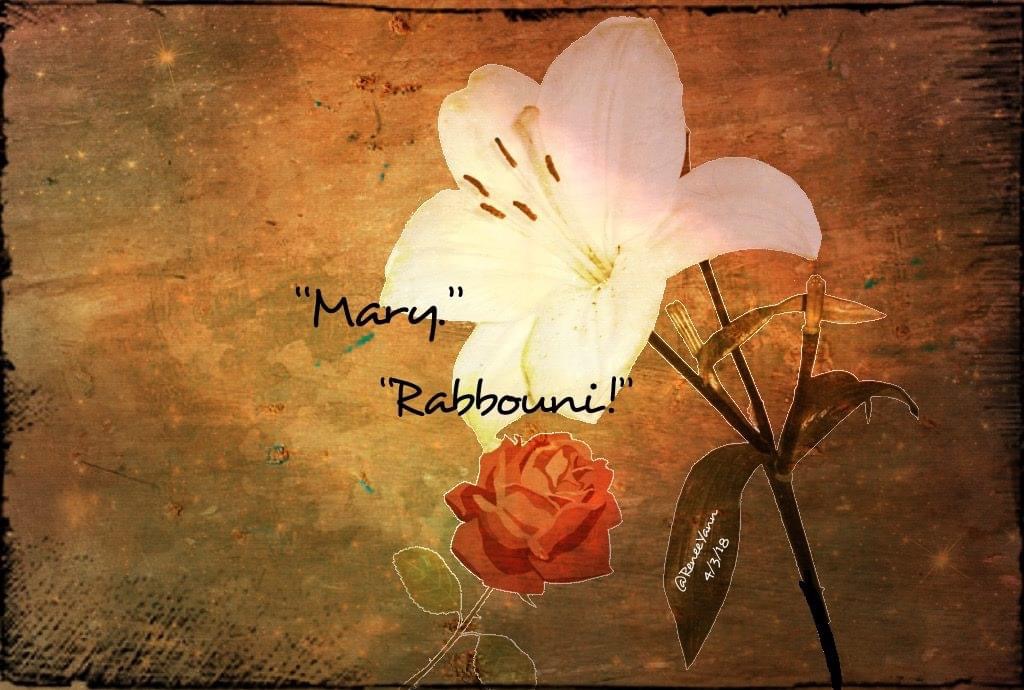
Jesus said to her, “Mary!”
She turned and said to him in Hebrew, “Rabbouni” 

Today, in God’s Lavish Mercy, we pray with Psalm 33 which connects two powerful readings from Acts and John’s Gospel.

Acts describes for us a gathered crowd which, upon Peter’s inspired preaching, become a repentant, converting community. Peter speaks a word that changes them. They are struck through to their core by the enormity of Christ’s sacrifice for them.

Now when they heard (Peter’s preaching),
they were cut to the heart,
and they asked Peter and the other Apostles,
“What are we to do, my brothers?”

Acts 2:37

In our Gospel, a bereaved Mary Magdalene’s heart is cut as well – with sorrow, confusion, and grief. But in that moment when Jesus simply speaks her name, she is awakened, healed, and energized.


What Word is it that our heart longs for today as we pray? What healing, light, and conversion do these readings hold for us as we open our hearts to Easter grace? 

We, too, like Peter’s congregation, have come to hear a Word that transforms us. We, too, like Mary have been waiting in Hope outside the tomb. As we pray today’s scriptures, let’s listen for our name.


Our soul waits for the LORD,
    who is our help and our shield.
May your kindness, O LORD, be upon us
    who have put our hope in you.

Psalm 33:20,22

Poetry: Say My Name – Meleika Gesa-Fatafehi

It is a good day to think about how important one’s name is to them, especially as it expresses our spiritual, familial and cultural rootedness. Meleika Gesa-Fatafehi is a proud Black/Indigenous, Pasifika and West Asian writer. She is from Murray (Mer) Island, from the Zagareb and Dauareb tribes.

My name was my name before
                            I walked among the living
               before I could breathe
               before I had lungs to fill
before my great grandmother passed
               and everyone was left to grieve

My name was birthed from a dream
               A whisper from gods to a king
               A shout into the stars that produced
                             another that shone as bright
They held me without being burnt, humming lullabies in pidgin

My name was passed down from my
               ancestors
They acknowledged my roots grew in two
               places
So, they ripped my name from the ocean
               and mixed it into the bloodlines of my totems

My name has survived the destruction of worlds
and the genocidal rebirthing of so-called ones
It’s escaped the overwhelmed jaw of the death bringer
               Many a time
It has survived the conflicts that resulted in my gods,
               from both lands, knowing me as kin,
but noticing that I am painfully unrecognisable and lost
They are incapable of understanding
               the foreign tongue that was forced on me

My name has escaped cyclones and their daughters
It has been blessed by the dead
As they mixed dirt, salt and liquid red,
               into my flesh
My name is the definition of resilience
It is a warrior that manifested because of warriors

So, excuse me as I roll my eyes or sigh as you
mispronounce my name
               over and over again
Or when you give me another
               that dishonours my mother and father
That doesn’t acknowledge my lineage to my island home
or the scents of rainforest and ocean foam
You will not stand here on stolen land
               and whitewash my name
For it is two words intertwined
               holding as much power as a hurricane
Say it right or don’t say it at all
For I am Meleika
               I will answer when you call


Music: You Know My Name – Brooklyn Tabernacle Choir

(You may come upon an ad in the middle of today’s music — because it is rather long. Just clip the “Skip Ads” after a few seconds and you’ll get back to the choir)

Psalm 19: The Law

Third Sunday of Lent

March 7, 2021


Today, in God’s Lavish Mercy, we pray with Psalm 19.

Those of you who click through to our daily readings on the USCCB website may notice that two sets of readings are offered for this 3rd Sunday in Lent. The alternative set is for a Mass which incorporates “The Scrutinies”.

“The Scrutinies” are part of the process of admitting adults into the Catholic Church which typically takes place throughout Lent and culminates in Easter Baptism. 

There are several steps in the admission process beginning with discernment and in-depth education. The Scrutinies occur near the end, during the 3rd, 4th, and 5th Sundays of Lent. As the name indicates, these exercises have us look deep into our hearts and souls for the healing and forgiveness we need in faith.


However, most of us attending this Sunday’s liturgy will hear the Year B readings which center on LAW and how our developing faith understands it.


For the ancient Israelites, as Exodus tells us, that understanding took the form of a specified discipline in the Ten Commandments.

For I, the LORD, your God, am a jealous God, 
inflicting punishment for their fathers’ wickedness 
on the children of those who reproach me …

Exodus 20:5

In our second reading, Paul preaches a new understanding of Law – the Law of Sacrificial Love revealed in the sacred contradiction of Cross.

… but we proclaim Christ crucified, 
a stumbling block to Jews and foolishness to Gentiles, 
but to those who are called, Jews and Greeks alike, 
Christ the power of God and the wisdom of God.

1 Corinthians 1: 23-25

And in our Gospel, Jesus confronts those whose faith is hardened against the new Law which he embodies:

While he was in Jerusalem for the feast of Passover, 
many began to believe in his name 
when they saw the signs he was doing.
But Jesus would not trust himself to them because he knew them all, 
and did not need anyone to testify about human nature.
He himself understood it well.

John 2:23-25

Our psalm offers us an opportunity to “scrutinize” the sincerity of this prayer in our own hearts:


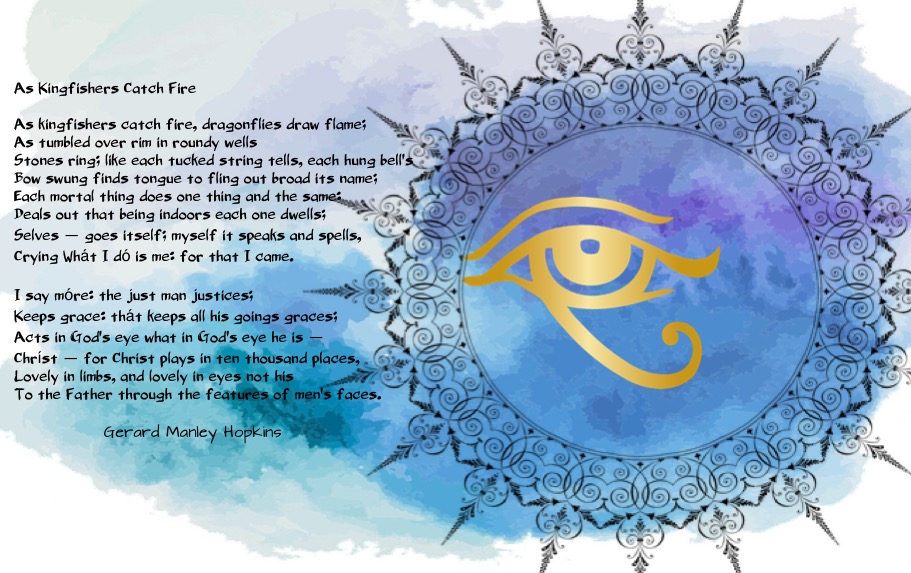
Poetry: As Kingfishers Catch Fire Gerard Manley Hopkins sees the law as acting in God’s eye…

As kingfishers catch fire, dragonflies dráw fláme;
As tumbled over rim in roundy wells
Stones ring; like each tucked string tells, each hung bell’s
Bow swung finds tongue to fling out broad its name;
Each mortal thing does one thing and the same:
Deals out that being indoors each one dwells;
Selves–goes itself; _myself_ it speaks and spells,
Crying _Whát I do is me: for that I came.

Í say móre: the just man justices;
Kéeps grace: thát keeps all his goings graces;
Acts in God’s eye what in God’s eye he is–
Chríst–for Christ plays in ten thousand places,
Lovely in limbs, and lovely in eyes not his
To the Father through the features of men’s faces.

Music: The Law of the Lord is Perfect

Psalm 103: #BeLike

Saturday of the Second Week of Lent

March 6, 2021


Today, in God’s Lavish Mercy, we pray with Psalm 103, an effusive canticle on God’s unbounded Mercy.

Bless the LORD, O my soul;
    and all my being, bless his holy name.
Bless the LORD, O my soul,
    and forget not all his benefits.
He pardons all your iniquities,
    he heals all your ills.
He redeems your life from destruction,
    he crowns you with kindness and compassion.

Psalm 103:1-4

A sufficient prayer today would be to thank God for our experiences of this overflowing mercy. But our Gospel tells us there is more to it. There is a response required of us.


If you’re into social media like Facebook or Twitter, you may have noticed the popular meme “BeLike”.  (A meme is an idea, behavior, or style that becomes a fad and spreads by means of imitation from person to person within a culture, often carrying a symbolic meaning.) Here is an example of the  #BeLike meme posted by the NJ State Police.


If our psalmist and evangelist were writing a meme for today’s readings, it might look like this:


That’s the message.
I’m spending my prayer time with just that today.


Poetry: The Prodigal’s Mother Speaks to God by Allison Frank

When he returned a second time,
the straps of his sandals broken,
his robe stained with wine,

it was not as easy to forgive.

By then his father
was long gone himself,
leaving me with my other son, the sullen one
whose anger is the instrument he tunes
from good morning on.

I know.

There’s no room for a man
in the womb.

But when I saw my youngest coming from far off,
so small he seemed, a kid
unsteady on its legs.

She-goat
what will you do? I thought,
remembering when he learned to walk.

Shape shifter! It’s like looking through water—
the heat bends, it blurs everything: brush, precipice.

A shambles between us.

Music: Father, I Have Sinned – Eugene O’Reilly

Psalm 105: Tell the Story

Friday of the Second Week of Lent

March 5, 2021


Today, in God’s Lavish Mercy, we pray with Psalm 105. Together with our other readings, the psalm allows us to participate in Israel’s great family storytelling.

Give thanks to the LORD, invoke God’s name;
make known among the peoples God’s deeds!
Sing praise to the Lord, play music;
proclaim all the Lord’s wondrous deeds!

Psalm 105: 1-2

Psalm 105 is one of two historical psalms. (The other is Psalm 78.) Its verses summarize an amazing catalogue of God’s faithfulness to Israel and invites the listeners to grateful praise and unfettered hope.


Today’s particular passage is chosen because it recounts the same incidents as our first reading – the story of Joseph. And Joseph’s story prefigures Jesus’s own story which he offers in parable form in today’s Gospel.

When the LORD called down a famine on the land
    and ruined the crop that sustained them,
He sent a man before them,
    Joseph, sold as a slave.

Psalm 105: 16-17

For us, the telling and re-telling
of relationship stories
is an important human rubric,
practiced at
crowded Thanksgiving tables,
at relaxed summer reunions,
and at our inevitable bereavements.


Eventually, with enough retellings, a story becomes part of our family or friendship canon. Thence forward, it gains new dimension. Just like the canon of the Mass, whose formula becomes beautifully rote to us, the story now may be endlessly repeated without being exhausted. In its retelling, it always reveals something new and confirms something old.

Seek out the LORD and the Lord’s might;
constantly seek God’s face.
Recall the wondrous deeds God has done
for you and your beloved ones

Psalm 105: 4-5

In fact, such a story becomes a kind of sacrament, carrying within it the mysterious and unwordable blessings of what it means to live, love, die, and believe. 

Each human story is, in some form, a re-enactment of Christ’s life, death, and Resurrection. The faith, courage, humor, pathos, genius and serendipity of our lives carry the graces to make us holy, to make us Love as Jesus was Love.

When we gratefully retell the history of those graces – as Psalm 105 does today – we practice a powerful ritual of faith. By such liturgy, we are invited to the same grateful praise and unfettered hope as we meet in Psalm 105.

The LORD, is our God
whose judgments reach through all the earth.
Who remembers forever the covenant,
the word commanded for a thousand generations.

Psalm 105: 8-9

Poetry: The Storyteller – Mike Jones

I’m a teller of tales, a spinner of yarns,
A weaver of dreams and a liar.
I’ll teach you some stories to tell to your friends,
While sitting at home by the fire.
You may not believe everything that I say
But there’s one thing I’ll tell you that’s true
For my stories were given as presents to me
And now they are my gifts to you.

My stories are as old as the mountains and rivers
That flow through the land they were born in
They were told in the homes of peasants in rags
And kings with fine clothes adorning.
There’s no need for silver or gold in great store
For a tale becomes richer with telling
And as long as each listener has a pair of good ears
It matters not where they are dwelling.

A story well told can lift up your hearts
And help you forget all your sorrows
It can give you the strength and the courage to stand
And face all your troubles tomorrow.
For there’s wisdom and wit, beauty and charm
There’s laughter and sometimes there’s tears
But when the story is over and the spell it is broken
You’ll find that there’s nothing to fear

My stories were learned in my grandparent’s home
Where their grandparents also had heard them
They were given as payment by travelling folk
For a warm place to lay down their burdens
My stories are ageless, they never grow old
With each telling they are born anew
And when my story is ended, I’ll still be alive
In the tales that I’ve given to you.

Music: The Story I’ll Tell – Morgan Harper Nichols 

Psalm 31: The Plot

Wednesday of the Second Week of Lent

March 3, 2021

Today, in God’s Lavish Mercy, we pray with Psalm 31 which expresses a pleading reflective of our first powerful reading from Jeremiah.

Come, let us contrive a plot against Jeremiah.
… let us destroy him by his own tongue;
let us carefully note his every word.

Jeremiah 18:18

This verse (18:18) is the pivotal turning point where everything goes south for Jeremiah. The Israelite power structure really didn’t want to hear what Jeremiah was telling them. He pins their troubles – the destruction the Temple and Babylonian Captivity – on one thing: their faithlessness to the Covenant with Yahweh.


Jeremiah is an archetype of the condemned prophet whom we meet in Jesus. Today’s Gospel reveals the same pivotal turning point for Jesus:

We are going up to Jerusalem,
and the Son of Man will be handed over to the chief priests
and the scribes,
and they will condemn him to death,
and hand him over to the Gentiles
to be mocked and scourged and crucified,
and he will be raised on the third day.

Matthew 20:18-19

They told the Truth – that we must continually discern God’s Word for our lives, always seeking love, mercy and justice. Few had the courage to listen. Most chose sinful resistance.

The suffering prophet has only one recourse when “hearing the whispers of the crowd, that frighten me from every side, as they consult together against me, plotting to take my life.” Psalm 31:14

That recourse is complete and trusting surrender to God. Psalm 31 reveals this surrender in a verse Jesus ultimately prays from the Cross:

Into your hands I commend my spirit;
    you will redeem me, O LORD, O faithful God.

Psalm 31:6

Lent calls us to the message of Jeremiah and Jesus – to examine our lives in light of love, mercy and justice. Let us pray in the spirit of Jesus today to be open to Truth in our own lives and to build Truth in our communities.


Poetry: The Paradox by Paul Laurence Dunbar
The poem carries a tone similar to sorrowful Jeremiah’s poetry.

I am the mother of sorrows,
I am the ender of grief;
I am the bud and the blossom,
I am the late-falling leaf.

I am thy priest and thy poet,
I am thy serf and thy king;
I cure the tears of the heartsick,
When I come near they shall sing.

White are my hands as the snowdrop;
Swart are my fingers as clay;
Dark is my frown as the midnight,
Fair is my brow as the day.

Battle and war are my minions,
Doing my will as divine;
I am the calmer of passions,
Peace is a nursling of mine.

Speak to me gently or curse me,
Seek me or fly from my sight;
I am thy fool in the morning,
Thou art my slave in the night.

Down to the grave will I take thee,
Out from the noise of the strife;
Then shalt thou see me and know me–
Death, then, no longer, but life.

Then shalt thou sing at my coming.
Kiss me with passionate breath,
Clasp me and smile to have thought me
Aught save the foeman of Death.

Come to me, brother, when weary,
Come when thy lonely heart swells;
I ‘ll guide thy footsteps and lead thee
Down where the Dream Woman dwells.

Music: Symphony No.1 – Jeremiah by Leonard Bernstein 

Summary: an excellent introduction to this symphony

Entire Symphony:

Psalm 116: Listen!

Second Sunday of Lent

February 28, 2021


Today, in God’s Lavish Mercy, we pray with Psalm 116 which Pope John Paul II called “A Prayer of Thanksgiving to the Lord”.

Praying the psalm today, in the context of our other Sunday readings, leads us deeper into the nature of that “thanksgiving” and its relationship to sacrifice.

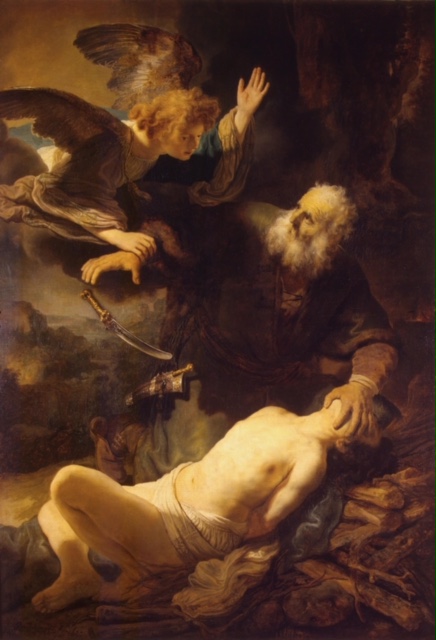
Abraham and Isaac by Rembrandt

In our first reading, we meet Abraham, full of thanks that God reconsidered the command to sacrifice his dear son.


But then our second reading expresses thanks that God was willing to sacrifice his own Son for our sakes.

The Transfiguration by Titian

Finally, our Gospel takes us to the Transfiguration where that Son who will be sacrificed is revealed in his true glory.

What is the thread binding these readings? I think it can be found in this Gospel verse:

This is my beloved Son.  
Listen to him.

True listening is obedience. The words come from the same root: obedience = listen to,” from ob “to” + audire “listen, hear”.

  • Abraham listens, no matter how hard, and finally hears God’s real command to love.
  • Jesus listens to the Will of the Father even through his suffering, and is led to Resurrection.
  • We, like Peter, James and John, are called to listen to Jesus who will transfigure our perceptions about what life is really calling us to.

In each case, intent “obedience” allows the listener to hear and see beneath circumstances to the deeper Grace beyond appearances. Deep spiritual listening transfigures us!

This is the whole point of the spiritual life. Our lives are so much more than mere circumstances or appearance. Our psalm calls us to believe this even in difficulty:

I believed, even when I said,
    “I am greatly afflicted.”
Precious in the eyes of the LORD
    is the death of his faithful ones.

Psalm 116:10

When we do this, we are freed to engage our lives at the level of God’s Will which is always for our good, which is always from Love. The long tradition of faith, learned from our forbearers, assures us of this:

O LORD, I am your servant;
    I am your servant, the child of your faithful ones;
    you have loosed my bonds.
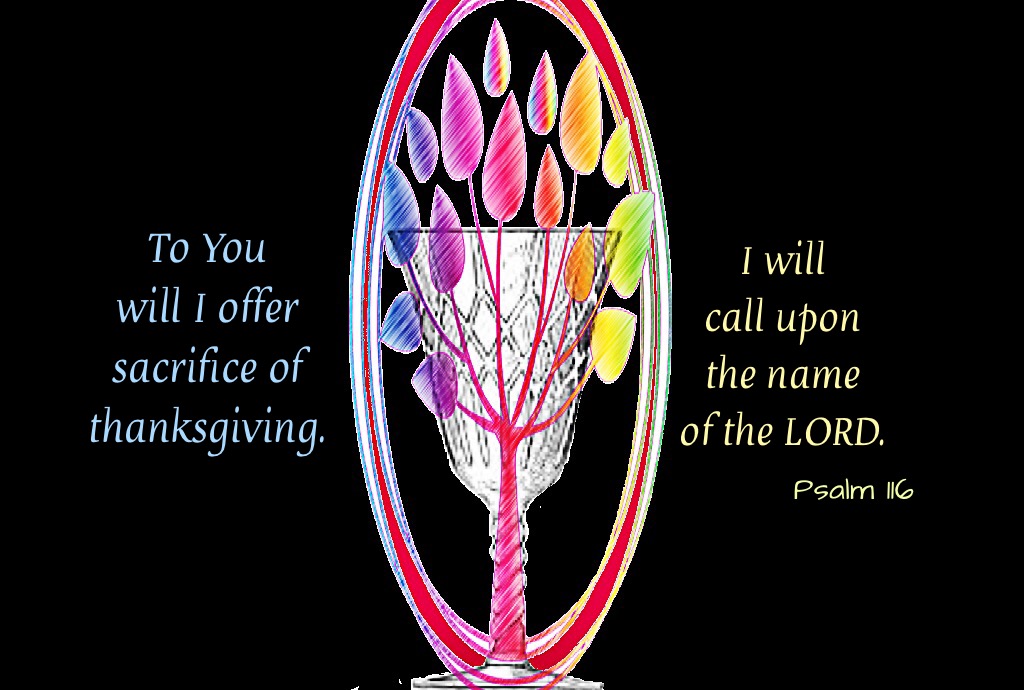
To you will I offer sacrifice of thanksgiving,
    and I will call upon the name of the LORD.

Psalm 116:16-17

Some of us go through life continually angry, frustrated, or overwhelmed by our challenges. Others, experiencing similar or even greater challenges, reflect a spirit of joy, peace, and gratitude. Why is that? I think today’s readings give us a big clue. Let’s listen to them!


Poetry: Story of Isaac, written and chanted by the bard Leonard Cohen who also wrote the currently popular “Hallelujah “.


Music: Psalm 116: Steve Green

Lyrics

I love the Lord, He heard my voice
He heard my voice. He heard my voice
He heard my cry for mercy
Because He has turned His ear to me
I will call (I will call)
I will call on the Lord for as long as I live

I love the Lord, He heard my voice
He heard my voice. He heard my voice
He heard my cry
I love the Lord, He heard my voice
He heard my voice. He heard my voice
He heard my cry for mercy

Psalm 34: Together

Tuesday of the First Week of Lent

February 23, 2021


Today, in God’s Lavish Mercy, we pray with Psalm 34, thought to be a young David’s thanksgiving prayer after God saved him from one of his many dangerous escapades.

In telling his deliverance story, David invites his friends to celebrate with him and to learn the faith-lesson he has learned:

Glorify the LORD with me,
    let us together extol his name.
I sought the LORD, and he answered me
    and delivered me from all my fears. 


I picture myself sitting in David’s audience, absorbing the words of his prayer. This line strikes me:

The LORD has eyes for the just,
    and ears for their cry.

Ah, the Lord has eyes for me….for ME! It conjures up sounds of The Flamingos, doesn’t it? (Sorry for the transcriber’s misspelling 😀)

Most of us want to think that we are individually special to God. This desire is at the core of the Protestant Evangelical model, “a personal relationship with Jesus Christ”. But for some, this model has become confused with a prosperity gospel that is quite misleading.

The only prosperity we should seek from God is the gift of grace because:

Yahweh’s peculiar inclinations are with the broken-hearted and the ones with crushed spirit. That is, Yahweh’s solidarity is not with the ones who go from success to success, but the ones denied success.

Walter Brueggemann The Message of the Psalms A Theological Commentary Ausberg Publishing House 1984

Still, such a personal relationship is not alien to a full and complete faith:

Faith is above all a personal, intimate encounter with Jesus, and to experience his closeness, his friendship, his love; only in this way does one learn to know him ever more, and to love and follow him ever more. May this happen to each one of us.

Pope Benedict XVI, General Audience, 2009

(Look for an extra prayer about “The Eye of God” in another post today.)


However, our psalm alerts us that this deeply personal dimension is only part of relationship with God.

When the just cry out, the LORD hears them,
    and from all their distress he rescues them.
The LORD is close to the brokenhearted;
   and those who are crushed in spirit he saves.

To be seen and heard by God, one must be part of the just community. To be close to God, one must feel the brokenheartedness of the poor. We come to the psalmist’s exuberant praise only by walking with suffering, either in our own lives, or beside others who bear distress.

From all their distress
God rescues the just.

Psalm 34 teaches us that our personal relationship with God is interdependent with our relationship with the whole community. David calls his community to share in his praise-song because they- together -recognize God’s mercy and share it in concern for one another.

The LORD has eyes for the just,
    and ears for their cry.


Our Gospel today confirms that a personal love for God thrives only within a communal love. The prayer Jesus shares is not “My Father”. It is “Our Father”. We come to the depths of God’s merciful heart with our sisters and brothers.


Poetry: An Inclusive Lord’s Prayer – Author unknown

Loving God, 
in whom is heaven, 
may Your name be honored everywhere.
May Your Mercy reign.
May the desire of Your heart for the world 
be done, 
in us, by us and through us.
Give us each and all
the bread we need for the day.
Forgive us.
Free us to forgive others.
Keep us from all anxiety, fear, and selfishness.
For You reign in the power that comes from love 
which is Your glory
forever and ever.
Amen.

Music: Our Father – Joe Wise