Today, in God’s Lavish Mercy, our liturgy repeats yesterday’s verses from Psalm 85. That’s how important they are to our Advent prayer! So let’s pray with our psalm in the light of the readings which surround it today.
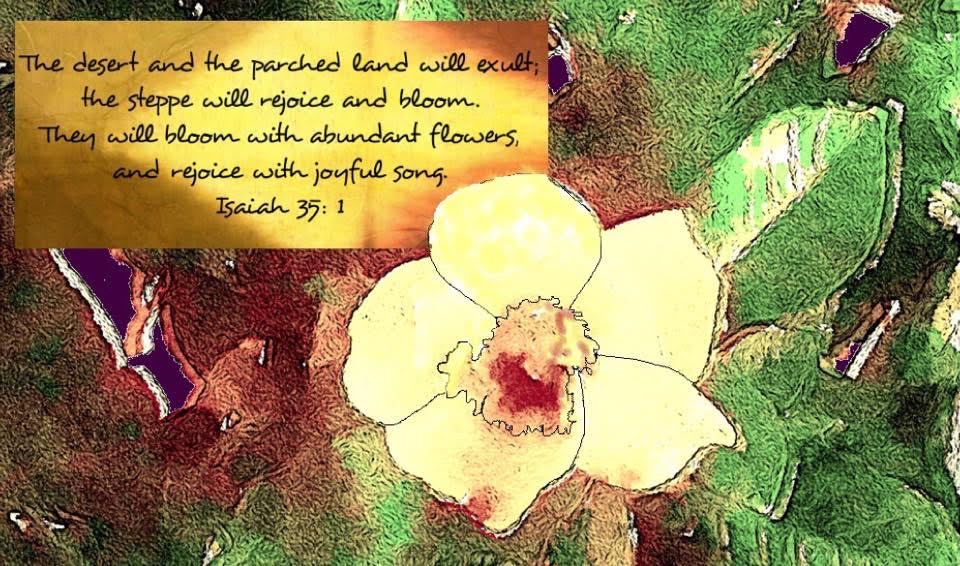
Today, in our first magnificent reading from the poet-prophet Isaiah, we read about the transformation God can accomplish even over the most broken and desolated landscapes. Isaiah encourages us to exuberant hope:
Strengthen the hands that are feeble, make firm the knees that are weak, Say to those whose hearts are frightened: Be strong, fear not! Here is your God, coming with vindication; With divine recompense – coming to save you.
Isaiah 35: 3-4
In our Gospel, Jesus transfigures both the inner and outer “landscape” of a young paralytic who has good and creative friends.
And some men brought on a stretcher a man who was paralyzed; they were trying to bring him in and set him in his presence. But not finding a way to bring him in because of the crowd, they went up on the roof and lowered him on the stretcher through the tiles into the middle in front of Jesus. When Jesus saw their faith, he said, “As for you, your sins are forgiven.”
Luke 5: 18-20
Our psalm reflects the transformative power in both readings as we pray:
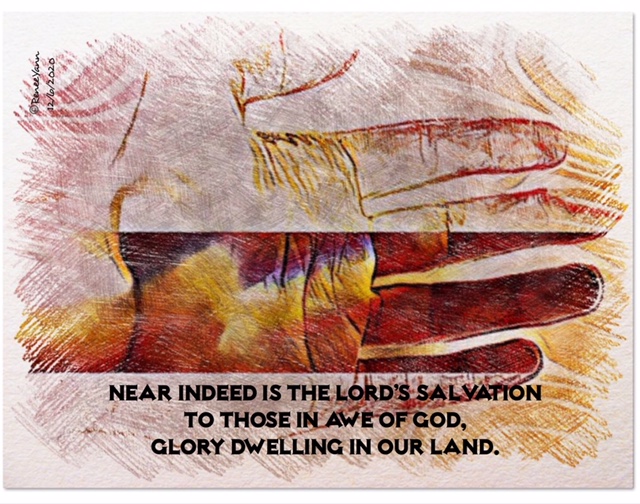
I will hear what God proclaims; the LORD – who proclaims peace to the people. Near indeed is salvation to those who reverence God, glory dwelling in our land.
Psalm 85:9-10
“Glory dwelling in our land” – the land of our earth, and the land of our hearts. Let’s hope for it, believe it, invite it in our prayer today.
Poetry: Rumi
And you?
When will you begin
that long journey into yourself?
Why do you stay in prison
when the door is so wide open?
Music: Handel: Then Shall the Eyes of the Blind Be Opened / He Shall Feed His Flock
Today, in God’s Lavish Mercy, we pray with Psalm 85 which, sprinkled heavily with “will”s and “shall”s, is written almost completely in the future tense.
This psalm, though filled with hope, is italicized with a sense of “then, but not just yet”. In the midst of a long waiting, it fuels our patience with words like “near”:
I will hear what God proclaims; the LORD— who proclaims peace to the people. Near indeed is salvation to those who are awed by the Lord, glory dwelling in our land.
Psalm 85: 9-10
Oh, my! Do we know how that long patience feels?
The feeling recalls my Dad’s answer on any long journey when I repeatedly queried, “Are we there yet.”
Not yet. But near. Not now. But soon.
The whole world shares a similar feeling right now. As we see the promise of a vaccine rising on the horizon, we still live in the worry and isolation of this pandemic. Are we safe yet?
Not yet. But near. Not now. But soon.
Let us not miss the practical lessons nor the spiritual ones that emerge as we read the psalmist’s ancient words in our current stressful times.
The practical lessons for our situation are clear:
a vaccine is near
be patient, prepare
mask up
wash hands
stay home if possible
respect your bubble and everyone else’s
Some of the spiritual inspirations might be these.
Amazing Grace is always near to us
be patient, prepare
learn from your solitude
clear your spirit of any impediments to grace
find your home in God’s Presence
rest in that Presence until you are renewed
The psalm assures us that God is with us; that the Sacred Presence will appear as we open our eyes to God’s justice and mercy.
The LORD will give us benefits; our land shall yield its increase. Justice shall walk before the Lord and prepare the way of God’s steps.
Psalm 85: 13-14
Isaiah and Mark direct our hearts to the voice of the prophet John the Baptist who proclaims, “Prepare a way for the Lord!” That’s how near God is! Just on the other side of our soul’s expectation.
In our second reading, Peterreminds us of how to be ready for the moment when “soon” becomes “now”.
But according to God’s promise we await new heavens and a new earth in which righteousness dwells. Therefore, beloved, since you await these things, be eager to be found without spot or blemish before the Lord, at peace.
2 Peter 3:13-14
Poetry: ADVENT (On a Theme by Dietrich Bonhoeffer) by Pamela Cranston
Look how long
the tired world waited,
locked in its lonely cell,
guilty as a prisoner.

As you can imagine,
it sang and whistled in the dark.
It hoped. It paced and puttered about,
tidying its little piles of inconsequence.

It wept from the weight of ennui
draped like shackles on its wrists.
It raged and wailed against the walls
of its own plight.

But there was nothing
the world could do
to find its freedom.

The door was shut tight.
It could only be opened
from the outside.

Who could believe the latch
would be turned by the flower
of a newborn hand?
Music: Soon and Very Soon written and sung by Andraé Crouch, accompanied here by Jessy Dixon
Andraé Edward Crouch (July 1, 1942 – January 8, 2015) was an American Gospel singer, songwriter, arranger, record producer and pastor. Referred to as “the father of modern gospel music” by gospel music professionals.
Jessy Dixon (March 12, 1938 – September 26, 2011) was an American Gospel music singer, songwriter, and pianist, with success among audiences across racial lines. He garnered seven Grammy Award nominations during his career.
Today, in God’s Lavish Mercy, we pray with Psalm 147 coming after the consoling passage from Isaiah:
O my people, no more will you weep; I will be gracious to you when you cry out, as soon as I hear you, I will answer.
Isaiah 30:19
Our readings today assure us that God sees and cares about our suffering. Like a mother who sings to a crying child, God wants to comfort us.
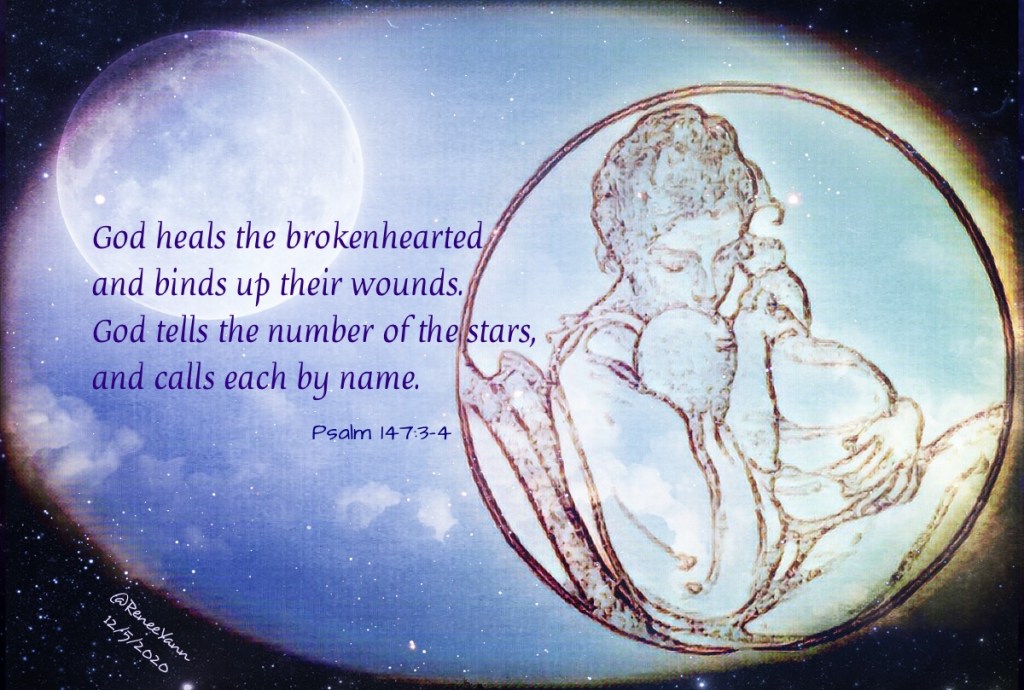
God heals the brokenhearted and binds up their wounds. God tells the number of the stars; calling each by name.
Psalm 147: 3-4
God’s lullaby is Jesus Christ. In Jesus, our Creator sings over us the melody of Infinite Love and Mercy. All we need do is calm ourselves and listen.
Jesus is the Divine Song. He sings God’s Mercy over all who suffer.
At the sight of the crowds, Jesus’s heart was moved with pity for them because they were troubled and abandoned.
Matthew 9:36
All of us, at some time in our lives, stand amidst the troubled crowd. Our friends and family members too stand there at times.
Today, as we pray Psalm 147, let us place all our troubles, and theirs, in the loving embrace of God who sings the lullaby of Jesus over us.
Poetry: from Rumi
Every midwife knows
that not until a mother's womb
softens from the pain of labour
will a way unfold
and the infant find that opening to be born.

Oh friend!
There is treasure in your heart,
it is heavy with child.

Listen.

All the awakened ones,
like trusted midwives are saying,
'welcome this pain.'
It opens the dark passage of Grace.
Today, in God’s Lavish Mercy, we pray with Psalm 118 which describes the Lord’s strong city and the gate which protects it.
Our opening passage from Isaiah exults in this Divine Strength, asking to be embraced within its sacred space:
A strong city have we; the Lord sets up walls and ramparts to protect us. Open up the gates to let in a nation that is just, one that keeps faith.
Isaiah 26: 1-2
Jesus, in our Gospel, tells us that inclusion in the sanctuary must be merited by those who understand that God’s Will is for justice over all Creation:
Not everyone who says to me, ‘Lord, Lord,’ will enter the Kingdom of heaven, but only the one who does the will of my Father in heaven.
Matthew 7: 21
Thus we, longing to be among the included, we pray this Advent psalm:
Open to me the gates of justice; I will enter them and give thanks to the LORD. This gate is the LORD’s; the just shall enter it. I will give thanks to you, for you have answered me and have been my savior.
Psalm 118: 19-21
As I meditate on these thoughts, our Motherhouse property offers many “icons” to reflect upon the concept of the “gate”. The entire campus is enclosed by various types of fencing or walls. There are four gates through which one may pass into the complex.
early photo of Motherhouse main gate , Montgomery County Historical Society. The open gate is barely visible against the small pine tree on the left of the opening.
I imagine that, when first installed, these great gates offered a more formidable enclosure than they do today. Only the wrought iron hinges remain of the main gate’s double swing panels. Yet these, driven into imposing stone pillars, still suggest the firm purpose to create a sacred space.
You will notice the open gate just under the right side of the big tree
Inside the property, another wrought iron enclosure surrounds the community cemetery. This fence’s two gates are usually open, demonstrating that their purpose too is not security but rather sacred designation.
These venerable gates, rather than castle-like ramparts, are more like torii, those traditional Japanese gates found at the entrance or within a Shinto shrine where they symbolically mark the transition from the mundane to the sacred.
The famous torii at Itsukushima Shrine, Hiroshima, Japan
During Advent, we slowly pass through such a sacred symbolic gate, once again entering the holy mystery who is Jesus Christ. We pray to be transformed, not simply by the retelling of his story, but by the Living Grace he is for us in our own lives.
With today’s powerful readings, we pray to enter more deeply into that Mystery.
Poetry: Endless Time – Tagore
Time is endless in thy hands, my lord.
There is none to count thy minutes.
Days and nights pass and ages bloom and fade like flowers.

Thou knowest how to wait.
Thy centuries follow each other perfecting a small wild flower.

We have no time to lose,
and having no time we must scramble for a chance.
We are too poor to be late.

And thus it is that time goes by
while I give it to every querulous person who claims it,
and thine altar is empty of all offerings to the last.

At the end of the day I hasten in fear lest thy gate be shut;
but I find that yet there is time.
Today, in God’s Lavish Mercy, we pray with Psalm 23. On this first Wednesday of Advent, our psalm is set between two eloquent readings about the full satisfaction of our soul’s hungers.
Isaiah blesses us with his metaphor for Heaven’s abundance, when our souls will be filled to a divine capacity of grace.
In a world already redeemed, Isaiah’s vision has been fulfilled. We live our lives already seated at the banquet he describes.
But do we realize it? Do we partake every moment in the outpouring of grace given us by our Baptism into Christ?
Unaware, many of us sit at the table starving.
In our Gospel, Jesus sees the deeper hungers of the fatigued crowd. His miracle feeds their bodies but, more importantly, awakens their souls to see him as the fulfillment of God’s promise. Isaiah’s prophecy is accomplished in Jesus:
On that day it will be said: Behold our God, to whom we looked to save us! This is the LORD for whom we looked; let us rejoice and be glad that he has saved us!” For the hand of the LORD will rest on this mountain.
Isaiah 26:9-10
As we read Psalm 23 today, let’s allow its consoling verses to become our prayer of trust and gratitude for God’s “already presence” in our lives. Like the crowd awakened by Jesus’s miracle, let us open our eyes to the infinite grace spread before us, though wrapped sometimes in the mundane circumstances of our lives.
Poetry: Joy Harjo – Perhaps the World Ends Here
The world begins at a kitchen table. No matter what, we must eat to live.

The gifts of earth are brought and prepared, set on the table. So it has been since creation, and it will go on.

We chase chickens or dogs away from it. Babies teethe at the corners. They scrape their knees under it.

It is here that children are given instructions on what it means to be human. We make men at it, we make women.

At this table we gossip, recall enemies and the ghosts of lovers.

Our dreams drink coffee with us as they put their arms around our children. They laugh with us at our poor falling-down selves and as we put ourselves back together once again at the table.

This table has been a house in the rain, an umbrella in the sun.

Wars have begun and ended at this table. It is a place to hide in the shadow of terror. A place to celebrate the terrible victory.

We have given birth on this table, and have prepared our parents for burial here.

At this table we sing with joy, with sorrow. We pray of suffering and remorse. We give thanks.

Perhaps the world will end at the kitchen table, while we are laughing and crying, eating of the last sweet bite.
My niece Maureen took this picture at the Biltmore in Asheville, NC
Today, in God’s Lavish Mercy, we pray with Psalm 19 which, according to the famous Baptist preacher Charles Spurgeon, is “the study of God’s two great books—nature and Scripture”.
The verses chosen for today’s Responsorial focus on the Law as we receive it in the words of Scripture.
The law of the LORD is perfect, refreshing the soul; The decree of the LORD is trustworthy, giving wisdom to the simple.
Psalm 19:8
St. Andrew, whose feast we celebrate today, was a simple fisherman made wise by the Living Word of God. He received the Gospel as it was first uttered in the life and preaching of his dear friend Jesus.
DUCCIO DI BUONINSEGNA The Calling of the Apostles Peter and Andrew, 1308-1311
Andrew decided to retell that precious Word in his own life and preaching.
He joyfully accepted the call to radical discipleship, allowing his inner vision to be enlightened by the Christ’s vision for the world.
The precepts of the LORD are right, rejoicing the heart; The command of the LORD is clear, enlightening the eye.
Psalm 19: 9
Andrew’s whole life and death gave witness to his total investment in God’s Word. That apostolic commitment sweetened not only Andrew’s life, but the life of the whole faith community to whom he transmitted the Living Word… including us.
Your words, Lord, are Spirit and life. They are more precious than gold, than a heap of purest gold; Sweeter also than syrup or honey from the comb.
Psalm 19: 10;11
Let’s pray this Psalm today with a simplicity and faith like Andrew’s.
Prayer: from daily-prayers.org
O Glorious St. Andrew,
you were the first to recognize and follow the Son of God.
With your friend, St. John,
you remained with Jesus,
for your entire life,
and now throughout eternity.
Just as you led your brother, St Peter,
to Christ and many others after him,
draw us also to Him.
Teach us how to lead them,
solely out of love for Jesus
and dedication to His service.
Help us to learn the lesson of the Cross
and carry our daily crosses without complaint,
so that they may carry us to God the Almighty Father. Amen.
Music: from Bach – Die Himmel erzählen die Ehre Gottes, BWV 76
Today, in God’s Lavish Mercy, we pray with Psalm 128 which is used this Sunday to connect a series of readings about “fruitfulness” and its eternal endurance.
Our readings today intensify a tone evident in recent weeks – a theme I call “end of the line warnings”. Just two weeks out from Advent, and the end of the 2020 Liturgical Year, we have our annual confrontation with “The End Times”.
I have never enjoyed these readings. They actually scared me as a child, and they don’t make me too carefree even now. The only thing that makes them tolerable is that they herald the coming of Advent, a favorite time for hope-filled readings.
But to get to those Advent scriptural delights, we have to face:
sudden disaster like labor pains
darkness like a thief in the night
alert and sober sleeplessness
and, if we’re not vigilant, a potential toss into the darkness outside where there will be wailing and grinding of teeth.
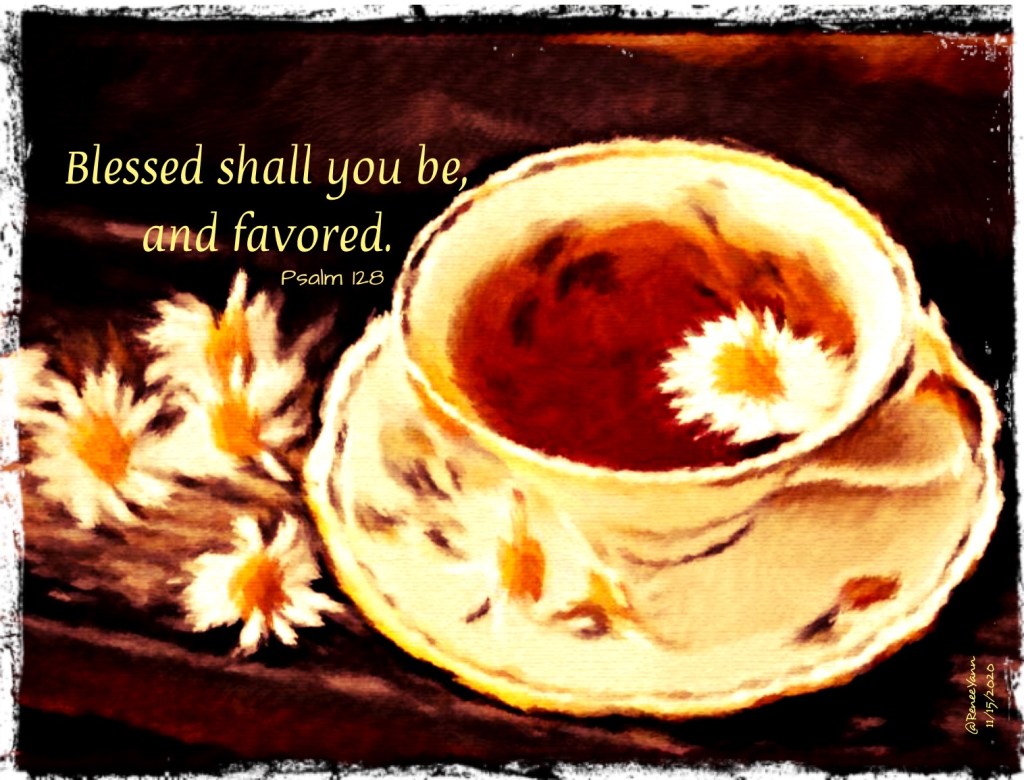
In the midst of these terror-producing readings, Psalm 128 can be like a calming cup of camomile tea. It reminds us – serenely, yet directly – of enduring blessings and how we secure them.
Blessed are you who fear the LORD, who walk in the Lord’s ways! For you shall eat the fruit of your handiwork; blessed shall you be, and favored.
Today’s readings are sprinkled with two usually contrasting words: fear and blessing. However, our prayer may lead us to realize that these actions can be complementary from a spiritual perspective.
When we live in awe, or holy fear, before God’s Presence and Power, our life is blessed with fruitful – just and merciful – relationships with all Creation, including an anticipated joy in our eternal home. As Christine Robinson transliterates Psalm 128:
You are blessed, who know God’s grace and who follow the Way of Life. Happiness and contentment are yours. Your home is a place of growth and love. Your city a better place for your life in it. Your life of faithful work, prayerful reflection,and shared love blesses those around you with life and peace.
…and you can look forward with joy to your continuing eternal life with God and God’s beloved family.
Poetry: To Heaven by Ben Johnson who is among the best-known writers and theorists of English Renaissance literature, second in reputation only to Shakespeare. A prolific dramatist and a man of letters highly learned in the classics, he profoundly influenced the Augustan age through his emphasis on the precepts of Horace, Aristotle, and other classical Greek and Latin thinkers.
Good and great God, can I not think of thee
But it must straight my melancholy be?
Is it interpreted in me disease
That, laden with my sins, I seek for ease?
Oh be thou witness, that the reins dost know
And hearts of all, if I be sad for show,
And judge me after; if I dare pretend
To ought but grace or aim at other end.
As thou art all, so be thou all to me,
First, midst, and last, converted one, and three;
My faith, my hope, my love; and in this state
My judge, my witness, and my advocate.
Where have I been this while exil'd from thee?
And whither rap'd, now thou but stoop'st to me?
Dwell, dwell here still. O, being everywhere,
How can I doubt to find thee ever here?
I know my state, both full of shame and scorn,
Conceiv'd in sin, and unto labour borne,
Standing with fear, and must with horror fall,
And destin'd unto judgment, after all.
I feel my griefs too, and there scarce is ground
Upon my flesh t' inflict another wound.
Yet dare I not complain, or wish for death
With holy Paul, lest it be thought the breath
Of discontent; or that these prayers be
For weariness of life, not love of thee.
( Good morning, friends, as the world awaits the final result of the U.S. Presidential election. It is an unsettling morning for many of us, and a difficult one for me to create new inspiration! Maybe that’s because I slept so little! Today, I find myself relying on some of my older reflections to bring myself a measure of equanimity. I was glad to see this one from two years ago. It comforted me as I hope it does you.)
Today, in Mercy, we meet the Shepherd bringing the lost lamb home. Haven’t we all, at some time in our lives, been carried on those sacred shoulders?
Whether by our own prayers, or the prayers of those who love us, have we not been rescued from sorrow, foolishness, isolation or fear?
This beautiful Gospel assures us of the one thing we most deeply need – we are cherished, irrevocably, by God.
This morning, if we need to ride those shoulders, let us trust ourselves to them in prayer.
If, by grace, we are already home, let us pray for those feeling most lost or abandoned – those most beset by a hostile world. May our merciful action help lift them to peace and the sweet scent of God so close beside them.
Poetry: from Kahlil Gibran
We live only to discover beauty. All else is a form of waiting.
Music: I Will Carry You – Sean Clive
I will carry you when you are weak. I will carry you when you can’t speak. I will carry you when you can’t pray. I will carry you each night and day.
I will carry you when times are hard. I will carry you both near & far. I’ll be there with you whenever you fall. I will carry you through it all.
My arms are wider than the sky, softer than a little child, stronger than the raging, calming like a gentle breeze. Trust in me to hold on tight because
I will carry you when you can’t stand. I’ll be there for you to hold your hand. And I will show you that you’re never alone. I will carry you and bring you back home.
Not pain, not fear, not death, no nothing at all can separate you from my love. My arms and hands will hold you close. Just reach out and take them in your own. Trust in me to hold on tight. I will carry you.
Today, in God’s Lavish Mercy, we pray with Psalm 1 which, together with our first reading from Ephesians, gives us a complete outline for moral behavior.
There are days when I feel like the world’s not doing too bad responding to that outline. But, to be honest, there are more days when I think we’re a pretty big mess.
It may sound simplistic, I know, but why can’t we all just follow Paul’s advice and be kind?
Brothers and sisters: Be kind to one another, compassionate, forgiving one another as God has forgiven you in Christ.
Ephesians 4:32
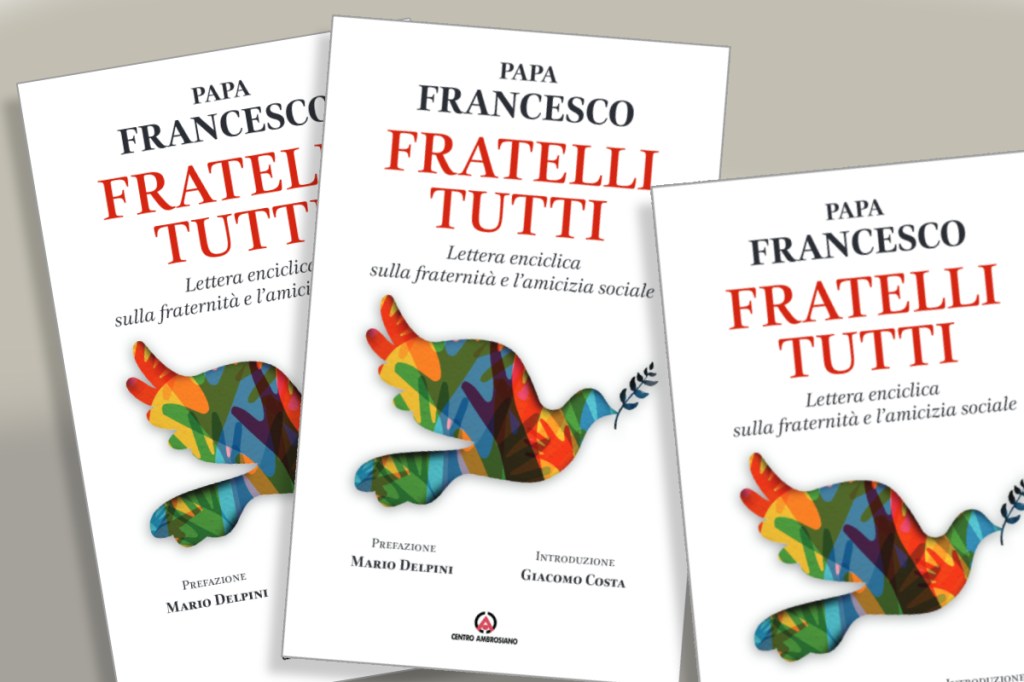
I think Pope Francis feels pretty much the same way as I do. Our reading from Ephesians could easily serve as a summary statement for Fratelli Tutti. Praying with this profound document, we can see the hope and agony of the world open before God’s Mercy, begging for healing.
(You may realize that I frequently refer to Fratelli Tutti. I believe this ground-breaking encyclical to be critically important for the future of our world. If you share my belief, you will be interested in this superb analysis written in Commonweal magazine by Austen Ivereigh.)
Psalm 1 gives us the peaceful picture of a person – and a world – centered on God’s loving law, the “plumb line” for holy balance in our lives. It is that same plumb line which Pope Francis drops for us in Fratelli Tutti.
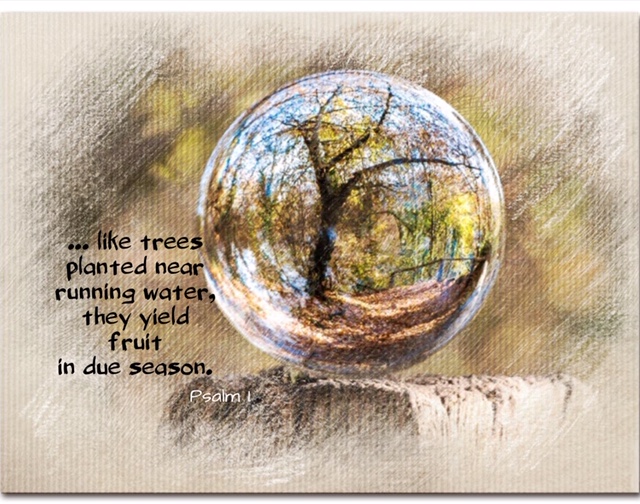
Blessed the one who follows not the counsel of the wicked Nor walks in the way of sinners, nor sits in the company of the insolent, But delights in the law of the LORD and meditates on God’s law day and night.
Not so the wicked, not so; they are like chaff which the wind drives away. For the LORD watches over the way of the just, but the way of the wicked vanishes.
Psalm 1
Poetry: A thought from Confucius:
If there is righteousness in the heart,
there will be beauty in the character.

If there is beauty in the character,
there will be harmony in the home.

If there is harmony in the home,
there will be order in the nations.

When there is order in the nations,
there will peace in the world.
Music: Blessed Be the Tie – Sara Groves remasters an enduring hymn on Ephesians 4:32. The original was written in 1782 by Baptist theologian John Fawcett
You for a father’s throne We pour our art in prayer Our fears and hopes are one Out comforts and our cares
Blessed be the tie That binds our hearts In Christian love We share each other’s walls Our common burdens bear And love for each other The sympathizing tear
Blessed be the tie That binds our hearts In Christian love Blessed be the tie That binds our hearts In Christian love Oh, kindred heart
It’s like heaven above It’s like heaven Oh, kindred heart It’s like heaven above It’s like heaven
Blessed be the tie That binds our hearts In Christian love, oh Blessed be the tie That binds our hearts In Christian love














 Lavish Mercy