Earthshine & Bling!

Twenty-fifth Sunday in Ordinary Time
September 18, 2022

Today’s Readings:

https://bible.usccb.org/bible/readings/091822.cfm

Today, in God’s Lavish Mercy, our readings make one thing very clear: we cannot serve both God and “mammon”.

The problem is that we have a hard time figuring out what mammon is. Experience tells us that it’s a lot more than just money, because there are people with money who do a good job serving God.

It seems to me that “mammon” is more the illusion that we are only our “possessions” — our money, house, car, looks, degrees, physical abilities — and that we (or anybody else) is nothing without them.

This misperception is so intrinsic to our inability to live the Gospel that it cripples our souls. The love of “mammon” becomes an overwhelming, incurable addiction that feeds on the well-being of our neighbor.

As our first reading tells us, living by this addiction invokes God’s eternal anger. Describing the abuse heaped upon the poor, God warns the abusers:

The LORD has sworn by the pride of Jacob:
Never will I forget a thing they have done!

Amos 8:7

Our Gospel tells us that we can’t have it both ways. We either live within the generosity and inclusivity of God, or we’re outside it:

No servant can serve two masters.
He will either hate one and love the other,

or be devoted to one and despise the other.

Luke 16:13

This is a challenging but fundamental teaching of the Gospel. It is essential that we consider how we live it.

Walter Bruggemann, in his book Money and Possessions says this:

Jesus said it … succinctly. You cannot serve God and mammon. You cannot serve God and do what you please with your money or your sex or your land. And then he says, “Don’t be anxious, because everything you need will be given to you.” But you must decide. Christians have a long history of trying to squeeze Jesus out of public life and reduce him to a private little Savior. But to do this is to ignore what the Bible really says. Jesus talks a great deal about the kingdom of God—and what he means by that is a public life reorganized toward neighborliness. . . .

Let’s have the courage to pray with that thought today. Although challenging, the question is rather simple: how do we use what we have to live a Gospel life, the essence of which Jesus stated like this:

Love God above all things

and your neighbor as yourself.

Mark 12:30-31


Poetry: Cullen in the Afterlife – P. K. Page

(This poet is new to me. She is a Canadian poet whose work is noted for its vibrant images. I liked this poem in which she imagines the experience of finding oneself in the afterlife. She notes the difficulty of embracing Love when hampered by “mammon” which she called “Earthshine”.

And how partake of such a gift when he
was handicapped by Earthshine—wore the stars,
badges and medals of privilege and success?
Desensitizers, brutalizers—all 
the tricks that mammon plays to make one sleep.


Cullen in the Afterlife – P. K. Page

He found it strange at first. A new dimension.  
One he had never guessed. The fourth? The fifth? 
How could he tell, who’d only known the third?
Something to do with eyesight, depth of field.
Perspective quite beyond him. Everything flat
or nearly flat. The vanishing point 
they’d tried to teach at school was out of sight
and out of mind. A blank.

Now, this diaphanous dimension—one
with neither up nor down, nor east nor west,
nor orienting star to give him north.
Even his name had left him. Strayed like a dog. 
Yet he was bathed in some unearthly light,
a delicate no-color that made his flesh
transparent, see-through, a Saran-Wrap self.
His body without substance and his mind
with nothing to think about—although intact—
was totally minus purpose. He must think.

Think of a Rubens, he said to himself. But where
Rubens had been there was a void, a vast
emptiness—no opulence. And then
Cézanne who broke all matter up—
made light of it, in fact. And mad Van Gogh
who, blinded by the light, cut off his ear.
Gone—that shadowy assembly—vanished, done. 
Gone without substance. Like himself. A shell.
Insensate in a flash. (What was that flash—
bereft of all but essence?) Was it death?
He wondered about the word, so filled with breath
yet breathless, breathless, breathless. A full stop.

“Divino Espirito Santo,” he had said
once in Brazil, “Soul of my very soul.”
He’d prayed in Portuguese, an easier tongue—
for newly agnostic Anglos—than his own,
burdened with shibboleths and past beliefs.
“Alma de minha alma”—liquid words
that made a calm within him. Where within?
Was there a word for it? Was it his heart?

Engulfed by love. Held in a healing beam
of love-light. Had he earned such love?
And how partake of such a gift when he
was handicapped by Earthshine—wore the stars,
badges and medals of privilege and success?
Desensitizers, brutalizers—all 
the tricks that mammon plays to make one sleep.
He must wake up. He must expose and strip
successive layers to find his soul again.
Where had the rubble come from? He was like
a junkyard—cluttered, filled with scrap iron, tin.
As dead as any metal not in use.
So he must start once more. He had begun
how many times? Faint glimmerings and dim
memories of pasts behind the past
recently lived—the animal pasts and vague
vegetable pasts—those climbing vines and fruits;
and mineral pasts (a slower pulse) the shine
of gold and silver and the gray of iron.
The “upward anguish.”
                                   What a rush of wings
above him as he thought the phrase and knew 
angels were overhead, and over them
a million suns and moons.

Music: a simple mantra, but powerful if we can live it: Love God, Love Neighbor by Dale Sechrest

A Gallery of Sinners!

Tuesday of the Twenty-third Week in Ordinary Time
September 6, 2022

Today’s Readings:

https://bible.usccb.org/bible/readings/090622.cfm

Today, in God’s Lavish Mercy, Corinthians might leave us thinking, “Wow, maybe I’m a sinner but I’m sure not as bad as those guys!”

Their Names Have Been Changed to Protect the Innocent 🙂

Paul generates quite a list of reprobates, doesn’t he!

Do not be deceived;
neither fornicators nor idolaters nor adulterers
nor boy prostitutes nor sodomites nor thieves
nor the greedy nor drunkards nor slanderers nor robbers
will inherit the Kingdom of God.

The list is so compelling that we might be blinded by it and miss the message that the reading has for us. And I think the message is this – what do Paul’s miscreants have in common?

They have violated and scorned
the sanctity of
RELATIONSHIP
which demands commitment, trust,
reverence and integrity.


When, in our prayer, we examine our conscience and honestly place before God the best we have done with our day, how does it look in terms of right-relationship?

How committed, honest, respectful and caring
have we been toward those God has given us
in the circle of our lives?

Paul’s catalogue of sinners use others for their own selfish purposes. There is no mutuality, responsibility or investment in one another’s good. And while our wrongdoings may not make Paul’s Most Wanted List, they will be characterized by the same failings.


The question Paul offers us is this: how reverent, honest, respectful, merciful and loving am I in each of my relationships – with God, myself, Creation, my immediate and larger world?
Or whom might I instead “write off” as fodder for my contempt, gossip, judgements, disregard, indifference or exclusion?

NAMASTE

Maybe we don’t mean to do these things, but I think we might be surprised if we really took a good look at ourselves — myself included.

In calling the  Corinthians to get it together, Paul is also calling me.


Poetry: When I Am Among the Trees – Mary Oliver

When I am among the trees,
especially the willows and the honey locust,
equally the beech, the oaks and the pines,
they give off such hints of gladness.
I would almost say that they save me, and daily.
I am so distant from the hope of myself,
in which I have goodness, and discernment,
and never hurry through the world
but walk slowly, and bow often.
Around me the trees stir in their leaves
and call out, “Stay awhile.”
The light flows from their branches.
And they call again, “It's simple,” they say,
“and you too have come
into the world to do this, to go easy, to be filled
with light, and to shine.”

Music: We Are All One – 

Wisdom, please ….

Twenty-third Sunday in Ordinary Time
September 4, 2022

Today, in God’s Lavish Mercy, we continue to move into the final segments of Luke’s Gospel which we have been reading on Sundays throughout this liturgical year.

Today, the Church links three readings which, at first glance, might seem unrelated.

  • Our first reading from Wisdom reminds us of God’s infinite wisdom, incomprehensible to our human minds.
  • Paul, in his letter to Philemon, begs for the loving inclusion of Onesimus, an enslaved person, into the Colossian community.
  • In our Gospel, Jesus makes this harsh pronouncement:

If anyone comes to me without hating his father and mother,
wife and children, brothers and sisters,
and even his own life,
he cannot be my disciple.


How might we interpret these disparate passages to find a message of wholeness for our prayer?

Wis9_13 gods mind

Let’s start with Jesus. In no uncertain terms, he challenges his disciples to move out of their small worlds into God’s big world. That Godly world is not defined by family, nor by any condition other than our common Creaturehood in God … not by:

word gram

Jesus says the sacred community is defined only by shared and irrevocable commitment to the Gospel of love and mercy.


Paul knows and loves Onesimus, the slave, as a brother in this community. In his letter, Paul encourages Philemon to do the same.


Sometimes as human beings, filled with all kinds of insecurities, we tend to build enclaves that make us feel safe. We like to be with “our kind”. We invent borders to filter out those whose differences we don’t understand. We allow fear to grow with that lack of understanding. Within the enclosure of our self-protectionism, we eventually forget that we are all one, equal, precious, beautiful and beloved by God.

Such toxic attitudes are the soil for slavery, war, ethnic cleansing, racial supremacy, human trafficking, destructive nationalism, and all the other sacrileges committed by humans against the human family.

Wisdom reminds us that only God can open
the tight circle of our fears, judgments and isolations
– only God whose infinite love encompasses all.
Jesus tells us that we find that love
only by lifting up the cross and following him.

Wisdom tells us to put it in God’s hands, and to respond to God’s challenge in the preaching of Jesus Christ.

Who can know your way of thinking, O God
… except you give us wisdom

 and send your Holy Spirit from on high
 thus stretching the hearts of those on earth

Today I pray, may God do this for me,
and for all our tight, convoluted
and troubled world.


Poetic Prayer of Hildegard of Bingen

Hildegard of Bingen (c. 1098 – 17 September 1179), was a German Benedictine abbess and polymath active as a writer, composer, philosopher, mystic, visionary, and as a medical writer and practitioner during the High Middle Ages. She is one of the best-known composers of sacred monophony, as well as the most recorded in modern history. She has been considered by scholars to be the founder of scientific natural history in Germany.

I am Wisdom. 
Mine is the blast of the resounding Word 
through which all creation came to be, 
and I quickened all things with my breath 
so that not one of them is mortal in its kind; 
for I am Life.

Indeed I am Life, whole and undivided 
-- not hewn from any stone, 
or budded from branches, 
or rooted in virile strength; 
but all that lives has its root in Me.
 
For Wisdom is the root 
whose blossom is the resounding Word....
I flame above the beauty of the fields 
to signify the earth 
-- the matter from which humanity was made.

I shine in the waters to indicate the soul, 
for, as water suffuses the whole earth, 
the soul pervades the whole body. 

I burn in the sun and the moon to denote Wisdom, 
and the stars are the innumerable words of Wisdom.

Music: Who Has Known (an Advent hymn, but perfect I think for today’s readings)

Alleluia: Everyone’s Invited

Twenty-second Sunday in Ordinary Time
August 28, 2022

Today’s Readings:

https://bible.usccb.org/bible/readings/082822.cfm

Today, in God’s Lavish Mercy, our readings share the common theme of humility, instructing us that the virtue is essential to our salvation.

Lk14_11 humbled

Alleluia, alleluia.
Take my yoke upon you, says the Lord,
and learn from me, for I am meek and humble of heart.

Humility, of course, gets a bad rap in our dominating, “me” culture. We tend to think of humiliation, servitude, inelegance rather than the actual root of the word: humus -“of the earth”.

I was fascinated a few years ago by a small fracas arising from the unconsidered remarks of one of our Phillies baseball players. The team had been running hot and cold – with a little bit too much cold for some fans. The famous Philly “boos” had been flying. Frustrated with these, then outfielder Sean Rodriguez referred to the disgruntled fans as “entitled”. 

angry

Uh oh! They didn’t like that. We prefer to think of ourselves as “deserving “, right?

Humility is that virtue which helps us realize that we are not “entitled” or “deserving” of anything over and above other human beings. It roots us in the respect for each other that refuses to rank the worth of other human beings. 

The social leverage that comes from wealth, power, and influence can beguile us. We become lost in a maze of stereotypes, rankings and prejudices which are the foundation of social injustice.


Do we ever hear among ourselves justifying phrases for our entitlement like these. Maybe the thoughts go unexpressed, but the attitude is unmistakably there:

  • well, I earned what I have
  • at least I paid for what I have
  • they” need to work if they want to have …(food, healthcare, housing…)
  • it’s their own fault for … (dropping out of school, taking drugs, ….)
  • that’s just the way it is in “those” countries. The people are …(lazy, stupid, violent …)
  • they” don’t need what I need. “They” are used to being … (poor, disabled, sick …)

And probably the most dangerous of all the phrases:

  • it’s not my problem
  • I’m not the one exiling, bombing, blocking, trafficking, enslaving “them”

Today’s readings enjoin us: it is my problem. My attitude, choices, vote, conversation, and lifestyle matter at the banquet of life we are all meant to share.

My intention to humbly join and rejoice with all Creation, to take a seat beside and never above my sister and brother – this is my only “entitlement” to the one banquet that matters.

When you hold a banquet,
invite the poor, the crippled, the lame, the blind;
blessed indeed will you be because of their inability to repay you.
For you will be repaid at the resurrection of the righteous.


Prose – from Mary Oliver in Upstream (Penguin Press, 2016)

Understand from the first this certainty. Butterflies don’t write books, neither do lilies, or violets. Which doesn’t mean they don’t know, in their own way, what they are. That they don’t know they are alive – that they don’t feel, that action upon which all consciousness sits, lightly or heavily.

Humility is the prize of the leaf-world.
Vainglory is the bane of us, the humans.  

Sometimes the desire to be lost again, as long ago, comes over me like a vapor. With growth into adulthood, responsibilities claimed me, so many heavy coats. I didn’t choose them, I don’t fault them, but it took time to reject them. Now in the spring I kneel, I put my face into the packets of violets, the dampness, the freshness, the sense of ever-ness. Something is wrong, I know it, if I don’t keep my attention on eternity. May I be the tiniest nail in the house of the universe, tiny but useful. May I stay forever in the stream. May I look down upon the windflower and the bull thistle and the coreopsis with the greatest respect. 


Music:  A Place at the Table – Lori True and Shirley Elena Murray

Saturday of the Fifth Week of Easter

May 21, 2022

Jn15:18 world

Today, in God’s Lavish Mercy, Jesus talks about “the world”.

That word can cause a little confusion, both as we find it in scripture and in the history of Christian thought.

Baker’s Evangelical Dictionary of Biblical Theology says five connotations for “world” may be found in scripture:

  • The physical world – the actual plant Earth
  • The human world – the land and seas we can navigate
  • The moral world – the universe of good and evil
  • The temporal world – the world that will someday end
  • The coming world – eternal existence 

In today’s Gospel, Jesus is talking about the moral world which, in the New Testament, refers to those people who are indifferent and hostile to Christ’s teaching.

If the world hates you, realize that it hated me first.
If you belonged to the world, the world would love its own;
but because you do not belong to the world…
the world hates you.

John 15:18

wolf-clipart-57
A Wolf in Sheep’s Clothing

We understand this use of the word. We see the evil in the world. We are saddened, angered and confounded by it when we recognize it.

But do we always recognize it?

Blatant evils like mass shootings and racial violence are readily recognized. But how do we sincerely act to confrontt and eradicate these evils?

And still, the most insidious evils are those that masquerade as good.

These masquerading evils often pretend to protect our rights, our security, our safety. But they usually do so at the expense of someone else’s rights – the poor, the refugee, the aged, the homeless, people of color……and all who have become “disposable” or invisible in our society.


These deceptions hide behind brave and noble words like “America First”, “Second Amendment Rights”, “Protect Life” and a rash of other slogans which fail to examine the whole impact of single-issue politics. 

It’s confusing because we love America, right? We believe in people’s constitutional rights, right? We respect life, right?

What if our slogans instead more clearly reflected Gospel values:

  • The Human Family First
  • Safety Rights for Everyone
  • Health Security for All Life – Womb to Tomb

How can we be spiritually discerning about what is good within such realities and what is rooted in sinful self-interest? Jesus tells us in these words:

Remember the word I spoke to you,
‘No slave is greater than his master.’
If they persecuted me, they will also persecute you.

John 15:18-20

We must look to the one who is hated and persecuted to find the Face of Christ. We must love that Face and learn its heartaches. We must become a companion in their search for wholeness. We must set aside any costume of self-righteousness and put on the garment of Mercy.


from Scripture: I think this passage, as well as divine inspiration, is pure poetry!

Therefore, as God’s chosen people, holy and dearly loved,
clothe yourselves with mercy, kindness,
humility, gentleness and patience.
Bear with each other and forgive one another
if any of you has a grievance against someone.
Forgive as the Lord forgave you.
And over all these virtues put on love,
which binds them all together in perfect unity.
Colossians 3:14-16


Music: The Mercy Song – Paul Alexander

Monday of the Fourth Week of Easter

May 9, 2022

Click here for readings

800px-Domenico_Fetti_-_Peter's_vision_of_a_sheet_with_animals_-_Kunsthistorisches_Museum_Wien
Peter’s Vision of the Sheet – By Domenico Fetti – Kunsthistorisches Museum Wien, Bilddatenbank., Public Domain

Today, in God’s Lavish Mercy, we have the long story and explanation by Peter about who can be welcomed into the Community.

The earliest Christians were all Jews. Their beginning Christian rituals had deep roots in Jewish tradition. Their entire expectation of a Messiah was wrapped in the garment of the Old Testament. So it was hard for them to comprehend that Gentiles might also be saved by the Blood of Christ.

We might be tempted to consider these Jewish Christians very provincial, parochial, or even prejudiced in their closed attitudes. But maybe we should just look in the mirror!

It seems to be an enduring human inclination that, rather than – like Peter – seek a road to inclusion, we claim privilege for ourselves and exclude others on all kinds of bases:

  • She’s a woman, so she can’t…. whatever…
  • He’s gay, so he can’t …
  • She’s divorced, so she can’t…
  • He’s pro-life, or pro-choice, so he can’t…
  • She’s a Muslim, an atheist, and (irony of ironies) a Jew, so she can’t…
  • He’s too young – She’s too old – so they can’t …

Maybe in your own life, you have felt the pain of some of these suggested or blatant exclusions.


Jn10_4 Mine

Jesus, in our Gospel, has a whole different approach to whom he loves. All creatures belong to him and will be brought to the Father in love.

I am the good shepherd,
and I know mine and mine know me,
just as the Father knows me and I know the Father;
and I will lay down my life for the sheep.
I have other sheep that do not belong to this fold.
These also I must lead, and they will hear my voice,
and there will be one flock, one shepherd.


Let us pray today to know and love our God ever more intensely. Let us ask to experience God’s infinite love and knowledge of us so that our unquenchable joy, humble gratitude, and limitless charity grow more evident.

Let us pray these gifts for all our sisters and brothers, no matter by what gate they come to the sheep fold.


Quote: I couldn’t find the original source, but it is a quote common in Eastern Spirituality:

We are all One.
There is no Other.


Music: They’ll Know We Are Christians By Our Love

This is an interesting rendering of an old hymn. Kind of touched my heart.

David Falls Down

January 28, 2022
Memorial of Saint Thomas Aquinas, Priest and Doctor of the Church

Today, in God’s Lavish Mercy, we clearly are being taught. The first lesson comes from a gripping iconic story in Samuel – the treacherous murder of Uriah; the second from the Markan Parables – the miraculous mustard seed.

In our first reading, the noble, kingly David takes a mighty fall. He has tripped over his own power and descended into a chasm of indifference, lust, manipulation, deceit, and murder. Walter Brueggemann captures the immensity of the story here:

II Samuel 11:1–27 
We are now at the pivotal turning point in the narrative plot of the books of Samuel. We are also invited into the presence of delicate, subtle art. We are at the threshold of deep, aching psychology, and at the same time we are about to witness a most ruthless political performance. In this narrative we are in the presence of greatness. For David and for Israel, we are at a moment of no return. Innocence is never to be retrieved. From now on the life of David is marked, and all Israel must live with that mark.

David handing over a letter to Uriah, 1619 – Pieter Lastman

Unfortunately, David’s moral depravity is reshaped and retold in thousands of other biographies throughout history as “strongmen” (and women) grasp power. Too bad David, and those like him, could not have benefitted from some later-age wisdom such as these two quotables:

Power tends to corrupt, and absolute power corrupts absolutely.
~ John Dalberg-Acton, letter to Bishop Mandela Creighton, (April 1887)


One uncontrolled character flaw can ruin your greatest accomplishment.
~ Wayde Goodall, Why Great Men Fall: 15 Winning Strategies to Rise Above It All (2005)


While David’s sinfulness had corrupted the concept of “kingdom”, in Mark, Jesus teaches us a divinely refreshed understanding of the term.

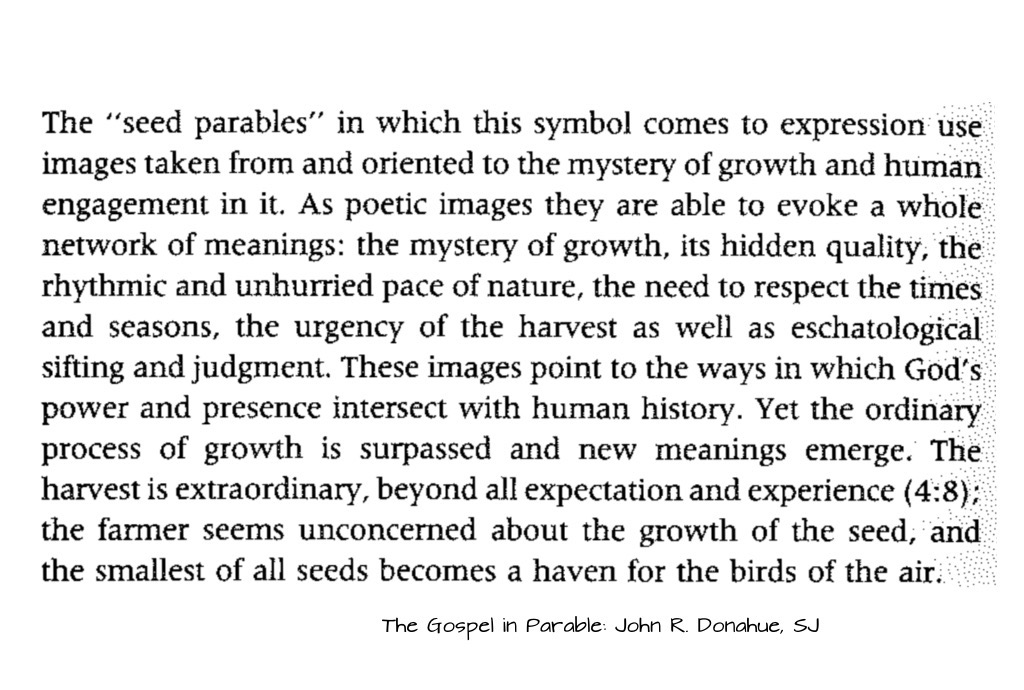
When asked what the kingdom of heaven is like, Jesus describes generous, inclusive reality sprung from humble, hopeful investment:

To what shall we compare the Kingdom of God,
or what parable can we use for it?
It is like a mustard seed that, when it is sown in the ground,
is the smallest of all the seeds on the earth.
But once it is sown, it springs up and becomes the largest of plants
and puts forth large branches,
so that the birds of the sky can dwell in its shade.

Mark 4: 30-32

Perhaps our prayer today is best reflected in the Alleluia Verse – a plea to retain, in our choices, the deep innocence of faith:

Blessed are you, Creator, Lord of heaven and earth;
you have revealed to little ones the mysteries of the Kingdom.

Matthew 11:25

Praying with that this morning, I offer you the innocent drawing of my 6 year-old grand-nephew Robert, an interpretation of what it means to fall down.

Something Falling Down, as titled by the Artist

Poetry: When the Great Trees Fall – Maya Angelou

When great trees fall,
rocks on distant hills shudder,
lions hunker down
in tall grasses,
and even elephants
lumber after safety.
When great trees fall
in forests,
small things recoil into silence,
their senses
eroded beyond fear.
When great souls die,
the air around us becomes
light, rare, sterile.
We breathe, briefly.
Our eyes, briefly,
see with
a hurtful clarity.
Our memory, suddenly sharpened,
examines,
gnaws on kind words
unsaid,
promised walks
never taken.
Great souls die and
our reality, bound to
them, takes leave of us.
Our souls,
dependent upon their
nurture,
now shrink, wizened.
Our minds, formed
and informed by their
radiance,
fall away.
We are not so much maddened
as reduced to the unutterable ignorance
of dark, cold
caves.
And when great souls die,
after a period peace blooms,
slowly and always
irregularly. Spaces fill
with a kind of
soothing electric vibration.
Our senses, restored, never
to be the same, whisper to us.
They existed. They existed.
We can be. Be and be
better. For they existed.

Music: All the King’s Horses – Aretha Franklin
Although the song is not biblical, the lyrics carry similar emotions to the ones we find in the reading from Samuel.

Sing Mercy in the Sadness

December 7, 2021
Tuesday of the Second Week of Advent
Memorial of St. Ambrose

Today, in God’s Lavish Mercy, we are blessed, once again, with magnificent readings!

Our psalm coaches us to rejoice and sing – a song that will heal the nations.

Sing to the LORD a new song;
    sing to the LORD, all you lands.
Sing to the LORD; bless the LORD’s name;
    announce God’s salvation, day after day.

Psalm 96:1-2

Our first reading is the exquisite “Comfort” passage from Isaiah. And our Gospel gives us Jesus tenderly seeking the single lost lamb.

The first and last words of these two readings – COMFORT, LOST – capture the whole intent of today’s message:


Life is a maze whose walls are heightened
by our incivility to one another.
Isaiah calls us to be a leveler of walls,
a straightener of twists, a bridge over deadly valleys.
Jesus calls us to seek and carry the lost sheep.
We are called to be Mercy in a suffering world.


These beautiful and challenging readings come to us this year at a time when Pope Francis has offered a clear and similar challenge to the world. Last week, during his visit to the refugee encampment on the Greek island of Lesbos, Francis voiced his profound pain at the international immigration tragedy:

“Let us not let our sea (mare nostrum) be transformed into a desolate sea of death (mare mortuum),” the Pope concluded.  “Let us not allow this place of encounter to become a theatre of conflict.  Let us not permit this “sea of memories” to be transformed into a “sea of forgetfulness”.  Please, let us stop this shipwreck of civilization.”

“It is an illusion to think it is enough to keep ourselves safe, to defend ourselves from those in greater need who knock at our door”, Pope Francis said.  “In the future, we will have more and more contact with others.  To turn it to the good, what is needed are not unilateral actions but wide-ranging policies.  History teaches this lesson, yet we have not learned it.” 

Source for quotes: Vatican News – vaticannews.va

During his address, the Pope asked every man and woman, “to overcome the paralysis of fear, the indifference that kills, the cynical disregard that nonchalantly condemns to death those on the fringes.” 


Resource: To learn about and reflect on the issue of immigration, here is a link to NETWORK. Founded by Catholic Sisters in the progressive spirit of Vatican II, NETWORK works to create a society that promotes justice and the dignity of all in the shared abundance of God’s creation.


Music: Comfort Ye from Handel’s Messiah – sung by Jerry Hadley

As we pray this glorious music today, let us ask for the strength and courage to be Mercy for the world, to find the ways to comfort God’s people, close by and at life’s borders.

Nineteenth Sunday in Ordinary Time

Sunday, August 8, 2021

Today, in God’s Lavish Mercy, our readings capture the essence of life in God through Christ.

The first reading from Kings tells how Elijah, after eating the food God had provided him, was able to endure the long journey to God’s mountain. There, the sweetest whisper carried to Elijah the voice of God!


In today’s Gospel passage, Jesus makes clear that no one makes that journey into the heart of God unless God calls us. But Jesus says that the invitation is given to all who believe. He says that, just as with Elijah, the Father gives us food – Jesus himself – the bread of life.


The second reading from Ephesians says that we have already “been sealed for the day of redemption through the Holy Spirit.” Paul says that, given this amazing gift, we have only one job:

So be imitators of God, as beloved children,
and live in love,
as Christ loved us and handed himself over for us
as a sacrificial offering to God for a fragrant aroma.

We are so accustomed to hearing these astounding passages that we may miss how astounding they really are. But Macrina Wiederkehr says:

When Jesus’ words begin to sound naive
to our 21st century minds,
let us look through the words,
in between the words,
underneath for a deeper truth.

Macrina Wiederkehr, OSB

Pierre Teilhard de Chardin, the great Jesuit mystical theologian, upon reading these passages, saw the mystery of the Body of Christ. He saw our call to be the heart of Christ in the world. He saw Christ’s promise to become one with us in Eucharist. He saw that, through this Infinite Love played out in our ordinary lives, God continues to redeem Creation.

In each soul,
God loves and partly saves
the whole world which that soul sums up
in an incommunicable and particular way.

The Divine Milieu

Poetry: Love after Love by Derek Walcott

The time will come when with elation
you will greet yourself arriving at your own door, in your own mirror
and each will smile at the other’s welcome
and say, sit here, eat.
You will love again the stranger who was your self

Give wine, give bread.
Give back your heart to itself,
to the stranger who has loved you all your life
whom you ignored for another
who knows you by heart

Take down the love letters from the bookshelf,
the photographs, the desperate notes,
peel your own image from the mirror.
Sit. Feast on your life.


Music: Quintessence – Spencer Brewer

May this lovely instrumental piece help take us to a deeply prayerful place as we contemplate God’s gift in Jesus.

Memorial of Saint Ignatius of Loyola

Saturday, July 31, 2021

Today, in God’s Lavish Mercy, we pray with Psalm 67 which calls on God to bless all people.

O God, be merciful to us and bless us,
show us the light of your countenance and come to us.
So may your way be known upon earth;
   among all nations, your salvation.

Psalm 67: 1-2

This psalm is notable for its inclusiveness of nations outside of Israel. Most psalms focus inwardly on Israel’s needs, hopes and memories. But Psalm 67 calls on God to gather and bless universally:

May the nations be glad and exult
    because you rule the peoples in equity;
    the nations on the earth you guide.


For this reason, Psalm 67 has been called “the missionary psalm”, and is such a fitting prayer on this feast of St. Ignatius who founded a community which has carried the faith throughout the world.


As we pray our psalm today, we might examine how our own faith reaches out, includes and blesses others.  

Our final verses today point back to our first reading from Leviticus. While the math and calendar counting could get me pretty mixed up, the message is clear. It is a Jubilee message:

  • Stop. 
  • Take a good look at your life and the harvest of your years. 
  • Be grateful.
  • Be just.
  • Share. 
  • Bring others into your bounty because it all belongs to God, not you.

When we do these things, Psalm 67 becomes our prayer:

Let the nations be glad and sing for joy, 
for you judge the peoples with equity
and guide all the nations upon earth.
Let the peoples praise you, O God;
let all the peoples praise you.
The earth has brought forth its increase; 
may you, O God our God, bless us.
May you bless us,
and may all the ends of the earth stand in awe of you.


Poetry: This Is My Song by Lloyd Stone and Georgia Harkness

This is my song, O God of all the nations,
a song of peace for lands afar and mine;
this is my home, the country where my heart is;
here are my hopes, my dreams, my holy shrine:
but other hearts in other lands are beating
with hopes and dreams as true and high as mine.

My country’s skies are bluer than the ocean,
and sunlight beams on cloverleaf and pine;
but other lands have sunlight too, and clover,
and skies are everywhere as blue as mine:
O hear my song, thou God of all the nations,
a song of peace for their land and for mine.

May truth and freedom come to every nation;
may peace abound where strife has raged so long;
that each may seek to love and build together,
a world united, righting every wrong;
a world united in its love for freedom,
proclaiming peace together in one song.

Music: Finlandia, Opus 26

The above poem is sung to the tune of the final hymn in this work by Jean Sibelius. I think you will enjoy this beautiful video, especially the young ducks about midway through. Be sure to click the little arrowhead under the right side of the video to read the great history of this musical composition.