Isaiah the Poet

Wednesday of the Twenty-ninth Week in Ordinary Time

October 21, 2020


Today, in God’s Lavish Mercy, we pray with Isaiah for our Responsorial Psalm.

God indeed is my savior;
I am confident and unafraid.
My strength and my courage is the LORD,
Who has been my savior.

Isaiah 12: 2-3

But how do we get to the degree of steadfast faith described here by Isaiah, a faith that is confident, unafraid, strong and courageous? Isaiah says it is like satisfying a deep thirst at a flowing fountain.


We all know how unpleasant it is to be thirsty, but what about really thirsty?

I’m a pretty big fan of old cowboy movies. A standard scene in many of these is the forlorn rider traversing a parched plain, longing for water.

by Stanley L. Wood

Now that’s “thirsty”! And that is the degree of longing Paul describes in today’s passage from Ephesians, a longing for that “water” that had been hidden through the ages:

To me, the very least of all the holy ones, this grace was given,
to preach to the Gentiles the inscrutable riches of Christ,
and to bring to light for all what is the plan of the mystery
hidden from ages past in God who created all things,
so that the manifold wisdom of God
might now be made known …


… the inscrutable riches of Christ…

This is the Fountain to which we are invited as we open ourselves through the Word of God in scripture, sacrament, and sacred circumstance of our lives.


Sing praise to the LORD for his glorious achievement;
let this be known throughout all the earth.
Shout with exultation, O city of Zion,
for great in your midst
is the Holy One of Israel!

Isaiah 12: 5-6

The “glorious achievement” proclaimed by Isaiah is the same “manifold wisdom” to which Paul says we all have access by faith:

… the manifold wisdom of God …
… accomplished in Christ Jesus our Lord,
in whom we have boldness of speech
and confidence of access through faith in him.

Ephesians 3: 10-12

In our Gospel, Jesus tells that this gift, this Fountain, once opened to us, demands our faithful response:

Much will be required of the person entrusted with much,
and still more will be demanded of the person entrusted with more.

So as we drink deeply of this Fountain, let us pray for a grateful, responsive fidelity for the gift we have been given.


Poem: excerpt from “Water Sign Woman” by Lucille Clifton

Photo by Kevin Bidwell on Pexels.com
the woman who feels everything
sits in her new house
waiting for someone to come
who knows how to carry water
without spilling, who knows
why the desert is sprinkled
with salt, why tomorrow
is such a long and ominous word.

they say to the feel things woman
that little she dreams is possible,
that there is only so much
joy to go around, only so much
water. there are no questions
for this, no arguments. she has
to forget to remember the edge
of the sea, they say, to forget
how to swim to the edge, she has

to forget how to feel. the woman
who feels everything sits in her
new house retaining the secret
the desert knew when it walked
up from the ocean, the desert,

so beautiful in her eyes;
water will come again
if you can wait for it.
she feels what the desert feels.
she waits.

Music: Come Thou Fount of Every Blessing written by Robert Robinson (1758) sung here by Fernando Ortega

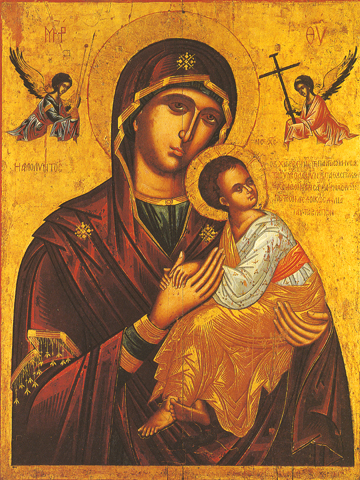
Our Lady of the Rosary

Memorial of Our Lady of the Rosary

October 7, 2020

Today, in God’s Lavish Mercy, we pray with Psalm 117. Since it is also the Memorial of Our Lady of the Holy Rosary, I’ll refer you to a previous post on Psalm 117.


For today, the Feast of the Holy Rosary, we may wish to focus on that venerable prayer which had its origins in the very early Church. In fact, those early versions of a rosary are connected to the Psalms:

Prayers with beads like the rosary may have begun as a practice by the laity to imitate the Christian monasticism of the Liturgy of the Hours during the course of which the monastics prayed the 150 Psalms daily. As many of the laity could not read, they substituted 150 repetitions of the Our Father for the Psalms, sometimes using a cord with knots on it to keep an accurate count.
(The Catholic Encyclopedia)


The shape of the rosary as we pray it today emerged more clearly in the 13th century as Marian devotion blossomed in the Church. The tendency of that devotion was to place Mary, and other saints, between us and God. They, having already gained heaven, were deemed to have intercessory power we lacked. So praying the rosary became an “asking prayer” rather than a meditation on the whole of Christ’s life. In many ways, our relationship with Mary also took on a sentimentalism which lessened her true and unique power as witness and companion in the Communion of Saints.


Theotokos of the Passion – 17th century

Today, Marian theology, as well as rosary devotion, looks to a clearer understanding of Mary’s role as participant in the continuing redemptive act of Jesus. Praying with her, in any form, is an opportunity to experience Jesus from her perspective and to apply that grace to our own life and world.

“Remembering Mary as a friend of God and prophet in the communion of saints, a woman who is truly sister to our strivings, allows the power of her life to play in the religious consciousness of the church, encouraging ever-deeper relationship with the living God in whom our spirits rejoice, and allying us with God’s redemptive designs for the hungry, the lowly, and all those who suffer, including in an unforgettable way women with their children in situations of poverty, prejudice, and violence.”

Elizabeth Johnson, CSJ – Truly Our Sister

I try, as I pray the rosary, to imagine Mary within each particular mystery or circumstance of Christ’s life. What did she experience? How did she grow in grace? What is she guiding me toward in my relationship with God?

I also ask Mary to allow those graces and insights to bless and heal not only my life but the life of the world, particularly where there is great pain or suffering for women and children.


In Whom We Live and Move and Have Our Being
~ Denise Levertov
(Reading this poem, we may think of our prayer as a “breathing” enveloped in the Presence of God. The “holy ones”, like Mary, easily ride that breath of prayer. When we pray with them, as in the Rosary, they “rock” us into the silent rhythm of God.)

Photographer: Johannes Plenio
Birds afloat in air's current,
sacred breath?  No, not breath of God,
it seems, but God
the air enveloping the whole
globe of being.
It's we who breathe, in, out, in, in the sacred,
leaves astir, our wings
rising, ruffled -- but only the saints
take flight.  We cower
in cliff-crevice or edge out gingerly
on branches close to the nest.  The wind
marks the passage of holy ones riding
that ocean of air.  Slowly their wake
reaches us, rocks us.
But storms or still, 
numb or poised in attention,
we inhale, exhale, inhale,
encompassed, encompassed.

Music: Beneath Your Compassion (Sub Tuum Praesidium) performed here in Russian by the PaTRAM Institute Singers

The oldest known devotion to Mary can be found in the words of a hymn that is documented to have existed and been sung before the middle of the 3rd century. 

Beneath your compassion,
We take refuge, O Theotokos:
do not despise our petitions in time of trouble;
but rescue us from dangers,
only pure, only blessed one.

Psalm 25: God’s Will?

Twenty-sixth Sunday in Ordinary Time

September 27, 2020


Today, in God’s Lavish Mercy, we pray with Psalm 25, set perfectly in the midst of a few readings that speak to us about, among other things , “the Father’s Will”.

I think there is no greater spiritual mystery than the meaning of  “God’s Will”, (and not wanting to show up Thomas Aquinas, I’ll resist explaining it here. 😂🧐)

But we’ve all heard attempts at explaining it, haven’t we, especially as it relates to suffering— as in:

  • everything that happens is God’s Will, so we must accept it
  • God wills our suffering to test us
  • if God wills that we suffer, He will give us the strength to endure it

I just don’t think so … not the God I love and Who loves me.

But these attempts to explain suffering are understandable because we want to rationalize the things we fear. Most of us, I think, struggle with the problem of evil and suffering in the world. We want to know what to do when, as Rabbi Kushner wrote, “… Bad Things Happen to Good People”.


Our first reading from Ezekiel shows us that even the ancient peoples met this struggle. The prophet seems to suggest that if you’re bad, you’ll suffer. If you repent, you won’t. Well, we all know that’s not quite the reality! But nice try, Ezekiel.

Our psalm gently leads to another way of facing suffering as the psalmist prays for wisdom, compassion and divine guidance. In the Garden of Gethsemane, Jesus himself prayed like this as he confronted his impending suffering.


In our second reading, Paul places before us the example of Jesus who, in the face of suffering, was transformed by love:

Praying with these readings, each one of us must come to our own peace with the mystery of suffering. What we can be sure of is this: God’s Will is always for our wholeness and joy as so simply taught to us when we were little children:

God made me to know, love, and serve God, 
and to be happy with God in this world and forever.

Our Gospel tells us that such happiness comes through faith and loving service, through responding to “the Father’s Will”.  May we have the insight, the love and the courage!


Poetry: Of Being by Denise Levertov 

I know this happiness
is provisional:

       the looming presences—
       great suffering, great fear—

       withdraw only
       into peripheral vision:

but ineluctable this shimmering
of wind in the blue leaves:

this flood of stillness
widening the lake of sky:

this need to dance,
this need to kneel:

       this mystery:

Music: To You, O Lord (Psalm 25) Graham Kendrick

Psalm 119: Guide Me, Lord

Tuesday of the Twenty-fifth Week in Ordinary Time

September 22, 2020


Today, in God’s Lavish Mercy, we pray with another of the Torah Psalms, Psalm 119. It is the prayer of one who delights in and lives by the Torah, the sacred law. ( See yesterday’s reflection for some scholarly words on the Torah Psalms.)

In today’s verses, with lovely antiphonal lilt, the psalmist describes the holy person, then asks for the virtues to become one.

  • Blessed are the blameless….. so guide me in your ways.
  • I want to meditate on your deeds …. so make me understand.
  • I want to observe your laws … so give me discernment
  • I delight in your path …. so lead me on it.
  • I will keep your law forever …. if you will just guide me.

I don’t think God can resist a sincere prayer like this. The psalmist is saying, “I want to love you, God, with my whole life. But you, Almighty, must help my weakness.”

Notice the guy on the right 🙂

As we pray today with Psalm 119, we might let a similar prayer rise up in our hearts.

We, too, want to love God well – completely. We, too, need Divine guidance to discern God’s continuing call in the complexities of our lives. We, too, long to deepen in discernment and commitment.


The psalmist gives us good example. Just tell God like it is. Tell God what you really want, what you really need to love as God wishes us to love.

If you hear yourself making requests for power, money, fame, security in any of their selfish forms, you better start all over again!😉

Remember the beginning of the psalm, the foundation of our prayer:

Blessed are they whose way is blameless,
who walk in the law of the LORD.

In the Christian scriptures, that foundation is proclaimed like this:

One of the teachers of the law came and heard them debating. Noticing that Jesus had given them a good answer, he asked him, “Of all the commandments, which is the most important?”
 “The most important one,” answered Jesus, “is this: ‘Hear, O Israel: The Lord our God, the Lord is one. Love the Lord your God with all your heart and with all your soul and with all your mind and with all your strength.’ The second is this: ‘Love your neighbor as yourself.’ There is no commandment greater than these.”


Let’s ask God for  the courage to offer a blameless prayer. The simple prayer of the Gospel centurion comes to mind:

Lord, I do believe. 
Help my unbelief.
Mark 9:24

Poetry: Morning Hymn by Charles Wesley, brother of John Wesley. They are considered founders of the Methodist religion.

Christ, whose glory fills the skies, 
Christ, the true, the only light, 
Sun of Righteousness, arise, 
Triumph o’er the shades of night:  
Day-spring from on high, be near:  
Day-star, in my heart appear.
  
Dark and cheerless is the morn  
Unaccompanied by thee,  
Joyless is the day’s return,  
Till thy mercy’s beams I see;  
Till thy inward light impart,  
Glad my eyes, and warm my heart.
  
Visit then this soul of mine,  
Pierce the gloom of sin, and grief,  
Fill me, Radiancy Divine,  
Scatter all my unbelief,  
More and more thyself display,  
Shining to the perfect day.

Music: Help My Unbelief – Audrey Assad

Psalm 19: Declare God’s Glory

Feast of Saint Matthew, Apostle and Evangelist

September 21, 2020


Today, in God’s Lavish Mercy, we pray with Psalm 19, one of the unique “Torah Psalms” (1, 19, 119) in which Israel celebrates the divine structure of life in all Creation, including ourselves.

James Luther Mays, in his article The Place of the Torah-Psalms in the Psalter, suggests that these psalms serve as a guide to how all the other psalms are to be read, interpreted and prayed.


Walter Brueggemann describes life without God as “normless” – without the structure of grace and relationship with God that holds all Creation in abundant Life. He refers to the Torah as a “norming” dynamism, and writes:

And when Israel … used the term “Torah” (never meaning simply or simplistically “law”), it refers to the entire legacy of norming that is elastic, dynamic, fluid, and summoning. The outcome of that legacy in the Psalter is the great Torah Psalms in which Israel celebrates, with joy, that the creator God has not left the world as a normless blob but has instilled in the very structure of creation the transformative capacity for enacted fidelity. That is why Psalm 19 juxtaposes the glory of creation that attests the creator (vv. 1–6) with the commandments that are the source of life.


Our verses today for the Feast of St. Matthew include this phrase…

Their message goes out through all the earth.

… perhaps equating the universal ministry of the Apostles to the transformative power and witness of the heavens to God’s immutable glory.

The heavens declare the glory of God;
and the firmament proclaims his handiwork.
Day pours out the word to day,
and night to night imparts knowledge.
Not a word nor a discourse
whose voice is not heard;
Through all the earth their voice resounds,
and to the ends of the world, their message.


The teaching of the Apostles is codified for Catholics in the Apostles Creed. We might want to pray it slowly today, attentive to those “norming ” beliefs – our sort of fundamental “Torah” – which hold our lives in graceful relationship with God through Jesus Christ.

Apostles Creed

I believe in God, the Father Almighty, 
Creator of Heaven and earth;
and in Jesus Christ, His only Son Our Lord,
Who was conceived by the Holy Spirit, 
born of the Virgin Mary, 
suffered under Pontius Pilate, 
was crucified, died, and was buried.
He descended into Hell; 
the third day He rose again from the dead;
He ascended into Heaven, 
and sits at the right hand of God, the Father almighty; 
from thence He shall come to judge the living and the dead.
I believe in the Holy Spirit, 
the holy Catholic Church, 
the communion of saints, 
the forgiveness of sins, 
the resurrection of the body 
and life everlasting.
Amen.

Poetry: XIX Caeli Ennarant by Malcolm Guite

In that still place where earth and heaven meet
Under mysterious starlight, raise your head
And gaze up at their glory:  ‘the complete

Consort dancing’ as a poet said
Of his own words. But these are all God’s words;
A shining poem, waiting to be read

Afresh in every heart. Now look towards
The brightening east, and see the splendid sun
Rise and rejoice, the icon of his lord’s

True light. Be joyful with him, watch him run
His course, receive the gift and treasure of his light
Pouring like honeyed gold till day is done

As sweet and strong as all God’s laws, as right
As all his judgements and as clean and pure,
All given for your growth, and your delight!


Music: Wonderland – David Nevis

Psalm 118:

Thursday of the Twenty-fourth Week in Ordinary Time

Thursday, September 17, 2020


Today, in God’s Lavish Mercy, we pray with Psalm 118 (Confitemini Domino), part of the Hallel. Hallel consists of six Psalms (113–118), which are recited as a unit, on joyous occasions such as Passover.

This joy arises from the core belief
and experiential evidence that
 “God’s Mercy endures forever”.

Give thanks to the LORD, Who is good,
Whose mercy endures forever.
Let the house of Israel say,
“God’s mercy endures forever.”

Psalm 118: 1-2

Looking at the entire psalm, we see the prayer of a person delivered from enemies, one who has taken refuge in the Lord. And the Lord has responded both in protection and abiding relationship.


Our Gospel story of the woman with the alabaster jar reiterates this theme. Surely this woman is beset by enemies, both within and without. Ultimately, grace moves her to take refuge at the feet of Jesus’s Mercy. She does this by breaking through any inhibiting tradition in order to offer Jesus her own intimate act of tenderness. Moved, Jesus reciprocates.

As we seek to be fully embraced in God’s Lavish Mercy, what “ointments”, held too long, must we pour out to God. What illusions do we cling to convincing us we have no need for repentance, forgiveness, transformation?

What little jars of selfishness, pride, or arrogance keep us from fully giving and receiving Mercy?

In my distress, I poured my heart out to the LORD;
the LORD answered me and set me free.
The LORD is with me now, I am not afraid;
darkness has no power against me.

Psalm 118: 13-14

Poem: Mended by Annie Villiers

Invisible mending
This is the place where souls come
To be mended                               where
Tatty ends of unfinished business
Or business                              unravelled
Are drawn together and tenderly
Made new.
Nimble stitches
Seen                           only by the weaver
Whose loving                                 fingers
Repair the frangible fabric of lives.


Music: Confitemini Domino – Taize Community

Confitemini Domino, quoniam bonus, 
quoniam in sæculum misericordia ejus.

O give thanks unto the Lord, for he is gracious,
because his mercy endureth for ever.

We Set our Psalm Aside

Today, in God’s Lavish Mercy, I must put our Psalm in the background and refer to an earlier post for this Feast.

On this Feast of the Exaltation of the Holy Cross, our readings include the sublime Philippians Canticle.

To me, this is the most beautiful passage in the Bible – so beautiful that nothing else needs to be said about it.

As we read it lovingly and prayerfully today, may we take all the suffering of the world to Christ’s outstretched arms – even our own small or large heartaches and longings.

Poetry: God’s Love for Us – Julian of Norwich (1342-1416)

The love of God most High for our soul
is so wonderful that it surpasses all
knowledge. No created being can fully know
the greatness, the sweetness, the
tenderness, of the love that our Maker has
for us. By his Grace and help therefore let
us in spirit stand in awe and gaze, eternally
marvelling at the supreme, surpassing,
single-minded, incalculable love that God,
Who is all goodness, has for us.

from Revelations of Divine Love

Music: Philippians Canticle ~ John Michael Talbot

And if there be therefore any consolation
And if there be therefore any comfort in his love
And if there be therefore any fellowship in spirit
If any tender mercies and compassion

We will fulfill His joy
And we will be like-minded
We will fulfill His joy
We can dwell in one accord
And nothing will be done
Through striving or vainglory
We will esteem all others better than ourselves

This is the mind of Jesus
This is the mind of Our Lord
And if we follow Him
Then we must be like-minded
In all humility
We will offer up our love

Though in the form of God
He required no reputation
Though in the form of God
He required nothing but to serve
And in the form of God
He required only to be human
And worthy to receive
Required only to give

Psalm 145: Mercy Makes Us Sing

Tuesday of the Twenty-second Week in Ordinary Time

September 1, 2020

2018 reflection on Corinthians 

Today, in God’s Lavish Mercy, we pray with Psalm 145, a consoling hymn of confidence in God’s Mercy.

And, my dears, all I really want to say to you is, “September 1st! God bless us! We have made it this far in these times (as one gifted friend calls them, “these quantum weird times”.)

And, certainly, we pray in profound companionship with all those who suffer because of this pandemic. But at the same time we are so grateful for all who have, so far, been delivered from its grasp!

So hooray for us, and hooray for God! Let’s pick up our hope, energy and faith by drinking in the beauty of Psalm 145. Together, in faith, we CAN make it to a vaccine time- a time to forget,  AND to remember all that might transform and bless us from these days…

… because God is MERCY,
and there is some gift for all of us
even in shadow

The LORD is gracious and merciful,
slow to anger and of great kindness.
The LORD is good to all
and compassionate toward all his works.


Jesus meets the demon in today’s Gospel, a demon who is no match for Uncreated Grace. By the power of our Baptism, let us draw that Grace into our spirits, into our world today as we pray. 

And let us be at once both astonished and confident in the power of God’s Word to heal even the immense darkness of our world.

Jesus went down to Capernaum, a town of Galilee.
He taught them on the sabbath,
and they were astonished at his teaching
because he spoke with authority.


Poetry: The Fountain – Denise Levertov

Don’t say, don’t say there is no water
to solace the dryness at our hearts.
I have seen

the fountain springing out of the rock wall
and you drinking there. And I too
before your eyes

found footholds and climbed
to drink the cool water.

The woman of that place, shading her eyes,
frowned as she watched—but not because
she grudged the water,

only because she was waiting
to see we drank our fill and were
refreshed.

Don’t say, don’t say there is no water.
That fountain is there among its scalloped
green and gray stones,

it is still there and always there
with its quiet song and strange power
to spring in us,
up and out through the rock.

A Second Poem for the month’s beginning: September by Deborah Landau
Some of us might also find ourselves somewhere  in this wistful poem. I just like it. Thought some of you might too. 🤗

Dazzling emptiness of the black green end of summer no one
running in the yard pulse pulse the absence.

Leave them not to the empty yards.

They resembled a family. Long quiet hours. Sometimes
one was angry sometimes someone called her "wife"
someone's hair receding.

An uptick in the hormone canopy embodied a restlessness
and oh what to do with it.

(How she arrived in a hush in a looking away and not looking.)
It had been some time since richness intangible
and then they made a whole coat of it.

Meanwhile August moved toward its impervious finale.

A mood by the river. Gone. One lucid rush carrying them along.

Borderless and open the days go on—

Music: I Will Praise Your Name – Marty Hagen and David Haas

Antiphon: | will praise your name, my King and my God.
1. I will give you glory, my God and King, and I will bless your name forever.
Every day I will bless and praise your name forever.
2. The Lord is full of grace and mercy. He is kind and slow to anger.
He is good in all His works and full of compassion.
3. Let all your works give you thanks, O Lord, and let all the faithful bless you.
Let them speak of your might, O Lord, the glory of your kingdom.
4. The Lord is faithful in all His words, and always near. His name is holy.He lifts up all those who fall. He raises up the lowly.

Psalm 119: Divine Thread

Monday of the Twenty-second Week in Ordinary Time

August 31, 2020


Today, in God’s Lavish Mercy, we pray with Psalm 119, a song of the wisdom that comes from holiness.

Your command has made me wiser than my enemies,
for it is ever with me.
I have more understanding than all my teachers
when your decrees are my meditation.
I have more discernment than the elders,
because I observe your precepts.

Psalm 119: 97-98

And we’ve all met them, haven’t we – those grounded, simple, wise and joyful people whose spirits are tied to that Sacred Thread running through all Creation. These blessed souls may be young or old, schooled or not. No matter – they shine with the reflection of Wisdom Itself.

Paul humbly claims such wisdom in our first reading. It is not a worldly persuasiveness, but rather a demonstration of truth and power grounded in the Spirit.

… my message and my proclamation
were not with persuasive words of wisdom,
but with a demonstration of spirit and power,
so that your faith might rest not on human wisdom
but on the power of God.

1 Corinthians 2: 4-5

In our Gospel, Jesus chooses his hometown synagogue to announce that he is the fulfillment of Isaiah’s prophecy, the Spirit and Wisdom of God:

The Spirit of the Lord is upon me,
because he has anointed me
to bring glad tidings to the poor.
He has sent me to proclaim liberty to captives
and recovery of sight to the blind,
to let the oppressed go free,
and to proclaim a year acceptable to the Lord.

Luke 4: 18-19 (Isaiah 61: 1-2)

Jesus is the Incarnation of Wisdom, the Divine Spirit that surpasses all human understanding.

Many turned away from Jesus at this proclamation. May we never be among them.

From every evil way I withhold my feet,
that I may keep your words.
From your ordinances I turn not away,
for you have instructed me.

Psalm 119: 101-102

Poetry: Wisdom by Rumi

I have one small drop of knowing in my soul. 
Let it dissolve in Your ocean.


Music: Be Thou My Vision – Eden’s Bridge ( On the video, you can drop the menu you down using the little arrowhead on the right under the picture. The Irish and English lyrics will then be displayed.)

Psalm 145: Praise Under the Figs

Feast of Saint Bartholomew, Apostle

August 24, 2020


Today, in God’s Lavish Mercy, on this Feast of St. Bartholomew, we pray with Psalm 145. And what a perfect choice!

Your friends make known, O Lord, 
the glorious splendor of your Kingdom.

As our Gospel today indicates, many believe that Bartholomew is the same person as Nathaniel – in fact Nathaniel bar Talmai, (Talmai meaning “farmer”, or “son of the furrows”).

Praying with Psalm 145, I picture Nathaniel leaning back into his ancient fig tree, his fingers burrowing into the fertile earth around him. What might have been his deep thoughts as he dissolved into the fig tree’s generous shade?

Knowing Psalm 145 by heart, perhaps Nathaniel prayed it in his own very personal words:

Make me your loyal friend, O Lord.
I see your glory in all Creation.
Let me help others see that glory,
see themselves as a precious part of You.

Maybe Nathaniel had retreated to that tree because the noise around him didn’t hold an answer to his longing. He needed silence to remember that God will always find a way to bring our holy desires to fruition – just like the nearly sweet, unripe figs dancing just over Nathaniel’s pondering head:

The LORD is just in all his ways
and holy in all his works.
The LORD is near to all who call upon him,
to all who call upon him in truth.

Psalm 145:17

Nathaniel found his truth, his answer that day. It walked right up to him in the form of his buddy Philip:

Philip found Nathanael and told him,
“We have found the one about whom Moses wrote in the law,
and also the prophets, Jesus son of Joseph, from Nazareth.”

John 1:45

Nathaniel, perhaps his head and belly still full of figs, takes a little while to get the full picture. But when he does, he gets it completely, unreservedly, and forever:

Rabbi, you are the Son of God;
you are the King of Israel….

John1:49

You are the One we pray for in our psalms. 
You are the One we have waited for.


The beautiful thing for Nathaniel is that Jesus was waiting for him too.

Before Philip called you, I saw you under the fig tree.

John 1:48

We’re all under some kind of shadow at times, longing to hear the invitation of God. The story of Nathaniel assures us that the call will come through our hopeful prayer and deep desire for God’s glory.

Let all your works give you thanks, O LORD,
and let your faithful ones bless you.
Let them discourse of the glory of your Kingdom
and speak of your might.


Poetry:  Joy and Peace in Believing by William Cowper, an English poet and hymnodist. One of the most popular poets of his time, Cowper changed the direction of 18th century nature poetry by writing of everyday life and scenes of the English countryside.

Sometimes a light surprises
The Christian while he sings;
It is the Lord who rises
With healing on His wings;
When comforts are declining,
He grants the soul again
A season of clear shining,
To cheer it after rain.

In holy contemplation
We sweetly then pursue
The theme of God's salvation,
And find it ever new;
Set free from present sorrow,
We cheerfully can say,
E'en let the unknown to-morrow
Bring with it what it may!

It can bring with it nothing,
But He will bear us through;
Who gives the lilies clothing,
Will clothe His people too;
Beneath the spreading heavens
No creature but is fed;
And He who feeds the ravens
Will give His children bread.
Though vine nor fig tree neither
Their wonted fruit shall bear,

Though all the field should wither,
Nor flocks nor herds be there:
Yet God the same abiding,
His praise shall tune my voice;
For, while in Him confiding,
I cannot but rejoice.

Music: Yet Will I Praise Thee – Kent Henry