Psalm 105: God at the Center

Saturday of the Twenty-seventh Week in Ordinary Time

October 10, 2020


Today, in God’s Lavish Mercy, we pray with Psalm 105, a recounting of the marvelous works God has done from the Abrahamic covenant to the Exodus.

Sing to God, sing praise,
proclaim all God’s wondrous deeds.
Glory in the Holy Name;
rejoice, O hearts that seek the LORD!

Psalm 105: 2-3

Our psalm today enjoins us to remember God’s faithful mercy to us and to praise God as we remember.

Such sacred “remembering” is an act of radical faith which, first, recognizes God as the Center of our life, and second, acts from that radical awareness.


The word “obedience”, so commonly misconstrued as subservience, is another way of describing this radical faith which hears, listens, acknowledges, responds and centers itself on the voice of God. The word “obedience” comes from the same root as the word “listen”.

This freely-given and continually deepened obedience allows us to hear and discern the loving truth God weaves through our lives.

The counter-world of the Psalms contradicts our closely held world of amnesia and mediates to us a world of lively remembering….
… In Psalm 105, a long recital of the great deeds climaxes, “in order that they might keep his statutes and observe his laws” (v. 45). The purpose of remembering is thus to evoke a contemporary practice of obedience in the wake of the memory. The implied negative is that when the inventory of miracles is forgotten, there will be no contemporary obedience .

Walter Brueggemann, From Whom No Secrets Are Hid

In the encyclical Fratelli Tutti, Pope Francis points out how this obedience, (this holy remembering, listening and acting), is tied to the course of human affairs. Francis quotes JPII here:

In this regard, I wish to cite the following memorable statement: “If there is no transcendent truth, in obedience to which the human person achieves full identity, then there is no sure principle for guaranteeing just relations between people. Their self-interest as a class, group or nation would inevitably set them in opposition to one another. If one does not acknowledge transcendent truth, then the force of power takes over, and each person tends to make full use of the means at their disposal in order to impose personal interests or opinion, with no regard for the rights of others… The root of modern totalitarianism is to be found in the denial of the transcendent dignity of the human person who, as the visible image of the invisible God, is therefore by very nature the subject of rights that no one may violate – no individual, group, class, nation or state.

St. John Paul II, Encyclical Letter Centesimus Annus (1 May 1991)

Rootedness in this “remembering obedience” begins with each person’s own sincere prayer. With the psalmist, let us remember God’s loving fidelity to us and, in grateful response, live that Love faithfully into our conflicted world:

Look to the LORD’s strength;
seek to serve the Lord constantly.
Recall the wondrous deeds that God has wrought,
the signs, and the graces God has spoken in your life.

Psalm 105: 4-5

Poem: Called to Become – Edwina Gateley

You are called to become
A perfect creation.
No one else is called to become
Who you are called to be.
It does not matter
How short or tall
Or thick-set or slow
You may be.
It does not matter
Whether you sparkle with life
Or are as silent as a still pool.
Whether you sing your song aloud
Or weep alone in darkness.
It does not matter
Whether you feel loved and admired
Or unloved and alone
For you are called to become
A perfect creation.
No one's shadow
Should cloud your becoming.
No one's light
Should dispel your spark.
For the Lord delights in you.
Jealously looks upon you
And encourages with gentle joy
Every movement of the Spirit
Within you.
Unique and loved you stand.
Beautiful or stunted in your growth
But never without hope and life.
For you are called to become
A perfect creation.
This becoming may be
Gentle or harsh.
Subtle or violent.
But it never ceases.
Never pauses or hesitates.
Only is—
Creative force—
Calling you
Calling you to become
A perfect creation.

Music: Psalm 105 – Give Thanks – Sean Dayton

Psalm 88: Outlook Gloomy

Memorial of Saint Jerome, Priest and Doctor of the Church

September 30, 2020

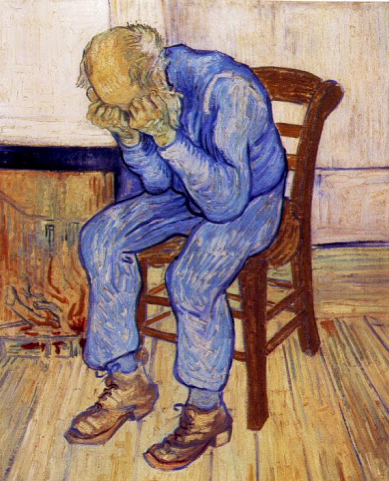
Today, in God’s Lavish Mercy, we pray with Psalm 88. It’s supposed to be a gloomy, rainy day around here where I live, and Psalm 88 isn’t going to help! It is the desperate prayer of one who hears no answer from God:

But I, O LORD, cry out to you;
with my morning prayer I wait upon you.
Why, O LORD, do you reject me;
why hide from me your face?


Sorrowful Man – Vincent Van Gogh

According to Martin Marty, a professor of church history at the University of Chicago,
Psalm 88 is “a wintry landscape of unrelieved bleakness.”
Psalm 88 ends by saying:
You have taken my companions and loved ones from me; 
the darkness is my closest friend.
Indeed, in Hebrew the last word of the psalm is “darkness”.
~ from Wikipedia


Also from Wikipedia:

J.M.Neale and R.F. Littledale, writing in the 19th century, find that Psalm 88 “stands alone in all the Psalter for the unrelieved gloom, the hopeless sorrow of its tone. Even the very saddest of the others, and the Lamentations themselves, admit some variations of key, some strains of hopefulness; here only all is darkness to the close.”


Gratefully, I have seldom been in the place of this psalm … but that doesn’t mean never. Many of you, I imagine, could say the same.

So what do we do when life, by our choices or despite them, finds us irrevocably caught in spiritual darkness? What happens to us when we think God isn’t listening to our prayer, or maybe that there was never any God in the first place?

St. John of the Cross says this:

Live in faith and hope,
though it be in darkness,
for in this darkness God protects the soul.
Cast your care upon God
for you are His and He will not forget you.
Do not think that He is leaving you alone,
for that would be to wrong Him.

John’s further writings show us that this darkness, rather than alienate John from God, was the source of unparalleled union with God.

May we be blessed in the same way.🙏


One dark night, 
Kindled in love with yearnings—oh, happy chance!— 
I went forth without being observed, 
My house being now at rest.
In darkness and secure, 
By the secret ladder, disguised—oh, happy chance!—
In darkness and in concealment, 
My house being now at rest.
In the happy night, 
In secret, when none saw me,
Nor I beheld aught, 
Without light or guide, save that which burned in my heart.
This light guided me 
More surely than the light of noonday
To the place where he (well I knew who!) was awaiting me— 
A place where none appeared.
Oh, night that guided me, 
Oh, night more lovely than the dawn,
Oh, night that joined Beloved with lover, 
Lover transformed in the Beloved!
~ John of the Cross

Poetry: Sorrow – Renee Yann, RSM

You must be alone
    with sorrow
    before you can leave it,
    or it will crush you
    like a dark, heavy rock.

    You must drive into
    the hollow of its face,
    under the ledges
    it projects against you.
    Feel its cold granite
    pressed to your grain.

    In time,
    it will allow your turning
    to rest your back
    within its curve.

    Only then,
    you will be free to leave it,
    walking lightly once again
    on yielding earth.

    When you return, it will be freely,
    on a pilgrimage,
    to touch the name you carved once
    in your heart’s anguish.

Music: Holy Darkness – John Michael Talbot
Psalm 25: God’s Will?

Twenty-sixth Sunday in Ordinary Time

September 27, 2020


Today, in God’s Lavish Mercy, we pray with Psalm 25, set perfectly in the midst of a few readings that speak to us about, among other things , “the Father’s Will”.

I think there is no greater spiritual mystery than the meaning of  “God’s Will”, (and not wanting to show up Thomas Aquinas, I’ll resist explaining it here. 😂🧐)

But we’ve all heard attempts at explaining it, haven’t we, especially as it relates to suffering— as in:

  • everything that happens is God’s Will, so we must accept it
  • God wills our suffering to test us
  • if God wills that we suffer, He will give us the strength to endure it

I just don’t think so … not the God I love and Who loves me.

But these attempts to explain suffering are understandable because we want to rationalize the things we fear. Most of us, I think, struggle with the problem of evil and suffering in the world. We want to know what to do when, as Rabbi Kushner wrote, “… Bad Things Happen to Good People”.


Our first reading from Ezekiel shows us that even the ancient peoples met this struggle. The prophet seems to suggest that if you’re bad, you’ll suffer. If you repent, you won’t. Well, we all know that’s not quite the reality! But nice try, Ezekiel.

Our psalm gently leads to another way of facing suffering as the psalmist prays for wisdom, compassion and divine guidance. In the Garden of Gethsemane, Jesus himself prayed like this as he confronted his impending suffering.


In our second reading, Paul places before us the example of Jesus who, in the face of suffering, was transformed by love:

Praying with these readings, each one of us must come to our own peace with the mystery of suffering. What we can be sure of is this: God’s Will is always for our wholeness and joy as so simply taught to us when we were little children:

God made me to know, love, and serve God, 
and to be happy with God in this world and forever.

Our Gospel tells us that such happiness comes through faith and loving service, through responding to “the Father’s Will”.  May we have the insight, the love and the courage!


Poetry: Of Being by Denise Levertov 

I know this happiness
is provisional:

       the looming presences—
       great suffering, great fear—

       withdraw only
       into peripheral vision:

but ineluctable this shimmering
of wind in the blue leaves:

this flood of stillness
widening the lake of sky:

this need to dance,
this need to kneel:

       this mystery:

Music: To You, O Lord (Psalm 25) Graham Kendrick

Psalm 119: Guide Me, Lord

Tuesday of the Twenty-fifth Week in Ordinary Time

September 22, 2020


Today, in God’s Lavish Mercy, we pray with another of the Torah Psalms, Psalm 119. It is the prayer of one who delights in and lives by the Torah, the sacred law. ( See yesterday’s reflection for some scholarly words on the Torah Psalms.)

In today’s verses, with lovely antiphonal lilt, the psalmist describes the holy person, then asks for the virtues to become one.

  • Blessed are the blameless….. so guide me in your ways.
  • I want to meditate on your deeds …. so make me understand.
  • I want to observe your laws … so give me discernment
  • I delight in your path …. so lead me on it.
  • I will keep your law forever …. if you will just guide me.

I don’t think God can resist a sincere prayer like this. The psalmist is saying, “I want to love you, God, with my whole life. But you, Almighty, must help my weakness.”

Notice the guy on the right 🙂

As we pray today with Psalm 119, we might let a similar prayer rise up in our hearts.

We, too, want to love God well – completely. We, too, need Divine guidance to discern God’s continuing call in the complexities of our lives. We, too, long to deepen in discernment and commitment.


The psalmist gives us good example. Just tell God like it is. Tell God what you really want, what you really need to love as God wishes us to love.

If you hear yourself making requests for power, money, fame, security in any of their selfish forms, you better start all over again!😉

Remember the beginning of the psalm, the foundation of our prayer:

Blessed are they whose way is blameless,
who walk in the law of the LORD.

In the Christian scriptures, that foundation is proclaimed like this:

One of the teachers of the law came and heard them debating. Noticing that Jesus had given them a good answer, he asked him, “Of all the commandments, which is the most important?”
 “The most important one,” answered Jesus, “is this: ‘Hear, O Israel: The Lord our God, the Lord is one. Love the Lord your God with all your heart and with all your soul and with all your mind and with all your strength.’ The second is this: ‘Love your neighbor as yourself.’ There is no commandment greater than these.”


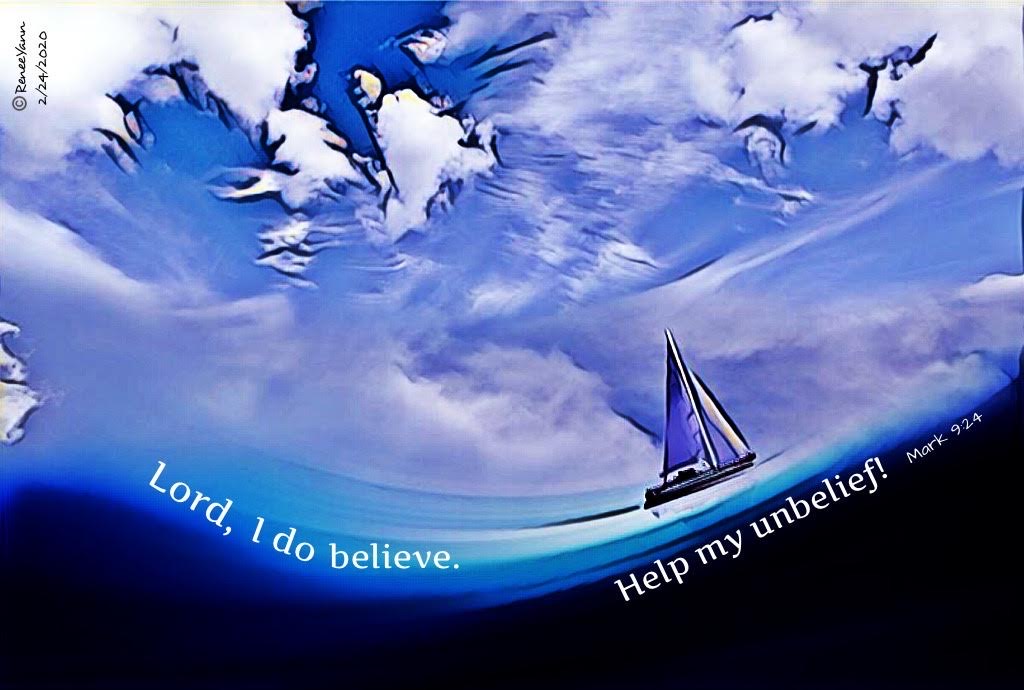
Let’s ask God for  the courage to offer a blameless prayer. The simple prayer of the Gospel centurion comes to mind:

Lord, I do believe. 
Help my unbelief.
Mark 9:24

Poetry: Morning Hymn by Charles Wesley, brother of John Wesley. They are considered founders of the Methodist religion.

Christ, whose glory fills the skies, 
Christ, the true, the only light, 
Sun of Righteousness, arise, 
Triumph o’er the shades of night:  
Day-spring from on high, be near:  
Day-star, in my heart appear.
  
Dark and cheerless is the morn  
Unaccompanied by thee,  
Joyless is the day’s return,  
Till thy mercy’s beams I see;  
Till thy inward light impart,  
Glad my eyes, and warm my heart.
  
Visit then this soul of mine,  
Pierce the gloom of sin, and grief,  
Fill me, Radiancy Divine,  
Scatter all my unbelief,  
More and more thyself display,  
Shining to the perfect day.

Music: Help My Unbelief – Audrey Assad

Psalm 17: Apple of God’s Eye

Friday of the Twenty-fourth Week in Ordinary Time

Friday, September 18, 2020


Today, in God’s Lavish Mercy, we pray with Psalm 17, a confident prayer calling on God’s intervention.

The psalmist tenders a plea:

Hear, O LORD, a just suit;
attend to my outcry;
hearken to my prayer
from lips without deceit.

Psalm 17:1

But before reiterating that plea, the pray-er convinces God that she is worthy of an answer:

You have tested my heart,
searched it in the night.
You have tried me by fire,
but find no malice in me.
My mouth has not transgressed
as others often do.
As your lips have instructed me,
I have kept from the way of the lawless.

Psalm 17: 3-4

It sounds a little boastful but it really isn’t. The one who prays this psalm is very familiar with God and God with her. There are no secrets between them. She knows that she is infinitely loved and protected, not despite her vulnerability but because of it. 

The psalmist, from long experience, is confident asking for help, as we would be asking a friend to turn and listen to us:

I call upon you; answer me, O God.
Turn your ear to me; hear my speech.

Psalm 17: 7

Have you ever been asked for prayers because you are “a good prayer”?
It happens to nuns all the time.

But no prayer is more powerful than another. We say “Of course” to such requests because it is our intention to join our prayer with that of the requester.

Show your wonderful mercy,
you who deliver with your right arm
those who seek refuge from their foes.
Keep me as the apple of your eye;
hide me in the shadow of your wings

Psalm 17: 8-9

Each of us is God’s “eye-apple”. Each of us, when we give ourselves to a long familiarity with God, will be wrapped in the confidence of one who is always answered.

( In a second posting, I’ll be sending on an extra meditation on The Eye of God by Macrina Wiederkehr – beautifully profound.)


Poetry: As Kingfishers Catch Fire – Gerard Manley Hopkins

by Alcedo Atthis

As kingfishers catch fire, dragonflies draw flame; 
As tumbled over rim in roundy wells 
Stones ring; like each tucked string tells, each hung bell’s 
Bow swung finds tongue to fling out broad its name; 
Each mortal thing does one thing and the same: 
Deals out that being indoors each one dwells; 
Selves — goes itself; myself it speaks and spells, 
Crying Whát I dó is me: for that I came. 

I say móre: the just man justices; 
Keeps grace: thát keeps all his goings graces; 
Acts in God’s eye what in God’s eye he is — 
Chríst — for Christ plays in ten thousand places, 
Lovely in limbs, and lovely in eyes not his 
To the Father through the features of men’s faces. 


Music:   The Apple of My Eye by Umb-5 and Sam Carter

Sometimes a non-spiritual song captures a spiritual meaning in a beautiful way. Let God sing to you with this lovely song.

Psalm 33: Convinced!

Memorial of Saints Cornelius, Pope, and Cyprian, Bishop, Martyrs

Wednesday, September 16, 2020


Today, in God’s Lavish Mercy, we pray with verses from Psalm 33, the whole of which is the steadfast prayer of a person convinced of God!

As we read through Psalm 33, there is no hem and haw, no grey! It’s about God as the center of the psalmist’s, and the nation’s, life:

Know that the LORD is God;
Who made us, Whose we are;
God’s people, the flock God tends.


Our first reading grows from a similar conviction. Paul tells the Corinthians that our rootedness in God is not about spiritual eloquence, knowledge or holy detachment. He allows that it’s a little bit about faith and hope. But, over all things, it’s about love.


Lesson: We can’t be like the Gospel’s marketplace children. There should be but one song in our hearts – the same one Love sang as Love created each one of us in Her image.

For upright is the word of the LORD,
and all his works are trustworthy.
He loves justice and right;
of the kindness of the LORD the earth is full.


Poetry: Great Heart of God – (Nicholas) Vachel Lindsay (1879 – 1931), an American poet who is considered a founder of modern singing poetry, as he referred to it, in which verses are meant to be sung or chanted.

O great heart of God, 

Once vague and lost to me, 
Why do I throb with your throb to-night, 
In this land, eternity? 

O little heart of God, 
Sweet intruding stranger, 
You are laughing in my human breast, 
A Christ-child in a manger. 

Heart, dear heart of God, 
Beside you now I kneel, 
Strong heart of faith. O heart not mine, 
Where God has set His seal. 

Wild thundering heart of God 
Out of my doubt I come, 
And my foolish feet with prophets' feet, 
March with the prophets' drum. 

Music: Coulin – James Last – just a lovely instrumental to pray with today. ❤️

We Set our Psalm Aside

Today, in God’s Lavish Mercy, I must put our Psalm in the background and refer to an earlier post for this Feast.

On this Feast of the Exaltation of the Holy Cross, our readings include the sublime Philippians Canticle.

To me, this is the most beautiful passage in the Bible – so beautiful that nothing else needs to be said about it.

As we read it lovingly and prayerfully today, may we take all the suffering of the world to Christ’s outstretched arms – even our own small or large heartaches and longings.

Poetry: God’s Love for Us – Julian of Norwich (1342-1416)

The love of God most High for our soul
is so wonderful that it surpasses all
knowledge. No created being can fully know
the greatness, the sweetness, the
tenderness, of the love that our Maker has
for us. By his Grace and help therefore let
us in spirit stand in awe and gaze, eternally
marvelling at the supreme, surpassing,
single-minded, incalculable love that God,
Who is all goodness, has for us.

from Revelations of Divine Love

Music: Philippians Canticle ~ John Michael Talbot

And if there be therefore any consolation
And if there be therefore any comfort in his love
And if there be therefore any fellowship in spirit
If any tender mercies and compassion

We will fulfill His joy
And we will be like-minded
We will fulfill His joy
We can dwell in one accord
And nothing will be done
Through striving or vainglory
We will esteem all others better than ourselves

This is the mind of Jesus
This is the mind of Our Lord
And if we follow Him
Then we must be like-minded
In all humility
We will offer up our love

Though in the form of God
He required no reputation
Though in the form of God
He required nothing but to serve
And in the form of God
He required only to be human
And worthy to receive
Required only to give

Psalm 95:Hear the Voice

Twenty-third Sunday in Ordinary Time

Sunday, September 6, 2020

Today, in God’s Lavish Mercy, we pray with Psalm 95, a favorite of liturgists, and one we have met several times before. What different light might it offer us today as we pray?

The psalm today serves as a bridge between powerful readings about neighborly love and fraternal correction. These readings tell us to listen for God’s heartbeat in our world and to enter its rhythm. 

They also tell us to love our neighbor enough that, if she or he is out of synch with God’s rhythm, we help align them by our counsel and example.

Have you ever tried to do that? It’s really tough!


First of all, we have to be so vigilant about the purity of our own intentions. We can’t instruct our friends in righteousness out of our own confusion. So often, our desire for others to “improve” grows out of our opinionated self-interest. You might remember what Jesus said about extracting the plank from our own eye before removing the splinter from our neighbor’s!


Next we really have to love our sister or brother and sincerely want their good. We have to forgive them any hurt they have caused us. We have to be bigger than most of us, speaking for myself, are inclined to be.

As the psalm tells us, we can’t have hard hearts. As we approach our sister or brother, our hearts must be softened by listening, patience, understanding, humility and hope. We have to be sure the “voice” we’re sharing comes from God not self.

Harden not your hearts as at Meribah,
as in the day of Massah in the desert,
Where your fathers tempted me;
they tested me though they had seen my works.

And the flip of all this, of course, is that when we are the one out of rhythm, we receive loving correction in the same spirit of openness.

Lots of Grace is needed on both sides of this dance! May we learn and receive it!


Poetry: The Gift by Li-Young Lee

To pull the metal splinter from my palm
my father recited a story in a low voice.
I watched his lovely face and not the blade.
Before the story ended, he’d removed
the iron sliver I thought I’d die from.

I can’t remember the tale,
but hear his voice still, a well
of dark water, a prayer.
And I recall his hands,
two measures of tenderness
he laid against my face,
the flames of discipline
he raised above my head.

Had you entered that afternoon
you would have thought you saw a man
planting something in a boy’s palm,
a silver tear, a tiny flame.
Had you followed that boy
you would have arrived here,
where I bend over my wife’s right hand.

Look how I shave her thumbnail down
so carefully she feels no pain.
Watch as I lift the splinter out.
I was seven when my father
took my hand like this,
and I did not hold that shard
between my fingers and think,
Metal that will bury me,
christen it Little Assassin,
Ore Going Deep for My Heart.
And I did not lift up my wound and cry,
Death visited here!
I did what a child does
when he’s given something to keep.
I kissed my father.

Music: Let Me Hear Your Voice – Francesca LaRose

Psalm 33: Fashioned by God

Wednesday of the Twenty-second Week in Ordinary Time

Wednesday, September 2, 2020


Today, in God’s Lavish Mercy, we pray again with Psalm 33, this time with one different verse from a few days ago:

From heaven’s fixed throne God beholds
all who dwell on the earth,
God Who fashions each heart
and knows all its works.

Think of that: God fashions each heart.

The phrase has special meaning for me today because, yesterday, we welcomed a precious new baby girl into our family.

I look at her newborn innocence and realize that she is the freshest, most hopeful breath of God, still so wrapped in the heavenly air from Whom we all receive life.


We all received that Breath once and it lives eternally within us. Every one of us has received a heart fashioned in God’s own image.

Sometimes that reality is hard to believe about ourselves and others, as it seems to have been for the Corinthians in today’s first reading. Sometimes we make a real mess of the gift we have been given!

Nevertheless, the gift is true and remains true despite our worst efforts!😉


Reflecting on today’s Gospel, there may be “various diseases” and dysfunctions that we wish to bring to the healing hands of Jesus today – for ourselves and for our world. We ask God to restore our innocence and hope throughout our lives and world.

In order to remember and live within the sacred truth that God breathed us into being, we might repeat today’s psalm refrain throughout our day:

Blessed are we, chosen to be God’s own.


Poetry: Two poems today to bless our dear new child Claire:

Songs of Innocence - William Blake
Little Lamb who made thee
Dost thou know who made thee
Gave thee life & bid thee feed.
By the stream & o’er the mead;
Gave thee clothing of delight,
Softest clothing wooly bright;
Gave thee such a tender voice,
Making all the vales rejoice!
Little Lamb who made thee?
Dost thou know who made thee?

Little Lamb, I’ll tell thee; 
Little Lamb, I’ll tell thee:
He is called by thy name, 
For He calls Himself a Lamb 
He is meek, and He is mild, 
He became a little child.
I a child, and thou a lamb, 
We are called by His name. 
Little Lamb, God bless thee! 
Little Lamb, God bless thee!


Christina Rossetti - Holy Innocents
Sleep, little baby, sleep;
The holy Angels love thee,
And guard thy bed, and keep
A blessed watch above thee.
No spirit can come near
Nor evil beast to harm thee:
Sleep, sweet, devoid of fear
Where nothing need alarm thee.
The love which doth not sleep,
The eternal Arms around thee:
The shepherd of the sheep
In perfect love hath found thee.
Sleep through the holy night,
Christ-kept from snare and sorrow,
Until thou wake to light
And love and warmth to-morrow.

Music: Innocence – Roberto Cacciapaglia

Psalm 85: Listen!

Memorial of the Queenship of the Blessed Virgin Mary

August 22, 2020

by Bartolome Murillo

Indeed, Mary herself was a song of hope to God, sung for us and for all generations. That passionate song opened her heart to receive the Word and to carry its redeeming power to each of us.

She was the greatest prophet of all time who not only proclaimed God but enfleshed him.

I will hear what God proclaims;
the LORD– Who proclaims peace.
Near indeed is salvation to those who fear God,
glory dwelling in our land.

As we pray to Mary today, let us ask for listening hearts and hope-filled spirits. Let us ask to enflesh love and hope in our lives in imitation of her. Let us ask to believe as she did:

The LORD himself will give his benefits;
our land shall yield its increase.
Justice shall walk before him, 
and salvation, along the way of his steps.


Poetry: Annunciation – Denise Levertov


Annunciation
_________________________________________
‘Hail, space for the uncontained God’
From the Agathistos Hymn, Greece, 6th century
_________________________________________
We know the scene: the room, variously furnished, 
almost always a lectern, a book; always
the tall lily.
       Arrived on solemn grandeur of great wings,
the angelic ambassador, standing or hovering,
whom she acknowledges, a guest.

But we are told of meek obedience. No one mentions
courage.
       The engendering Spirit
did not enter her without consent.
         God waited.

She was free
to accept or to refuse, choice
integral to humanness.
                 ____________________
Aren’t there annunciations
of one sort or another
in most lives?

         Some unwillingly
undertake great destinies,
enact them in sullen pride,
uncomprehending.
More often
those moments
      when roads of light and storm
      open from darkness in a man or woman,
are turned away from

in dread, in a wave of weakness, in despair
and with relief.
Ordinary lives continue.
                                 God does not smite them.
But the gates close, the pathway vanishes.
                  ____________________

She had been a child who played, ate, slept
like any other child–but unlike others,
wept only for pity, laughed
in joy not triumph.
Compassion and intelligence
fused in her, indivisible.

Called to a destiny more momentous
than any in all of Time,
she did not quail,
  only asked
a simple, ‘How can this be?’
and gravely, courteously,
took to heart the angel’s reply,
the astounding ministry she was offered:

to bear in her womb
Infinite weight and lightness; to carry
in hidden, finite inwardness,
nine months of Eternity; to contain
in slender vase of being,
the sum of power–
in narrow flesh,
the sum of light 

                     Then bring to birth,
push out into air, a Man-child
needing, like any other,
milk and love–

but who was God.

This was the moment no one speaks of,
when she could still refuse.

A breath unbreathed,
                                Spirit,
                                          suspended,
                                                            waiting.
                  ____________________

She did not cry, ‘I cannot. I am not worthy,’
Nor, ‘I have not the strength.’
She did not submit with gritted teeth,
                                                       raging, coerced.
Bravest of all humans,
                                  consent illumined her.
The room filled with its light,
the lily glowed in it,
                               and the iridescent wings.
Consent,
              courage unparalleled,
opened her utterly.

Music: Tota Pulchra Es, Maria