Psalm 69: Snapping Out on God

Twelfth Sunday in Ordinary Time

June 21, 2020

Today, in God’s Lavish Mercy, we pray with Psalm 69 which Brueggemann describes as

“a script for unburdening negation in God’s presence. It is a script for rehabilitation to the community of praise and thanks.”

Walter Bruggemann: From Whom No Secrets Are Hid

This Sunday’s reading are not happy ones. Jeremiah is plagued by his persecutors. Romans describes the reign of sin and death before Christ’s act of redemption. And, in our Gospel, Jesus tells his followers not to be afraid of those who kill the body but cannot kill the soul!

Guess what! Despite the Gospel’s advice, I am afraid of that kind of stuff — persecution, sin, evil, murder…. and all the other terrible consequences in the larger reading of all of Psalm 69.

And guess what else. The psalmist is not only afraid. He is angry… and I mean infuriated, outraged and massively ticked off.

No one wants to listen to him about his grievances either so who gets an earful? Yes, you got it — God. 


In verses 22-28, the writer spews a line of curses for his enemies. And they’re masterpieces — very satisfying ideations if you ever find yourself in similar straits.

But that’s the whole beauty of this psalm. All the negativity remains in the prayer’s imagination. It is not acted out. Once vehemently expressed to God, the catharsis slowly evolves to healing. This happens because the complaining psalmist all of a sudden realizes to Whom he is complaining — the Merciful One, the Patient One, the Forgiving One who has given all these generosities repeatedly to him.

I pray to you, O LORD,
for the time of your favor, O God!
In your great kindness answer me
with your constant help.
Answer me, O LORD, for bounteous is your kindness;
in your great mercy turn toward me.


Seeing God’s Face turn toward him in prayer, the psalmist regains balance. The final verse of the psalm rests on the hope and confidence God has promised in the covenantal relationship.

For God will rescue Zion,
and rebuild the cities of Judah.
They will dwell there and possess it
the descendants of God’s servants will inherit it;
those who love God’s name will dwell in it.


Anger visits all of us, sometimes in response to persecution, misunderstanding or disrespect. We feel it for personal grievances and for meanness in the world toward the helpless.  Praying with Psalm 69 may help us, too, find our balance, as did the psalmist, so that the anger leads to wholeness rather than destruction.


Poetry: Time’s Lesson – Emily Dickinson

Mine enemy is growing old, —
I have at last revenge.
The palate of the hate departs;
If any would avenge, —

Let him be quick, the viand flits,
It is a faded meat.
Anger as soon as fed is dead;
'T is starving makes it fat.

Music: Liberty and Justice for All – Brandon Williams

Psalm 103: Bless Your Sacred Heart!

Solemnity of Most Sacred Heart of Jesus

June 19, 2020

Today, in God’s Lavish Mercy, on this tender feast of the Sacred Heart, we pray with Psalm 103, a hymn of exultant and confident praise.

Walter Brueggemann calls Psalm 103 the best known and best loved of the hymns of praise. He says these hymns have a five-fold purpose, which I paraphrase here:

First, praise imagines something new. It doesn’t describe what is. We are healed to become new selves in God:

God pardons all your iniquities,
heals all your ills.


Second, hymns of praise are acts of devotion with political and controversial overtones. Human boundaries will not impede God’s Mercy.

Not according to our sins does he deal with us,
nor does he requite us according to our crimes.


Third, the Psalms refer to Israel’s whole salvation history in which God is the key character and lively agent. Our prayer is not about just this moment in our lives – it is built on a long faith-story.

Merciful and gracious is the LORD,
slow to anger and abounding in kindness.


Fourth … in singing praise, all claims for the self are given up as the self is ceded over to God. In other words, we fall in love with God.

Bless the LORD, O my soul;
all my being, bless his holy name.


Fifth, the hymns of praise with their unreserved and exuberant self-abandonment into the infinity God, contrast starkly with modern “praise songs” which often revert to a narcissistic smallness. . True praise is a large prayer that includes all Creation

The Lord’s kindness is everlasting to those who fear him.


In Psalm 103, the psalmist begins by counting her own blessings. She then moves out to praise God for the blessings given to all Creation. This unfolding in prayer reminds us to enlarge our own awareness of the needs and blessings of others as we pray.

Praying this psalm, let us become amazed and delighted that God loves us completely, irrationally, perfectly and eternally. Wow!

God is so good that it just makes you want to dance. Thus, our energetic music this morning from Godspell

Music: O Bless the Lord, My Soul (based on Psalm 103)
(Lyrics below)

Oh bless the Lord my soul!
His praise to thee proclaim!
And all that is within me join,
To bless His holy name!
Oh yeah!

Oh bless the Lord my soul!
His mercies bear in mind!
Forget not all His benefits,
The Lord, to thee, is kind.
He will not always chide
He will with patience wait
His wrath is ever slow to rise

Oh bless the Lord
And ready to abate
And ready to abate
Oh yeah!

Oh bless the lord
Bless the lord my soul
Oh bless the lord my soul!
He pardons all thy sins
Prolongs thy feeble breath
He healeth thine infirmities
And ransoms thee from death
He clothes thee with his love
Upholds thee with his truth
And like an eagle he renews
The vigor of thy youth

Then bless His holy name
Whose grace hath made thee whole
Whose love and kindness crowns
Thy days


Poetry: Praise the Rain by Joy Harjo who is a member of the Muscogee (Creek) Nation. She earned her BA from the University of New Mexico and MFA from the Iowa Writers’ Workshop. Harjo draws on First Nation storytelling and histories, as well as feminist and social justice poetic traditions, and frequently incorporates indigenous myths, symbols, and values into her writing. Her

Praise the rain; the seagull dive
The curl of plant, the raven talk—
Praise the hurt, the house slack
The stand of trees, the dignity—
Praise the dark, the moon cradle
The sky fall, the bear sleep—
Praise the mist, the warrior name
The earth eclipse, the fired leap—
Praise the backwards, upward sky
The baby cry, the spirit food—
Praise canoe, the fish rush
The hole for frog, the upside-down—
Praise the day, the cloud cup
The mind flat, forget it all—

Praise crazy. Praise sad.
Praise the path on which we’re led.
Praise the roads on earth and water.
Praise the eater and the eaten.
Praise beginnings; praise the end.
Praise the song and praise the singer.

Praise the rain; it brings more rain.

Psalm 51: A Contrite Spirit

Tuesday of the Eleventh Week in Ordinary Time

June 16, 2020

Today, in God’s Lavish Mercy, we pray with Psalm 51, the Miserere. Perhaps the most recognized of the penitential psalms, it is said to have been written by David after his adulterous affair with Bathsheba. ( although it more likely was written separately and applied to David’s situation later.)

This psalm is so rich in deep spiritual psychology that it would be a shame to dismiss it simply as a “confessional”. The psalm truly teaches us how our soul’s vigor and wholeness may be restored in an environment of sin where we are often both consciously and unconsciously complicit.


Let me give an example of how I see this. Last night in my city, a group of protesters gathered around a statue of Christopher Columbus, supposedly, “to protect it” from dismantling by “them”. Many in the group carried clubs and bats; a few carried military-style weapons. All of the “defenders” were white, angry, and mostly men.

I ask myself what were they really there to do. What did they really feel they had to defend? Did their violent public intimidation scream out, “We love Christopher Columbus!”? Or did it shout, “We refuse to acknowledge that our heritage is laced with racism and sinful domination!”?


For me, this is the kind of sinful circumstance which Psalm 51 can help us redeem. We may not act out our culpable ignorance, violence, defensiveness, or racism like last night’s threatening mob. But we must examine what we retain of these sins in our choices, attitudes, speech, and complicit silence.

How does Psalm 51 guide us to that kind of redemption?

First, there is a broken-hearted recognition of failure in holding up our end of relationship with God. Because, as David acknowledges, it is God whom we ultimately offend in our crassness toward one another. It’s not about only one sinful act, like the list we made before our grade school confessions. It’s about a fissure in love, honesty, and loyalty to the One who gives us all life.


Second, there is confession – saying out loud the failure that has replaced love. My favorite Biblical scholar, Walter Brueggemann, describes it as Truth-telling:

Psalm 51 makes available the truth of our life before God. On the one hand, it resists arrogant autonomy that imagines (with David) that we can live without accountability or dependence on the will and purpose of God. On the other hand, it contradicts the practice of denial that is so seductive in a society that has no time, patience, or energy for the nurture of an interior life. It turns out that truth-telling before God is an indispensable condition for joyous existence. Such emancipation makes for exuberant singing and glad generosity. (Walter Brueggemann: From Whom No Secrets are Hid)

Third, and most important because it is woven through and sustains the other two, is the immovable confidence in God’s mercy and God’s desire to give it.

For you do not desire sacrifice or I would give it;
a burnt offering you would not accept.

My sacrifice, O God, is a contrite spirit;
a contrite, humbled heart, O God, you will not scorn.

Psalm 51 is a big one. If you have time, read the whole thing reflectively. It’s good medicine once we have the courage to swallow it.


Poetry: To Live in the Mercy of God – Denise Levertov

To lie back under the tallest
oldest trees. How far the stems
rise, rise
               before ribs of shelter
                                           open!

To live in the mercy of God. The complete
sentence too adequate, has no give.
Awe, not comfort. Stone, elbows of
stony wood beneath lenient
moss bed.

And awe suddenly
passing beyond itself. Becomes
a form of comfort.
                      Becomes the steady
air you glide on, arms
stretched like the wings of flying foxes.
To hear the multiple silence
of trees, the rainy
forest depths of their listening.

To float, upheld,
                as salt water
                would hold you,
                                        once you dared.

 To live in the mercy of God.

To feel vibrate the enraptured
waterfall flinging itself
unabating down and down
                              to clenched fists of rock.

Swiftness of plunge,
hour after year after century,
                                                   O or Ah
uninterrupted, voice
many-stranded.
                              To breathe
spray. The smoke of it.
                              Arcs
of steelwhite foam, glissades
of fugitive jade barely perceptible. Such passion—
rage or joy?

                              Thus, not mild, not temperate,
God’s love for the world. Vast
flood of mercy
                      flung on resistance.

Music: Miserere Mei Deus – Gregorio Allegri 

Mary, Mother of the Church

Memorial of the Blessed Virgin Mary, Mother of the Church

June 1, 2020

Click here for today’s readings

Today, in Mercy, we celebrate the Memorial of the Blessed Virgin Mary, Mother of the Church.


web3-the-annunciation-by-henry-ossawa-tanner
Annunciation by Henry Ossawa Tanner

It is a day to honor Mary for giving life to Jesus
for the sake of all humanity.

It is day to beg her intercession
for a world so desperately in need of
Christ’s continued revelation.

door of Mercy

Mary is the Door through which
Heaven visited earth
to heal it from sinful fragmentation.


Ave

May Mary continue to carry her beautiful grace
to broken hearts and even
to the twisted souls who broke them. 

Through her, may we all find healing.

Mary, Mother of Mercy, intercede for all Creation
that we may embrace the Love your Son taught us.


Music: Ave Maria – Michael Hoppé

What “World” Do You Live In?

Saturday of the Fifth Week of Easter

May 16, 2020

Click here for readings

Jn15:18 world

Today, in Mercy, Jesus talks about “the world”.

That word can cause a little confusion, both as we find it in scripture and in the history of Christian thought.

Baker’s Evangelical Dictionary of Biblical Theology says five connotations for “world” may be found in scripture:

  • The physical world – the actual plant Earth
  • The human world – the land and seas we can navigate
  • The moral world – the universe of good and evil
  • The temporal world – the world that will someday end
  • The coming world – eternal existence 

In today’s Gospel, Jesus is talking about the moral world which, in the New Testament, refers to those people who are indifferent and hostile to Christ’s teaching.

If the world hates you, realize that it hated me first.
If you belonged to the world, the world would love its own;
but because you do not belong to the world…
the world hates you.


wolf-clipart-57
A Wolf in Sheep’s Clothing

We understand this use of the word. We see the evil in the world. We are saddened, angered and confounded by it when we recognize it.

But do we always recognize it?

Blatant evils like murder are readily recognized. But the most insidious evils are those that masquerade as good.

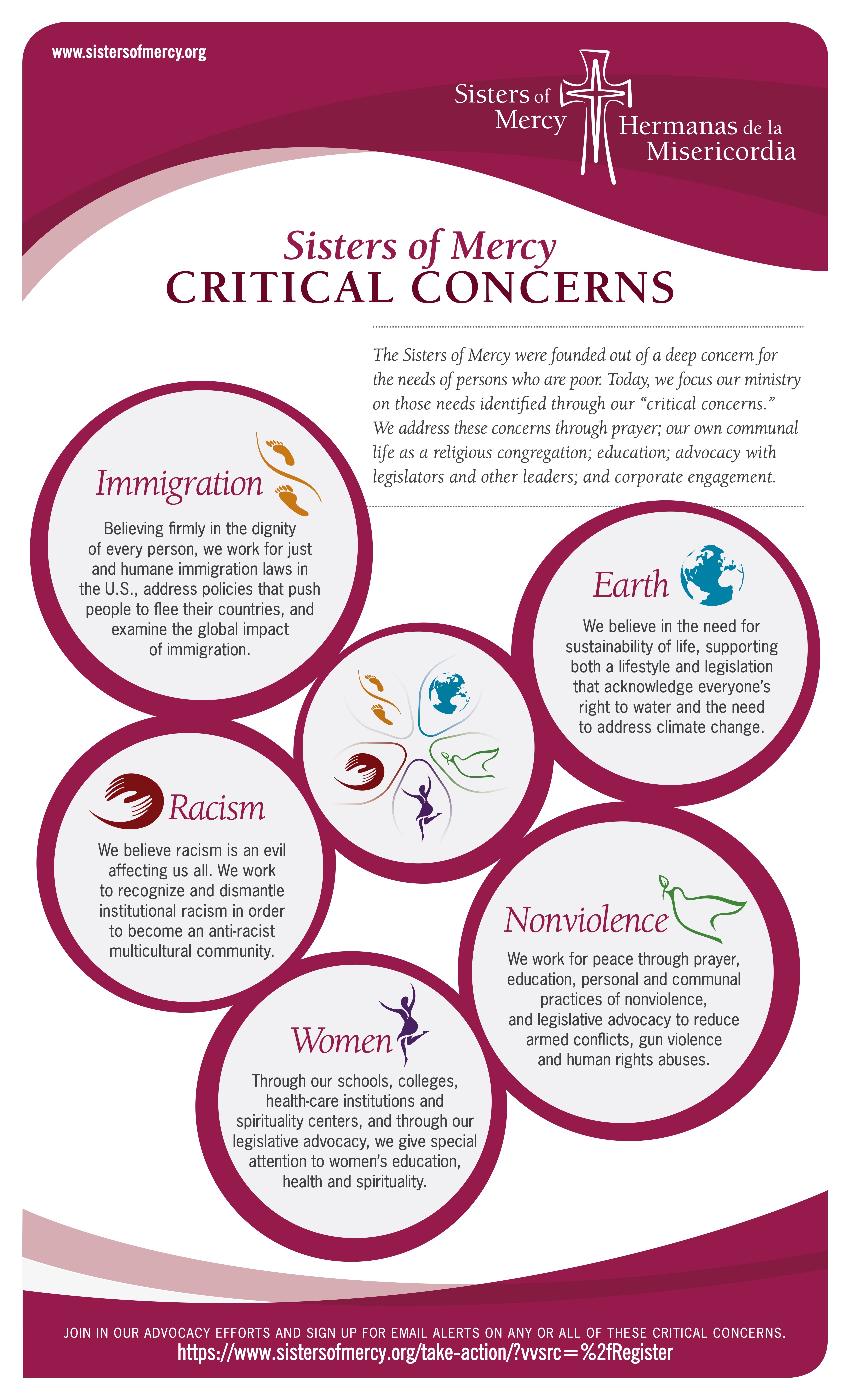
These masquerading evils often pretend to protect our rights, our security, our safety. But they usually do so at the expense of someone else’s rights – the poor, the refugee, the aged, the homeless, people of color……and all who have become “disposable” in our society.


These deceptions hide behind brave and noble words like “America First”, “Second Amendment Rights”, “Protect Life” and a rash of other slogans which fail to examine the whole impact of single-issue politics. 

It’s confusing because we love America, right? We believe in people’s constitutional rights, right? We respect life, right?

What if our slogans instead more clearly reflected Gospel values:

  • The Human Family First
  • Safety Rights for Everyone
  • Health Security for All Life – Womb to Tomb

CriticalConcerns-Poster-FINAL

How can we be spiritually discerning about what is good within such realities and what is rooted in sinful self-interest? Jesus tells us in these words:

Remember the word I spoke to you,
‘No slave is greater than his master.’
If they persecuted me, they will also persecute you.

We must look to the one who is hated and persecuted to find the Face of Christ. We must love that Face and learn its heartaches. We must become a companion in their search for wholeness. We must set aside any costume of self-righteousness and put on the garment of Mercy:

Therefore, as God’s chosen people, holy and dearly loved, clothe yourselves with mercy, kindness, humility, gentleness and patience. Bear with each other and forgive one another if any of you has a grievance against someone. Forgive as the Lord forgave you. And over all these virtues put on love, which binds them all together in perfect unity.
Colossians 3:14-16

Music: The Mercy Song – Paul Alexander

Life is the Miracle

Tuesday of the Third Week of Easter

April 28, 2020

Click here for readings

Today, in Mercy, Acts recounts the sad but inspiring story of Stephen’s martyrdom.

To read an earlier reflection on St. Stephen’s death, click here.


In our Gospel, we continue to pray with John’s Discourse on the Bread of Life.

The setting is Capernaum, on the other side of the lake from where the feeding of the 5000 occurred. Rumors are flying about how Jesus got from one side to the other without a boat. In other words, the air is buzzing with whispers of miracles.


Some bright light in the re-gathering crowd decides to become their representative and inquisitor of Jesus:

inquisitors

“What sign can you do, that we may see and believe in you?
What can you do?
Our ancestors ate manna in the desert … ”
(how about something a long those lines, the questioner seems to imply????)

Where was this guy when the loaves and fishes were pouring out of a single basket? Where was he when Jesus appeared at the lake’s far side, already rested and waiting for the exhausted, arriving crowd?


But Jesus doesn’t take the inquisitor’s bait. He speaks as the Divine Teacher to help them understand that this is about a lot more than signs and miracles. 

Jesus reminds them that any “miracle”, any “manna” should lead us to God, in whose Presence the need and demand for continuing miracles ceases.

Jn6_35 bread

Jesus encourages them to get beyond their limited perceptions of signs, manna, bread, and miracles. He explains that all the Power of God stands before them in him, the Son, the Bread sent “down from heaven, and giving life to the world.”

It’s a lot to take in. But they want to: “Sir, give us this bread always.”


It’s a lot for us to take in too, don’t you think. I know I wouldn’t mind a regular old miracle now and then… a shower of manna or a cure for Covid19!

But instead Jesus asks us to live within the miracle of God’s Presence in all things, in the bread of our ordinary lives which He transforms by love.

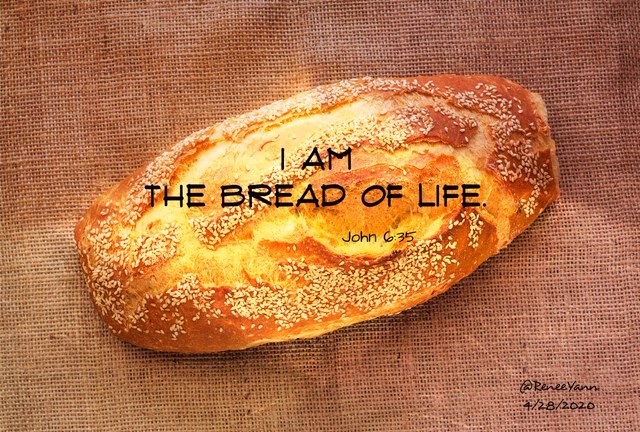
Jesus said to them, “I am the bread of life;
whoever comes to me will never hunger,
and whoever believes in me will never thirst.”

Stephen had this kind of radical faith. “Filled with the Holy Spirit”,  he could – even in the throes of human contradiction – “see the heavens opened and the Son of Man standing at the right hand of God.”

May our faith ever deepen that we too see God in the Bread of our ordinary daily lives. May that faith inspire us to act always with love, hope and mercy.

Music:  I Am the Bread, the Bread of Life – Brian Hoare 

Where Are We, Anyway?

March 31, 2020

Click here for readings

Today, in Mercy, we end the month of March in a very different place from where we began it.  On March 1st, I didn’t expect to be in midst of the Corona Desert did you?

Neither did the Israelites in today’s first reading expect to be in their particular desert. They had left the oppressions of Egypt with no certainties, but nonetheless with expectations. Now, after decades wandering the desert, those expectations turned into some typical complaints:

Why have you brought us up from Egypt to die in this desert,
where there is no food or water?
We are disgusted with this wretched food!

They even go so far as to blame a coincidental snake infestation on God, demanding that Moses get God to fix it.

desert

What’s going on here with our wandering ancestors? I think that, in our current circumstances, it might be worthwhile to consider that question. Our Gospel reading points us toward an answer.

Jesus has invited his community to a journey too – a journey away from the oppressions of injustice, selfishness, and lovelessness; to a place where “law” is not used as an excuse for domination; to a new community where all Creation shares equally in the Bread of Life.

But the Pharisees don’t get it. They are lost in a desert of their own illusions, needs, and fears. They can’t see past the sandstorms of their own construction.

That’s why Jesus tells them:

I am going away and you will look for me,
but you will die in your sin.
Where I am going you cannot come.

…. because you just can’t trust enough, let go enough to see that the journey is so much deeper than your present concerns. It is a journey of the soul from oppression to freedom, from selfishness to love, from blindness to light.

Jesus invites us too, even as we negotiate our desert journeys, to release our hearts to a world beyond appearances.

You belong to what is below,
I belong to what is above.
You belong to this world,
but I do not belong to this world.

Indeed, we must pay attention to the exigencies of our earthly journey, but today’s readings remind us that the true journey is infinitely deeper. That faith should inspire our hope, choices, and attitudes in what certainly seems like an awfully big desert.

Deserts can make us desperate, if we let them. Or they can shear us of everything that blocks our soul’s sight.

We may not see clearly beyond this momentary desert, but we are the children of an eternal and merciful God. May we trust our journey to that Immutable Loving Presence and allow ourselves to be made new.

Music: Everything is Holy Now – Peter Mayer

(Thanks to Sister Michele Gorman for sharing this beautiful song on Facebook)

Being Led to Light

Monday of the Fifth Week of Lent
March 30, 2020


Click here for readings

Today in Mercy, we encounter the stories of Suzanna and the woman taken in adultery. Both these stories always make me mad. Even though their ultimate lesson is the justice and mercy of God, I can’t help nettling every time I read them.

Here’s why. Still today, in so many instances, women continue to endure the same kind of assault, objectification, suspicion and blame — and still at the hands of judges, clerics, business and political leaders. Just let the newsreels of the past few years run through your mind. You’ll be as angry as I am.

So to save you from a continuing diatribe, I have gone back to a piece I wrote for the Catholic Health Association several years ago.  It looks at the themes of this week in Lent. It helps us to break through the stories to their point of redemption, to go through death to life, sin to forgiveness, judgement to mercy, darkness to light.


Reflection for the Fifth Week of Lent

 I will keep my covenant with you …
to be your God
and the God of your descendants after you.
~Genesis 17:7

roses
photo by Chi Pham

The golden June morning had broken bright and warm through the hospital windows. With its breaking, the attending physician and chaplain had received a page. Dorothy had taken an unexpected turn. She was struggling both to live and to die.

As they attended and comforted her, Dorothy managed to whisper ” … wait for Henry.” Henry, her husband of fifty-eight years, had arrived promptly at 7:00 AM daily for all the weeks of Dorothy’s hospitalization. Glancing at her watch, the chaplain saw that it was just 6:50 AM.

When, after ten eternal minutes, Henry appeared at the door, he carried a small bouquet of yellow roses from their beloved garden. Quickly apprehending the changed situation, he laid the roses aside and hurried to hold Dorothy for the last few minutes of her life. In the loving, covenanted presence Dorothy had waited for, she finally embraced a peaceful death.

It had not been easy for Dorothy to die nor, from then on, had it been easy for Henry to live. Still, through many bereavement visits, the chaplain watched their long, honest love arise to heal Henry. Through prayer and the benediction of memories, Henry realized that their love, like the roses still blooming in their garden, was both fragile and perpetual.

In this week’s readings, God again calls us to such a love. As God brought Lazarus, Suzanna and Shadrack out of darkness and death, so God promises to bring us. “I will keep my covenant with you,” God says. “Whoever keeps my word will never die.”

Accompanying Jesus, as he nears Jerusalem, let us trust and cherish these promises in our own darknesses and bereavements. Let us ask God to deliver us from both our sins and our judgements of others.

Music: No Shame – by Tenth Avenue North

That Little White Book

Friday of the Third Week of Lent

March 20, 2020

Click here for readings

Wednesday-20-March-1963-tf79df128030699e87a485b4eb093700302fe62c25f3a5cfc651f117a49786663k-lq

Today, in Mercy, I’m going to tell you a story. But first …

In our first reading, the passionate prophet Hosea offers us this quintessential Lenten advice:

Return, O Israel, to the LORD, your God;
you have collapsed through your guilt.
Take with you words,
and return to the LORD

In our Gospel, Jesus is giving advice too. A sincere scribe seeks out Jesus’ wisdom:

One of the scribes came to Jesus and asked him,
“Which is the greatest of all the commandments?”

Jesus instructs the scribe:

The Lord our God is Lord alone!
You shall love the Lord your God with all your heart,
with all your soul,
with all your mind,
and with all your strength.

Then Jesus goes on to tell him the second greatest commandment:

You shall love your neighbor as yourself.

Assessing the scribe’s sincerity, Jesus promises him:

“You are not far from the Kingdom of God.”


Praying with these passages on this particular date took me back to March 20, 1963, Wednesday of the 3rd week of Lent that year. I was almost 18 years old and, while not wise as a scribe, I too sought answers to guide my faith.

One place I found that  wisdom was at the desk of a wonderful Sister of Mercy, Sister Mary Giovanni. Like many high school girls back then, I hung around Sister’s homeroom after school. Her good humor, gentle interest, and kind encouragement nourished all of us still slightly silly but ever-so-earnest young women.

On that particular afternoon, an unusual white book sat on Sister’s desk. Its gold letters attracted me and I asked what it was. Sister said it was her community’s centenary book and that, if I wanted, I could borrow it to read.

That little book changed my life. Well, I guess what it actually did was to capture many loose threads running through my mind and heart, and to tie them into a conviction.

I had been toying with a religious vocation ever since third grade. I did love God with my whole heart, just like the young scribe in today’s Gospel. And I loved the nuns and I always wanted to be like them. But actually becoming like them was another story. 

That little white book gave me the courage and will to make that commitment. Here’s what it said:

The Sisters of Mercy,
in addition to the vows of poverty, chastity and obedience,
take a fourth vow of service of the poor, sick, and ignorant.

That was it! That short sentence opened my understanding to see that loving God had to be demonstrated in love of neighbor. The two great commandments are always interdependent.

So I decided to “take my words”, as Hosea encourages, and to ask God if He would have me as a Sister of Mercy.
follow

Less than a week after reading that book, I signed up to become a Sister of Mercy. And I have continued to become one every day for almost 60 years. Because just as Jesus said to the scribe, I believe I am “not far from the Kingdom of Heaven”. But I’m not there yet. Everyday is a chance to grow deeper into the glorious gift that was opened to me back in March 1963.

novices'_dining_room

As you pray with these passages today, take a long view of God’s continuing call in your life. You may have been called to marriage and parenthood, priesthood, a generous single life, a profession which allowed you to serve others. 

In each individual call, we are invited to love God with all our hearts and to love others as God loves them. Let’s pray for one another’s continuing deepening in our particular call.

Music: The Call – written by Vaughn Williams from the poetry of George Herbert
(Lyrics below)


the call

Grace-filled Water

Third Sunday of Lent

March 15, 2020

Click here for readings

Today, in Mercy, water flows through all our readings, inviting us to God’s refreshing Mercy.

Gen_rock

For the thirsty and testy Israelites, the water flows from the rock of their hopelessness. Wandering in the desert for days on end, they are exhausted and bewildered. Each sunrise seems to push their destination farther away rather than bring it closer. They are thirsty … but for a lot more than a cool drink.

And God gives everything they need – not only water, but surprised hope and renewed confidence as they witness the mighty rock split at Moses’ touch.

Paul points out that it is, indeed, that hope which truly slakes the deeper thirst. 

And hope does not disappoint,
because the love of God has been poured out into our hearts
through the Holy Spirit who has been given to us.

In our Gospel story, Jesus awakens in the Samaritan woman a thirst and hope she didn’t know she had. The layers of her tangled life had formed an impervious rock around her, insulating her from her own soul’s needs.

800px-Duccio_di_Buoninsegna_-_Christ_and_the_Samaritan_Woman_-_Google_Art_Project
Christ and the Samaritan Woman by Duccio di Buoninsegna

Jesus, “tired from the journey”, expressed his own need to her. This simple request unleashes a cascade of searching from the woman. Jesus, seeing her readiness for grace, catches all that pours out from her. He transforms it into a challenge for conversion:

Jesus answered and said to her,
“If you knew the gift of God
and who is saying to you, ‘Give me a drink, ‘
you would have asked him
and he would have given you living water.”

And she accepts the challenge:

Sir, give me this water,
so that I may not be thirsty again.

As we pray today, we may sense a desert within us. Or we may feel that our soul’s journey has become frustratingly circuitous. We may be like the Samaritan woman, sitting beside a well that seems slowly drying out. Maybe the juices have dwindled in our souls.

In these readings, as we listen to the Ancients call out for flowing grace, we may find a way to ask God for the refreshment we need just now.

Living Waters – Gettys