Psalm 95:Hear the Voice

Twenty-third Sunday in Ordinary Time

Sunday, September 6, 2020

Today, in God’s Lavish Mercy, we pray with Psalm 95, a favorite of liturgists, and one we have met several times before. What different light might it offer us today as we pray?
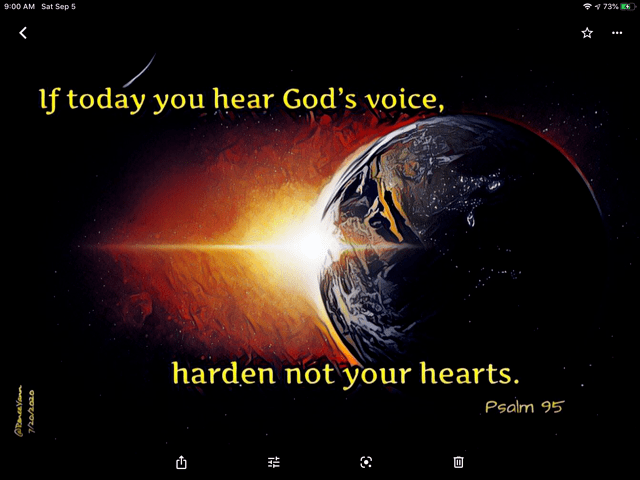
The psalm today serves as a bridge between powerful readings about neighborly love and fraternal correction. These readings tell us to listen for God’s heartbeat in our world and to enter its rhythm. 
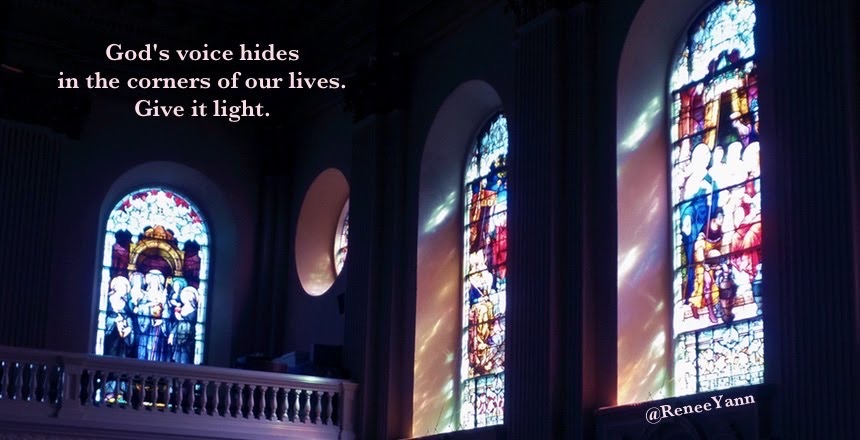
They also tell us to love our neighbor enough that, if she or he is out of synch with God’s rhythm, we help align them by our counsel and example.

Have you ever tried to do that? It’s really tough!


First of all, we have to be so vigilant about the purity of our own intentions. We can’t instruct our friends in righteousness out of our own confusion. So often, our desire for others to “improve” grows out of our opinionated self-interest. You might remember what Jesus said about extracting the plank from our own eye before removing the splinter from our neighbor’s!


Next we really have to love our sister or brother and sincerely want their good. We have to forgive them any hurt they have caused us. We have to be bigger than most of us, speaking for myself, are inclined to be.

As the psalm tells us, we can’t have hard hearts. As we approach our sister or brother, our hearts must be softened by listening, patience, understanding, humility and hope. We have to be sure the “voice” we’re sharing comes from God not self.

Harden not your hearts as at Meribah,
as in the day of Massah in the desert,
Where your fathers tempted me;
they tested me though they had seen my works.

And the flip of all this, of course, is that when we are the one out of rhythm, we receive loving correction in the same spirit of openness.

Lots of Grace is needed on both sides of this dance! May we learn and receive it!


Poetry: The Gift by Li-Young Lee

To pull the metal splinter from my palm
my father recited a story in a low voice.
I watched his lovely face and not the blade.
Before the story ended, he’d removed
the iron sliver I thought I’d die from.

I can’t remember the tale,
but hear his voice still, a well
of dark water, a prayer.
And I recall his hands,
two measures of tenderness
he laid against my face,
the flames of discipline
he raised above my head.

Had you entered that afternoon
you would have thought you saw a man
planting something in a boy’s palm,
a silver tear, a tiny flame.
Had you followed that boy
you would have arrived here,
where I bend over my wife’s right hand.

Look how I shave her thumbnail down
so carefully she feels no pain.
Watch as I lift the splinter out.
I was seven when my father
took my hand like this,
and I did not hold that shard
between my fingers and think,
Metal that will bury me,
christen it Little Assassin,
Ore Going Deep for My Heart.
And I did not lift up my wound and cry,
Death visited here!
I did what a child does
when he’s given something to keep.
I kissed my father.

Music: Let Me Hear Your Voice – Francesca LaRose

Psalm 37: Divine Delight

Friday of the Twenty-second Week in Ordinary Time

Friday, Sept 4, 2020


Today, in God’s Lavish Mercy, we pray with Psalm 37, a psalm which Walter Brueggemann says describes “a world that works!”


Jalopy with headache 🙂

Living in a world that sometimes feels like a crumbling old jalopy, “a world that works” sounds very inviting. So how does the psalmist imagine such a world’s genesis?

Trust in the LORD and do good,
that you may dwell in the land and be fed in security.
Take delight in the LORD,
you will be granted your heart’s requests.


When we hear a consoling verse like this, we might be tempted to picture a magical world where whatever we desire is granted to us – you know, sort of like the genie in the lamp! We’re good people – we deserve that, don’t we???


Rather, what we have been given, undeserved, is the eternal assurance that God is with us, and that as we open ourselves to God’s gracious Presence, our hearts will be transformed.

For ancient Israel, that heart-opening was accomplished by making just choices, remaining faithful in difficulty, and building a community of mutual care.

Turn from evil and do good,
that you may abide forever;
For the LORD loves what is right,
and forsakes not his faithful ones.
Criminals are destroyed 
and the posterity of the wicked is cut off.


So, in the end, it is surely not that our “every wish” is granted. It is, instead, that we become so aligned with God’s hope for all Creation that it becomes our greatest desire and delight. We trust and live within God’s loving and Omnipotent Will for our good.

The salvation of the just is from the LORD;
God is their refuge in time of distress.
And the LORD helps them and delivers them;
delivering them from the wicked and saving them,
because they take refuge in God.


Poetry: Primary Wonder – Denise Levertov
( I am repeating this poem and, oh my, it is so worthy of the repetition!)

Days pass when I forget the mystery.
Problems insoluble and problems offering
their own ignored solutions
jostle for my attention, they crowd its antechamber
along with a host of diversions, my courtiers, wearing
their colored clothes; cap and bells.
                                                        And then
once more the quiet mystery
is present to me, the throng's clamor
recedes: the mystery
that there is anything, anything at all,
let alone cosmos, joy, memory, everything,
rather than void: and that, O Lord,
Creator, Hallowed One, You still,
hour by hour sustain it.

Music: I Delight in You, Lord – David Baroni

Psalm 24: Vanity, Vanity

Memorial of Saint Gregory the Great, Pope and Doctor of the Church

Thursday, September 3, 2020


Today, in God’s Lavish Mercy, we pray with Psalm 24 which encourages us to be sinless, pure of heart, and humble. And that’s hard!

Who can ascend the mountain of the LORD?
or who may stand in his holy place?
He whose hands are sinless, whose heart is clean,
who desires not what is vain.


Do you remember the song “You’re So Vain”? Here is a reminder.

The song expresses a common understanding of the word “vanity”:

excessive pride in or admiration of one’s own appearance or achievement


We all know people who seem to think they’re hot stuff. Maybe we’re even one of them! But I think that often a person behaving vainly really is quite unsure of himself.

The apparent vanity is a veneer to hide the emptiness inside. It is a veiled fear that, rather than being “all that”, one is really “not enough”.

The word vanity comes from the Latin root vanus which means empty – not “empty” with a readiness to be filled. Instead it connotes an emptiness that rattles with accumulated pretenses and falsehoods. It is a place of loud but lonely echoes.


Paul addresses this kind of emptiness when he writes to the Corinthians. He tells them not to get caught up in the contest of human vanity because we already are sufficient in God’s love and grace. Everything important is already ours in Christ, in God.

So let no one boast about human beings, for everything belongs to you,
Paul or Apollos or Cephas,
or the world or life or death,
or the present or the future:
all belong to you, and you to Christ, and Christ to God.


Psalm 24 assures us that to participate in this blessing, to be embraced by God’s favor only this is sufficient:

Who can stand in God’s holy place?
The clean of hand and pure of heart,
who have not given their soul to useless things,
to what is vain.
They will receive blessings from the LORD,
and justice from their saving God.


Poetry: Vanity by George Herbert

The fleet astronomer can bore 
And thread the spheres with his quick-piercing mind: 
He views their stations, walks from door to door, 
         Surveys, as if he had designed 
To make a purchase there; he sees their dances, 
                   And knoweth long before 
Both their full-eyes aspècts, and secret glances. 
         
         The nimble diver with his side 
Cuts through the working waves, that he may fetch 
His dearly-earnèd pearl, which God did hide 
         On purpose from the venturous wretch; 
That he might save his life, and also hers 
                   Who with excessive pride 
Her own destruction and his danger wears. 
         
         The subtle chymic can divest 
And strip the creature naked, till he find 
The callow principles within their nest: 
         There he imparts to them his mind, 
Admitted to their bed-chamber, before 
                   They appear trim and dressed 
To ordinary suitors at the door. 
         
       What hath not man sought out and found, 
But his dear God? who yet his glorious law 
Embosoms in us, mellowing the ground 
         With showers and frosts, with love and awe, 
So that we need not say, “Where’s this command?” 
                   Poor man, thou searchest round 
To find out death, but missest life at hand.

Song: As We Seek Your Face – Divine Hymns

Psalm 33: Fashioned by God

Wednesday of the Twenty-second Week in Ordinary Time

Wednesday, September 2, 2020


Today, in God’s Lavish Mercy, we pray again with Psalm 33, this time with one different verse from a few days ago:

From heaven’s fixed throne God beholds
all who dwell on the earth,
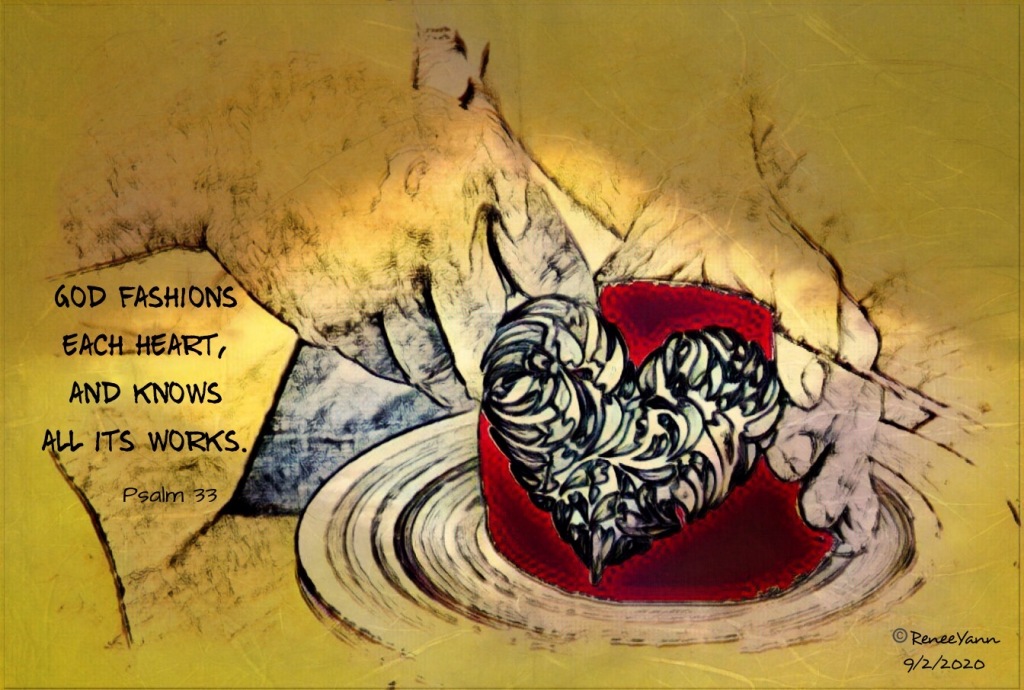
God Who fashions each heart
and knows all its works.

Think of that: God fashions each heart.

The phrase has special meaning for me today because, yesterday, we welcomed a precious new baby girl into our family.

I look at her newborn innocence and realize that she is the freshest, most hopeful breath of God, still so wrapped in the heavenly air from Whom we all receive life.


We all received that Breath once and it lives eternally within us. Every one of us has received a heart fashioned in God’s own image.

Sometimes that reality is hard to believe about ourselves and others, as it seems to have been for the Corinthians in today’s first reading. Sometimes we make a real mess of the gift we have been given!

Nevertheless, the gift is true and remains true despite our worst efforts!😉


Reflecting on today’s Gospel, there may be “various diseases” and dysfunctions that we wish to bring to the healing hands of Jesus today – for ourselves and for our world. We ask God to restore our innocence and hope throughout our lives and world.

In order to remember and live within the sacred truth that God breathed us into being, we might repeat today’s psalm refrain throughout our day:

Blessed are we, chosen to be God’s own.


Poetry: Two poems today to bless our dear new child Claire:

Songs of Innocence - William Blake
Little Lamb who made thee
Dost thou know who made thee
Gave thee life & bid thee feed.
By the stream & o’er the mead;
Gave thee clothing of delight,
Softest clothing wooly bright;
Gave thee such a tender voice,
Making all the vales rejoice!
Little Lamb who made thee?
Dost thou know who made thee?

Little Lamb, I’ll tell thee; 
Little Lamb, I’ll tell thee:
He is called by thy name, 
For He calls Himself a Lamb 
He is meek, and He is mild, 
He became a little child.
I a child, and thou a lamb, 
We are called by His name. 
Little Lamb, God bless thee! 
Little Lamb, God bless thee!


Christina Rossetti - Holy Innocents
Sleep, little baby, sleep;
The holy Angels love thee,
And guard thy bed, and keep
A blessed watch above thee.
No spirit can come near
Nor evil beast to harm thee:
Sleep, sweet, devoid of fear
Where nothing need alarm thee.
The love which doth not sleep,
The eternal Arms around thee:
The shepherd of the sheep
In perfect love hath found thee.
Sleep through the holy night,
Christ-kept from snare and sorrow,
Until thou wake to light
And love and warmth to-morrow.

Music: Innocence – Roberto Cacciapaglia

Psalm 145: Mercy Makes Us Sing

Tuesday of the Twenty-second Week in Ordinary Time

September 1, 2020

2018 reflection on Corinthians 

Today, in God’s Lavish Mercy, we pray with Psalm 145, a consoling hymn of confidence in God’s Mercy.

And, my dears, all I really want to say to you is, “September 1st! God bless us! We have made it this far in these times (as one gifted friend calls them, “these quantum weird times”.)

And, certainly, we pray in profound companionship with all those who suffer because of this pandemic. But at the same time we are so grateful for all who have, so far, been delivered from its grasp!

So hooray for us, and hooray for God! Let’s pick up our hope, energy and faith by drinking in the beauty of Psalm 145. Together, in faith, we CAN make it to a vaccine time- a time to forget,  AND to remember all that might transform and bless us from these days…

… because God is MERCY,
and there is some gift for all of us
even in shadow

The LORD is gracious and merciful,
slow to anger and of great kindness.
The LORD is good to all
and compassionate toward all his works.


Jesus meets the demon in today’s Gospel, a demon who is no match for Uncreated Grace. By the power of our Baptism, let us draw that Grace into our spirits, into our world today as we pray. 

And let us be at once both astonished and confident in the power of God’s Word to heal even the immense darkness of our world.

Jesus went down to Capernaum, a town of Galilee.
He taught them on the sabbath,
and they were astonished at his teaching
because he spoke with authority.


Poetry: The Fountain – Denise Levertov

Don’t say, don’t say there is no water
to solace the dryness at our hearts.
I have seen

the fountain springing out of the rock wall
and you drinking there. And I too
before your eyes

found footholds and climbed
to drink the cool water.

The woman of that place, shading her eyes,
frowned as she watched—but not because
she grudged the water,

only because she was waiting
to see we drank our fill and were
refreshed.

Don’t say, don’t say there is no water.
That fountain is there among its scalloped
green and gray stones,

it is still there and always there
with its quiet song and strange power
to spring in us,
up and out through the rock.

A Second Poem for the month’s beginning: September by Deborah Landau
Some of us might also find ourselves somewhere  in this wistful poem. I just like it. Thought some of you might too. 🤗

Dazzling emptiness of the black green end of summer no one
running in the yard pulse pulse the absence.

Leave them not to the empty yards.

They resembled a family. Long quiet hours. Sometimes
one was angry sometimes someone called her "wife"
someone's hair receding.

An uptick in the hormone canopy embodied a restlessness
and oh what to do with it.

(How she arrived in a hush in a looking away and not looking.)
It had been some time since richness intangible
and then they made a whole coat of it.

Meanwhile August moved toward its impervious finale.

A mood by the river. Gone. One lucid rush carrying them along.

Borderless and open the days go on—

Music: I Will Praise Your Name – Marty Hagen and David Haas

Antiphon: | will praise your name, my King and my God.
1. I will give you glory, my God and King, and I will bless your name forever.
Every day I will bless and praise your name forever.
2. The Lord is full of grace and mercy. He is kind and slow to anger.
He is good in all His works and full of compassion.
3. Let all your works give you thanks, O Lord, and let all the faithful bless you.
Let them speak of your might, O Lord, the glory of your kingdom.
4. The Lord is faithful in all His words, and always near. His name is holy.He lifts up all those who fall. He raises up the lowly.

Psalm 119: Divine Thread

Monday of the Twenty-second Week in Ordinary Time

August 31, 2020


Today, in God’s Lavish Mercy, we pray with Psalm 119, a song of the wisdom that comes from holiness.

Your command has made me wiser than my enemies,
for it is ever with me.
I have more understanding than all my teachers
when your decrees are my meditation.
I have more discernment than the elders,
because I observe your precepts.

Psalm 119: 97-98

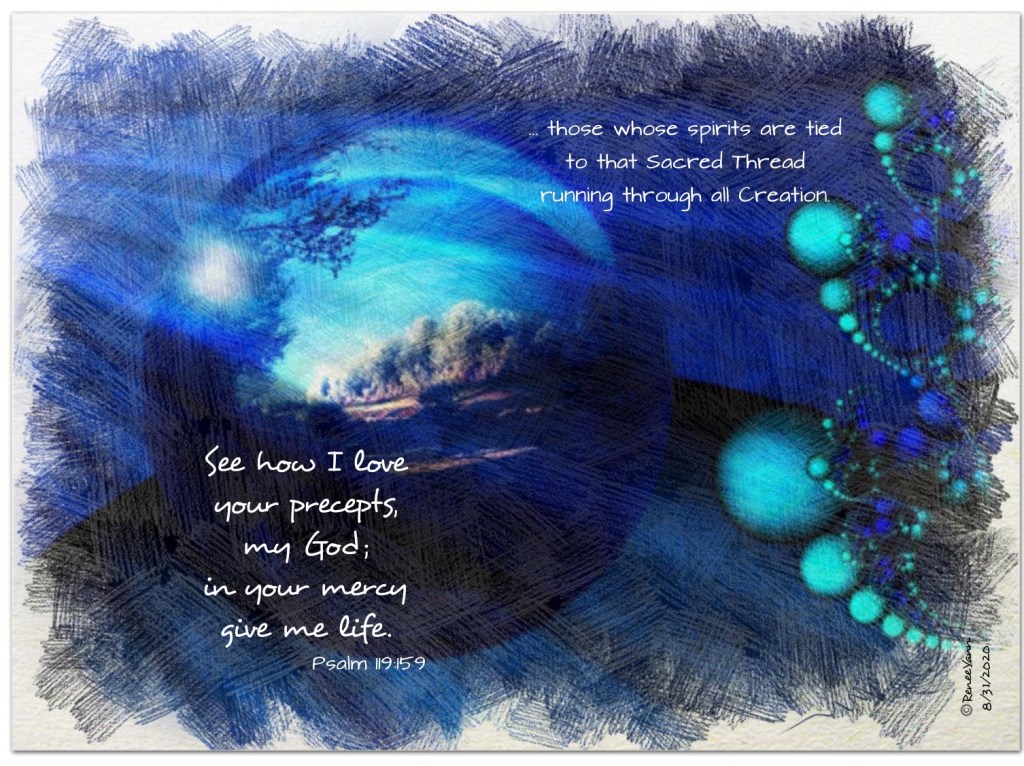
And we’ve all met them, haven’t we – those grounded, simple, wise and joyful people whose spirits are tied to that Sacred Thread running through all Creation. These blessed souls may be young or old, schooled or not. No matter – they shine with the reflection of Wisdom Itself.

Paul humbly claims such wisdom in our first reading. It is not a worldly persuasiveness, but rather a demonstration of truth and power grounded in the Spirit.

… my message and my proclamation
were not with persuasive words of wisdom,
but with a demonstration of spirit and power,
so that your faith might rest not on human wisdom
but on the power of God.

1 Corinthians 2: 4-5

In our Gospel, Jesus chooses his hometown synagogue to announce that he is the fulfillment of Isaiah’s prophecy, the Spirit and Wisdom of God:

The Spirit of the Lord is upon me,
because he has anointed me
to bring glad tidings to the poor.
He has sent me to proclaim liberty to captives
and recovery of sight to the blind,
to let the oppressed go free,
and to proclaim a year acceptable to the Lord.

Luke 4: 18-19 (Isaiah 61: 1-2)

Jesus is the Incarnation of Wisdom, the Divine Spirit that surpasses all human understanding.

Many turned away from Jesus at this proclamation. May we never be among them.

From every evil way I withhold my feet,
that I may keep your words.
From your ordinances I turn not away,
for you have instructed me.

Psalm 119: 101-102

Poetry: Wisdom by Rumi

I have one small drop of knowing in my soul. 
Let it dissolve in Your ocean.


Music: Be Thou My Vision – Eden’s Bridge ( On the video, you can drop the menu you down using the little arrowhead on the right under the picture. The Irish and English lyrics will then be displayed.)

Psalm 63: The Longing

Twenty-second Sunday in Ordinary Time

August 30, 2020

Today, in God’s Lavish Mercy, we pray with the magnificent Psalm 63 which captures the soul’s deep longing for God.

It is a longing that, once released in the heart, must be satisfied.


In our first reading, Jeremiah experiences it akin to an addiction, the power of it consuming his life:

I say to myself, I will not mention him,
I will speak in his name no more.
But then it becomes like fire burning in my heart,
imprisoned in my bones;
I grow weary holding it in, I cannot endure it.

Jeremiah 20:9

Paul, in his letter to the Romans, says not to resist the longing, but to let ourselves be consumed by it like a sacrificial offering:

I urge you, brothers and sisters, by the mercies of God,
to offer your bodies as a living sacrifice,
holy and pleasing to God, your spiritual worship. 

Romans 12:1

Jesus, in our Gospel, is the One who surrenders himself fully to that holy longing. He calls us to imitate him:

For whoever wishes to save his life will lose it,
but whoever loses his life for my sake will find it.


These are profound readings calling us a place that words cannot describe, a place where the Cross intersects with the truth of our lives. May we have the grace to hear and believe.


Poetry: The Longing – Rumi

There is a candle in your heart,
ready to be kindled.
There is a void in your soul,
ready to be filled.

You feel it, don't you?
You feel the separation
from the Beloved.

Invite Love to quench you,
embrace the fire.

Remind those who tell you otherwise that 
Love
comes to you of its own accord, 
and the longing for it cannot be learned in any school.

Music: The Prayer – Montserrat Cabalé

Psalm 33: Unfailing Trust

Memorial of the Passion of Saint John the Baptist

August 29, 2020

Today, in God’s Lavish Mercy, we pray again with Psalm 33. Today’s verses console us with the reminder that God is watching over us, as individuals and as communities.

Blessed the nation whose God is the LORD,
the people chosen for God’s own inheritance.
From heaven the LORD looks down;
seeing all humanity.

You know, sometimes I wonder! How can God see some of the things going on in the world and not intervene? How can God let innocence suffer? The psalm seems to promise that intervention, but does it really?

But see, the eyes of the LORD are upon those who fear God,
upon those who hope for God’s kindness,
To deliver them from death
and preserve them in spite of famine.

That last line is the zinger. It doesn’t say there will be no famine. It simply says that the God-fearing will be preserved despite the famine.


Hasn’t your life taught you that? We’ve all been through lots of things that we asked God to take away – pain, sadness, fear, loss. Probably most, if not all, of those burdens remained with us until we worked through them. 

By faith and God’s Grace, we came through the other side stronger, deeper, more faithful. If we can trust God, “wait on the Lord”, the way comes to us – a way that leads us more deeply into God’s freedom and joy.

Our soul waits for the LORD,
who is our help and our shield,
For in God our hearts rejoice;
in God’s holy name we trust.

Let’s pray for that kind of faith and trust for ourselves and for our beloveds. Let’s pray for the courage to learn it by unfailing prayer and practice.


Poetry: In Memoriam A. H. H. OBIIT MDCCCXXXIII: 54
by Alfred Lord Tennyson

Oh, yet we trust that somehow good 
         Will be the final end of ill, 
         To pangs of nature, sins of will, 
Defects of doubt, and taints of blood; 

That nothing walks with aimless feet; 
         That not one life shall be destroy'd, 
         Or cast as rubbish to the void, 
When God hath made the pile complete; 

That not a worm is cloven in vain; 
         That not a moth with vain desire 
         Is shrivell'd in a fruitless fire, 
Or but subserves another's gain. 

Behold, we know not anything; 
         I can but trust that good shall fall 
         At last—far off—at last, to all, 
And every winter change to spring. 

So runs my dream: but what am I? 
         An infant crying in the night: 
         An infant crying for the light: 
And with no language but a cry. 

Music: The Passion of John – Johann Sebastian Bach

This piece is not about John the Baptist. It is an excerpt from two hour meditation of the Passion narrative in John the Evangelist’s Gospel.

However, this beautiful excerpt fits so well with today’s reflection.

Psalm 33:Love’s Design

Memorial of Saint Augustine, Bishop and Doctor of the Church

August 28, 2020


Today, in God’s Lavish Mercy, we pray with Psalm 33, a song of praise calling the people to rejoice in God’s justice and kindness.

In its attitude of trust and freedom, the Psalm might remind us of Robert Browning’s verse:

God’s in his heaven. All’s right with the world.

But neither in the psalmist’s time, nor in Browning’s, was everything really “all right” with the world. Things are never really “all right” with the world. There is always war, crime, hunger, disease, natural disasters, and a slew of other troubles brewing somewhere.

So how can the psalmist or any other preacher invite us to trust, believe, and rejoice like this?

Exult, you just, in the LORD;
praise from the upright is fitting.
Give thanks to the LORD on the harp;
with the ten-stringed lyre chant his praises.


Keywords in this verse give us a clue: those who are just and upright will see the pattern of God’s mercy which lies deeper than the troubles of this world. They will trust and be comforted by God’s transcendent faithfulness to us in all things. Their faith and joy in the face of suffering will confound the faithless.


Calling us to the full meaning of Christ’s sacrificial love, Paul reiterates this mysteriously contradictory truth in our first reading :

For the foolishness of God is wiser than human wisdom,
and the weakness of God is stronger than human strength.

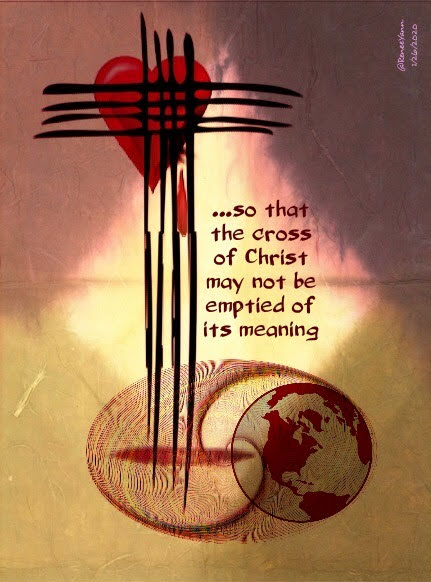
For Christians, the Cross is the ultimate symbol of this profound wisdom and strength. It is a mystery too deep for our understanding, but by faith we may slowly become immersed in its Truth.


The message of the cross is foolishness to those who are perishing, 
but to us who are being saved it is the power of God.

1 Corinthians 18

As we pray with Psalm 33 today, let us be aware of the cause of our joy – a holy joy deeply rooted in God, trusting God’s Will for our salvation in the pattern of Jesus Christ.


For upright is the word of the LORD,
and all God’s works are trustworthy.
The LORD loves justice and right;
of the kindness of the Lord the earth is full.


Poetry: Primary Wonder – Denise Levertov

Days pass when I forget the mystery.
Problems insoluble and problems offering
their own ignored solutions
jostle for my attention, they crowd its antechamber
along with a host of diversions, my courtiers, wearing
their colored clothes; cap and bells.
                                                        And then
once more the quiet mystery
is present to me, the throng’s clamor
recedes: the mystery
that there is anything, anything at all,
let alone cosmos, joy, memory, everything,
rather than void: and that, O Lord,
Creator, Hallowed One, You still,
hour by hour sustain it.

Music: Your Cross Changes Everything – Matt Redman

Psalm 145: Prayer Answered

Memorial of Saint Monica

August 27, 2020


Today, in God’s Lavish Mercy, on this feast of St. Monica, we pray with Psalm 145.

We can almost picture the psalm’s sentiments pouring out in Monica’s prayer. For years, she had prayed for her son Augustine’s conversion. She was canonized for the level of her persevering prayer – a prayer blessed with the amazing answer of St. Augustine’s holy life.

Every day will I bless you,
and I will praise your name forever and ever.
Great is the LORD and highly to be praised;
his greatness is unsearchable.

Like the answer to most prayers, Monica’s came after the long working of God’s mysterious ways. Her own life was shaded by suffering and loss. But, she was steadfast in her hope over the nearly two decades it took to see Light dawn in Augustine.


Generation after generation praises your works
and proclaims your might.
They speak of the splendor of your glorious majesty
and tell of your wondrous works.


As we reflect on the generations of our own families, and the decades of our own lives, there are many “Monica-Augustine” stories. Whenever we pray for life to lead us and our beloveds to God, we pray like Monica.

Today, let’s bring our own “Augustines” to God in hopeful prayer. And let’s thank God for any “Monica” who has done this loving service for us over our lives.

I think this morning of my mother’s well-worn prayer book. The little devotional volume had been fattened with a number of prayer cards stuffed in its thin pages. One day, just before my mother died, I noticed this one: Prayer for My Daughter, a Nun. I can’t say I was exactly surprised by it. I supposed Mom prayed for me. But the card blessed me in a vey tender way and made me confident that my life would continue to be blessed.


Discovering the card also made me aware of my responsibility to pray daily for my family, friends, and community. They are my “Augustines” in whatever challenges they may face in life – just as I hope I am somebody’s too. Because, friends, we belong to one another in the Communion of Saints, and our “family” is fed not by blood, but by the Spirit.

The generations discourse of the power of your awesome deeds
and declare your greatness.
They publish the fame of your abundant goodness
and joyfully sing of your justice.


Poetry: St. Augustine and Monica by Charles Tennyson Turner

Her weeping kiss – for years, her sorrow flowed
At last into his wilful blood; he owed
To her his after-life of truth and bliss:
And her own joy, what words, what thoughts could paint!
When o’er his soul, with sweet constraining force,
Came Penitence – a fusion from remorse –
And made her boy a glorious Christian saint.
Oh ye, who tend the young through doubtful years
Along the busy path from birth to death,
Parents and friends! forget not in your fears
The secret strength of prayer, the holy breath
That swathes your darlings! think how Austin’s faith
Rose like a star upon his mother’s tears!


Music: (something for opera fans among us) La Conversione di Sant Agostino, Oratorio by Johann Adolph Hasse

Hasse begins La Conversione di Sant’ Agostino with an orchestral introduction that establishes the work‘s tonal center in the key of B-flat major, with most arias composed within related keys. From the grandeur and dynamic intensity of the Introduction comes the first vocal entrance of the oratorio. The listener acts as a voyeur into a conversation between Simpliciano (tenor), a priest, and Monica (soprano), the mother of Saint Augustine of Hippo, in which Monica expresses her fears that her son may never change his wicked ways. This urgent desire becomes the core dramatic theme throughout the oratorio with Alipio (alto), the friend, and Navigio (bass), the brother, serving to intensify the desperate desire for conversion. The role of Saint Augustine (alto) is secondary to that of his mother, Monica. Saint Augustine only has two arias, both dealing with his desire to find release from his sinful ways. His conversion is explicitly stated in the Part Two aria in which he begs God to look upon him with compassion following the censure of his own heart.