A Passion Like Christ’s

Memorial of the Passion of Saint John the Baptist

Thursday, August 29, 2019

Readings: http://www.usccb.org/bible/readings/082919.cfm

Today, in Mercy, we commemorate the Passion of John the Baptist who, besides Mary, was the greatest saint embracing both the Old and the New Testaments.

When I was young, the memorial was simply referred to as “The Beheading of John the Baptist”. The term “passion” captures its meaning so much more clearly:

  • it inclines us to realize the similarities between John’s passion and death and that of Jesus.
  • it shifts the power of the event to John, who chose his fate by the courage of his witness, rather than to see Herod, the “beheader”, as the agent of the story.

John’s whole prophetic life was part of his “passion”. It inevitably led him to this ultimate confrontation with evil.

Walter Bruggemann, in his transformational book “The Prophetic Imagination” writes about prophets. He indicates that prophets emerge in the context of “totalism” – those paralyzing systems which attempt to control and dominate all freedom and possibility.

Totalism kills ideas, hope, freedom, choice, self-determination, and creativity for the sake of controlling reality for its own advantage. Totalism is the ultimate “abusive relationship “.

Brueggemann defines the prophet as one engaged in these three tasks:

  • the prophet is clear on the force and illegitimacy of the totalism.
  • the prophet pronounces the truth about the force of the totalism that contradicts the purpose of God.
  • the prophet articulates the alternative world that God has promised, and that God is actually creating within the chaos around us.

Every age requires prophets because every age is infected with “Herods” trying to thwart God’s reign of love, mercy, truth, freedom, and joy. In our own time, the poison of totalism is quite evident in those systems fueled by racism, militarism, financial duplicity, desecration of the earth, and the sad array of other ideologies that cripple humanity.

Today, as we pray with this great saint, may we be inspired to respond to our own prophetic call – to be prophetic signs of love, mutual reverence, joy, Gospel justice,and lavish mercy for our world.

Music: I think of this song by Simon and Garfunkel as the modern day song of John the Baptist.
https://youtu.be/XgbBLKet14E

Wide Mercy

Memorial of Saint Pius X, Pope

August 21, 2019

Click here for readings

Today, in Mercy,  in our reading from Judges, we meet two guys who are polar opposites of each other: Jotham and Abimelech.

Jotham was the youngest of the 70 sons of Gideon (yes, 70 – not a typo. Makes one think of The King and I.) Abimelech is his half-brother, son of Gideon’s Shechemite concubine.

To put the story in a nutshell, Jotham is the goodie and Abimelech is the baddie. Abimelech, lusting to be king, engages his Shechemite family to kill the 70 sons of Gideon. Only Jotham survives. So in our reading, Jotham  prophesies by parable, warning the people that they have made a serious mistake in allowing Abimelech to grasp the kingship.

Praying with this reading, we may realize that some things never change. Human beings still jockey for political power and economic domination. Nations still slaughter and suppress other nations in that pursuit. Some leaders still commandeer control by deception and pretense. The voting populace still allows itself to be hoodwinked by tyrants in disguise.

Jotham doesn’t accept the old adage that religion and politics don’t mix (or however they may have phrased it in his day). He says true leadership must grow from the good faith of both leaders and followers. He says, in parable form, that leaders must be willing to set their own pursuits aside for the good of the people. Otherwise, an avaricious fire burns up the heart of the people.

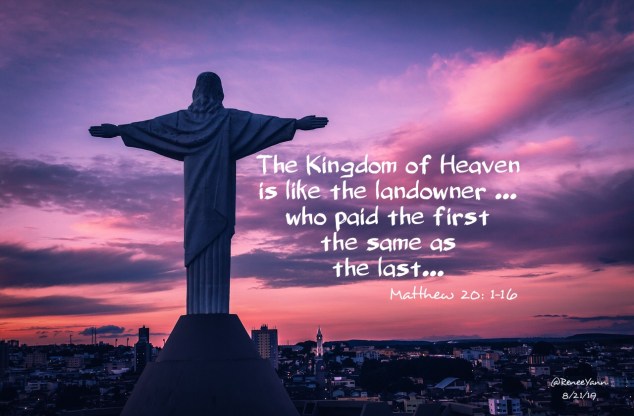
The landowner in Matthew’s Gospel is a leader in the pattern of God. He administers his charge in such a way that all find benefit. His methods are contradictory and irrational to anyone who fails to see the universal creaturehood of the human family. He reigns from mercy not merit, because he knows that all have full merit in God.

wide mercy

Certainly, my prayer leads me to consider how these principles affect my own leadership responsibilities whether within family, community, workplace, or world.

I am also led to consider how I must respond, just as Jotham did, to any leader or administration that stands in contradiction to these principles.

Faith and morality not only mix with politics, they are its core. Bereft of these, politics becomes nothing but a power game in which the poorest and weakest are the chips.

But, in this Gospel parable, Jesus says his “game” is just the opposite. At his table, the first shall be last and the last first.

These readings have much to offer us as we daily try to right our hearts with the God of infinite mercy.

Music: There’s a Wideness in God’s Mercy – written by Frederick Faber in 1862
Rendered here by Nate Macy

https://youtu.be/l5LN1ZvwWfs

The Basket … The Women

Tuesday of the Fifteenth Week in Ordinary Time

July 15, 2019

Click here for readings

Today, in Mercy, little Moses is saved from the Pharaoh’s wrath against the Israelites. It is a theme we are familiar with, notably repeated in the New Testament when Herod orders the slaughter of the Holy Innocents. In that event Jesus, like Moses, is spared by clandestine human intervention.

Exodus2_3 basket

The interveners in Exodus are all women – Moses’ mother, sister, Pharaoh’s daughter, and maid. Each of them decides to practice what we, today, call “civil disobedience“ – to stand and act against an immoral government order. Each woman becomes an agent through whom God actualizes the promise of life and freedom. And their choices are interdependent. They need to be a community of holy resistance in order to succeed.

An apt symbol for this agency is the papyrus basket, fortified with bitumen and pitch, and set afloat in the very river where Pharaoh had ordered the babies to be drowned. The basket is reminiscent of Noah’s ark, that vessel which preserved the diversity of life for future generations.

Sadly, history often has repeated the drama in which soulless leaders set a policy to extinguish the innocent. Many perish in that savagery. But many also rise up to bravely weave a “basket” of solidarity and compassion for the persecuted. Even in our own time, we see this story unfolding on the borders of xenophobic nations, whose leaders are indifferent to shaping just and moral policies.

But God is always at work in the world to accomplish the Promise of Life for God’s Creatures. Often, as in the story of infant Moses, God is not named – but rather is  evident as a relentless, compassionate force in the courageous choices of caring human beings.

As we pray today, might we find ourselves somewhere in this story? How might this finding inspire us to be God’s agents for life in our own time?

Video Clip from “The Prince of Egypt” (Lyrics below)

Hush now, my baby. Be still love, don’t cry
Sleep as you’re rocked by the stream
Sleep and remember my last lullaby
So I’ll be with you when you dream
Drift on a river
That flows through my arms
Drift as I’m singing to you

I see you smiling
So peaceful and calm
And holding you, I’m smiling, too
Here in my arms
Safe from all harm
Holding you, I’m smiling, too

Hush now, my baby
Be still, love, don’t cry
Sleep like you’re rocked by the stream
Sleep and remember this river lullaby
So I’ll be with you when you dream
Here in my arms
Safe from all harm
Holding you, I’m smiling, too

Sleep and remember this river lullaby
And I’ll be with you when you dream
Sleep and remember this river lullaby
And I’ll be with you when you dream

Journey through Exodus

Memorial of Saint Bonaventure, Bishop and Doctor of the Church

July 15, 2019

Click here for readings

Today, in Mercy, we begin a three-week journey through the Book of Exodus. The word “journey” is used purposefully because the Book not only narrates a journey in history, it invites us to move with it into a deeper spiritual freedom within ourselves.

It also impresses me that these weeks of reading come to us during a time when the world witnesses oppressed peoples exiting their ravished homelands in search of a sustainable life. Our prayerful reading of these Exodus passages may bring us deeper understanding, compassion, and advocacy courage for these struggling sisters and brothers.

In today’s introduction to Exodus, the narrator provides a transition from the closing of Genesis to the new situation in Egypt. Many years have passed. Favored Joseph is long dead. A “new king”, never named perhaps from contempt of his evilness, “knows nothing” of Joseph. If we don’t care enough to “know” another, we can never care enough to respect and foster their life.

Ex1_10_oppress

This Pharaoh’s sole preoccupation is to preserve Egyptian dominance . He was a man driven by irrational fears. To allay those fears, he was willing to suppress the life of a people who had lived peacefully in Egypt for hundreds of years. 

The Pharaoh begins by objectifying the Israelites as potential enemies and terrorists.

He orders their containment and oppression, moving them to encampments. Ironically, these encampment cities had originally been built, at Joseph’s direction, to contain surplus grain before the famine so that Egypt would not starve!

Still, the Israelites thrive and grow. They are the children of God’s Promise. This growth further threatens Pharaoh, spinning him into more desperate and ineffective attempts to retain domination. His systemic oppression doesn’t work. His fears – and his projection of them on to the Egyptian populace – consume both him and his people.


As the oppressors dehumanize others and violate their rights, they themselves also become dehumanized. … Once a situation of violence and oppression has been established, it engenders an entire way of life and behavior for those caught up in it—oppressor and oppressed alike. Both are submerged in the situation, and both bear the marks of oppression.
PAULO FREIRE, Pedagogy of the Oppressed, pp. 43-44)


Today’s readings offer us so much to consider in terms of a culture of domination versus one of right relationship. These balances and imbalances occur in exchanges as small as a word between two people, or as large as a policy between two nations. The parallels to our current world are painfully obvious. There may be parallels in our personal relationships as well that we might place into the power of prayer.

May we have eyes to see, a heart to care, and the courage to act – both personally and globally.

Music:  Hymn to Our Alien God – Maryknoll Father’s and Brothers

(Background music is the hymn “Eternal Father, Strong to Save” by William Whiting

Be the Neighbor!

Fifteenth Sunday in Ordinary Time

July 14, 2019

Click here for readings

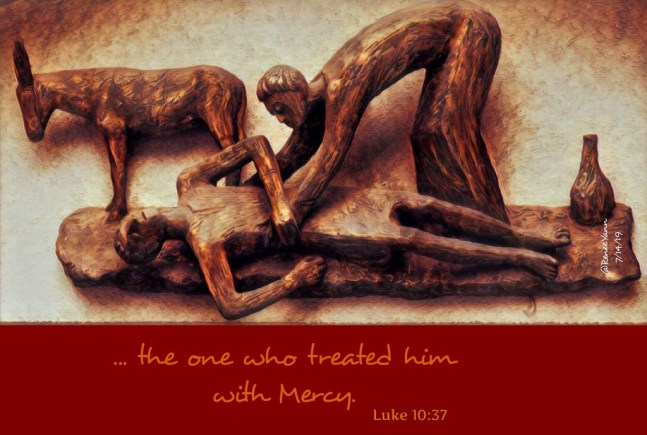
Today, in Mercy, dear friends, we have heard this Gospel from our youth. Even those without faith know the story.

Lk10_37 Samaritan

Let us deeply examine our daily lives today as we pray.

What more is there to say? This is what I hear in my prayer today:

Always be the neighbor.
Just do it.
This is Mercy.

do it1JPG

Music: I Will Love You, Lord! – Dale Sechrest

This wonderful mantra! Let yourself sing it!

The 5th of July!

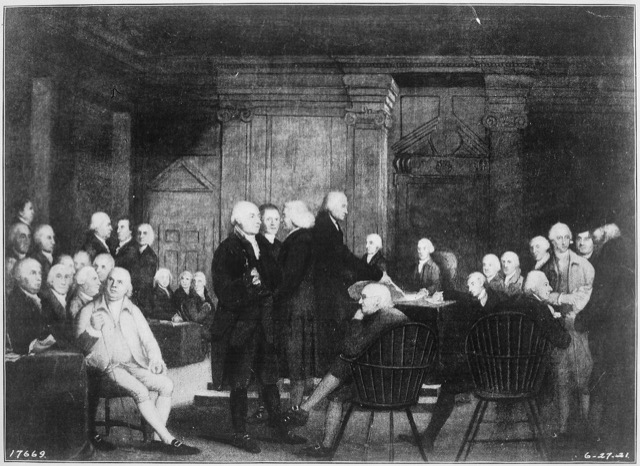
After all the speeches, sparklers and spectaculars, the “Next Day” dawns. I wonder what it was like for Jefferson, Franklin and Adams on the fifth of July in 1776. Did they wake up thinking, “Declaration of Independence – signed. Now, make it happen!”?

congress

When you get right down to it, most of our days are 5th, 6th, 7th and 8ths of July. They are the days after graduation when we need to get a job. They are the days after the honeymoon when somebody needs to cook dinner and take out the trash. They are the days after the promotion when the first deadline looms and a bunch of faces are looking to you for the plan.

If the 4th of July is Independence Day, the 5th is Dependability Day, a day to celebrate the people we can always count on. They are there for the parades but they are there for the clean up afterward. They light the spark for the fireworks, but they have a hose nearby just in case. They put their “John Hancock” on the brave new dream and they show up the next morning to design its daunting execution.

WIP

The 5th of July is a day to celebrate our own sense of responsibility or “Dependability” – to realize that most of us really do try to be good spouses, parents, employees, neighbors, sons, daughters and friends – that we do keep making the effort every day to be someone for others and not just for ourselves. It is a day to look around at the people in our lives and be grateful that most of them are trying to do the same thing.

Like Jefferson, Franklin and Adams, we all need to wake up the next day, consider the “dependabilities” in our lives and put our shoulders to the task of making a better world. Each of our lives is its own small country where the future really depends on how we show up on our “5th of Julys”. The fact that you get up every day and engage that challenge is cause for its own celebration. So if you have a little sparkler left in your back yard, light it for yourself tonight – and for your spouse, your boss, your kids, your co-workers – who all showed up today to do the best they could on the 5th of July.

Thanks for that and have a great day!

Music: A Morning After – Maureen McGovern

The Challenge of Peter & Paul

Solemnity of Saints Peter and Paul, Apostles

June 29, 2019

Click here for readings

Today, in Mercy, we celebrate the great Apostles Peter and Paul, first architects of the Christian faith.

Peter and Paul

From our 21st century perspective, we may be tempted today to celebrate the totality of their accomplishments – the scriptures ascribed to them, the theology traced to them, the cathedrals named for them.

But there is a deeper message given to us in today’s readings, one that challenges our practice of faith. We can access that message by asking an obvious question:

Why were Peter and Paul, simple religious leaders, persecuted, imprisoned, harassed, and eventually executed? What was the terrible threat these unarmed preachers presented to political power?

The answer:

It was their testimony to the transformative Gospel message of Jesus Christ – the Gospel of Mercy and Justice.

But Jesus’ proclamation of God’s kingdom constituted a serious challenge to the Romans who ruled Israel during his lifetime. The cheering crowds who greeted him, especially during his entry into Jerusalem, as well as his confrontation with the moneychangers in the Temple, constituted such a threat to the unjust power of empire that the rulers crucified Jesus in order to silence him. – Elizabeth Johnson, CSJ

Peter and Paul, and every committed Christian after them, bears the same holy threat to ensuing cultures of domination, violence and greed.

As Jesus, Peter, Paul and so many others down through Pope Francis show us, faith and politics always work hand in hand. The work of faith is to build a world where every person can live, and find their way to God, in dignity and peace. It is to witness to an alternative to any power that feeds on the freedom, joy and peace of another person – especially those who are poor, sick and vulnerable.

May Peter and Paul inspire us to continue the daunting task of such an apostolic faith.

Music:  They Who Do Justice – David Haas

They who do justice will live in the presence of God!
Those who walk blamelessly and live their lives doing justice,
who keep the truth in their heart, and slander not with their tongue!
Who harm not another, nor take up reproach to their neighbor,
who hate the site of the wicked, but honor the people of God!
Who show no condition in sharing the gifts of their treasure,
who live not off the poor: they shall stand firm forever!

Will We Live Our Faith Out Loud?

Tuesday of the Twelfth Week in Ordinary Time

June 25, 2019

Click here for readings

Today, in Mercy, we begin several weeks of readings from the Book of Genesis. 

Some people think of Genesis as a literal history. Others think of it more as a myth. Was there a real Adam and Eve? A real apple? A real snake?

When we get caught up in these ambivalences about Genesis, we are likely to miss the whole point. And the whole point, according to Hebrew Scripture scholar Walter Brueggemann is this:

… these texts should be taken neither as history nor as myth.
Rather, we insist that the text is a proclamation
of God’s decisive dealings with his creation. 


“God’s decisive dealings with God’s Creation…”

What a powerful phrase! So over the next few weeks, here is our opportunity:

How does God want to be with us,
to love us,
and to share the ongoing Creation with us?


Today’s reading, according to Brueggemann, is the second part of a four-part drama:

Genesis 11: 30—25: 18 “The Embraced Call of God”
Will Abraham live by faith? 

This second segment poses a profound question to us, and to our Church:
Have we embraced God’s call in our lives and will we live our faith OUT LOUD!

Jesus asks us the same question in today’s Gospel: Will we live our faith OUT LOUD?


Will we:
“Do to others whatever you would have them do to you.”

cage

How to help children at the border and in inhuman detention centers:

Click here.


Music: By Faith -Keith and Kristyn Getty

Is Scrooge My Hero?

Memorial of Saint Aloysius Gonzaga, Religious

June 21, 2019

Click here for readings

Today, in Mercy, Jesus puts the whole spiritual life in a nutshell:

Luke heart treasure

When I was a kid (and maybe even now), one of my favorite cartoon characters was Uncle Scrooge McDuck.

Scrooge

I was amazed to think that someone could accumulate all that money, and fascinated to see that all he wanted to do was sit on it!

Both Uncle Scrooge and Jesus pose some deep questions to us today.

  • How much do we really need to make us happy?
  • Will having it actually make us happy in the long run?
  • Where does our happiness come from, if we have happiness at all?

We have seen the theme in a hundred books and movies – poor little rich boy or girl starving for love. We all seem to realize that true wealth comes from love. But do we live and choose by that understanding?

Possessions can distract us from what is truly essential for our soul. Greed and selfishness can kill the Spirit within us.

Our coöptation by materialism and greediness doesn’t have to rise to the level of Scrooge’s mounted millions. So often a miserly heart is crippled by things much more complex than money. We can be sinfully stingy with:

  • our attention to those deemed unimportant
  • our kindness to those struggling with life
  • our forgiveness to the unappreciative 
  • our presuppositions about what belongs to whom

The following parable has always shaken me down at the root of my assumed entitlements:

A young woman was waiting to catch a flight in the boarding area of the airport. Given that her wait was going to be several hours she decided to buy a book to read along with a packet of cookies to enjoy. She sat down in an armchair in the VIP room of the airport to relax and read her book in peace. 

Beside the armchair where the packet of cookies lay, a man was seated next to her reading his magazine.  When the woman reached into the packet of cookies to take the first cookie, the man next to her also took one. She was irritated but said nothing. “What nerve this man has!” she thought.  For each cookie she took the man also took a cookie. 

She was infuriated but didn’t want to cause a scene. When only one cookie remained she thought to herself, “what will this horrible man do now?” The man reached down and broke the cookie into even halves and handed one half to her. It was more than she could handle!  She grabbed her things in a huff, refused the half, and stormed off to the boarding area.  

When she got onto her seat on the plane she reached into her purse to get her reading glasses and, to her surprise, her packet of cookies was sitting there untouched and unopened.

We might wish to spend some prayer time considering the application of this story to our own attitudes.

Music: Where Your Treasure Is – Marty Haugen

Good-bye Can Break Your Heart (Open)

Tuesday of the Sixth Week of Easter

May 28, 2019

Click here for readings

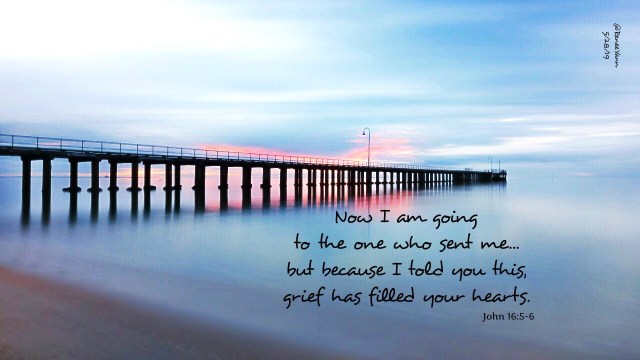
Today, in Mercy, Jesus offers his good-byes as time approaches for him to return to the Father.

Jn16_5

His friends are sad. Wouldn’t you be? What a guy to have known, and palled around with, and loved – in person! But now it’s time for Jesus to return to his role in the Blessed Trinity. And it is time for the Holy Spirit’s continuing role in the world to begin.

Jesus describes the Spirit’s role as one that will set things right by: 

  • showing the world its mistake in rejecting Jesus
  • making clear that Jesus’s teaching was right and just
  • condemning any evil that denies Christ’s teaching

The Holy Spirit will do all this in a different way from Jesus. Jesus was beside his disciples showing them the way to live – and he still is. But the Holy Spirit in within the People of God, working through our communal love, mercy, and justice to transform all Creation.

So Jesus is telling us not to be sad. He is still with us in Scripture and Sacrament. But now our experience of being with God is enriched by the indwelling Spirit who breathes Life to the world through our faith.

What an astounding good-bye Gift! Do we appreciate it, respond to it — even realize we have received it? We are capable of so much more than a small understanding of God. Let us ask to be opened to that Power.

Music: Holy Spirit Rain Down