Psalm 137:Silent Harps

Friday of the Twelfth Week in Ordinary Time

June 26, 2020

(I have not written a past reflection on Matthew 8:1-4 because other feasts have occurred on its past dates. But the story is the same as Luke 5 so that reflection is available here.)

Today, in God’s Lavish Mercy, we pray with Psalm 137, one of the most tender and yet violent of the psalms. Set during the Babylonian Captivity, the verses express the longing of the Jewish people for their homeland and their freedom.

The composer, thought to be Jeremiah the prophet, captures the poignant desperation of those who have lost everything. In literature and music, the psalm’s ardent emotions have been applied to the shameful enslavements throughout subsequent history — of Jews, Africans, and other devastated peoples. It resounds in the lives of refugee families incarcerated at our borders. Its mournful simplicity echoes a cosmic suffering.


But the prayer can also be a very personal one. It has brought release for the pain of individuals experiencing unwanted separation from someone or something not only beloved, but core to their identity.

By the streams of Babylon
we sat and wept
when we remembered Zion.
On the aspens of that land
we hung up our harps…

How could we sing a song of the LORD
in a foreign land?
If I forget you, Jerusalem,
may my right hand be forgotten!


Over thirty years ago, I was blessed to spend four months accompanying my mother in the final stages of her terminal illness. It was a time of unexpected benediction and joy for both of us. But it was also a time of deep sadness to the point that I was unable to listen to my precious morning music with which I have always prayed. To do so caused the sadness to rip through me in tears- tears which would have broken my mother’s heart had she seen them. So I hid them by abstaining from music. I hung up my harp. Even after Mom’s death, it took a while for me to tiptoe back into those melodic waters. After it all, I understood more clearly what it meant when the psalmist said, “How can we sing our song in a foreign land?”


Christine Robinson’s transliteration is so perfect to capture this kind of pain, shot with unbearable light.

We were at the end of our rope—
tired, bereaved, despairing.
And they wanted us to sing!
How could we?
How can we sing God’s song in a strange land?
But we will never forget.
We will hold fiercely to our good memories of love.
And we will prevail!

Today, let this magnificent psalm bring you your own global awarenesses and personal memories of how even devastation, when received in faith, can teach and transform us.

Music: Chorus of the Hebrew Slaves from the opera Nabucco by Giuseppe Verdi

The opera follows the plight of the Jews as they are assaulted, conquered and subsequently exiled from their homeland by theBabylonian king Nabucco ( Nebuchadnezzar II). The historical events are used as background for a romantic and political plot. The best-known number from the opera is the “Chorus of the Hebrew Slaves”, “Va, pensiero, sull’all dorate”/ lFly, thought, on golden wings”, a chorus that is regularly given an encore in opera houses when performed today.

Psalm 69: Snapping Out on God

Twelfth Sunday in Ordinary Time

June 21, 2020

Today, in God’s Lavish Mercy, we pray with Psalm 69 which Brueggemann describes as

“a script for unburdening negation in God’s presence. It is a script for rehabilitation to the community of praise and thanks.”

Walter Bruggemann: From Whom No Secrets Are Hid

This Sunday’s reading are not happy ones. Jeremiah is plagued by his persecutors. Romans describes the reign of sin and death before Christ’s act of redemption. And, in our Gospel, Jesus tells his followers not to be afraid of those who kill the body but cannot kill the soul!

Guess what! Despite the Gospel’s advice, I am afraid of that kind of stuff — persecution, sin, evil, murder…. and all the other terrible consequences in the larger reading of all of Psalm 69.

And guess what else. The psalmist is not only afraid. He is angry… and I mean infuriated, outraged and massively ticked off.

No one wants to listen to him about his grievances either so who gets an earful? Yes, you got it — God. 


In verses 22-28, the writer spews a line of curses for his enemies. And they’re masterpieces — very satisfying ideations if you ever find yourself in similar straits.

But that’s the whole beauty of this psalm. All the negativity remains in the prayer’s imagination. It is not acted out. Once vehemently expressed to God, the catharsis slowly evolves to healing. This happens because the complaining psalmist all of a sudden realizes to Whom he is complaining — the Merciful One, the Patient One, the Forgiving One who has given all these generosities repeatedly to him.

I pray to you, O LORD,
for the time of your favor, O God!
In your great kindness answer me
with your constant help.
Answer me, O LORD, for bounteous is your kindness;
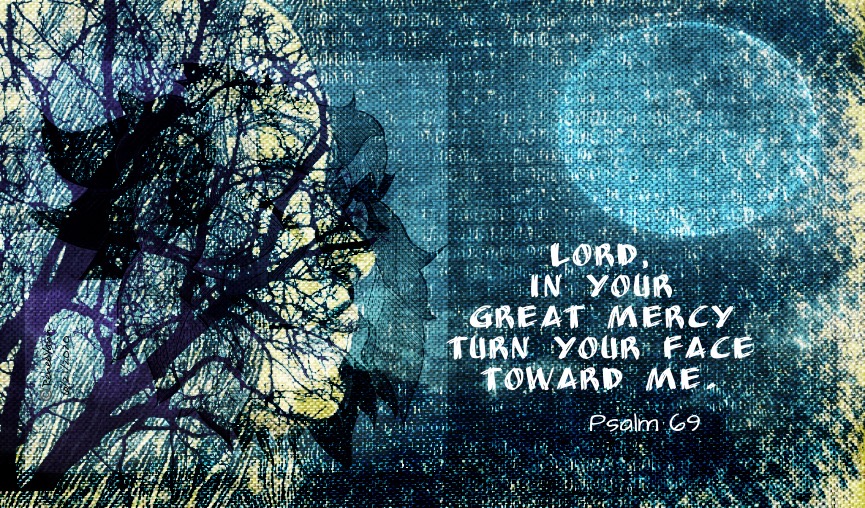
in your great mercy turn toward me.


Seeing God’s Face turn toward him in prayer, the psalmist regains balance. The final verse of the psalm rests on the hope and confidence God has promised in the covenantal relationship.

For God will rescue Zion,
and rebuild the cities of Judah.
They will dwell there and possess it
the descendants of God’s servants will inherit it;
those who love God’s name will dwell in it.


Anger visits all of us, sometimes in response to persecution, misunderstanding or disrespect. We feel it for personal grievances and for meanness in the world toward the helpless.  Praying with Psalm 69 may help us, too, find our balance, as did the psalmist, so that the anger leads to wholeness rather than destruction.


Poetry: Time’s Lesson – Emily Dickinson

Mine enemy is growing old, —
I have at last revenge.
The palate of the hate departs;
If any would avenge, —

Let him be quick, the viand flits,
It is a faded meat.
Anger as soon as fed is dead;
'T is starving makes it fat.

Music: Liberty and Justice for All – Brandon Williams

Psalm 27: Lift the Veil

Friday of the Tenth Week in Ordinary Time

June 12, 2020

Click here for readings

Psalm 27JPG

Today, in God’s Lavish Mercy, we pray with Psalm 27, a popular psalm used often in the liturgy.

The psalm rocks back and forth between a desperate cry for light and a firm confidence that it will come. No wonder it’s so popular. Isn’t our whole life filled with that rocking?

How many times have we said or heard the plea, “God help me/us!”? I know someone who punctuates almost her entire conversation with similar exclamations. Whenever her own circumstances, or the world in general, disappoints or astounds her, some form of the aspiration arises. Often, it takes a secular form like, “Ay, ay, ay!”, but it is still the same prayer.😀


2bubble

How about you? Have you heard that kind of plea resounding in your own heart lately? The world has been pretty overwhelming recently with disease, death, brutality, anger, and hatred all spilling out like lava from a frightening volcano. And you’ve probably got your own few personal boilers to add!

Unless we’re living in some kind of bubble, it all has to have some impact on our faith, hope and joy.


Psalm 27 is made for these times. It does not fail to acknowledge the weight of circumstances:

Hear, O LORD, the sound of my call;
have pity on me, and answer me…
Hide not your face from me;
do not in anger repel your servant.
You are my helper: cast me not off...

Nevertheless, under its pleading, rests a complete and steadfast confidence in God’s favor:

I believe that I shall see the bounty of the LORD
in the land of the living.
Wait for the LORD with courage;
be stouthearted, and wait for the LORD.

The psalmist invites us to share in this honest prayer, for ourselves and for all the anxious world which may carry troubles greater than our own.

(P.S. Be sure to read today’s first reading. Elijah was looking for God’s Face/Voice too. He found it in the most delightful way. Don’t miss it.)


For poetry today, a selection from the powerful poet Denise Levertov

The Tide

Where is the Giver to whom my gratitude
rose? In this emptiness
there seems no Presence.
*
How confidently the desires
of God are spoken of!
Perhaps God wants
something quite different.
Or nothing, nothing at all.
*
Blue smoke from small
peaceable hearths ascending
without resistance in luminous
evening air.
Or eager mornings—waking
as if to a song’s call.
Easily I can conjure
a myriad images
of faith.
Remote. They pass
as I turn a page.
*
Outlying houses, and the train’s rhythm
slows, there’s a signal box,
people are taking their luggage
down from the racks.
Then you wake and discover
you have not left
to begin the journey.
*
Faith’s a tide, it seems, ebbs and flows responsive
to action and inaction.
Remain in stasis, blown sand
stings your face, anemones
shrivel in rock pools no wave renews.
Clean the littered beach, clear
the lines of a forming poem,
the waters flood inward.
Dull stones again fulfill
their glowing destinies, and emptiness
is a cup, and holds
the ocean.

Music: Psalm 27 – Choir of St. John’s College Elora

Psalm 25: Through the Maze

Thursday of the Ninth Week in Ordinary Time

June 4, 2020

Click here for today’s readings

Today, in God’s Lavish Mercy, we pray with Psalm 25.

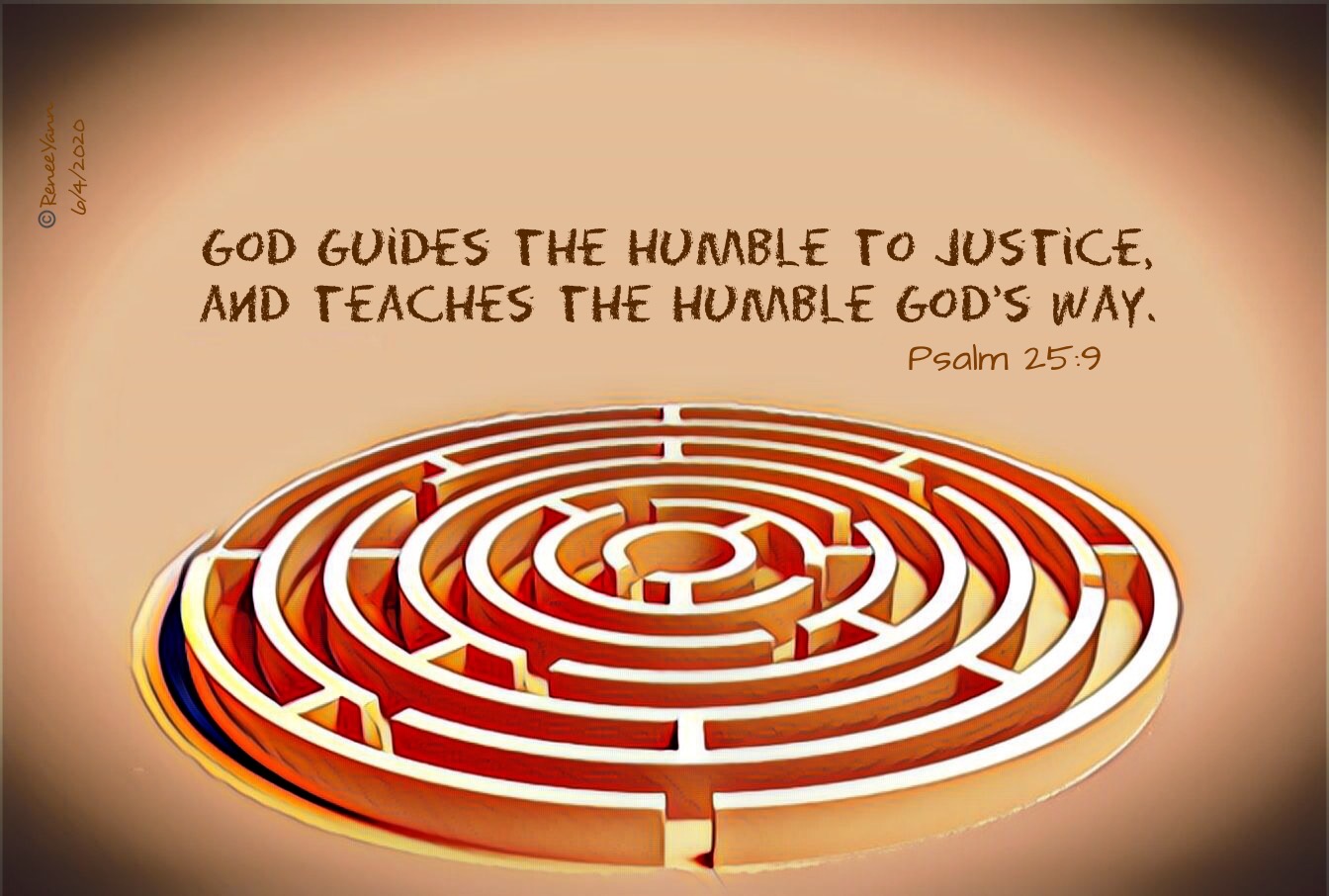
Psalm 25_9JPG

In today’s liturgy, this Psalm clearly ties together our first and second readings where both Timothy and a scribe seek clearer understanding of what faith requires:

  • Paul reminds Timothy that it takes perseverance and fidelity to live our faith
  • Jesus affirms for the scribe that there is no greater commandment than love

In Psalm 25, we find David working through his own faith challenges. He is asking God to show him the way, presumably out of some trouble or dilemma, one of the many faced by David over his lifetime.

Like Paul, Timothy, and the Gospel scribe, David realizes that the pursuit of justice is a circuitous journey, one that requires the accompaniment of God.


In today’s excerpt, we have only a few verses of Psalm 25, but the entire psalm paints David as feeling a bit lost and overwhelmed. Nevertheless, in his prayer, he draws on his long, trusting relationship with God.

Walter Brueggemann calls Psalm 25 a “psalm of candor”, one in which the psalmist honestly lays out his confusion, need, or pain. Praying the psalm today, we might do the same, asking God’s merciful insight and direction for ourselves, our loved ones, our country or our world.

There is certainly enough need for a lot of candor on our part! I know that I am feeling more than a bit overwhelmed by our current realities. Racial injustice, pandemic, economic hurt, and political confusion have all combined to make these very troubling times. 

  • But like David, we can lay down our fears, needs and concerns before a loving God.
  • Like David, we can trust God’s desire to lead us.
  • Like David, we can remember God’s mercies and be confident they will continue.
  • Like David, we can ask for and follow God’s direction to justice and peace.

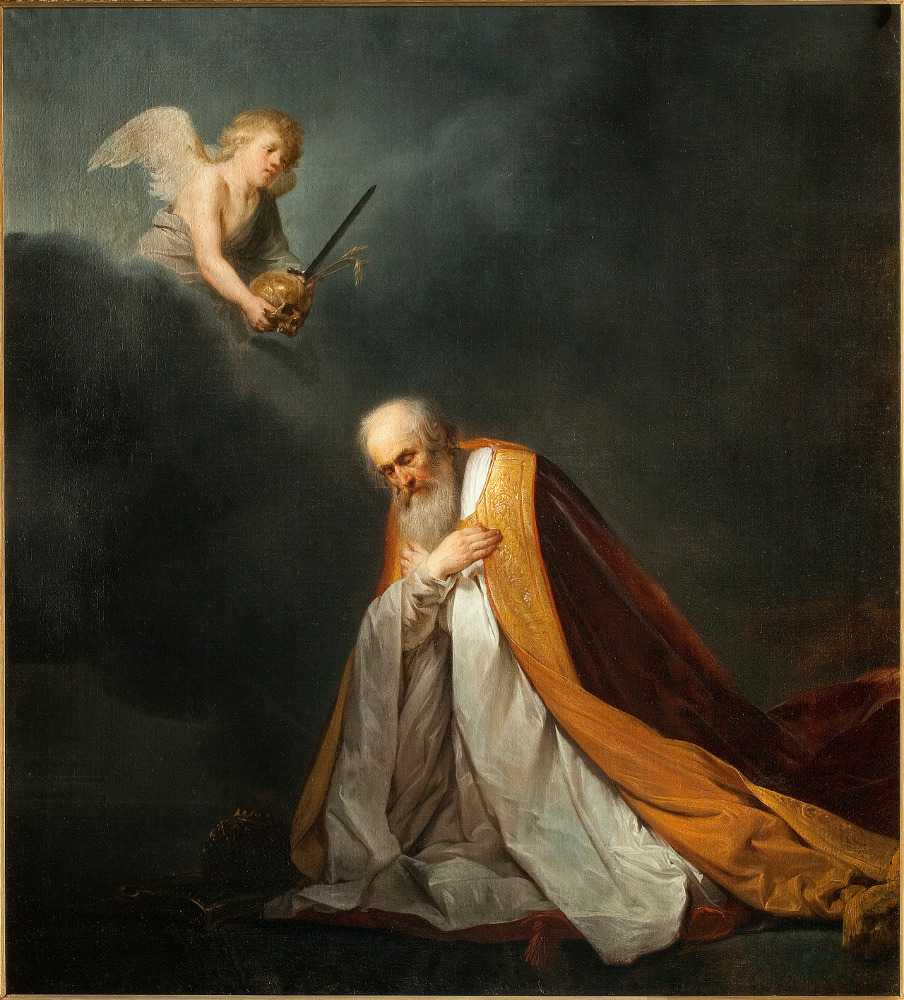
degrebber_david-plagen_grt
King David at Prayer by Pieter deGrabber


swords
Let Us Beat Swords into Plowshares, a sculpture by Evgeniy Vuchetich in the United Nations Art Collection

In our poem today, Rudyard Kipling does much the opposite of what I suggest above. He is deeply angry after WWI has claimed the life of his son John. His poem speaks of “justice” but suggests revenge or retribution. The justice he describes is one that demands the last drop of the opponent’s blood before it is satisfied .

I read the poem to better understand my own feelings.  What fragments of darkness still hide in my longing for light?

Kipling’s poem is available here.


Kipling’s angry passion is completely understandable, rational, and politically powerful. But it is not the justice or “right relationship“ of the Gospel. The pursuit of such Gospel justice is an arduous and winding journey of the heart and soul. It is the trying walk of sacrificial love which Jesus taught us. May we have the courage to walk it for our time. Thus the cry of our Psalm 25:


Your ways, O LORD, make known to me;
teach me your paths,
Guide me in your truth and teach me,
for you are God my savior.

Music: Psalm 25 – Karl Kolhase

Take My Hand

Friday of the Seventh Week of Easter

May 29, 2020

Click here for readings

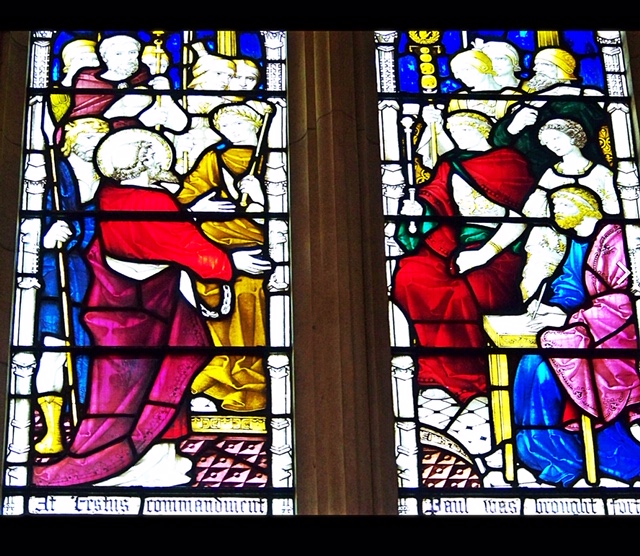
festus
Window in St. Paul’s Cathedral, Melbourne – Paul Pleads His Case (Festus in yellow)

Today, in Mercy, Paul’s case goes before Festus and King Herod Agrippa. Just in case you are confused, like I was, about just who this particular Herod is, this family tree from Wikipedia helped:

chart

This King Agrippa was Marcus Julius Agrippa II (A.D. 27-100), son of Agrippa I (Acts 12:1-25) and great-grandson of Herod the Great (Mt 2:1-23). 

I offer these facts for no real spiritual reason, but they remind me that these biblical characters were real people, like us, engaging (or not) a real life of faith. (Also, I thought it was fun to see how uncreative they were in naming their babies 🙂


In our Gospel, Jesus once again prepares Peter for his tremendous responsibility in the building of that faith. Jesus asks Peter three times, “Do you love Me?”. By the third interrogation, Peter’s answer sounds a little intense:

“Lord, you know everything; you know that I love you.”

Hearing this response, Jesus lays the full burden of Peter’s life upon his shoulders. Not only must Peter “feed” the faith of Jesus’s followers, he must do so by giving over all control to God:

“Amen, amen, I say to you, when you were younger,
you used to dress yourself and go where you wanted;
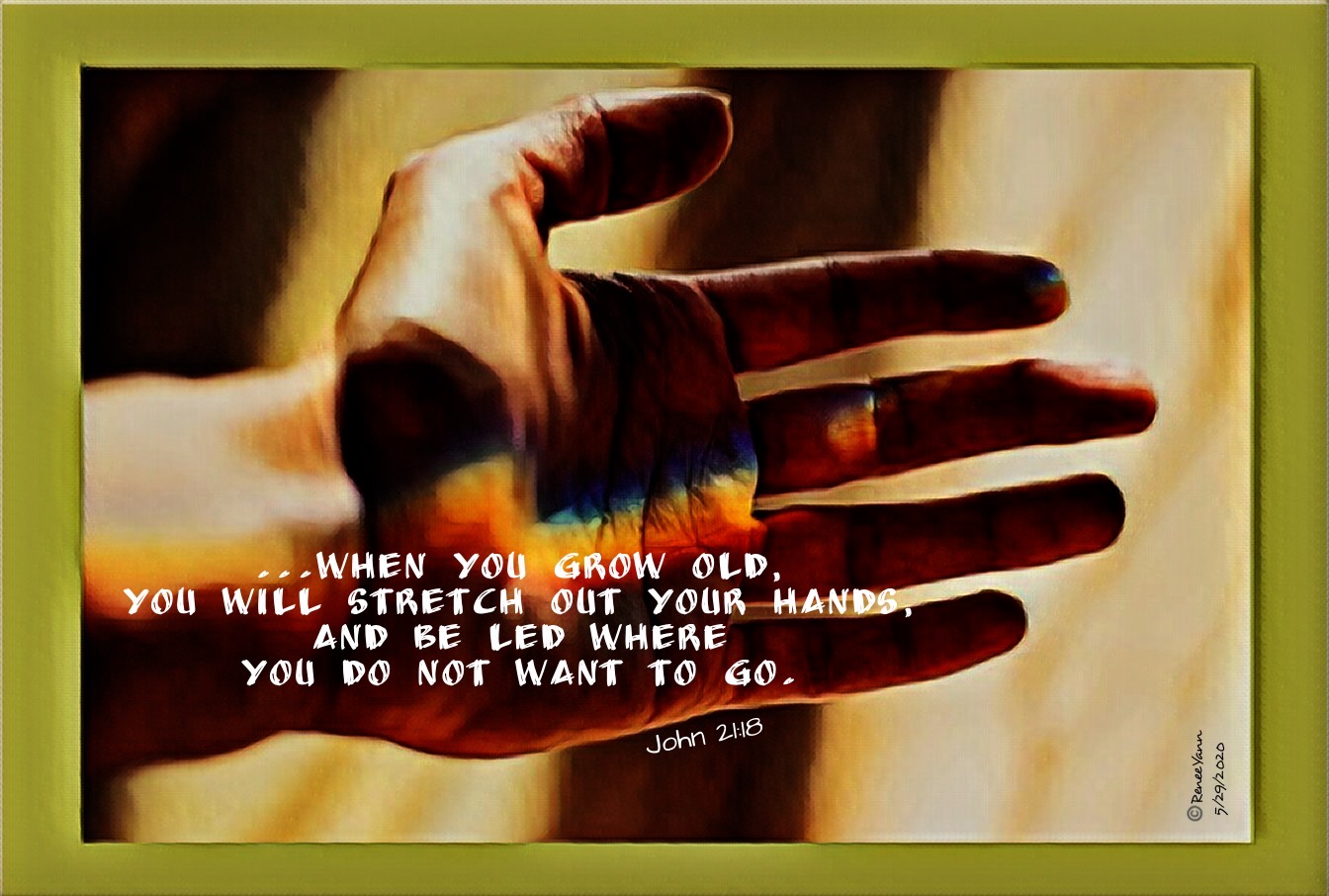
but when you grow old, you will stretch out your hands,
and someone else will dress you
and lead you where you do not want to go.”

hand

Like Peter,
we too are given the gift and responsibility
of living a faithful life.
Like Peter, we all learn through the years,
that life comes to us in unexpected ways.
In reality, life often chooses us
rather than the other way around.

As we pray with these passages, we might want to look back over our lives for those points where life challenged or unbalanced us. What unexpected blessings came from those surprises/shocks? When God’s plan contradicted our own, how were we eventually blessed with courage, hope and insight?

We are the person we are today because of how we responded to God’s mysterious plan for our lives. Did we reach out our hand and let God lead us? Do we still need to do some letting go in order to enjoy that kind of freedom?

Music:  Precious Lord, Take My Hand – written by Thomas A. Dorsey, sung here by the Great Mahalia Jackson

When my way groweth drear

Precious Lord, linger near-ear

When my li-ight is almost gone

Hear my cry, hear my call

Hold my ha-and lest I fa-all

Take my hand, precious Lor-ord

Lead me on

Precious Lord, take my hand

Lead me on, let me sta-and

I am tired, I’m weak, I am worn

Through the storm, through the night

Lead me on to the li-ight

Take my ha-and, precious Lor-ord

Lead me home

When my work is all done

And my race here is are you-un

Let me see-ee by the light

Thou hast shown

That fair city so bright

Where the lantern is the li-ight

Take my ha-and, precious Lor-ord

Lead me on

Precious Lord, take my hand

Lead me on, let me sta-and

I am tired, I’m weak, I am worn

Through the storm, through the night

Lead me on to the li-ight

Take my ha-and, precious Lor-ord

Lead me home

We’ll Meet Again

Friday of the Sixth Week of Easter

May 22, 2020

Click here for readings

Today, in Mercy, Jesus acknowledges the difficulty of living a Christian life in a hostile world, especially without his physical presence to lead the disciples.

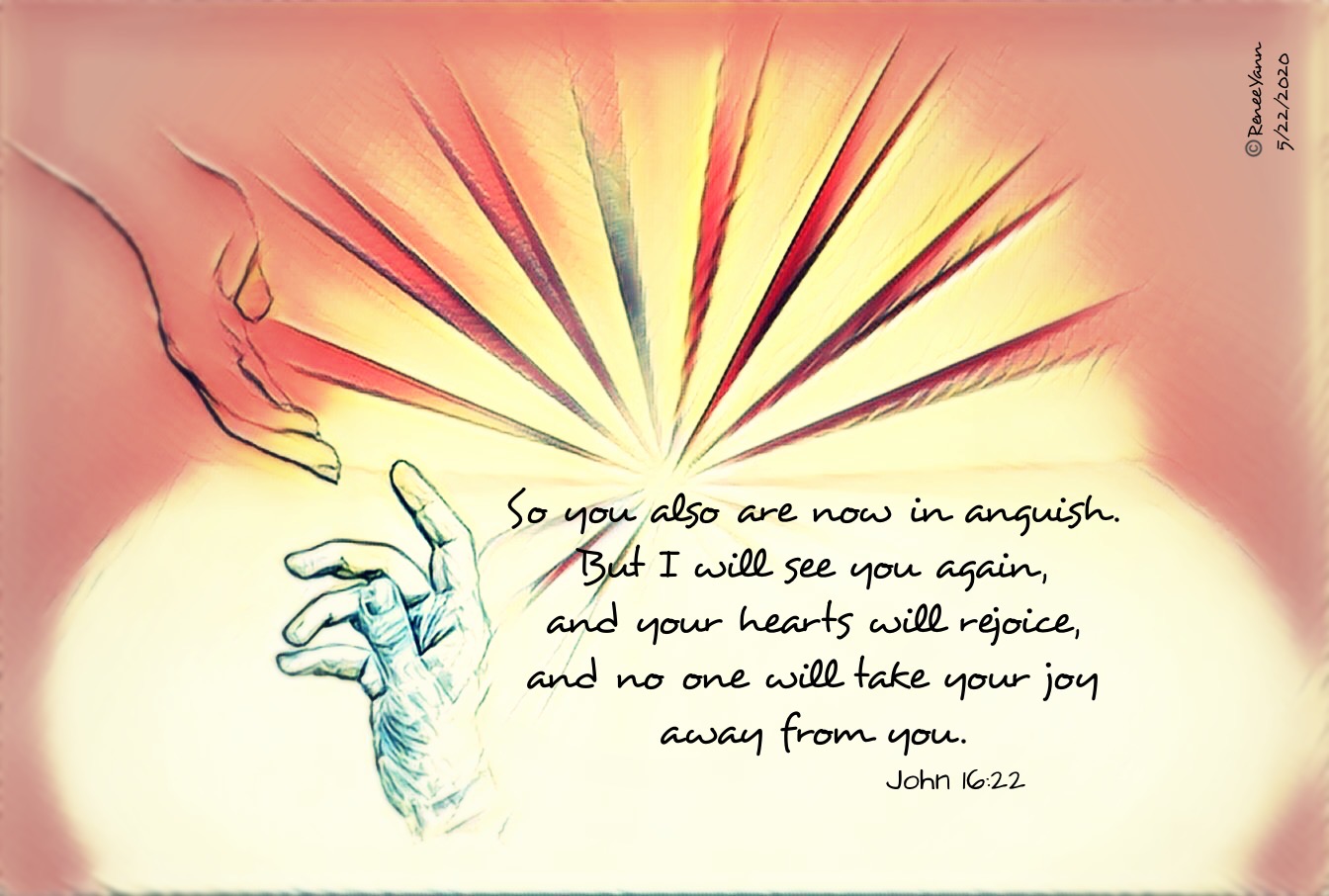
John16_22 separation

He knows that his friends are anguished at the thought of being separated from him. He compares their heartbreak to the pain of a mother in labor. The comparison is a perfect one because labor pains yield a gift that washes away the memory of suffering:

… when she has given birth to a child,
she no longer remembers the pain because of her joy
that a child has been born into the world.

Jesus tries to comfort his followers with this analogy, but he doesn’t deny the sorrow they are experiencing. Jesus knows that separation from what we dearly love can be a crushing experience. He knows that change often carries unwanted loss.

joys and sorrows

Our lives are braided into this cycle of labor, birth, love, loss, sorrow and joy. Jesus assures us that if we live this cycle in faith and hope, all things return to him in glory:

But I will see you again, and your hearts will rejoice,
and no one will take your joy away from you.

At those times in our lives when we feel more the absence than the presence of God, (perhaps these pandemic days), remembering the endurance and bravery of others may help us. Although it’s not a religious song, this melody kept playing itself in my heart as I read today’s Gospel. It opened my spirit to a very comforting prayer time.

Music: We’ll Meet Again – Dame Vera Lynn

Dame Vera Margaret Lynn Welch, CH,DBD, OStJ, age 103, is a British singer of traditional popular music, songwriter and actress, whose musical recordings and performances were enormously popular during World War II.

She is widely known as “the Forces Sweetheart” and gave outdoor concerts for the troops in Egypt, India and Burma during the war. The songs most associated with her are “We’ll Meet Again”, “The White Cliffs of Dover”, “A Nightingale Sang in Berkeley Square”, and “There’ll Always Be an England”. For more on her generous and fascinating life, Click here

Feast of the Ascension of Our Lord

The Ascension of the Lord

May 21, 2020

Click here for readings

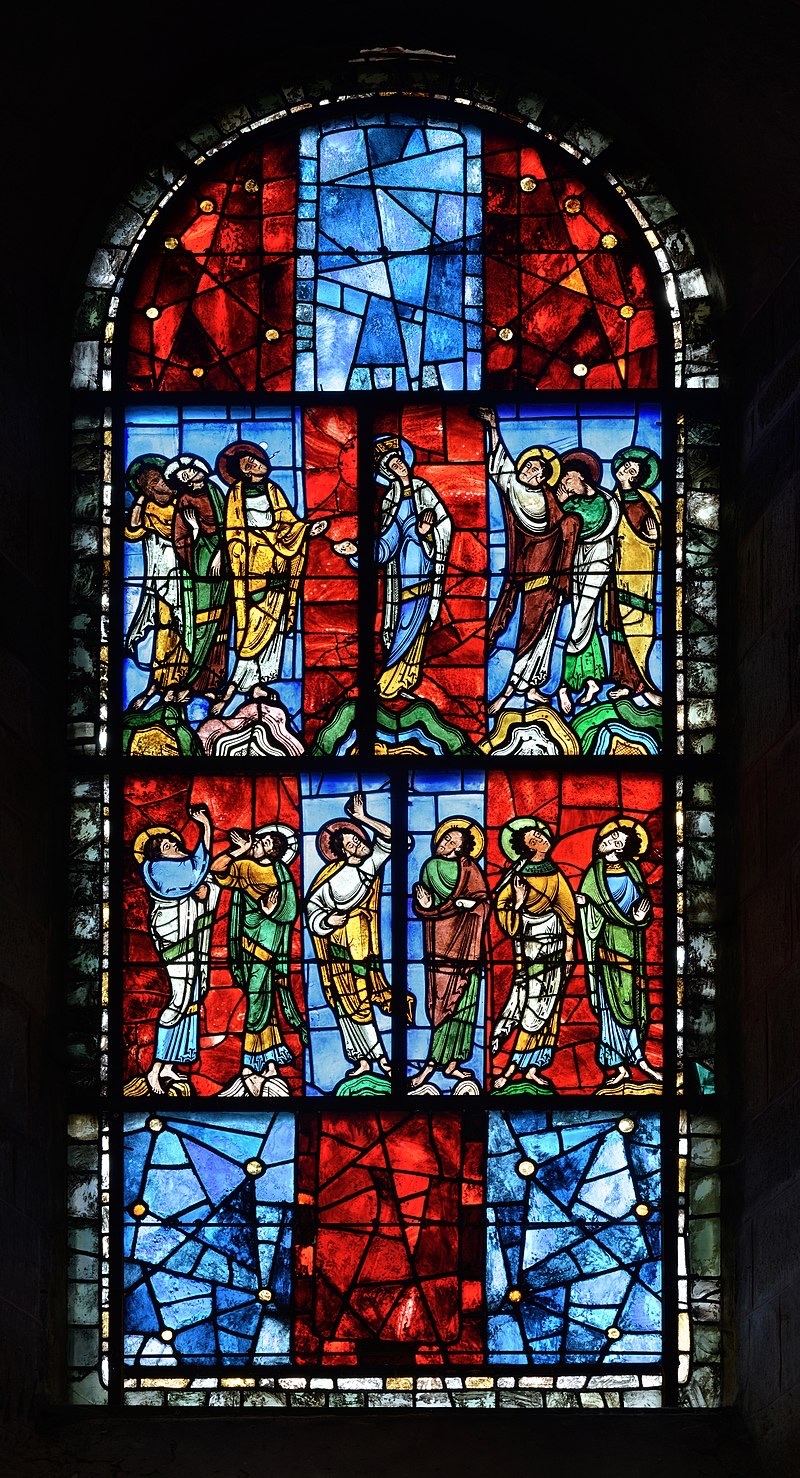
le mans
Le Mans Cathedral is a Catholic Church situated in Le Mans, France. Its construction dates from the 6th through the 14th century, and it features many French Gothic elements. The cathedral, which combines a Romanesque nave and a High Gothic choir is notable for its rich collection of stained glass and the spectacular bifurcating flying buttresses at its eastern end. The Ascension window, towards the western end of the south aisle of the nave, has been dated to 1120, making it one of the oldest extant stained glass windows in France.


Today, in Mercy, we stand with the disciples, straining for a last look at Jesus as He ascends into heaven. Their hearts are stretched with both joy and pain at all that is happening to them. They long for the Holy Spirit to come to them even as they mourn the physical departure of Christ.

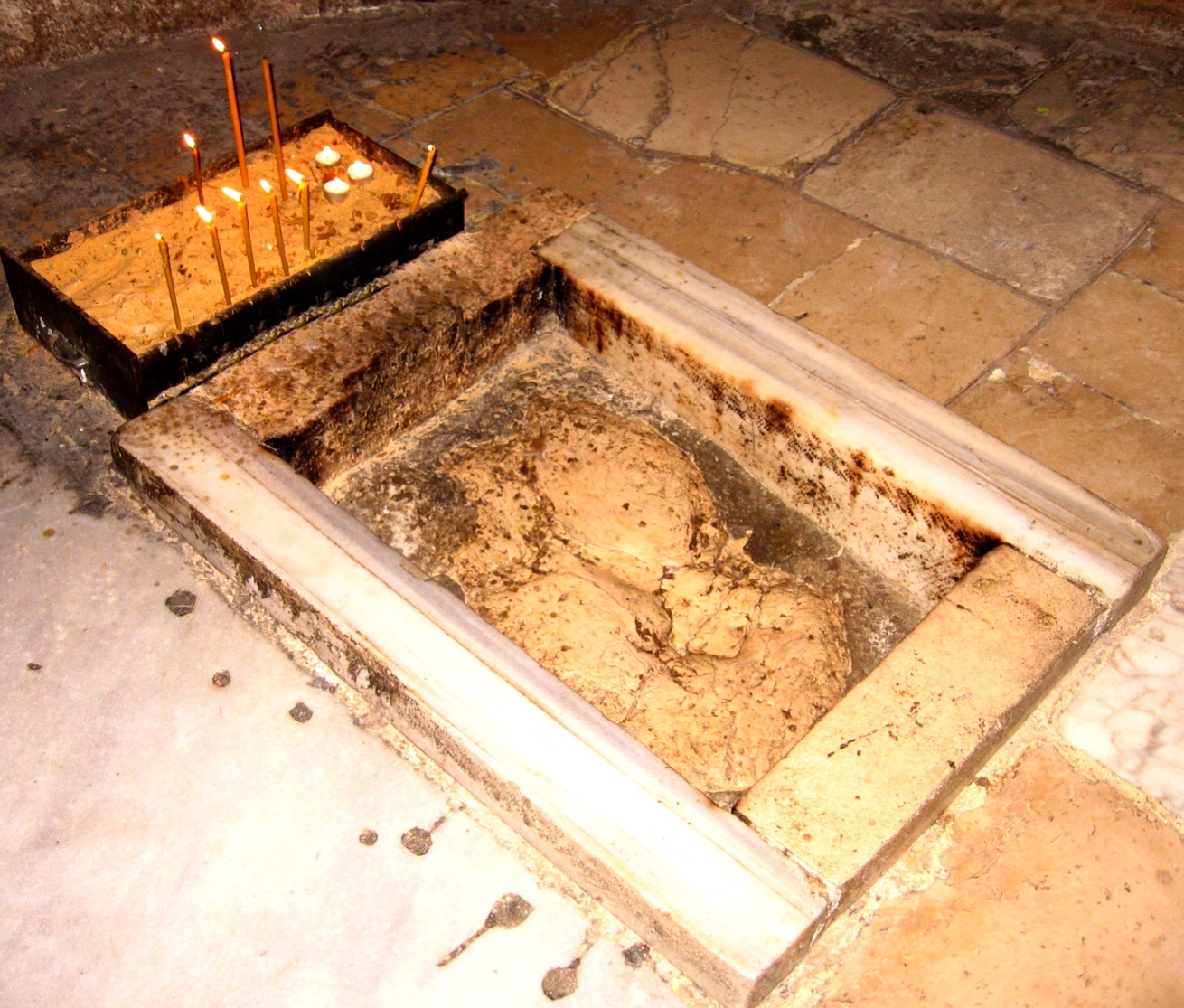
Many years ago, I was blessed to stand in the Chapel of the Ascension, a small shrine on the Mount of Olives in Jerusalem. Tradition holds this to be the site of Jesus’ Ascension. Inside is a well-worn rock with a slight indentation. Many venerate this as the last footprint of Christ on earth.

Ascension rock
Whether or not this devotion is valid is unimportant. In the hush of my early morning visit to this shrine, the Holy Spirit embraced me, overwhelming me with an awareness of how the disciples felt that day in the absence of Jesus.
Many reading this may feel a similar absence, a need, or a longing for God. Perhaps by touching that sense of absence, that indentation in the rock of our hearts, we may invite and welcome the Holy Spirit to fill our need.

Music: Abide with Me – Matt Maher

Remain

Wednesday of the Fifth Week of Easter

May 13, 2020

Click here for readings

Today, in Mercy, Acts reveals the tensions in the Church between Jewish and Gentile believers. For the Jews, the ritual of circumcision was a key expression of covenantal faith. Some felt it was necessary for Gentile converts to undergo the ritual in order to become Christians.

Like all start-ups, the Church had many friction points which required decisions about what was essential and what was only customary. Those customs being thousands of years old, the decisions become even harder. Readings later this week describe more conflict points.

Nevertheless, under the guidance of the Holy Spirit, and despite the venerability of custom, the nascent Church was able embrace a new reality rooted in Christ’s inclusive love.

These kinds of philosophical and theological tugs-of-war have accompanied the Church down through history. Some of them have helped reveal deeper insights into our faith. But, as in all human communities, some of the tugs have been motivated by fear, greed, power, and other selfish interests.

Watching how the early Church handles their particular situation may give us hints about how we should handle them today.


In our Gospel, Jesus makes clear what is essential and inviolable to the faith:

I am the vine, you are the branches.
Whoever remains in me and I in him will bear much fruit,
because without me you can do nothing.

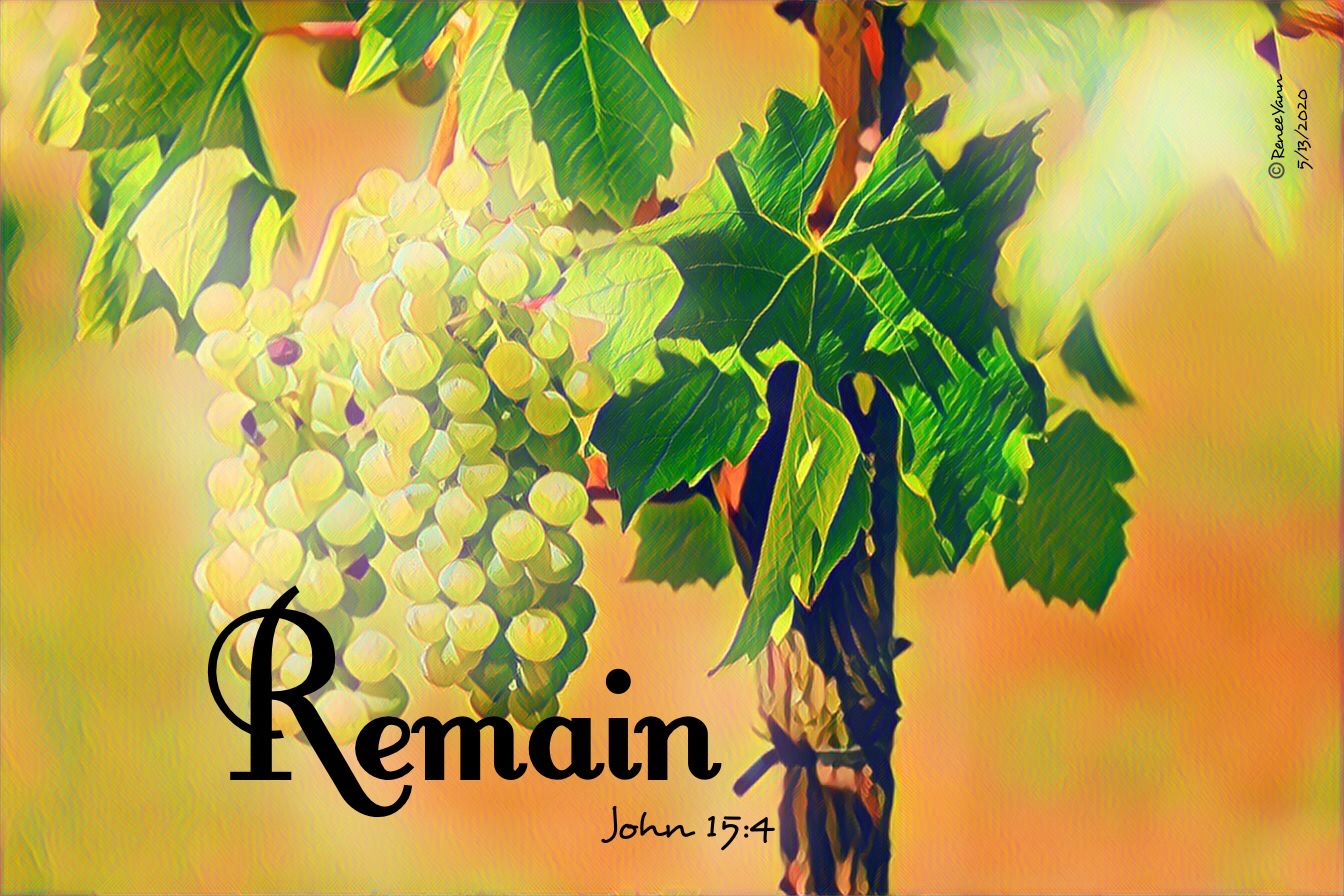
John15_4 Remain

I think “Remain” is a beautiful word. In the dictionary, it will be defined as ‘stay’. But it connotes much more to me.  Re–main asks us not just to choose to stay with Jesus, but to choose it over and over – like reenlist, renew, recommit.

Remain means to endure with the Beloved Vine through every season – winter’s cold and summer’s heat, and all that’s in between.

Remain means “Love Me, stay beside me, even when others fall away.”

May we remain.


Music: I Am the Vine – John Michael Talbot

Everything!

Monday of the Fifth Week of Easter

May 11, 2020

Click here for readings

Today, in Mercy, Acts recounts some of the challenges Paul and Barnabas met as they continued spreading the Gospel. With such a reading, we see the beginnings of theological arguments in the unfolding teaching of the Church.

One might wonder what turned yesterday’s Jewish and Gentile listeners into a stone-throwing mob. One wonders it today regarding some of the acrimonious factions within the Church.

It is one thing to receive the Gospel with one’s heart and spirit. It is another thing to receive it with one’s mind. As human beings, we resist mystery; we long for logic. We are more comfortable with a problem we can solve than with a Truth beyond our comprehension. Rather than Infinite Surprise, I think most of us prefer predictability and control.


Jn14_26 Everything

The Gospel can be fearsome. It asks that we let go of our limited human “geometry”; that we entrust everything to the Inclusive Love who is Jesus Christ. It asks us to open ourselves to the Holy Spirit who, ultimately, will “teach us EVERYTHING”.


question

In our recent readings, we’ve seen Thomas, Philip, and today, Jude trying to reach this level of spiritual trust. It’s hard because such trust is more than human. It is a trust bred of the Holy Spirit within us. It is a trust born of living fully in Peace with that Presence.


It is a trust described like this in tomorrow’s Gospel reading:

Peace I leave with you; my peace I give to you.
Not as the world gives do I give it to you.
Do not let your hearts be troubled or afraid.

Let us pray for trust and peace in ourselves, our Church, and world.


Music:  Wonderful Peace – an old Gospel song by Warren Cornell and William Cooper (1899), sung here by Don Moen 

Far away in the depths of my spirit tonight
Rolls a melody sweeter than psalm;
In celestial strains it unceasingly falls
O’er my soul like an infinite calm.

Peace, peace, wonderful peace,
Coming down from the Father above!
Sweep over my spirit forever, I pray
In fathomless billows of love!

Ah, soul! are you here without comfort and rest,
Marching down the rough pathway of time?
Make Jesus your Friend ere the shadows grow dark;
O accept of this peace so sublime!

What a treasure I have in this wonderful peace,
Buried deep in the heart of my soul,
So secure that no power can mine it away,
While the years of eternity roll!

I am resting tonight in this wonderful peace,
Resting sweetly in Jesus’ control;
For I’m kept from all danger by night and by day,
And His glory is flooding my soul!

And I think when I rise to that city of peace,
Where the Anchor of peace I shall see,
That one strain of the song which the ransomed will sing
In that heavenly kingdom will be:

Peace, peace, wonderful peace,
Coming down from the Father above!
Sweep over my spirit forever, I pray
In fathomless billows of love!

Lean on the Cornerstone

Fifth Sunday of Easter

May 10, 2020

Click here for readings

Today, in Mercy, our readings give us the powerful description of a growing Church built on the cornerstone of Jesus Christ.

Acts shows us how that young Church organizes itself on the pattern of Christ, its Foundation.

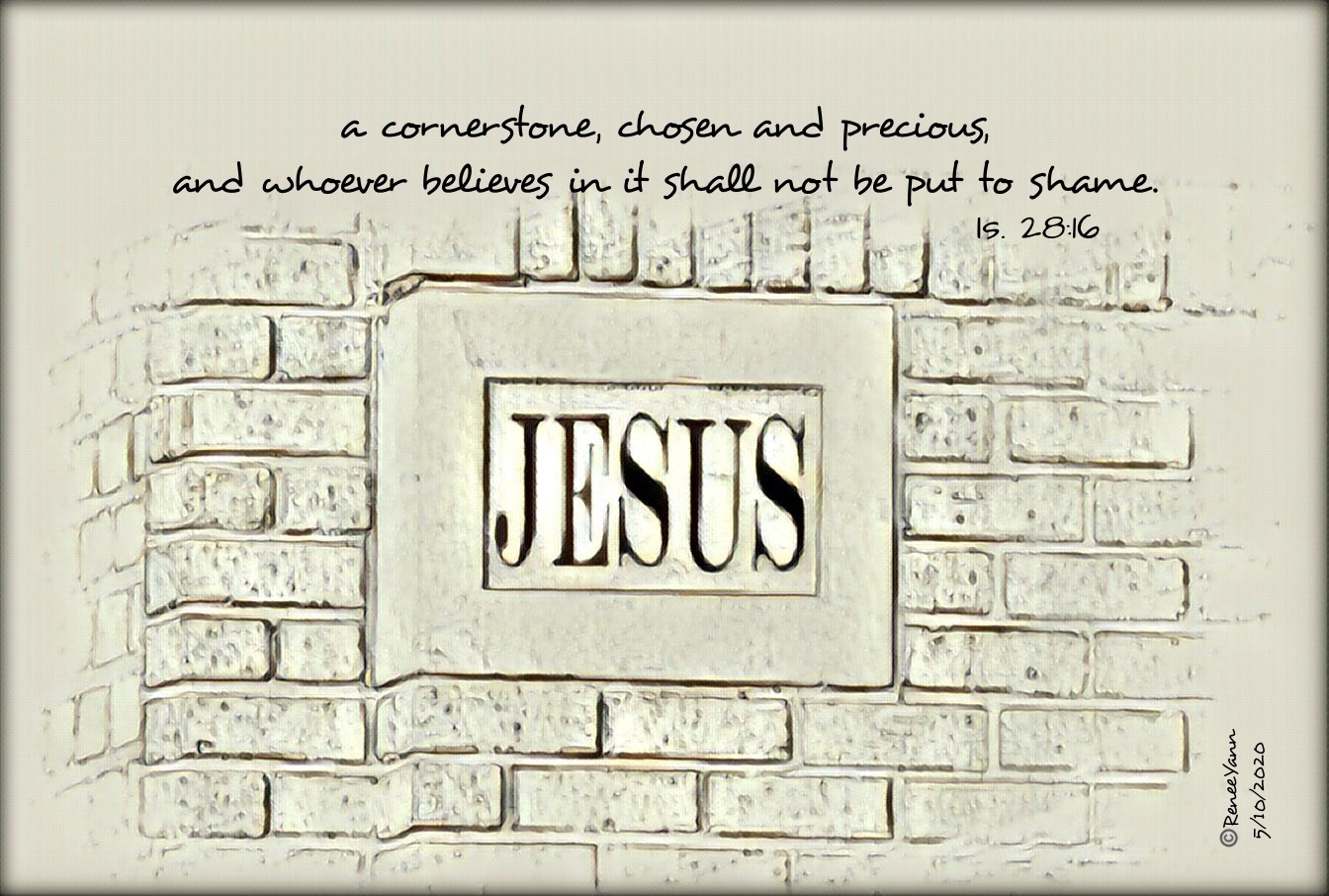
Our reading from Peter draws on Isaiah’s dynamic metaphor:

cornerstone

Jesus, too, describes a mansion, a sturdy dwelling place with God. It is not some ephemeral dream. That “mansion” is Christ himself who, by his death and Resurrection,  brings us home to our Original Love.


Such images help us to imagine the unimaginable, that God:

  • made us in the Divine Likeness
  • sent the Beloved to redeem us 
  • remains with us forever in the Holy Spirit
  • opens the doors of eternal life to us

This unimaginable grace is a trustworthy promise which we can rest on securely, as a magnificent building rests on its cornerstone.


When the exigencies of time and circumstance assail us, we need to go lean against that Rock. It will not move, even when everything else swirls around us.

Do not let your hearts be troubled.
You have faith in God; have faith also in me.
In my Father’s house there are many dwelling places…
…I will come back again and take you to myself,
so that where I am you also may be.


motherhouse early
19th century photo of Mercy Motherhouse from Lower Merion Historical Society

The beautiful buildings on our Motherhouse grounds are constructed of sixteen inch thick stones, chiseled by a 19th century stonemason. On a clear, late afternoon, one western wall heats up like a vertical oven, capturing all the final sunbeams of the day.  I like to lean against that wall, especially in winter, praying to the God Whose power it has absorbed. I ask that I too may absorb that power; that those for whom I pray may be wrapped in it.

Maybe today, you might find a stone like that to help you pray. Even hold a small one in your hand.

Such images can yield unexpected grace.

Music: Cornerstone – Hillsong ( Lyrics below)

My hope is built on nothing less
Than Jesus’ blood and righteousness
I dare not trust the sweetest frame
But wholly trust is Jesus’ name

My hope is built on nothing less
Than Jesus’ blood and righteousness
I dare not trust the sweetest frame
But wholly trust is Jesus’ name
Christ alone, Cornerstone

Weak made strong in the Savior’s love
Through the storm
He is Lord
Lord of all

When darkness seems to hide His face
I rest on His unchanging grace
In every high and stormy gale
My anchor holds within the veil
Christ alone, Cornerstone

Weak made strong in the Savior’s love
Through the storm
He is Lord
Lord of all
He is Lord
Lord of all, Christ alone
Christ alone, Cornerstone

Weak made strong in the Savior’s love
Through the storm
He is Lord
Lord of all
Christ alone, Cornerstone

Weak made strong in the Savior’s love
Through the storm
He is Lord
Lord of all

When he shall come with trumpet sound
Oh, may I then in Him be found
Dressed in His righteousness alone
Faultless, stand before the throne
Cornerstone

Oh, yeah, in the Savior’s love
He is Lord
Lord of all

Christ alone, Cornerstone
Weak made strong in the Savior’s love
Through the storm
He is Lord
Lord of all