Today, in God’s Lavish Mercy, we pray with Psalm 119 which is considered a hymn psalm, meant for offering praise for God’s handiwork.
This psalm, the longest in the Bible, is an extended string of delight in God’s beauty, power, and tenderness. It reminds me of a mockingbird’s lovely, tireless song, lilting up into the morning or evening sky.
Though long, the psalm is a very simple yet profound prayer. Seeing its length, we might tend to set it aside for a shorter psalm. Instead, don’t tackle the whole thing. Pick one verse that speaks to you. Sit down beside it. Let it crawl into to your lap like a small child. Cradle it and let your soul hum with it.
I remember, as a young novice, learning to pray this beautiful psalm in Latin. Its innocent clarity echoed my desire simply to deepen in God’s ways. Psalm 119 has been one of my favorites for nearly sixty years now, carrying God’s Word to me in myriad ways.
Today in our prayer, we might want to contemplate what single word God is speaking most clearly to us in this moment. The words vary over the course and circumstances of our lives. Let us listen and respond to what we hear today in quiet prayer.
Today, in God’s Lavish Mercy, we pray with Psalm 25.
In today’s liturgy, this Psalm clearly ties together our first and second readings where both Timothy and a scribe seek clearer understanding of what faith requires:
Paul reminds Timothy that it takes perseverance and fidelity to live our faith
Jesus affirms for the scribe that there is no greater commandment than love
In Psalm 25, we find David working through his own faith challenges. He is asking God to show him the way, presumably out of some trouble or dilemma, one of the many faced by David over his lifetime.
Like Paul, Timothy, and the Gospel scribe, David realizes that the pursuit of justice is a circuitous journey, one that requires the accompaniment of God.
In today’s excerpt, we have only a few verses of Psalm 25, but the entire psalm paints David as feeling a bit lost and overwhelmed. Nevertheless, in his prayer, he draws on his long, trusting relationship with God.
Walter Brueggemann calls Psalm 25 a “psalm of candor”, one in which the psalmist honestly lays out his confusion, need, or pain. Praying the psalm today, we might do the same, asking God’s merciful insight and direction for ourselves, our loved ones, our country or our world.
There is certainly enough need for a lot of candor on our part! I know that I am feeling more than a bit overwhelmed by our current realities. Racial injustice, pandemic, economic hurt, and political confusion have all combined to make these very troubling times.
But like David, we can lay down our fears, needs and concerns before a loving God.
Like David, we can trust God’s desire to lead us.
Like David, we can remember God’s mercies and be confident they will continue.
Like David, we can ask for and follow God’s direction to justice and peace.
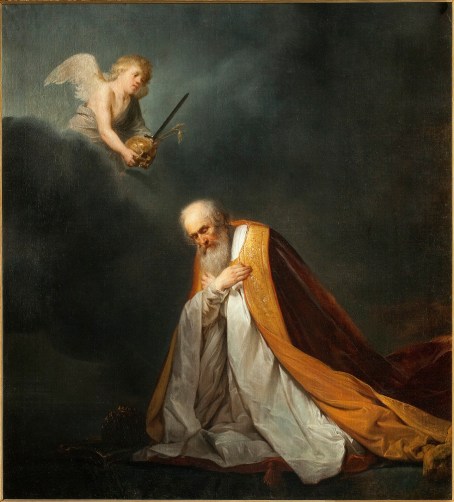
King David at Prayer by Pieter deGrabberLet Us Beat Swords into Plowshares, a sculpture by Evgeniy Vuchetich in the United Nations Art Collection
In our poem today, Rudyard Kipling does much the opposite of what I suggest above. He is deeply angry after WWI has claimed the life of his son John. His poem speaks of “justice” but suggests revenge or retribution. The justice he describes is one that demands the last drop of the opponent’s blood before it is satisfied .
I read the poem to better understand my own feelings. What fragments of darkness still hide in my longing for light?
Kipling’s angry passion is completely understandable, rational, and politically powerful. But it is not the justice or “right relationship“ of the Gospel. The pursuit of such Gospel justice is an arduous and winding journey of the heart and soul. It is the trying walk of sacrificial love which Jesus taught us. May we have the courage to walk it for our time. Thus the cry of our Psalm 25:
Your ways, O LORD, make known to me; teach me your paths, Guide me in your truth and teach me, for you are God my savior.
Memorial of Saint Charles Lwanga and Companions, Martyrs
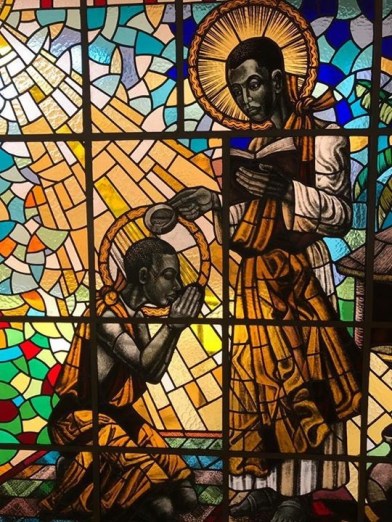
St. Kizito being baptised by St. Charles Lwanga at Munyonyo – stained glass at Munyonyo Martyrs Shrine
Charles Lwanga (1860 – 1886) was a Ugandan convert to the Catholic Church, who was martyred for his faith and is revered as a saint by both the Catholic Church and the Anglican Communion.
Today, in God’s Lavish Mercy, we pray with Psalm 123. How fitting that this particular prayer should bless us at this time!
Psalm 123 is one of the fifteen Psalms of Ascent (120-134). It is thought that these prayer songs were sung by pilgrims ascending to Jerusalem, expressing the joys, sorrows, needs and sufferings of the community.
Among them Psalm 123 is a lament, particularly for the scorn and contempt the Israelites felt as they tried to live lives of faith in a hostile world. Verses 3 and 4, (not included in today’s passage) plead:
Show us favor, LORD, show us favor, for we have our fill of contempt. Our souls are more than sated with mockery from the insolent, with contempt from the arrogant.
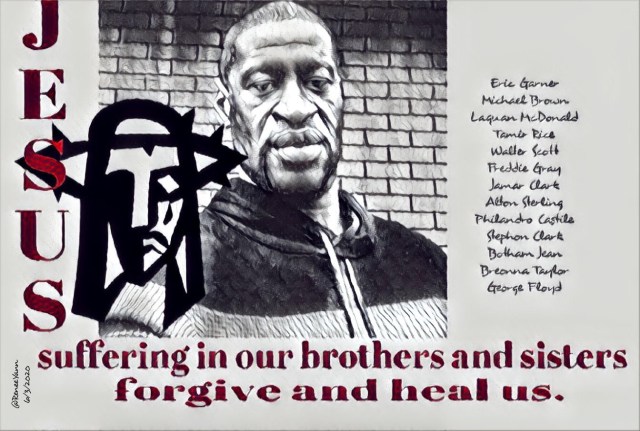
Praying with Psalm 123, we might think of today’s “pilgrims”, traveling the streets in protest of racial injustice. The integrity of their cause has been polluted by the rioters and looters infiltrating them, drawing contempt even from some who might otherwise have supported them.
Still, people of faith must not be distracted from the truth, nor should we hide from the reality of our own complicity in normalizing unjust systems. We must hear the lament of all those who long for justice. We must acknowledge that our current structures have grievously failed people of color, the poor and the refugee. We must make the choices that justice and mercy demand of us.
Today’s Responsorial verses may help us. In our hearts and souls, let us stand beside one another as we pray, each of us created to serve God by serving one another:
To you I raise my eyes, to you enthroned in heaven. Yes, like the eyes of servants on the hand of their masters,
Like the eyes of a maid on the hand of her mistress, So our eyes are on the LORD our God, till we are shown favor.
A poem to enrich your reflection:
Caged Bird
A free bird leaps
on the back of the wind
and floats downstream
till the current ends
and dips his wing
in the orange sun rays
and dares to claim the sky.
But a bird that stalks
down his narrow cage
can seldom see through
his bars of rage
his wings are clipped and
his feet are tied
so he opens his throat to sing.
The caged bird sings
with a fearful trill
of things unknown
but longed for still
and his tune is heard
on the distant hill
for the caged bird
sings of freedom.
The free bird thinks of another breeze
and the trade winds soft through the sighing trees
and the fat worms waiting on a dawn bright lawn
and he names the sky his own
But a caged bird stands on the grave of dreams
his shadow shouts on a nightmare scream
his wings are clipped and his feet are tied
so he opens his throat to sing.
The caged bird sings
with a fearful trill
of things unknown
but longed for still
and his tune is heard
on the distant hill
for the caged bird
sings of freedom.
~ Maya Angelou
Music: Giovanni Pierluigi da Palestrina: Ad te levavi oculos meos (Psalm 123)
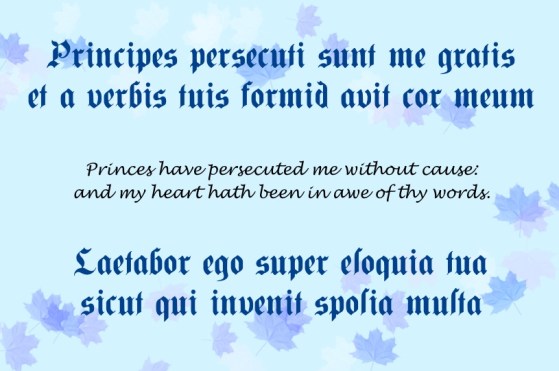
Ad te levavi oculos meos, qui habitas in caelis.
Ecce sicut oculi servorum in manibus dominorum suorum;
sicut oculi ancillae in manibus dominae suae:
ita oculi nostri ad Dominum Deum nostrum,
donec misereatur nostri.
Miserere nostri, Domine, miserere nostri,
quia multum repleti sumus despectione;
quia multum repleta est anima nostra
opprobrium abundantibus, et despectio superbis.
Today, in God’s Lavish Mercy, we pray with Psalm 90. As we re-enter Ordinary Time, I was so happy to see this beautiful psalm as the first in our new reflective approach!
Psalm 90 is the only psalm attributed to Moses. Reading it, one can imagine him in his older years, considering his long relationship with God. As the story of his graced life unfolds in prayer, Moses prays too for the community with whom his years have been intwined.
Some of his same sentiments may fill our hearts as we pray for our own communities in the troubled times:
Relent, O LORD! How long? Have pity on your servants! Fill us at daybreak with your mercy, that all our days we may sing for joy.
Sister Beatrice Brennan, RSCJ wrote an article entitled, “Praying at 93”. Sister reminded me of Moses when she wrote:
To live this long is an amazing grace. One of its unexpected joys is how alive one can feel spiritually as the slow dismantling of other human processes goes on.
The Bible speaks of “laughing in the latter day.” Prayer, for me, is like that at times. And always, a song of gratitude and joy.
I think Psalm 90 is that kind of prayer, one marinated in a long fidelity and trust. As Sister Beatrice goes on to say:
At a deeper, quieter level of consciousness runs an undefined awareness of God’s presence, similar, I think, to that union of old married couples who may rarely or never put love into words. It has become their life. So prayer becomes a steady underlying trust bearing me along.
Two poems that I hope will enrich your reflection:
Now I Become Myself Now I become myself. It’s taken Time, many years and places;
I have been dissolved and shaken,
Worn other people’s faces,
Run madly, as if Time were there,
Terribly old, crying a warning,
“Hurry, you will be dead before—”
(What? Before you reach the morning?
Or the end of the poem is clear?
Or love safe in the walled city?)
Now to stand still, to be here,
Feel my own weight and density!
The black shadow on the paper
Is my hand; the shadow of a word
As thought shapes the shaper
Falls heavy on the page, is heard.
All fuses now, falls into place
From wish to action, word to silence,
My work, my love, my time, my face
Gathered into one intense
Gesture of growing like a plant.
As slowly as the ripening fruit
Fertile, detached, and always spent,
Falls but does not exhaust the root,
So all the poem is, can give,
Grows in me to become the song,
Made so and rooted by love.
Now there is time and Time is young.
O, in this single hour I live
All of myself and do not move.
I, the pursued, who madly ran,
Stand still, stand still, and stop the sun!
~ May Sarton
A Long Faith This is the way of love, perhaps
near the late summer,
when the fruit is full
and the air is still and warm,
when the passion of lovers
no longer rests against
the easy trigger
of adolescent spring,
but lumbers in the drowsy silence
where the bees hum—
where it is enough
to reach across the grass
and touch each other’s hand.
~ Renee Yann, RSM
First, I want to thank you for following Lavish Mercy. It both humbles and delights me that these daily reflections seem to be meaningful for so many people.
Second, I want to tell you about some upcoming changes to the blog.
As some of you longtime followers realize, I have been offering these posts for over two years. Every lectionary reading has been covered, most of them twice. So I think it is time for a little change.
Beginning with the Tuesday, 6/2/2020 blog, I will shift to a reflection on the Psalms. Most often it will be the Psalm of the day, but sometimes a different Psalm or the Gospel Verse of the day. My plan is to reflect on the particular Psalm through poetry, music and a brief prayer.
I hope that many of you also share a love for the Psalms. Sister Marilyn Sunderman wrote a beautiful piece on Catherine McAuley’s love of prayer and the Psalms. She wrote:
The Psalter of Jesus, one of Catherine’s favorite prayers, invokes Jesus’ name 150 times. Its themes—such as the need for God’s forgiving mercy, dependency on God’s help, reverence for Jesus’ person and ministry and gratitude for Jesus’ passion and death—resonated deeply with Catherine.
The seven Penitential Psalms—6, 31 (32 in the New Revised Standard Version – NRSV), 37 (NRSV 38), 50 (NRSV 51), 101 (NRSV 102) 129 (NRSV 130) and 142 (NRSV 143) were also prayers Catherine often recited. These psalms are prayers for the repentance of sin and confidence in God’s mercy. (Sister Marilyn Sunderman)
Today, in Mercy, on this day before Pentecost, we close the book on both Acts and John’s Gospel, companions we have been praying with since mid-April.
When I read a really great book, I hate it to end. The characters and their story linger in my mind. The places where I’ve pictured them seem real – as if I’ve visited there myself. And the core of their stories becomes part of me, a reference point for my own experience.
Hopefully, the same thing happens when we read and pray with scripture.
As we leave Acts today, we should feel like we know the early disciples better, especially Peter, Paul, Barnabas, Stephen, Lydia and others whose story might have touched us. We should better understand the ups and downs of the early Church, the passion for mission, and the evolution of faith – and how these speak to our own times.
Finishing John, we have a slightly different picture of Jesus from that of the Synoptic Gospels of Matthew, Mark, and Luke. We see a Jesus full of Light, his human existence described through the lens of his Divinity. Johannine scholar Raymond E. Brown describes the difference like this:
That Jesus is the center of John’s message is confirmed by even a hasty reading of the Gospel itself. The emphasis on the Kingdom of God, so prominent in the Synoptic Gospels, has yielded in John to an emphasis on Jesus as the embodiment of life, truth, and light. No more is the parabolic language introduced by “The kingdom of God is like,..”; rather we hear the majestic “I am ” Whereas it is the Kingdom that the Synoptic Gospels describe in terms of vineyard, wheat, shepherd and sheep, in John it is Jesus who is the vine, the bread, the shepherd, and the sheepgate.
Today, in our prayer, we might want to glance back through these books, reminding ourselves of the words, phrases and stories that touched our own experience most deeply.
Sketching such phrases – perhaps in a daily prayer journal – is a good way to let our minds turn them over and over again in prayer, discovering new depths with each turn.
Music: Cavalleria Rusticana: Easter Hymn – Pietro Mascagni, featuring Australian soprano Kiandra Howarth
I thought we’d close these two wonderful books, and the Easter Season, with a bang. (Lyrics and explanation below)
Lyrics:
LATIN AND ENGLISH:
CHORUS (within the church)
Regina coeli, laetare—Alleluia!
Quia, quem meruisti portare—Alleluia!
Resurrexit sicut dixit—Alleluia!
CHORUS (in the square)
We rejoice that our Saviour is living!
He all-glorious arose from the dead;
Joys of heaven the Lord to us giving,
All the sorrows of darkness are fled! (The chorus goes out slowly)
ITALIAN:
CORO INTERNO (dalla Chiesa.)
Regina coeli, laetare—Alleluja!
Quia, quem meruisti portare—Alleluja!
Resurrexit sicut dixit—Alleluja!
CORO ESTERNO (sulla piazza.)
Inneggiamo, il Signor non è morto.
Ei fulgente ha dischiuso l’avel,
inneggiamo al Signore risorto
oggi asceso alla gloria del Ciel!
(il Coro esce lentamente)
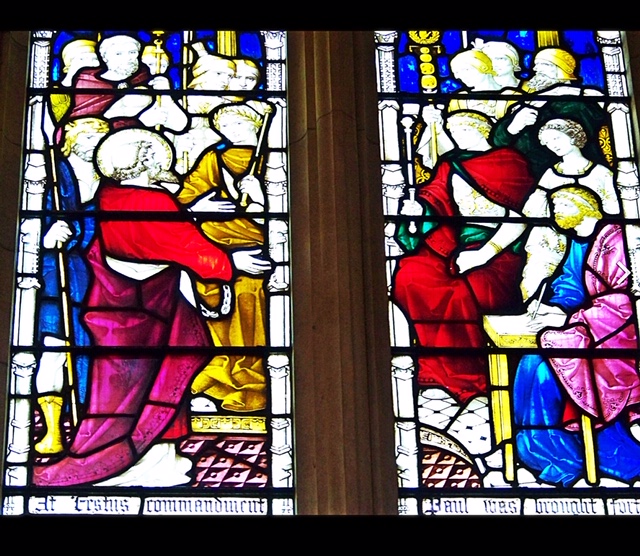
Window in St. Paul’s Cathedral, Melbourne – Paul Pleads His Case (Festus in yellow)
Today, in Mercy, Paul’s case goes before Festus and King Herod Agrippa. Just in case you are confused, like I was, about just who this particular Herod is, this family tree from Wikipedia helped:
This King Agrippa was Marcus Julius Agrippa II (A.D. 27-100), son of Agrippa I (Acts 12:1-25) and great-grandson of Herod the Great (Mt 2:1-23).
I offer these facts for no real spiritual reason, but they remind me that these biblical characters were real people, like us, engaging (or not) a real life of faith. (Also, I thought it was fun to see how uncreative they were in naming their babies 🙂
In our Gospel, Jesus once again prepares Peter for his tremendous responsibility in the building of that faith. Jesus asks Peter three times, “Do you love Me?”. By the third interrogation, Peter’s answer sounds a little intense:
“Lord, you know everything; you know that I love you.”
Hearing this response, Jesus lays the full burden of Peter’s life upon his shoulders. Not only must Peter “feed” the faith of Jesus’s followers, he must do so by giving over all control to God:
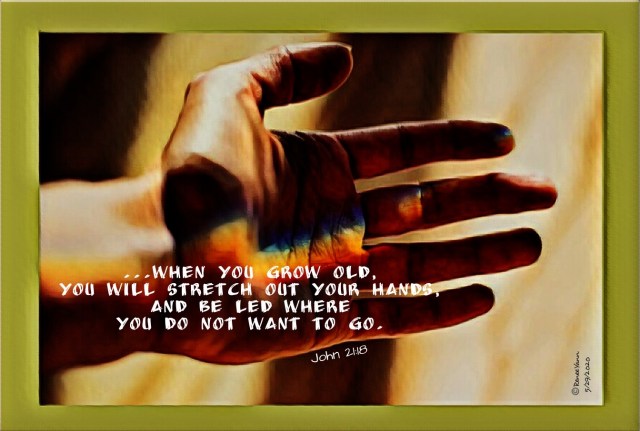
“Amen, amen, I say to you, when you were younger, you used to dress yourself and go where you wanted; but when you grow old, you will stretch out your hands, and someone else will dress you and lead you where you do not want to go.”
Like Peter,
we too are given the gift and responsibility
of living a faithful life.
Like Peter, we all learn through the years,
that life comes to us in unexpected ways.
In reality, life often chooses us
rather than the other way around.
As we pray with these passages, we might want to look back over our lives for those points where life challenged or unbalanced us. What unexpected blessings came from those surprises/shocks? When God’s plan contradicted our own, how were we eventually blessed with courage, hope and insight?
We are the person we are today because of how we responded to God’s mysterious plan for our lives. Did we reach out our hand and let God lead us? Do we still need to do some letting go in order to enjoy that kind of freedom?
Music:Precious Lord, Take My Hand – written by Thomas A. Dorsey, sung here by the Great Mahalia Jackson
Today, in Mercy, as we continue to read Jesus’s loving dialogue with his Father, we become the silent listener to an intimate conversation.
As I prayed with this passage, the memory of my own conversations with my mother came back to me. Many of these exchanges took place in person, but what I remembered today was our daily evening phone calls late in her life.
The calls were brief, but unflinchingly regular – 7PM every night. The exchanges werevery simple and almost formulaic: were we both OK, slept well, had a good day, had what for dinner, endured whatever weather….did we need anything?
But the real conversation was deep under any formula. It was the silent language of love, comfort, hope, trust and fidelity.It was the unspoken assurance that we were, and would always be, FOR each other.
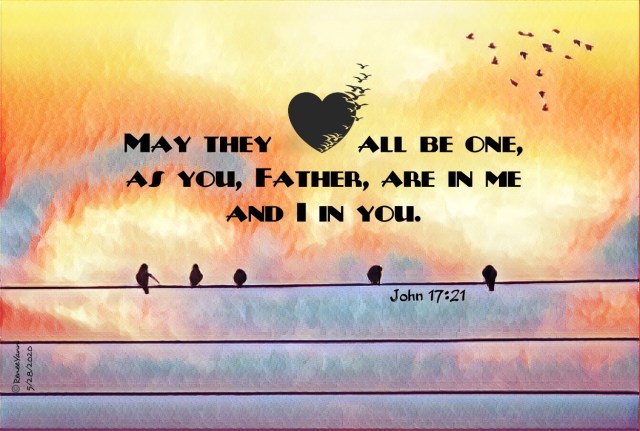
In John 17, we find the same kind of conversation between Jesus and his Father.
You and I are one
You have gifted me with your glory
You have empowered me in your Name
You have always loved me
I know your heart
and I am grateful
What a privilege to listen to God’s conversation! In our prayer today, we may just want to witness silently the infinite love between Jesus and the Father. As Jesus prays for us to be incorporated into that love, may our hearts overflow in gratitude.
Music: I Just Called fo Say I Love You – Stevie Wonder
Mom and I loved this song because it so clearly described our relationship. I still sing it to her sometimes… loooong distance for sure now🥰.
I think it’s a song we could easily share with God in our prayer.






















 Lavish Mercy