Today, in God’s Lavish Mercy, we pray with the magnificent Psalm 63 which captures the soul’s deep longing for God.
It is a longing that, once released in the heart, must be satisfied.
In our first reading, Jeremiah experiences it akin to an addiction, the power of it consuming his life:
I say to myself, I will not mention him, I will speak in his name no more. But then it becomes like fire burning in my heart, imprisoned in my bones; I grow weary holding it in, I cannot endure it.
Jeremiah 20:9
Paul, in his letter to the Romans, says not to resist the longing, but to let ourselves be consumed by it like a sacrificial offering:
I urge you, brothers and sisters, by the mercies of God, to offer your bodies as a living sacrifice, holy and pleasing to God, your spiritual worship.
Romans 12:1
Jesus, in our Gospel, is the One who surrenders himself fully to that holy longing. He calls us to imitate him:
For whoever wishes to save his life will lose it, but whoever loses his life for my sake will find it.
These are profound readings calling us a place that words cannot describe, a place where the Cross intersects with the truth of our lives. May we have the grace to hear and believe.
Poetry: The Longing – Rumi
There is a candle in your heart,
ready to be kindled.
There is a void in your soul,
ready to be filled.

You feel it, don't you?
You feel the separation
from the Beloved.

Invite Love to quench you,
embrace the fire.

Remind those who tell you otherwise that
Love
comes to you of its own accord,
and the longing for it cannot be learned in any school.
Today, in God’s Lavish Mercy, we pray with Psalm 33, a song of praise calling the people to rejoice in God’s justice and kindness.
In its attitude of trust and freedom, the Psalm might remind us of Robert Browning’s verse:
God’s in his heaven. All’s right with the world.
But neither in the psalmist’s time, nor in Browning’s, was everything really “all right” with the world. Things are never really “all right” with the world. There is always war, crime, hunger, disease, natural disasters, and a slew of other troubles brewing somewhere.
So how can the psalmist or any other preacher invite us to trust, believe, and rejoice like this?
Exult, you just, in the LORD; praise from the upright is fitting. Give thanks to the LORD on the harp; with the ten-stringed lyre chant his praises.
Keywords in this verse give us a clue: those who are just and upright will see the pattern of God’s mercy which lies deeper than the troubles of this world. They will trust and be comforted by God’s transcendent faithfulness to us in all things. Their faith and joy in the face of suffering will confound the faithless.
Calling us to the full meaning of Christ’s sacrificial love, Paul reiterates this mysteriously contradictory truth in our first reading :
For the foolishness of God is wiser than human wisdom, and the weakness of God is stronger than human strength.
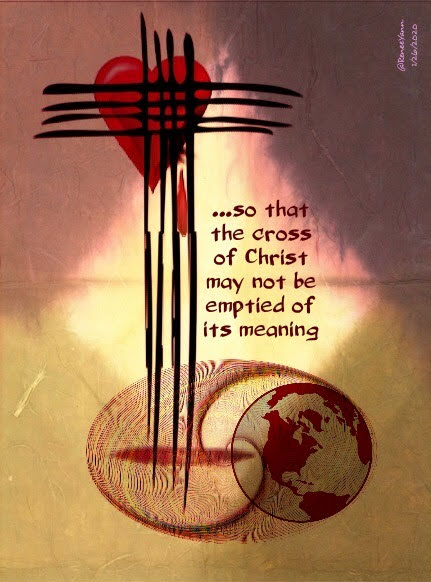
For Christians, the Cross is the ultimate symbol of this profound wisdom and strength. It is a mystery too deep for our understanding, but by faith we may slowly become immersed in its Truth.
The message of the cross is foolishness to those who are perishing, but to us who are being saved it is the power of God.
1 Corinthians 18
As we pray with Psalm 33 today, let us be aware of the cause of our joy – a holy joy deeply rooted in God, trusting God’s Will for our salvation in the pattern of Jesus Christ.
For upright is the word of the LORD, and all God’s works are trustworthy. The LORD loves justice and right; of the kindness of the Lord the earth is full.
Poetry: Primary Wonder – Denise Levertov
Days pass when I forget the mystery. Problems insoluble and problems offering their own ignored solutions jostle for my attention, they crowd its antechamber along with a host of diversions, my courtiers, wearing their colored clothes; cap and bells. And then once more the quiet mystery is present to me, the throng’s clamor recedes: the mystery that there is anything, anything at all, let alone cosmos, joy, memory, everything, rather than void: and that, O Lord, Creator, Hallowed One, You still, hour by hour sustain it.
Music: Your Cross Changes Everything – Matt Redman
Today, in God’s Lavish Mercy, on this feast of St. Monica, we pray with Psalm 145.
We can almost picture the psalm’s sentiments pouring out in Monica’s prayer. For years, she had prayed for her son Augustine’s conversion. She was canonized for the level of her persevering prayer – a prayer blessed with the amazing answer of St. Augustine’s holy life.
Every day will I bless you, and I will praise your name forever and ever. Great is the LORD and highly to be praised; his greatness is unsearchable.
Like the answer to most prayers, Monica’s came after the long working of God’s mysterious ways. Her own life was shaded by suffering and loss. But, she was steadfast in her hope over the nearly two decades it took to see Light dawn in Augustine.
Generation after generation praises your works and proclaims your might. They speak of the splendor of your glorious majesty and tell of your wondrous works.
As we reflect on the generations of our own families, and the decades of our own lives, there are many “Monica-Augustine” stories. Whenever we pray for life to lead us and our beloveds to God, we pray like Monica.
Today, let’s bring our own “Augustines” to God in hopeful prayer. And let’s thank God for any “Monica” who has done this loving service for us over our lives.
I think this morning of my mother’s well-worn prayer book. The little devotional volume had been fattened with a number of prayer cards stuffed in its thin pages. One day, just before my mother died, I noticed this one: Prayer for My Daughter, a Nun. I can’t say I was exactly surprised by it. I supposed Mom prayed for me. But the card blessed me in a vey tender way and made me confident that my life would continue to be blessed.
Discovering the card also made me aware of my responsibility to pray daily for my family, friends, and community. They are my “Augustines” in whatever challenges they may face in life – just as I hope I am somebody’s too. Because, friends, we belong to one another in the Communion of Saints, and our “family” is fed not by blood, but by the Spirit.
The generations discourse of the power of your awesome deeds and declare your greatness. They publish the fame of your abundant goodness and joyfully sing of your justice.
Poetry: St. Augustine and Monica by Charles Tennyson Turner
Her weeping kiss – for years, her sorrow flowed At last into his wilful blood; he owed To her his after-life of truth and bliss: And her own joy, what words, what thoughts could paint! When o’er his soul, with sweet constraining force, Came Penitence – a fusion from remorse – And made her boy a glorious Christian saint. Oh ye, who tend the young through doubtful years Along the busy path from birth to death, Parents and friends! forget not in your fears The secret strength of prayer, the holy breath That swathes your darlings! think how Austin’s faith Rose like a star upon his mother’s tears!
Music: (something for opera fans among us) La Conversione di Sant Agostino, Oratorio by Johann Adolph Hasse
Hasse begins La Conversione di Sant’ Agostino with an orchestral introduction that establishes the work‘s tonal center in the key of B-flat major, with most arias composed within related keys. From the grandeur and dynamic intensity of the Introduction comes the first vocal entrance of the oratorio. The listener acts as a voyeur into a conversation between Simpliciano (tenor), a priest, and Monica (soprano), the mother of Saint Augustine of Hippo, in which Monica expresses her fears that her son may never change his wicked ways. This urgent desire becomes the core dramatic theme throughout the oratorio with Alipio (alto), the friend, and Navigio (bass), the brother, serving to intensify the desperate desire for conversion. The role of Saint Augustine (alto) is secondary to that of his mother, Monica. Saint Augustine only has two arias, both dealing with his desire to find release from his sinful ways. His conversion is explicitly stated in the Part Two aria in which he begs God to look upon him with compassion following the censure of his own heart.
Today, in God’s Lavish Mercy, on this Feast of St. Bartholomew, we pray with Psalm 145. And what a perfect choice!
Your friends make known, O Lord, the glorious splendor of your Kingdom.
As our Gospel today indicates, many believe that Bartholomew is the same person as Nathaniel – in fact Nathaniel bar Talmai, (Talmai meaning “farmer”, or “son of the furrows”).
Praying with Psalm 145, I picture Nathaniel leaning back into his ancient fig tree, his fingers burrowing into the fertile earth around him. What might have been his deep thoughts as he dissolved into the fig tree’s generous shade?
Knowing Psalm 145 by heart, perhaps Nathaniel prayed it in his own very personal words:
Make me your loyal friend, O Lord.
I see your glory in all Creation.
Let me help others see that glory,
see themselves as a precious part of You.
Maybe Nathaniel had retreated to that tree because the noise around him didn’t hold an answer to his longing. He needed silence to remember that God will always find a way to bring our holy desires to fruition – just like the nearly sweet, unripe figs dancing just over Nathaniel’s pondering head:
The LORD is just in all his ways and holy in all his works. The LORD is near to all who call upon him, to all who call upon him in truth.
Psalm 145:17
Nathaniel found his truth, his answer that day. It walked right up to him in the form of his buddy Philip:
Philip found Nathanael and told him, “We have found the one about whom Moses wrote in the law, and also the prophets, Jesus son of Joseph, from Nazareth.”
John 1:45
Nathaniel, perhaps his head and belly still full of figs, takes a little while to get the full picture. But when he does, he gets it completely, unreservedly, and forever:
Rabbi, you are the Son of God; you are the King of Israel….
John1:49
You are the One we pray for in our psalms. You are the One we have waited for.
The beautiful thing for Nathaniel is that Jesus was waiting for him too.
Before Philip called you, I saw you under the fig tree.
John 1:48
We’re all under some kind of shadow at times, longing to hear the invitation of God. The story of Nathaniel assures us that the call will come through our hopeful prayer and deep desire for God’s glory.
Let all your works give you thanks, O LORD, and let your faithful ones bless you. Let them discourse of the glory of your Kingdom and speak of your might.
Poetry:Joy and Peace in Believing by William Cowper, an English poet and hymnodist. One of the most popular poets of his time, Cowper changed the direction of 18th century nature poetry by writing of everyday life and scenes of the English countryside.
Sometimes a light surprises
The Christian while he sings;
It is the Lord who rises
With healing on His wings;
When comforts are declining,
He grants the soul again
A season of clear shining,
To cheer it after rain.

In holy contemplation
We sweetly then pursue
The theme of God's salvation,
And find it ever new;
Set free from present sorrow,
We cheerfully can say,
E'en let the unknown to-morrow
Bring with it what it may!

It can bring with it nothing,
But He will bear us through;
Who gives the lilies clothing,
Will clothe His people too;
Beneath the spreading heavens
No creature but is fed;
And He who feeds the ravens
Will give His children bread.
Though vine nor fig tree neither
Their wonted fruit shall bear,

Though all the field should wither,
Nor flocks nor herds be there:
Yet God the same abiding,
His praise shall tune my voice;
For, while in Him confiding,
I cannot but rejoice.
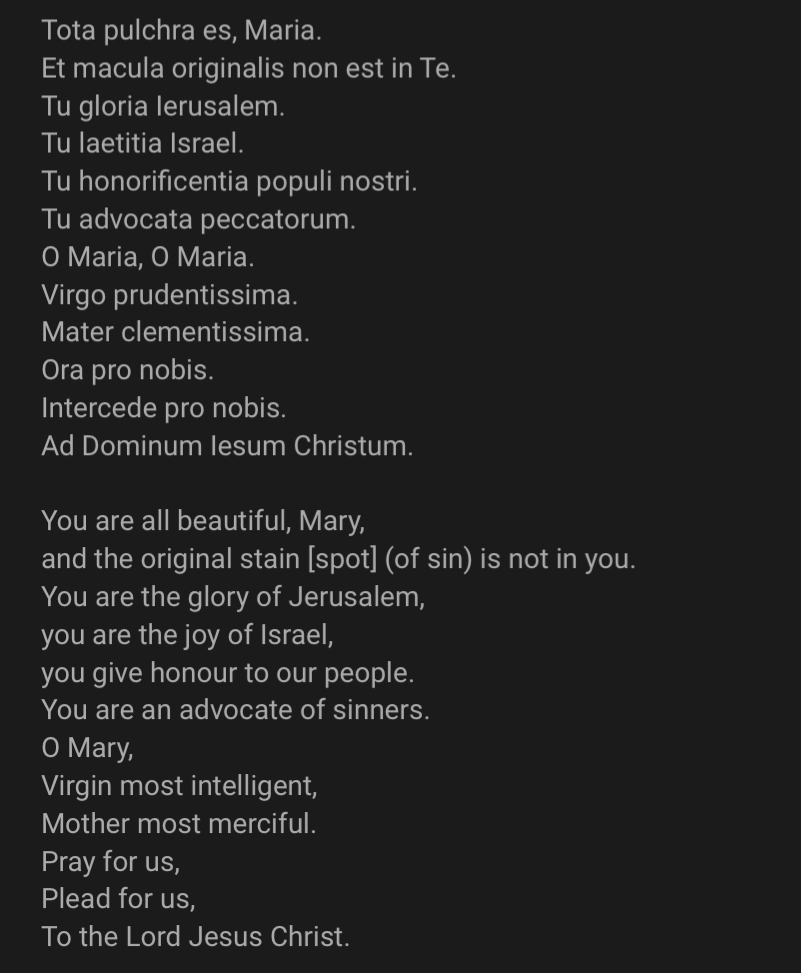
Indeed, Mary herself was a song of hope to God, sung for us and for all generations. That passionate song opened her heart to receive the Word and to carry its redeeming power to each of us.
She was the greatest prophet of all time who not only proclaimed God but enfleshed him.
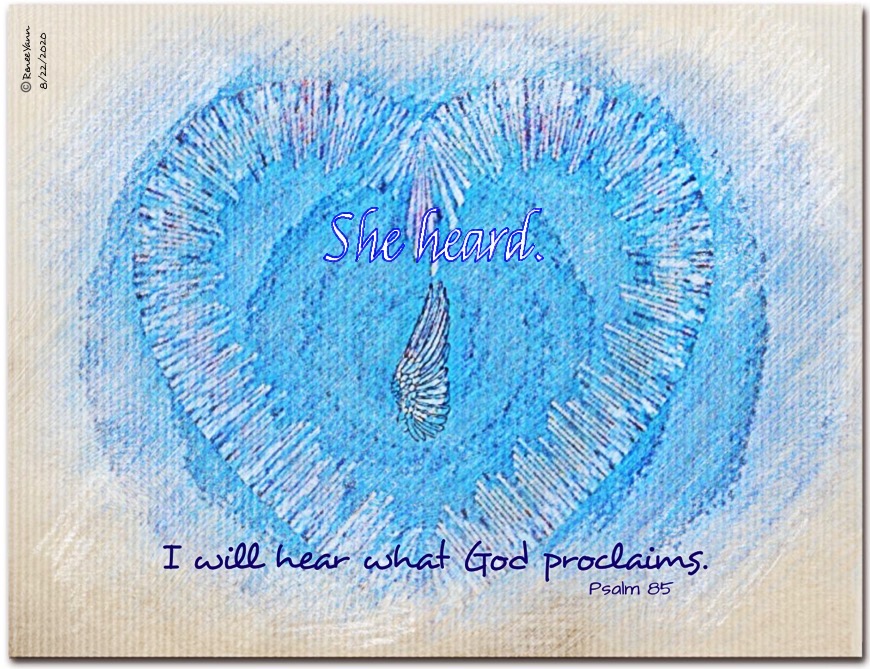
I will hear what God proclaims; the LORD– Who proclaims peace. Near indeed is salvation to those who fear God, glory dwelling in our land.
As we pray to Mary today, let us ask for listening hearts and hope-filled spirits. Let us ask to enflesh love and hope in our lives in imitation of her. Let us ask to believe as she did:
The LORD himself will give his benefits; our land shall yield its increase. Justice shall walk before him, and salvation, along the way of his steps.
Poetry: Annunciation – Denise Levertov
Annunciation
_________________________________________
‘Hail, space for the uncontained God’From the Agathistos Hymn, Greece, 6th century
_________________________________________
We know the scene: the room, variously furnished,
almost always a lectern, a book; always
the tall lily.
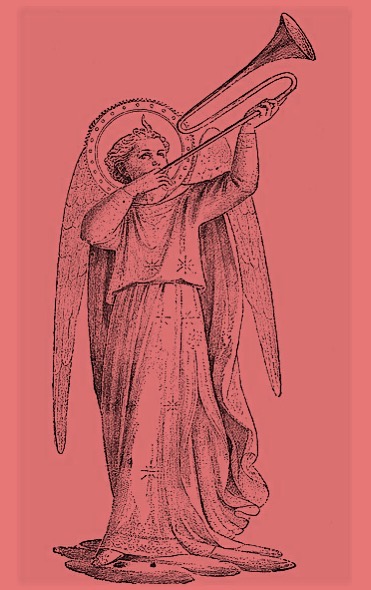
Arrived on solemn grandeur of great wings,
the angelic ambassador, standing or hovering,
whom she acknowledges, a guest.
But we are told of meek obedience. No one mentions
courage.
The engendering Spirit
did not enter her without consent.
God waited.
She was free
to accept or to refuse, choice
integral to humanness.
____________________
Aren’t there annunciations
of one sort or another
in most lives?
Some unwillingly
undertake great destinies,
enact them in sullen pride,
uncomprehending.
More often
those moments
when roads of light and storm
open from darkness in a man or woman,
are turned away from
in dread, in a wave of weakness, in despair
and with relief.
Ordinary lives continue.
God does not smite them.
But the gates close, the pathway vanishes.
____________________
She had been a child who played, ate, slept
like any other child–but unlike others,
wept only for pity, laughed
in joy not triumph.
Compassion and intelligence
fused in her, indivisible.
Called to a destiny more momentous
than any in all of Time,
she did not quail,
only asked
a simple, ‘How can this be?’
and gravely, courteously,
took to heart the angel’s reply,
the astounding ministry she was offered:
to bear in her womb
Infinite weight and lightness; to carry
in hidden, finite inwardness,
nine months of Eternity; to contain
in slender vase of being,
the sum of power–
in narrow flesh,
the sum of light
Then bring to birth,
push out into air, a Man-child
needing, like any other,
milk and love–
but who was God.
This was the moment no one speaks of,
when she could still refuse.
A breath unbreathed,
Spirit,
suspended,
waiting.
____________________
She did not cry, ‘I cannot. I am not worthy,’
Nor, ‘I have not the strength.’
She did not submit with gritted teeth,
raging, coerced.
Bravest of all humans,
consent illumined her.
The room filled with its light,
the lily glowed in it,
and the iridescent wings.
Consent,
courage unparalleled,
opened her utterly.
Today, in God’s Lavish Mercy, we pray with a little more Deuteronomy. Coupled once again with Ezekiel’s excoriations and with the Gospel warnings, today’s Responsorial Psalm is a hot potato!
To tell you the truth, I’ve pretty much had enough of it, but I trust there’s a treasure buried in its hard words.
You will come to appreciate the full force & magnetic beauty of Deuteronomy only as you read its pages….Nothing in literature matches the majesty of its eloquence. Nothing in the Old Testament has any more powerful appeal for the spiritual life. No book in all the Word of God pictures better the life that is lived according to God’s will & the blessings showered upon the soul who comes into the richness & fullness of spiritual living along the rugged pathway of simple obedience…If you want a taste of heaven on earth, become familiar with Deuteronomy.
Henrietta Mears in her book “What the Bible Is All About” (over 3 million copies sold)
Taken together, today’s passages remind me that it is so easy to get full of ourselves and our comforts, ultimately forgetting our dependence on God.
Ezekiel gives this divine judgement to the people:
By your wisdom and your intelligence you have made riches for yourself; You have put gold and silver into your treasuries. By your great wisdom applied to your trading you have heaped up your riches; your heart has grown haughty from your riches– therefore thus says the Lord GOD: Because you have thought yourself to have the mind of a god, Therefore I will bring against you foreigners, the most barbarous of nations.
Deuteronomy 32 warns us:
You were unmindful of the Rock that begot you, you forgot the God who gave you birth. The LORD saw and was filled with loathing, provoked by his sons and daughters.
And in our Gospel, Jesus gives us that classic zing which makes all of us wonder if we’re sleek enough to be saved:
Again I say to you, it is easier for a camel to pass through the eye of a needle than for one who is rich to enter the Kingdom of God
I don’t think we need a road map to find the message in these readings. God wants to be our one, true God. The love of wealth, power, and self obscures that Truth. It can even fool us into thinking that we are like gods in control of our lives.
The corrective, as our Alleluia Verse indicates, is to imitate Jesus:
Jesus Christ became poor although he was rich So that by his poverty you might become rich as he is.
Poetry: Salvation by Stephen Dunn
Finally, I gave up on obeisance,
and refused to welcome
either retribution or the tease
of sunny days. As for the can’t-be-
seen, the sum-of-all-details,
the One—oh, when it came
to salvation I was only sure
I needed to be spared
someone else’s version of it.
The small prayers I devised
had in them the hard sounds
of split and frost.
I wanted them to speak
as if it made sense to speak
to what isn’t there
in the beaconless dark.
I wanted them to startle
by how little they asked.
Today, in God’s Lavish Mercy, we pray once again with Deuteronomy 32, the Psalm of Moses. Today’s verses describe an angry God who decides to take vengeance a faithless people.
To pray with these verses is not easy. Taken in isolation, they paint a God who contradicts our larger experience of mercy and tenderness. But the Psalm, like the jarring first reading from Ezekiel, has a lesson for us.
Ezekiel from Biblical Images by James Padgett
In that reading, Ezekiel suffers the sudden death of his beloved wife. The experience opens his prophetic spirit to more fully understand God’s relationship with Israel. He allows his life to be a witness for the people that God expects their repentance and faithfulness.
Like many Old Testament readings, these portray God by way of human analogy because that is the only context we have available to us. Therefore, the temptation when reading these passages might be to think of God solely in human terms playing tit-for-tat with us when we stray from the Law. But God is infinitely greater than any capacity we, or the scripture writers, have to describe Divinity.
The narrative provided by this prophetic book is not one of comfort; its merciless accusations and its violent imagery do not make it an easy scroll to swallow (Ezek 2:8–3:3). While much of Ezekiel’s language, imagery, and reasoning will appear foreign to modern readers, his narrative would have been clearly intelligible to his contemporaries—even though presumably it would have been hard to accept. The exile, according to this narrative, is both inevitable and deserved; it is portrayed as God’s judgement for the constant and complete failure of God’s people.
At the same time, it is not God’s last word. While resisting both optimism and despair, Ezekiel offers a narrative that sheds light on his present and arrives at an original, if peculiar, imagination of hope, founded solely on theological conviction.
Janina M. Hiebel – Hope in Exile: In Conversation with Ezekiel
So then, what might we take from today’s dark readings? For me, it is this:
God is always Light. It is we who get caught in darkness.
God does speak to us in our circumstances, as God did to Ezekiel and Moses. By faithful prayer and sincere desire, we can deepen in our love and understanding of God through every experience of our lives, even the painful ones. When we live with that kind of faith and hope, our lives witness to God’s fidelity and love.
Poetry: two offerings today
Motto – Bertold Brecht
In the dark times
Will there also be singing?
Yes, there will also be singing.
About the dark times.
Light – Alice Jones
The morning when I first notice
the leaves starting to color,
early orange, and back-lit,
I think how rapture doesn't
vanish, merely fades into
the background, waits for those
moment between moments.

I think this and the door pens,
the street takes on its glistening
look, Bay fog lifting, patches of sun
on sycamore -- yellow sea.
I am in again, and swimming.
Today, in God’s Lavish Mercy, we pray with Psalm 112, a poetic description of what “holiness-in-action” looks like. The psalm’s tone is reminiscent of the beloved passage from Proverbs 31, “Who shall find a valiant woman…” Only this passage says, “Blessed is the man… Beatus vir”.
Both these passages give us a glimpse into the righteousness expected of one who is in covenant with God. That person reflects the Divine Righteousness of God in both word and deed.
The “righteousness of God” comes down to concrete actions that intend generous rehabilitation of those without resources. The Psalms sing of these concrete acts.
Walter Brueggemann
A slow reading of the psalm is a good prayer today, asking God to help us open our hearts and choices to this graceful righteousness. The heavily masculine translation can be a little off-putting for the women among us though. So you might like to use this translation as I did.
Happy are those who revere God
and delight in doing his will.
Their children will be greatly honored
and their grandchildren greatly blessed.
Abundance will fill their houses
as gratitude fills their hearts.
They conduct their affairs with justice;
their integrity cannot be shaken.
They give of themselves to the poor
and share their wealth with the needy.
They are patient, cheerful, compassionate,
generous, impeccably fair.
They harbor no regrets for the past
and no worries about the future.
Their minds are centered in God,
and they trust him with all their hearts.
They honor themselves, and are honored;
they walk with their heads held high.
Their rising is like the sunrise,
and their light fills heaven and earth.
Their righteousness shines on all people;
their good works endure forever.
fromA Book of Psalms: Selections Adapted from the Hebrew by Stephen Mitchell
Poetry: from Rumi
Your acts of kindness
are iridescent wings
of divine love
which linger and continue
to uplift others
long after your sharing.
Music: Beatus Vir – Antonio Vivaldi
Beatus vir qui timet Dominum, In mandatis ejus volet nimis. Blessed the man who fears the Lord, in his commandments he delights greatly.
Today, in God’s Lavish Mercy, on this glorious Feast of the Transfiguration, we pray with Psalm 97 which prophesies the messianic era when God will reign supreme over the earth. Its verses announce God’s sovereignty, establishment of justice, and universal joy.
Transfiguration by Giovanni Bellini
Our Gospel describes the moment when Jesus gave his three disciples a glimpse of that future glory in order to sustain them through the sufferings to come.
As we pray Psalm 97 today, we might think of our experiences of God’s beauty, tenderness, and joy. Remembering and storing these small, accumulated revelations helps us to hold faith in times of darkness or trouble.
In Martin Luther King’s final speech the night before he was assassinated, he spoke of his own such transfiguring moments and the courageous faith they inspired in him:
Well, I don’t know what will happen now. We’ve got some difficult days ahead. But it doesn’t matter with me now. Because I’ve been to the mountaintop. And I don’t mind. Like anybody, I would like to live a long life. Longevity has its place. But I’m not concerned about that now. I just want to do God’s will. And He’s allowed me to go up to the mountain. And I’ve looked over. And I’ve seen the promised land. I may not get there with you. But I want you to know tonight, that we, as a people, will get to the promised land. And I’m happy, tonight. I’m not worried about anything. I’m not fearing any man. Mine eyes have seen the glory of the coming of the Lord.
Also in our prayer today, we are mindful of the 75th anniversary of the atomic bombings of Hiroshima and Nagasaki, an event which represents the complete inversion of God’s will for the Peaceful Kingdom.
Majesty, turned inside out by our sin, becomes terror.
Robert Oppenheimer, one of the designers of the atomic bomb, reflecting on the bomb’s first test, said that as he watched the huge blast wave ripple out over the New Mexico desert, a line from the Hindu scripture Bhagavad Gita came to mind: “Now I am become Death the Destroyer of Worlds.”
Psalm 97 reminds us that all Creation belongs to God:
The LORD is king; let the earth rejoice; let the many islands be glad. Clouds and darkness are round about him, justice and judgment are the foundation of his throne.
If, by faith, we learn to see and reverence God’s glory in all things, we can be delivered from the terrors of war, racism, and every other deathly weapon which threatens us. As Psalm 97 so encouragingly closes:
You who love the LORD, hate evil, God protects the souls of the faithful, rescues them from the hand of the wicked. Light dawns for the just, and gladness for the honest of heart. Rejoice in the LORD, you just, and give thanks at the remembrance of his holiness.
Poetry: Origami by Joyce Sutphen
In Hiroshima’s Peace Park there is a statue of Sadako Sasaki lifting a crane in her arms. Sadako was two years old when the atomic bomb was dropped; she was diagnosed with leukemia ten years later. The Japanese believe that folding a thousand origami cranes brings good fortune. Sadako spent the last months of her young life folding hundreds of paper cranes. She folded 644 before she died.
Origami
It starts
with a blank sheet,
an undanced floor,
air where no sound
erases the silence.

As soon as
you play the first note,
write down a word,
step onto the empty stage,
you've moved closer
to the creature inside.

Remember—
a square
can end up as frog, cardinal,
mantis, or fish.
You can make
what you want,
do what you wish.
Today, in God’s Lavish Mercy, we pray with a beautiful pastoral segment from Jeremiah. This Responsorial Psalm follows on the first reading, both passages affirming God’s everlasting love for us.
Jeremiah wrote at a time of great suffering and confusion for Israel. The Kingdom was falling apart, having been beset by overwhelming enemies. Near the end of Jeremiah’s life, the nation falls into the Babylonian Captivity. Much of the Book of Jeremiah prophesies, judges, and laments these troubles.
But today’s verses come from Chapters 30 – 33, part ofJeremiah often referred to as the “Book of Comfort” or “Little Book of Consolation.” These are the brighter and more hopeful chapters of an otherwise heavy set of writings.
Moreover, these three chapters speak to a significant shift in understanding God’s relationship with Israel. The original covenant with Abraham is stated in conditional terms- “You will be my People and I will be your God”. I hate to use the now sullied term, but it was sort of a “quid pro quo”.
The renewed covenant described in Jeremiah is an unconditional relationship sustained, despite Israel’s weaknesses, by a Divine and Everlasting Love, by the Good Shepherd:
As Israel comes forward to be given his rest, the LORD appears to him from afar: With age-old love I have loved you; so I have kept my mercy toward you.
As we look over our lives past and present, we can pray in gratitude that we are embraced by the same Ancient and Everlasting Love.
Probably each of us has had a few personal little “Babylons”. We may even have had some of our personal “temples” destroyed. You know, those self-absorbed campaigns and petty addictions that distract us from the sacred essence of our life that:
We are God’s Love made flesh, called to live in that Truth.
Video Poem: Three Poems from Rilke’s Book of Hours
















 Lavish Mercy